conservation environment
  • Blog
  • About
  • Contact

Green Tech: Don’t Wait For ‘Goldilocks’ Product, Say Researchers

6/29/2018

0 Comments

 
Many people are considering investing or adopting in an emerging low-carbon explanation in the market region, so as to save the environment and the money as well. But, we are also waiting for that ideal piece of innovation or technology that is certainly going to provide our money's worth.

Sadly, according to some scientists, this fantasy solution is not actually coming in any moment. Moreover, according to the cutting-edge study, we are all lost out on the money-saving, green chances that are presently in the market.

Base on what Mac Dowell and his group states; that the strategy of 'Goldilocks' have two main drawbacks:

First, it may come from a considerable failure to transport to greener, newer solutions, thus making sure that the carbon-emission targets were never met.

Next, the concept can lead to the solution wherein emerging or existing solutions, included those that are using fossil fuels were perpetuated, in more diffuse volumes, bigger, over time, to balance for the increasing standard industrial and residential power needs. In the situation, de-carbonization aim can be met but with an expense of the systems with an extreme redundancy.

​Researchers clarifies why this ‘Goldilocks’ strategy, example like the waiting for the completely ideal solution, will not be the appropriate approach in achieving this ‘greener’ technology.

Picture

Low-carbon power, (n.d.). In Wikipedia. Retrieved June 30, 2018, from en.wikipedia.org/wiki/Low-carbon_power

LSE. March 2014. What is “decarbonisation” of the power sector? Why do we need to decarbonise the power sector in the UK?. [ONLINE] Available at: lse.ac.uk/GranthamInstitute/faqs/what-is-decarbonisation-of-the-power-sector-why-do-we-need-to-decarbonise-the-power-sector-in-the-uk/.

​Evolving Science. May 2018. Green Tech: Don’t Wait For ‘Goldilocks’ Product, Say Researchers. [ONLINE] Available at: evolving-science.com/matter-energy/green-tech-goldilocks-product-researchers-00669
0 Comments

10 Riches that Will Vanish as Sea Levels Increases

5/24/2014

0 Comments

 
Because of the rising and falling of water, some of the most important architectural, cultural, historical and religious destinations may lost as sea level rise up, if that pair of European researchers will be right. There are average sea levels that might possibly go up at about 9 degrees F or it will jump up at around 30 feet high. If warming ratios will continues to go up, researchers Ben Marzeion and Anders Levermann states that around 136 tourist world destinations would be washed out into the sea in the next 2,000 years. Though, it sounds like a long time, but let’s glanced at those destinations that are over 2,000 years old already. Here are some of the structures that could be possibly affected in the future.
Picture
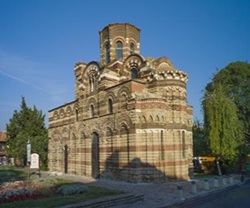
10. Ancient City of Nessebar

The city of Nessebar is more than 3,000 old, it dots on the Black Sea of a rocky Bulgarian Peninsula. After being developed by during the Bronze Age by Thracians, the city was then occupied in 6 B.C.E. by Greeks. It stands as an enlightening testament to the different civilizations that populated this slight stretch of land, with architectural and archaeological highlights including a Temple to Apollo, a Greek Acropolis, a Middle Age fortress , and a ninth-century Basilica.


Picture
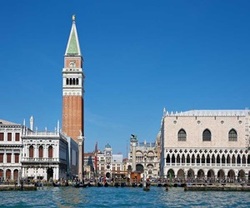
9. Venice and Its Lagoon

One of the world's most exceptional urban settings, the Venice Italian City consists of 118 islands above a lagoon, many of which are related through a sequence of canals. This town on the water is a breathing, living, monument to the Gothic Islamic and Byzantine influences, and it's viewed over more than 1,500 years.

From its low settlement on the Adriatic Sea in Italy's northeast angle, Venice is not an alien with regards to flooding. The trials are becoming more severe and as much as 70% of the city was sunken in 2013 flood, and weather experts attribute that to growing sea levels. For now, researchers show that Venice's rises is sinking around 0.09 inch each year while sea levels go up by 2 millimeters.

Picture
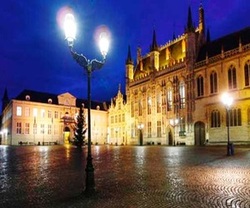
8. Bruges Historic Centre

The centre of the city spells "Bruges" in English and "Brugge" in Dutch. It happens to be an attractive medieval historic colony that operates as the initiation point for Flemish ancient painting. The initial mention of the city was in 9th century. The 401ft. or 122-meter Church of Our Lady is between the earth’s highest brick buildings, as well as house of "Madonna and Child," of Michelangelo, the one and only artist's sculptures to have left Italy during his lifetime.


Picture
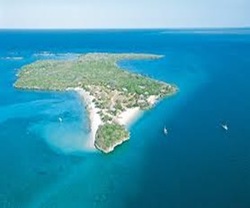
7. The Island of Mozambique

Formerly settled by population of the Bantu tribe and then in the 10th century by Arab settlers, the island of Mozambique rose to distinction as a Portuguese business outpost on the way to India. Now, it's popular for its charming beaches, vibrant blue waters, various religious buildings and stunning coral reef. The city is believed as a tough example of architectural union since 16th century.


Picture
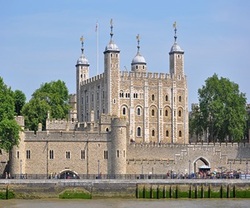
6. Tower of London

It's hard to envision the United Kingdom's capital city with no Tower of London, the dreadful fortress constructed in 1066 by William the Conqueror. Governing the British skyline along with Big Ben, the London Eye and St. Paul's Cathedral, the Tower is really the entire castle that throughout the years had operates as everything from a military barracks, prison to the home of England's crown jewels and execution site. 


Picture
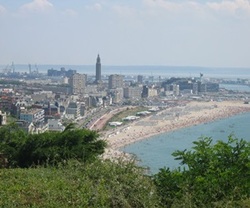
5. Le Havre

Snuggle along the English Channel at the mouth of the Seine estuary in Normandy. It was a little fishing village before King Francois I altered it into one of France's hugest harbours in early 16th century. The city stays as a booming trade port until World War II, until it was brutally bombed. It thoroughly renovated between 1945-1964, to mirror the city’s innovative outline while also creating room for more current construction techniques and urban planning. UNESCO named the remade city "a trademark of the combination of urban planning customs."


Picture
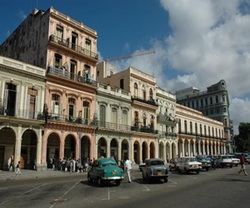
4. Old Havana

The last Cuban city founded in 1519 by Spanish conquistadors. Old Havana preserve much of its innovative character as mutually huge shipping port and military defence set up, while contributing to visitors a lucid slice of living in the Caribbean's hugest metropolis. The old city is combined altogether by 5 massive plazas, each of which preserved its own personality and character. Old Havana presented neoclassical architecture and an array of Baroque, represented by the personal colonial mansions that line silent side streets just off the chief road. It is also the home for some lively art scenes and best museums. The United Nations funded the restoration of the decaying city but of course, maintain the old world charm.


Picture
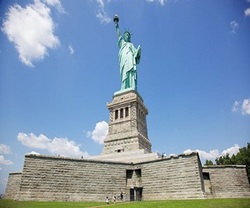
 3. Statue of Liberty

The New York Harbour stands tall as Lady Liberty that serves as the mouth of welcoming immigrants, residents and visitors of America's massive city as a proud sign of democracy and freedom. Dedicated in 1886, the 305 feet or 93 meter, 450,000-pound statue was an offering from the populace of France as a symbol of friendship with the U.S. and in gratitude of its victorious formation of a democratic civilization.

The Statue of Liberty steel framework was planned by French engineer Alexandre-Gustave Eiffel, the same person who designed Eiffel Tower, while the main formation of it was sculpted by the French sculptor Frederic-Auguste Bartholdi from the pieces of hammered copper. The torch-wielding statue was the initial thing millions of immigrants saw as they come nearby Ellis Island and remnants one of the earth’s well-known trademarks.


Picture
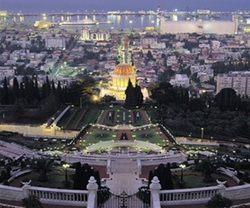
2. Baha'i Holy Places

Established in 1844 in Iran, the Baha'i devotion  speaks that the creators of the world's major religions were Abraham, Buddha, Jesus, Krishna, Moses, and Muhammad were the divine messengers tapped to unveil exposure of one God, and that their religion's originator, Baha'u'llah, is the newest divine messenger. Despite this tolerant method to all faiths, Baha'i followers and leaders faced harassment from the outset, specifically in their natural country.

Observed as heretics to the Islam religion, about 20,000 Baha'i supporters, including their prophet named the Báb – were killed in mid 1850’s across Iran. After wandering Egypt, Iraq and Turkey for 15 years, Baha'u'llah came to Western Galilee as prisoner in 1868. He stays in the area for the last 24 years of his life, compiling and drafting the scriptures that now function as the religion's introductory texts.


Picture
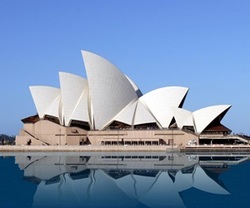
1. Sydney Opera House

The latest trademark on the list, the Sydney Opera House was finished in 1973 after 16 years of work it is measured as a masterwork of 20th-century structural designs. The performing arts centre is an Australia's well-known building. These are huge white-tiled shells that created the building's roof and the glass cover up that faces the Sydney Harbour.


0 Comments

    Author

    This is our world and I am just doing my part to save it.

    Archives

    June 2018
    May 2014

    Categories

    All

    RSS Feed

Powered by Create your own unique website with customizable templates.