Mark S. Cogan

Non-traditional security challenges in Southeast Asia

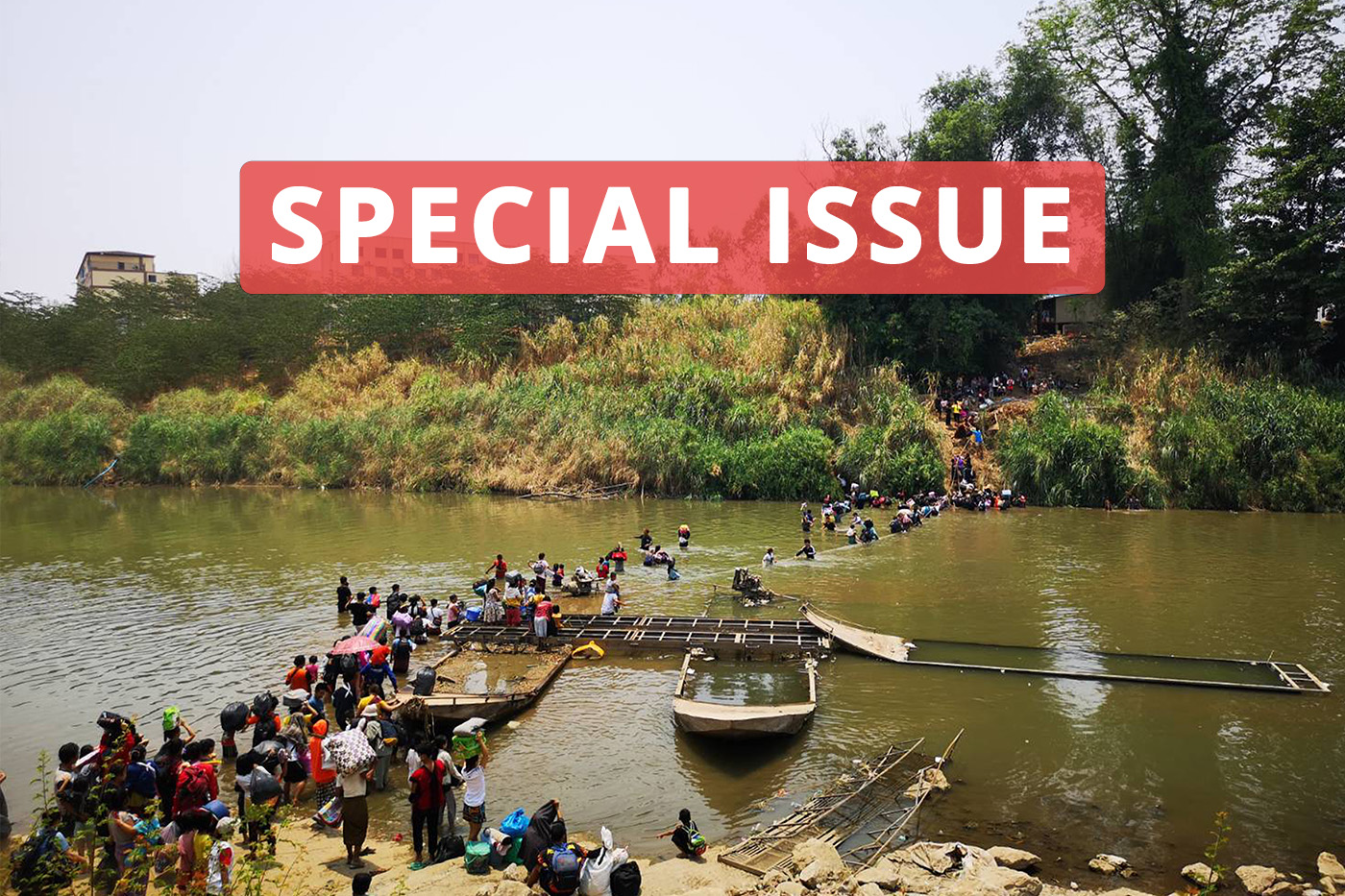
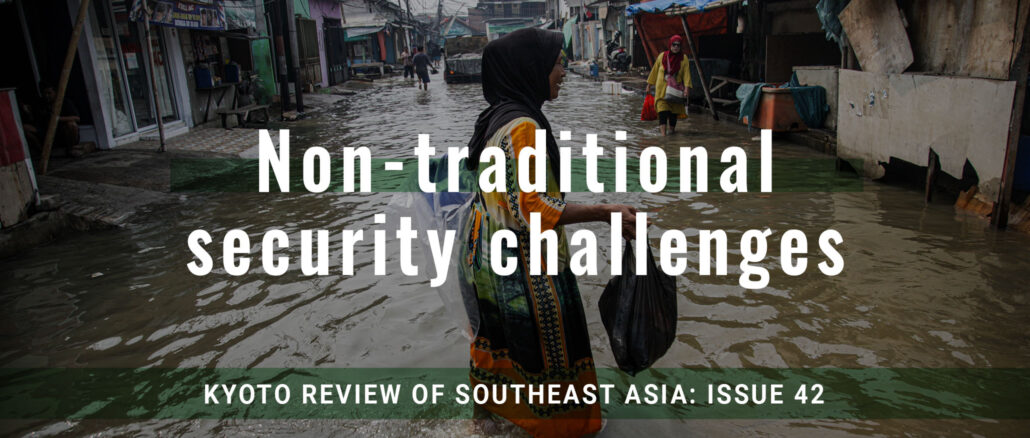
While more recognizable forms of human insecurity take center stage in Southeast Asia, such as lingering civil war in Myanmar, political fragility and strained relations between Thailand and Cambodia, no less problematic insecurities have emerged in the region that are equally difficult to contain. This issue of the Kyoto Review examines several cases of non-traditional security concerns, from the grave threats posed by climate change, the proliferation of scam operations in Myanmar and Cambodia, terrorism and religious intolerance, and more. The scope of non-traditional security challenges have grown, evidenced recently in the catastrophic damages caused by the COVID-19 pandemic, where border closures for health and security purposes had wide ranging impacts on the region’s long-term economic outlook. [...]

Mark S. Cogan

Virgemarie A. Salazar

Previous Issue #41

  • The Indonesian left has always been on the defensive when it comes to the production of history. Though it is commonplace to associate anticommunism most strongly with the 32 years of Suharto’s Orde Baru or the New Order Regime (1966-1998), such a deep-seated political view has long been presupposing the Indonesian state and society since the late colonial period. Anticommunism has manifested itself in different guises throughout the last century, from the Dutch counterinsurgent police (Shiraishi 2021) to the sanctioned maturation of the army during Soekarno’s Guided Democracy (Roosa 2020, Ch.1) and the manufactured fear of the rise of communism (kebangkitan PKI) in the contemporary Reformasi period (Estrelita 2024). Immediately after the suppression of the Prambanan Revolt in 1926/27, the Madiun Affairs in 1948, and the Genocide in 1965/66, leftist ideas were systemically exterminated alongside and along with dead revolutionary bodies (Lane 2009; Wahid and Novianto 2017). Imagine how much more we would have learned about Indonesian peoples’ history if [...]
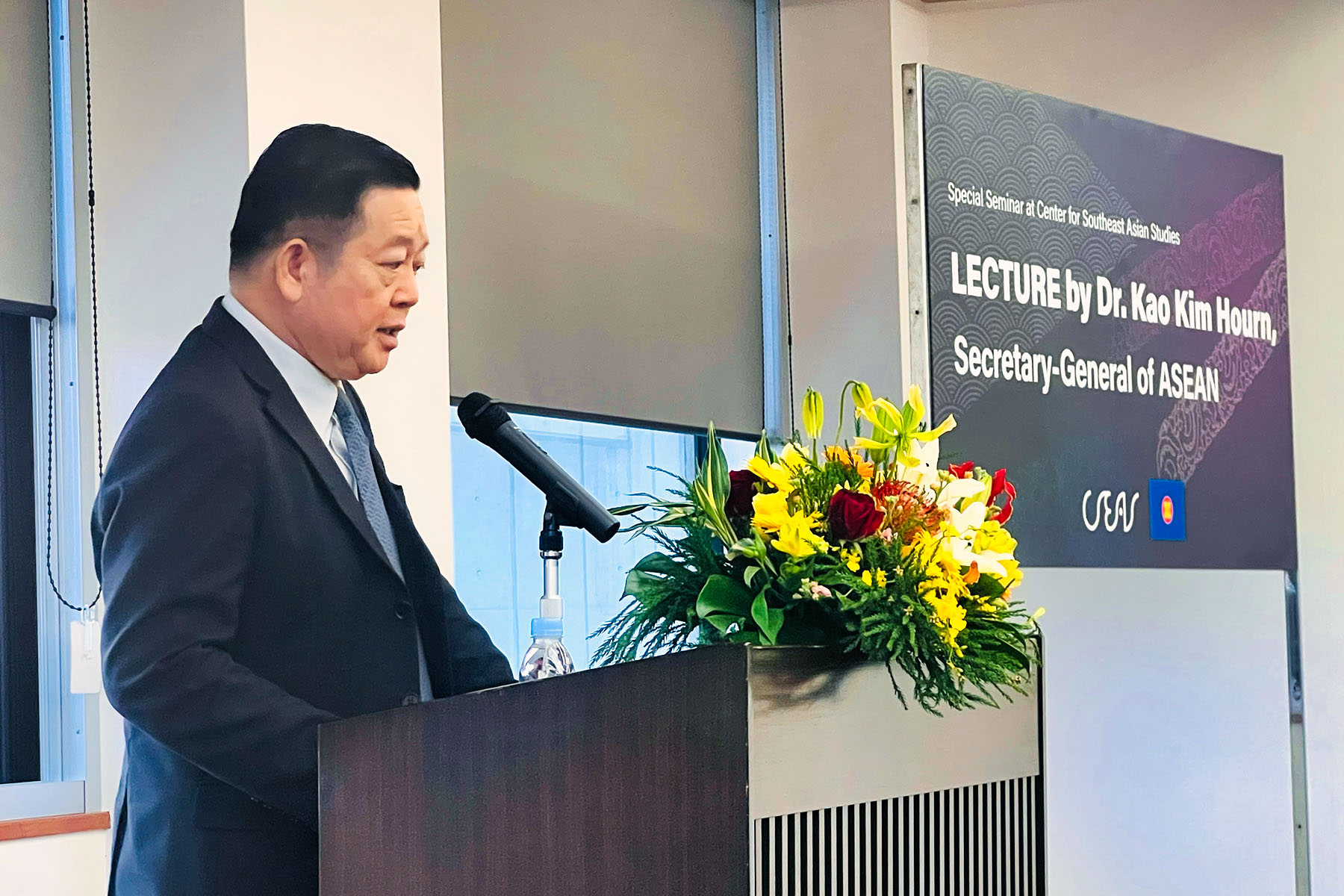
  • Dr Kao Kim Hourn, ASEAN Secretary-General, on the Relevance of ASEAN

    Dr Kao Kim Hourn, ASEAN Secretary-General, on the Relevance of ASEAN

    On behalf of the Center for Southeast Asian Studies (CSEAS) and as the editor of the Kyoto Review of Southeast Asia, Pavin Chachavalpongpun, professor at CSEAS, interviewed Dr. Kao Kim Hourn, ASEAN’s Secretary-General, on the topic, “Is ASEAN Still Relevant?” The interview was conducted on 19 December 2024 during which time Dr. Kao was invited to give a lecture on the said topic at CSEAS. [...]

Guest Editor’s Introduction – Decha Tangseefa, CSEAS

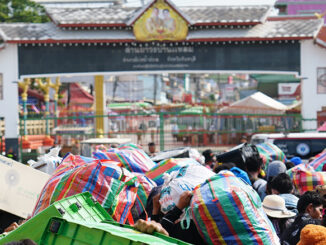
A border is a “contact zone” of people, culture, and capital. In an area like the Thai-Myanmar border, disease must also be included, as tuberculosis, drug-resistant malaria, and other illnesses have been prevalent since long before COVID-19 raged across the world. These transnational forces entwine and tremendously complicate the spaces in-between the two nation-states. As Burma/Myanmar has witnessed far more protracted armed conflicts than unarmed negotiations since its independence in 1948, this border region has become a space where hundreds of thousands have had to endure manifold sickness due to their marginal positionalities either as displaced peoples or voluntary migrants, many of whom become sources of unskilled or low-skilled cheap labor in Thailand. […]

Trendsetters

Revisiting Civil–Military and Gender Relations in Top Positions of Indonesia’s Ministry of Defense

by Stefanie Thamrin, & Wendy Prajuli in Issue 42 Mar. 2026

Since its independence in 1945, Indonesia has had only 16 civilian ministers of defense, and 12 of them served during the 1945-1965 era. Meanwhile, during the 1965-1998 era, all defense ministers were members of the military, both active and retired. Now, for more than a decade, the Indonesian Ministry of Defense has once again been led by retired military generals rather than civilians, as in its predecessors. Where the Ministry’s existence was supposedly meant to serve as civilian control [...]
Trendsetters

The Sovereignty Straitjacket: Cambodia-Thailand Relations, Withdrawal from Memorandum of Understanding 2001 and Regional Security

by William J. Jones & Narut Charoensri in Issue 42 Mar. 2026

The current Thai government, led by Anutin Charnvirakul and his Bhumjaithai Party, secured a resounding electoral victory in February 2026. Bhumjaithai significantly increased its parliamentary representation from 71 seats in 2023 to 192. Its constituency vote doubled from 5 million to nearly 11 million, while [...]

Book Reviews

UA-21469080-8