


Preparing for Virtual Job Interviews in Immersive Work Environments
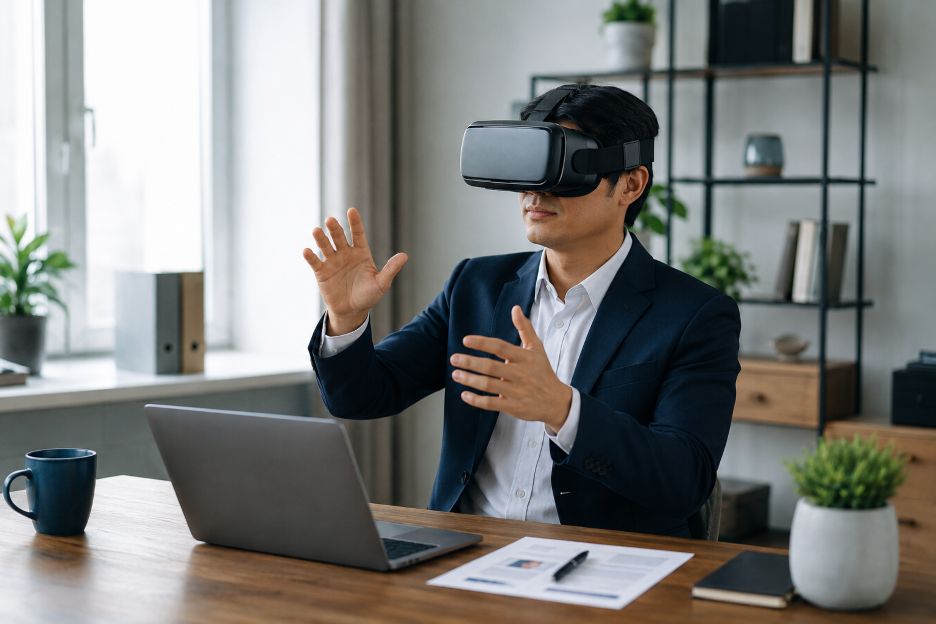
Virtual worlds are being developed for work, learning, collaboration, and skills practice. The European Commission identifies employment and training among their practical uses, while also raising accessibility, privacy, and worker-rights questions. An immersive interview changes the setting, but it does not erase the need for accurate qualifications, relevant examples, and clear communication.
Preparation begins before a headset is switched on. Candidates still need a resume aligned with the vacancy, strong examples, and a portfolio available outside the simulation. AI-based tools like Reztune can assist with tailoring a resume before a virtual interview, but every edit should match the person’s real experience. An OECD review warns that gaming automated screening or inserting fictitious details can weaken trust.
Traditional Preparation Versus Immersive Preparation
A conventional plan covers employer research, role analysis, rehearsed answers, suitable clothing, and equipment tests. Those steps remain useful in VR. Candidates may also need to navigate a three-dimensional space, control an avatar, handle virtual objects, respond to spatial audio, or complete a simulated task while speaking.
That layer makes technical rehearsal important. Learn the controls, confirm headset comfort, test internet stability, charge devices, set safe boundaries, and close distracting applications. Join early to correct tracking or audio problems. Identify any desktop alternative and keep the recruiter’s contact details nearby.
Behavioral rehearsal also changes. Traditional practice emphasizes eye contact, voice, posture, and answer structure. VR may expose turn-taking, orientation toward speakers, object use, and reactions during a scenario. PwC‘s soft-skills study found greater focus and emotional connection in VR than in classroom or e-learning formats. It studied training, however, not hiring outcomes.
What Each Format Can Reveal
Traditional interviews are efficient for discussing employment history, motivation, judgment, and role knowledge. They are familiar to most applicants and generally require less specialized equipment. However, answers can stay abstract. A polished account of teamwork does not always show how someone collaborates when priorities shift.
An immersive assessment can place candidates in a realistic activity, such as presenting to a client or responding to a service problem. Peer-reviewed research indexed by the U.S. National Library of Medicine has evaluated VR job-interview training, showing that simulated practice can be studied as a structured method.
Yet motion sensitivity, disability, limited hardware, unfamiliar controls, or poor connectivity may affect performance. The U.S. Equal Employment Opportunity Commission cautions that software and automated assessments can create disability-related barriers. Candidates needing adjustments should ask early about accessible controls, captions, a seated mode, or an equivalent non-VR assessment.
Resumes, Portfolios, and Digital Identity Still Matter
An avatar may shape an impression, but it cannot replace evidence. A resume records roles, accomplishments, education, and skills. A portfolio provides deeper proof through samples, case studies, code, presentations, or project outcomes. The OECD‘s 2025 skills-first report describes resumes, assessments, professional networks, and digital credentials as complementary signals.
Keep these materials consistent. Dates and titles should agree across the resume and profiles. Portfolio items should identify the problem, personal contribution, process, and verifiable result. Prepare lightweight files for virtual displays, but send an accessible web or PDF version beforehand so evidence remains available if the platform fails.
Digital identity requires judgment. Choose an avatar, display name, voice setting, and background that follow instructions without misrepresentation. Before using an unfamiliar platform, reviewing community feedback on immersive experiences may help candidates identify recurring concerns involving comfort, controls, tracking, and usability. Keep personal information out of usernames and room captures. Ask whether the session is recorded, what behavioral data is collected, who can access it, and how long it is retained.
A Practical Combined Checklist
- Tailor and fact-check the resume against the job description.
- Select two or three portfolio examples that demonstrate required skills.
- Prepare concise situation, action, and result stories.
- Practice movement, object handling, audio, and avatar controls.
- Test hardware, connection, boundaries, comfort, and an alternative access method.
- Confirm assessment rules, recording practices, accommodations, and recruiter contacts.
Where AI and VR May Meet
Future hiring systems may combine AI-assisted document preparation with immersive simulations that let candidates demonstrate selected abilities. AI could help organize evidence, generate practice questions, or offer feedback, while VR could provide a setting for rehearsing conversations and job tasks. The EEOC notes that automated systems are increasingly involved in recruitment and hiring, which makes transparency, human oversight, accessibility, and bias testing essential.
The strongest preparation strategy is therefore blended. Candidates should preserve the disciplined research and truthful documentation used for conventional interviews, then add platform fluency, spatial awareness, privacy checks, and contingency planning. Immersion may make an interview feel more lifelike, but sound hiring should still connect every digital interaction to relevant job requirements. Candidates should therefore judge each new feature by a practical question: does it help employers understand relevant ability while giving every applicant a fair, accessible, and clearly explained opportunity to demonstrate that ability? AI and VR can complement human judgment when they clarify skills and expand practice, rather than becoming substitutes for evidence, fairness, or a genuine conversation.
How RL Boosting is Evolving in Virtual Reality?
As gaming transitions into more immersive environments, virtual reality (VR) is reshaping not only how players experience games, but also how services like RL boosting is delivered. Traditional boosting models are more focused on rank climbing, level progression, or unlocking achievements. All of which are consistently evolving to meet the demands of spatial interaction, real-time engagement, and skill-based gameplay.
In VR ecosystems, boosting is no longer just about outcomes. It is increasingly about experience, participation, and guided improvement within fully interactive digital worlds.
From Passive Progression to Active Participation
When compared to conventional games, boosting often involves a degree of passivity. Players have the ability to outsource progression tasks, allowing a third party to handle gameplay while they receive the results. By integrating this model, it works in environments driven by inputs like mouse clicks and keyboard commands.
By incorporating VR on the other hand, this changes the whole dynamic.
Because gameplay relies on physical movement, spatial awareness, and real-time interaction, boosting becomes a more collaborative process. Instead of handing over control, players remain present in the environment, actively engaging while receiving assistance.
This movement transforms boosting from a transactional service into a shared experience, where progress is achieved through participation rather than delegation.
Skill-Based Assistance in Immersive Environments
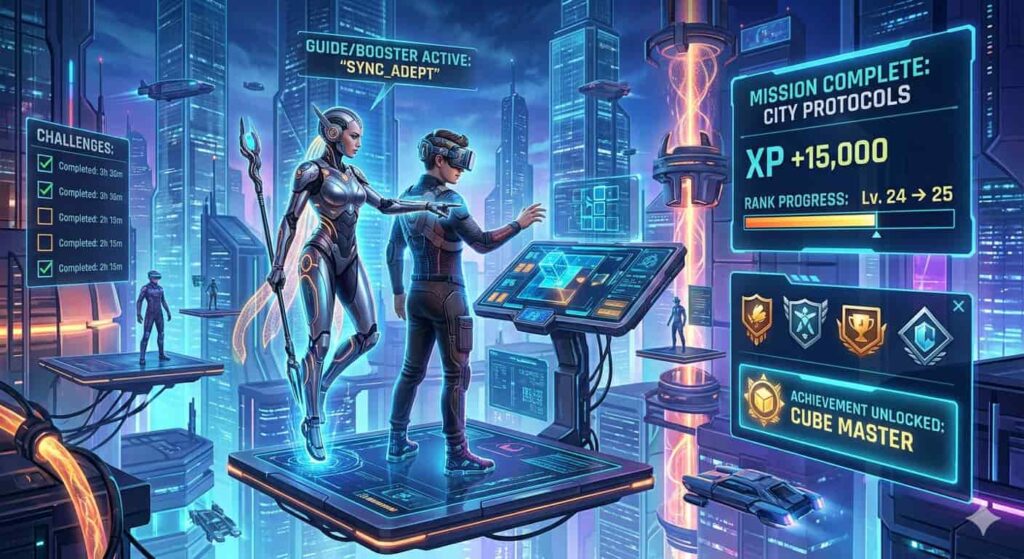
One of the most significant changes VR introduces is the emphasis on skill development. In immersive games, success often depends on coordination, timing, and environmental awareness. All of these are skills that cannot be easily replicated or transferred through traditional boosting methods. As a result, boosting in VR extends into areas such as real-time coaching within the game environment, guided walkthroughs for complex challenges, cooperative gameplay sessions with experienced players, hands-on demonstrations of techniques and strategies and many more.
This approach accelerates learning while preserving engagement. Players are not just progressing, they are improving their capabilities within the game.
Technical Demands and Infrastructure Challenges
VR environments introduce new layers of technical complexity that directly impact boosting services. Unlike traditional setups, VR relies on:
- Motion tracking systems
- High frame rate rendering
- Low-latency network connections
- Synchronized user presence
Any disruption such as lag or tracking inaccuracies, can significantly affect gameplay quality. For boosting providers, this means that infrastructure must be more robust and responsive. Coordinating sessions in VR also requires precise timing and system compatibility between users. Ensuring stable connections and synchronized interactions becomes essential for delivering consistent results.
These technical demands elevate the operational standards of boosting services, requiring advanced systems and careful execution.
The Rise of Collaborative Boosting Models
VR naturally encourages collaborative boosting models, where players and service providers interact within the same virtual space. Instead of a one-sided service, boosting becomes a cooperative effort. Because by implementing this model, it makes it possible for:
- Experienced players guide others through challenges in real time
- Teams work together to complete objectives
- Learn and progress happen as a team
This approach aligns with the social nature of VR, where presence and interaction are central to the experience. It also reduces concerns related to account sharing, as players maintain control while receiving assistance. Collaborative boosting represents a shift toward integration rather than substitution, blending support with active gameplay.
Redefining Value in Next-Generation Boosting
As VR continues to evolve, the definition of value in boosting services is changing. Traditional metrics such as rank or level, remain relevant, but they are no longer the sole indicators of success. In immersive environments, value is also measured by a number of things similar to skill acquisition and improvement, efficiency in learning complex mechanics, quality of interaction and guidance, overall gameplay experience.
This broader perspective reflects the unique nature of VR, where progression is deeply tied to player ability and engagement.
A New Era of Immersive Support
Virtual reality is pushing the boundaries of what game boosting can be. By introducing spatial interaction, real-time collaboration, and skill-based progression, it transforms boosting from a background service into an integral part of the gameplay experience.
As the industry adapts, providers must embrace more interactive and technically sophisticated models. Players, in turn, benefit from a more engaging and educational approach to progression. In this next-generation landscape, boosting is no longer just about reaching the destination, it is about enhancing the journey within immersive digital worlds.
How VR Startups Use Reddit Communities to Test Immersive Experiences
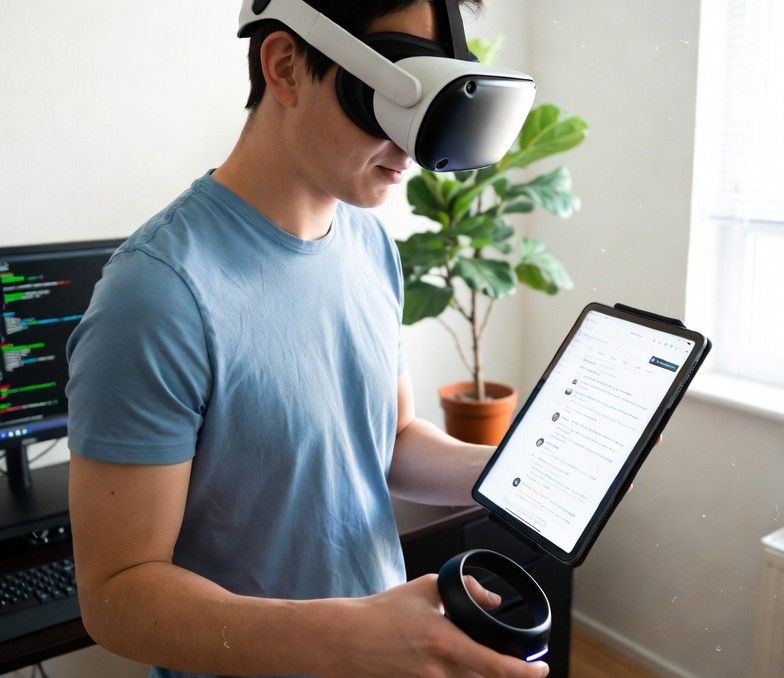
More than 430 million people visit Reddit each month, and many of them gather in niche tech communities where early hardware and software get dissected in detail, according to the Pew Research Center. Virtual reality developers have learned something interesting from that behavior. The most honest product testers are often hiding in comment threads, debating frame rates, complaining about motion sickness, and arguing about controller tracking like it is a competitive sport.
Startups building immersive technology are paying attention. Many quietly study Reddit discussions or introduce prompts to spark conversation. Some even experiment with tools such as a reddit comment service to distribute questions across relevant VR communities and observe how enthusiasts react. It sounds unusual at first. Yet for small companies without large testing budgets, structured discussion across multiple subreddits can reveal the kind of blunt feedback that polished focus groups rarely provide.
Why VR Communities on Reddit Matter
Virtual reality attracts a particular type of enthusiast. These users follow headset releases like sports fans follow championships. They compare tracking algorithms, benchmark GPUs, and share lengthy impressions after testing even the smallest demo.
Subreddits dedicated to VR topics often function like informal research labs. Communities such as those discussing standalone headsets, PC-VR setups, or experimental locomotion systems constantly evaluate new experiences. A short gameplay clip can trigger hundreds of comments dissecting latency, comfort, and immersion.
Developers who spend time reading these threads quickly realize something important. Reddit users rarely sugarcoat their opinions. If a headset strap feels awkward, someone will say it. If a game mechanic causes nausea after ten minutes, someone else will write a three-paragraph breakdown explaining why.
Conversations about moderation and visibility also appear often, especially when users wonder whether they’ve been shadowbanned in VR communities, a situation where posts or interactions quietly lose visibility without clear notification, a moderation approach sometimes used by online platforms to manage behavior and reduce disruptive activity. For VR startups studying community reactions, these discussions reveal how users experience both the technology and the platforms surrounding it.
For VR startups, that honesty is gold.
Turning Comment Threads Into Early Testing Grounds
Traditional game testing often happens behind closed doors. Small test groups play unfinished builds while researchers take notes. The process works, but it is limited. A dozen testers cannot replicate the range of hardware setups and play styles found in the real world.
Reddit communities fill that gap.
Developers sometimes post discussion prompts before launching demos. Questions like “How long should a VR puzzle session last?” or “Would hand tracking change how you play?” quickly attract thoughtful responses. Some users share detailed feedback based on years of VR use.
A startup founder once described this process in a forum thread as “crowdsourced curiosity.” One user suggests a mechanic, another criticizes it, and suddenly the developer has a mini design debate happening in real time.
That kind of organic feedback is difficult to manufacture in a controlled testing environment.
Sparking Conversations Across Multiple VR Subreddits
Timing and reach matter when developers seek feedback online. A single post can easily disappear in a busy subreddit. That is why some startups coordinate conversations across several VR communities simultaneously.
Discussion prompts may focus on specific technical questions. Motion tracking accuracy. Controller ergonomics. How long players tolerate artificial locomotion before discomfort appears.
Platforms that manage Reddit engagement sometimes help distribute these prompts using established accounts that already understand community etiquette. The idea is not to spam threads, which Reddit users dislike immediately. The goal is to start conversations that feel natural and relevant to the audience.
When the discussion flows, valuable insights appear quickly. Someone compares headset balance during long sessions. Another user posts a workaround for tracking drift. A third explains why a mechanic feels intuitive or awkward.
Developers quietly take notes.
How Community Feedback Shapes VR Products
Consumer expectations for VR change rapidly. Comfort, visual clarity, and intuitive controls matter more every year. Reddit discussions often reveal these shifts before formal market reports do.
For example, many players began pushing for lighter headsets and better airflow after long play sessions caused discomfort. These concerns appeared repeatedly in forum conversations long before major manufacturers emphasized ergonomics in their marketing.
Independent developers watch those patterns closely. A thread discussing controller fatigue might inspire a redesign. A conversation about immersion could lead to improved sound design or smoother locomotion.
Feedback gathered through community discussions, including insights surfaced by organized Reddit comment services, helps developers refine ideas early in production. Fixing problems at that stage is far cheaper than patching them after launch.
And sometimes the community surprises everyone. One small VR studio reportedly changed a game mechanic entirely after Reddit users suggested a simpler interaction method. The final version felt more natural and received far better player reviews.
The Power of Community-Driven Development
Virtual reality still feels like a frontier industry. New headsets appear regularly. Experimental mechanics rise and fall. Developers are still figuring out what truly feels immersive.
That uncertainty makes community insight incredibly valuable.
Reddit functions as a giant brainstorming room where enthusiasts share experiences, frustrations, and creative ideas. For startups trying to build the next compelling VR experience, those conversations are difficult to ignore.
Tools that help organize engagement, including specialized Reddit comment service platforms, simply amplify what already exists. They bring developers closer to the people who actually spend hours exploring virtual worlds.
And if history is any indication, the next breakthrough in VR design might start with a casual Reddit thread, a few passionate commenters, and a developer quietly reading every reply.
Sometimes the best research lab is a comment section.
SAP Partner Experts bring ERP Systems and VR Techs in Easier to Understand Concept
Understanding enterprise resource planning systems can often feel abstract. Diagrams, documentation, and process maps describe how data moves, but they rarely convey how the system behaves as a living environment. Seeking the services of a SAP partner expert offers a more intuitive perspective. Instead of observing ERP from the outside, organizations are invited to step inside the system, exploring workflows and data relationships as if navigating an immersive digital space.
Expert SAP partners function much like VR guides. They help organizations move beyond surface-level configuration and experience how enterprise processes interact in real time. This shift in perspective transforms ERP learning from a theoretical exercise into an experiential one, where complexity becomes navigable rather than overwhelming.
Visualizing Workflows in 3D
Virtual reality excels at making complex structures understandable by placing users within them. Similarly, SAP experts translate layered business processes into visual, interactive models. Financial postings, supply chain movements, and approval workflows are no longer isolated transactions, they become interconnected pathways that can be explored and optimized.
Through process modeling and system visualization, SAP partners help organizations see how a change in one area affects the rest of the system. Bottlenecks, redundancies, and inefficiencies emerge clearly when viewed as part of a three-dimensional flow rather than a static chart. This approach supports better decision-making and fosters a deeper understanding of how ERP drives daily operations.
Simulation as a Tool for Safe Exploration
One of virtual reality’s greatest strengths is simulation. Users can test scenarios without real-world consequences. SAP partners apply the same principle through system simulations and sandbox environments. Before changes go live, organizations can explore new workflows, integrations, or configurations in controlled settings.
These simulations allow teams to experience outcomes rather than predict them. Performance impacts, data dependencies, and user interactions can be observed firsthand. SAP experts guide organizations through these environments, helping them understand not only what changes are possible, but how those changes will feel in practice.
Interactive Learning and User Engagement
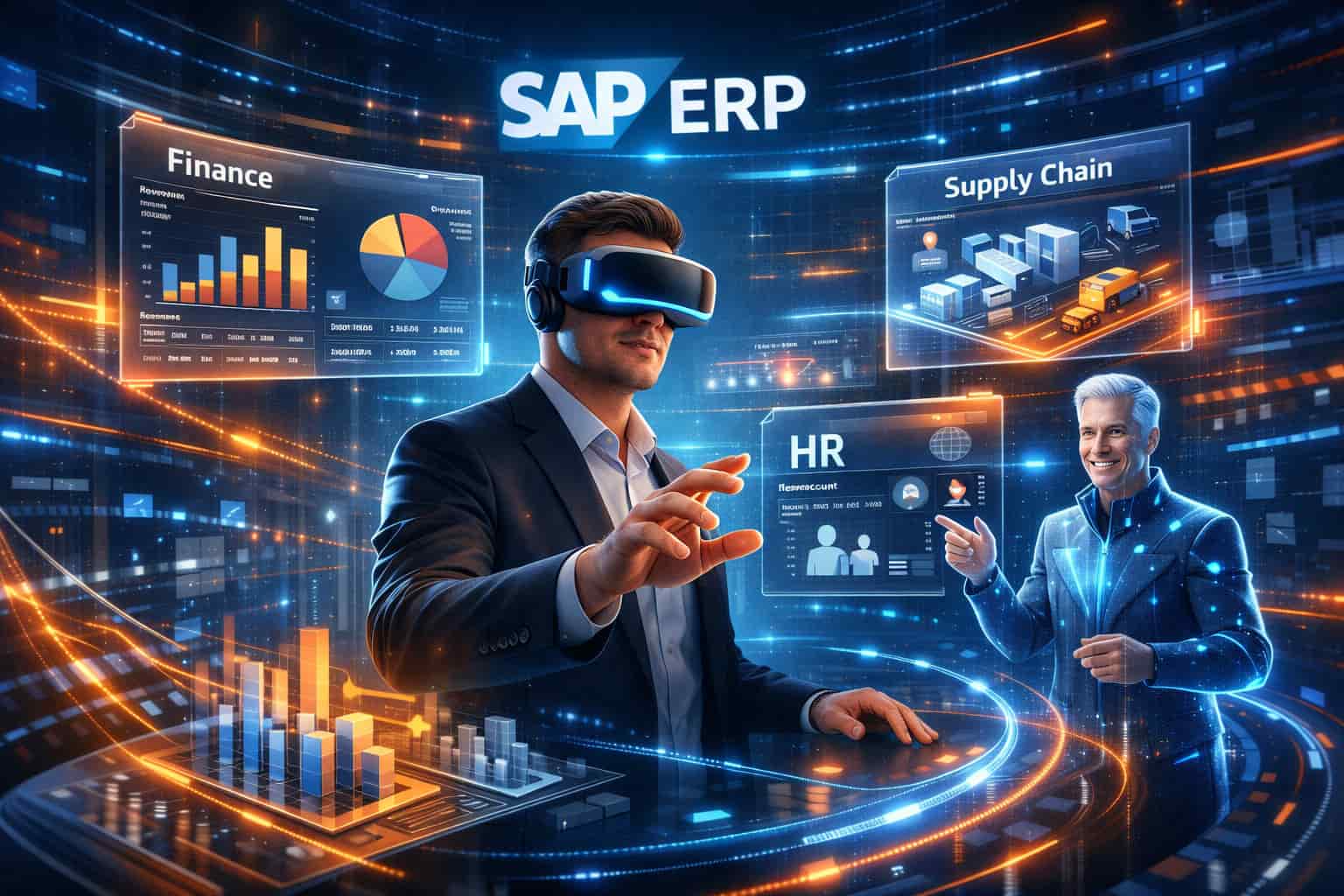
Traditional ERP training often relies on manuals and step-by-step instructions. While necessary, these methods can struggle to convey context. A VR-inspired approach emphasizes interaction. SAP partners encourage hands-on engagement, allowing users to navigate processes, explore data paths, and experiment with system behavior.
This interactive learning model accelerates adoption and reduces resistance to change. Users develop spatial awareness of how their roles fit into the larger system. By making ERP tangible and intuitive, SAP experts help organizations internalize best practices rather than simply follow procedures.
Optimizing the System from the Inside Out
Virtual reality environments are not static; they evolve as users interact with them. The same is true for ERP systems. Once organizations step inside their SAP environment, optimization becomes an ongoing process.
SAP partners analyze system behavior from within, identifying opportunities for performance tuning, process simplification, and integration improvement.
This inside-out perspective ensures that enhancements align with real operational needs. Instead of reacting to isolated issues, organizations gain a holistic view of system health. SAP experts use this insight to guide continuous improvement, ensuring that ERP remains responsive as business demands change.
Virtual Reality and Why You Might Be Shadowbanned
 Virtual reality has come a long way. It lets people step into digital spaces and feel like they are part of the scene. Many enjoy VR for gaming, training, fitness, social events, and workrooms. But as VR platforms grow, so do questions about safety, moderation, and user visibility. One of the most common concerns online users have today is: why am I shadowbanned? This topic has become even more relevant as VR communities become more active.
Virtual Reality in Simple Terms
Virtual reality is a digital environment you can step into using a headset. It creates the feeling that you are inside a new world. You can walk around, interact with objects, talk to people, and play games.
VR is now used in many fields:
- Entertainment: Games, virtual concerts, meet-ups.
- Education: Simulations for science, engineering, medical training.
- Business: Workrooms, design previews, training.
- Fitness: VR workouts and guided programs.
- Social Spaces: Virtual hangouts where people talk and meet.
The idea is simple. Instead of watching a screen, you enter a space that reacts to your movement. This creates a sense of presence that standard devices cannot match.
But because VR is so immersive, platforms must manage user behavior more closely. This brings us to content control and moderation systems, which often lead to shadowbans.
What Shadowbanning Means
A shadowban is a form of moderation that limits your visibility without sending a direct notice. You can still use your account, but fewer people see your posts, comments, or interactions. In VR platforms, this may look different because the environment is interactive.
Some signs of a shadowban include:
- You speak in a VR space, but fewer people respond.
- Your avatar or messages do not appear for some users.
- Your posts in VR communities get no views or engagement.
- You can join rooms, but users seem unaware of your presence.
Shadowbanning is used to reduce harmful or disruptive behavior without removing the user completely. It is often automated and triggered by certain actions, patterns, or reports.
Common Reasons You May Be Shadowbanned
Many people think they are shadowbanned for no reason. In reality, it often comes from platform rules that you may not be aware you triggered. Here are the most common causes in simple terms:
1. Violating Community Guidelines
VR platforms want users to feel safe. This means rules cover speech, behavior, gestures, and even movement patterns. Breaking these rules can lead to a shadowban instead of a full ban.
Examples include:
- Using offensive or harmful language
- Harassing another user
- Making threats or inappropriate gestures
- Sharing restricted content
- Even one strong report from other users can trigger temporary visibility limits.
2. Automated Moderation Flags
VR systems often use AI to monitor behavior. If the system detects something unusual, it may restrict your account for review.
Automated flags may happen because of:
- Sudden high activity
- Repeating the same actions
- Spamming voice chat
- Using modified software or exploits
You may not even know you triggered a system alert until your visibility drops.
3. Technical Glitches
Not all shadowbans are real bans. Some are the result of platform bugs.
Glitches can make it seem like you are banned when you are not:
- Sync issues in VR rooms
- Voice server problems
- Network delays
- Avatar visibility bugs
These can cause you to appear invisible to others.
4. Regional Restrictions
Some VR spaces limit visibility based on region for safety or policy reasons. If your area has restrictions, you may notice smaller interaction pools.
5. Reports from Other Users
Even a few reports can lead to temporary moderation. Many VR platforms act first and review later to avoid risks.
Reports can come from:
- Users who disagree with you
- Groups that do not want you in a space
- Mistaken identity
- Automated systems misreading behavior
This is one of the most common triggers for shadowbans.
How to Check If You’re Shadowbanned
VR platforms do not always notify you, but there are simple steps to confirm what is happening:
- Join different VR rooms and see if the issue persists.
- Ask trusted friends if they can see or hear you.
- Test posting content and track engagement.
- Log out and back in to see if it resets the system.
- Try another device or connection.
- Review your recent activity and check if anything might trigger moderation.
If none of these steps help, the platform may have enforced a quiet restriction on your account.
What You Can Do About It
If you suspect a shadowban, you can take the following steps:
1. Stay Calm and Review Guidelines. Many shadowbans are temporary. Review the platform’s rules to see if you may have broken a guideline.
2. Contact Support. Submit a ticket and explain your situation. Keep the message simple and direct. Many platforms will review your account and lift the shadowban if it was an error.
3. Avoid Repeating Actions That Trigger Flags. Slow down your activity for a while. Avoid high-volume actions.
4. Update Your Software. Make sure your VR apps and headset are up to date to avoid false triggers.
5. Reset Your Network Settings. Some issues are tied to unstable connections.
Taking these steps can help you return to normal visibility.
Why VR Needs Moderation
Virtual reality is more personal than standard social media. People can speak, move, and interact in ways that feel real. Because of this, platforms must protect users from harm or discomfort. Shadowbanning is one method to keep spaces safe while reviewing potential issues.
Moderation creates a smoother, safer experience, but it must also be fair. Many users want more transparency, and VR companies continue to adjust how they handle these systems.
Page Creation Service for Wikipedia and the Expanding Impact of Virtual Reality
In a world shaped by rapid technological evolution, information and immersion go hand in hand. A page creation service for Wikipedia plays a vital role in documenting technological progress, offering credible and accessible information about new innovations like Virtual Reality (VR). As this immersive technology evolves, accurate and up-to-date online content becomes crucial to help people understand its global influence. Wikipedia pages crafted with precision ensure that verified knowledge about VR’s applications, history, and milestones remains publicly available and factually consistent.
When maintained by experts, a page created for Wikipedia not only safeguards digital credibility but also mirrors VR’s mission, to make complex experiences easily accessible to everyone.
Beyond Entertainment and Gaming
Initially, Virtual Reality was synonymous with gaming. However, its potential has since transcended entertainment, branching into education, healthcare, architecture, and even therapy. In classrooms, VR allows students to explore historical sites or conduct virtual science experiments without physical boundaries. Medical professionals use VR to simulate surgeries, improving training precision and patient outcomes. The technology has evolved from a niche gadget into a tool that redefines how humans interact with data, space, and emotion.
How a Page Creation Service for Wikipedia Keeps Innovation Documented?
The evolution of VR deserves accurate chronicling. Through a Wikipedia page, technological breakthroughs are recorded with reliable sources and structured narratives that foster global understanding. Much like VR enhances the way users experience information,
Wikipedia ensures that such knowledge remains free and unbiased. The structured, citation-driven process used in page creation mirrors the precision required in coding immersive environments.
Rise of VR in Communication and Collaboration
VR’s capacity to replicate real-world interactions is reshaping communication. Virtual meetings, 3D social platforms, and immersive workspaces now allow people from different continents to collaborate as if they were side by side. This transformation breaks down geographical barriers, enabling inclusivity and emotional connection beyond video calls. The accessibility of these environments depends not only on technology but also on the availability of verified resources that explain their functionality.
Revolutionizing Industries through Immersive Design
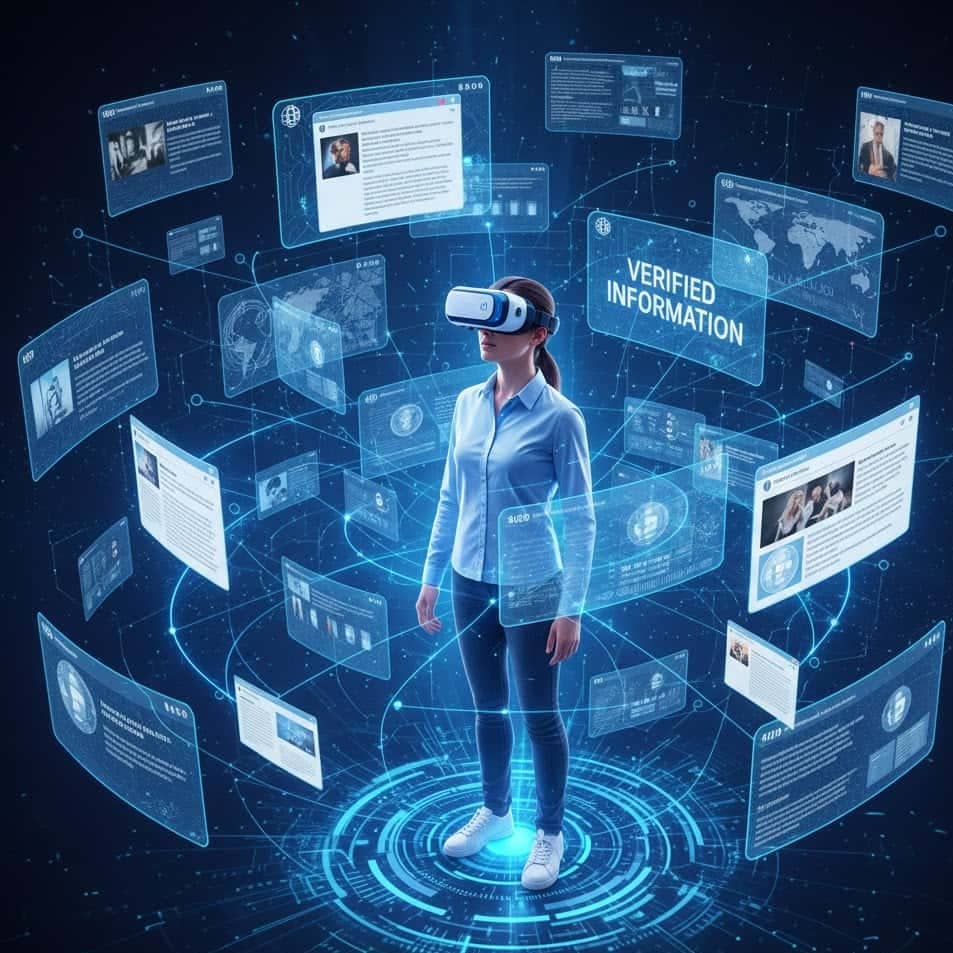
From real estate walkthroughs to automotive prototypes, VR has revolutionized how industries present and test products. Businesses can visualize outcomes, make data-driven decisions, and minimize costly trial-and-error processes.
In tourism, users can explore destinations before booking flights, while artists can sculpt, paint, and compose in fully immersive studios. The applications continue to expand as hardware improves, leading society toward a more interactive, sensory-driven digital age.
Virtual Reality and the Reimagining of Human Experience
At its core, VR is changing the way humans perceive reality itself. It offers empathy-driven experiences, such as simulating life in another person’s perspective or recreating cultural moments otherwise lost to time.
As VR continues to influence global culture, technology, and psychology, ensuring the documentation of its evolution through trusted digital archives remains crucial. The synergy between innovation and information, between immersive experience and credible documentation, continues to define how the modern world learns, connects, and grows.
The Role of Buying YouTube Views in Amplifying Virtual Reality Live Streams
One of the newest and most captivating digital media formats is virtual reality live streaming. VR enables users to be “present” with the video content in a way that is impossible with traditional video formats.
VR live videos can be in the form of video game presentations, live virtual events, and VR product demonstrations. However, it is difficult to obtain audience engagement in any virtual meeting without pre-event promotion.
More VR-focused creators view purchasing YouTube video views as a way to promote their live videos.
Live VR Stream Challenges
Live VR streams are unique because of their niche audience and because they are time-bound and technically difficult. Depending on the views that the stream has attained, the YouTube and TikTok algorithms ignore (or recommend) a stream.
Virtually everyone bypasses a virtual reality stream with only a handful of views. Creators adjust to the changes in the algorithms with the help of YouTube virtual reality streams that aim to gain visibility.
Why Virtual Reality Streams Appreciate Engagement Momentum
Social proof typically serves as the basis of virtual reality streams. People are more inclined to join an interactive virtual reality stream if they observe many customers interacting with it.
Buying YouTube views, when done responsibly, sets an initial momentum. Quality and innovation are still paramount, but they are complemented to ensure well-made virtual reality streams do not get lost under negative algorithmic dye.
For virtual reality stream developers, educators, and hosts, this momentum is the difference between an interactive live stream and an empty live stream with no comments or shares.
Enhancing Viewer Interaction and Retention
Live streams, as opposed to recorded videos, depend more on real-time engagement. When view counts rise early, streamers often notice increased chat participation and extended stream durations.
For virtual reality live streams, this effect is especially important, as it is often the case that audience input is used to modify the virtual reality experience as it happens.
We extend more invitations to join the stream, thereby encouraging more participants to do so. This is an engagement cycle that is mutually beneficial to the audience and streamer.
Even for creators of new virtual reality channels or untapped formats, buying YouTube views can act as a catalyst to alleviate the challenges of starting a new YouTube streaming channel.
ALSO READ: Virtual Reality and Why You Might Be Shadowbanned
Ethical Use and Long-Term Growth
Buying YouTube views is most effective when incorporated into ethical content strategies. Virtual reality creators who offer visibility support and combine authentic promotion, solid storytelling, and technical reliability tend to achieve better outcomes over time.
The goal is discoverability, not artificial inflation. When used in conjunction with organic traffic sources (e.g. social media previews, community announcements, and cross-channel collaborations), purchased views can assist VR live streams in reaching people who appreciate immersive content.
A Tool for the Future of Immersive Media
As virtual reality continues to intersect with the fields of education, entertainment, and business communication, live streaming will become even more critical.
Customarily, buying YouTube views has been considered a tactical option for amplifying experiences during launch windows.
For creators who prioritize innovation and audience value, purchasing YouTube views is just one element in a comprehensive growth strategy to guarantee the visibility of immersive moments.
The Ethics of Virtual Reality Simulations
The ethics of Virtual Reality (VR) simulations revolve around how immersive digital environments impact behavior, privacy, and morality. As VR blurs the line between reality and simulation, it raises important questions about responsible use and potential consequences.
Psychological Effects of Virtual Reality
Virtual Reality (VR) has profound psychological effects, both positive and negative, as it immerses users in highly realistic digital environments. On the positive side, VR can reduce anxiety, treat phobias, and help patients with post-traumatic stress disorder (PTSD) through controlled exposure therapy. It can also enhance empathy by allowing users to experience situations from different perspectives, fostering understanding and emotional connection.
Haptic Feedback and Its Importance in VR Interaction
Haptic feedback is a technology that simulates the sense of touch in Virtual Reality (VR) by applying forces, vibrations, or motions to the user. It enhances immersion by allowing users to feel physical sensations, such as the texture of objects, resistance when pressing buttons, or impact during interactions.
How VR is Revolutionizing Education and Training
Virtual Reality (VR) is reshaping education and training by creating immersive, interactive learning environments that go beyond traditional classrooms. By simulating real-world scenarios, VR allows students and professionals to learn through experience rather than just theory.
The Role of VR in Healthcare and Therapy
Virtual Reality (VR) is transforming healthcare by offering innovative ways to diagnose, treat, and support patients. Through immersive simulations, VR enables realistic training for medical professionals, allowing them to practice surgeries or emergency procedures in a safe, controlled environment.
In therapy, VR is used to treat conditions such as phobias, PTSD, and anxiety through exposure therapy in virtual environments, helping patients confront fears in a safe space. It also aids in physical rehabilitation by providing interactive exercises that motivate patients and track progress in real time.
Optimizing User Experience in Virtual Reality
Optimizing user experience (UX) in Virtual Reality is essential for creating immersive and comfortable environments that keep users engaged. Unlike traditional interfaces, VR places users directly inside a 3D space, requiring careful design to ensure realism, ease of use, and physical comfort.
Introduction to Virtual Reality How It Works
Virtual Reality (VR) is a technology that creates a simulated, immersive environment where users can interact as if they were physically present in that world. By using VR headsets, motion controllers, and specialized software, users can experience 3D visuals, sounds, and even physical sensations that mimic real-world experiences.
VR works by combining hardware and software to track a user’s movements and adjust the virtual environment in real-time. The headset displays stereoscopic images, giving depth perception, while sensors and cameras track head, hand, and body movements. This seamless tracking creates the illusion of being inside a fully interactive world, allowing users to look around, move, and interact naturally.
From gaming and education to healthcare and business, VR is transforming how we learn, work, and play, bridging the gap between digital simulations and real-world experiences.


