Buy New
-52%
$10.04$10.04
FREE delivery Friday, October 16 on orders shipped by Amazon over $35
Ships from: Amazon.com Sold by: Amazon.com
Used - Very Good
$8.25$8.25
FREE delivery October 21 - 27
Ships from: 2nd Life Books Sold by: 2nd Life Books
Download the free Kindle app and start reading Kindle books instantly on your smartphone, tablet, or computer - no Kindle device required.
Read instantly on your browser with Kindle for Web.
Using your mobile phone camera - scan the code below and download the Kindle app.

Follow the author
OK
Caste: The Origins of Our Discontents
Purchase options and add-ons
Referenced in the historic 2026 Supreme Court decision in the concurrence by Justice Ketanji Brown Jackson, who, in affirming birthright citizenship, called the Reconstruction Amendments “an anticaste, antisubordination reset for the nation.”
“An instant American classic and almost certainly the keynote nonfiction book of the American century thus far.”—Dwight Garner, The New York Times
“[Caste] changes the lens through which we see the world.”—Oprah Winfrey for Time, “25 Books That Capture This American Moment”
The Pulitzer Prize-winning author of The Warmth of Other Suns examines the unspoken caste system that has shaped America and shows how our lives today are still defined by a hierarchy of human divisions—now with a new afterword by the author.
“As we go about our daily lives, caste is the wordless usher in a darkened theater, flashlight cast down in the aisles, guiding us to our assigned seats for a performance. The hierarchy of caste is not about feelings or morality. It is about power—which groups have it and which do not.”
Beyond race, class, or other factors, there is a powerful caste system that influences people’s lives and behavior and the nation’s fate. Linking the caste systems of America, India, and Nazi Germany, Isabel Wilkerson explores eight pillars that underlie caste systems across civilizations, including divine will, bloodlines, stigma, and more. Using riveting stories about people—including Martin Luther King, Jr., baseball’s Satchel Paige, a single father and his toddler son, Wilkerson herself, and many others—she shows the ways that the insidious undertow of caste is experienced every day. Finally, she points forward to ways America can move beyond the artificial and destructive separations of human divisions, toward hope in our common humanity.
ONE OF THE BEST BOOKS OF THE YEAR: The Washington Post, The New York Times, Los Angeles Times, Boston Globe, O: The Oprah Magazine, NPR, Bloomberg, The Christian Science Monitor, New York Post, The New York Public Library, Fortune, Smithsonian Magazine, Marie Claire, Slate, Library Journal, Kirkus Reviews
Winner of the Los Angeles Times Book Prize • National Book Critics Circle Award Finalist • Winner of the Carl Sandburg Literary Award • Dayton Literary Prize Finalist • PEN/John Kenneth Galbraith Award for Nonfiction Finalist • PEN/Jean Stein Book Award Finalist • Kirkus Prize Finalist
- Print length544 pages
- LanguageEnglish
- PublisherRandom House Trade Paperbacks
- Publication dateFebruary 14, 2023
- Dimensions5.14 x 1.15 x 7.98 inches
- ISBN-100593230272
- ISBN-13978-0593230275
Explore your book, then jump right back to where you left off with Page Flip.
View high quality images that let you zoom in to take a closer look.
Enjoy features only possible in digital – start reading right away, carry your library with you, adjust the font, create shareable notes and highlights, and more.
Discover additional details about the events, people, and places in your book, with Wikipedia integration.
Frequently bought together
Customers who viewed this item also viewed
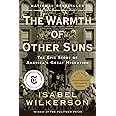
- The Warmth of Other Suns: The Epic Story of America's Great MigrationPaperbackFREE Shipping on orders over $35 shipped by AmazonGet it as soon as Friday, Oct 16
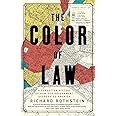
- The Color of Law: A Forgotten History of How Our Government Segregated AmericaPaperbackFREE Shipping on orders over $35 shipped by AmazonGet it as soon as Friday, Oct 16
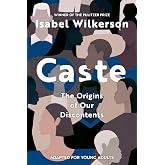
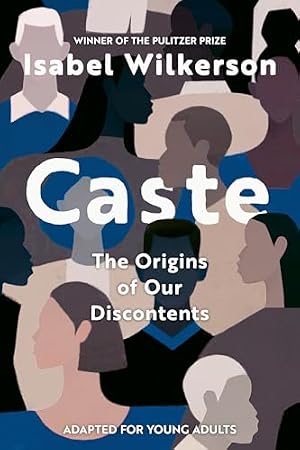
- Caste (Adapted for Young Adults)PaperbackFREE Shipping on orders over $35 shipped by AmazonGet it as soon as Friday, Oct 16
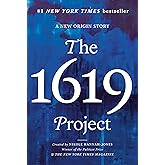
- The 1619 Project: A New Origin StoryPaperbackFREE Shipping on orders over $35 shipped by AmazonGet it as soon as Friday, Oct 16
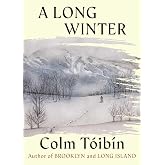
- A Long WinterHardcoverFREE Shipping on orders over $35 shipped by AmazonGet it as soon as Friday, Oct 16
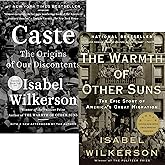
- Isabel Wilkerson Bestselling 2 Books Set: Caste, The Warmth of Other Suns (Paperback Edition)PaperbackFREE Shipping by AmazonGet it as soon as Friday, Oct 16Only 1 left in stock - order soon.
Customers also bought or read
- The Warmth of Other Suns: The Epic Story of America's Great Migration#1 Best SellerEmigration & Immigration Studies
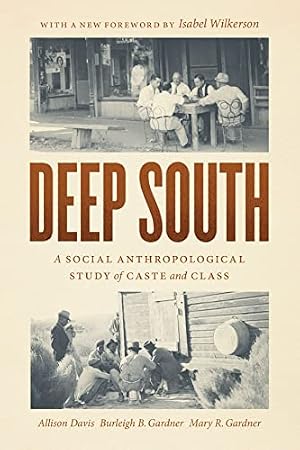
Paperback$10.63$10.63Delivery Fri, Oct 16 - Deep South: A Social Anthropological Study of Caste and Class
Paperback$18.03$18.03Delivery Fri, Oct 16 - The Color of Law: A Forgotten History of How Our Government Segregated America#1 Best SellerHousing & Urban Development Law
Paperback$8.54$8.54Delivery Fri, Oct 16 - Regime Change: Inside the Imperial Presidency of Donald Trump#1 Best SellerUnited States Executive Government
Hardcover$23.78$23.78Delivery Fri, Oct 16 - Entry Lessons: The Stories of Women Fighting for Their Place, Their Children, and Their Futures After Incarceration
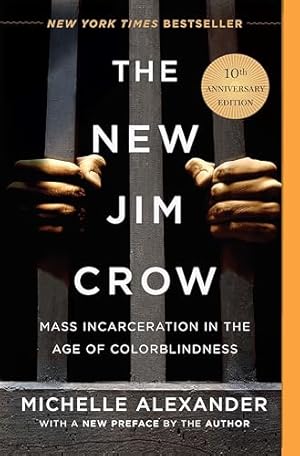
Paperback$17.95$17.95Delivery Fri, Oct 16 - The New Jim Crow: Mass Incarceration in the Age of Colorblindness
Paperback$9.99$9.99Delivery Fri, Oct 16 - America, U.S.A.: How Race Shadows the Nation's Anniversaries
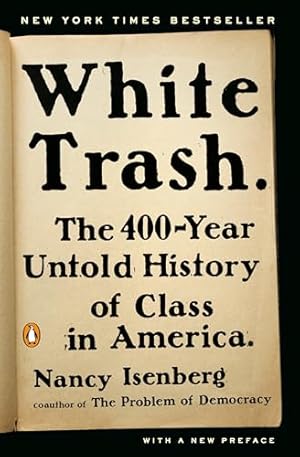
Hardcover$20.40$20.40Delivery Oct 22 - 28 - White Trash: The 400-Year Untold History of Class in America
Paperback$10.48$10.48Delivery Fri, Oct 16 - A More Just Future: Psychological Tools for Reckoning with Our Past and Driving Social Change
Paperback$15.48$15.48Delivery Sun, Oct 18 - Stamped from the Beginning: The Definitive History of Racist Ideas in America
Paperback$15.60$15.60Delivery Fri, Oct 16 - Liar's Kingdom: How to Stop Trump’s Deceit and Save America
Hardcover$15.48$15.48Delivery Fri, Oct 16 - White Fragility: Why It's So Hard for White People to Talk About Racism
Paperback$6.81$6.81Delivery Oct 27 - Nov 1 - Their Accomplices Wore Robes: How the Supreme Court Chained Black America to the Bottom of a Racial Caste System
Hardcover$20.66$20.66Delivery Fri, Oct 16 - The Nerd Reich: Silicon Valley Fascism and the War on Democracy#1 Best SellerCivics & Citizenship
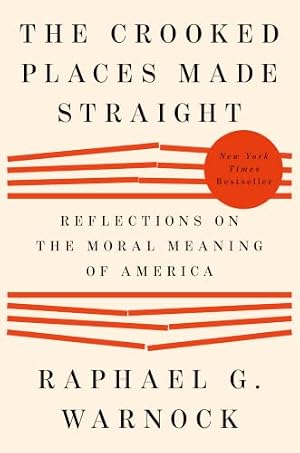
Hardcover$26.85$26.85Delivery Fri, Oct 16 - The Crooked Places Made Straight: Reflections on the Moral Meaning of America
Hardcover$20.48$20.48Delivery Oct 29 - Nov 1 - Digital, Diverse & Divided: How to Talk to Racists, Compete With Robots, and Overcome Polarization
Hardcover$24.95$24.95Delivery Fri, Oct 16 - How the Word Is Passed: A Reckoning with the History of Slavery Across America
Paperback$10.68$10.68Delivery Fri, Oct 16 - The Sum of Us: What Racism Costs Everyone and How We Can Prosper Together (One World Essentials)
Paperback$9.94$9.94Delivery Oct 21 - 22 - Moving Beyond Assessment: A practical guide for beginning helping professionals
Paperback$61.49$61.49FREE delivery Fri, Oct 16 - The Steal: Four Right-Wing Hard-Liners, One Republican Presidency, and the Raid on America's Courts
Just releasedHardcover$25.70$25.70Delivery Fri, Oct 16 - Medical Apartheid: The Dark History of Medical Experimentation on Black Americans from Colonial Times to the Present#1 Best SellerMedical Ethics
Paperback$9.16$9.16Delivery Fri, Oct 16 - Faithful Friendships: Embracing Diversity in Christian Community
Paperback$20.99$20.99Delivery Fri, Oct 16 - The Fire Next Time (Vintage International)#1 Best SellerCivil Rights & Liberties
Paperback$7.69$7.69Delivery Fri, Oct 16
From the Publisher
Editorial Reviews
Review
“This book has the reverberating and patriotic slap of the best American prose writing. . . . Wilkerson has written a closely argued book that largely avoids the word ‘racism,’ yet stares it down with more humanity and rigor than nearly all but a few books in our literature. . . . It’s a book that changes the weather inside a reader.”—Dwight Garner, The New York Times
“A surprising and arresting wide-angle reframing . . . Her epilogue feels like a prayer for a country in pain, offering new directions through prophetic language.”—Bilal Qureshi, The Washington Post
“A transformative new framework through which to understand identity and injustice in America.”—Justin Worland, Time
“Magisterial . . . Her reporting is nimble and her sentences exquisite. But the real power of Caste lies tucked within the stories she strings together like pearls. . . . Caste roams wide and deep, lives and deaths vividly captured, haloed with piercing cultural critique. . . . Caste is a luminous read, bearing its own torch of righteous wrath in a diamond-hard prose that will be admired and studied by future generations of journalists.”—Hamilton Cain, Minneapolis Star Tribune
“Brave, clear and shatteringly honest in both approach and delivery . . . Extrapolating Wilkerson’s ideas to contemporary America becomes an unsettling exercise that proves how right she is and how profoundly embedded into society the caste system is. . . . Her quest for answers frames everything and acts as the perfect delivery method for every explanation.”—Gabino Iglesias, San Francisco Chronicle
“Caste draws heavily on the powerful mingling of narrative, research, and visionary, sweeping insight that made Wilkerson’s The Warmth of Other Suns the definitive contemporary study of African Americans’ twentieth-century Great Migration from the Jim Crow South to northern, midwestern, and western cities. It deepens the resonance of that book (a seemingly impossible feat) by digging more explicitly into the pervasive racial hierarchy that transcends region and time.”—Steve Nathans-Kelly, New York Journal of Books
“Caste will spur readers to think and to feel in equal measure.”—Kwame Anthony Appiah, TheNew York Times Book Review
“Wilkerson’s book is a powerful, illuminating and heartfelt account of how hierarchy reproduces itself, as well as a call to action for the difficult work of undoing it.”—Kenneth W. Mack, The Washington Post
“Should be required reading for generations to come . . . A significant work of social science, journalism, and history, Caste removes the tenuous language of racial animus and replaces it with a sturdier lexicon based on power relationships.”—Joshunda Sanders, The Boston Globe
“[Caste] should be at the top of every American’s reading list.”—Jennifer Day, Chicago Tribune
“An expansive interrogation of racism, institutionalised inequality and injustice . . . This is an American reckoning and so it should be. . . . It is a painfully resonant book and could not have come at a more urgent time.”—Fatima Bhutto, The Guardian
“Full of uncovered stories and persuasive writing . . . Opening up a new bank of language in a time of emboldened white supremacism may provide her readers with a new way of thinking and talking about social injustice. . . . A useful reminder to India’s many upper-caste cosmopolitans . . . that dreams of resistance are just one part of the shared inheritance of the world’s oldest democracy, and the world’s largest.”—Supriya Nair, Mumbai Mirror
“It is bracing to be reminded with such precision that our country was built through genocide and slavery. But Ms. Wilkerson has also provided a renewed way of understanding America’s longest, fiercest trouble in all its complexity. Her book leaves me both grateful and hopeful. I gulped it down.”—Tracy Kidder, Pulitzer Prize–winning author of Mountains Beyond Mountains
“Like Martin Luther King, Jr. before her, Isabel Wilkerson has traveled the world to study the caste system and has returned to show us more clearly than ever before how caste is permanently embedded in the foundation and unseen structural beams of this old house called America. Isabel Wilkerson tells this story in prose that is so beautiful, the only reason to pause your reading is to catch your breath. You cannot understand America today without this book.”—Lawrence O’Donnell
“This enthralling exposé deserves a wide and impassioned readership.”—Publishers Weekly (starred review)
“Similar to her previous book, the latest by Wilkerson is destined to become a classic, and is urgent, essential reading for all.”—Library Journal (starred review)
“This is a brilliant book, well timed in the face of a pandemic and police brutality that cleave along the lines of a caste system.”—Booklist (starred review)
About the Author
Excerpt. © Reprinted by permission. All rights reserved.
Chapter 2
An Old House and an Infrared Light
The inspector trained his infrared lens onto a misshapen bow in the ceiling, an invisible beam of light searching the layers of lath to test what the eye could not see. This house had been built generations ago, and I had noticed the slightest welt in a corner of plaster in a spare bedroom and had chalked it up to idiosyncrasy. Over time, the welt in the ceiling became a wave that widened and bulged despite the new roof. It had been building beyond perception for years. An old house is its own kind of devotional, a dowager aunt with a story to be coaxed out of her, a mystery, a series of interlocking puzzles awaiting solution. Why is this soffit tucked into the southeast corner of an eave? What is behind this discolored patch of brick? With an old house, the work is never done, and you don’t expect it to be.
America is an old house. We can never declare the work over. Wind, flood, drought, and human upheavals batter a structure that is already fighting whatever flaws were left unattended in the original foundation. When you live in an old house, you may not want to go into the basement after a storm to see what the rains have wrought. Choose not to look, however, at your own peril. The owner of an old house knows that whatever you are ignoring will never go away. Whatever is lurking will fester whether you choose to look or not. Ignorance is no protection from the consequences of inaction. Whatever you are wishing away will gnaw at you until you gather the courage to face what you would rather not see.
We in the developed world are like homeowners who inherited a house on a piece of land that is beautiful on the outside, but whose soil is unstable loam and rock, heaving and contracting over generations, cracks patched but the deeper ruptures waved away for decades, centuries even. Many people may rightly say, “I had nothing to do with how this all started. I have nothing to do with the sins of the past. My ancestors never attacked indigenous people, never owned slaves.” And, yes. Not one of us was here when this house was built. Our immediate ancestors may have had nothing to do with it, but here we are, the current occupants of a property with stress cracks and bowed walls and fissures built into the foundation. We are the heirs to whatever is right or wrong with it. We did not erect the uneven pillars or joists, but they are ours to deal with now.
And any further deterioration is, in fact, on our hands.
Unaddressed, the ruptures and diagonal cracks will not fix themselves. The toxins will not go away but, rather, will spread, leach, and mutate, as they already have. When people live in an old house, they come to adjust to the idiosyncrasies and outright dangers skulking in an old structure. They put buckets under a wet ceiling, prop up groaning floors, learn to step over that rotting wood tread in the staircase. The awkward becomes acceptable, and the unacceptable becomes merely inconvenient. Live with it long enough, and the unthinkable becomes normal. Exposed over the generations, we learn to believe that the incomprehensible is the way that life is supposed to be.
The inspector was facing the mystery of the misshapen ceiling, and so he first held a sensor to the surface to detect if it was damp. The reading inconclusive, he then pulled out the infrared camera to take a kind of X-ray of whatever was going on, the idea being that you cannot fix a problem until and unless you can see it. He could now see past the plaster, beyond what had been wallpapered or painted over, as we now are called upon to do in the house we all live in, to examine a structure built long ago.
Like other old houses, America has an unseen skeleton, a caste system that is as central to its operation as are the studs and joists that we cannot see in the physical buildings we call home. Caste is the infrastructure of our divisions. It is the architecture of human hierarchy, the subconscious code of instructions for maintaining, in our case, a four-hundred-year-old social order. Looking at caste is like holding the country’s X-ray up to the light.
A caste system is an artificial construction, a fixed and embedded ranking of human value that sets the presumed supremacy of one group against the presumed inferiority of other groups on the basis of ancestry and often immutable traits, traits that would be neutral in the abstract but are ascribed life-and-death meaning in a hierarchy favoring the dominant caste whose forebears designed it. A caste system uses rigid, often arbitrary boundaries to keep the ranked groupings apart, distinct from one another and in their assigned places.
Throughout human history, three caste systems have stood out. The tragically accelerated, chilling, and officially vanquished caste system of Nazi Germany. The lingering, millennia-long caste system of India. And the shape-shifting, unspoken, race-based caste pyramid in the United States. Each version relied on stigmatizing those deemed inferior to justify the dehumanization necessary to keep the lowest-ranked people at the bottom and to rationalize the protocols of enforcement. A caste system endures because it is often justified as divine will, originating from sacred text or the presumed laws of nature, reinforced throughout the culture and passed down through the generations.
As we go about our daily lives, caste is the wordless usher in a darkened theater, flashlight cast down in the aisles, guiding us to our assigned seats for a performance. The hierarchy of caste is not about feelings or morality. It is about power—which groups have it and which do not. It is about resources—which caste is seen as worthy of them and which are not, who gets to acquire and control them and who does not. It is about respect, authority, and assumptions of competence—who is accorded these and who is not.
As a means of assigning value to entire swaths of humankind, caste guides each of us often beyond the reaches of our awareness. It embeds into our bones an unconscious ranking of human characteristics and sets forth the rules, expectations, and stereotypes that have been used to justify brutalities against entire groups within our species. In the American caste system, the signal of rank is what we call race, the division of humans on the basis of their appearance. In America, race is the primary tool and the visible decoy, the front man, for caste.
Product details
- Publisher : Random House Trade Paperbacks
- Publication date : February 14, 2023
- Language : English
- Print length : 544 pages
- ISBN-10 : 0593230272
- ISBN-13 : 978-0593230275
- Item Weight : 2.31 pounds
- Dimensions : 5.14 x 1.15 x 7.98 inches
- Best Sellers Rank: #2,639 in Books (See Top 100 in Books)
- #1 in Slavery & Emancipation History
- #1 in Sociology of Social Theory
- #2 in Sociology of Class
- Customer Reviews:
About the author

Isabel Wilkerson, winner of the Pulitzer Prize and the National Humanities Medal, is the author the critically acclaimed New York Times bestsellers The Warmth of Other Suns, and Caste: The Origins of Our Discontents.
Her first book, The Warmth of Other Suns, tells the story of the Great Migration, a watershed in American history. It won the National Book Critics Circle Award for Nonfiction, the Heartland Prize for Nonfiction, the Anisfield-Wolf Award for Nonfiction, the Lynton History Prize from Harvard and Columbia universities, the Stephen Ambrose Oral History Prize and was shortlisted for both the Pen-Galbraith Literary Award and the Dayton Literary Peace Prize.
WARMTH was named to more than 30 Best of the Year lists, including The New York Times' 10 Best Books of the Year, Amazon's 5 Best Books of the Year and Best of the Year lists in The New Yorker, Los Angeles Times, The Washington Post and The Economist, among others. In 2019, TIME Magazine named Warmth to its list of the10 best books of the decade.
Her second book, CASTE: The Origins of Our Discontents, explores the unrecognized hierarchy in America, its history and its consequences. Caste became a No. 1 New York Times bestseller, was the 2020 summer/fall selection for Oprah’s Book Club and was longlisted for the National Book Award. It was named to more best of the year lists than any other work of nonfiction. TIME named it the No. 1 nonfiction book of 2020. Publishers Marketplace named it the book of the year across all genres. In 2021, it was the most borrowed nonfiction library book in the United States, according to Quartz Magazine.
Wilkerson won the Pulitzer Prize for her work as Chicago Bureau Chief of The New York Times in 1994, making her the first black woman in the history of American journalism to win a Pulitzer and the first African-American to win for individual reporting. In 2016, President Barack Obama awarded her the National Humanities Medal for "championing the stories of an unsung history."
She has appeared on national programs such as "Fresh Air with Terry Gross," CBS's "60 Minutes," NBC's "Nightly News," "The PBS News Hour," MSNBC's "The Last Word with Lawrence O'Donnell," “The Daily Show with Trevor Noah,” NPR's "On Being with Krista Tippett," the BBC and others. She has taught at Princeton, Emory and Boston universities and has lectured at more than 200 other colleges and universities across the U.S. and in Europe and Asia.
Follow @isabelwilkerson on Instagram and Threads. Follow her on Facebook at http://www.facebook.com/IsabelWilkersonWriter/
Customer reviews
Customer Reviews, including Product Star Ratings help customers to learn more about the product and decide whether it is the right product for them.
To calculate the overall star rating and percentage breakdown by star, we don’t use a simple average. Instead, our system considers things like how recent a review is and if the reviewer bought the item on Amazon. It also analyzed reviews to verify trustworthiness.
Learn more how customers reviews work on AmazonCustomers say
Generated from the text of customer reviewsSelect to learn more
Reviews with images
‘Caste,’ an election and the resonance of racism below the surface of liberal, progressive America
Top reviews from the United States
- 5 out of 5 stars
Absolutely Extraordinary
Reviewed in the United States on September 4, 2026I am 82 and this is the best book I have ever read. The writing, the research and the analysis, our shared history and the humanity of her interpretations and how we get out of the trap we are in of not caring about each other. I wish ever American would read this book and a new enlightenment would occur. It is to the everlasting shame of Texas that the book banners have attacked this book.
5 people found this helpfulSending feedback...Sending feedback...HelpfulThank you for your feedback.Sorry, we failed to record your vote. Please try againThanks, we'll investigate in the next few days.Sorry, We failed to report this review. Please try againWe'll check if this review meets our community guidelinesOpens in a new tab. If it doesn't, we'll remove it.
CancelReport - 5 out of 5 stars
This Book Has Inspired Me To Be A Better Human
Reviewed in the United States on October 7, 2026This is by far the most well written and thought-provoking book that I have ever read.
It is truly life changing. Devastating. And presented with so much skill and heart that makes it impossible to put down. I feel an immense gratitude to Ms. Wilkerson for creating this masterpiece.
This book could actually save the world.
Sending feedback...Sending feedback...HelpfulThank you for your feedback.Sorry, we failed to record your vote. Please try againThanks, we'll investigate in the next few days.Sorry, We failed to report this review. Please try againWe'll check if this review meets our community guidelinesOpens in a new tab. If it doesn't, we'll remove it.
CancelReport - 5 out of 5 stars
It IS all about 2042.
Reviewed in the United States on September 16, 2020This is a book all thinking Americans should read this fall: it is well-argued, fascinating and very well-written. I was particularly taken with the consistency of Wilkerson's argument, which I find convincing and on-the-mark.
After you read this, you will never regard American society in the same way. I found that my heart ached when thinking about past encounters I have had (as a white male) and past encounters I have witnessed with black Americans. I have had police officers apologize to me for giving me speeding tickets; they have "adjusted" my speed so that I would not fall into the "wreckless driving" category (much appreciated, by the way); I have been treated in general with such deference in so many contexts, that I never really thought about it. When I do now, I cringe just to think about WHY that deference occurred. I always thought it was because I am a nice guy, not because I represented the dominate spot on the caste hierarchy. When I saw others treated not so well, I dismissed it in my mind as probably grounded in some logical cause, NOT caste position. Boy, was I wrong.
I think this book explains much of the aggressive nature of the Republican political stance, which has revealed itself to be unconcerned with the democratic process (voter suppression), and is hypocritical in its application of the American notion of fair play (imagine Republican response if Obama had Russian connections, or had blown the pandemic response!). It really is about retaining one's dominate spot on the hierarchy in light of changing demographics. I am embarrassed by this Republican hypocrisy and Anti-Americanism, and hope that this will not be the undoing of our country. Hats off to Wilkerson for her militant articulation of a real threat to our Constitutional freedoms, while at the same time expressing a real social dynamic that percolates into all aspects of our daily life.
My one - very minor - criticism would be her discussion of Robert E. Lee (pp. 333-339). I agree with everything she says about Charlottesville, etc., but I would point out that Lee himself was no advocate of the Lost Cause, and would be horrified at the thought of the hagiographic image of him in statues throughout the land. When asked about memorials to the Confederacy and the war, he said forget it, don't mention it again. I think he was ashamed and embarrassed by his Confederate service. Winfield Scott said that Lee had made the biggest mistake of his life by leaving the Federal army, and he was correct. Also, as harsh as Lee was in punishing slaves at Arlington, remember that he never owned slaves, nor did he own Arlington: those were "possessions" of his wife, Mary Custis. Lee grew up in a rented house with his single mother in Alexandria; he attended West Point because it was free. The only home he ever "owned" was the President's house in Lexington, Virginia. Lee himself was a complex and tragic individual; his real conflicted life should not be conflated with white supremacist notions of who he was and what he did. Oh, and that Confederate flag "the size of a bedsheet" that Wilkerson notes (p. 346), is not on the interstate, but on Route 29 outside of Danville, Virginia. It flies in response to the city of Danville taking down a small Confederate flag outside the Sutherlin Mansion a few years ago, and is an embarrassment to most of the citizens of the region. It flies on private property, and its presence sickens us each time we have to drive past it. It will only disappear when the folks who fly it disappear, and that will take generations.
55 people found this helpfulSending feedback...Sending feedback...HelpfulThank you for your feedback.Sorry, we failed to record your vote. Please try againThanks, we'll investigate in the next few days.Sorry, We failed to report this review. Please try againWe'll check if this review meets our community guidelinesOpens in a new tab. If it doesn't, we'll remove it.
CancelReport - 5 out of 5 stars
There is much here to be learned
Reviewed in the United States on January 20, 2021It seems we live in a caste society. This is the message of "Caste: The Origins of our Discontent" by Isabel Wilkerson, a Pulitzer Prize winning author. She cites a number of sources to support her thesis, the most compelling by historian Nell Irvin Painter, who says simply and succinctly: "Americans cling to race as the unschooled cling to superstition." The author also makes the point that racial prejudice is not healthy. Indeed, she cites clinical evidence that harboring racial hatred can shorten your life, and ultimately kill you. At 388 pages the book is not overly long, and reads quite well. However, as well as the author makes her points, she often overstates the case, with repeated stories that after awhile become tiresome. Having said that there is much here to be learned, and I recommend the book heartily.
Certainly, our nation has been long divided over race, dating back to 1619, when the first slave ship made port in Point Comfort, Virginia, and unloaded about twenty chained Africans, destined for slavery. Up to this point the concept of "white" and "black" people was unknown. The colonies were comprised of Europeans (mostly Englishmen) who did not think of themselves as white. And the arriving African slaves did not think of themselves as black, but as Igbo. Yoruba, Ewe Akan, and Ndebele. White people and black people were concepts that developed over time. Writes the author: "There developed a caste system, based on what people looked like, an internalized ranking, unspoken, unnamed, unacknowledged by everyday citizens even as they go about living their lives adhering to it and acting upon it subconsciously to this day."
She adds, "Caste is not a term often applied to the United States. It is considered the language of India or feudal Europe. But some anthropologists and scholars of race in America have made use of the term for decades." Indeed, the idea of "race", is a recent phenomenon in human history. It dates back to the start of the transatlantic slave trade and thus to the subsequent caste system that arose from slavery.
The word "race" likely derived from the Spanish word "raza" and was originally used to refer to the "caste or quality of authentic horses, which are branded with an iron so as to be recognized," wrote the anthropologists Audrey and Brian Smedley. As Europeans explored the world, they began using the word to refer to the new people they encountered. "Ultimately, the English in North America developed the most rigid and exclusionist form of race ideology," say the Smedleys. "In the American mind (race) was and is a statement about profound and unbridgeable differences (that) conveys the meaning of social distance that cannot be transcended."
Geneticists and anthropologists have long considered race as a manmade invention, with no basis in science or biology. In fact, the term "Caucasian", a label often ascribed to people of European descent, is a word invented by a German professor of medicine named Johann Friedrich Blumenbach, who was so taken with the shape of a human skull he found in the Caucasus Mountains of Russia, that he applied it to the people he believed descended from there and settled in Europe.
About two decades ago, an analysis of the human genome established that all human beings are 99.9 percent the same. Concludes the geneticist J. Craig Venter: "We all evolved in the last 100,000 years from the small number of tribes that migrated out of Africa and colonized the world." Which means the entire racial caste system--the catalyst of hatreds and civil war--was built on what anthropologists now call "an arbitrary and superficial selection of traits," derived from "a few of the thousands of genes that make up a human being."
In other words, it is based on a lie.
As slavery took hold in the Southern colonies, slaveholders began looking to the Bible for justification of their "peculiar institution" and, while conveniently ignoring Jesus's Sermon on the Mount, turned their attention to the Old Testament and learned that back in the Middle Ages some interpreters had described Noah's son, Ham, as bearing dark skin, and thus translated Noah's curse against him as a curse against the descendants of Ham--against all humans bearing dark skin.
They took further comfort from Leviticus, which exhorted them, "Both thy bondmen, and thy bondmaids, which thou shalt have, shall be of the heathen that are around you; of them shall ye buy bondmen and bondmaids." They took as further license to enslave those they considered religious heathens, to build a new country out of the wilderness. Thus, a hierarchy evolved in the New World they created, one that set those with the lightest skin above those with the darkest.
"The curse of Ham is now being executed upon his descendants," wrote Thomas Cobb, a leading Confederate and defender of slavery. "The great Architect had framed them both physically and mentally to fill the sphere in which they were thrown. His wisdom and mercy combined in constituting them thus suited to the degraded position they were destined to occupy."
Writes the author: "The United States and India would become, respectively, the oldest and the largest democracies in human history, both built on caste systems undergirded by their reading of the sacred texts of their respective cultures. In both countries, the subordinate castes were consigned to the bottom, seen as deserving of their debasement, owing to the sins of the past."
It would take a civil war, the deaths of three-quarters of a million soldiers and citizens, the assassination of a president, Abraham Lincoln, and the passage of the Thirteenth Amendment to bring an end to slavery in the United States. Still slavery would live on in a new form of discrimination--white supremacy.
The white supremacists devised a labyrinth of laws to hold the newly freed people on the bottom rung ever more tightly, while a popular new pseudoscience called eugenics emerged to justify the renewed debasement. People on the bottom rung could be beaten or killed with impunity for any breach of the caste system, like not stepping off the sidewalk fast enough--or in trying to vote.
When Hitler and his band of thugs took power in Germany and focused their hatred toward European Jews, who should they turn their attention to for guidance? To the discriminatory race laws of the Jim Crow south. According to Yale legal historian James Whitman, in debating "how to institutionalize racism in the Third Reich, the Nazis began by asking how the Americans did it."
PUTTING AN END TO CASTE
Writes the author: "The caste system in America is four hundred years old and will not be dismantled by a single law or any one person, no matter how powerful. We have seen in the years since the civil rights era that laws, like the Voting Rights Act of 1965, can be weakened if there is not the collective will to maintain them . . .
"Caste is a disease, and none of us is immune. It is as if alcoholism is encoded into the county's DNA, and can never be declared fully cured. It is like a cancer that goes into remission only to return when the immune system of the body politic is weakened . . .
"To imagine an end to caste in America, we need only look at the history of Germany. It is living proof that if a caste system--the twelve-year reign of the Nazis--can be created, it can be dismantled. We make a serious error when we fail to see the overlap between our country and others, the common vulnerability in human programming, what the theorist Hannah Arendt called "the banality of evil."
"What's most disturbing about the Nazi phenomenon," writes philosopher David Livingston Smith, "is not that the Nazis were madmen or monsters. It is that they were ordinary human beings."
Note: While preparing this review, I came across this quote by Nelson Mandela: "No one is born hating another person because of the color of his skin or background or his religion. People must learn to hate, and if they can learn to hate, they can learn to be taught to love, for love comes more naturally to the human heart than its opposite." Mandela, it will be remembered, was elected as South Africa's first black head of state. Under his watch, the government focused on dismantling the legacy of caste (a.k.a. apartheid) by tackling institutionalized racism and fostering racial reconciliation.
178 people found this helpfulSending feedback...Sending feedback...HelpfulThank you for your feedback.Sorry, we failed to record your vote. Please try againThanks, we'll investigate in the next few days.Sorry, We failed to report this review. Please try againWe'll check if this review meets our community guidelinesOpens in a new tab. If it doesn't, we'll remove it.
CancelReport - 4 out of 5 stars
Exposing American Racial/Class Hierarchy
Reviewed in the United States on February 28, 2021Having read Coates’s “We Were Eight Years in Power” and Ngũgĩ wa Thiong'o’s “Globalectics” (see my reviews), I wanted to get a woman’s perspective on similar issues. When looking through recent titles along these lines, I came upon, sampled, and bought Wilkerson’s book. The initial narrative as well as her preliminary remarks comparing conditions in the US with those in India and WW II Germany provoked my curiosity as well as questions regarding inferences and conclusions she would draw. As with the previous books, I was again devastated by the compelling argument relating our American racial/class hierarchy and its explanatory power regarding recent events.
Within the book, the author proceeds to make her case through an Introduction (‘A Man in the Crowd’), some 31 chapters broken into seven parts and an Epilogue (‘A World Without Caste’). The parts are as follows: (1) Toxins in the Permafrost and Heat Rising all Around; (2) The Arbitrary Construction of Human Divisions; (3) The Eight Pillars of Caste; (4) The Tentacles of Caste; (5) The Consequences of Caste; (6) Backlash; and (7) Awakening. There are also Dedication and Acknowledgement along with extensive Notes and Bibliography sections.
Some of the parts that stood out for me began with the author’s framing of her study of caste. For instance, Wilkerson observes (at Location 233 in the Kindle version) that “The election [in 2016] would set the United States on a course toward isolationism, tribalism, the walling in and protecting of one’s own, the worship of wealth and acquisition at the expense of others, even of the planet itself . . .” A little later (Location 276), she adds “Then the worst pandemic in more than a century brought humanity to a standstill.” Her attention turns to questions (Location 280-86) “What had happened to America? What could account for tens of millions . . . [to] ‘vote against their own interests’. . .” After indicating (Location 357) that “Like old houses, America has an unseen skeleton, a caste system that is as central to its operation . . .” along with its imposed racial and power dimensions, the author clarifies her quest across oceans for understanding and explanation (bringing to mind Weiner’s “Socrates Express” and Zakaria’s “Ten Lessons for a Post Pandemic World”---see my reviews).
Wilkerson goes back and forth in place and time between the US, India and Nazi Germany to explore the origins, character and insidious effects of such caste systems. For instance, she relates (Location 1158-59) that “Both countries enacted a fretwork of laws to chain the lowliest group—Dalits in India and African-Americans in the United States—to the bottom, using terror and force to keep them there . . . ‘Perhaps only the Jews have as long a history of suffering from discrimination as the Dalits’. . .” In one of many examples later (Location 1213-14), the author describes that “In the early stages of the Third Reich . . . Nazi bureaucrats met to weigh the options for imposing a rigid new hierarchy, one that would isolate Jewish people from Aryans now that the Nazis had taken control. . . [They studied] how the United States had managed to turn its racial hierarchy into rigid law yet retain such a sterling reputation on the world stage.”
While the book begins and finishes strong, there is much substantiating material in-between to go through to get to the many gems hidden within the text. For instance, Wilkerson indicates (in Location 4754-59) that “The 2016 election became a remarkable blueprint of caste hierarchy in America, from highest to lowest status in a given group’s support of the Republican: White men voted for Trump at 62 percent. White women at 53 percent. Latino men at 32 percent. Latina women at 25 percent. African-American men at 13 percent, and black women at 4 percent . . . The Democratic vote went as follows: White men, 31 percent. White women, 43 percent. Latino men, 63 percent. Latina women, 69 percent. African-American men, 82 percent. [and] African-American women, supported the white female Democrat by 94 percent.” Even while such references and the author’s anecdotes are helpful, I find myself seeking other sources to help spell out minority women’s situation and perspective further for someone like me (e.g., see Angela Davis’s “Women, Race, and Class” and other such works).
As the author expresses the tremendous personal/societal cost and detrimental human impact of our caste system, she admits the limitations of a book such as hers and the challenges in resolving matters. However, her text is well worth reading and offers the possibility of awakening regarding these issues and pursing a vision for a better world. As she states in her conclusion (Location 5553-55), “In a world without caste, being male or female, light or dark, immigrant or native-born, would have no bearing on what anyone was perceived as being capable of. . . we would all be invested in the well-being of others in our species if only for our own survival, and recognize that we are in need of one another more than we have been led to believe.”
33 people found this helpfulSending feedback...Sending feedback...HelpfulThank you for your feedback.Sorry, we failed to record your vote. Please try againThanks, we'll investigate in the next few days.Sorry, We failed to report this review. Please try againWe'll check if this review meets our community guidelinesOpens in a new tab. If it doesn't, we'll remove it.
CancelReport - 5 out of 5 stars
A Must Read in These Challenging Times
Reviewed in the United States on October 3, 2026Excellent book that draws a thread through the commonalities of Jews during the Nazi horrors, the intricate levels of castes in Indian and the plight of Blacks in America.
If I didn’t admire Einstein before, I now do based on his stand on racism.
This book will be an eye opener for some a validation for others. I highly recommend this amazing book.
Sending feedback...Sending feedback...HelpfulThank you for your feedback.Sorry, we failed to record your vote. Please try againThanks, we'll investigate in the next few days.Sorry, We failed to report this review. Please try againWe'll check if this review meets our community guidelinesOpens in a new tab. If it doesn't, we'll remove it.
CancelReport - 5 out of 5 stars
A MUST KNOW ……
Reviewed in the United States on September 15, 2026Very informative and provides clarity to the miseducation of America’s cultural mindset. This should be a must read to juniors and seniors in HIGH SCHOOL alongside civics.
Thank you and it will be one of the item deemed to certain children in my family.
One person found this helpfulSending feedback...Sending feedback...HelpfulThank you for your feedback.Sorry, we failed to record your vote. Please try againThanks, we'll investigate in the next few days.Sorry, We failed to report this review. Please try againWe'll check if this review meets our community guidelinesOpens in a new tab. If it doesn't, we'll remove it.
CancelReport - 5 out of 5 stars
The Most Important Book I Have Read in My Life
Reviewed in the United States on February 10, 2022I am a voracious reader, and Caste by Isabel Wilkerson stands out as the best book I have read in my 79 years of life. Unquestionably it is well-researched. But Wilkerson's art of weaving historical documents and non-fictional accounts of caste and all of its ramifications into metaphors that hit home to our hearts and minds is an art form. Here is one example:
"Just as DNA is the code of instructions for cell development, caste is the operating system for economic, political, and social interaction in the United States from the time of its gestation."
(p. 24).
Wilkerson's artistry with words, for me, is a source of jealousy. It is pure symphony. "As we go about our daily lives, caste is the wordless usher in a darkened theater, flashlight cast down in the aisles, guiding us to our assigned seats for a performance. The hierarchy of caste is not about feelings or morality. It is about power—which groups have it and which do not. It is about resources—which caste is seen as worthy of them and which are not,..."
Yes, there is more freedom in America than in other countries, especially those under the iron heel of autocrats. But what we have seen in the last 400 years since the White man stepped ashore has never been honestly dealt with: we are a hypocritical democracy-- one in which the White Anglo Protestant reigns supreme, while others fall prey to all manifestations of life, liberty and the pursuit of happiness.
I am not into guilt or feeling responsible for what others before me have done, but what we have now is what we inherited over the last 400 years of inequity. All of us are now living in this 400-year old house and it is falling apart because we refuse to acknowledge the major cracks in its foundation, and how rotten some of the joists are in the floors and attic. Separatism and Power are not working in our country. Realizing what is wrong and fixing the ills underlying the pathology of this power-play are necessary steps If our nation can truly become America the beautiful, the good, and the true.
Read and/or listen to this masterpiece. Wilkerson, you have made one heck of a contribution. Congratulations on a damn excellent piece of writing.
5 out of 5 starsThe Most Important Book I Have Read in My Life
Reviewed in the United States on February 10, 2022I am a voracious reader, and Caste by Isabel Wilkerson stands out as the best book I have read in my 79 years of life. Unquestionably it is well-researched. But Wilkerson's art of weaving historical documents and non-fictional accounts of caste and all of its ramifications into metaphors that hit home to our hearts and minds is an art form. Here is one example:
"Just as DNA is the code of instructions for cell development, caste is the operating system for economic, political, and social interaction in the United States from the time of its gestation."
(p. 24).
Wilkerson's artistry with words, for me, is a source of jealousy. It is pure symphony. "As we go about our daily lives, caste is the wordless usher in a darkened theater, flashlight cast down in the aisles, guiding us to our assigned seats for a performance. The hierarchy of caste is not about feelings or morality. It is about power—which groups have it and which do not. It is about resources—which caste is seen as worthy of them and which are not,..."
Yes, there is more freedom in America than in other countries, especially those under the iron heel of autocrats. But what we have seen in the last 400 years since the White man stepped ashore has never been honestly dealt with: we are a hypocritical democracy-- one in which the White Anglo Protestant reigns supreme, while others fall prey to all manifestations of life, liberty and the pursuit of happiness.
I am not into guilt or feeling responsible for what others before me have done, but what we have now is what we inherited over the last 400 years of inequity. All of us are now living in this 400-year old house and it is falling apart because we refuse to acknowledge the major cracks in its foundation, and how rotten some of the joists are in the floors and attic. Separatism and Power are not working in our country. Realizing what is wrong and fixing the ills underlying the pathology of this power-play are necessary steps If our nation can truly become America the beautiful, the good, and the true.
Read and/or listen to this masterpiece. Wilkerson, you have made one heck of a contribution. Congratulations on a damn excellent piece of writing.
72 people found this helpfulSending feedback...Sending feedback...HelpfulThank you for your feedback.Sorry, we failed to record your vote. Please try againThanks, we'll investigate in the next few days.Sorry, We failed to report this review. Please try againWe'll check if this review meets our community guidelinesOpens in a new tab. If it doesn't, we'll remove it.
CancelReport
Top reviews from other countries
RP5 out of 5 starsMakes you think deeply
Reviewed in Australia on July 13, 2026Very very interesting read.
Sending feedback...Thanks, we'll investigate in the next few days.Sorry, We failed to report this review. Please try againWe'll check if this review meets our community guidelinesOpens in a new tab. If it doesn't, we'll remove it.
CancelReport
Charlotte Black5 out of 5 starsÀ lire!
Reviewed in Canada on June 12, 2026Un livre hautement instructif qui propose une relecture de l’histoire vécue par les Afros Américains. Les rapprochements avec les castes de l’Inde et l’antisemitisme nazi sont inédits mais combien instructifs!
Sending feedback...Thanks, we'll investigate in the next few days.Sorry, We failed to report this review. Please try againWe'll check if this review meets our community guidelinesOpens in a new tab. If it doesn't, we'll remove it.
CancelReport
Rene Andrew4 out of 5 starsVery insightful
Reviewed in the United Arab Emirates on August 5, 2024Race is a complicated issue, this book illustrates another layer to an already complicated, yet unnecessary situation in our times. Read and learn.
Sending feedback...Thanks, we'll investigate in the next few days.Sorry, We failed to report this review. Please try againWe'll check if this review meets our community guidelinesOpens in a new tab. If it doesn't, we'll remove it.
CancelReport
leo5 out of 5 starsOttimo
Reviewed in Italy on August 27, 2026Gran lettura
Sending feedback...Thanks, we'll investigate in the next few days.Sorry, We failed to report this review. Please try againWe'll check if this review meets our community guidelinesOpens in a new tab. If it doesn't, we'll remove it.
CancelReport
tom morgan5 out of 5 starsA seminal book on culture, power and some brutal aspects of human nature.
Reviewed in the United Kingdom on June 16, 2026This is a moving and insightful book with huge topical relevance today. Should be required reading for anyone over the age of 16.
Sending feedback...Thanks, we'll investigate in the next few days.Sorry, We failed to report this review. Please try againWe'll check if this review meets our community guidelinesOpens in a new tab. If it doesn't, we'll remove it.
CancelReport