
Learn more
These promotions will be applied to this item:
Some promotions may be combined; others are not eligible to be combined with other offers. For details, please see the Terms & Conditions associated with these promotions.
Your Memberships & Subscriptions
Download the free Kindle app and start reading Kindle books instantly on your smartphone, tablet, or computer - no Kindle device required.
Read instantly on your browser with Kindle for Web.
Using your mobile phone camera - scan the code below and download the Kindle app.

Follow the authors
OK
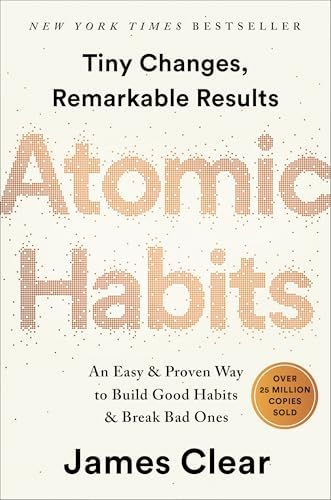
Atomic Habits: An Easy & Proven Way to Build Good Habits & Break Bad Ones
Over 25 million copies sold!
Translated into 60+ languages!
Tiny Changes, Remarkable Results
No matter your goals, Atomic Habits offers a proven framework for improving--every day. James Clear, one of the world's leading experts on habit formation, reveals practical strategies that will teach you exactly how to form good habits, break bad ones, and master the tiny behaviors that lead to remarkable results.
If you're having trouble changing your habits, the problem isn't you. The problem is your system. Bad habits repeat themselves again and again not because you don't want to change, but because you have the wrong system for change. You do not rise to the level of your goals. You fall to the level of your systems. Here, you'll get a proven system that can take you to new heights.
Clear is known for his ability to distill complex topics into simple behaviors that can be easily applied to daily life and work. Here, he draws on the most proven ideas from biology, psychology, and neuroscience to create an easy-to-understand guide for making good habits inevitable and bad habits impossible. Along the way, readers will be inspired and entertained with true stories from Olympic gold medalists, award-winning artists, business leaders, life-saving physicians, and star comedians who have used the science of small habits to master their craft and vault to the top of their field.
Learn how to:
- make time for new habits (even when life gets crazy);
- overcome a lack of motivation and willpower;
- design your environment to make success easier;
- get back on track when you fall off course;
Atomic Habits will reshape the way you think about progress and success, and give you the tools and strategies you need to transform your habits--whether you are a team looking to win a championship, an organization hoping to redefine an industry, or simply an individual who wishes to quit smoking, lose weight, reduce stress, or achieve any other goal.
- LanguageEnglish
- PublisherAvery
- Publication dateOctober 16, 2018
- File size8.4 MB
Explore your book, then jump right back to where you left off with Page Flip.
View high quality images that let you zoom in to take a closer look.
Enjoy features only possible in digital – start reading right away, carry your library with you, adjust the font, create shareable notes and highlights, and more.
Discover additional details about the events, people, and places in your book, with Wikipedia integration.
Customers who viewed this item also viewed
Customers also bought or read
- Protocols: An Operating Manual for the Human Body#1 Best SellerAging & Longevity
Kindle Edition$16.99$16.99 - The Compound Effect (10th Anniversary Edition): Jumpstart Your Income, Your Life, Your Success
Kindle Edition$12.99$12.99 - The 7 Habits of Highly Effective People: 30th Anniversary Edition (The Covey Habits Series)
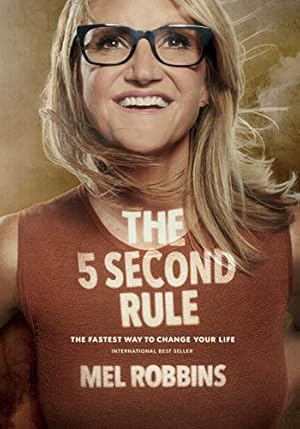
Kindle Edition$14.99$14.99 - The 5 Second Rule: Transform Your Life, Work, and Confidence with Everyday Courage
Kindle Edition$12.99$12.99 - Breaking the Habit of Being Yourself: How to Lose Your Mind and Create a New One
Kindle Edition$10.99$10.99
Editorial Reviews
Review
USA Today bestseller
Publisher's Weekly bestseller
One of Fast Company's 7 Best Business Books of 2018
One of Business Insider's Best Self-Help Books of 2018
"A supremely practical and useful book. James Clear distills the most fundamental information about habit formation, so you can accomplish more by focusing on less."
-Mark Manson, #1 New York Times best-selling author of The Subtle Art of Not Giving a F*ck
“James Clear has spent years honing the art and studying the science of habits. This engaging, hands-on book is the guide you need to break bad routines and make good ones.”
-Adam Grant, New York Times best-selling author of Originals, Give and Take, and Option B with Sheryl Sandberg
"A special book that will change how you approach your day and live your life."
-Ryan Holiday, bestselling author of The Obstacle is the Way and Ego is the Enemy
“As a physician attempting to help my patients build healthy habits to decrease and reverse chronic disease, Atomic Habits is the playbook I have been searching for. Not only does the book offer actionable items I can teach my patients, I can refer them to read and implement the ideas themselves. The format is powerful and simple. This should be taught in all medical schools.”
-Laurie Marbas, MD, United States Air Force veteran
“Atomic Habits was a great read. I learned a lot and think it’ll be helpful to a lot of people.”
—Gayle King, co-anchor of CBS This Morning and editor-at-large for O, The Oprah Magazine
“Useful new book”
–Wall Street Journal
“In Atomic Habits, Clear will show you how to overcome a lack of motivation, change your environment to encourage success, and make time for new (and better) habits.
–Glamour.com
“Atomic Habits is a great book for anyone who is frustrated with the way they can’t seem to kick that one (or two dozen) bad habit(s) and wants to finally achieve health, fitness, financial freedom, great relationships, and a good life.”
–Medium.com
“Excellent. Well worth the read.”
–Benjamin Hardy, Inc.com
About the Author
Excerpt. © Reprinted by permission. All rights reserved.
It is so easy to overestimate the importance of one defining moment and underestimate the value of making small improvements on a daily basis. Too often, we convince ourselves that massive success requires massive action. Whether it is losing weight, building a business, writing a book, winning a championship, or achieving any other goal, we put pressure on ourselves to make some earth- shattering improvement that everyone will talk about.
Meanwhile, improving by 1 percent isn’t particularly notable—sometimes it isn’t even noticeable—but it can be far more meaningful, especially in the long run. The difference a tiny improvement can make over time is astounding. Here’s how the math works out: if you can get 1 percent better each day for one year, you’ll end up thirty-seven times better by the time you’re done. Conversely, if you get 1 percent worse each day for one year, you’ll decline nearly down to zero. What starts as a small win or a minor setback accumulates into something much more.
Habits are the compound interest of self-improvement. The same way that money multiplies through compound interest, the effects of your habits multiply as you repeat them. They seem to make little difference on any given day and yet the impact they deliver over the months and years can be enormous. It is only when looking back two, five, or perhaps ten years later that the value of good habits and the cost of bad ones becomes strikingly apparent.
This can be a difficult concept to appreciate in daily life. We often dismiss small changes because they don’t seem to matter very much in the moment. If you save a little money now, you’re still not a millionaire. If you go to the gym three days in a row, you’re still out of shape. If you study Mandarin for an hour tonight, you still haven’t learned the language. We make a few changes, but the results never seem to come quickly and so we slide back into our previous routines.
Unfortunately, the slow pace of transformation also makes it easy to let a bad habit slide. If you eat an unhealthy meal today, the scale doesn’t move much. If you work late tonight and ignore your family, they will forgive you. If you procrastinate and put your project off until tomorrow, there will usually be time to finish it later. A single decision is easy to dismiss.
But when we repeat 1 percent errors, day after day, by replicating poor decisions, duplicating tiny mistakes, and rationalizing little excuses, our small choices compound into toxic results. It’s the accumulation of many missteps—1 percent decline here and there—that eventually leads to a problem.
The impact created by a change in your habits is similar to the effect of shifting the route of an airplane by just a few degrees. Imagine you are flying from Los Angeles to New York City. If a pilot leaving from LAX adjusts the heading just 3.5 degrees south, you will land in Washington, D.C., instead of New York. Such a small change is barely noticeable at takeoff—the nose of the airplane moves just a few feet—but when magnified across the entire United States, you end up hundreds of miles apart.
Similarly, a slight change in your daily habits can guide your life to a very different destination. Making a choice that is 1 percent better or 1 percent worse seems insignificant in the moment, but over the span of moments that make up a lifetime these choices determine the difference between who you are and who you could be. Success is the product of daily habits—not once‑in‑a‑lifetime transformations.
That said, it doesn’t matter how successful or unsuccessful you are right now. What matters is whether your habits are putting you on the path toward success. You should be far more concerned with your current trajectory than with your current results. If you’re a millionaire but you spend more than you earn each month, then you’re on a bad trajectory. If your spending habits don’t change, it’s not going to end well. Conversely, if you’re broke, but you save a little bit every month, then you’re on the path toward financial freedom—even if you’re moving slower than you’d like.
Your outcomes are a lagging measure of your habits. Your net worth is a lagging measure of your financial habits. Your weight is a lagging measure of your eating habits. Your knowledge is a lagging measure of your learning habits. Your clutter is a lagging measure of your cleaning habits. You get what you repeat.
If you want to predict where you’ll end up in life, all you have to do is follow the curve of tiny gains or tiny losses, and see how your daily choices will compound ten or twenty years down the line. Are you spending less than you earn each month? Are you making it into the gym each week? Are you reading books and learning something new each day? Tiny battles like these are the ones that will define your future self.
Time magnifies the margin between success and failure. It will multiply whatever you feed it. Good habits make time your ally. Bad habits make time your enemy.
Habits are a double-edged sword. Bad habits can cut you down just as easily as good habits can build you up, which is why understanding the details is crucial. You need to know how habits work and how to design them to your liking, so you can avoid the dangerous half of the blade.
Product details
- ASIN : B07D23CFGR
- Publisher : Avery
- Accessibility : Learn more
- Publication date : October 16, 2018
- Language : English
- File size : 8.4 MB
- Screen Reader : Supported
- Enhanced typesetting : Enabled
- X-Ray : Enabled
- Word Wise : Enabled
- Print length : 319 pages
- ISBN-13 : 978-0735211308
- Page Flip : Enabled
- Best Sellers Rank: #1,388 in Kindle Store (See Top 100 in Kindle Store)
- Customer Reviews:
About the authors

Discover more of the author’s books, see similar authors, read book recommendations and more.

James Clear is a writer and speaker focused on habits, decision making, and continuous improvement. He is the author of the #1 New York Times bestseller, Atomic Habits. The book has sold over 20 million copies worldwide and has been translated into more than 60 languages.
Clear is a regular speaker at Fortune 500 companies and his work has been featured in places like Time magazine, the New York Times, the Wall Street Journal and on CBS This Morning. His popular "3-2-1" email newsletter is sent out each week to more than 3 million subscribers.
Customer reviews
- 5 star4 star3 star2 star1 star2 star83%13%4%0%0%0%
- 5 star4 star3 star2 star1 star1 star83%13%4%0%0%0%
Customer Reviews, including Product Star Ratings help customers to learn more about the product and decide whether it is the right product for them.
To calculate the overall star rating and percentage breakdown by star, we don’t use a simple average. Instead, our system considers things like how recent a review is and if the reviewer bought the item on Amazon. It also analyzed reviews to verify trustworthiness.
Learn more how customers reviews work on AmazonCustomers say
Generated from the text of customer reviewsSelect to learn more
Reviews with images
A Masterpiece that Actually Works—Not Your Typical Self-Help Book!
Top reviews from the United States
- 5 out of 5 stars
A Life-Changing Guide to Building Better Habits
Reviewed in the United States on September 2, 2026Atomic Habits by James Clear is one of the most practical and impactful self-improvement books I've read. Instead of focusing on massive life changes, the book shows how small, consistent improvements can lead to remarkable results over time.
James Clear breaks down the science of habit formation into simple, actionable strategies that are easy to understand and apply. The concept of improving by just 1% each day is powerful, and the book provides real-world examples that make the ideas relatable. The framework for building good habits and breaking bad ones is straightforward and effective.
What makes this book stand out is its focus on systems rather than goals. Clear explains that lasting success comes from creating routines and environments that support positive behaviors rather than relying solely on motivation or willpower.
Whether you're trying to improve your health, productivity, finances, career, or personal relationships, the lessons in this book can be applied to almost any area of life.
Pros:
-Easy to read and highly engaging
-Packed with practical, actionable advice
-Science-backed concepts explained simply
-Helpful real-life examples and stories
-Applicable to both personal and professional goals
-Focuses on sustainable, long-term improvement
Cons:
-Some concepts are repeated throughout the book
-Readers looking for quick fixes may find the approach gradual
-Certain examples may feel familiar if you've read other habit-related books
Overall:
Atomic Habits is an outstanding book that delivers actionable strategies for creating lasting change. Its simple approach, practical tools, and powerful insights make it a must-read for anyone looking to improve their daily habits and achieve long-term success.
Rating: ★★★★★ (5/5)
2 people found this helpfulSending feedback...Sending feedback...HelpfulThank you for your feedback.Sorry, we failed to record your vote. Please try againThanks, we'll investigate in the next few days.Sorry, We failed to report this review. Please try againWe'll check if this review meets our community guidelinesOpens in a new tab. If it doesn't, we'll remove it.
CancelReport - 5 out of 5 stars
Atomic Habits will change your life! 9 takeaways:
Reviewed in the United States on May 30, 2019Atomic Habits by James Clear is one of those rare books that I immediately read twice in a row. It is filled with dozens of science-backed and actionable nuggets of wisdom. Do you want to improve any habits in your life? I heartily recommend Atomic Habits to you! We are all driven by our habits - many of which are unconscious. Below are 9 quotes and takeaways from this life-changing book:
1. "Getting 1 percent better every day counts for a lot in the long-run." Atomic Habits explains why the little things you do every day matters. Your little habits matter. It may not seem like a big deal to skip a workout or to be kind, but it is a big deal. Imagine if you improved your habits by only 1% every day. You'd be dramatically a different person in a year. Then imagine if you let your habits decline by 1% every day. You'd be in a much worse spot in life overall a year from now. Your little habits - atomic habits - count for a lot in the long run. What little habits are you improving upon (or neglecting...) today?
2. "You do not rise to the level of your goals. You fall to the level of your systems." This is such an important point in the book. Oftentimes we focus on goals in our life, while neglecting to focus on the systems that help us achieve goals. As an example, I had a friend who had the goal to complete a triathlon. He achieved this goal! And then he quit working out for the next year and got out of shape... He was so focused on achieving a goal that he neglected his underlying systems of being healthy. Goal achievement can actually set us back if we don't get set up sustainable systems. Get the systems right and then we'll indeed also achieve our goals. Systems > Goals.
3. "Every action you take is a vote for the type of person you wish to become. No single instance will transform your beliefs, but as the votes build up, so does the evidence of your new identity." I love this quote from the book. Every action - every habit - you take casts a vote for the type of person you want to become. Do you want to be a more organized person? When you develop habits and systems that organize your life, you are casting votes for thinking of yourself as an organized person. You think to yourself, "hey, I'm an organized person." And then you reinforce that belief with your habits and actions - a virtuous cycle! The flip side of this can be true too. What if you often show up late to meetings? You're casting votes that may make you think "well, I'm just a person that is always late." An un-virtuous cycle. Be careful to make sure that your habits and ultimately your beliefs cast votes for the type of person you want to become and, indeed, who you truly are.
4. "How long does it actually take to form a new habit? You just need to get your reps in." Atomic Habits answers the question of "how much time does it take to form a new habit" with a better answer of : X number of actions. Meaning, you may need to simply complete a new habit 100 times for it to stick, which could be done in 3 days or 3 weeks or 3 months, depending on the new habit. It is better to think of forming new habits in terms of consistently taking action, versus trying to stick to a habit for just X number of days. Get your reps in.
5. "Reduce friction. Decrease the number of steps between you and your good habits." The inverse of this is also true - increase friction between you and your bad habits! I think about this a lot when it comes to eating healthy. I need to reduce friction by having healthy food in the house and healthy snacks at work. And I need to increase friction by not having candy in the house or in my office! Out of sight, out of mind. In sight, and I eat it. :) (which of course reminds me of the Dad joke I often tell my girls: "I'm on a seafood diet. I see food and I eat it...)
6. "Use temptation bundling. Pair an action you want to do with an action you need to do." This is a powerful concept. I put this in practice by only "watching TV" when I'm on the treadmill. I am able to run at a 6 MPH pace and watch TV or videos on the iPad when I'm on a treadmill. So, I generally only watch sporting events or movies or 80s music videos on YouTube when I'm running on the treadmill. This approach actually allows me to run longer if I want to watch a full half of a game, for example. And 80s music videos will often give me the energy to run that extra mile. :) Think about a new habit you want to start and how you can bundle it with an action you're already taking. Stack them together - i.e. habit stacking.
7. "Use a habit tracker. Keep track of your habit streak and 'don't break the chain.'" Atomic Habits does a nice job of explaining the importance of tracking your habits for success. What gets measured gets managed. One of my favorite habit trackers is a FitBit/Apple Watch, which tracks steps, heart rate, sleep, weight and can even track food intake/calories, if you input this data. My behavior definitely changes thanks to these habit trackers. Atomic Habits gives you additional habit tracker resources.
8. "Never miss twice. When you forget to do a habit, make sure you get back on track immediately." We all will have days where we fall off the bandwagon and our habits go in reverse. Well, that's okay for one day. Don't let it happen twice. Get back on track as soon as possible. (And, yes, sometimes we miss a habit two days in row. Just don't let it become three days...)
9. Author James Clear gets to the point quickly in Atomic Habits and with actionable advice. James has been blogging about habits, health, happiness, creativity and productivity since 2012. Check out a sampling of his writing at his website. James is also fun to follow on Twitter. Atomic Habits has 20 relatively short chapters that open with compelling stories and end with helpful chapter summaries. If you listen to books on Audible, I highly recommend the audio book as James reads this book very passionately.
5 out of 5 starsAtomic Habits will change your life! 9 takeaways:
Reviewed in the United States on May 30, 2019Atomic Habits by James Clear is one of those rare books that I immediately read twice in a row. It is filled with dozens of science-backed and actionable nuggets of wisdom. Do you want to improve any habits in your life? I heartily recommend Atomic Habits to you! We are all driven by our habits - many of which are unconscious. Below are 9 quotes and takeaways from this life-changing book:
1. "Getting 1 percent better every day counts for a lot in the long-run." Atomic Habits explains why the little things you do every day matters. Your little habits matter. It may not seem like a big deal to skip a workout or to be kind, but it is a big deal. Imagine if you improved your habits by only 1% every day. You'd be dramatically a different person in a year. Then imagine if you let your habits decline by 1% every day. You'd be in a much worse spot in life overall a year from now. Your little habits - atomic habits - count for a lot in the long run. What little habits are you improving upon (or neglecting...) today?
2. "You do not rise to the level of your goals. You fall to the level of your systems." This is such an important point in the book. Oftentimes we focus on goals in our life, while neglecting to focus on the systems that help us achieve goals. As an example, I had a friend who had the goal to complete a triathlon. He achieved this goal! And then he quit working out for the next year and got out of shape... He was so focused on achieving a goal that he neglected his underlying systems of being healthy. Goal achievement can actually set us back if we don't get set up sustainable systems. Get the systems right and then we'll indeed also achieve our goals. Systems > Goals.
3. "Every action you take is a vote for the type of person you wish to become. No single instance will transform your beliefs, but as the votes build up, so does the evidence of your new identity." I love this quote from the book. Every action - every habit - you take casts a vote for the type of person you want to become. Do you want to be a more organized person? When you develop habits and systems that organize your life, you are casting votes for thinking of yourself as an organized person. You think to yourself, "hey, I'm an organized person." And then you reinforce that belief with your habits and actions - a virtuous cycle! The flip side of this can be true too. What if you often show up late to meetings? You're casting votes that may make you think "well, I'm just a person that is always late." An un-virtuous cycle. Be careful to make sure that your habits and ultimately your beliefs cast votes for the type of person you want to become and, indeed, who you truly are.
4. "How long does it actually take to form a new habit? You just need to get your reps in." Atomic Habits answers the question of "how much time does it take to form a new habit" with a better answer of : X number of actions. Meaning, you may need to simply complete a new habit 100 times for it to stick, which could be done in 3 days or 3 weeks or 3 months, depending on the new habit. It is better to think of forming new habits in terms of consistently taking action, versus trying to stick to a habit for just X number of days. Get your reps in.
5. "Reduce friction. Decrease the number of steps between you and your good habits." The inverse of this is also true - increase friction between you and your bad habits! I think about this a lot when it comes to eating healthy. I need to reduce friction by having healthy food in the house and healthy snacks at work. And I need to increase friction by not having candy in the house or in my office! Out of sight, out of mind. In sight, and I eat it. :) (which of course reminds me of the Dad joke I often tell my girls: "I'm on a seafood diet. I see food and I eat it...)
6. "Use temptation bundling. Pair an action you want to do with an action you need to do." This is a powerful concept. I put this in practice by only "watching TV" when I'm on the treadmill. I am able to run at a 6 MPH pace and watch TV or videos on the iPad when I'm on a treadmill. So, I generally only watch sporting events or movies or 80s music videos on YouTube when I'm running on the treadmill. This approach actually allows me to run longer if I want to watch a full half of a game, for example. And 80s music videos will often give me the energy to run that extra mile. :) Think about a new habit you want to start and how you can bundle it with an action you're already taking. Stack them together - i.e. habit stacking.
7. "Use a habit tracker. Keep track of your habit streak and 'don't break the chain.'" Atomic Habits does a nice job of explaining the importance of tracking your habits for success. What gets measured gets managed. One of my favorite habit trackers is a FitBit/Apple Watch, which tracks steps, heart rate, sleep, weight and can even track food intake/calories, if you input this data. My behavior definitely changes thanks to these habit trackers. Atomic Habits gives you additional habit tracker resources.
8. "Never miss twice. When you forget to do a habit, make sure you get back on track immediately." We all will have days where we fall off the bandwagon and our habits go in reverse. Well, that's okay for one day. Don't let it happen twice. Get back on track as soon as possible. (And, yes, sometimes we miss a habit two days in row. Just don't let it become three days...)
9. Author James Clear gets to the point quickly in Atomic Habits and with actionable advice. James has been blogging about habits, health, happiness, creativity and productivity since 2012. Check out a sampling of his writing at his website. James is also fun to follow on Twitter. Atomic Habits has 20 relatively short chapters that open with compelling stories and end with helpful chapter summaries. If you listen to books on Audible, I highly recommend the audio book as James reads this book very passionately.
736 people found this helpfulSending feedback...Sending feedback...HelpfulThank you for your feedback.Sorry, we failed to record your vote. Please try againThanks, we'll investigate in the next few days.Sorry, We failed to report this review. Please try againWe'll check if this review meets our community guidelinesOpens in a new tab. If it doesn't, we'll remove it.
CancelReport - 5 out of 5 stars
Improving a lot since reading this book
Reviewed in the United States on April 25, 2026This is one of the best self help books I’ve read. I see improvements from my laziness and unconscious bad habits, which were preventing me from being disciplined at work and in how I spend my personal time.
Reasons I like this book:
* The techniques taught are based on the 4 laws of behavior change and each chapter goes through how to apply the methods of these laws.
* Methods are backed by studies and science.
* Easy to read (I read it eagerly in less than 2 weeks).
* Summary bullet points at the end of each chapter. This makes it easy to revisit the important points.
* At the beginning of each chapter, the author gives a quote and example of what a successful and/or famous person did that is relevant to the topic of the chapter.
* There is an inspiring intro chapter about the author life and how he overcame obstacles and quickly became successful, surpassing his peers, by applying consistent good habits.
* Focuses not on willpower but on human psychology and behavior to create good habits that can be lasting. These are methods that anyone can apply.
* Provides very easy practical steps and solutions to building good habits.
I highly recommend doing the exercises that you can find for free on the author’s site, which is mentioned in some of the chapters. It really reinforces what you’re learning and gets you to take action.
I read this book twice. The first time, I read it without taking notes or doing exercises. I was just digesting the information and realizing where I was doing things wrong. The second time I read the book a few weeks later because I realized I forgot most of what I had learned and wasn’t really applying good habits. However the second time, I read it more quickly glossing over the chapters and focusing on the summary bullet points at the end of each chapter. I also did the written exercises from his site which you can print out. This step really helped me take action and ingrain what I learned.
Others books I read after were Brian Tracy’s “Eat that Frog” and No Excuses!” on self discipline. Coupled with this book, I feel like I’m on my way to reaching more of my full potential and becoming the person I want to be. Good habits + discipline = success and happiness.
83 people found this helpfulSending feedback...Sending feedback...HelpfulThank you for your feedback.Sorry, we failed to record your vote. Please try againThanks, we'll investigate in the next few days.Sorry, We failed to report this review. Please try againWe'll check if this review meets our community guidelinesOpens in a new tab. If it doesn't, we'll remove it.
CancelReport - 4 out of 5 stars
“if you can’t find a game where the odds are stacked in your favor, create one.”
Reviewed in the United States on October 9, 2026Review:
Chapters one and Chapter two have nothing of importance to deliver.
I do understand it is always important to know who we could become to be worthy of success, and as Jim Rohn said, “Discipline attracts opportunity” so it is true we need to work on who we are, and who we want to become first. But you cannot undermine the importance of how!
Chapter three the book moves to scientific examples, the separation of habit into Cue, Craving, Response and Reward is very basic, in addition; on page 49, the notion that “make the behavior difficult and you won’t be able to do it” will be developed throughout the book to clarify it further, as clearly we all agree forming a new habit is ever easy, being a 5:00 am person is the hardest ever and still it is done!
Now we move to the framework for creating and breaking habits, and the four laws on each. As claimed by author they apply to nearly every field, from sports to politics, art to medicine, comedy to management. They start to be explained extensively:
On the first law: so now he is jumping from habit, nonconscious in his words to skill, the story of the paramedic who was able to tell something was not ok with her father in law, thts is pur skill that comes from years of practice that is not a habit!
“with enough practice, you can pick upon the cues that oredict certain outcomes without consciously thinking about it. Automatically your brain encodes the lessons learned through experience.” Page 60
Chapter four presents the habit scorecard, but the breakthrough in the book comes on chapter five with the extremely important “Implementation Intention”, yet it is incomplete, what we need is a full action plan for anything that we need to undergo, it is not about the time and location only, it is about planning you years, month, weeks “Don’t start your week until you have it finished”, and days!
On Chapter five and the theory if habit stacking, the theory of Diderot effect is interesting and important for “coordination, beauty and beauty”, but the link is weak to stacking of basic habits. -age 72-75
It is extremely important to understand that obvious goals with set times and specific places, chapter six adds cues to the places, as per the book “Environment is the invisible hand that shapes human behavior.”, it is a rich chapter with interesting studies and facts on visual cues, environment and context. The example of the heroin addicts is a real eye opener.
Moving to the second Law on Chapter eight is the wow! Chapter nine starts with the Polgar story, that is a story of deliberate practice and exposure to rigorous routines, the link to the three laws of forming habits due to the close, the many and the powerful is a weak link, the girls were raised and exposed to a specific environment, that required deep practice. We cannot exclude the role of hard work and practice, skills become habits only after being forged in the fire of hard and deliberate work.
The flow is excellent form Chapter nine on, there is a lot of science and studies, however again, the studies mentioned are all very old, for example on Chapter eleven, talking about neuroscience (note that he mentions on barley two pages, although this is the most important aspect of habit formation and skill) he is referring to Hebb`s law from 1949 and ignoring the new science of Myelin which is the essence of neuroscience of today in terms of habit and skill.
It is true, as the book says, that habit formation is about repetition, but I can add from multiple scientific books, the factor of deliberate and focused practice. That is why time is not good by itself, but when and only, you are repeating and practicing deliberately.
The 3rd law of making it easy, the theory of motion and action is pure genius. The example delivered is even better!
Chapter twelve we are introduced to the least effort theory. On the first pages you will ask yourself, what is he talking about? The easy way is never an option, yes, we prefer the easiest option, but; life is not about the easy way out and it never applies to any concrete and honest accomplishment? However, the explanation comes later when delivering the environment design where it becomes clear that habits fit into the design of our lives, and that it is about making the process for doing the habit easy and with least friction. Several simple and witty insights are delivered as examples.
Chapter thirteen continues explaining the same law using the Two-minute rule that is the gate to the habit, “make it easy to start and the rest will follow.” The five steps table from Very easy to Very hard is an excellent demonstration of how you can start to adopt the habits and goals you wish to adopt. A very important chapter! Chapter fourteen starts with the victor Hugo example, enlightening and equally important.
The fourth Law introduced in Chapter fifteen is crucial on how to make good habits enjoyable to stick to. Chapter sixteen starts off with excellent examples on how to stick with good habits, it is about Habit tracking. Habit tracking is a life changing habit, from a personal point of view, I use it every day, it is simple, however; it needs to be tailored to individual lifestyles, needs and routines. Goodhart’s Law and the concept that “measurement is one piece of feedback in the overall system” is worthy of more elaboration and effective examples.
Chapter seventeen concept of the accountability partner and the Habit Contract is original, but I did not find it important.
The final part of the book is Advanced Tactics, from Chapter eighteen on. It is mainly about genes We start with a real-life example of two athletes, Phelps and El Guerrouj, explaining the role of genetics and their determinacy to where we should put our time and effort.
I find it controversial knowing that Phelps had a rigorous routine of twlve years getting ready for the Olympics, was his torso formed during these years or was it genetic, I don’t know. But they are behind the surface of every behavior and habit.
The key is to find a habit that is easy for you to do and enjoyable, in the sense that our genes are in favor of that habit. It will be enjoyable when it is easy. Again, from a personal point of view, I doubt that even when our genes are in favor, a habit will be easy or enjoyable, not everything that is good for us and necessary is easy or enjoyable. We need to make it easy and enjoyable by putting ourselves in the right mindset, knowing that when we HAVE to do it, WE need to make it seem easy and enjoyable. The author highlights this point later “the mark of whether you are made for a task is not whether you love it but whether you can handle the pain of the task easier than most people.”
“To be honest, some of the process Is just luck.” I totally agree, I have across the theory where successful people, like bill gates, succeeded because they were born in the right place at the right time and in a supporting environment, “the truly great among us are the ones who not only work hard but also have the good fortune to be exposed to opportunities that favor us.”
But he doesn’t leave it for luck, “if you can’t find a game where the odds are stacked in your favor, create one.”
I wrote it down and kept it in a place to see to keep telling my children! “When you can’t win by being better, you can win by being different.”
Chapter nineteen is about staying motivated despite the boredom that sets in, when things stop being as exciting after doing the same things repeatedly. Chapter twenty is about the downside of habits, “Once a skill has been mastered there is usually a slight decline in performance over time. FINALLY on page 240 he mentions Deliberate Practice, “What you need is a combination of automatic habits and deliberate practice” it should have been mentioned earlier and deserves more delving into. Many books have been written on deliberate practice and deep work.
The chapter is concluded with the notion that everything is impermanent, we need to periodically check our habits and beliefs are still serving us.
In general:
There is a long list of books on forming good habits, changing bad habits, learning new skills, self-improvement, self-development, success, etc., that can click and grip you from the first pages. The list could start with Jim Rohn, Dale Carnegie, Ericsson, Duhig, Daniel Coyle, Cal Newport, Darren Hardy, etc. Atomic habits start at a slow pace in terms of style, information, etc. However, the narrative and style improve, the pace increases and great insights, studies, theories, and techniques are delivered.
A warning to the reader, if you have read a lot about habits and skills, the book overlaps everyday behaviors with natural habits and skills. There is much more to be delivered by the book! Enjoy
Sending feedback...Sending feedback...HelpfulThank you for your feedback.Sorry, we failed to record your vote. Please try againThanks, we'll investigate in the next few days.Sorry, We failed to report this review. Please try againWe'll check if this review meets our community guidelinesOpens in a new tab. If it doesn't, we'll remove it.
CancelReport - 5 out of 5 stars
Updated review after 100 days building small yet lasting habits.
Reviewed in the United States on October 18, 2018I previously wrote this review right after reading the book. Today, February 15th, after applying James’s system for 100 days on a few tiny habits, I feel compelled to share updates with you because they have sincerely worked.
I will divide the review into 5 parts. The first part is a summary of the book with short excerpts highlighted while taking notes. Next, I hope to share pieces of advice that have motivated me while building new habits. Following that, I will share how I implemented the first 3 habits throughout these months. Then, some thoughts to whom I would recommend reading the book. Last, there are 4 complementary readings.
SUMMARY
[Introduction] James starts by sharing personal strategies he implemented to recover from a serious accident in high school. That event forced him to improve the quality of his routine to get his life in order, coming to the conclusion that “we all deal with setbacks, but in the long run, the quality of our lives often depends on the quality of our habits. With the same habits, you will end up with the same results. But with better habits, anything is possible.”
[Section I : The Fundamentals]
[Chapter 1] Here we learn the power of compounding effect: changes that seem small and unimportant at any given day will compound into remarkable results if we are willing to stick with them for months and years. James explains that “breakthrough moments are often the result of many previous actions, which build up the potential required to unleash a major change.” Comparing to habits, he shows that bamboo can barely be seen during the first couple of years while the roots grow underground before exploding for almost 100 feet into the air in a few weeks. From that perspective, we come to understand the best outcomes are generally delayed.
[Chapter 2] Based on a 3-layer concentric circle behavior change model—divided into outcome change, process change, and identity change—James explains that we should pay attention to our inner identity by focusing on beliefs, assumptions, and values. “Many people begin the process of changing their habits by focusing on what they want to achieve. This leads us to outcome-based habits. The alternative is to build identity-based habits. With this approach, we start by focusing on who we wish to become.” The strongest changes, then, happen from inside out, starting from our identity, passing through the process, and ultimately changing the outcome.
[Chapter 3] In this chapter we are introduced to a 4-step framework, which is composed of cue, craving, response, and reward. James calls it 'The 4 Laws of Behavior Change'. He then explains that we can think of each law as a lever that influences our behavior—when the levers are in the right positions, they create good habits effortless whereas when they are in the wrong position, it is nearly impossible. Through examples, he explains that “the cue triggers a craving, which motivates a response, which provides a reward, which satisfies the craving and, ultimately, becomes associated with the cue.” Together they create a habit loop that, when repeated many times, habits become automatic.
[Section II : Make It Obvious]
[Chapter 4] A primer on how cues play a crucial role in predicting habit formation without consciously thinking about the outcomes. Once our habits become so common, the cues associated with them become essentially invisible because they are deeply encoded. If we want to create better habits, a good idea is to be aware of the cues. James finishes up by sharing a strategy called 'Habits Scorecard'—a simple exercise to become more aware of our behavior on a daily basis. We first write down a chronological list of our daily habits and, once we have a full list, we score each habit as an effective, ineffective, or neutral habit. Besides noticing what is actually going on, we can notice if certain behaviors help us become the type of person we wish to be.
[Chapter 5] The cues that can trigger a habit come in a wide range of forms, and the 2 most common cues are time and location. When we make a specific plan for when and where we will perform a new habit, we are more likely to follow through. Stacking our habits by pairing a new habit with a current habit is a form to connect our behavior to our own advantage. An example when building a daily journaling habit would be: “after I pour my cup of coffee each morning, I will journal for 5 minutes.”
[Chapter 6] This chapter shows how our environment plays a crucial role in defining habit behaviors. “Given that we are more dependent on vision than any other sense, it should come as no surprise that visual cues are the greatest catalyst of our behavior.” To build good habits, then, we should either make desirable cues obvious in our environment or build new habits in a new environment to avoid fighting against old ones.
[Chapter 7] One of the most practical ways to break a bad habit is to reduce exposure to the cue that causes it. As James points out, “it is easier to avoid temptation than resist it.”
[Section III : Make It Attractive]
[Chapter 8] James explains how the modern food industry has created products that are more attractive and addictive to consumers, and by doing so he shows that the more attractive an opportunity is, the more likely it is to become habit-forming. Every behavior that is highly habit-forming tends to be associated with higher levels of dopamine. It is the anticipation of a reward that motivates us to take action. “Temptation bundling is one way to make your habits more attractive. The strategy is to pair an action you want to do with an action you need to do.”
[Chapter 9] “We tend to adopt habits that are praised and approved of by our culture because we have a strong desire to fit in and belong to the tribe.” That said, it is common to pick up habits and behaviors from our parents, peers, and colleagues. There is also a tremendous internal pressure to comply with the norms of the tribe. And, finally, we try to copy the behavior of successful people because we desire success ourselves. One of the best strategies to build better habits is to join a culture where the desired behavior is the normal behavior.
[Chapter 10] To avoid unnecessary and detrimental cravings, we should highlight the benefits of avoiding a bad habit by making it seem unattractive. “Habits are unattractive when we associate them with negative feelings.”
[Section IV : Make It Easy]
[Chapter 11] “All habits follow a similar trajectory from effortful practice to automatic behavior, a process known as automaticity. Automaticity is the ability to perform a behavior without thinking about each step, which occurs when the nonconscious mind takes over.” The key component is to pay close attention to the frequency we perform a habit, not much for how long we have been practicing it.
[Chapter 12] Since every action requires a certain amount of energy, we are motivated to do what is easy. By contrast, the more energy required, the less likely it is to occur. “You don't actually want the habit itself. What you really want is the outcome the habit delivers. The greater the obstacle, the more friction there is between you and your desired end state.” That is why we should reduce the friction associated with our habits by creating a prosperous environment to make future actions easier.
[Chapter 13] There are decisive moments that deliver an outsized impact every single day. As James puts, these decisive moments are a fork in the road, sending us in the direction of a productive path or an unproductive one. To avoid procrastination, the skill of 'Showing Up' says that we should start a new habit by taking baby steps, making it as easy as possible to take action. “A new habit should not feel like a challenge. The actions that follow can be challenging, but the first 2 minutes should be easy. What you want is a gateway habit that naturally leads you down a more productive path.” He calls it the 'Two-Minute Rule', meaning that new habits should take less than 2 minutes to do in the beginning. Once the habit is established we can improve and master the finer details.
[Chapter 14] In order to keep bad habits away is to make them difficult in the first place. There are 2 interesting strategies to improve our future behavior. [1] Make good choices in advance before we can fall victim to temptation in the future. James gives a personal example by sharing that whenever he is looking to cut calories he will ask the waiter to split his meal and box half of it to go before the meal is served. If, however, he waits for the meal to be served and tries to eat just half, that would never happen. [2] Make onetime actions that can automate our future habits and deliver increasing returns over time such as buying a good water filter, unsubscribing from unwanted emails, moving to a friendlier neighborhood, buying a standing desk, or setting up automatic bill pay.
[Section V : Make It Satisfying]
[Chapter 15] We should make sure to feel immediately satisfied after performing a new habit to increase the odds that the behavior will be repeated next time. “The human brain has evolved to prioritize immediate rewards over delayed rewards.” For that, we can add a little bit of immediate pleasure to the habits that pay off in the long-run.
[Chapter 16] Here we learn how to measure our progress by tracking our habits. The immediate satisfaction it delivers—as mentioned earlier in Chapter 15—is one of the many benefits that standout. Besides that, James says, “when we get a signal that we are moving forward, we become more motivated to continue down that path.” The most basic format to track our habits is to get a calendar and mark an X each time we stick with our routine. One of the most important passages of the entire book is as follows: “If you miss one day, try to get back into it as quickly as possible. The first mistake is never the one that ruins you. It is the spiral of repeated mistakes that follows. Missing once is an accident. Missing twice is the start of a new habit. This is a distinguishing feature between winners and losers. Anyone can have a bad performance, a bad workout, or a bad day at work. But when successful people fail, they rebound quickly.”
[Chapter 17] In order to prevent bad habits and/or eliminate unhealthy behaviors, James says that we could either add an instant cost to the action or make it painful. A habit contract is also another strategy to hold our accountability: “It is a verbal or written agreement in which you state your commitment to a particular habit and the punishment that will occur if you don't follow through. Then you find one to two people to act as your accountability partners and sign off on the contract with you.”
[Section VI : Advanced Techniques]
[Chapter 18] We learn how to distinguish habits when genes may or may not influence our performance especially for competitive activities. “One of the best ways to ensure your habits remain satisfying over the long-run is to pick behaviors that align with your personality and skills.” James proposes us to set some time apart to explore new activities in the beginning, before shifting our focus to exploit them thoroughly.
[Chapter 19] When we find the sweet spot of our ability we tend to learn best and fastest. The ‘Goldilocks Rule’ states that "humans experience peak motivation when working on tasks that are right on the edge of their current abilities. Not too hard. Not too easy. Just right.”
[Chapter 20] One downside of certain habits, James explains, is that we may stop paying attention to the little details and errors. To counterbalance that we should review and reflect on the process over time to remain conscious of our own performance. Using a simple chart to convey his message, we learn that “the process of mastery requires that you progressively layer improvements on top of one another, each habit building upon the last until a new level of performance has been reached and a higher range of skills has been internalized.”
PERSONAL THOUGHTS
Reading the book twice helped me take better notes and capture details. In the meantime, I thought about 3 simple strategies that could improve our adherence to new habits. Let me share these strategies here with you, and in the following section, I will describe how I managed to cultivate the first 3 new habits upon reading the book—following the system proposed by James together with these 3 strategies.
[1] The first strategy is about determining a 'commitment time frame' to avoid excuses during this initial trial period. A 1-month time frame is a fair commitment, choosing to start on the first day of the month to practice it every single day for a full month. Just at the end of the period, I will take the time to reflect and evaluate the pros and cons.
[2] The next one is to choose only 1 new habit each month. In doing so we become familiar with the practice intentionally while we develop a sense of purpose.
[3] Last, during the first month of any new habit, I noticed that if I spend time exploring the details and the benefits, my motivation stays high. It doesn't only help us create better practices, but it is also inspiring to learn from others who have succeeded previously by adding the same habit into their lives. Podcasts, articles, videos, books, online courses, tutorials, and blog posts are all good sources.
IMPLEMENTATION OF NEW HABITS
[Nov 1, 2018] I had been wanting to journal on a daily basis for many years but that had never happened. Although I have carried a notebook with me for quite a while, it has never worked as a real journal—a daily routine, when we sit down and write personal thoughts, intentions, and reflections at around the same time. Instead, it has been mostly used to take notes during meetings, to write down ideas and thoughts, to express travel memories, and to doodle. Today, after 3+ months, I haven't looked back once, and still can't believe it took me that long to start this daily habit. During the first month, I read blog posts, watched videos, and even read a short and inexpensive book to foster my creativity.
[Dec 1, 2018] I have been impressed by the physical capabilities we can develop through body movement. Although yoga has been a special part of my life since I was 18, I hadn't given proper attention to handstands. But now, after 2+ months practicing it every day, it is rewarding to see improvements on a weekly basis. Again, I definitely recommend watching videos and reading tutorials to find your favorite method. This is the perfect habit to stack at the end or in the middle of any physical movement practice you may enjoy.
[Jan 1, 2019] By now we know the benefits of cold showers—ranging from healthier skin appearance all the way to a more resilient perspective of the world. I had previously taken cold showers for 3 months in 2017, but it was a “goal” mindset instead of a “habit” mindset. After that trial I set aside and, although I have kept taking cold showers once or twice a week since then, I wished cold showers was the default mode. Now, after 1+ month, I can't see myself taking warm showers. After all, it is about intention. Again, we can learn uncountable benefits of cold showers by reading success stories. One of my inspirations was Wim Hof. It isn't comfortable in the beginning of any chosen day, but after 3-4 minutes, both my breath and thoughts calm down.
Putting them together, these 3 habits don't take more than 30 minutes of my day. While I spend about 10 minutes journaling and 10 more minutes practicing handstands, I save 5 minutes taking cold showers because I won't stay any longer than necessary.
RECOMMENDATION
[1] First, if you have watched videos, listened to podcasts, read articles and books on habit formation and, after all that, you feel satisfied, then, please, save your money and time.
[2] However, if you are like me, that even after reading a few books on building habits and having successfully added good habits to your life, feel that there is still room for improvement, this book can be a terrific addition.
[3] Last, if you haven't spent much time and energy discovering a good system to build lasting habits while breaking bad ones, please, read this book.
COMPLEMENTARY READINGS
[1] Game Changers, by Dave Asprey, exposed me to a wealth array of ideas/habits/tools that have helped me decide which new habit to build next. The book is divided into 46 laws.
[2] Essentialism, by Greg McKeown, helped me focus on less but more important tasks, giving clarity to what matters most. This is especially interesting to break bad habits.
[3] The Talent Code, by Daniel Coyle, brought more motivation when learning new skills based on the assumptions that we develop new talents through deep practices, finding our ignition identity, and having the right coach to guide us genuinely. I read it many years ago, then, a few years back, I read his following book called The Little Book of Talent—which is perhaps even more to the point.
[4] The Systems View of Life, by Fritjof Capra, enlightened my perspectives on how nature and living beings are systematically integrated. It is a profound and slightly academic book that can complement Atomic Habits especially to tie together the 4-step framework into the feedback loop system.
I sincerely hope you, too, have fun while building new habits.
Take care,
Haical
17,771 people found this helpfulSending feedback...Sending feedback...HelpfulThank you for your feedback.Sorry, we failed to record your vote. Please try againThanks, we'll investigate in the next few days.Sorry, We failed to report this review. Please try againWe'll check if this review meets our community guidelinesOpens in a new tab. If it doesn't, we'll remove it.
CancelReport - 5 out of 5 stars
A Masterpiece that Actually Works—Not Your Typical Self-Help Book!
Reviewed in the United States on September 11, 2026This book completely shifted the way I view progress and daily routines. Instead of giving vague advice about "staying motivated," James Clear breaks down the actual science of behavior change into actionable, incredibly practical steps. The core concept—that getting just 1% better every day leads to massive compounding results over time—took so much pressure off me and made my personal goals feel completely achievable.The "Four Laws of Behavior Change" outlined in the book are absolute genius. They are easy to memorize, simple to apply, and they work instantly whether you are trying to build a good habit (like working out or reading) or break a bad one. Clear’s writing style is punchy, engaging, and filled with highly relatable real-world examples. I have read plenty of personal development books, but Atomic Habits is the first one that left me with a concrete, daily blueprint that I could implement the second I closed the back cover. If you only read one book this year to transform your lifestyle, make it this one!
5 out of 5 starsA Masterpiece that Actually Works—Not Your Typical Self-Help Book!
Reviewed in the United States on September 11, 2026This book completely shifted the way I view progress and daily routines. Instead of giving vague advice about "staying motivated," James Clear breaks down the actual science of behavior change into actionable, incredibly practical steps. The core concept—that getting just 1% better every day leads to massive compounding results over time—took so much pressure off me and made my personal goals feel completely achievable.The "Four Laws of Behavior Change" outlined in the book are absolute genius. They are easy to memorize, simple to apply, and they work instantly whether you are trying to build a good habit (like working out or reading) or break a bad one. Clear’s writing style is punchy, engaging, and filled with highly relatable real-world examples. I have read plenty of personal development books, but Atomic Habits is the first one that left me with a concrete, daily blueprint that I could implement the second I closed the back cover. If you only read one book this year to transform your lifestyle, make it this one!
2 people found this helpfulSending feedback...Sending feedback...HelpfulThank you for your feedback.Sorry, we failed to record your vote. Please try againThanks, we'll investigate in the next few days.Sorry, We failed to report this review. Please try againWe'll check if this review meets our community guidelinesOpens in a new tab. If it doesn't, we'll remove it.
CancelReport - 5 out of 5 stars
Huge toolkit of actionable, practical, organized strategies to build positive habits
Reviewed in the United States on October 16, 2018I've read a lot of books on changing behavior and building habits and James Clear's Atomic Habits is my new favorite. This book is different from others in the way it covers an enormous amount of ground in the larger area of self-improvement while seamlessly tying all these ideas back into the central theme of habits.
One of the core concepts in Atomic Habits is to focus on the small improvement. The impact a 1% improvement per day can make may appear negligible at first, but Clear makes a compelling argument that in the case of habits, thinking small produces the biggest results over time. "Habits are the compound interest of self-improvement," explains Clear.
Over the months and years, the accumulated effect of small habitual daily behaviors is staggering. Early in the book we are also warned that this compounding works both ways, so we'd better make sure we're making it work in the positive direction, not for the negative.
This is a concept I was introduced to years ago under a different name - Kaizen - the Japanese term for continuous incremental improvement. What's different and new in this book is how the concept is applied specifically to building habits.
I found the information introduced in chapter two about behavior change at the identity level to be spot-on. You're also given a simple two-step process for changing your identity and this one idea alone is incredibly powerful.
In chapter three, we are introduced to the habit loop - cue, craving, response, reward - and we learn how to build good habits in 4 simple steps and break bad habits in 4 simple steps.
One of those steps to habit formation, which goes hand in hand with the 1% concept, is how to make it not only small, but easy. In the chapters that follow, this is exactly what you find out.
Other ideas of great value that stood out included, habit stacking (the best way to form a new habit), habit tracking, habit shaping and how to design your environment - physical and social - for habit building success. You learn the truth about self-control, how to stop procrastinating and how to use implementation intentions, temptation bundling and motivational rituals. The book is simply packed with actionable ideas, tactics and strategies.
Virtually every idea in the book is useful and resonated with me. While I may not agree that we should "forget about goals," I agree with one of Clear's core principles in the book - that we must develop systems for change. If we only focus on goals and don't develop systems and a focus on the process, we risk falling into a number of goal-related traps which ultimately lead to stagnation. With the right systems, we're rewarded with continuous improvement on a lifelong journey of success.
Another difference between Atomic Habits and other books in this genre is that while it's based on science it doesn't bog you down with unnecessary details of the research. Clear's book is intensely practical, giving you a huge toolkit of organized and named strategies you can apply immediately to create and strengthen positive habits and stop the negative ones.
The book is conversational, and includes many interesting stories, making it easy to read - and hard to put down (I read it cover to cover in one day).
It's possible this might become your most highlighted personal improvement book because every page is so chocked full of memorable and quotable gems of advice.
5 out of 5 starsHuge toolkit of actionable, practical, organized strategies to build positive habits
Reviewed in the United States on October 16, 2018I've read a lot of books on changing behavior and building habits and James Clear's Atomic Habits is my new favorite. This book is different from others in the way it covers an enormous amount of ground in the larger area of self-improvement while seamlessly tying all these ideas back into the central theme of habits.
One of the core concepts in Atomic Habits is to focus on the small improvement. The impact a 1% improvement per day can make may appear negligible at first, but Clear makes a compelling argument that in the case of habits, thinking small produces the biggest results over time. "Habits are the compound interest of self-improvement," explains Clear.
Over the months and years, the accumulated effect of small habitual daily behaviors is staggering. Early in the book we are also warned that this compounding works both ways, so we'd better make sure we're making it work in the positive direction, not for the negative.
This is a concept I was introduced to years ago under a different name - Kaizen - the Japanese term for continuous incremental improvement. What's different and new in this book is how the concept is applied specifically to building habits.
I found the information introduced in chapter two about behavior change at the identity level to be spot-on. You're also given a simple two-step process for changing your identity and this one idea alone is incredibly powerful.
In chapter three, we are introduced to the habit loop - cue, craving, response, reward - and we learn how to build good habits in 4 simple steps and break bad habits in 4 simple steps.
One of those steps to habit formation, which goes hand in hand with the 1% concept, is how to make it not only small, but easy. In the chapters that follow, this is exactly what you find out.
Other ideas of great value that stood out included, habit stacking (the best way to form a new habit), habit tracking, habit shaping and how to design your environment - physical and social - for habit building success. You learn the truth about self-control, how to stop procrastinating and how to use implementation intentions, temptation bundling and motivational rituals. The book is simply packed with actionable ideas, tactics and strategies.
Virtually every idea in the book is useful and resonated with me. While I may not agree that we should "forget about goals," I agree with one of Clear's core principles in the book - that we must develop systems for change. If we only focus on goals and don't develop systems and a focus on the process, we risk falling into a number of goal-related traps which ultimately lead to stagnation. With the right systems, we're rewarded with continuous improvement on a lifelong journey of success.
Another difference between Atomic Habits and other books in this genre is that while it's based on science it doesn't bog you down with unnecessary details of the research. Clear's book is intensely practical, giving you a huge toolkit of organized and named strategies you can apply immediately to create and strengthen positive habits and stop the negative ones.
The book is conversational, and includes many interesting stories, making it easy to read - and hard to put down (I read it cover to cover in one day).
It's possible this might become your most highlighted personal improvement book because every page is so chocked full of memorable and quotable gems of advice.
2,367 people found this helpfulSending feedback...Sending feedback...HelpfulThank you for your feedback.Sorry, we failed to record your vote. Please try againThanks, we'll investigate in the next few days.Sorry, We failed to report this review. Please try againWe'll check if this review meets our community guidelinesOpens in a new tab. If it doesn't, we'll remove it.
CancelReport - 5 out of 5 stars
Worth Reading
Reviewed in the United States on September 12, 2026I was inspired by many people to read this book and I have to say it has been great, I have never spent more time reading a book then I have with this one. I can definitely say it has changed my mindset with a lot and helped me to understand habits, I can say definitely worth it honestly I never thought I could change the way I look at things and the way I would act, I feel it's given me a more mature mind and has allowed me to grow as an adult, I have felt stuck with my bad habits and bad mindset but this has made me stop and think about better ways to go about it all. I definitely recommend reading this book, it's worth it if your struggling like me.
Sending feedback...Sending feedback...HelpfulThank you for your feedback.Sorry, we failed to record your vote. Please try againThanks, we'll investigate in the next few days.Sorry, We failed to report this review. Please try againWe'll check if this review meets our community guidelinesOpens in a new tab. If it doesn't, we'll remove it.
CancelReport
Top reviews from other countries
Luiza Vilela Frenkle5 out of 5 starsSuch a good book
Reviewed in Brazil on May 20, 2026I was an extremely slow reader, but I feel like every time I picked up this book, it somehow made me rethink a lot about my habits and about how I am living my life. It’s nice for someone who is ready to change and seeks motivation.
Sending feedback...Thanks, we'll investigate in the next few days.Sorry, We failed to report this review. Please try againWe'll check if this review meets our community guidelinesOpens in a new tab. If it doesn't, we'll remove it.
CancelReport
giovanna5 out of 5 starsEste libro es una JOYA!!!
Reviewed in Mexico on January 28, 2021Toda mi vida he sido una persona con malos hábitos y muchos de ellos no los he logrado romper. Días antes de encontrarme con este libro estaba muy frustrada y desesperada pensando que habia algo malo conmigo y que nunca lograría cambiar. Lo compré con la esperanza de que me ayudara a mejorar, pero encontré algo más grande. Éste es más que un libro para construir buenos hábitos y romper los malos; es un libro para replantearte qué tipo de persona deseas ser y para darte la oportunidad de cuestionar las creencias que te convirtieron en quien eres hoy. Una guía para entender la idea e imagen que tienes de ti mismo y construir tu confianza. Esto va más allá de lograr cepillarse los dientes todas las noches, hacer tu cama por las mañanas y hacer ejercicio. Te muestra de una forma sencilla y práctica que tu vida es un reflejo de las cosas que te cuentas de ti mismo. Que no debes concentrarte en el resultado, sino enamorarte del proceso que te lleve a él. Totalmente recomiendo esta joya a cualquiera que como yo, crea que por más que se esfuerza y tenga las mejores intenciones, no lo logra (aplica para cualquier ámbito de tu vida). Ojalá alguien me hubiera explicado ésto hace tanto tiempo. No lo duden, les va a cambiar la vida.

5 out of 5 starsEste libro es una JOYA!!!
Reviewed in Mexico on January 28, 2021Toda mi vida he sido una persona con malos hábitos y muchos de ellos no los he logrado romper. Días antes de encontrarme con este libro estaba muy frustrada y desesperada pensando que habia algo malo conmigo y que nunca lograría cambiar. Lo compré con la esperanza de que me ayudara a mejorar, pero encontré algo más grande. Éste es más que un libro para construir buenos hábitos y romper los malos; es un libro para replantearte qué tipo de persona deseas ser y para darte la oportunidad de cuestionar las creencias que te convirtieron en quien eres hoy. Una guía para entender la idea e imagen que tienes de ti mismo y construir tu confianza. Esto va más allá de lograr cepillarse los dientes todas las noches, hacer tu cama por las mañanas y hacer ejercicio. Te muestra de una forma sencilla y práctica que tu vida es un reflejo de las cosas que te cuentas de ti mismo. Que no debes concentrarte en el resultado, sino enamorarte del proceso que te lleve a él. Totalmente recomiendo esta joya a cualquiera que como yo, crea que por más que se esfuerza y tenga las mejores intenciones, no lo logra (aplica para cualquier ámbito de tu vida). Ojalá alguien me hubiera explicado ésto hace tanto tiempo. No lo duden, les va a cambiar la vida.
Sending feedback...Thanks, we'll investigate in the next few days.Sorry, We failed to report this review. Please try againWe'll check if this review meets our community guidelinesOpens in a new tab. If it doesn't, we'll remove it.
CancelReport
Mitch’s Fitgear5 out of 5 starsA Game-Changer for Transforming Your Life, One Atomic Habit at a Time!
Reviewed in Canada on June 16, 2023I have always been intrigued by the idea of personal growth and self-improvement, but I often found it challenging to make lasting changes in my habits. That's where "Atomic Habits" by James Clear comes in, and let me tell you, it's nothing short of a revelation.
This book takes a refreshingly practical approach to habit formation and breaking bad habits. James Clear introduces the concept of atomic habits, which are small, incremental changes that have a remarkable impact over time. By focusing on the tiny, seemingly insignificant actions that make up our daily routines, Clear demonstrates how these habits can compound and lead to remarkable transformations.
One of the things I appreciated most about this book is Clear's ability to blend scientific research with relatable anecdotes and practical advice. He doesn't just preach theory; he provides actionable steps and strategies that are easy to understand and implement in everyday life. The book is filled with compelling examples and case studies that illustrate the power of atomic habits and how they can shape our identity and determine our success.
Clear emphasizes the importance of creating an environment that supports our desired habits, and he offers valuable insights into how to design our surroundings to make good habits inevitable and bad habits nearly impossible. His strategies for habit stacking, habit tracking, and habit shaping are incredibly effective and have helped me establish positive routines and break free from detrimental behaviors.
Another aspect I loved about "Atomic Habits" is how the author tackles the inevitable setbacks and obstacles that come with habit change. Clear provides practical advice on how to overcome plateaus, stay motivated, and recover from slip-ups without falling back into old habits. He emphasizes the power of small wins and the compounding effect they have on our motivation and self-belief.
By the time I finished reading this book, I had a newfound appreciation for the potential of small, consistent actions to transform my life. "Atomic Habits" is not just a book; it's a roadmap for personal growth and a guide to building a life of intention and fulfillment. Whether you're looking to improve your health, relationships, career, or any other area of your life, this book is a must-read.
In conclusion, "Atomic Habits" is an absolute game-changer. It's a practical, engaging, and well-researched book that offers a clear blueprint for building good habits and breaking bad ones. James Clear's writing style is accessible and relatable, making it an enjoyable read from start to finish. If you're serious about transforming your life, I can't recommend this book highly enough. Get ready to unleash the power of atomic habits and watch your life take off!
Sending feedback...Thanks, we'll investigate in the next few days.Sorry, We failed to report this review. Please try againWe'll check if this review meets our community guidelinesOpens in a new tab. If it doesn't, we'll remove it.
CancelReport
NAS CEE5 out of 5 starsLife changer Game changer
Reviewed in Italy on March 10, 2026I’m genuinely blown away by *Atomic Habits*. The feedback I’d seen from other readers made it sound simple, but this book delivers far more than that.
James Clear breaks down habit formation in a clear, actionable way, but the depth of insight goes way beyond basic “tips.” The strategies are practical, psychologically sound, and easy to apply, yet the explanations also make you think differently about behaviour and long-term change.
It’s the kind of book you can read once and then revisit repeatedly, picking up new lessons each time. Every chapter is packed with examples, stories, and small tweaks that can genuinely change how you approach habits.
If you’re looking for more than just motivational fluff, this book is a game-changer. No wonder it’s a million-copy bestseller—it earns every bit of that praise.
Sending feedback...Thanks, we'll investigate in the next few days.Sorry, We failed to report this review. Please try againWe'll check if this review meets our community guidelinesOpens in a new tab. If it doesn't, we'll remove it.
CancelReport
Il est excellent une texture soft qui colle pasje le recommande un petit bemol ce que le tube est petit5 out of 5 starsكتاب مفيد
Reviewed in Saudi Arabia on July 6, 2026ساعدني كثيرا هذا الكتاب
Sending feedback...Thanks, we'll investigate in the next few days.Sorry, We failed to report this review. Please try againWe'll check if this review meets our community guidelinesOpens in a new tab. If it doesn't, we'll remove it.
CancelReport