
Download the free Kindle app and start reading Kindle books instantly on your smartphone, tablet, or computer - no Kindle device required.
Read instantly on your browser with Kindle for Web.
Using your mobile phone camera - scan the code below and download the Kindle app.

Follow the authors
OK
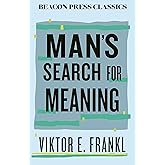
Man's Search for Meaning
Purchase options and add-ons
“He who has a why to live can bear almost any how” is the central theme in Man's Search For Meaning.
This seminal book, which has been called “one of the outstanding contributions to psychological thought” by Carl Rogers and “one of the great books of our time” by Harold Kushner, has been translated into more than 50 languages and sold over 18 million copies. “An enduring work of survival literature,” according to the New York Times, Viktor Frankl’s riveting account of his time in the Nazi concentration camps, and his insightful exploration of the human will to find meaning in spite of the worst adversity, has offered solace and guidance to generations of readers since it was first published in 1946.
At the heart of Frankl’s theory of logotherapy (from the Greek word for “meaning”) is a conviction that the primary human drive is not pleasure, as Freud maintained, but rather the discovery and pursuit of what the individual finds meaningful. Today, as new generations face new challenges and an ever more complex and uncertain world, Frankl’s classic work continues to inspire us all to find significance in the very act of living, in spite of all obstacles.
A must-read companion to this classic work, a new, never-before-published work by Frankl entitled Yes to Life: In Spite of Everything, is now available in English.
- Print length184 pages
- LanguageEnglish
- PublisherBeacon Press
- Publication dateJune 1, 2006
- Dimensions5.51 x 0.55 x 8.46 inches
- ISBN-109780807014271
- ISBN-13978-0807014271
Explore your book, then jump right back to where you left off with Page Flip.
View high quality images that let you zoom in to take a closer look.
Enjoy features only possible in digital – start reading right away, carry your library with you, adjust the font, create shareable notes and highlights, and more.
Discover additional details about the events, people, and places in your book, with Wikipedia integration.
Frequently bought together
Customers who viewed this item also viewed
- Man's Search for Meaning: Young Adult Edition: Young Adult EditionPaperbackFREE Shipping on orders over $35 shipped by AmazonGet it as soon as Friday, Oct 16
- Yes to Life: In Spite of EverythingPaperbackFREE Shipping on orders over $35 shipped by AmazonGet it as soon as Friday, Oct 16
- Man's Search for MeaningHardcoverFREE Shipping on orders over $35 shipped by AmazonGet it as soon as Saturday, Oct 17Only 1 left in stock - order soon.
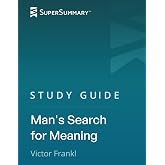
- Study Guide: Man’s Search for Meaning by Victor Frankl (SuperSummary)PaperbackFREE Shipping on orders over $35 shipped by AmazonGet it as soon as Friday, Oct 16
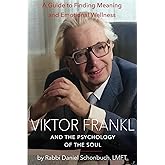
- Viktor Frankl and the Psychology of the Soul: A Guide to Finding Meaning and Emotional WellnessPaperbackFREE Shipping on orders over $35 shipped by AmazonGet it as soon as Friday, Oct 16

Customers also bought or read
- The Will to Meaning: Foundations and Applications of Logotherapy
Paperback$13.09$13.09Delivery Fri, Oct 16 - The Alchemist: A Modern Classic Fable of Spiritual Healing, Self-Discovery, and the Power of Dreams#1 Best SellerShort Stories Anthologies
Paperback$8.97$8.97Delivery Fri, Oct 16 - Embracing Hope: On Freedom, Responsibility & the Meaning of Life
Hardcover$13.83$13.83Delivery Fri, Oct 16 - The Myth of Sisyphus (Vintage International)#1 Best SellerExistentialist Philosophy
Paperback$9.19$9.19Delivery Oct 26 - Nov 10 - The Why That Conquers Every How: Viktor Frankl, the Search for Meaning, and the Case for Christ

Just releasedPaperback$19.99$19.99Delivery Fri, Oct 16 - Crime and Punishment (Vintage Classics)#1 Best SellerHistory & Criticism of Russian & Soviet Literature
Paperback$10.47$10.47Delivery Fri, Oct 16 - Man's Search for Meaning: Young Adult Edition: Young Adult Edition#1 Best SellerTeen & Young Adult Holocaust History
Paperback$10.11$10.11Delivery Fri, Oct 16 - The Psychology of Money: Timeless lessons on wealth, greed, and happiness#1 Best SellerWealth Management
Paperback$10.99$10.99Delivery Fri, Oct 16 - The Gift of Therapy: An Open Letter to a New Generation of Therapists and Their Patients#1 Best SellerPopular Psychology Research
Paperback$11.39$11.39Delivery Fri, Oct 16 - The Body Keeps the Score: Brain, Mind, and Body in the Healing of Trauma#1 Best SellerAnxiety
Paperback$14.15$14.15Delivery Fri, Oct 16 - The Desecration of Man: How the Rejection of God Degrades Our Humanity
Hardcover$21.49$21.49Delivery Fri, Oct 16 - When Breath Becomes Air: Pulitzer Prize Finalist#1 Best SellerConsciousness & Thought Philosophy
Hardcover$10.93$10.93Delivery Fri, Oct 16 - As a Man Thinketh - The Original 1902 Classic (includes The Mastery of Destiny) (Reader's Library Classics)#1 Best SellerSociology of Religion
Paperback$5.99$5.99Delivery Fri, Oct 16 - Excellent Sheep: The Miseducation of the American Elite and the Way to a Meaningful Life
Paperback$9.99$9.99Delivery Fri, Oct 16 - The Stranger (Vintage International)#1 Best SellerFrench Literature
Paperback$9.99$9.99Delivery Oct 16 - 20 - The Constitution of Liberty: The Definitive Edition (Volume 17) (The Collected Works of F. A. Hayek)
Paperback$20.70$20.70Delivery Oct 23 - 24 - The Righteous Mind: Why Good People Are Divided by Politics and Religion
Paperback$22.00$22.00Delivery Nov 7 - Dec 18 - Making Sense of Your World: A Biblical Worldview by W. Gary Phillips, William E. Brown, John Stonestreet (2008) Perfect Paperback
Paperback$45.44$45.44$3.99 delivery Oct 26 - Nov 4 - Protocols: An Operating Manual for the Human Body#1 Best SellerAging & Longevity
Hardcover$28.94$28.94Delivery Fri, Oct 16
From the Publisher
Yes to Life: In Spite of Everything
|
Embracing Hope: On Freedom, Responsibility & the Meaning of Life
|
Man's Search for Meaning: Gift Edition
|
Viktor E. Frankl and the Search for Meaning: 21 Reflections on Living Life wi...
|
|
|---|---|---|---|---|
|
Add to Cart
|
Add to Cart
|
Add to Cart
|
Add to Cart
|
|
| Customer Reviews |
4.7 out of 5 stars 2,950
|
4.5 out of 5 stars 117
|
4.8 out of 5 stars 4,112
|
4.0 out of 5 stars 2
|
| Price | $11.16$11.16 | $13.83$13.83 | $16.01$16.01 | $18.73$18.73 |
| Reviews | no data | no data | no data | no data |
Editorial Reviews
Review
"An enduring work of survival literature." —The New York Times
"[Man's Search for Meaning] might well be prescribed for everyone who would understand our time." —Journal of Individual Psychology
"An inspiring document of an amazing man who was able to garner some good from an experience so abysmally bad… Highly recommended." —Library Journal
“This is a book I try to read every couple of years. It’s one of the most inspirational books ever written. What is the meaning of life? What do you have when you think you have nothing? Amazing and heartbreaking stories. This is a book that should be in everyone’s library.”
—Jimmy Fallon
“This is a book I reread a lot . . . it gives me hope . . . it gives me a sense of strength.”
—Anderson Cooper, Anderson Cooper 360/CNN
“One of the great books of our time.” —Harold S. Kushner, author of When Bad Things Happen to Good People
“One of the outstanding contributions to psychological thought in the last fifty years.”
—Carl R. Rogers (1959)
About the Author
Harold S. Kushner is rabbi emeritus at Temple Israel in Natick, Massachusetts, and the author of bestselling books including When Bad Things Happen to Good People, Living a Life That Matters, and When All You’ve Ever Wanted Isn’t Enough.
William J. Winslade is a philosopher, lawyer, and psychoanalyst who teaches psychiatry, medical ethics, and medical jurisprudence at the University of Texas Medical School in Galveston.
Product details
- ASIN : 0807014273
- Publisher : Beacon Press
- Publication date : June 1, 2006
- Edition : 1st
- Language : English
- Print length : 184 pages
- ISBN-10 : 9780807014271
- ISBN-13 : 978-0807014271
- Item Weight : 7.4 ounces
- Dimensions : 5.51 x 0.55 x 8.46 inches
- Best Sellers Rank: #265 in Books (See Top 100 in Books)
- Customer Reviews:
About the authors

Viktor E. Frankl was professor of neurology and psychiatry at the University of Vienna Medical School until his death in 1997. He was the founder of what has come to be called the Third Viennese School of Psychotherapy (after Freud's psychoanalysis and Adler's individual psychology)—the school of logotherapy.
Born in 1905, Dr. Frankl received the degrees of Doctor of Medicine and Doctor of Philosophy from the University of Vienna. During World War II he spent three years at Auschwitz, Dachau and other concentration camps.
Dr. Frankl first published in 1924 in the International Journal of Psychoanalysis and has since published twenty-six books, which have been translated into nineteen languages, including Japanese and Chinese. He was a visiting professor at Harvard, Duquesne, and Southern Methodist Universities. Honorary Degrees have been conferred upon him by Loyola University in Chicago, Edgecliff College, Rockford College, and Mount Mary College, as well as by universities in Brazil and Venezuela. He was a guest lecturer at universities throughout the world and made fifty-one lecture tours throughout the United States alone. He was President of the Austrian Medical Society of Psychotherapy.

Discover more of the author’s books, see similar authors, read book recommendations and more.
Customer reviews
Customer Reviews, including Product Star Ratings help customers to learn more about the product and decide whether it is the right product for them.
To calculate the overall star rating and percentage breakdown by star, we don’t use a simple average. Instead, our system considers things like how recent a review is and if the reviewer bought the item on Amazon. It also analyzed reviews to verify trustworthiness.
Learn more how customers reviews work on AmazonCustomers say
Generated from the text of customer reviewsSelect to learn more
Reviews with images
Finding purpose during The Holocaust
Top reviews from the United States
- 5 out of 5 stars
excellent book - for many reasons
Reviewed in the United States on August 12, 2012I recently completed a master's in counseling and guidance and have been reading to find a set of books that will best address some of the disorders in the DSM-IV. Following is a list I have put together from my reading so far, and these are books that I would HIGHLY recommend. I would like to say up front that the DSM-IV is full of very normal behaviors that for some reason have become magnified or exaggerated in an individual to the point of causing a negative impact in their daily lives. Take OCD for example, it is quite normal and even preferable (from a safety perspective) to check and be sure that one has turned off all the burners on the stove after cooking, or to be sure the back door is locked before going to bed. But to continue checking time and again would be problematic and can lead to problems in an individual's life. Something is diagnosed as a disorder when it moves from being a "normal" activity to being something that causes dysfunction in daily living. So, one may read the DSM-IV and see themselves reflected in many of the disorders. The question is always: is this behavior negatively impacting my life? If so then that is when it crosses the line of normal and needs to be treated.
Depression; I believe there are two sources for depression: one source is our own minds, we think ourselves into the depression - at least in this case we know where it is coming from and we should be able to step behind our thoughts and help ourselves move in a better direction. The other source seemingly comes from nowhere; one minute we are okay and the next we are thrown into the depths
* Book = "Transforming Depression: Healing the Soul Through Creativity"- David H. Rosen"
o I would recommend reading this at least through chapter 4, going further than that delves into some deep Jungian psychology which will not likely appeal to everyone. I certainly enjoy Jungian psychology and believe that Jung's work will become more and more important and critical to our understanding as we move forward in this field of psychology. Jung's psychology is really on the borderland between spirit/soul and the science of psychology and it is Jung's work that brought me into this field. However it is quite complex/deep/different and may lose some readers. For a very good intro to Jung's work, I would recommend "The Essential Jung" by Anthony Storr, but this is not light reading as is composed of excerpts from Jung's collected works.
* Book = "Man's Search for Meaning" - Viktor Frankl
o I would recommend this book for two primary reasons: one is it pushes very strongly the message that meaning is essential in our lives - as shown through Victor Frankl's imprisonment in Nazi concentration camps. Frankl comments on how he observed the individuals who gave up the fight and died, and the individuals who persevered - and most importantly what it was that he believes made the difference. The other reason I recommend this book is that it helps the individuals whose thoughts may have led them to depression to realize that things could be worse. Of course there are devastations we may face that can truly be to us, just as bad as a Nazi concentration camps, but for the most part, we often push ourselves into depression for reasons that are somewhat superficial compared to other realities.
Depersonalization Disorder - essentially feeling like you are not really there
* Book = "Feeling Unreal: Depersonalization Disorder and the Loss of the Self" - Daphne Simeon and Jeffrey Abugel
o Excellent book which will help folks understand this disorder. This is for me a very interesting disorder, I think this is one disorder where the connection between our ego consciousness and perhaps what we are at a much deeper level is challenged. Normally we are locked into full belief in our reality - we believe we are very much a part of it and that we "are" the body in which we reside. This disorder forces us to question if we are the body we think we are. It would appear that whatever piece of our mind is keeping us in full belief is breaking down a bit, leaving us a bit outside of the "normal" feeling of being the body. Folks with this disorder can actually worry that they do not have control of their body and that this body may do something they do not want it to do. Driving a car for example can be quite traumatic if you think your body may be acting without your input.
Bipolar disorder - the book I am recommending is focused on Bipolar II disorder - essentially swinging from manic (very happy and carefree) to severe depression. This book was actually required reading during the Masters program
* Book = "An Unquiet Mind: A Memoir of Moods and Madness" by Kay Redfield Jamison
o Excellent book written by a psychologist who suffers from this disorder. This book helps to understand the importance of medication for this disorder, as well as the path of destruction that can easily be paved during carefree, manic episodes.
ADHD (attention deficit disorder)
* Book = "Scattered: How Attention Deficit Disorder Originates And What You Can Do About It" - Gabor Mate
o This is not just a great book for folks with ADHD, but for everyone - as many of the lessons here translate to all of us. This is an extremely excellent book on ADHD and living in general.
OCD (obsessive compulsive disorder)
* Book = "Tormenting Thoughts and Secret Rituals: The Hidden Epidemic of Obsessive-Compulsive Disorder" - Ian Osborn
o Excellent book on OCD - this book will help individuals with OCD as well as those who know someone with the disorder - to understand what is happening in the mind of a person with this disorder. This book will also help OCD folks realize that they are not alone and that many of the rituals or compulsions are shared by other folks with OCD.
That is all for now, but I am still reading
433 people found this helpfulSending feedback...Sending feedback...HelpfulThank you for your feedback.Sorry, we failed to record your vote. Please try againThanks, we'll investigate in the next few days.Sorry, We failed to report this review. Please try againWe'll check if this review meets our community guidelinesOpens in a new tab. If it doesn't, we'll remove it.
CancelReport - 5 out of 5 stars
A classic that speaks to our time
Reviewed in the United States on February 18, 2015Plus ça change, rien ne change — The more that changes, nothing changes.
This French proverb came to mind as I read Victor E. Frankl’s Man’s Search for Meaning (Amazon Kindle edition). First published in English in 1962, the book serves up timeless insights, chronicling Frankl’s stint in 4 concentration camps during World War 2, surviving the ordeal and from it fine-tuning what became know as logotherapy.
The book neatly divides into 2 major parts. The first part records Frankl’s experiences in the camps, noting with a keen eye the everyday details of life and how prisoners coped (or didn’t) with the horrendous conditions. Part two turns to a scholarly exposition of logotherapy – from the Greek logos, “meaning” – a theory that many neuroses have little to do with sex (Freud) or power (Adler) but everything to do with what Frankl terms the “existential vacuum,” the failure to identify purpose or meaning in life.
Speaking of the minority of prisoners who maintained a hopeful attitude, Frankl observed: “They may have been few in number, but they offer sufficient proof that everything can be taken from a man but one thing: the last of the human freedoms — to choose one’s attitude in any given set of circumstances, to choose one’s own way” (p. 68, location).
Related is a quote from Neitzsche cited multiple times:
“He who has a Why to live can bear almost any How” (location 21).
Frankl identifies three areas that can bring meaning to a person’s life (location 28):
1) work (doing something significant)
2) love (caring for another person)
3) courage during difficult times
As a Christian minister, there was much in Frankl’s book to praise. Jesus taught principles that line-up well with the first two points. For example, Matthew 16:25 insists: “For whoever wants to save their life will lose it, but whoever loses their life for me will find it” (NIV). The follower of Christ identifies a purpose much larger than one’s own pursuit of happiness, losing himself or herself in service to God and others. Likewise, in the example of Christ who braved the cross and thereby redeemed humanity, the third point in Frankl’s triad is illustrated. Though Jewish and not Christian, Frankl – after his first wife perished in the camps – married a Roman Catholic. Perhaps this is why he is comfortable with Christian language, noting for example:
“The way in which a man accepts his fate and all the suffering it entails, the way in which he takes up his cross, gives him ample opportunity – even under the most difficult circumstances – to add a deeper meaning to his life” (p. 70, location 154).
Writers since Frankl have picked up in the theme of meaning as essential to mental health. Rick Warren’s The Purpose Driven Life: What on Earth Am I Here For? (2002) explores the same theme but from a specifically Christian angle.
While much of Frankl’s observations are spot-on, I question his insistence that meaning stemming from past achievement is irrevocable (see location 1832). What happens when a culture at-large devalues history and is almost entirely oriented to the “next best thing”? Can a 90-year-old individual who invested his or her life in what was once a meaningful invention – such as the 3 1/2 floppy disk – still take pride in it when no one uses them anymore? While that may have given meaning to life at the time, can it be a source of ongoing meaning when now most everything is stored in the “cloud”?
Despite this question, on-balance, Victor Frankl’s Man’s Search for Meaning is a remarkable account of how purpose can keep a person going even in the most miserable of circumstances. There is much there to ponder, more than single reading can absorb. I’ll look forward to picking it up again in a few years and finding new insights.
6 people found this helpfulSending feedback...Sending feedback...HelpfulThank you for your feedback.Sorry, we failed to record your vote. Please try againThanks, we'll investigate in the next few days.Sorry, We failed to report this review. Please try againWe'll check if this review meets our community guidelinesOpens in a new tab. If it doesn't, we'll remove it.
CancelReport - 4 out of 5 stars
A must read
Reviewed in the United States on December 28, 2022This 2008 edition of Frankl's 1945 book is a must read for every human being who wants to lift their spirit in moments of despair.
The book is structured in three different parts. The first one (Experiences in a Concentration Camp) and the Postscript (The case for a Tragic Optimism) fit beautifully together, and are the basis of Frankl's philosophy and psychotherapy system called Logotherapy. They are narrated in a very conversational way because they are, after all, a memoir. They differ greatly in style and tone from the second part (Logotherapy in a Nutshell), which is a summary of Frankl's therapy system, partially based on Frankl's experiences and observations as Auschwitz inmate, and partially on techniques and views of the world that he had started elaborating before he was sent to the camp. This part is drier in style, way more technical and not as approachable for the reader, unless the reader is really into therapy or a therapist. Harold Kushner's preface to this 2008 edition is a good summary of the book main points, while Frankl's preface to the 1992 edition summarizes well how the book and Logotherapy came to be.
The book has many pearls of wisdom, and is very uplifting despite the brutality of what we read. In all honesty, I already expected that when I picked up the book. Some prisoner's stories are utterly poetic despite their tragedy. I'm glad that those people's historical memoirs had been so beautifully preserved. On the other hand, this is a survivor's first-person narration of the events, so that allows for invaluable insights into the reality of the extermination camps and into the inmates' mental/emotional state and fortune.
Since we live in 2021 and we're pretty aware of the Nazis' atrocities, most of the things that Frankl tells about his experience are somewhat lessened by the impact on the reader of dozens of documentaries and movies on WW2. It might have been chilling reading the book in the postwar era, when all the details were still unfolding and the wold came to realize what had really happened. What we didn't know before reading the book is that a new therapeutic model, Logotherapy, was greatly influenced by the Jew's suffering in Auschwitz, and that there is hope even in the biggest moments of despair.
For the rest, Frank's take on life is admirable and full of wisdom, whether you are into Logotherapy or not. I especially liked his comments on love, the youth and unemployment, as they are still, more than half a century later, valid.
LOGOTHERAPY, SOME CORE PRINCIPLES AND POINTS I LIKE
> The great task for any person is to find meaning in his/her life. Frankl saw three possible sources for meaning: Work (doing something significant), Love (caring for another person), and Courage in difficult times.
> Suffering is meaningless; we give our suffering meaning by the way in which we respond to it.
> You cannot control what happens to you in life, but you can always control what you will feel and do about what happens to you.
> Logotherapy aims to curing the soul by leading it to find meaning in life.
> What matters is to make the best of any given situation.
> Man’s main concern is not to gain pleasure or to avoid pain but rather to see a meaning in his life.
> The aim of life is not to be happy as the seeking of happiness can increase someone's unhappiness.
> Suffering is unavoidable, is part of life, and we need to accept it and re-frame it.
> Tragic optimism, i.e., one remains optimistic in spite of the “tragic triad, or those aspects of human existence which may be circumscribed by: (1) pain; (2) guilt; and (3) death and that we should say 'yes' to life in spite of all that.
> To suffer unnecessarily is masochistic rather than heroic.
> Success cannot be pursued but it is an end result that the unintended side-effect of one’s dedication to a cause greater than oneself or as the by-product of one’s surrender to a person other than oneself.
There are hundreds of pearls of wisdom that I cannot reproduce here because it would take too long, but those are the ones that made me read the book in the first place.
SOME CRITIQUE
Frankl poignantly mentions that despite all the inmates being subject to the harsh situations (food and sleep deprivation, hard-work labor, extreme cold, beatings, etc.) some died and some survived, and he ways that, many of those who died did so because they gave up on life and lose hope in getting alive out of the camps and resuming their lives after the war.
I love most of what Frankl says and his attitude towards life. However, we cannot say that Frankl survived just because he had a specific mindset, hopes of getting alive, finding his family and publishing the basics of Logotherapy included in this edition, which he had already started writing before being taken to the camp. First of all, he was an intellectual and a psychiatrist, i.e. a person with a strong mind, mentally s stable with enough intellectual harnesses to re-frame anything in his head to give it meaning. He certainly was an optimistic, like it's in his nature. Not everyone was so well equipped mentally and emotionally. What's more, there must have been other people who, like him, had hopes of surviving, seeing their families and doing something with their lives in the outside world, but they never made it because, I can only hypothesize, their physique and immune system, as well as their mental state weren't Frankl's.
237 people found this helpfulSending feedback...Sending feedback...HelpfulThank you for your feedback.Sorry, we failed to record your vote. Please try againThanks, we'll investigate in the next few days.Sorry, We failed to report this review. Please try againWe'll check if this review meets our community guidelinesOpens in a new tab. If it doesn't, we'll remove it.
CancelReport - 5 out of 5 stars
A Powerful and Thought-Provoking Read
Reviewed in the United States on August 3, 2026Man’s Search for Meaning is an inspiring and emotional book that offers a unique perspective on resilience, hope, and finding purpose even in the most difficult situations. Viktor Frankl’s experiences make the message deeply meaningful and unforgettable. The only downside is that some sections are a bit repetitive and philosophical, which may feel slow for some readers. Overall, it’s a must-read that leaves a lasting impact.
5 out of 5 starsA Powerful and Thought-Provoking Read
Reviewed in the United States on August 3, 2026Man’s Search for Meaning is an inspiring and emotional book that offers a unique perspective on resilience, hope, and finding purpose even in the most difficult situations. Viktor Frankl’s experiences make the message deeply meaningful and unforgettable. The only downside is that some sections are a bit repetitive and philosophical, which may feel slow for some readers. Overall, it’s a must-read that leaves a lasting impact.
3 people found this helpfulSending feedback...Sending feedback...HelpfulThank you for your feedback.Sorry, we failed to record your vote. Please try againThanks, we'll investigate in the next few days.Sorry, We failed to report this review. Please try againWe'll check if this review meets our community guidelinesOpens in a new tab. If it doesn't, we'll remove it.
CancelReport - 5 out of 5 stars
One of the Most Important Reflections on Human Meaning
Reviewed in the United States on May 12, 2026Man’s Search for Meaning remains powerful not because it offers simplistic optimism in the face of suffering, but because it refuses both despair and illusion. Frankl writes from firsthand experience of the concentration camps with a level of psychological clarity and restraint that gives the book much of its force.
What stands out most is the central insight that meaning is not dependent on comfort, certainty, or favorable conditions. Frankl argues that even in situations where external freedom is stripped away, human beings retain the capacity to choose their orientation toward suffering, responsibility, and existence itself. The idea is profound precisely because it emerges from conditions severe enough to test it completely.
The book also avoids becoming abstract philosophy detached from lived reality. Frankl moves between personal observation, psychological insight, and existential reflection in a way that keeps the ideas grounded in human experience rather than intellectual performance.
The prose is direct and disciplined, almost understated given the subject matter. That restraint allows the emotional and philosophical weight to emerge without sentimentality. The book does not romanticize suffering, nor does it claim meaning can erase pain. Instead, it insists that purpose, responsibility, love, and inner orientation remain psychologically vital even within profound hardship.
Its lasting influence comes from the seriousness with which it treats human dignity—not as naïve idealism, but as something tested under extreme conditions and still found meaningful.
It is ultimately less a memoir of suffering than a meditation on what allows a person to remain spiritually intact when nearly everything else has been taken away.
5 people found this helpfulSending feedback...Sending feedback...HelpfulThank you for your feedback.Sorry, we failed to record your vote. Please try againThanks, we'll investigate in the next few days.Sorry, We failed to report this review. Please try againWe'll check if this review meets our community guidelinesOpens in a new tab. If it doesn't, we'll remove it.
CancelReport - 5 out of 5 stars
Captivating reading
Reviewed in the United States on August 4, 2011I was reading a counseling book on the "Search for Meaning" and in the introduction Dr. Gary Collins stated, 'For a number of years Viktor Frankl's Man's Search for Meaning was required reading for all incoming freshmen at a Christian Liberal Arts college where I taught.' The statistics showed that students who read this book upon entering college did better in their academic life because it helped prepare them to understand what their true desire in life was.
So, before I finished that book I purchased this book and read it. I was amazed at all of the lessons that are taught, all of the theories that made sense and the purpose that it gives towards the work of a counselor that was so practical.
The first half of the book talks about Fankl's time spent in a Nazi prison camp. He talked about how there was only a 1 in 28 chance that the prisoner would survive the camp. Most either died from disease or malnutrition or they were sent to the ovens where they died. Many more died by their own hand. Their lack of hope for a future drove them to suicide.
Frankl took his observations of human nature and the experience in the war camps to think through the best way to provide counseling for people who are stressed, anxious, depressed, etc. The counseling he came up with is called 'Logotherapy.' He states that "Logo" is a Greek word which denotes, "meaning," and therapy is the method used to help people learn to deal with their neuroses.
So, 'Logotherapy' focuses on the future, that is to say, on the meanings to be fulfilled by the patient in his future. In other words, what is the meaning of life for the individual that is being counseled. As a counselor you must remember that the meaning of life for each of your patients will differ. There is not one easy answer that works for everyone. Each person is different. One of Frankl's favorite quotes is from Nietzche and it is, "He who has a why to live for can bear almost any how." The point of that statement is that people can endure any suffering, any disease, any hard life lesson if they know that they have a reason to live for.
This is why a patient with cancer may beat all the odds, in other words, he is told he has only two months to live, but because he desires to see his child graduate from college he might actually live for 9 more months until that accomplishment is fulfilled and then the person takes a turn for the worse and dies. There was meaning for life, so life was lived.
The second half of Fankl's book expresses his thoughts on why Man's Search For Meaning is so powerful and so necessary for each person. The subject is not fully discussed, this is a summary of his overall therapy method and learning. But it gives you a great introduction to what he believes is a good therapy format.
After reading through this short book I can see why Dr. Collins and others felt that this was a good book for college freshman to read. The statistics gathered by George Barna were that upon entering college when asked what they hoped to accomplish, students answered 84% of the time that they wanted to find the meaning for their lives. The other 16% stated they wanted to gain a degree to earn more money and satisfy their desires.
So, let's help our students and others learn more about the meaning for their lives. From a Pastor's point of view I was amazed at how well Viktor Frankl's thoughts weave right into Holy Scripture and are so pertinent.
I think all serious students will gain much insight from this short work.
Enjoy!
17 people found this helpfulSending feedback...Sending feedback...HelpfulThank you for your feedback.Sorry, we failed to record your vote. Please try againThanks, we'll investigate in the next few days.Sorry, We failed to report this review. Please try againWe'll check if this review meets our community guidelinesOpens in a new tab. If it doesn't, we'll remove it.
CancelReport - 5 out of 5 stars
Life-changing, riveting until the end!
Reviewed in the United States on February 21, 2012I had the good fortune of knowing my great-grandfather, may he rest in peace, for the first ten years of my life. Being a Holocaust survivor, my great-grandfather always had a story or piece of wisdom to share with my family when we visited. He gave my father Man's Search for Meaning by Victor Frankl as a gift and it remains one of my father's favorite books to this day. Although I was too young to read the book at the time, I know now that it rings truth in a new perspective on the Holocaust. My ancestors survived the horrors that the Nazis inflicted upon them, and they lived to tell me the tale. In an engaging and fascinating way, Frankl sheds some light as to how exactly people made it out of the concentration camps alive, with a will to live and with hope for the future.
In the first part of the book, Frankl describes his personal experiences as a prisoner in the Nazi concentration camps. He traces the mental state of an average prisoner in the camps, beginning upon arrival, and through liberation. Frankl writes that after the initial shock of reaching the infamous camp, a prisoner would be overcome by a "delusion of reprieve", an irrational feeling of hope that his situation would somehow be changed for the better. However, after being separated from loved ones in the dreaded selections, and watching them walk towards the gas chambers to their deaths, the reality and horrification of it all dawned upon the prisoner. Frankl describes the next emotional stage as "relative apathy", which was a complete weakening of the prisoner's senses and feelings, leaving a body merely going through the motions of everyday camp routine rather than a person. According to Frankl, apathy was essential for the preservation of a prisoner's life, because it channeled every emotion he had towards the goal of making it through the day alive. The third and final stage that a prisoner experienced was the complete inability to grasp the meaning of freedom. Following this the prisoner would have to re-learn what emotions such as joy and pleasure meant. Throughout this development, there still remains the question: what were the thoughts that gave a prisoner the drive to live, completely necessary for the conservation of his life? Frankl provides answers to this question in the second section of the book.
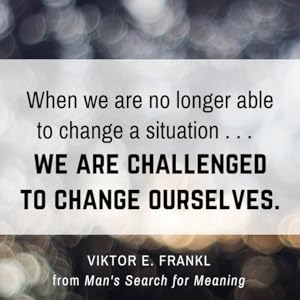
Throughout the book, Frankl often quotes Nietzsche: "He who has a why to live for can bear with almost any how." In the second section, Frankl elaborates on how this phrase sums up, in a nutshell, the mentality with which he survived the war. Having a purpose in life, writes Frankl, is the key to withstanding almost any suffering. Frankl named his theory "logotherapy", since logos is Greek for meaning. A method employed in psychology, "logotherapy" causes a patient to pinpoint and become familiar with the meaning of his life, which according to Frankl is the patient's will to strive, succeed, and to live. Frankl goes on to suggest three ways in which one can strive for meaning. The first one, understandably, is to accomplish something. Additionally, meaning can be found by loving another. Finally, man can find meaning by suffering. When one is faced with suffering, and there is nothing he can do to change his predicament, the only remaining option is for him to change his perspective, to change the way in which he views the situation. An example that Frankl gives is of a story of a grieving widower who had lost his wife. The man came to Frankl to ask for advice. Frankl asked the man, "What would have happened...if you had died first and your wife would have had to survive without you?" Through this question, the suffering the man was enduring gained a new purpose, he was mourning, but his wife would not have to mourn him. This story illustrates the usage of "logotherapy", and how by using it, one can utilize his suffering and find meaning through it.
The Holocaust and World War II is a time in world history that has been studied and pondered by many scholars. There are volumes upon volumes written about this dark time in history. Man's Search for Meaning is unique because Frankl focuses on the psychology of it all. He brings proofs to back up his claim that man's search for meaning is, in and of itself, a will to live. Through starvation, sickness, torture and brutality, surrounded by death and despair, man can endure it all, he can even gain something from it, so long as he has a reason to keep going. Each individual has a different source of meaning, yet no matter what the cause, the meaning alone is what gives that man the drive to wake up each morning and endure whatever life sends his way. Even when faced with death itself, man can survive if he has a reason to.
This book was written specifically about the Holocaust and the concentration camps. Nonetheless, there is a life-changing lesson that one can learn from reading the book, no matter what his life circumstances may be. Life is full of challenges, but those challenges eventually cause a person to question who he is and what he stands for, thereby forcing him to determine the meaning in his life. No matter where a person comes from, and no matter where he is headed, he must have a purpose in his life in order to move forward, and to be able to look back at the end of his life and feel proud of all that he accomplished. In a brilliant and insightful way, Victor Frankl has ultimately handed his readers the key to success and happiness, and the answer to many questions; he has affirmed that above all, meaning is what makes life worth living.
194 people found this helpfulSending feedback...Sending feedback...HelpfulThank you for your feedback.Sorry, we failed to record your vote. Please try againThanks, we'll investigate in the next few days.Sorry, We failed to report this review. Please try againWe'll check if this review meets our community guidelinesOpens in a new tab. If it doesn't, we'll remove it.
CancelReport - 5 out of 5 stars
for it is a great piece that gets its essence from the experiences of ...
Reviewed in the United States on August 22, 2017Any attempt towards writing what this book beholds is a futile attempt, for it is a great piece that gets its essence from the experiences of author and several other unnamed people in Auschwitz concentration camp. Hence what I intend to do here is just to write about the key messages from the book. The book is not only must read, but is also a must have in one’s personal collection of books.
While author had the core idea of the book (logotherapy) even before he was sent to Auschwitz concentration camp, his experiences at the camp and those of fellow inmates helped in existential validation of Logotherapy, and today have made it more understandable and relatable for the readers. Logotherapy has its roots in “logos”. Logos is a Greek work that denotes “meaning”. Logotherapy focuses on the meaning of human existence as well as on man’s search for such a meaning. As per Logotherapy, striving to find a meaning is the primary motivational force in a man, and is what keeps man’s desire to live alive.
The core message of the book is “He who has a ‘why’ to live for can bear with almost any ‘how’”. Finding the ‘why’ to live i.e. finding ‘meaning’ in life, and then enduring the ‘how’s is what life is. There are three ways in which man discovers meaning in life:
1. Creating something or doing a deed - artists, scientists, researchers etc.
2. Experiencing something or encountering someone such as goodness, truth and beauty, and by experiencing nature and culture or, last but not the least, by experiencing another human being in his very uniqueness - by loving him
3. By the attitude we take towards unavoidable suffering - like that of concentration camp experience i.e. by turning one’s predicament into human achievement
While # 1 & # 2 are relatively easier to comprehend, # 3 warrants some discussion. Author goes on to explain how people have, in many cases, been able to turn their predicament into achievement. The key thing to understand is - in some way, suffering ceases to be suffering at the moment it finds a meaning! For the inmates in camp it was a realization that their loved ones are waiting on the other side, or that only they can complete an experiment which was just about to be completed before they were sent to the camp. The author elaborates this principle further through the case of an elderly gentleman who went to see a psychologist because of depression he was suffering, since two years post his wife’s death. The psychologist asked him one question - “What would have happened, if you had died first, and your wife would have had to survive you?” “Oh”, he said, “This would have been terrible for her; how she would have suffered”. Wherein psychologist replied - that the gentleman in fact saved his wife from suffering, at the price of surviving and mourning her. The gentleman left with a sigh of relief!
If Life has a meaning, then suffering also has to have a meaning - since it is an inevitable part of life. Whether one is worth of his/her sufferings is the thing that makes the difference! Reminds me of the Hindi / Urdu quote by Muhammad Iqbal -“Khudi ko kar buland itna ke har taqdeer se pehle Khuda bande se khud pooche bata teri raza kya hai.”
Life’s meaning can be discovered well through # 1 & # 2 above too, but what do you do in face of un-avoidable suffering? “Suffering” isn’t a bad thing - it is just another way in which meaning of life is realized – it is an opportunity to turn your predicament into achievement
Coming back to the book - It has been published in 21 other languages, English editions have sold more than 12 MN copies, and have seen more than 100 printings. Logotherapy itself was published originally in German in 20 volumes. If I have to keep only one book in my personal library it would be this.
4 people found this helpfulSending feedback...Sending feedback...HelpfulThank you for your feedback.Sorry, we failed to record your vote. Please try againThanks, we'll investigate in the next few days.Sorry, We failed to report this review. Please try againWe'll check if this review meets our community guidelinesOpens in a new tab. If it doesn't, we'll remove it.
CancelReport
Top reviews from other countries
Ross McDougall5 out of 5 starspound-for-pound one of the best books available
Reviewed in Australia on April 30, 2017What a spectacular gift Frankl has given society in this book. A truly heartbreaking account of time in various SS camps, the journey the author took is just as jaw-dropping as the place he found himself at the end.
Man's Search For Meaning is an excellent perspective-checker, an excellent first-hand account of how horrible people can be to each other, a tribute to the human ability to make sense of the suffering and pain one endures, and a poignant insight into the psychology that kept some prisoners alive in Auschwitz while others perished.
I was continually struck with the way Frankl beautifully weaves discussion of psychology and the ways in which people respond to shocking circumstances into the description of the realities facing the prisoners in the Nazi death camps. The book is an ongoing push-pull between feeling utterly sick reading the occurrences in the camp and inspired by the positions taken by some prisoners, as well as the beauty that sporadically managed to shine into the camp. Hope is one of the most powerful forces available to humanity, and it energised the prisoners as no bread or water could.
The new addition of a discussion of Logotherapy is very helpful for application into one's own life today, and much of Frankl's explanation of it seems logical and with merit. It's a testament to the quality of the writer that both halves of the book are equally enthralling to read and ingest.
I feel I may need to put this into a rotation to allow the concepts to sink deeper. I wish more people wrote with grace and beauty like Frankl; He shows beauty in the midst of terror and maintains an objective perspective like nobody else I've read. A story of Frankl speaking to the other prisoners and encouraging them to find hope and see the positives of their imprisonment is one of the finest things I've read.
Sending feedback...Thanks, we'll investigate in the next few days.Sorry, We failed to report this review. Please try againWe'll check if this review meets our community guidelinesOpens in a new tab. If it doesn't, we'll remove it.
CancelReport
J5 out of 5 starsA great read
Reviewed in Japan on April 23, 2024This book is a great compact size, and the book itself is inspiring. The cover is eye-catching and elegant.
Sending feedback...Thanks, we'll investigate in the next few days.Sorry, We failed to report this review. Please try againWe'll check if this review meets our community guidelinesOpens in a new tab. If it doesn't, we'll remove it.
CancelReport
Roan Fourie5 out of 5 starsA must Read
Reviewed in South Africa on May 30, 2026Great read, highly recommended! I learned so much about the Holocaust and from the point of view of the writer, It felt as if I was there! A must read. The book is of good quality.
Sending feedback...Thanks, we'll investigate in the next few days.Sorry, We failed to report this review. Please try againWe'll check if this review meets our community guidelinesOpens in a new tab. If it doesn't, we'll remove it.
CancelReport
viktoriia1 out of 5 starsPurchased Book with Indian Subcontinent-Only Sticker — Sold in Ireland
Reviewed in Ireland on January 4, 2026This review is not about the content of the book, but about the quality of the edition sold. The font is extremely small, making it difficult to read. Most importantly, the copy I received has a sticker stating “For Sale in the Indian Subcontinent Only,” yet it was sold to me in Ireland via Amazon. This raises concerns about regional restrictions and the legitimacy of the edition provided
1 out of 5 starsPurchased Book with Indian Subcontinent-Only Sticker — Sold in Ireland
Reviewed in Ireland on January 4, 2026This review is not about the content of the book, but about the quality of the edition sold. The font is extremely small, making it difficult to read. Most importantly, the copy I received has a sticker stating “For Sale in the Indian Subcontinent Only,” yet it was sold to me in Ireland via Amazon. This raises concerns about regional restrictions and the legitimacy of the edition provided
Sending feedback...Thanks, we'll investigate in the next few days.Sorry, We failed to report this review. Please try againWe'll check if this review meets our community guidelinesOpens in a new tab. If it doesn't, we'll remove it.
CancelReport
Víctor Iglesias González5 out of 5 starsMagnífico
Reviewed in Mexico on January 30, 2024Es un pilar.
Creo que el primero que va a sistematizar el tema de la actitud.
Es un gran ejemplo de cómo aproximarse a la espiritualidad sin caer en el esoterismo, manteniendo una actitud científica.
Sending feedback...Thanks, we'll investigate in the next few days.Sorry, We failed to report this review. Please try againWe'll check if this review meets our community guidelinesOpens in a new tab. If it doesn't, we'll remove it.
CancelReport