Governor of Ohio
| Ohio Governor | |
 | |
| General information | |
| Office Type: | Partisan |
| Office website: | Official Link |
| Compensation: | $176,255 |
| 2026 FY Budget: | $4,196,821 |
| Term limits: | Two consecutive terms |
| Structure | |
| Length of term: | 4 years |
| Authority: | Ohio Constitution, Article III, Section 5 |
| Selection Method: | Elected |
| Current Officeholder(s) | |
Governor of Ohio
Richard Michael DeWine | |
| Elections | |
| Next election: | 2026 |
| Last election: | 2022 |
| Other Ohio Executive Offices | |
| Governor • Lieutenant Governor • Secretary of State • Attorney General • Treasurer • Auditor • Superintendent of Education • Agriculture Commissioner • Insurance Commissioner • Natural Resources Commissioner • Labor Commissioner • Public Service Commission | |
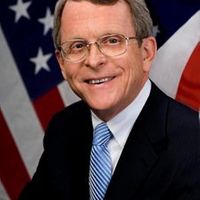
The Governor of the State of Ohio is an elected constitutional officer, the head of the executive branch and the highest state office in Ohio. The governor is popularly elected every four years by a plurality and is limited to two consecutive terms.[1]
Prior to 1963, the term of office was two years and, prior to 1995, term limits were not in place.[2][3]
Ohio has a Republican trifecta. The Republican Party controls the office of governor and both chambers of the state legislature.
Ohio has a Republican triplex. The Republican Party controls the offices of governor, secretary of state, and attorney general.
Current officeholder
The current Governor of Ohio is Richard Michael DeWine (R). DeWine assumed office in 2019.
Authority
The state Constitution addresses the office of the governor in Article III, the Executive Department.
Under Article III, Section 5:
|
The supreme executive power of this state shall be vested in the governor.[4] |
Qualifications
| State Executives |
|---|
 |
| Current Governors |
| Gubernatorial Elections |
| 2026 • 2025 • 2024 • 2023 • 2022 • 2021 • 2020 • 2019 • 2018 • 2017 • 2016 • 2015 • 2014 |
| Current Lt. Governors |
| Lt. Governor Elections |
| 2026 • 2025 • 2024 • 2023 • 2022 • 2021 • 2020 • 2019 • 2018 • 2017 • 2016 • 2015 • 2014 |
A candidate for the governor's office may not hold any congressional or federal office or any other state office.[4]
A candidate for governor of Ohio must be:[5]
- at least 18 years old
- a resident of the state
- a U.S. citizen
Vacancies
- See also: How gubernatorial vacancies are filled
Details of vacancy appointments are addressed under Article III, Sections 15, 17, and 22.
If the governor dies, resigns, is removed or is convicted on impeachment, the lieutenant governor succeeds.
The lieutenant governor also serves as the acting governor in the event of any temporary disability of the governor.
After the lieutenant governor, the line of succession goes to the President Pro Tem of the Ohio State Senate and then to the Speaker of the Ohio House of Representatives. Whoever serves as the acting governor has the full duties, powers, and emoluments of the elected governor.
Of the four offices of the governor, lieutenant governor, President Pro Tem of the Senate, and Speaker of the House of Representatives, no person may hold two of them simultaneously or receive the compensation and emoluments of more than one office simultaneously.
If both the offices of the governor and the lieutenant governor are vacant and there are more than 20 months remaining in the current term, a special election for both offices shall be held at the next general election. The highest officer in the line of succession serves as an acting governor until the election.
If a governor-elect is unable to take office, the lieutenant governor-elect takes office and serves as the governor. If the governor-elect is only temporarily unable to take office, the lieutenant governor-elect serves as acting governor until the elected governor's disability is removed.
If, by a joint resolution, the legislature presents the case for the governor's removal on grounds of mental disability to discharge the office, the Supreme Court of Ohio shall have "original, exclusive, and final, jurisdiction" in the case. Within 21 days of receipt of such a resolution, the court shall give notice to the governor, hold a public hearing and render a decision.
If the office is vacated in such a manner, the court also has "original, exclusive, and final, jurisdiction" in choosing the manner of succession to the office.
Elections
Ohio elects governors in the midterm elections, that is, even years that are not presidential election years. For Ohio, 2018, 2022, 2026, 2030, and 2034 are all gubernatorial election years. Legally, the gubernatorial inauguration is always set for the second Monday in the January following an election.
If two candidates are tied, the joint session of the legislature shall cast votes to choose among the top two vote getters.[4]
Term limits
- See also: States with gubernatorial term limits
Ohio governors are restricted to two consecutive terms in office, after which they must wait one term before being eligible to run again.
Ohio Constitution, Article III, Section 2
| No person shall hold the office of governor for a period longer than two successive terms of four years.[4] |
Partisan composition
The chart below shows the partisan breakdown of Ohio governors from 1992 to 2013.

Election results
See also: Ohio gubernatorial and lieutenant gubernatorial election, 2030
There are no official candidates yet for this election.
See also: Ohio gubernatorial and lieutenant gubernatorial election, 2026
Ohio gubernatorial and lieutenant gubernatorial election, 2026 (May 5 Democratic primary)
Ohio gubernatorial and lieutenant gubernatorial election, 2026 (May 5 Republican primary)
Ohio gubernatorial and lieutenant gubernatorial election, 2026 (May 5 Libertarian primary)
General election
The general election will occur on November 3, 2026.
General election for Governor of Ohio
The following candidates are running in the general election for Governor of Ohio on November 3, 2026.
Candidate | ||
 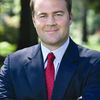 | Amy Acton (D) / David Pepper (D) | |
  | Vivek Ramaswamy (R) / Robert McColley (R) | |
 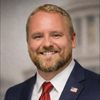 | Don Kissick (L) / James Mills (L) | |
  | Tim Grady (Independent)  / Andrea Neutzling (Independent) (Write-in) | |
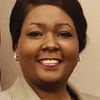  | Heather Hill (Independent) / Pat Manley (Independent) (Write-in) | |
 | Renea Turner (Independent) / Jalen Turner (Independent) (Write-in) | |
| Ron Ula (Independent) / Michael Lehnerd (Independent) (Write-in) | ||

| ||||
| = candidate completed the Ballotpedia Candidate Connection survey. | ||||
| If you are a candidate and would like to tell readers and voters more about why they should vote for you, complete the Ballotpedia Candidate Connection Survey. | ||||
Do you want a spreadsheet of this type of data? Contact our sales team. | ||||
Democratic primary
Democratic primary for Governor of Ohio
Amy Acton (D) advanced from the Democratic primary for Governor of Ohio on May 5, 2026.
Candidate | % | Votes | ||
| ✔ | | Amy Acton / David Pepper | 100.0 | 767,360 |
| Total votes: 767,360 | |||
| = candidate completed the Ballotpedia Candidate Connection survey. | ||||
| If you are a candidate and would like to tell readers and voters more about why they should vote for you, complete the Ballotpedia Candidate Connection Survey. | ||||
Do you want a spreadsheet of this type of data? Contact our sales team. | ||||
Withdrawn or disqualified candidates
Republican primary
Republican primary for Governor of Ohio
Vivek Ramaswamy (R) defeated Casey Putsch (R) and Heather Hill (R) (Disqualified, still on ballot) in the Republican primary for Governor of Ohio on May 5, 2026.
Candidate | % | Votes | ||
| ✔ | | Vivek Ramaswamy / Robert McColley | 82.4 | 676,562 |
  | Casey Putsch / Kim Georgeton | 17.6 | 144,184 | |
| Total votes: 820,746 | |||
| = candidate completed the Ballotpedia Candidate Connection survey. | ||||
| If you are a candidate and would like to tell readers and voters more about why they should vote for you, complete the Ballotpedia Candidate Connection Survey. | ||||
Do you want a spreadsheet of this type of data? Contact our sales team. | ||||
Withdrawn or disqualified candidates
- Heather Hill (R) (Disqualified, still on ballot) / Stuart Moats (R) (Withdrew, still on ballot)
- Robert Sprague (R)
- Renea Turner (R) / Jalen Turner (R)
- Dave Yost (R)
Libertarian Party primary
Libertarian Party primary for Governor of Ohio
Don Kissick (L) defeated Travis Vought (L) in the Libertarian Party primary for Governor of Ohio on May 5, 2026.
Candidate | % | Votes | ||
| ✔ | | Don Kissick / James Mills | 98.0 | 8,705 |
 | Travis Vought / Christy Jo Orr (Write-in) | 2.0 | 180 | |
| Total votes: 8,885 | |||
| = candidate completed the Ballotpedia Candidate Connection survey. | ||||
| If you are a candidate and would like to tell readers and voters more about why they should vote for you, complete the Ballotpedia Candidate Connection Survey. | ||||
Do you want a spreadsheet of this type of data? Contact our sales team. | ||||
See also: Ohio gubernatorial and lieutenant gubernatorial election, 2022
General election
General election for Governor of Ohio
The following candidates ran in the general election for Governor of Ohio on November 8, 2022.
Candidate | % | Votes | ||
| ✔ |   | Richard Michael DeWine (R) / Jon Husted (R) | 62.4 | 2,580,424 |
  | Nan Whaley (D) / Cheryl Stephens (D) | 37.4 | 1,545,489 | |
  | Marshall Usher (Independent) / Shannon Walker (Independent) (Write-in) | 0.2 | 8,082 | |
| Tim Grady (Independent) / Dayna Bickley (Independent) (Write-in) | 0.0 | 574 | |
| Renea Turner (Independent) / Adina Pelletier (Independent) (Write-in) | 0.0 | 231 | |
| Craig Patton (Independent) / Collin Cook (Independent) (Write-in) | 0.0 | 77 | ||
| Total votes: 4,134,877 | |||
| = candidate completed the Ballotpedia Candidate Connection survey. | ||||
Do you want a spreadsheet of this type of data? Contact our sales team. | ||||
Withdrawn or disqualified candidates
- F. Patrick Cunnane (Independent) / Mary Cunnane (Independent)
- Niel Petersen (Independent) / Michael Stewart (Independent)
Democratic primary
Democratic primary for Governor of Ohio
Nan Whaley (D) defeated John Cranley (D) in the Democratic primary for Governor of Ohio on May 3, 2022.
Candidate | % | Votes | ||
| ✔ | | Nan Whaley / Cheryl Stephens | 65.0 | 331,014 |
  | John Cranley / Teresa Fedor | 35.0 | 178,132 | |
| Total votes: 509,146 | |||
| = candidate completed the Ballotpedia Candidate Connection survey. | ||||
Do you want a spreadsheet of this type of data? Contact our sales team. | ||||
Republican primary
Republican primary for Governor of Ohio
Incumbent Richard Michael DeWine (R) defeated Jim Renacci (R), Joe Blystone (R), and Ron Hood (R) in the Republican primary for Governor of Ohio on May 3, 2022.
Candidate | % | Votes | ||
| ✔ | | Richard Michael DeWine / Jon Husted | 48.1 | 519,594 |
  | Jim Renacci / Joe Knopp | 28.0 | 302,494 | |
  | Joe Blystone / Jeremiah Workman | 21.8 | 235,584 | |
  | Ron Hood / Candice Keller | 2.1 | 22,411 | |
| Total votes: 1,080,083 | |||
| = candidate completed the Ballotpedia Candidate Connection survey. | ||||
Do you want a spreadsheet of this type of data? Contact our sales team. | ||||
Withdrawn or disqualified candidates
- Niel Petersen (R)
See also: Ohio gubernatorial and lieutenant gubernatorial election, 2018
General election
General election for Governor of Ohio
The following candidates ran in the general election for Governor of Ohio on November 6, 2018.
Candidate | % | Votes | ||
| ✔ | | Richard Michael DeWine (R) / Jon Husted (R) | 50.4 | 2,231,917 |
  | Richard Cordray (D) / Betty Sutton (D) | 46.7 | 2,067,847 | |
  | Travis Irvine (L) / Todd Grayson (L) | 1.8 | 79,985 | |
  | Constance Gadell-Newton (G) / Brett Joseph (G) | 1.1 | 49,475 | |
| Renea Turner (Independent) / Keith Colton (Independent) (Write-in) | 0.0 | 185 | |
| Rebecca Ayres (Independent) / Anthony Durgans (Independent) (Write-in) | 0.0 | 132 | ||
 | Richard Duncan (Independent) / Dennis Artino (Independent) (Write-in) | 0.0 | 41 | |
| Total votes: 4,429,582 (100% precincts reporting) | |||
| = candidate completed the Ballotpedia Candidate Connection survey. | ||||
Do you want a spreadsheet of this type of data? Contact our sales team. | ||||
Withdrawn or disqualified candidates
- Collin Hill (Independent)
Democratic primary
Democratic primary for Governor of Ohio
The following candidates ran in the Democratic primary for Governor of Ohio on May 8, 2018.
Candidate | % | Votes | ||
| ✔ | | Richard Cordray / Betty Sutton | 62.2 | 428,159 |
 | Dennis Kucinich / Tara Samples | 23.0 | 158,284 | |
  | Joseph Schiavoni / Stephanie Dodd | 9.2 | 63,131 | |
 | William O'Neill / Chantelle Lewis | 3.3 | 22,667 | |
| Paul Ray / Jerry Schroeder | 1.4 | 9,536 | ||
| Larry Ealy / Jeffrey Lynn | 1.0 | 7,011 | ||
| Total votes: 688,788 | |||
| = candidate completed the Ballotpedia Candidate Connection survey. | ||||
Do you want a spreadsheet of this type of data? Contact our sales team. | ||||
Withdrawn or disqualified candidates
- Jonathan Heavey (D)
- Connie Pillich (D)
Republican primary
Republican primary for Governor of Ohio
Richard Michael DeWine (R) defeated Mary Taylor (R) in the Republican primary for Governor of Ohio on May 8, 2018.
Candidate | % | Votes | ||
| ✔ | | Richard Michael DeWine / Jon Husted | 59.8 | 499,639 |
 | Mary Taylor / Nathan Estruth | 40.2 | 335,328 | |
| Total votes: 834,967 | |||
| = candidate completed the Ballotpedia Candidate Connection survey. | ||||
Do you want a spreadsheet of this type of data? Contact our sales team. | ||||
Withdrawn or disqualified candidates
- Jim Renacci (R)
Green Party primary
Green Party primary for Governor of Ohio
Constance Gadell-Newton (G) advanced from the Green Party primary for Governor of Ohio on May 8, 2018.
Candidate | % | Votes | ||
| ✔ | | Constance Gadell-Newton / Brett Joseph | 100.0 | 3,031 |
| Total votes: 3,031 | |||
| = candidate completed the Ballotpedia Candidate Connection survey. | ||||
Do you want a spreadsheet of this type of data? Contact our sales team. | ||||

Duties

The governor is the commander-in-chief of the state's military forces (§ 10). The governor has a duty to enforce state laws; the power to either approve or veto bills passed by the Ohio State Legislature; the power to convene the legislature; and the power to grant pardons, except in cases of treason and impeachment (§ 11).[4]
Other duties and privileges of the office include:[4]
- Executing all laws and requiring written information on any office from the head of that office (§ 6)
- Making an annual address to the General Assembly, with recommendation for legislation (§ 7)
- Convening extraordinary sessions of the legislature with limited purposes (§ 8)
- Adjourning the legislature when the two chambers cannot agree to do so themselves, not to include the privilege of adjourning the legislature past the sine die set for the regular session (§ 9)
- Keeping and using "The Great Seal of the State of Ohio" (§ 12)
- Signing and sealing all commissions granted in the name of the state of Ohio (§ 13)
- Nominating, in the event of a vacancy in the Lieutenant Governor's office, a new officer, subject to a confirmatory vote of both chambers of the legislature (§ 17a)
- Making vacancy appointments for all "key state officers" (the Auditor, the Treasurer, the Secretary of State, and the Attorney General). Such appointments are for the remainder of the term when the next general election is less than 40 days away and until the next general election otherwise (§ 18)
- Accepting a report from the head of each executive department at least once a year, not later than five days before the regular session of the legislature convenes, and including the substance of those reports in his or her annual address to the legislature (§ 20)
- Making all appointments not otherwise provided for, with the advice and consent of the Senate, unless the Senate refuses to act, in which case the Governor's appointee takes offices by default (§ 21)
Divisions

Note: Ballotpedia's state executive officials project researches state official websites for information that describes the divisions (if any exist) of a state executive office. That information for the Governor of Ohio has not yet been added. After extensive research we were unable to identify any relevant information on state official websites. If you have any additional information about this office for inclusion on this section and/or page, please email us.
State budget
Role in state budget
- See also: Ohio state budget and finances
The state operates on a biennial budget cycle. The sequence of key events in the budget process is as follows:[6]
- Budget instructions are sent to state agencies in July of the year preceding the start of the new biennium.
- State agencies submit their requests to the governor between September and October.
- The governor submits his or her proposed budget to the state legislature in February (the deadline is extended to March 15 for a newly elected governor).
- The legislature typically adopts a budget in June. A simple majority is required to pass a budget. The biennium begins July 1 of odd-numbered years.
Ohio is one of 44 states in which the governor has line item veto authority.[6][7]
The governor is legally required to submit a balanced budget proposal. Likewise, the state legislature is legally required to pass a balanced budget.[6]
Governor's office budget
- See also: Ohio state budget and finances
The budget for the governor's office in fiscal year 2026 was $4,196,821.[8]
Compensation
As established in Article III, Section 19 of the Ohio Constitution, the governor's annual salary is legally fixed and may not be raised or decreased effective during the current term. The governor's salary is set by Title 1, Chapter 141 of the Ohio Revised Code.[9]
| Year | Salary | Source |
|---|---|---|
| 2025 | $176,255 | Source 1 |
| 2024 | $172,655 | Source 1 |
| 2023 | $171,059 | Source 1 |
| 2022 | $168,106 | Source 1 |
| 2021 | $164,590 | Source 1 |
| 2020 | $159,182 | Source 1 |
| 2019 | $153,650 | Source 1 |
| 2018 | $148,886 | Source 1 |
| 2017 | $148,886 | Source 1 |
| 2016 | $148,304 | Source 1 |
| 2015 | $148,886 | Source 1 |
| 2014 | $148,886 | Source 1 |
| 2013 | $148,886 | Source 1 |
| 2012 | $148,886 | Source 1 |
| 2011 | $144,269 | Source 1 |
| 2010 | $144,269 | Source 1 |
Historical officeholders
There have been 70 governors of Ohio since 1803. Of the 70 officeholders, 28 were Republican, 23 were Democratic, 10 were Democratic-Republican, five were Whig, three were Union, and one was a National Republican.[10]
| List of officeholders from 1803-present | |||||
|---|---|---|---|---|---|
| # | Name | Tenure | Party | ||
| 1 | Edward Tiffin | 1803 - 1807 | Democratic-Republican | ||
| 2 | Thomas Kirker | 1807 - 1808 | Democratic-Republican | ||
| 3 | Samuel Huntington | 1808 - 1810 | Democratic-Republican | ||
| 4 | Return Jonathan Meigs | 1810 - 1814 | Democratic-Republican | ||
| 5 | Othneil Looker | 1814 - 1814 | Democratic-Republican | ||
| 6 | Thomas Worthington | 1814 - 1818 | Democratic-Republican | ||
| 7 | Ethan Allen Brown | 1818 - 1822 | Democratic-Republican | ||
| 8 | Allen Trimble | 1822 - 1822 | Democratic-Republican | ||
| 9 | Jeremiah Morrow | 1822 - 1826 | Democratic-Republican | ||
| 10 | Allen Trimble | 1826 – 1830 | Democratic-Republican | ||
| 11 | Duncan McArthur | 1830 - 1832 | National Republican | ||
| 12 | Robert Lucas | 1832 - 1836 |  Democratic | ||
| 13 | Joseph Vance | 1836 - 1838 | Whig | ||
| 14 | Wilson Shannon | 1838 - 1840 | Democratic
| ||
| 15 | Thomas Corwin | 1840 - 1842 | Whig | ||
| 16 | Wilson Shannon | 1842 – 1844 | Democratic
| ||
| 17 | Thomas Welles Bartley | 1844 - 1844 | Democratic
| ||
| 18 | Mordecai Bartley | 1844 - 1846 | Whig | ||
| 19 | William Bebb | 1846 - 1849 | Whig | ||
| 20 | Seabury Ford | 1849 - 1850 | Whig | ||
| 21 | Reuben Wood | 1850 - 1853 | Democratic
| ||
| 22 | William Medill | 1853 - 1856 | Democratic
| ||
| 23 | Salmon Portland Chase | 1856 - 1860 |  Republican | ||
| 24 | William Dennison | 1860 - 1862 | Republican
| ||
| 25 | David Tod | 1862 - 1864 | Union | ||
| 26 | John Brough | 1864 - 1865 | Union | ||
| 27 | Charles Anderson | 1865 - 1866 | Union | ||
| 28 | Jacob Dolson Cox | 1866 - 1868 | Republican
| ||
| 29 | Rutherford Birchard Hayes | 1868 - 1872 | Republican
| ||
| 30 | Edward Follansbee Noyes | 1872 - 1874 | Republican
| ||
| 31 | William Allen | 1874 - 1876 | Democratic
| ||
| 32 | Rutherford Birchard Hayes | 1876 – 1877 | Republican
| ||
| 33 | Thomas L. Young | 1877 - 1878 | Republican
| ||
| 34 | Richard Moore Bishop | 1878 - 1880 | Democratic
| ||
| 35 | Charles Foster | 1880 - 1884 | Republican
| ||
| 36 | George Hoadly | 1884 - 1886 | Democratic
| ||
| 37 | Joseph Benson Foraker | 1886 - 1890 | Republican
| ||
| 38 | James Edwin Campbell | 1890 - 1892 | Democratic
| ||
| 39 | William McKinley | 1892 - 1896 | Republican
| ||
| 40 | Asa Smith Bushnell | 1896 - 1900 | Republican
| ||
| 41 | George Kilbon Nash | 1900 - 1904 | Republican
| ||
| 42 | Myron Timothy Herrick | 1904 - 1906 | Republican
| ||
| 43 | John M. Pattison | 1906 - 1906 | Democratic
| ||
| 44 | Andrew L. Harris | 1906 - 1909 | Republican
| ||
| 45 | Judson Harmon | 1909 - 1913 | Democratic
| ||
| 46 | James Middleton Cox | 1913 - 1915 | Democratic
| ||
| 47 | Frank Bartlett Willis | 1915 - 1917 | Republican
| ||
| 48 | James Middleton Cox | 1917 – 1921 | Democratic
| ||
| 49 | Harry L. Davis | 1921 - 1923 | Republican
| ||
| 50 | Alvin Victor Donahey | 1923 - 1929 | Democratic
| ||
| 51 | Myers Young Cooper | 1929 - 1931 | Republican
| ||
| 52 | George White | 1931 - 1935 | Democratic
| ||
| 53 | Martin Luther Davey | 1935 - 1939 | Democratic
| ||
| 54 | John William Bricker | 1939 - 1945 | Republican
| ||
| 55 | Frank John Lausche | 1945 - 1947 | Democratic
| ||
| 56 | Thomas J. Herbert | 1947 - 1949 | Republican
| ||
| 57 | Frank John Lausche | 1949 – 1957 | Democratic
| ||
| 58 | John William Brown | 1957 - 1957 | Republican
| ||
| 59 | Crane William O'Neill | 1957 - 1959 | Republican
| ||
| 60 | Michael Vincent DiSalle | 1959 - 1963 | Democratic
| ||
| 61 | James Allen Rhodes | 1963 - 1971 | Republican
| ||
| 62 | John Joyce Gilligan | 1971 - 1975 | Democratic
| ||
| 63 | James Allen Rhodes | 1975 – 1983 | Republican
| ||
| 64 | Richard F. Celeste | 1983 - 1991 | Democratic
| ||
| 65 | George V. Voinovich | 1991 - 1998 | Republican
| ||
| 66 | Nancy P. Hollister | 1998 - 1999 | Republican
| ||
| 67 | Bob Taft | 1999 - 2007 | Republican
| ||
| 68 | Ted Strickland | 2007 - 2011 | Democratic
| ||
| 69 | John Kasich | 2011 – 2019 | Republican
| ||
| 70 | Mike DeWine | 2019 – present | Republican
| ||
History
Partisan balance 1992-2013


From 1992-2013, in Ohio there were Democratic governors in office for four years while there were Republican governors in office for 18 years, including the last three. Ohio is one of eight states that were run by a Republican governor for more than 80 percent of the years between 1992-2013. Ohio was under Republican trifectas for the last three years of the study period.
Across the country, there were 493 years of Democratic governors (44.82%) and 586 years of Republican governors (53.27%) from 1992 to 2013.
Over the course of the 22-year study, state governments became increasingly more partisan. At the outset of the study period (1992), 18 of the 49 states with partisan legislatures had single-party trifectas and 31 states had divided governments. In 2013, only 13 states had divided governments, while single-party trifectas held sway in 36 states, the most in the 22 years studied.
The chart below shows the partisan composition of the Office of the Governor of Ohio, the Ohio State Senate and the Ohio House of Representatives from 1992 to 2013.

SQLI and partisanship
The chart below depicts the partisanship of the Ohio state government and the state's SQLI ranking for the years studied. For the SQLI, the states were ranked from 1-50, with 1 being the best and 50 the worst. Ohio had Republican trifectas during most of the years of the study, from 1995-2006 and from 2011-2013. The state's highest SQLI ranking, finishing 20th, occurred in 1997 during a Republican trifecta. Its lowest ranking, finishing 38th, occurred from 2008-2010 during a divided government.

State profile
| Demographic data for Ohio | ||
|---|---|---|
| Ohio | U.S. | |
| Total population: | 11,605,090 | 316,515,021 |
| Land area (sq mi): | 40,861 | 3,531,905 |
| Race and ethnicity** | ||
| White: | 82.4% | 73.6% |
| Black/African American: | 12.2% | 12.6% |
| Asian: | 1.9% | 5.1% |
| Native American: | 0.2% | 0.8% |
| Pacific Islander: | 0% | 0.2% |
| Two or more: | 2.5% | 3% |
| Hispanic/Latino: | 3.4% | 17.1% |
| Education | ||
| High school graduation rate: | 89.1% | 86.7% |
| College graduation rate: | 26.1% | 29.8% |
| Income | ||
| Median household income: | $49,429 | $53,889 |
| Persons below poverty level: | 19.6% | 11.3% |
| Source: U.S. Census Bureau, "American Community Survey" (5-year estimates 2010-2015) Click here for more information on the 2020 census and here for more on its impact on the redistricting process in Ohio. **Note: Percentages for race and ethnicity may add up to more than 100 percent because respondents may report more than one race and the Hispanic/Latino ethnicity may be selected in conjunction with any race. Read more about race and ethnicity in the census here. | ||
Presidential voting pattern
- See also: Presidential voting trends in Ohio
Ohio voted Republican in five out of the seven presidential elections between 2000 and 2024.
Pivot Counties (2016)
Ballotpedia identified 206 counties that voted for Donald Trump (R) in 2016 after voting for Barack Obama (D) in 2008 and 2012. Collectively, Trump won these Pivot Counties by more than 580,000 votes. Of these 206 counties, nine are located in Ohio, accounting for 4.37 percent of the total pivot counties.[11]
Pivot Counties (2020)
In 2020, Ballotpedia re-examined the 206 Pivot Counties to view their voting patterns following that year's presidential election. Ballotpedia defined those won by Trump won as Retained Pivot Counties and those won by Joe Biden (D) as Boomerang Pivot Counties. Nationwide, there were 181 Retained Pivot Counties and 25 Boomerang Pivot Counties. Ohio had eight Retained Pivot Counties and one Boomerang Pivot County, accounting for 4.42 and 4.00 percent of all Retained and Boomerang Pivot Counties, respectively.
More Ohio coverage on Ballotpedia
- Elections in Ohio
- United States congressional delegations from Ohio
- Public policy in Ohio
- Endorsers in Ohio
- Ohio fact checks
- More...
Contact information
Governor's Office
Riffe Center, 30th Floor
77 South High Street
Columbus, OH 43215-6108
Phone:614-466-3555
Fax:614-466-9354
See also
| Ohio | State Executive Elections | News and Analysis |
|---|---|---|
 |
 |
 |
|
|
|
|
External links
Footnotes
- ↑ Governor of Ohio, " Homepage," accessed January 18, 2021
- ↑ Ballotpedia, "States with gubernatorial term limits," accessed January 18, 2021
- ↑ Ballotpedia, "Ohio Gubernatorial Term Limits Amendment 1 (1954)," accessed January 18, 2021
- ↑ 4.0 4.1 4.2 4.3 4.4 4.5 The Ohio Legislature, "Ohio Constitution," accessed January 18, 2021
- ↑ Council of State Governments, "Book of the States 2019: Table 4.2 -- The Governors: Qualifications for Office," accessed January 18, 2021
- ↑ 6.0 6.1 6.2 National Association of State Budget Officers, "Budget Processes in the States, Spring 2021," accessed January 24, 2023
- ↑ National Conference of State Legislatures, "Separation of Powers: Executive Veto Powers," accessed January 26, 2024
- ↑ The Ohio Legislature, "Amended Substitute House Bill 96," accessed October 23, 2025
- ↑ LAWriter Ohio Laws and Rules, "Ohio Revised Code Title 1, Chapter 141: Salaries of State Officers," accessed January 18, 2021
- ↑ National Governors Association, "Former Ohio Governors," accessed January 18, 2021
- ↑ The raw data for this study was provided by Dave Leip of Atlas of U.S. Presidential Elections.