



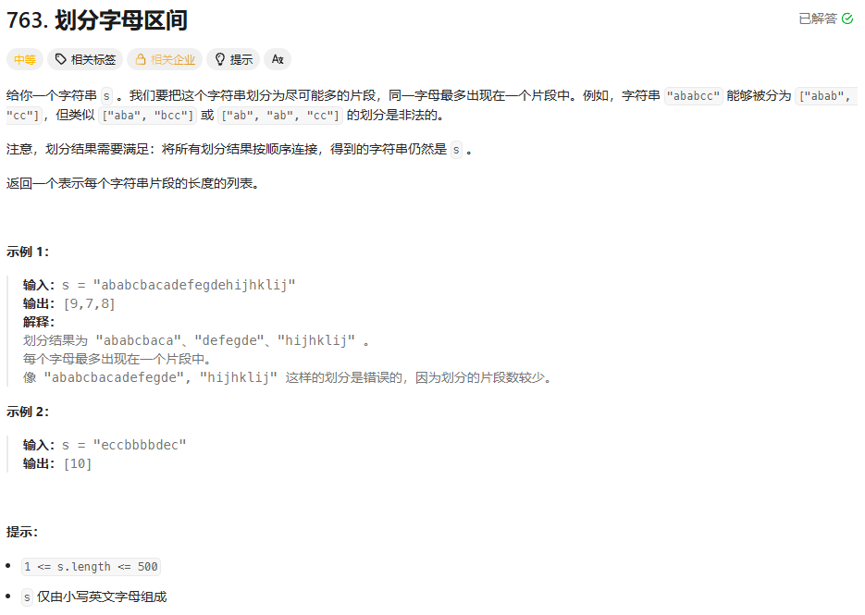
1.本题考查贪心算法,有点类似于力扣第45题-跳跃游戏Ⅱ,不同之处在于45题是尽可能少跳,而本题是满足区间条件后多跳。可以设置一个哈希数组,先遍历一遍字符串s,记录其中每个字母出现的区间;之后再遍历一遍,当遍历的位置超出了前面字符的最远右边界后即可划分一次。
2.基于以上思想,写出的完整代码如下:
 1. /**
 2.  * Note: The returned array must be malloced, assume caller calls free().
 3.  */
 4. int* partitionLabels(char* s, int* returnSize) {
 5.     int len = strlen(s);
 6.     // start记录字符串首字符,用于首次字符判断
 7.     char start = s[0];
 8.     // hash[26][0]:字母第一次出现下标;hash[26][1]:字母最后一次出现下标
 9.     int hash[26][2];
10.     // 初始化hash数组全部置0
11.     for (int i = 0; i < 26; i++){
12.         memset(hash[i], 0, sizeof(hash[i]));
13.     }
14.
15.     // 第一次遍历字符串,记录每个字母首尾出现位置
16.     for (int i = 0; i < len; i++){
17.         // 处理第一个字符,直接初始化其首尾下标为0
18.         if (i == 0){
19.             hash[s[i] - 'a'][0] = 0;
20.             hash[s[i] - 'a'][1] = 0;
21.             continue;
22.         }
23.         // 当前字母从未记录过起始位置,且不是首字符,记录首次出现下标
24.         if (hash[s[i] - 'a'][0] == 0 && s[i] != start){
25.             hash[s[i] - 'a'][0] = i;
26.             hash[s[i] - 'a'][1] = i;
27.         } else {
28.             // 字母重复出现,更新末尾下标为当前i
29.             hash[s[i] - 'a'][1] = i;
30.         }
31.     }
32.
33.     // 当前片段最远右边界,初始为第一个字符最后出现位置
34.     int end = hash[s[0] - 'a'][1];
35.     int cnt = 1;    // 当前分割片段字符计数
36.     int cur = 0;    // 结果数组填充下标
37.     // 最多分割len段,开辟长度为len的结果数组
38.     int* res = (int*)malloc(sizeof(int) * len);
39.
40.     // 第二次遍历,滑动窗口分割字符串
41.     for (int i = 1; i < len; i++){
42.         // 遍历下标超过当前片段最远边界,说明可以分割
43.         if (i > end){
44.             res[cur++] = cnt;
45.             // 开启新片段,更新边界与计数
46.             end = hash[s[i] - 'a'][1];
47.             cnt = 1;
48.         } else {
49.             // 仍在当前片段内,更新片段最大右边界
50.             end = fmax(end, hash[s[i] - 'a'][1]);
51.             cnt++;
52.         }
53.     }
54.     // 存入最后一段的长度
55.     res[cur++] = cnt;
56.
57.     // 返回数组有效长度
58.     *returnSize = cur;
59.     return res;
60. }
该算法时间复杂度为O(n),空间复杂度为O(1)。
3.本题实际上只关心字符的右边界,所以可以将哈希数组简化为一维,且因为i的值一直在递增,遍历的时候该字符的最大右边界不需要进行额外的判断,直接更新对应哈希数组的右边界值即可。优化后的完整代码如下:
 1. /**
 2.  * Note: The returned array must be malloced, assume caller calls free().
 3.  */
 4. int* partitionLabels(char* s, int* returnSize) {
 5.     // 获取字符串总长度
 6.     int len = strlen(s);
 7.     // hash数组:存储每个小写字母最后一次出现的下标
 8.     int hash[26] = {0};
 9.
10.     // 第一次遍历,记录每个字母最靠右的位置
11.     for (int i = 0; i < len; i++){
12.         hash[s[i] - 'a'] = i;
13.     }
14.
15.     // 分配结果数组,最多分割len段
16.     int* res = (int*)malloc(sizeof(int) * len);
17.     int cnt = 1;    // 当前片段字符个数,初始第一个字符
18.     int cur = 0;    // 结果数组写入下标
19.     int end = hash[s[0] - 'a']; // 当前片段能延伸到的最右边界
20.
21.     // 从第二个字符开始遍历分割字符串
22.     for (int i = 1; i < len; i++){
23.         // 遍历位置超出当前片段最大边界,代表可以分割
24.         if (i > end){
25.             res[cur++] = cnt;
26.             // 开启新片段,更新右边界、重置计数
27.             end = hash[s[i] - 'a'];
28.             cnt = 1;
29.         } else {
30.             // 仍在当前片段内,更新片段最远右边界,片段长度+1
31.             end = fmax(end, hash[s[i] - 'a']);
32.             cnt++;
33.         }
34.     }
35.     // 存入最后一段的长度
36.     res[cur++] = cnt;
37.
38.     // 设置返回数组有效元素个数
39.     *returnSize = cur;
40.     return res;
41. }
该算法时间复杂度为O(n),空间复杂度为O(1)





 扫一扫
扫一扫


 768
768

 被折叠的 条评论
为什么被折叠?
被折叠的 条评论
为什么被折叠?
 到【灌水乐园】发言





