

 墨衍会员
·
AI 创作全网分发
墨衍智能分发
本文由作者通过墨衍一键同步至各平台
1分发平台
3.1w累计阅读
3.1w+平均单平台
已同步平台
CSDN
微信公众号
微博
知乎
掘金
百家号
博客园
抖音
小红书
你的文章也可以这样分发
墨衍会员 ¥399起/年,写一次发全网
我也要
 AI摘要
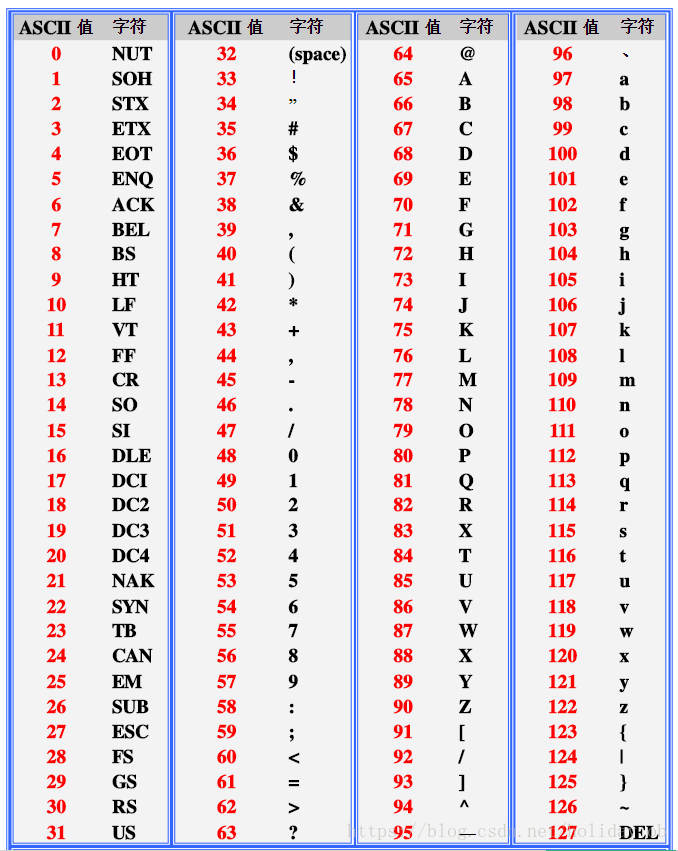
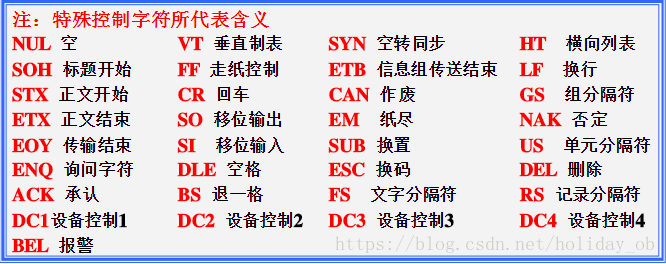
博客提供了完整版的 ASCII 码表,ASCII 码在信息技术领域用于字符编码,是计算机与外部设备、计算机与计算机进行信息交换的标准代码,该码表对相关开发和研究有重要参考价值。
ASCII码表(全)
简介 ASCII(American Standard Code for Information Interchange,美国信息互换标准代码,ASCⅡ)是基于拉丁字母的一套电脑编码系统。它主要用于显示现代英语和其他西欧语言。它是现今最通用的单字节编码系统,并等同于国际标准ISO/IEC 646。 ASCII第一次以规范标准的型态发表是在1967年,最后一次更新则是在1986年,至今为止共定义了128个字符,其中33个字符无法显示(这是以现今操作系统为依归,但在DOS模式下可显示出一些诸如笑脸、扑克牌花式等8
字母数字-ASCII码表(最详细,最直观)
数字,字母对应的ascll码 数字0~9对应的ASCII码(十进制)为“48”~“57” 大写字母A~Z对应的ASCII码(十进制)为“65”~“90” 小写字母a~z对应的百ASCII码(十进制)为"97"~“122” ascll码表 ...
Adaboost入门教程——最通俗易懂的原理介绍(图文实例)
Adaboost入门教程——最通俗易懂的原理介绍(图文实例)
ASCII 编码表
ASCII 编码一览表 二进制 十进制 十六进制 字符/缩写 解释 00000000 0 00 NUL (NULL) 空字符 00000001 1 01 SOH (Start Of Headling) 标题开始 00000010 2 02 STX (Start Of Text) 正文开始 00000011 3 03 ETX (End Of Text) 正文结束 0
基于Hadoop生态的大数据异常检测平台搭建
批处理:用Spark MLlib的LOF(局部异常因子,适合高密度数据)、(单类支持向量机,适合高维数据);流处理:用Flink ML的(实时聚类,检测离群点)、ADWIN(自适应滑动窗口,处理概念漂移)。数据层:用Flume/Kafka采集数据,HDFS存储,Hive管理元数据;计算层:用Spark处理离线批数据,Flink处理实时流数据;算法层:用孤立森林(批)、3σ原则(流)检测异常;可视化层:用Grafana做仪表盘,Prometheus+Alertmanager报警。这个平台能处理。
跟着团子学SAP CO:揭秘结果分析码在项目结算中的实战应用(一)KKA2/CJ88
本文深入解析了SAP CO模块中结果分析码在项目结算中的核心作用。以KKA2(方法10)和事务代码CJ88为例,详细阐述了如何在项目完工后一次性确认收入的场景下,通过结果分析功能实现收入与成本的精准匹配,将项目成本暂估为在制品,确保各期利润的准确反映。
ascii码01100001_ASCII码对照表以及各个字符的解释(精华版)
ASCII(American Standard Code for Information Interchange,美国信息互换标准代码)是一套基于拉丁字母的字符编码,共收录了 128 个字符,用一个字节就可以存储,它等同于国际标准 ISO/IEC 646。ASCII 规范于 1967 年第一次发布,最后一次更新是在 1986 年,它包含了 33 个控制字符(具有某些特殊功能但是无法显示的字符)和 ...
R语言pls包实战:手把手教你用偏最小二乘(PLS)搞定高维数据回归(附完整代码与数据标准化避坑指南)
本文详细介绍了如何使用R语言的pls包进行偏最小二乘(PLS)回归分析,特别针对高维数据回归问题。通过完整的代码示例和数据标准化避坑指南,帮助读者掌握从数据预处理到模型优化的全流程,解决实际应用中的常见问题。
ASCII码表_全_完整版
ASCII码表_全_完整版地址:ASCII码表_全_完整版
嵌套学习 (Nested Learning, NL):赋予AI持续学习能力的革命性范式
嵌套学习(Nested Learning, NL)的核心哲学在于彻底颠覆传统深度学习中将模型架构(Architecture)与优化算法(Optimization)视为两个独立组件的“扁平化”视角 。传统方法通常将神经网络的结构设计和其训练过程分离开来,模型架构是预先定义好的静态蓝图,而优化算法(如SGD、Adam)则是一个外部的、统一的规则引擎,负责在训练期间调整模型参数 。这种分离的视角隐藏了模型内部不同组件之间复杂的梯度流和动态更新过程,将整个学习系统视为一个单一层次的优化问题。然而,嵌套学习范式提出,
推荐系统(一)概述
在互联网领域,推荐系统(Recommendation Systems)的应用非常广泛。在音视频方面,如抖音、快手、哔哩等;在电商平台方面,如京东、淘宝、拼多多等。推荐有助于帮助用户快速发现潜在感兴趣的内容(音视频、商品、新闻等信息流),从而提升用户体验,同时有助于提升商业效率。从本文开始,笔者将结合自身在信息流推荐领域的经验,通过系列文章对推荐系统展开介绍。
ASCII 码表-完整版
ASCII 码表-完整版 【下载地址】ASCII码表-完整版 本开源项目提供了完整的ASCII码表资源,是计算机科学中不可或缺的基础资料。ASCII码表作为字符编码标准,广泛应用于文本数据处理中。无论您是初学者还是专业人士,这份资源都能帮助您快速查阅和理解ASCII码的详细信息与用法。下载后,您可以通过任何文本编辑器轻松...
AI金融投资002:批量下载巨潮资讯基金招募说明书
封闭式基础设施证券投资基金招募说明书 AI金融投资002:批量下载巨潮资讯基金招募说明书
探索ASCII码的奥秘:一份完整版码表的精典收藏
探索ASCII码的奥秘:一份完整版码表的精典收藏 去发现同类优质开源项目:https://gitcode.com/ 在编程的世界里,ASCII码是一个不可或缺的基础元素。无论是初学者还是资深开发者,掌握ASCII码都是一项必备技能。今天,我们为大家推荐一个开源项目——ASCII码表完整版(含扩展码)精典收藏,它将为你提供一个便捷、全面的ASCII码查询工具。 项目介绍 ASCII码表完整版(含扩展...
ICC2 user guide(二)Placement and Optimization
ICC2 place阶段user guide
IEM模型,地表粗糙度模拟
利用微波反演土壤水分时候,利用IEM模型可以实现对随机地表的模拟
ASCII码表-完整版:计算机科学的基础资源
ASCII码表-完整版:计算机科学的基础资源 【下载地址】ASCII码表-完整版 本开源项目提供了完整的ASCII码表资源,是计算机科学中不可或缺的基础资料。ASCII码表作为字符编码标准,广泛应用于文本数据处理中。无论您是初学者还是专业人士,这份资源都能帮助您快速查阅和理解ASCII码的详细信息与用法。下载后,您可以通...
全球国家地区城市数据
MySQL全球国家地区城市数据报。。。。。。。。。。。。
【亲测免费】 ASCII码表完整版(含扩展码)精典收藏
ASCII码表完整版(含扩展码)精典收藏 去发现同类优质开源项目:https://gitcode.com/ 本仓库提供了一份精心整理的ASCII码表完整版,包含扩展码,适合在项目中作为工具查询使用。该资源文件是个人多年收集整理的成果,旨在为开发者提供一个便捷的ASCII码查询工具。 资源内容 ASCII码表完整版:包含了标准的ASCII码表,涵盖了所有常见的ASCII字符及其对应的十进制、十六...
jdk-8u144-linux-x64.tar.gz.
该资源为搭建Linux系统Java环境用,资源的后缀为tar.gz格式的压缩包
深度学习工具包 DeepLearningToolbox
深度学习工具包Deprecation notice.-----This toolbox is outdated and no longer maintained.There are much better tools available for deep learning than this toolbox, e.g. [Theano](http://deeplearning.net/software/theano/), [torch](http://torch.ch/) or [tensorflow](http://www.tensorflow.org/)I would suggest you use one of the tools mentioned above rather than use this toolbox.Best, Rasmus.DeepLearnToolbox================A Matlab toolbox for Deep Learning.Deep Learning is a new subfield of machine learning that focuses on learning deep hierarchical models of data.It is inspired by the human brain's apparent deep (layered, hierarchical) architecture.A good overview of the theory of Deep Learning theory is[Learning Deep Architectures for AI](http://www.iro.umontreal.ca/~bengioy/papers/ftml_book.pdf)For a more informal introduction, see the following videos by Geoffrey Hinton and Andrew Ng.* [The Next Generation of Neural Networks](http://www.youtube.com/watch?v=AyzOUbkUf3M) (Hinton, 2007)* [Recent Developments in Deep Learning](http://www.youtube.com/watch?v=VdIURAu1-aU) (Hinton, 2010)* [Unsupervised Feature Learning and Deep Learning](http://www.youtube.com/watch?v=ZmNOAtZIgIk) (Ng, 2011)If you use this toolbox in your research please cite [Prediction as a candidate for learning deep hierarchical models of data](http://www2.imm.dtu.dk/pubdb/views/publication_details.php?id=6284)```@MASTERSTHESIS\{IMM2012-06284, author = "R. B. Palm", title = "Prediction as a candidate for learning deep hierarchical models of data", year = "2012",}```Contact: rasmusbergpalm at gmail dot comDirectories included in the toolbox-----------------------------------`NN/` - A library for Feedforward Backpropagation Neural Networks`CNN/` - A library for Convolutional Neural Networks`DBN/` - A library for Deep Belief Networks`SAE/` - A library for Stacked Auto-Encoders`CAE/` - A library for Convolutional Auto-Encoders`util/` - Utility functions used by the libraries`data/` - Data used by the examples`tests/` - unit tests to verify toolbox is workingFor references on each library check REFS.mdSetup-----1. Download.2. addpath(genpath('DeepLearnToolbox'));Example: Deep Belief Network---------------------```matlabfunction test_example_DBNload mnist_uint8;train_x = double(train_x) / 255;test_x = double(test_x) / 255;train_y = double(train_y);test_y = double(test_y);%% ex1 train a 100 hidden unit RBM and visualize its weightsrand('state',0)dbn.sizes = [100];opts.numepochs = 1;opts.batchsize = 100;opts.momentum = 0;opts.alpha = 1;dbn = dbnsetup(dbn, train_x, opts);dbn = dbntrain(dbn, train_x, opts);figure; visualize(dbn.rbm{1}.W'); % Visualize the RBM weights%% ex2 train a 100-100 hidden unit DBN and use its weights to initialize a NNrand('state',0)%train dbndbn.sizes = [100 100];opts.numepochs = 1;opts.batchsize = 100;opts.momentum = 0;opts.alpha = 1;dbn = dbnsetup(dbn, train_x, opts);dbn = dbntrain(dbn, train_x, opts);%unfold dbn to nnnn = dbnunfoldtonn(dbn, 10);nn.activation_function = 'sigm';%train nnopts.numepochs = 1;opts.batchsize = 100;nn = nntrain(nn, train_x, train_y, opts);[er, bad] = nntest(nn, test_x, test_y);assert(er < 0.10, 'Too big error');```Example: Stacked Auto-Encoders---------------------```matlabfunction test_example_SAEload mnist_uint8;train_x = double(train_x)/255;test_x = double(test_x)/255;train_y = double(train_y);test_y = double(test_y);%% ex1 train a 100 hidden unit SDAE and use it to initialize a FFNN% Setup and train a stacked denoising autoencoder (SDAE)rand('state',0)sae = saesetup([784 100]);sae.ae{1}.activation_function = 'sigm';sae.ae{1}.learningRate = 1;sae.ae{1}.inputZeroMaskedFraction = 0.5;opts.numepochs = 1;opts.batchsize = 100;sae = saetrain(sae, train_x, opts);visualize(sae.ae{1}.W{1}(:,2:end)')% Use the SDAE to initialize a FFNNnn = nnsetup([784 100 10]);nn.activation_function = 'sigm';nn.learningRate = 1;nn.W{1} = sae.ae{1}.W{1};% Train the FFNNopts.numepochs = 1;opts.batchsize = 100;nn = nntrain(nn, train_x, train_y, opts);[er, bad] = nntest(nn, test_x, test_y);assert(er < 0.16, 'Too big error');```Example: Convolutional Neural Nets---------------------```matlabfunction test_example_CNNload mnist_uint8;train_x = double(reshape(train_x',28,28,60000))/255;test_x = double(reshape(test_x',28,28,10000))/255;train_y = double(train_y');test_y = double(test_y');%% ex1 Train a 6c-2s-12c-2s Convolutional neural network %will run 1 epoch in about 200 second and get around 11% error. %With 100 epochs you'll get around 1.2% errorrand('state',0)cnn.layers = { struct('type', 'i') %input layer struct('type', 'c', 'outputmaps', 6, 'kernelsize', 5) %convolution layer struct('type', 's', 'scale', 2) %sub sampling layer struct('type', 'c', 'outputmaps', 12, 'kernelsize', 5) %convolution layer struct('type', 's', 'scale', 2) %subsampling layer};cnn = cnnsetup(cnn, train_x, train_y);opts.alpha = 1;opts.batchsize = 50;opts.numepochs = 1;cnn = cnntrain(cnn, train_x, train_y, opts);[er, bad] = cnntest(cnn, test_x, test_y);%plot mean squared errorfigure; plot(cnn.rL);assert(er<0.12, 'Too big error');```Example: Neural Networks---------------------```matlabfunction test_example_NNload mnist_uint8;train_x = double(train_x) / 255;test_x = double(test_x) / 255;train_y = double(train_y);test_y = double(test_y);% normalize[train_x, mu, sigma] = zscore(train_x);test_x = normalize(test_x, mu, sigma);%% ex1 vanilla neural netrand('state',0)nn = nnsetup([784 100 10]);opts.numepochs = 1; % Number of full sweeps through dataopts.batchsize = 100; % Take a mean gradient step over this many samples[nn, L] = nntrain(nn, train_x, train_y, opts);[er, bad] = nntest(nn, test_x, test_y);assert(er < 0.08, 'Too big error');%% ex2 neural net with L2 weight decayrand('state',0)nn = nnsetup([784 100 10]);nn.weightPenaltyL2 = 1e-4; % L2 weight decayopts.numepochs = 1; % Number of full sweeps through dataopts.batchsize = 100; % Take a mean gradient step over this many samplesnn = nntrain(nn, train_x, train_y, opts);[er, bad] = nntest(nn, test_x, test_y);assert(er < 0.1, 'Too big error');%% ex3 neural net with dropoutrand('state',0)nn = nnsetup([784 100 10]);nn.dropoutFraction = 0.5; % Dropout fraction opts.numepochs = 1; % Number of full sweeps through dataopts.batchsize = 100; % Take a mean gradient step over this many samplesnn = nntrain(nn, train_x, train_y, opts);[er, bad] = nntest(nn, test_x, test_y);assert(er < 0.1, 'Too big error');%% ex4 neural net with sigmoid activation functionrand('state',0)nn = nnsetup([784 100 10]);nn.activation_function = 'sigm'; % Sigmoid activation functionnn.learningRate = 1; % Sigm require a lower learning rateopts.numepochs = 1; % Number of full sweeps through dataopts.batchsize = 100; % Take a mean gradient step over this many samplesnn = nntrain(nn, train_x, train_y, opts);[er, bad] = nntest(nn, test_x, test_y);assert(er < 0.1, 'Too big error');%% ex5 plotting functionalityrand('state',0)nn = nnsetup([784 20 10]);opts.numepochs = 5; % Number of full sweeps through datann.output = 'softmax'; % use softmax outputopts.batchsize = 1000; % Take a mean gradient step over this many samplesopts.plot = 1; % enable plottingnn = nntrain(nn, train_x, train_y, opts);[er, bad] = nntest(nn, test_x, test_y);assert(er < 0.1, 'Too big error');%% ex6 neural net with sigmoid activation and plotting of validation and training error% split training data into training and validation datavx = train_x(1:10000,:);tx = train_x(10001:end,:);vy = train_y(1:10000,:);ty = train_y(10001:end,:);rand('state',0)nn = nnsetup([784 20 10]); nn.output = 'softmax'; % use softmax outputopts.numepochs = 5; % Number of full sweeps through dataopts.batchsize = 1000; % Take a mean gradient step over this many samplesopts.plot = 1; % enable plottingnn = nntrain(nn, tx, ty, opts, vx, vy); % nntrain takes validation set as last two arguments (optionally)[er, bad] = nntest(nn, test_x, test_y);assert(er < 0.1, 'Too big error');```[](https://bitdeli.com/free "Bitdeli Badge")


 被折叠的 条评论
为什么被折叠?
 到【灌水乐园】发言


 4201


 扫一扫


