Get inspired by what you can do with Claude
Browse practical examples across research, writing, coding, analysis, and everyday tasks, whether you're working solo or with a team.
Author
Category
Model
Features
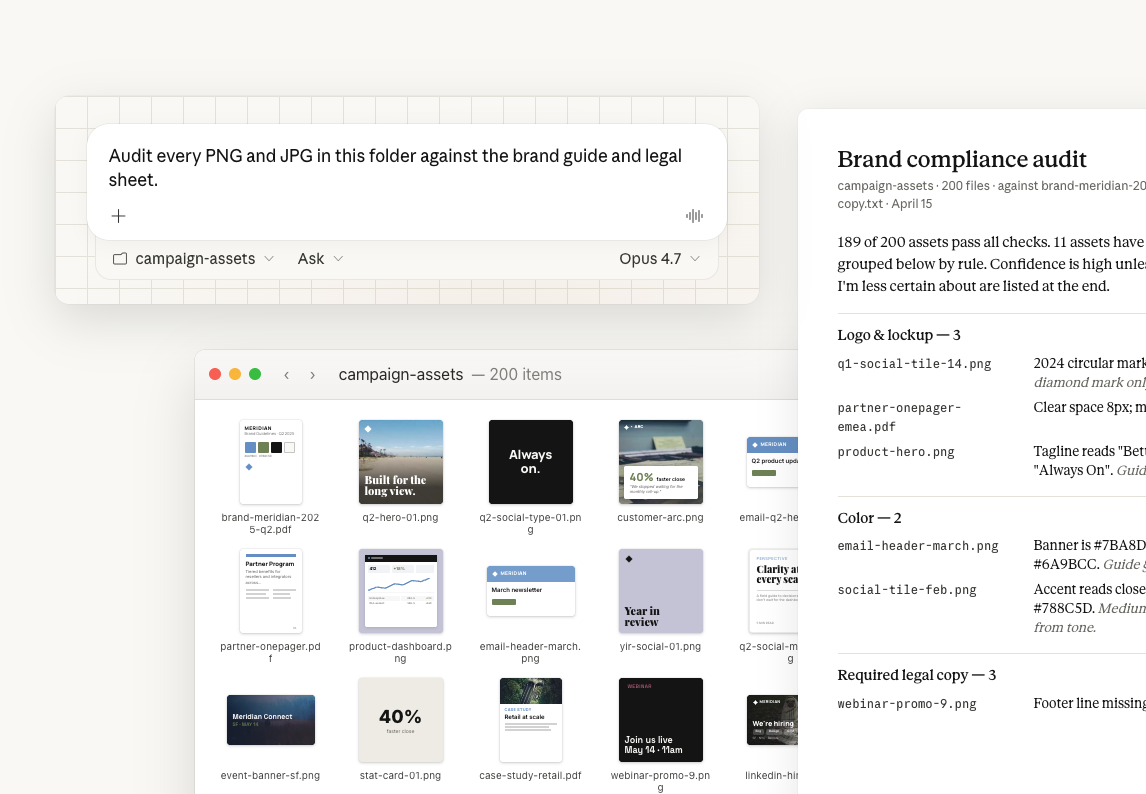
Audit a folder of visual assets against your guidelines
In Claude Cowork, Claude Opus 4.7 can read a large folder of image exports at full resolution to spot off-brand colors, outdated logos, and missing legal copy. Point Claude at your assets folder and your brand guidelines, and get back a categorized list of violations with a confidence rating on each one.
Claude Cowork
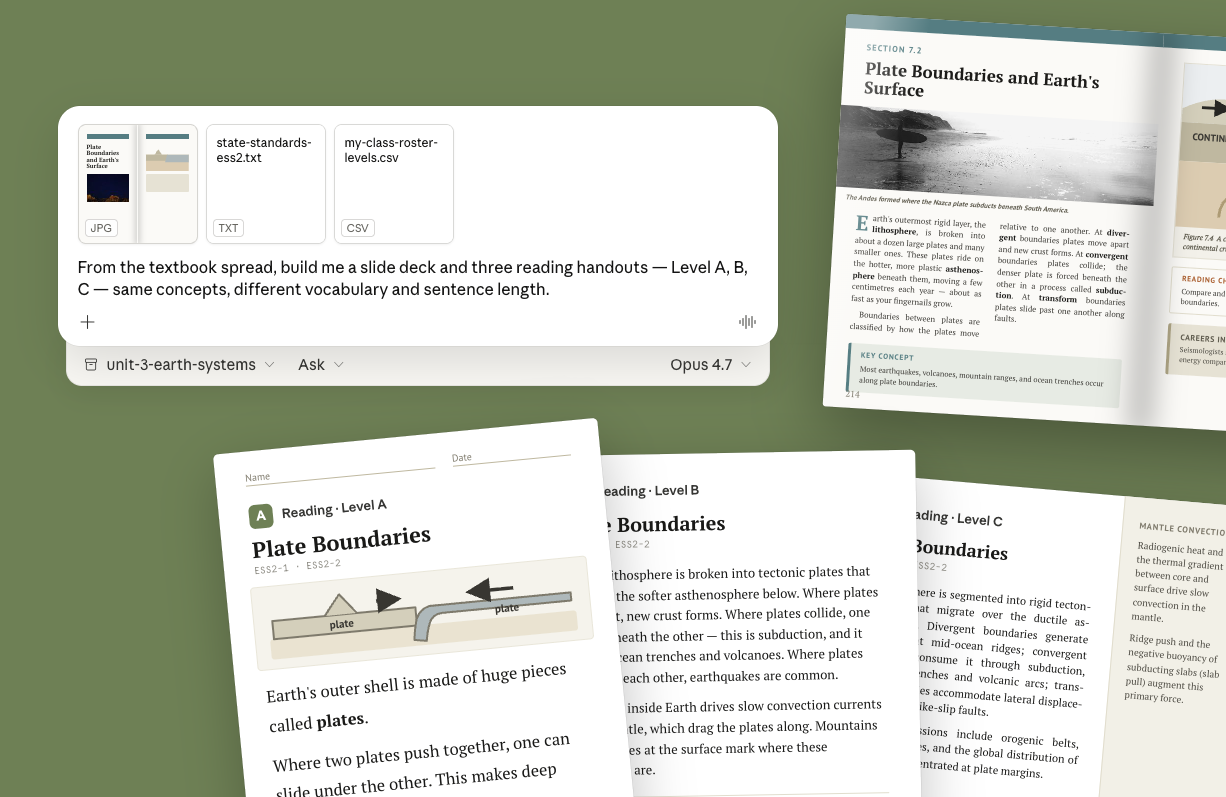
Adapt a standard textbook page to every reading level
Opus 4.7 reads a single source page in detail and returns a finished file for each audience that needs it. Here, one textbook spread becomes a slide deck and reading handouts at three levels.
Claude Cowork

Draft a credit memo from spreads and statements with Claude for Excel
Cowork pulls the borrower's filings and spreads through the S&P Capital IQ connector and reads the underwriting workbook from your deal folder. You take the ratios and exceptions into Claude for Excel to update the model, then bring the writeup into Claude for Word for the credit memo.
Claude Cowork

Validate reserves and draft filing narrative with Claude for Excel
Cowork reads your reserve workbook from the valuation folder and pulls prior filings and bulletins through the NAIC connector. You take the formula flags and reserve walk into Claude for Excel to clean the workbook, then bring the narrative into Claude for Word for the filing memo.
Claude Cowork

See your theory of change in chat with Claude
Describe your program and Claude draws the causal chain inline, inputs through impact, with every arrow clickable to show the assumption behind it. For when you know what you do but have never drawn why it works.
Claude.ai

Plan your syllabus
Attach your syllabus and Claude shows which weeks are locked by real prerequisites and which you're free to rearrange — right in chat as you work through the order.
Claude.ai

Work through grant options in chat
Claude plots every funder in one view — odds, award, deadline, effort — and you filter, test scenarios, ask for a prioritization, narrow down together. For decisions where no single sort order shows the full picture.
Claude.ai

Apply a formula as you learn it
Claude builds a blank scatter right in the conversation — you place the points, drag them, watch what happens to the fit. For when you can do the calculation but don't yet have a feel for it.
Claude.ai

Bring your whiteboard lesson to life
Work through how to teach a concept with Claude sketching alongside. The visual streams in as part of the back-and-forth — a thinking tool for your prep first, and a teaching tool if you take it further.
Claude.ai

Visualize the mechanism behind an explanation mid-chat
Claude builds an interactive visual inline as you talk through the problem — shaped to the specific question you're asking, with controls you manipulate and buttons that drill deeper. Useful when a concept has moving parts text can't show.
Claude.ai
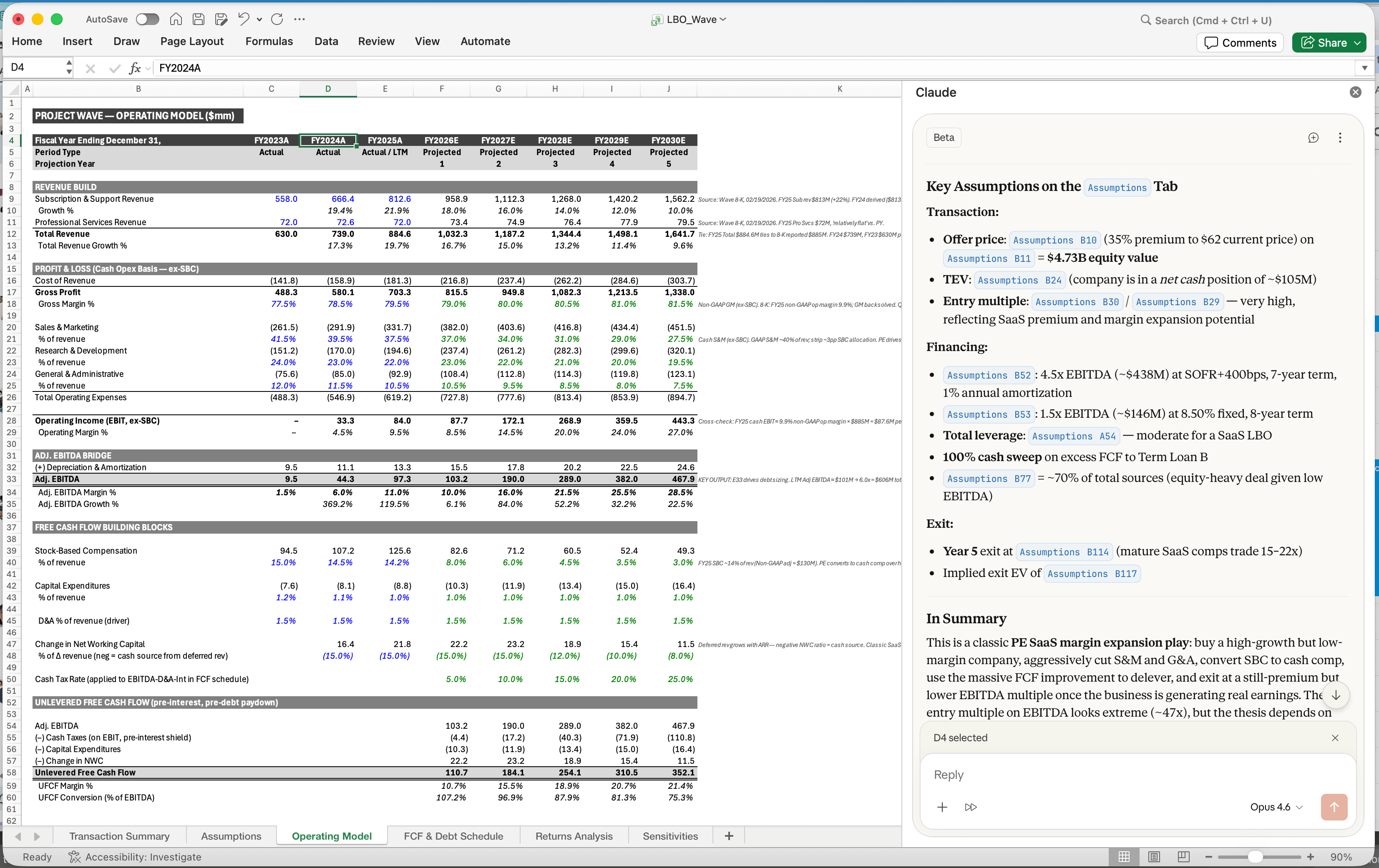
Update your financial model after earnings
Cowork pulls the release and transcript from S&P and checks them against your financial model. You take the flags into Claude for Excel to edit the cells, then open the deck in Claude for PowerPoint to build the page.
Claude in Excel

See what your campaign goal actually requires
Type a campaign goal and Claude draws the gift pyramid inline, tiered from the lead gift down, with each tier showing how many gifts you need and how many qualified prospects that realistically takes. Drag the goal and the whole shape rebuilds. For when you're wondering whether a campaign is feasible before you say yes to it.
Claude.ai

See budget futures side by side, in chat with Claude
Type your budget split and the thing that might change, and Claude draws three scenarios next to each other with a toggle between dollars and percentages. Click any scenario for a one-line read on where the real pressure lands.
Claude.ai

See why donor retention beats acquisition, in chat with Claude
Claude builds a five-year donor projection with sliders for retention and acquisition. Drag either one and the curve redraws, and it becomes clear fairly quickly why a modest retention bump does more than doubling the acquisition spend.
Claude.ai
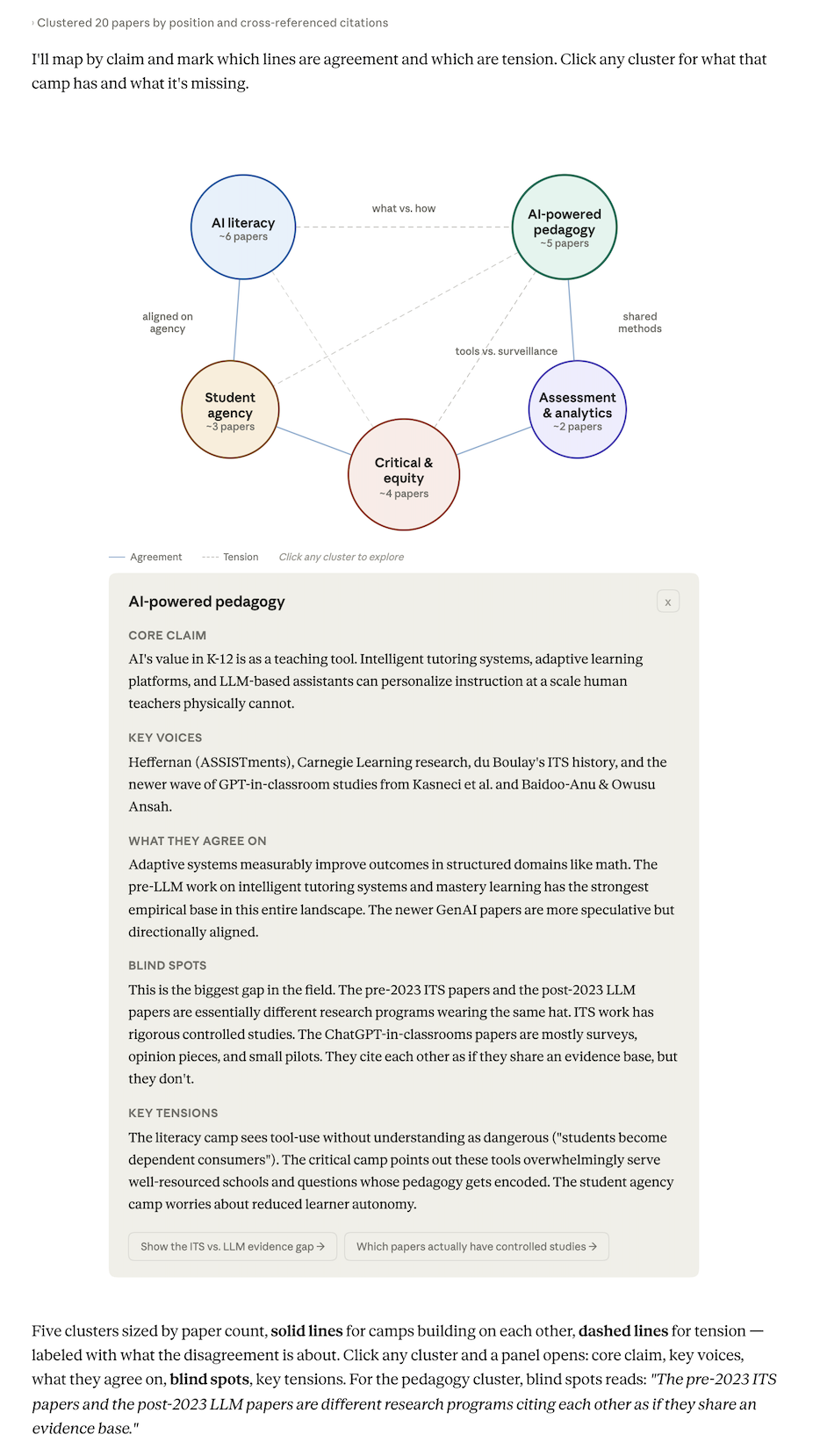
Map your lit review mid-conversation to surface the underlying debate
Claude reads your stack of papers and draws the argument structure inline — clusters by claim, tension lines where camps disagree, blind spots per group. A reading of the debate you test against your own, as you work through the set.
Claude.ai
No posts for those filters
Try another search or clear some of your filters.
