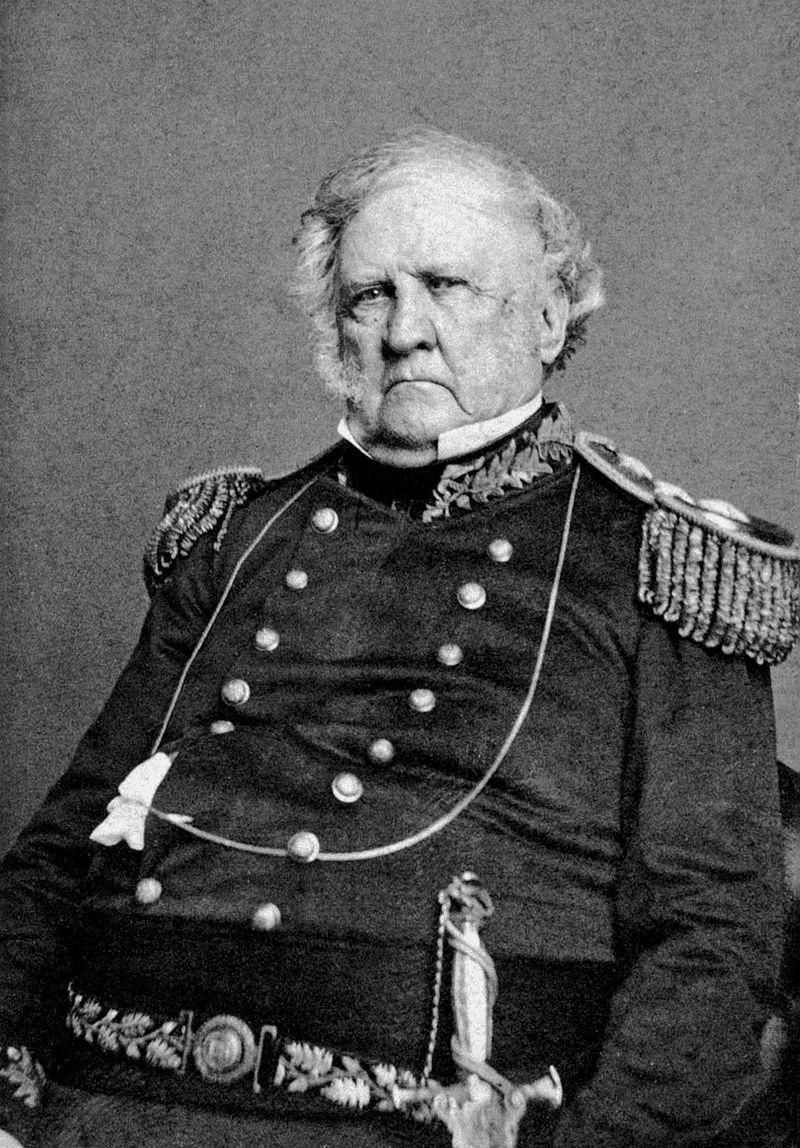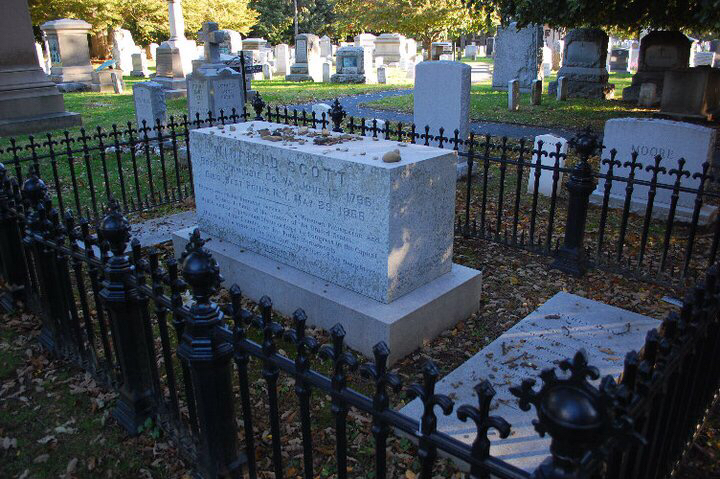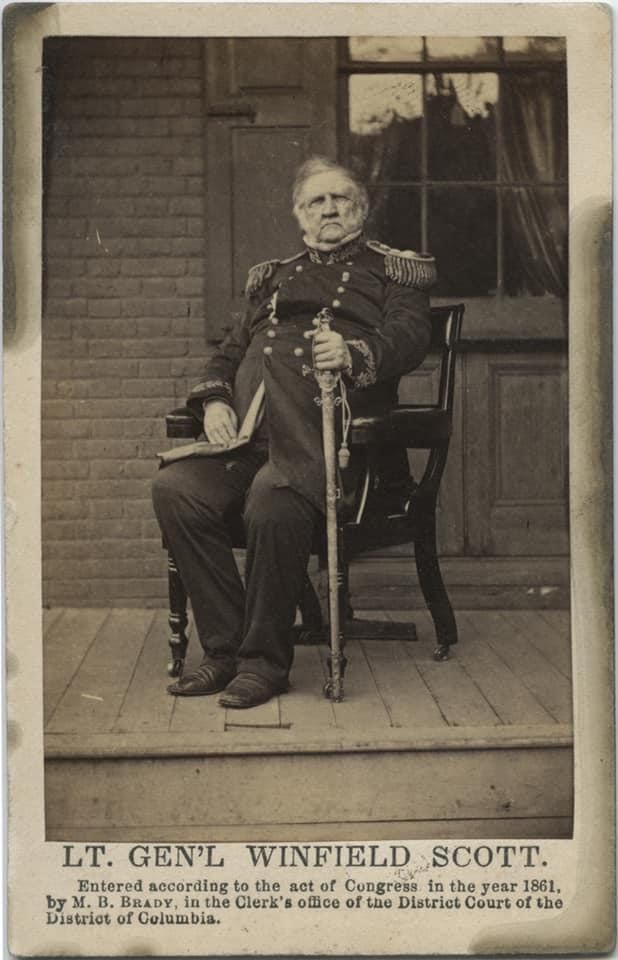
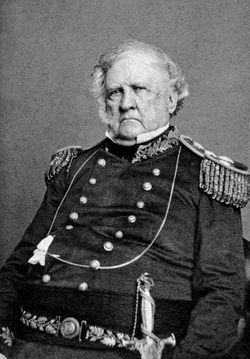
United States Army General. Undoubtedly the foremost American military figure of the first half of the 19th Century, his career spanned from 1808 to the Civil War. As a Brigadier General in the War of 1812, he captured Fort George, defeated the British at Upholds Creek, New York, and commanded American forces at the Battles of Lundy's Lane and Chippewa. He studied European military tactics after the war and conducted operations against the Creek and Seminole Indians in Florida (Seminole Wars). In 1841, he succeeded General Alexander Macomb as General-in-Chief of the United States Army, serving in that capacity from 1841 until 1861. After the outbreak of the Mexican War, he took command of operations against Mexico after being unsatisfied with General Zachary Taylor's victories in Northern Mexico. He personally planned and led the American troop movements that captured Vera Cruz, and directed every American victory from the Battle of Cerro Gordo to the final Battle of Chapultepec and the capitulation of Mexico City. Defeated by Franklin Pierce for President of the United States in 1852, he remained loyal to the Union at the outbreak of the Civil War, despite his Virginia birth. His "Anaconda Plan" was the basic strategy that successive Union commanders followed to achieve victory over the Confederacy. He was retired due to age in November 1861 with the rank of senior Major General, and was brevetted Lieutenant General, United States Regular Army. He lived the remainder of his life in retirement within the grounds of the U.S. Military Academy at West Point, New York and passed away there. He was afforded the appropriate military funeral with honors and was interred at the West Point Cemetery. It was reported that General In Chief Ulysses S. Grant, the future 18th President of the United States, was the presiding officer at the funeral.
United States Army General. Undoubtedly the foremost American military figure of the first half of the 19th Century, his career spanned from 1808 to the Civil War. As a Brigadier General in the War of 1812, he captured Fort George, defeated the British at Upholds Creek, New York, and commanded American forces at the Battles of Lundy's Lane and Chippewa. He studied European military tactics after the war and conducted operations against the Creek and Seminole Indians in Florida (Seminole Wars). In 1841, he succeeded General Alexander Macomb as General-in-Chief of the United States Army, serving in that capacity from 1841 until 1861. After the outbreak of the Mexican War, he took command of operations against Mexico after being unsatisfied with General Zachary Taylor's victories in Northern Mexico. He personally planned and led the American troop movements that captured Vera Cruz, and directed every American victory from the Battle of Cerro Gordo to the final Battle of Chapultepec and the capitulation of Mexico City. Defeated by Franklin Pierce for President of the United States in 1852, he remained loyal to the Union at the outbreak of the Civil War, despite his Virginia birth. His "Anaconda Plan" was the basic strategy that successive Union commanders followed to achieve victory over the Confederacy. He was retired due to age in November 1861 with the rank of senior Major General, and was brevetted Lieutenant General, United States Regular Army. He lived the remainder of his life in retirement within the grounds of the U.S. Military Academy at West Point, New York and passed away there. He was afforded the appropriate military funeral with honors and was interred at the West Point Cemetery. It was reported that General In Chief Ulysses S. Grant, the future 18th President of the United States, was the presiding officer at the funeral.
Bio by: RPD2