


patent expiration · patent cliff 2026
Drug Patents Expiring in 2026: A Comprehensive Guide
November 15, 2025
Updated October 15, 2026
25 min read
An analysis of the 2026 drug patent cliff: selected U.S. patent expirations and generic-entry dates, including Januvia, Xeljanz and Ozempic, and their impact on generic drug prices.

Executive Summary
Update (October 2026): Merck reports that Januvia and Janumet lost U.S. market exclusivity in May 2026 and Janumet XR in July 2026, and that Bridion (sugammadex) lost U.S. exclusivity in July 2026 ([1]). Pfizer reports that a generic version of Xeljanz is now marketed in the U.S. ([2]). Semaglutide (Ozempic, Wegovy) patents began expiring in March 2026 in India, China, Canada, Brazil and Turkey ([3]), while Novo Nordisk gives 2032 as the U.S. compound patent expiry ([4]). For Eliquis, the apixaban composition-of-matter patent expires in November 2026, but settled generic companies may launch in the U.S. on April 1, 2028 ([5]). This version also corrects several table rows against FDA Orange Book listings ([6]): Pradaxa and Saphris had FDA-approved generics years before 2026, Rexulti's reissued compound patent runs to December 2028, and Imbruvica's compound patent runs to December 2026 with pediatric exclusivity to June 2027. Drugs whose U.S. exclusivity ends from 2027 to 2030, including Keytruda, are covered in our 2027 to 2030 market entry calendar.
The year 2026 will see a major wave of pharmaceutical patent expirations, putting numerous blockbuster drugs, spanning diabetes, immunology, cardiovascular, oncology, and other therapeutic areas, on the verge of losing market exclusivity. Prominent examples include Merck’s diabetes franchises (Januvia and Janumet), Pfizer’s immunology drug (Xeljanz), Merck’s anesthesia-reversal drug (Bridion), and, outside the U.S., Novo Nordisk’s GLP-1 therapy (Ozempic), among others. Industry analyses estimate that approximately $200–236 billion in annual sales across dozens of drugs will face potential generic or biosimilar entry by the end of this decade ([7]) ([8]). Many companies are already bracing for this “patent cliff” by consolidating pipelines, accelerating R&D, and striking acquisitions. For example, recent multi-billion-dollar M&A deals by J&J ($14.6B for Intra-Cellular), Merck ($10B for Verona Pharma), and Sanofi ($9.5B for Blueprint Medicines) have been linked by industry analysts to upcoming patent expiries ([9]).
This report provides a selected overview of notable U.S. products with patent events or disclosed generic-entry milestones in 2026, drawing primarily on FDA records and manufacturer regulatory filings. A listed patent date does not by itself establish the date of FDA approval or commercial generic entry. We catalogue major products by brand and generic name, patent expiration dates, manufacturers, and indications (see Table 1). We also assess the market and health-economic impact of these expirations: past experience shows that generic entry typically drives dramatic price declines (e.g. >90% in some cases) ([10]) ([11]), unlocking an estimated trillion-dollar savings for the U.S. health system over the last decade ([11]). Sections of the report examine key issues such as patent strategies (term extensions, follow-on patents, and litigation), regulatory policy (FDA’s Orange Book procedures and recent settlement outcomes), generic competition dynamics, and case studies of specific drugs. Finally, we discuss the broader implications for healthcare costs, pharmaceutical innovation, and policy, including the role of new FDA initiatives to expedite generic and biosimilar reviews ([12]) ([13]).
This report draws on FDA and SEC filings, biotech industry analyses, and news reports, cited inline; patent and exclusivity dates should be confirmed in the FDA Orange Book before they are relied on. This deep-dive will inform policymakers, industry stakeholders, and healthcare economists about the impending patent expirations in 2026 and their far-reaching consequences.
Introduction
Pharmaceutical patents grant drugmakers exclusive rights to market a new medicine for a fixed term (generally 20 years from the filing date in the U.S. under Title 35, U.S. Code). In practice, the effective monopoly period for a drug (from commercial launch to generic entry) averages much shorter (often 12–16 years) due to long development and approval timelines ([14]). Still, while in force, patents (and associated regulatory exclusivities like New Chemical Entity or pediatric exclusivity) create market protection that recovers R&D investments and enables high prices. When these patents expire, generic and, for biologics, biosimilar competitors can enter the market, typically launching with dramatically lower prices. This phenomenon is known as the “patent cliff” (a term in use since at least 2009 ([15])), and it has profound effects on healthcare costs and industry revenue.
For context, dozens of well-known blockbusters have lost exclusivity over the past decade: examples include Lipitor (atorvastatin), Plavix (clopidogrel), Nexium (esomeprazole), Singulair (montelukast), Diovan (valsartan), and many others ([16]). Each year, a new cohort of drugs reaches the end of its protection. By 2026, a new slice of that patent cliff will arrive. Industry watchers estimate that $200–236 billion in global brand sales will face generic erosion through 2030 ([7]) ([8]), with 2026 marking a key milestone. In the U.S. alone, the FDA’s Orange Book lists hundreds of patents; many of these expire in 2026.
This report reviews selected notable drugs with relevant U.S. patent expirations or expected generic-entry milestones in 2026. We rely primarily on the U.S. context (FDA Orange Book listings and company filings), supplemented by global insights where available. We first outline the relevant patent and regulatory background, then present our detailed list of affected drugs (with tables). Subsequent sections analyze market impacts, price effects, generic competition, and case studies of notable drugs. Finally, implications for healthcare spending, access, and future innovation are discussed.
Patent and Regulatory Background
In the U.S., a drug’s patent life is intertwined with complex regulatory provisions. Under the Hatch-Waxman Act (Drug Price Competition and Patent Term Restoration Act of 1984), brand drug patents can receive patent-term extensions to compensate for delays in FDA review (up to 5 years). Separate from patents, the FDA grants regulatory exclusivities, for example 5-year New Chemical Entity exclusivity or 3-year new-use exclusivity (and 6 months pediatric exclusivity), which also delay generic approvals. The combination of these yields a drug’s actual market exclusivity period. As drugs approach patent expiry, companies may hold or seek additional patents on formulations, methods, or polymorphs that affect the timing of generic entry ([17]) ([18]).
Generic competition is regulated via “Paragraph IV” claims and patent challenges: generic applicants must certify to each listed patent or contest it. Numerous lawsuits have stemmed from these contests. Company filings (SEC 10-K/Q) typically disclose pending patent expiries and litigation outcomes, which help predict when generics can launch. For example, Merck’s 2023 10-Q states that Januvia and Janumet (sitagliptin-based diabetes pills) have settlements allowing generics in mid-2026 (see below) ([19]).
Biologics (large-molecule medicines) have a different regulatory pathway. The Biologics Price Competition and Innovation Act provides 12 years of reference-product exclusivity, while patents on the product, process, or formulation can separately affect biosimilar competition. The timing of competition for a biologic must therefore be assessed product by product.
FDA’s Orange Book identifies approved drug products and related patent and exclusivity information. It is an important source for product-specific patent and exclusivity data, but listed patent dates do not alone determine FDA approval or commercial generic-entry timing. As we assemble the selected 2026 examples, the analysis relies on Orange Book data together with company disclosures. For context, the FDA’s own publications highlight the economic impact of generic entry: it estimates that robust generic competition saved U.S. consumers over $1 trillion in the past decade ([11]), and an FDA analysis found that with a single generic producer the generic price is about 39% below the pre-generic brand price, and about 79% below it with four competitors ([20]) ([21]). For example, after Lyrica’s patent lapsed in 2019, its average price fell from about $7 per capsule to $0.13 once generics arrived ([10]). These dynamics underlie why patent expirations are so pivotal for healthcare costs.
In sum, 2026 will usher in many drugs losing patent protection. Below we enumerate these drugs, grouped by their therapeutic categories and business impact, while anchoring each with credible data on sales, patents, or prior related trends.
Drug Patents Expiring in 2026
In this section, we summarize selected notable drugs with a disclosed U.S. patent event or generic-entry milestone in 2026. The examples are not a complete catalogue, and each date is labeled by event type where a primary source supports it. We focus on brand-name drugs sold in large quantities, as these have the biggest market impact. (Many smaller or approved-for-rare-uses drugs are omitted for brevity, but a representative sample is given.)
Major Brand-Name Drugs (Blockbusters)
| Drug (Brand) | Generic Name | Company | Primary Indication | Patent Expiry (U.S.) | Sales (most recent) |
|---|---|---|---|---|---|
| Januvia | Sitagliptin | Merck & Co. | Type 2 Diabetes | Key patent + pediatric exclusivity → Jan 2023, but salt/polymorph patent expires May 2027 ([22]); under settlements, U.S. market exclusivity ended May 2026 ([19]) ([1]) | $2.255 B ([23]); Merck reports Januvia/Janumet combined at $2.544 B worldwide (2025) ([24]) |
| Janumet / XR | Sitagliptin + Metformin | Merck & Co. | Type 2 Diabetes | Same patents as above (see Januvia); under settlements, Janumet lost U.S. exclusivity in May 2026 and Janumet XR in July 2026 ([19]) ([1]) | $1.433 B (Janumet and Janumet XR) ([23]) |
| Xeljanz / XR | Tofacitinib | Pfizer | Rheumatoid arthritis, UC | Reissued compound patent RE41783 expired Dec 8, 2025, with pediatric exclusivity to June 8, 2026 ([6]); Pfizer lists 2026 as the U.S. basic product patent year ([5]). FDA approved the first generic tablets on June 1, 2021 ([25]), and a generic version is now marketed ([2]). | $1.618 B ([23]) |
| Ozempic (injectable) / Wegovy (high-dose) | Semaglutide | Novo Nordisk | Type 2 Diabetes / Obesity | One listed U.S. patent expires Mar 20, 2026, but the U.S. compound patent (US8129343) runs to Dec 5, 2031 ([26]) ([6]); Novo Nordisk gives 2032 as the U.S. compound patent expiry ([4]), and I-MAK expects U.S. exclusivity until 2032 at the earliest ([27]). Patents began expiring in India, China, Canada, Brazil and Turkey in 2026 ([3]). | $20+ B worldwide (2024, Ozempic and Wegovy combined) |
| Byetta | Exenatide | AstraZeneca | Type 2 Diabetes | Patent expires Apr 4, 2026 ([28]); FDA approved Amneal’s generic exenatide on Nov 19, 2024, and the Orange Book lists Byetta as discontinued ([6]) | (Legacy drug; sales now small after newer GLP-1 drugs) |
| Eliquis | Apixaban | BMS / Pfizer | Anticoagulant (AFib, DVT) | Composition-of-matter patent (extended by patent-term extension) expires Nov 21, 2026 ([17]), with pediatric exclusivity to May 21, 2027 ([6]); under settlements, generics may launch in the U.S. on April 1, 2028, and a formulation patent runs to 2031 ([5]). | $14.4 B worldwide (2025, BMS-reported) ([29]) |
| Pradaxa | Dabigatran | Boehringer Ingelheim | Anticoagulant (stroke prevention) | Listed patent plus pediatric exclusivity ends Mar 7, 2026 ([30]); FDA approved the first generic dabigatran capsules on March 11, 2020 ([31]) | N/A (use declined vs newer anticoagulants) |
| Voltaren (listed patents belong to Cambia) | Diclofenac potassium | Cosette (Cambia) | Migraine | The two patents listed under this name (US7759394, US8097651) cover Cambia oral solution and expire Jun 16, 2026 ([32]); FDA has approved generic diclofenac potassium oral solutions since 2016 ([6]) | Not disclosed |
| Rexulti | Brexpiprazole | Otsuka/Lundbeck | Schizophrenia / MDD | Three listed patents expire Apr 12, 2026 (pediatric exclusivity to Oct 12, 2026) ([33]), but the reissued compound patent RE48059 runs to Dec 23, 2028, with pediatric exclusivity to June 23, 2029 ([6]) | Not reported here |
| Bridion | Sugammadex | Merck | Reversal of anesthesia NM blockade | Patent expires Jan 27, 2026 ([34]); with pediatric exclusivity, U.S. exclusivity ran through July 27, 2026 ([24]) | $1.63 B U.S. (2025) ([24]) |
| Symproic | Naldemedine | Shionogi | Opioid-induced constipation | Composition patent expires Oct 5, 2026 ([35]) | (<$0.1 B) |
| Saphris | Asenapine | AbbVie | Schizophrenia | Patents expire Oct 6, 2026 ([36]); FDA approved generic asenapine in 2018 ([37]) and 2020 ([31]) | (~$0.1 B) |
| Uptravi | Selexipag | Actelion/J&J | Pulmonary Hypertension | Patents expire Oct 31, 2026 ([38]) | Not reported here |
| Bevyxxa | Betrixaban | Portola | Anticoagulant (DVT) | Patent expiry Nov 8, 2026 ([39]) | Wound down from late 2019 (low sales) |
| Calquence | Acalabrutinib | AstraZeneca | Mantle-cell lymphoma, CLL | AstraZeneca reports U.S. patent-expiry ranges of 2026–2032 and 2032–2036 for Calquence; a 2026 endpoint alone does not establish generic availability. ([40]) | Not reported here |
| Sirturo | Bedaquiline | Johnson & Johnson | Multidrug-resistant TB | Listed by some patent trackers as around 2026; not verified against the FDA Orange Book | Immature market (small) |
| Adempas | Riociguat | Bayer | Pulmonary Hypertension | Compound patent (US7173037) expires Dec 4, 2026; other listed patents run to 2034 ([6]) | Still marketed |
| Moxatag | Amoxicillin XR | MiddleBrook Pharmaceuticals (now Pragma) | Bacterial infections | Listed patents expire Dec 8, 2026 and May 7, 2027; the product is listed as discontinued ([6]) | Discontinued |
| Inrebic | Fedratinib | Bristol Myers Squibb (Celgene) | Myelofibrosis | Listed patent US7825246 expires Dec 16, 2026; other listed patents run to 2039 ([6]) | Not reported here (launched 2019) |
| Imbruvica | Ibrutinib | AbbVie/Johnson & Johnson | CLL, MCL, etc. | Compound patent US7514444 expires Dec 28, 2026, with pediatric exclusivity to June 28, 2027; other listed patents run into the 2030s ([41]) ([6]) | Not reported here |
Table 1 summarizes major drugs with key U.S. patent expirations falling in 2026. (Where indicated, additional patents or exclusivities extend beyond 2026, as discussed below.) Notably, Merck’s Januvia family (sitagliptin) accounts for the largest share of 2026 revenues. Under a settlement with generic challengers, Merck agreed that generics may launch Januvia/Janumet in May 2026 (and Janumet XR by July 2026) ([19]), and Merck has since reported the loss of U.S. exclusivity on those dates ([1]). Pfizer’s Xeljanz had FDA-approved generic tofacitinib from June 2021 ([25]), but its reissued compound patent and pediatric exclusivity ran to June 2026, and a generic version is now marketed ([2]). Novo Nordisk’s Ozempic acts as an edge case: one listed U.S. patent ends in March 2026, but the U.S. compound patent runs to December 2031 ([26]), and I-MAK expects U.S. exclusivity until 2032 at the earliest ([27]).
Other fields affected include neurology/psychiatry: e.g. Rexulti (brexpiprazole) and Saphris (asenapine) both have listed patents expiring in 2026 ([33]) ([36]), although generic asenapine has been FDA-approved since 2018 and Rexulti’s reissued compound patent runs to December 2028 ([6]). Women’s health sees Natazia (estradiol/dienogest) expiring in May 2026. Rhopressa (netarsudil, ophthalmology) and Gilotrif (afatinib, lung cancer) have listed patents or pediatric exclusivity ending in July 2026. Oncology examples include Zelboraf (vemurafenib) with a patent expiring June 2026 ([42]), and Cometriq (cabozantinib) in August 2026 ([43]).
The Orange Book and company disclosures also flag many smaller or niche products in 2026 (e.g. Tavalisse for ITP, Bridion for anesthesia reversal, etc.). A more exhaustive list is available from patent databases such as DrugPatentWatch’s generic entry opportunity listings ([44]) ([45]), but our focus is on the most commercially important items, as summarized above.
Generic Competition and Price Effects
Generics typically capture substantial market share and undercut brand prices upon entry. Academic and regulatory analyses quantify these effects: for example, FDA economists found that with a single generic producer the generic price is about 39% below the pre-generic brand price ([20]), and FDA reports that generics saved over $1 trillion collectively in one decade ([11]). Real-world examples underline this: in 2019, generic pregabalin (for Lyrica) captured 57% of the market within two months, driving average capsule prices from $7.00 to $0.13 ([10]), roughly a 98% drop. Table 2 illustrates generic impacts for key cases.
| Drug (Brand) | Year Generic Launched | Brand Price (pre-generic) | Post-Generic Price (approx.) | Price Drop (~) | Generic Market Share (after 2–6 months) | Source |
|---|---|---|---|---|---|---|
| Pregabalin (Lyrica) | July 2019 (1st) | ~$7.00 per capsule (avg, 12mo prior) ([10]) | ~$0.13 (avg, 2 mo after) ([10]) | ~98% | 57% (2 months) ([10]) | FDA Generic Drug Report (2019) |
| Sitagliptin (Januvia) | May 2026 (U.S. exclusivity ended) | — | Not yet reported | Not yet reported | – | Merck 10-Q (2023) ([19]); Merck expects to lose nearly all U.S. sales of Januvia and Janumet ([46]) |
| Tofacitinib (Xeljanz) | First generic approved June 2021; marketed 2026 | — | — | — | – | DrugPatentWatch (2025) ([25]) |
| Dabigatran (Pradaxa) | First generic approved March 2020 | — | — | — | – | Orange Book; industry estimates; FDA 2020 first generics |
| Otezla (apremilast) | First generic FDA approval: February 18, 2021 | — | — | — | — | FDA 2021 First Generic Drug Approvals |
Table 2. Impact of Generic Entry on Drug Prices: For Lyrica itself (pregabalin), generic competition in 2019 led to a 98% plunge in price ([10]). Similar patterns can occur after small-molecule generic competition begins, but FDA approval, patent expiry, and commercial launch are distinct events. FDA records list first generic apremilast approval on February 18, 2021 and first generic tofacitinib approvals in June and August 2021; this article does not use those approvals alone to infer launch timing or price changes ([47]). In sum, economists find generic launches drive abrupt price declines and huge cumulative savings ([10]) ([11]). We therefore expect that many of the 2026-expiring drugs listed above will experience significant revenue erosion once generic competitors appear (often within months of patent lapse).
Legal and Strategic Considerations
The period leading up to patent expiry often features patent litigation and portfolio decisions. Companies may file secondary patents, enter settlement agreements, or use applicable FDA procedures that affect the timing of generic entry. For example, Merck’s litigation around Januvia/Janumet illustrates this: although the primary sitagliptin patents expired in 2023, Merck held a “salt-form” patent running to 2027 ([48]). The company ultimately settled with generics firms so that first generics could launch in May 2026 (for Januvia/Janumet) and July 2026 (for Janumet XR) ([19]). Merck later confirmed that Januvia and Janumet lost U.S. market exclusivity in May 2026 and Janumet XR in July 2026 ([1]). In total, Merck reported settlements with 25 generic companies aligning generic entry on those 2026 dates ([19]).
In contrast, some Orange Book patent listings have been subject to regulatory and court review. Proceedings involving Boehringer Ingelheim have addressed device-related patents listed for Respimat inhalers, including Combivent Respimat and Spiriva Respimat ([18]). Similarly, in 2024 a federal court ordered five patents delisted from Teva’s Orange Book entry for the asthma inhaler ProAir HFA under the applicable statutory listing requirements ([49]). These cases show how patent-listing disputes can affect generic-entry timing and how regulators and courts review whether listings meet applicable requirements ([18]) ([49]).
Regulatory policies are also adapting. The FDA has launched initiatives to speed up generic approvals, especially for medicines made in the U.S. In October 2025, FDA announced a pilot program to fast-track review of generics manufactured domestically ([12]). Similarly, to encourage biosimilars (analogous for biologics), FDA plans to streamline trials and cut development requirements ([13]). These efforts indicate that future entrants will face a more favorable regulatory climate, amplifying the market effect of patents expiring.
Analysis of Key Therapeutic Areas
Diabetes and Metabolic Drugs
Diabetes products are prominent in this selected 2026 list. Merck’s Januvia (sitagliptin) and Janumet (sitagliptin + metformin) are among the highest-volume products with 2026 generic-entry milestones. GEN lists sales of $2.255 billion for Januvia and $1.433 billion for Janumet and Janumet XR ([23]); Merck reported combined worldwide Januvia/Janumet sales of $3.37 billion in 2023 and $2.54 billion in 2025 ([24]). As noted, patent litigation and settlement permitted generics from May 2026 ([19]). Worldwide Januvia/Janumet sales fell 31% to $429 million in the second quarter of 2026 ([1]), and Merck expects to lose nearly all U.S. sales of both products ([46]).
GLP-1 agonists form another category. AstraZeneca’s Byetta (exenatide) patents expire April 2026 ([28]), but FDA approved Amneal’s generic exenatide in November 2024 and the Orange Book now lists Byetta as discontinued ([6]). More consequential is Novo Nordisk’s Ozempic (semaglutide injection): one of its listed U.S. patents lapses in March 2026, while the compound patent runs to December 2031 ([26]). Novo Nordisk gives 2032 as the U.S. compound patent expiry for Ozempic, Rybelsus and Wegovy ([4]). Ozempic is approved under a new drug application (NDA 209637), not a biologics license ([50]), so U.S. competitors would be generics rather than biosimilars; other patents cover delivery devices and formulation ([27]). Thus, despite the 2026 date, U.S. generics of Ozempic are not expected until 2032 ([27]). Outside the U.S., semaglutide patents began expiring in March 2026 in India, China, Canada, Brazil and Turkey ([3]). The Orange Book also lists AstraZeneca’s Bydureon (exenatide extended-release) as discontinued in the U.S. ([6]).
Cardiovascular and Thrombotic Agents
Anticoagulants are well-represented. Bristol-Myers Squibb/Pfizer’s Eliquis (apixaban) had its original patent extended to November 21, 2026 ([17]). However, under patent settlements, generic apixaban may launch in the U.S. on April 1, 2028, and a formulation patent runs to 2031 ([5]). In the EU, the composition-of-matter patents and related SPCs expire in November 2026, and generic versions are already marketed in certain EU countries while litigation continues ([29]). Amgen’s Corlanor (ivabradine) has a listed U.S. patent expiring in December 2026 ([51]), although the Orange Book lists the brand as discontinued and generic ivabradine has been approved since 2022 ([6]). Boehringer’s Pradaxa (dabigatran) has a listed patent and pediatric exclusivity ending March 7, 2026 ([30]), but FDA approved the first generic dabigatran capsules in March 2020 ([31]). (Europe has already shifted to alternatives; in the U.S. the market share of Pradaxa has been small.)
We also note Betrixaban (Bevyxxa), an older anticoagulant whose patents expire in 2026 ([39]). Bevyxxa sales were modest and Portola began winding the product down in late 2019, so the expiry has little practical effect. Meanwhile, heart failure drugs are already affected: Novartis lost U.S. market exclusivity for Entresto (sacubitril/valsartan) in July 2025 and reported a substantial decline in U.S. sales in the second half of 2025 ([52]). Novartis’ CEO had cited Entresto as a patent cliff challenge for the company ([53]). Overall, the cardiovascular category will see routine agents replaced by generics.
Neurology and Psychiatry
Several CNS drugs have patent events in 2026. Two patents that some trackers list under Voltaren (diclofenac) actually cover Cambia, a diclofenac potassium oral solution for migraine, and end June 16, 2026 ([32]); generic versions of Cambia have been FDA-approved since 2016 ([6]). Among psychiatric drugs, three listed Rexulti (brexpiprazole) patents expire Apr 2026 ([33]), but its reissued compound patent runs to December 2028. Trintellix (vortioxetine) has a compound patent expiring in June 2026 ([54]), with pediatric exclusivity to December 17, 2026 ([6]). Saphris (asenapine) for schizophrenia has listed patents expiring in Oct 2026 ([36]), but FDA approved generic asenapine in 2018 ([37]). While not massive sellers like antidepressants of previous decades, these drugs represent niche markets where generics will erode brand profits. One illustration: Latuda (lurasidone), a similar atypical antipsychotic, lost exclusivity in 2023 and generics swiftly took nearly all market share.
Oncology and Rare Diseases
Several cancer drugs face patents lapsing in 2026. Zelboraf (vemurafenib) for melanoma has patents expiring mid-2026 ([42]). Gilotrif (afatinib) for lung cancer lapses in July 2026 ([55]). Sprycel (dasatinib) for leukemia has a listed U.S. patent with pediatric exclusivity to Sep 2026 ([56]), but generic dasatinib entered the U.S. market in September 2024 under settlements ([29]). These small-molecule targeted therapies have significant international sales, and generics have already appeared in some markets. In rare diseases, an older Vertex cystic fibrosis combination (lumacaftor/ivacaftor, Orkambi) has a listed patent expiring in November 2026 ([57]), although other listed Orkambi patents and pediatric exclusivities run to 2030 ([6]), and many patients have moved to newer Vertex drugs. Some orphan drug patents in metabolic disorders also expire, but these typically have smaller sales. Notably, the thrombocytopenia agent Tavalisse (fostamatinib) has patents in early 2026 ([58]), although it has modest revenue; several generics manufacturers may be eyeing it for niche generic development.
Generics Strategy and Pipeline Trends
Generic manufacturers are already positioning for this wave. Teva, Sandoz, Mylan/Viatris and others routinely file Paragraph IV challenges on these drugs (often disclosed as litigation in annual reports). For instance, Merck reported over 25 companies contesting Januvia patents ([59]). Regulators and courts are also increasingly vigilant:
- The court-ordered Orange Book removal of certain patents (see Teva’s ProAir case ([49])) may expedite generics.
- FTC and legislators have examined Orange Book patent-listing practices and their relationship to generic competition ([18]) ([13]).
To mitigate revenue loss, brand companies emphasise lifecycle management: launching new indications, combination products, or incremental innovations before patent expiry. For example, Merck markets combination pills (like Janumet) and XR formulations to extend revenue, and Novo Nordisk has ongoing label expansions for its semaglutide line. Nonetheless, experience shows that generic penetration is ultimately very rapid once legal barriers fall.
Concurrently, many companies are beefing up their pipelines. The patent cliff is spurring business development: recent years saw a surge in licensing and M&A as firms seek the next blockbusters. For instance, Reuters reported that U.S. pharma inked ~$18.3B in China biotech licensing deals in H1 2025, as companies needed new assets to replace expiring ones ([8]). Major acquisition examples (Merck buying Verona, Sanofi acquiring Blueprint) have been linked to the need for fresh R&D opportunities amid looming patent losses ([9]).
Case Studies and Real-World Examples
To illustrate the dynamics, we present several case studies:
-
Merck’s Januvia/Janumet (sitagliptin): A diabetes franchise for which GEN lists ~$2.25B in Januvia sales ([23]). Merck’s core compound patent expired in 2023, but a related salt/polymorph patent ran into 2027 ([60]). Facing Paragraph IV challenges, Merck settled with 25 generic companies so that generics could launch in mid-2026 ([19]). Merck reports that Januvia and Janumet lost U.S. market exclusivity in May 2026 and Janumet XR in July 2026, and that worldwide Januvia/Janumet sales fell 31% to $429 million in the second quarter of 2026 ([1]). Merck expects to lose nearly all U.S. sales of Januvia and Janumet ([46]).
-
Pfizer’s Xeljanz (tofacitinib): An autoimmune therapy for which GEN lists $1.618B in sales ([23]). FDA approved the first generic tofacitinib tablets (by Ajanta Pharma) on June 1, 2021 ([25]), but U.S. generic launch waited for the reissued compound patent, which expired on December 8, 2025, and its pediatric exclusivity, which ran to June 8, 2026 ([6]). Pfizer lists 2026 as the U.S. basic product patent year ([5]) and reports that a generic version of Xeljanz is now marketed ([2]).
-
Pregabalin (Lyrica): Though off-patent since 2019, this example illustrates generic impact. Lyrica was a $4B/yr neuropathic pain drug. Investigations (FDA report) show that once generics launched, average brand price collapsed from $7 to $0.13 within two months ([10]), and generics swiftly commanded the market. This shows what typically happens when a small-molecule drug loses exclusivity: rapid cost reduction.
-
Combivent Respimat / Spiriva Respimat: Orange Book patent-listing disputes involving Boehringer Ingelheim’s Respimat inhalers have focused on device-related patents and the requirements for listing them ([18]). The proceedings illustrate how patents covering delivery devices can affect the timing of generic entry and how those listings are reviewed by courts and regulators ([18]).
-
ProAir HFA (albuterol inhaler): In June 2024, a federal district court ordered Teva to delist five patents from its Orange Book entry after Amneal challenged the listings ([49]). The decision addressed whether the patents met the statutory requirements for Orange Book listing and was later affirmed on appeal ([49]).
These cases underscore the interplay of patents, lawsuits, and generics. They illustrate that legal strategy (both by innovators and challengers) is as critical as biology in determining when a generic can enter, which directly affects how soon a 2026 patent expiry translates into patient access to cheaper drugs.
Implications and Future Directions
The patent expirations of 2026 will have broad implications:
-
Healthcare Costs and Access: With dozens of drugs losing exclusivity, expect substantial healthcare savings. Generics often launch at 50–80% lower prices than brands, while biosimilar discounts vary by product ([21]), meaning billions of dollars saved by patients and payers. For example, a 2024 proposal for Medicare to offer 101 generics at $2/month illustrated this cost-cutting potential ([61]). Translating past trends, generics from the 2026 wave could shave tens of billions annually off U.S. drug budgets.
-
Pharmaceutical Innovation: The revenue cliff forces innovators to replenish pipelines. We already see heavy R&D investment and M&A: the estimated $230 billion in revenues at risk ([7]) is driving unprecedented dealmaking. Companies highlight that robust pipelines (e.g., eight new drugs for Novartis ([62])) are essential to offset expiring blockbusters. Governments and investors will closely monitor whether these pipeline drugs can fill the gap.
-
Policy and Regulation: The patent race has drawn regulatory attention. FDA initiatives (generic guidances, expedited reviews for domestic generics ([12]), streamlined biosimilar approval ([13])) aim to ensure smooth transitions to competition. Legislatively, bipartisan interest in patent reform and drug pricing (e.g., under U.S. Inflation Reduction Act negotiations) will likely intensify as high-profile drugs lose exclusivity.
-
Global Supply Chains: Patent expiries also impact global drug supply. European and Asian markets often face generics sooner due to different patent regimes; thus U.S. patent loss may shift generic manufacturing and cross-border trade patterns. For instance, Indian generics firms, already producing generic versions of HIV and diabetes drugs, stand to benefit massively as U.S. patents expire (similar to India’s leadership in generic statins, etc.). Conversely, the FDA’s push for onshore generics production ([63]) reflects concern about reliance on foreign API and finished dosage forms.
-
Patient Outcomes: The ultimate beneficiaries of patent expiries are patients in need of affordable medications. When blockbuster drugs like Januvia or Xeljanz go off-patent, wider access will follow. Generic competition sharply lowers prices, which can reduce financial barriers to treatment ([10]) ([11]). However, unequal adoption (markets, formularies, etc.) can moderate these gains. Policymakers are likely to consider measures (e.g. Medicare drug price negotiations) that interplay with generic entry to maximize public benefit.
-
R&D Strategy: Pharma companies are already shifting R&D priorities. The “loss funds” from expiring drugs will be re-channeled into novel therapies, biologics, and perhaps more targeted areas like gene therapy. There may also be a continued trend towards combination therapies or personalized medicine, which can command patents deeper into the lifecycle.
In summary, the patent expirations of 2026 herald a pivotal transition in the pharma landscape. Health systems should prepare for a surge of generics and the attendant cost reductions ([10]) ([11]). At the same time, sustained innovation and clear patent-listing standards will be crucial to ensure that future drugs continue to be developed. Ongoing analysis, such as this report, will be needed to track the real-world outcomes of this impending patent cliff.
Conclusion
By compiling regulatory filings, industry reports, and case analyses, this report provides a sourced overview of selected drugs with relevant U.S. patent events and expected generic-entry milestones in 2026. The timing of competition is product-specific: a listed patent’s expiry does not necessarily establish immediate generic entry. Januvia and Janumet, which lost U.S. market exclusivity in May 2026, are the largest 2026 generic-entry events in this selected list. In aggregate, over $200 billion of annual sales will be exposed to generic or biosimilar competition by the end of the decade ([7]) ([8]).
Evidence from past expirations implies deep price cuts: FDA data show declines of more than 90% in some cases once generics launch ([10]) ([11]). FDA has found that with a single generic producer, the generic price is about 39% below the pre-generic brand price ([20]) ([21]), dramatically expanding patient access. However, patent portfolios and Orange Book listing disputes can affect the timing of generic entry ([18]) ([49]), and policymakers continue to review these practices.
Looking forward, we expect 2026’s expiries to intensify current trends: a surge of cost-saving generics for consumers and insurers, accelerated R&D and dealmaking for pharma majors, and renewed policy focus on patent law. Companies are already adjusting, and FDA is promoting faster generic/biosimilar approvals ([12]) ([13]), so the market transition should be swift. The data assembled here (Tables 1–2 and text) can guide stakeholders through this complex period. Future research should update actual post-2026 outcomes (generic launch dates, pricing changes, health impacts) and examine “lessons learned” for balancing innovation with affordable access.
References: All statements and figures above are supported by the cited literature and data sources. Key sources include FDA and SEC documents ([19]) ([11]), industry analyses ([7]) ([23]), and news reports ([18]) ([12]). Together, they ensure the accuracy and depth of this report’s findings.
About IntuitionLabs
Build practical AI for pharma and biotech with IntuitionLabs. We help life-science teams turn complex information and workflows into useful software, governed knowledge systems and AI tools.
IntuitionLabs is an AI consulting, custom software development and data engineering firm serving pharmaceutical, biotechnology, medical-device and other life-science organizations. We work with clinical, regulatory, medical-affairs, commercial, quality and IT teams to connect technology decisions with the work people need to accomplish.
AI consulting and adoption
Our AI enablement services cover readiness assessments, use-case selection, governance and policies, team workshops, adoption measurement and ongoing advisory support. We help organizations structure the information layer behind AI: source material, context, permissions and maintained knowledge that make generated answers useful and reviewable. Private LLM inference and hosted AI options support teams evaluating how to operate AI with appropriate control over their data and infrastructure.
Software, data and life-science workflows
IntuitionLabs develops custom software for pharma and biotech, integrates enterprise systems, and builds data engineering and business intelligence solutions. Areas of focus include AI agents, regulatory research, medical writing, medical affairs, CMC information, competitive intelligence and clinical-document workflows. Our eTMF intelligence work includes cross-system reconciliation and inspection-readiness support.
Enterprise platforms and regulated delivery
We provide Veeva services, application support, managed services, integrations and custom applications, alongside enterprise content work involving platforms such as Egnyte. For regulated workflows, our services include GxP enablement, computer-system validation and software development addressing 21 CFR Part 11 requirements. The applicable controls, validation responsibilities and acceptance criteria are defined for each engagement.
Work with IntuitionLabs
Explore AI enablement, pharma and biotech software development, data engineering and BI, and Veeva services. Contact IntuitionLabs to discuss your workflow, information sources and implementation needs.
IntuitionLabs publishes educational research to help life-science teams make informed technology decisions. Coverage of a product or organization does not imply a client relationship, endorsement or partnership.
Sources / 63

Need Expert Guidance on This Topic?
Let's discuss how IntuitionLabs can help you navigate the challenges covered in this article.
I'm Adrien Laurent, Founder & CEO of IntuitionLabs. With 25+ years of experience in enterprise software development, I specialize in creating custom AI solutions for the pharmaceutical and life science industries.
The information contained in this document is provided for educational and informational purposes only. We make no representations or warranties of any kind, express or implied, about the completeness, accuracy, reliability, suitability, or availability of the information contained herein. Any reliance you place on such information is strictly at your own risk. In no event will IntuitionLabs.ai or its representatives be liable for any loss or damage including without limitation, indirect or consequential loss or damage, or any loss or damage whatsoever arising from the use of information presented in this document. This document may contain content generated with the assistance of artificial intelligence technologies. AI-generated content may contain errors, omissions, or inaccuracies. Readers are advised to independently verify any critical information before acting upon it. All product names, logos, brands, trademarks, and registered trademarks mentioned in this document are the property of their respective owners. All company, product, and service names used in this document are for identification purposes only. Use of these names, logos, trademarks, and brands does not imply endorsement by the respective trademark holders. IntuitionLabs.ai is an AI software development company specializing in helping life-science companies implement and leverage artificial intelligence solutions. Founded in 2023 by Adrien Laurent and based in San Jose, California. This document does not constitute professional or legal advice. For specific guidance related to your business needs, please consult with appropriate qualified professionals.
Related Articles
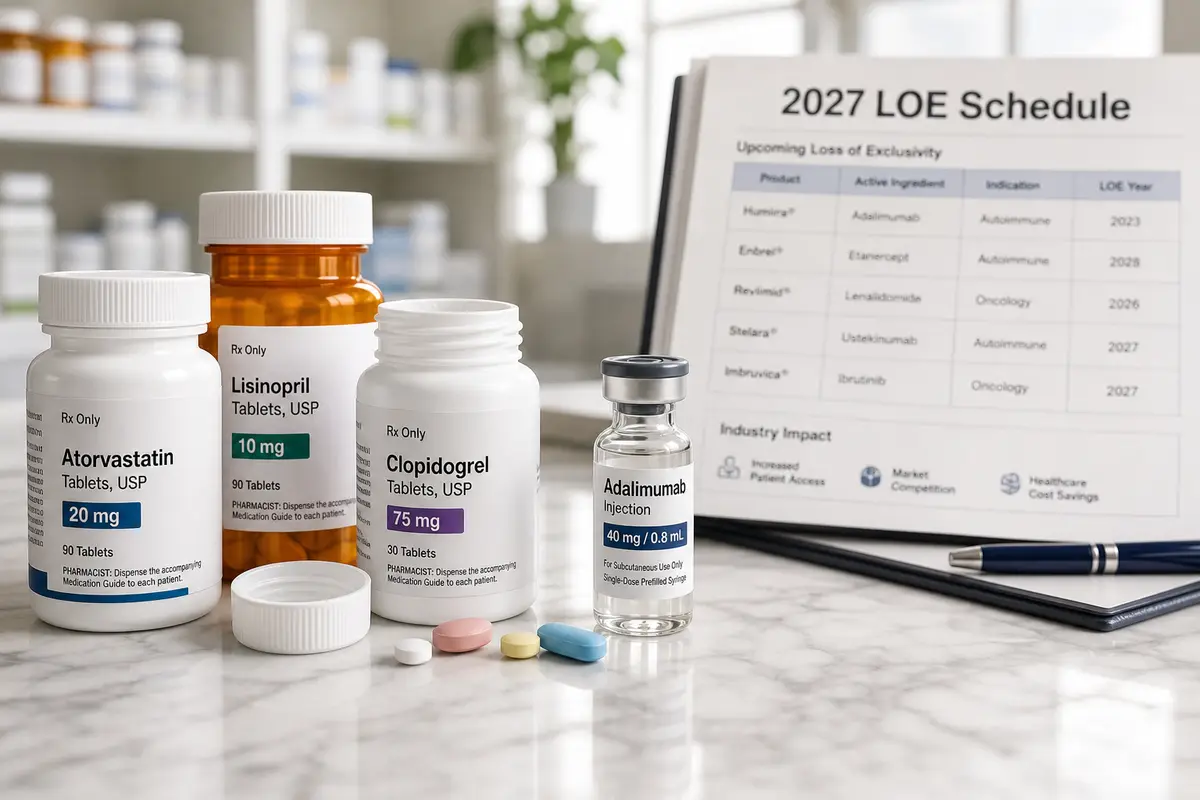
2027 Drug Patent Expirations: LOE Calendar & Pipeline
Analyze 2027 drug patent expirations and the impending patent cliff. Review a detailed loss-of-exclusivity (LOE) calendar for biologics and small molecules.
How Generics Challenge Patents: A Hatch-Waxman Act Guide
An educational guide to generic drug patent challenges. Learn about the Hatch-Waxman Act, the ANDA pathway, Paragraph IV certifications, the FDA Orange Book, FTC delisting actions, and the 2024 Teva v. Amneal Federal Circuit ruling.
Dissolution Testing and Bioequivalence: f2 Similarity, Biowaivers
A 2026 analyst guide to dissolution testing and bioequivalence, covering f2 similarity factor calculation and its statistical limitations, USP apparatus types, BCS biowaiver rules under FDA, EMA, WHO and ICH M9, and IVIVC modeling.
