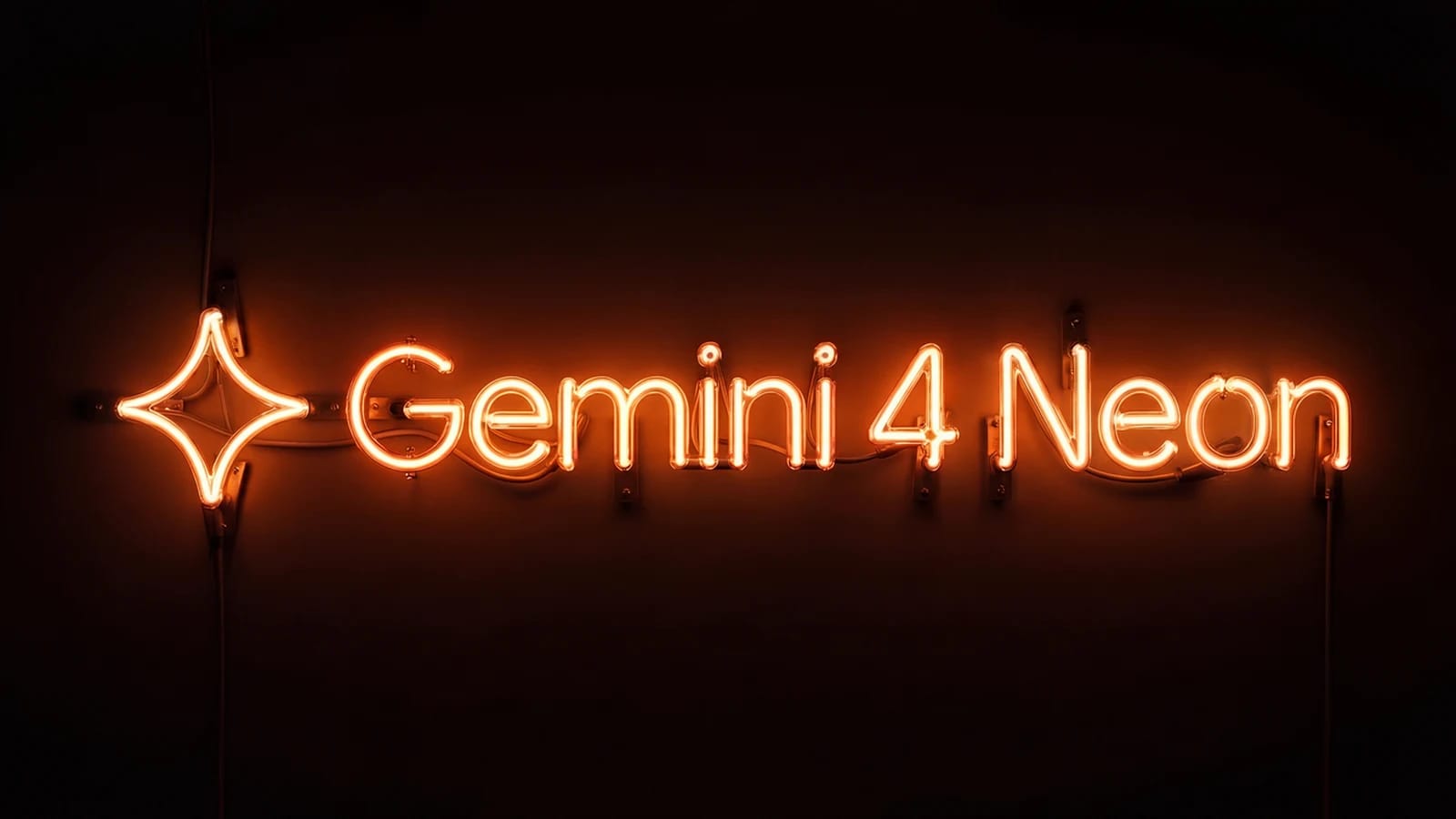
Gemini 4 Neon: Ahead of Opus 5.5 and GPT-6.2 Sol on 8 of 10 Benchmarks at $3/$15
Google's official Gemini 4 Neon scores (self-reported): ahead of Opus 5.5 and GPT-6.2 Sol on 8 of 10 rows, strongest past 256K tokens, at $3/$15 per 1M.
Daily LLM news, model releases, open-source updates, benchmark results, and major AI announcements.
Read by people at OpenAI, Anthropic, Google, Meta — and 400,000+ more.
Recent papers from arXiv in AI, NLP, and Machine Learning
No new papers today
arXiv updates on weekdays
Free head-to-head playgrounds across image, video, website, game and chat modalities.
LLM evaluation news and benchmark results. Find the best AI model for coding, math, reasoning, and more
HumanEval, SWE-bench, MBPP
MATH, GSM8K, AIME
GPQA, ARC, HellaSwag
MMLU, TriviaQA, WinoGrande
Ranked by average benchmark score
Top performers on this benchmark
Highest quality per dollar spent
Based on benchmark score vs. API pricing ($/million tokens)
Stay informed with large language model news today. The LLM ecosystem has evolved dramatically, with over 500 models now available across commercial APIs and open source LLM releases. From OpenAI's GPT-4 series to Anthropic's Claude, Google's Gemini, and Meta's Llama family, developers tracking AI model updates have unprecedented choice when selecting a model.
Our LLM benchmark news covers evaluations like GPQA (graduate-level reasoning), HumanEval (code generation), and MMLU (multitask understanding). LLM evaluation news helps you compare capabilities, though real-world performance depends on your specific use case.
LLM research updates, large language model evaluation news, leaderboards, and AI model insights
A challenging dataset of 448 multiple-choice questions written by domain experts in biology, physics, and chemistry. Questions are Google-proof and extremely difficult, with PhD experts reaching 65% accuracy.
A more robust and challenging multi-task language understanding benchmark that extends MMLU by expanding multiple-choice options from 4 to 10, eliminating trivial questions, and focusing on reasoning-intensive tasks. Features over 12,000 curated questions across 14 domains and causes a 16-33% accuracy drop compared to original MMLU.
A verified subset of 500 software engineering problems from real GitHub issues, validated by human annotators for evaluating language models' ability to resolve real-world coding issues by generating patches for Python codebases.
All 30 problems from the 2025 American Invitational Mathematics Examination (AIME I and AIME II), testing olympiad-level mathematical reasoning with integer answers from 000-999. Used as an AI benchmark to evaluate large language models' ability to solve complex mathematical problems requiring multi-step logical deductions and structured symbolic reasoning.
Humanity's Last Exam (HLE) is a multi-modal academic benchmark with 2,500 questions across mathematics, humanities, and natural sciences, designed to test LLM capabilities at the frontier of human knowledge with unambiguous, verifiable solutions
Massive Multitask Language Understanding benchmark testing knowledge across 57 diverse subjects including STEM, humanities, social sciences, and professional domains
A more robust multi-discipline multimodal understanding benchmark that enhances MMMU through a three-step process: filtering text-only answerable questions, augmenting candidate options, and introducing vision-only input settings. Achieves significantly lower model performance (16.8-26.9%) compared to original MMMU, providing more rigorous evaluation that closely mimics real-world scenarios.
BrowseComp is a benchmark comprising 1,266 questions that challenge AI agents to persistently navigate the internet in search of hard-to-find, entangled information. The benchmark measures agents' ability to exercise persistence in information gathering, demonstrate creativity in web navigation, and find concise, verifiable answers. Despite the difficulty of the questions, BrowseComp is simple and easy-to-use, as predicted answers are short and easily verifiable against reference answers.
Live model battles across chat, coding, image, video, and audio modalities

Google's official Gemini 4 Neon scores (self-reported): ahead of Opus 5.5 and GPT-6.2 Sol on 8 of 10 rows, strongest past 256K tokens, at $3/$15 per 1M.

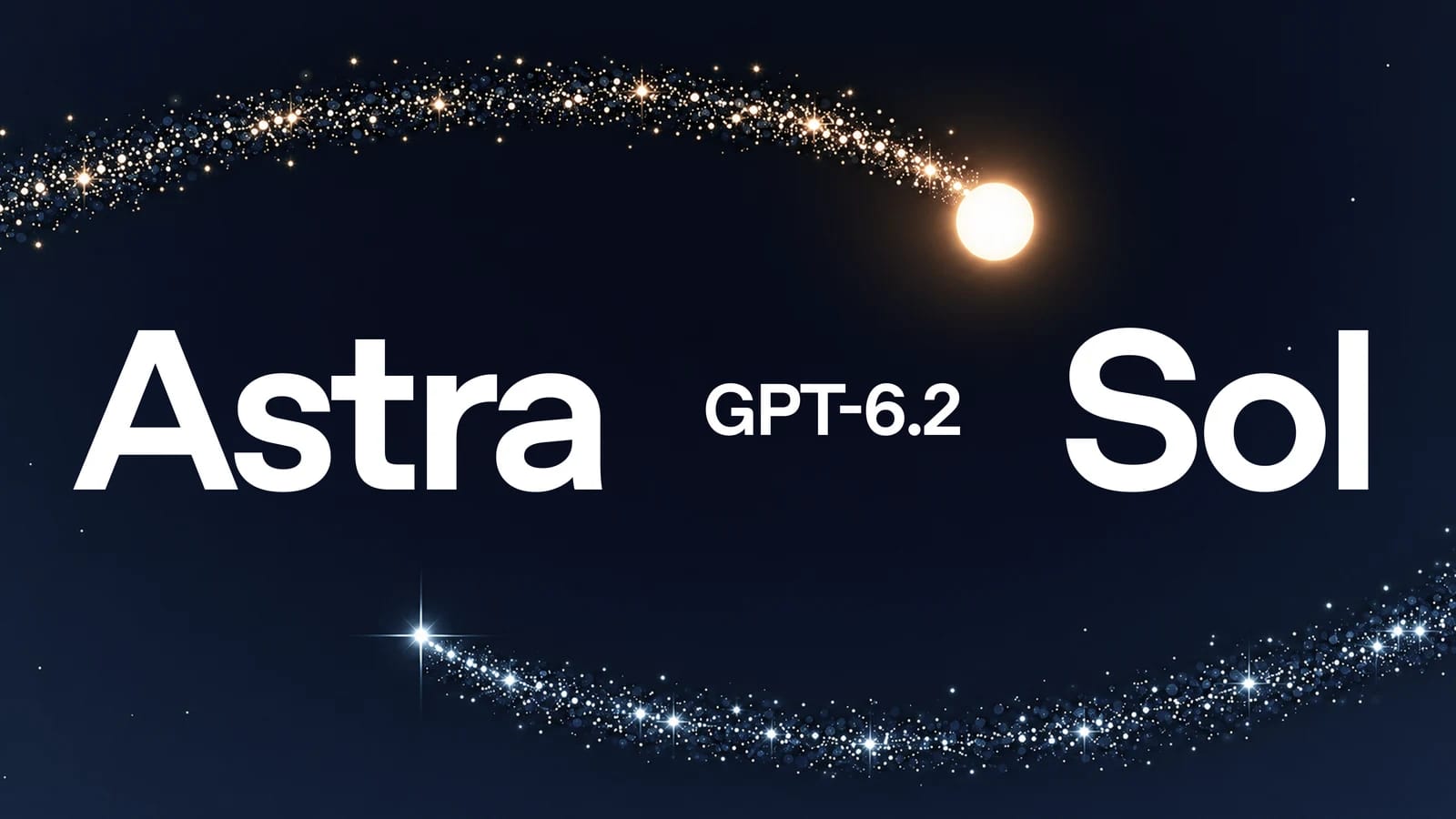
OpenAI released GPT-6.2 Astra ($8/$40) and Sol ($2/$10) on Nov 17, 2026. Self-reported scores vs GPT-6 Astra, Fable 5.2, Carbon, the 272K surcharge, and which tier to use.

Alibaba released Qwen4-Max on November 16, 2026 at $1.50/$4.50 per 1M tokens with 1M context. Self-reported benchmarks, pricing vs Opus 5.5 and GPT-6.1 Sol, and when to use it.
A practical guide to choosing the right LLM
Identify your primary task—code generation (HumanEval, SWE-bench), mathematical reasoning (MATH, GSM8K), or general knowledge (MMLU). Different benchmarks measure different capabilities.
API pricing ranges from $0.15/M tokens for lightweight models to $60+/M for frontier models. Use our comparison tool to find the best ratio.
Smaller models like GPT-4o-mini or Claude 3.5 Haiku offer faster responses. Reasoning models (o1, DeepSeek-R1) trade latency for accuracy on complex tasks.
Benchmarks provide signals, but real performance depends on your prompts. Create an evaluation set from actual use cases. Our AI Arena enables side-by-side comparison.
Common questions about LLM news today, open source LLM updates, and AI model releases
Large language model news, open source LLM updates, AI model comparisons, and benchmark analysis
Compare 500+ models across benchmarks. Real-time rankings updated daily.
Apache, MIT & permissive licenses
Side-by-side analysis
HumanEval, SWE-bench & more
MATH, GSM8K benchmarks
GPQA, MMLU, HumanEval, MATH, and 50+ more evaluations
Pricing, latency & throughput