Lojban
In other languages 日本語 中文 русский Deutsch English Esperanto español français la .lojban. latviešu Lengua Aquatica magyar Nedderdüütsch polski português svenska
Chat with the Lojban community


What is Lojban?
|
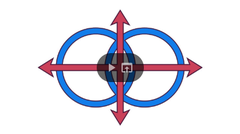
Lojban is a carefully constructed spoken language. It has been developed since 1987 by a community of logic and language enthusiasts, building on work that began in the 1950s with the Loglan language.
- Lojban's grammar is based on simple rules, and its linguistic features are inspired by predicate logic.
- Lojban has words called attitudinals which function similar to emoticons and emoji, expressing emotions and nuance. ue indicates surprise; ba'u admits you're exaggerating.
- You can be as vague or as detailed as you like. Tense (past, present, future) and number (singular, plural) are optional by default.
- Lojban is machine parsable: The syntactic structure of a sentence is unambiguous and can be checked with software.
- There is a community of speakers who continue to explore and expand Lojban's possibilities, writing, translating, and making music in it.
Lojban means different things to different people
- a new perspective on language
- a way to discipline your thinking
- a medium for socialization and art
- a domain for exploring the intersection of human language and software
- a test-bed for linguistic experimentation
What will Lojban mean for you?
Who we are
This wiki is hosted by the Logical Language Group (LLG), also known as la .lojbangirz., a non-profit organization founded in 1987 to promote the scientific study of the relationships between language, thought and human culture. LLG is recognized as a 501(c)(3) educational and scientific charity.
LLG and this web site are run entirely by volunteers, and hosting costs are covered by members and donors. See Logical Language Group for how to contact the organization, attend the annual meeting, become a member, or donate.
Official publications
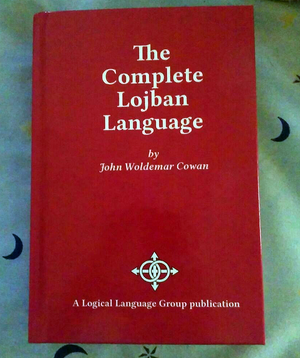
The Complete Lojban Language (the "CLL"), by John Woldemar Cowan, is the official reference grammar, published by LLG and available in several formats:
- hardcover
- PDF (cover)
- EPUB and MOBI (for Kindle and other ebook readers)
- In HTML: one file per section, one file per chapter, one big file
The CLL is is easiest to read once you already understand some Lojban. It does not teach vocabulary, style, or colloquial usage.
What Is Lojban? (.i la lojban mo) by Nick Nicholas and John Woldemar Cowan, provides a tutorial approach to the language:
Lojban usage has changed over time. Some of these changes have been described by the BPFK (baupla fuzykamni, or "Language Planning Committee"), which was formed in 2003, or the LFK (la lojbau fuzykamni), which succeeded the BPFK in 2018. One of the more significant shifts is in the usage of articles ("gadri") such as lo and le.
- The xorlo reform, approved by LLG in 2003
- BPFK on gadri
Learning Lojban
These resources have been made by the Lojban community.
Courses and textbooks
- Getting Started with Lojban: A course with interactive exercises based on the older Wave Lessons by la klaku, la kribacr, la xalbo, and others
- Learn Lojban: A course by la gleki
- Lojban for Beginners: An older course by Nick Nicholas and Robin Turner
- la karda: A fast-paced overview of the Lojban grammar by ldlework
- Pronunciation guides
Dictionaries
- la lensisku: A collaborative online multilingual Lojban dictionary
- la sutysisku: A multilingual dictionary that also works offline and includes a searchable database of sentences
- la vlasisku: An elegant Lojban-English dictionary, with attention to grammatical classification
- StarDict dictionaries in several languages (e.g. for GoldenDict)
- jbovlaste: The original LLG-hosted collaborative dictionary database, now read-only. Many of the other dictionaries include its content.
- Word lists ordered by frequency of use and an unofficial list of simple gismu definitions.
- multilingual gismu and cmavo word lists in TSV and HTML
Reading practice
- Terry the Tiger: Short and easy, with audio
- la melbi .e le ractu: A story by la lalxu with high-frequency vocabulary
- The Little Prince and Alice in Wonderland: Translated by la xorxes
- The Wonderful Wizard of Oz: Translated by la selpa'i
- ...and more
Other learning materials ...
Connect with the community
Lojban is spoken by a vibrant community, producing literature, music, and art, and discussing questions about language and thought. The web comic xkcd said that, if you spoke Lojban, you'd have to speak with Lojbanists. That may not be such a bad thing!
Chat
The Lojban community is active on several Discord servers, including "lojban" and "roljbogu'e".
Ask questions in #ckule, talk in or about Lojban in #lojban, speak only Lojban in #jbosnu, and chat about anything else in #jboselbau. Answers usually arrive within hours, often within minutes.
An older chat, which includes history going back to 2016, bridges Telegram with IRC.
See Lojban Live Chat for other ways to connect.
Forums, social media and mailing lists
- r/lojban on Reddit
- Lojban group on Facebook
- lojban-beginners — questions about learning and understanding Lojban (subscribe)
- lojban — the general-purpose list, founded in 1989 (subscribe)
International contacts
Volunteers who are happy to answer questions in languages other than English:
| Languages spoken | |
|---|---|
| la selpa'i seladwa@gmx.de |
English, German |
| la gleki bangu@lojban.org |
English, Russian |
| la ilmen ilmen.pokebip@gmail.com |
English, French |
| la tsani nictytan@gmail.com |
English, French |
| la xorxes jjllambias@gmail.com |
English, Spanish |
| la guskant gusni.kantu@gmail.com |
English, French, Chinese, Japanese, Esperanto |
| la remod rdentato@gmail.com |
English, Italian |
Lojban around the world — other ways of communication ...
Other community-run websites
LLG hosts this wiki and lojban.org, but a great deal of Lojban lives elsewhere. These sites are built and maintained independently by members of the community; they are not LLG publications, and LLG does not vouch for their contents.
| Site | What it is |
|---|---|
| lojban.io | A community platform with interactive courses, a wiki, and a regularly updated catalogue of Lojban resources |
| lojban.pw | la gleki's site, home of the Learn Lojban course |
| NALVAI | A project documenting the dynamic lojban corpus |
| zbalermorna | A dedicated script for Lojban |
More info ...
- la karda, an overview of Lojban in tiny lessons!
- la sutysisku, an interactive dictionary.
- The Complete Lojban Language, a comprehensive textbook.
From Lojban news...
Community news
July 2026
- "Investigating the limits of free-form debate as a scalable oversight strategy" by Gareth Tan, Leonid Tsyplenkov, Edy Nastase, and Gabriel Recchia is published in Transactions on Machine Learning Research. LLM models were assessed for their performance on tasks related to Lojban.
19 January 2026
- la janbe publishes a video blog, "Speaking Lojban at an Esperanto conference..."
28 December 2025
- LLG holds its annual members meeting via Google Meet.
7 June 2025
- la nalva publishes NALVAI, a project documenting the occurrence of words in the dynamic Lojban corpus.
11 April 2025
- The 11th Language Creation Conference of the Language Creation Society was held in College Park, Maryland. It included the participation of Lojbanists and Loglanists.
1 April 2025
- la srasu publishes a short story, la nu farlu lo plini in lipu tenpo, a magazine dedicated to Toki Pona.
6 February 2025
- Edward Hong Wang and Cynthia Xin Wen publish "Building A Unified AI-centric Language System: analysis, framework and future work", a paper citing Lojban as an example of "how unambiguously parsed sentences can be constructed".
13 July 2023
- la korvo announces la brismu, a project to define formal semantics for Lojban.
30 October 2022
- la gleki announces "The Incomplete Lojban Language", his own unofficial revision of CLL.
20 September 2022
- LLG convenes its annual members meeting via Mattermost forum.
Archives
17 January 2021
- la janbe publishes tabgapci, an original song.
20 September 2020
- la solpa'i publishes Ua langu, an original song.
13 January 2020
- The LFK is selected and begins meeting on Mattermost.
24 September 2018
- la gleki publishes a translation of How the enemy came to Thlunrana, a story by Lord Dunsany dedicating it to a new meeting of the LLG.
24 July 2018
- la evar usar published an English video introduction to Lojban.
15 May 2018
- la evar usar published The Magic Unsystem (makfa nalciste), the fifth episode of a Lojban-language worldbuilding video series. (English subtitles)
28 April 2018
- la evar usar published The Human Inhabitans (remna xabju), the fourth episode of a Lojban-language worldbuilding video series. (English subtitles)
30 March 2018
- la evar usar published The Rainforest Buffet (cavyricfoi gusta), the third episode of a Lojban-language worldbuilding video series. (English subtitles)
28 February 2018
- la evar usar published The Food Web (citka je cidja ciste), the second episode of a Lojban-language worldbuilding video series. (English subtitles)
30 January 2018
- la guskant published the first episode of mEntulimu, a series of short videos about Lojban.
20 January 2018
- la evar usar published The Lay of the Land (tcila co tumla), the first episode of a Lojban-language worldbuilding video series. (English subtitles)
14 September 2017
- la guskant published almapamla, a translation of the song Amapola] by Joseph Lacalle
04 January 2017
- la uakci published no da re roi fasnu, a translation of Polish poem Nic dwa razy by Wisława Szymborska into Lojban.
12 November 2016
- la guskant published lo vliraitru, a documentary film in Lojban.
06 November 2016
- la uakci published sorxaizu'e sei catlu, a translation of Polish poem Terrorysta, on patrzy by Wisława Szymborska into Lojban.
13 October 2016
- la lalxu published la melbi e le ractu, an original short story in Lojban.
1 June 2016
- la selpa'i published lu mi za'o citno li'u, an original short story in Lojban.


