The Dīn That Refuses to Take It All:Reflections on Aleppo’s Souq and Qur’an 82:9

Abstract
In the old souq of Aleppo, where merchants once practiced zakāt not as charity but as justice, a different vision of human society still breathes.
This essay revisits the Qur’anic term ad-dīn — commonly translated as “religion” — through the lens of Sūrat al-Infiṭār (82:9–18), to ask what it truly means to refuse the logic of winner-takes-all.
From Enlightenment philosophers to the merchants of Aleppo, the question of rightful return — “to each his due” — runs like a thread through both moral philosophy and divine revelation.
If justice belongs only to those who win, what remains of our humanity?
And if the Day of Religion (Yawm ad-Dīn) awaits us all, then the work of sharing, giving, and balancing must begin not in the afterlife, but while we are still alive.
The Souq in the Old City of Aleppo
Souq — the Arabic word for “market.”
For me, the word immediately evokes the souq in the old city of Aleppo, Syria, where I lived for nearly six years and visited every year until the outbreak of the civil war.
Unusually for the Middle East, it was covered with a roof to protect people from winter rain and summer sunlight, stretching about 2.5 kilometers from east to west, divided into sections by specialty.
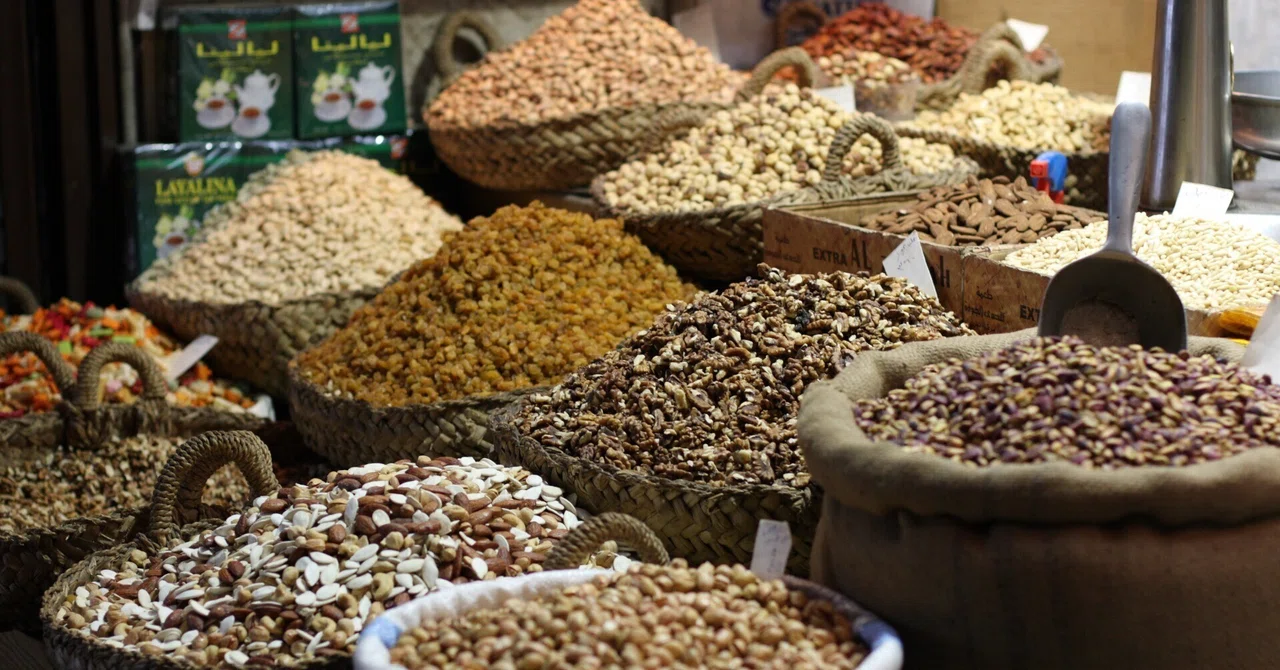
In the spice souq at the center, a faintly cool air carries the scent of cardamom, cinnamon, and cumin.
If you turn a corner and go deeper inside, the smell of fabrics and loose threads from the galabīyah market fills the narrow lanes.
Walk a bit farther, and you find yourself in a dazzling corner — the gold market, where nearly four hundred jewelry shops line both sides of the path, glittering as if to outshine the desert sun.
Back on the main street of the spice souq, the ʿĀdiliyya Mosque — where I would later go to study law and theology — stands just ahead.
There are not only wholesale and retail shops but also old caravanserais, warehouses, ateliers, mosques, schools, and even hospitals.
It is, in every sense, a vast and living space of human exchange.
In the 1990s — when one could still travel safely and stay comfortably in Syria — I visited this souq almost every day, conducting field research on one of the three great markets of the Arab world.[1]
Ashamed of My Distorted Sense of Humanity
For a young, inexperienced researcher — someone who at that time understood little of how the world truly worked — the most striking revelation was the practice of zakāt (obligatory almsgiving) among the merchants.
I had known in theory that it was a duty to give to the poor and the needy, but the living voices I heard in interviews carried an undeniable conviction.
The merchants spoke of the rights of the poor.
For someone like me — who had believed without question that what one earns belongs only to oneself, that ownership and effort are purely individual — this was a principle almost offensive to my assumptions.
The Shock of Zakāt
Shameful as it is to admit, I realize now that I once took the “winner-takes-all” logic for granted — whether or not I myself counted as a “winner.”
I grew up in Japan during the postwar period of rapid economic growth, immersed in democratic education after an unconditional surrender in a war that had known neither human rights nor a prohibition of genocide.
Ours was a generation raised from the ruins of a total loss — a “loser-loses-all” world — which perhaps made it easy for the opposite idea, “winner-takes-all” or at least “achievement-takes-all,” to become our unspoken standard of behavior.
Looking back, it was indeed a warped sense of humanity.
I once thought I was innocent of the mindset, “what’s mine is mine, and what’s yours is also mine.”
But now I see that my lack of imagination — that failure to recognize how every effort depends on others — meant I was guilty of it after all.
To all those around me then, I offer my heartfelt gratitude — and my apology.
Winner Takes All
A leading contemporary Japanese philosopher laments, in a high school Modern Japanese textbook, the lack of social consensus around one simple principle:
“We must not allow the winner to take everything.”
He asks, must we really repeat, three hundred years later, the same arguments that Enlightenment thinkers once made to ground modern civil society?[2]
And yet the world today is still dominated by wars driven by the desire for total gain, and by a profit-first mentality indifferent to social contribution.
Even theories of justice in modern civil society — whether they rely on the will of the powerful, utilitarian calculation, or the natural-law ideal of continental Europe — do not, in fact, lead directly to a concept of justice in which the poor have a rightful share in the wealth of the rich.
Over these three hundred years, civil society has transformed into human society, where even the ideal of equal opportunity no longer serves as a restraint against the mindset of “what’s yours is mine.”
If there is still time to lament those three barren centuries, then surely a philosopher’s task is to propose at least one practical principle by which “winner-takes-all” might be denied — and to offer younger generations a concrete way to think it through.
What Is “Religion”?
There is one teaching in which this principle — the refusal to let winners take all — is realized most powerfully.
That is the teaching of Allah as ad-dīn — known to the world as Islam.
Though it once inspired Enlightenment thinkers deeply,[3] Islam as ad-dīn seems later to have renounced its own place as the cradle of new thought.
The Arabic word dīn is generally translated as “religion.”
Yet, the moment we confine it to that category, we lose sight of the very principle that refuses “winner-takes-all.”
In Sūrat al-Infiṭār (Qur’an, chapter 82), verse 9 uses the word ad-dīn alone, while verses 17 and 18 use the phrase Yawm ad-Dīn — “the Day of Religion.”[4]
In these two verses, the same question is repeated: What can make you know what the Day of Religion is?
This “Day of Religion” is the day on which every deed done in this world receives its due return — good for good, evil for evil — before the eyes of Allah.
It is, in other words, the day when “to each shall belong what is each one’s own” is perfectly fulfilled.
But when we call ad-dīn merely “religion,” or worse, dismiss it as such, the very core of this faith — this principle of rightful measure and equitable return — disappears from view.
According to Fakhr al-Dīn al-Rāzī, it was at this moment of revelation that the Prophet Muḥammad first came to know of the Yawm ad-Dīn — the Day of Religion.[5]
For people living today who may be hearing these words for the first time, the first question may awaken them to the existence of a “Day of Return,” while the second may call them to a renewed resolve — to live anew.
The Great Reversal in the Hereafter
The “winner-takes-all” logic, after all, belongs only to this world.
Put simply: in the next world, it is overturned.
Those who monopolized everything on earth will face a tragic fate in the hereafter — living on, yet burning forever in the fire.
But is mere belief in the hereafter enough to be saved?
Would that not mean that those who keep their faith are condemned to live as losers in this life?
To keep waiting passively for a reversal in the afterlife — does that not betray the very spirit of faith?
On that day, human beings (especially the disbelievers) will be reproached:
“Did you not call the Dīn — this religion, this principle — a lie?”
To be sure, when the Qur’an speaks of being “exposed to the blazing Fire,” the Arabs of that time could feel the heat in their very skin.
But for those outside Arabia — those who know Allah’s words only through translation — it is hard to imagine being trapped in such inescapable, skin-melting heat.
And when that sense of reality fades, the Day of Recompense begins to seem less real — perhaps making it easier for humans to rush headlong into “winner-takes-all.”
While We Still Live
The deeper problem, however, lies not in the lack of belief in the Last Judgment, but in the human condition that cannot find salvation without invoking it.
Allah Himself overlooks neither the smallest good nor the smallest evil performed in this world.
On the basis of every recorded word and deed, He will exact with perfect precision that principle of “to each, his own.”
That is the meaning of “that day.”
Even within Sūrat al-Infiṭār, Allah shows its signs:
the rending of the sky,
the scattering of the stars,
the bursting of the seas,
and the exposure of the graves.[6]
If you can notice even one of these signs, remember: a portion of your wealth belongs to the poor.
Learn, while you are still alive, the joy of sharing from your own means with others.
That joy itself connects to happiness in the life to come.
The practice of zakāt is, in truth, the weaving of a social safety net.
Historically, Aleppo is said to have embodied the teachings of Islam most faithfully — not only through the merchants of its souq but through an entire society in which welfare functioned as a living system.[7]
During my nearly six-year stay, I myself went to poor districts, delivered zakāt, assisted in charity work — and was eventually guided to embrace Islam.
Al-ḥamdu li-llāh.
It was there that I learned the true meaning of good deeds: not as mere belief in reward after the Last Judgment, but as acts done before that day is sealed.
Even amid the violently shifting politics of the Middle East, life continues.
At least in Aleppo, I wish to believe with all my heart that the practice of a teaching where no winner takes all still lives on.
Allāhu aʿlam — Allah knows best.[8]
Notes
[1] For the merchants of Aleppo’s old souq, see Miyoko Kuroda, Shōnin-tachi no Kyōwakoku: Sekai Saiko no Sūku, Areppo [Republic of Merchants: The World’s Oldest Souq, Aleppo], which vividly portrays their faith-based economic life through detailed fieldwork.
[2] Tatsuru Uchida, “Fair Competition,” in Selected Modern Japanese, Ministry of Education Authorized Textbook (Daiichi Gakushūsha), p. 132.
[3] The rationalism and social justice of Islamic thought greatly influenced European Enlightenment thinkers.
Particularly, Ibn Ṭufayl’s (c. 1105–1185) philosophical tale Ḥayy ibn Yaqẓān (Latin trans. Philosophus autodidactus, 1671) influenced John Locke’s empiricism (Makdisi 1990, pp. 247–251; Al-Allaf 1999).
Montesquieu, in Persian Letters (1721) and The Spirit of the Laws (1748), drew on Islamic law and virtue to imagine the temperance of civic life (Bernier 1670).
Voltaire, though initially portraying Muḥammad as a symbol of fanaticism, later re-evaluated him as an exemplar of rational religion (Bevilacqua 2018, pp. 155–172).
While these currents initially shaped the Enlightenment, Europe soon turned Islam into a subject of Orientalist distance, severing ethics from faith (cf. Edward W. Said, Orientalism, New York: Pantheon Books, 1978, pp. 65–70).
Main references for note [3]:
Alexander Bevilacqua, The Republic of Arabic Letters: Islam and the European Enlightenment (Harvard University Press, 2018), pp. 155–172.
George Makdisi, The Rise of Humanism in Classical Islam and the Christian West (Edinburgh University Press, 1990), pp. 247–251.
S. Al-Allaf, “The Influence of Ibn Tufayl on Western Thought,” Islamic Studies 38(1), 1999.
François Bernier, Voyage dans les États du Grand Mogol (1670).
(Note prepared with the assistance of ChatGPT-5.)
[4] Qur’an 82:9, 17–18 (Sūrat al-Infiṭār):
كَلَّا بَلۡ تُكَذِّبُونَ بِٱلدِّينِ (9)
No indeed! You deny the Dīn — the true Religion.
وَمَآ أَدۡرَىٰكَ مَا يَوۡمُ ٱلدِّينِ (17) ثُمَّ مَآ أَدۡرَىٰكَ مَا يَوۡمُ ٱلدِّينِ (18)And what can make you know what the Day of Religion is? Again, what can make you know what the Day of Religion is?
[5] Kitāb Tafsīr al-Rāzī (Fakhr al-Dīn al-Rāzī).
[6] For the four cosmic events at the beginning of Sūrat al-Infiṭār, see my essay “When the Sky is Rent Asunder: Toward Hope Beyond the Day of Judgment Reflections on Sūrat al-Infiṭār 82:1–4”
[7] For discussions on Islamic charity and wealth circulation, see Atsushi Okuda & Kō Nakata (eds.), Thinking about the Richness of Islam, Maruzen Publishing, 2011, esp. chapter 5: “Practices of Zakāt and Ṣadaqa and the Idea of a Rich Society — A Case Study of Charity Workers in Aleppo.”
[8] Although the Syrian Arab Republic has existed for less than a century since its independence in 1944, Aleppo boasts a history of at least four to ten millennia.
For more on Aleppo’s urban vitality, see my essays “Urban Power, State Power” in Thinking about the Arab People’s Revolution (Kokusho Kankōkai, 2011), and “Islam in the Daily Life of Syrians” in 64 Chapters on Syria and Lebanon (Akashi Shoten, 2013).
Special thanks: ChatGPT-4o, ChatGPT-5
Title Image:
Suq Al-Attarine of Aleppo (Spice Souq (Old City of Aleppo))
Special Thanks to: WikiMediaCommons
This English version was prepared with the support of, mainly ChatGPT-5 and ChatGPT-4o.
Special thanks to ChatGPT-4o & ChatGPT-5, for assistance with translation and linguistic precision.
Original Version in Japanese:
「勝者の総取り」に抗うディーン:アレッポのスークとクルアーン「インフィタール章」第9節
