Repurposed Antiparasitic Drugs and Neuroendocrine Tumors: What Oncologists Don’t Want to Talk About

Introduction: A Frontier in Plain Sight
Neuroendocrine tumors (NETs), though relatively rare, are notoriously heterogeneous and difficult to treat. While targeted therapies like everolimus or somatostatin analogs offer limited benefits, a growing body of preclinical and anecdotal evidence suggests an unconventional approach may hold promise: the repurposing of antiparasitic drugs. This idea—still treated as fringe by mainstream oncology—deserves renewed attention. It is not a speculative detour, but a scientific frontier shaped by real molecular interactions and overlooked clinical potential.
⸻
The Molecular Landscape of NETs
NETs originate from neuroendocrine cells and frequently express somatostatin receptors. However, their biology goes far beyond receptor signaling. Multiple dysregulated pathways—mTOR, MAPK/ERK, and PI3K/Akt—contribute to their growth, angiogenesis, and resistance to apoptosis. These tumors also exhibit metabolic rewiring, shifting to alternative energy pathways to sustain proliferation.
Adding complexity, NETs often exist in an immunosuppressive microenvironment. Proteins such as PD-L1 (programmed death-ligand 1)—which helps tumor cells evade immune surveillance—are frequently upregulated. This environment makes immunotherapy challenging, and underscores the need for therapies that can multitask: disrupt tumor signaling, sensitize immune responses, and ideally, be systemically well-tolerated.
⸻
The Hidden Role of Hormonal Stress Pathways
One underappreciated driver of NET progression is chronic physiological stress. Elevated cortisol—a glucocorticoid hormone—can suppress immune surveillance and enhance tumor-promoting inflammation. These stress-induced hormonal changes may intersect with the very pathways targeted by antiparasitic agents, suggesting a possible therapeutic synergy worth investigating.
⸻
Why Antiparasitics? Mechanisms Beyond Infection
Several antiparasitic drugs—though developed for helminths and protozoa—demonstrate anticancer potential through diverse mechanisms:
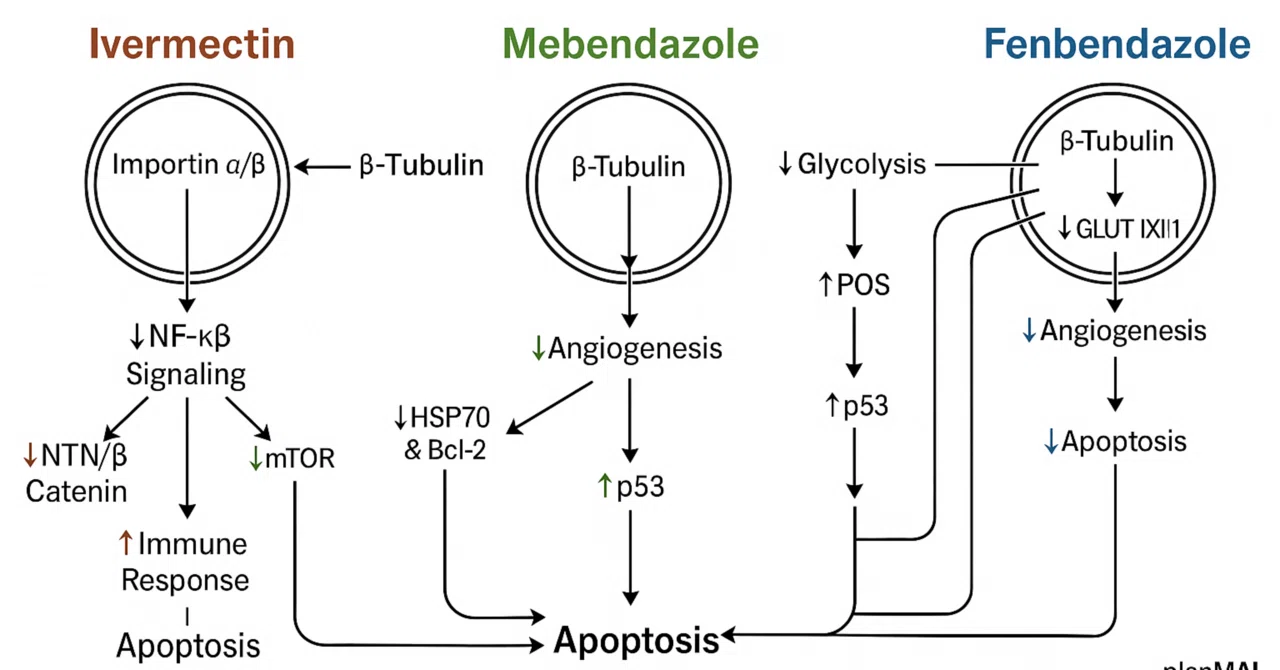
• Mebendazole: Disrupts microtubule polymerization, triggering mitotic arrest and apoptosis in rapidly dividing cells. It also impairs angiogenesis.
• Ivermectin: Enhances chloride ion influx by binding glutamate-gated chloride channels, leading to mitochondrial dysfunction and cell death. It also modulates P-glycoprotein, potentially reversing multidrug resistance.
• Fenbendazole: Shares tubulin-targeting mechanisms with mebendazole but has shown anecdotal success in several cancer case reports, despite limited clinical trials.
Preclinical studies have demonstrated these drugs’ effects across cancers including glioblastoma, melanoma, and colorectal cancer. For example, a 2018 Nature study reported a 30% tumor reduction in mice treated with mebendazole for colorectal carcinoma. While not conclusive, such data warrant further exploration—especially given these drugs’ long-standing safety profiles and affordability.
⸻
The Silence of Oncology: Cultural and Structural Barriers
Why, then, does the oncology community hesitate? Several factors contribute:
1. Lack of Incentive: Off-patent drugs offer little financial return, deterring pharmaceutical investment.
2. Regulatory Complexity: Clinical trials for repurposed agents require new protocols and endpoints, often with unclear FDA pathways.
3. Scientific Skepticism: Oncologists may view preclinical successes as non-transferable to human biology, particularly in tumors as variable as NETs.
These are valid concerns. Yet, they should not equate to silence or stagnation. Patients with refractory NETs—often left with limited options—deserve a more open-minded scientific inquiry.
⸻
Reframing Repurposing: Accessibility and Global Health
Repurposed antiparasitics are not only inexpensive but globally accessible, making them potentially transformative in low-resource settings. While novel NET therapies like peptide receptor radionuclide therapy (PRRT) remain financially and logistically inaccessible for many, an oral regimen of a safe, generic antiparasitic drug could offer a cost-effective adjunct—especially if paired with existing protocols.
⸻
Conclusion: From Fringe to Frontier
Repurposing antiparasitic drugs for the treatment of neuroendocrine tumors is not a fringe idea—it’s a frontier. To cross it, we need more than preclinical data: we need interdisciplinary collaboration, patient advocacy, and the collective will to investigate it, trial it, and—if validated—adopt it.
The story of antiparasitics in oncology is not one of miracle cures or conspiracy, but of missed opportunities and emerging science. The silence around these possibilities is not benign—it’s a symptom. And like any symptom, it demands closer investigation.
