Mamoru Hosoda’s Greatest Achievement to Date — and Why Scarlet Only Fully Reveals Itself on a Rewatch

If you’ve seen Scarlet once, see it again. A second viewing changes everything.
TL;DR (3 lines):
This movie is a four-layer narrative machine.
Hamlet is inverted; Purgatorio is the climb; Macbeth is the misdirection.
Rites of passage repeat four times—and the ending only works on that basis.
Spoiler warning: I’m going to talk about structure, late-film reveals, and why the ending coheres.
Scarlet is not “one story.” It’s a four-layer narrative engine: multiple frameworks stacked at once, with the protagonist sliding between them. The film almost wants your first viewing to feel confusing—because that confusion is part of its rite-of-passage effect. It creates deliberate “cracks” in the surface narrative so that, on a rewatch, deeper layers start to show through.
This post maps that machine—without dropping any of the required pillars:
Hamlet is inverted in every sense (plot logic, moral logic, even who survives to “carry the story”).
After the Festival Dance in Shibuya, the film becomes an Ascending Dante climb, visually aiming “upper-left,” and the father’s ghost delivers a beat that syncs with Virgil’s final release of Dante in Purgatorio.
Claudius and the Old Woman / Dragon operate as a Macbeth + Three Witches system: truth shaped like traps, prophecy-by-framing, and misdirection that deceives both Claudius and the audience.
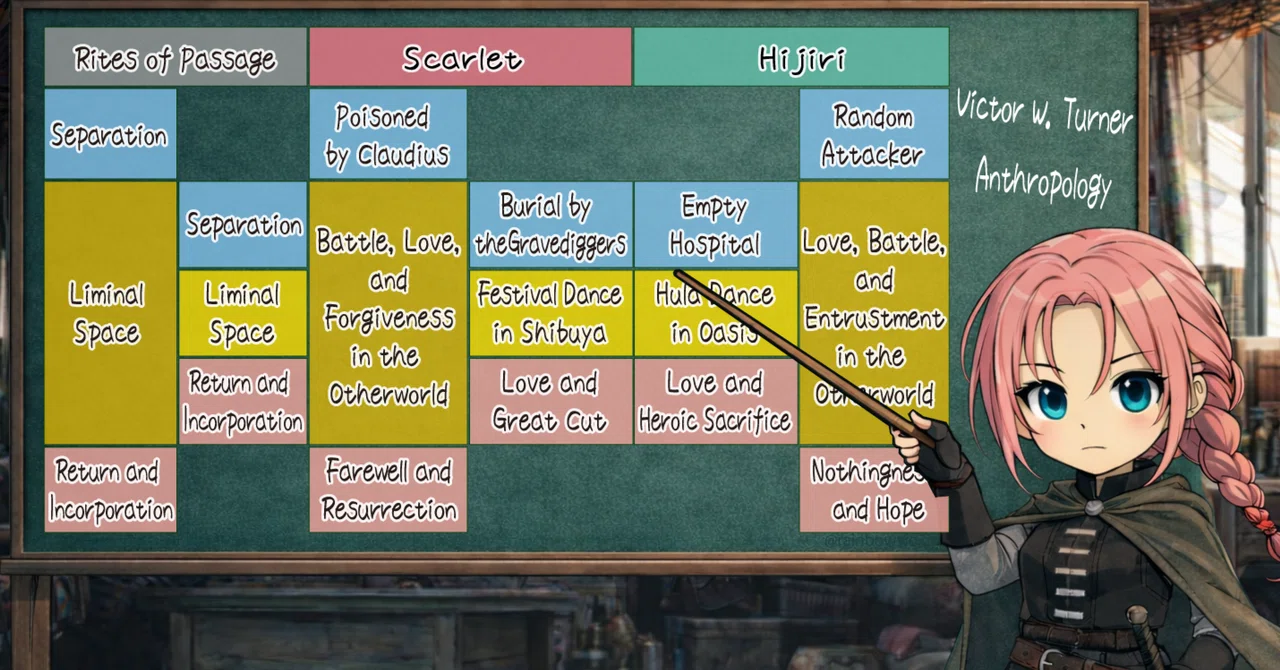
The film contains four Turner / van Gennep Rites of Passage, nested and mirrored.
Beneath Shakespeare and Dante, the film overlays the Bible and universal mythic patterns—not as trivia, but as the logic that makes the ending work.
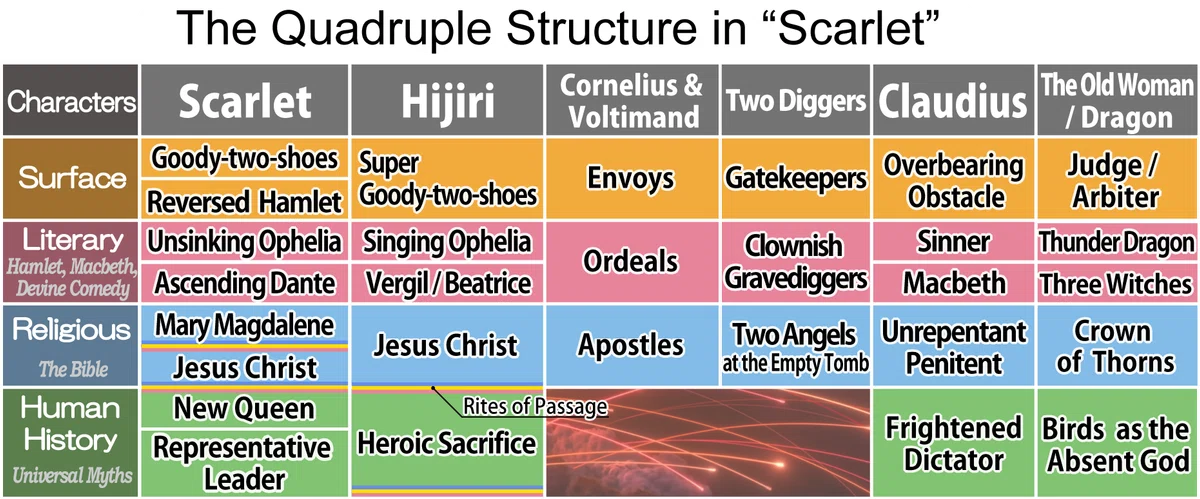
0) Four-Layer Engine in One Sentence
Scarlet operates simultaneously as:
a Surface layer (politics / revenge),
a Literary layer (Hamlet / Macbeth / Divine Comedy),
a Religious layer (Mary Magdalene / Jesus Christ / Crown of Thorns),
a Human History / Universal Myths layer (hero-sacrifice patterns and modern social-contract legitimacy).
These layers aren’t referenced—they’re assigned. Characters carry functions across layers like interlocking parts of a machine.
1) Scarlet’s 8 Roles: Bleeding Across Layers
A common misreading is that Scarlet simply “levels up.” The direction suggests something subtler: deeper layers are already faintly visible inside earlier roles, and the film gradually increases their opacity.
Scarlet Carries Eight Roles:
Surface: Goody-two-shoes → Reversed Hamlet
Literary: Unsinking Ophelia → Ascending Dante
Religious: Mary Magdalene → Jesus Christ
Universal: New Queen → Representative Leader
This shouldn’t work. But it does, because roles don’t hard-switch—they overlap, and earlier masks keep haunting later ones.
2) Hamlet Inverted: Ghost as Brake, Not Engine
What the Ghost does in Hamlet:
In Shakespeare, the father’s ghost is a revenge engine. Hamlet is dragged by that demand into catastrophe. Ophelia sinks. Everyone dies. Someone else carries the story.
What the Ghost does in Scarlet:
Here, the function is reversed:
Scarlet begins as Goody-two-shoes—pure, powerless, trapped.
The symbol of her fixation is a portrait of her father, Amulet, which she painted herself.
When her stepmother tears this painting to shreds (symbolized nothingness), and her father is executed by Claudius, Scarlet’s world freezes.
Scarlet becomes Reversed Hamlet - The Child of Trauma: She trains, plans, and moves toward violent resolution. She begins her journey not as a calculated avenger, but as a child mentally arrested by trauma, spending the first half of the film in a state of mental immaturity, self-hypnotized into a cycle of vengeance, clinging to the shards of her trauma as her only reality.
The film forces her into a moral “To be or not to be”—revenge or forgiveness.
On-Screen Anchor:
the prolonged still image / doubled figure where Scarlet’s identity splits and argues with itself. The film freezes the image to show the conflict, not explain it.
At the turning point, the father’s apparition says—essentially: Don’t do this for me. Don’t live inside hatred. Choose the life you actually want.
The Ghost is no longer the engine—it’s the brake.
And the ending mirrors the inversion:
In Hamlet: the protagonist dies; a friend preserves the tale.
In Scarlet: Scarlet lives, and must carry forward the future—especially the future embodied by Hijiri.
Tragedy flips into responsibility-to-the-living.
Girl with Long Braids:
The Mirror of the Past: Scarlet (with short hair) encounters a poor girl in the marketplace arround the separation wall. The girl wears her hair in long braids—the same hairstyle Scarlet once had. Scarlet sees her own lost innocence in the girl.
"I wish I’d been born a princess... If I were, I’d make a world where children like us don't have to die."
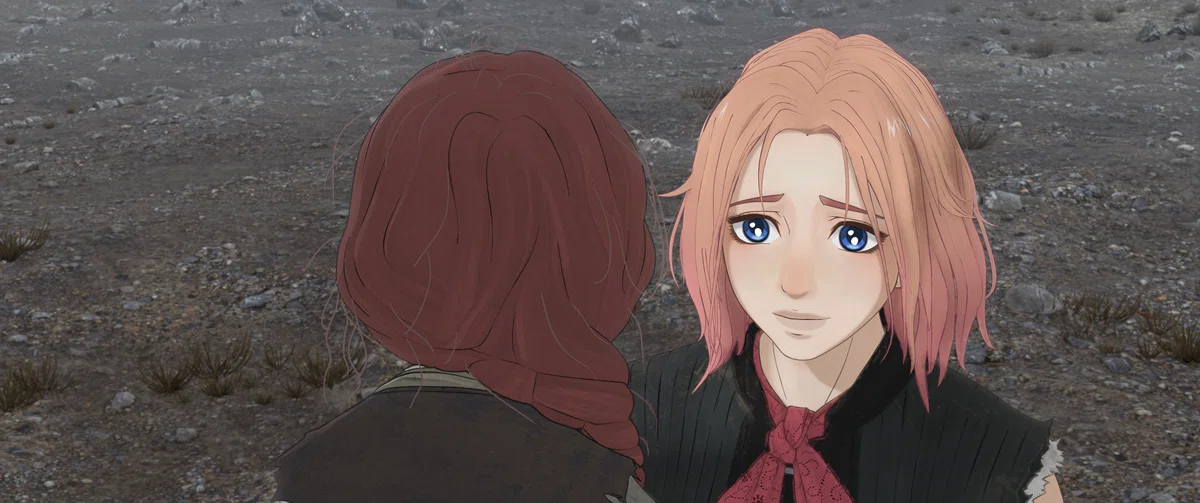
Scarlet accepts a scarlet-colored scarf from the girl in exchange for a gold coin. This scarf acts as a surrogate for her severed hair and a contract with the girl’s hope.
The Mirroring of Hijiri: This mental shift manifests in her physicality. When she finally leaps out to shield the girl, she does so without even drawing her sword. In this moment, she perfectly mirrors Hijiri’s earlier sacrifice during the "random attacker incident"—choosing the weight of a life over the pragmatism of combat.
3) Ophelia Split, Inversion, and De-centering
The most radical structural move is how the "Ophelia function" is removed from her traditional family and shared between the leads.
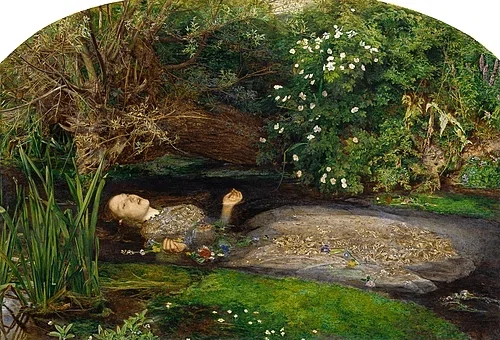
Split and Inverted Roles:
Scarlet is the "Unsinking Ophelia" (the survivor who ascends), while Hijiri carries the aesthetic of the "Singing Ophelia" (the savior who cures).
Demotion of Status:
Because the Ophelia role—the narrative axis—is no longer present within her family, the old power structures of the Elsinore kingdom collapse in importance.
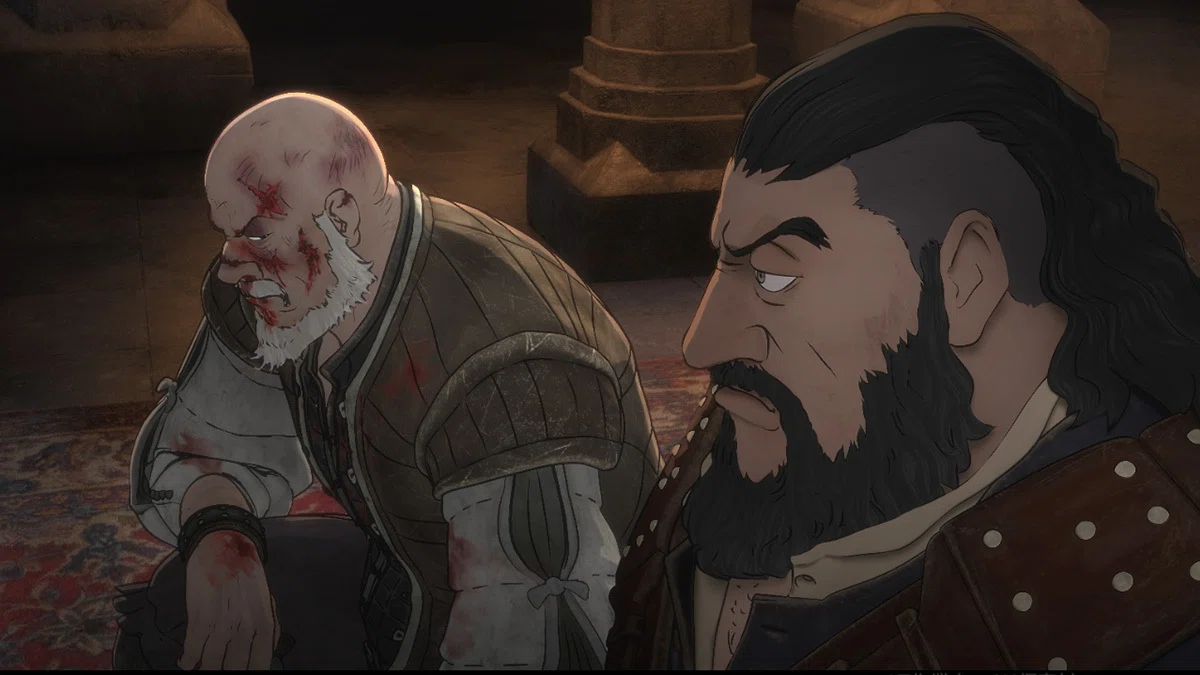
Penultimate Bosses:
Deprived of their narrative "Ophelia pillar," Polonius and Laertes are demoted to the status of obstacles. Yet, their physical threat peaks here; they appear as the penultimate "mid-bosses," with Polonius depicted with overwhelming combat strength.
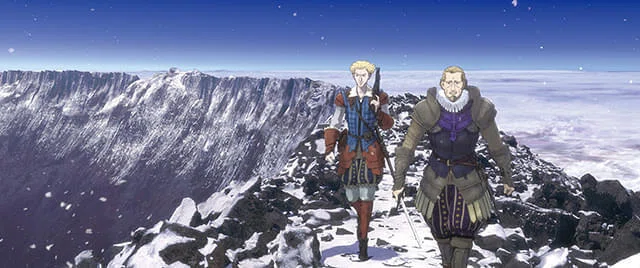
Defection of Envoys:
The minor messengers, Cornelius and Voltimand, gain their importance through action. They defect from the old order and intercept Polonius and Laertes, acting as the defensive shield for Scarlet’s new path.
4) Purgatorio: Shibuya Pivot and Ascending Vector
On first viewing, Shibuya can look like Hosoda-style surreal spectacle. Structurally, it’s a liminal ritual:

Festival Dance in Shibuya:
In this artificial, rule-suspending, identity-loosening space, another Scarlet and Hijiri—multiversal aliases in a joyous 2034 Shibuya—appear and dance alongside them. This overlapping of "others" signifies the suspension of a single tragic timeline.
This dance refers to the Baptism which I will elaborate on in #6 , or the rites of passage which I will address in #7 .
After this hinge, the film obsesses over ascent.
Scarlet and Hijiri keep moving toward the upper-left of the frame.
This isn’t just climbing a mountain—it’s a repeated visual vector. The world becomes purification-through-climbing.
After the Festival Dance in Shibuya, the film becomes Purgatorio (Dante's Divine Comedy).
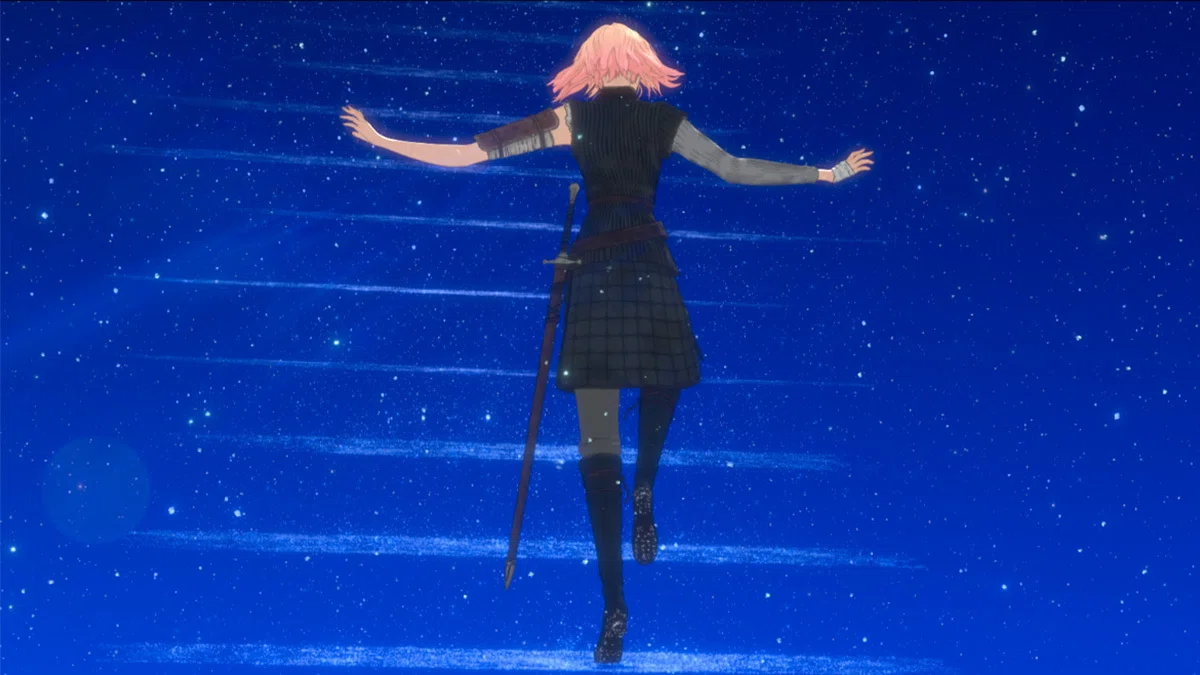
Virgil’s Release, Echoed:
In Dante’s Purgatorio, Virgil’s final act is release: Your will is free. Walk upright. Choose.
The father’s ghost gives Scarlet the same release. That’s why the intertext matters: Hamlet inverted resolves exactly where Purgatorio ends.
5) Macbeth as Misdirection: Traps of Truth
Macbeth isn’t referenced—it’s weaponized as misdirection.
The diagram is explicit:
Claudius = Macbeth (Sinner / Unrepentant Penitent / Frightened Dictator)
Old Woman = Three Witches = Dragon (Judge, Thunder, Crown of Thorns, Absent God)
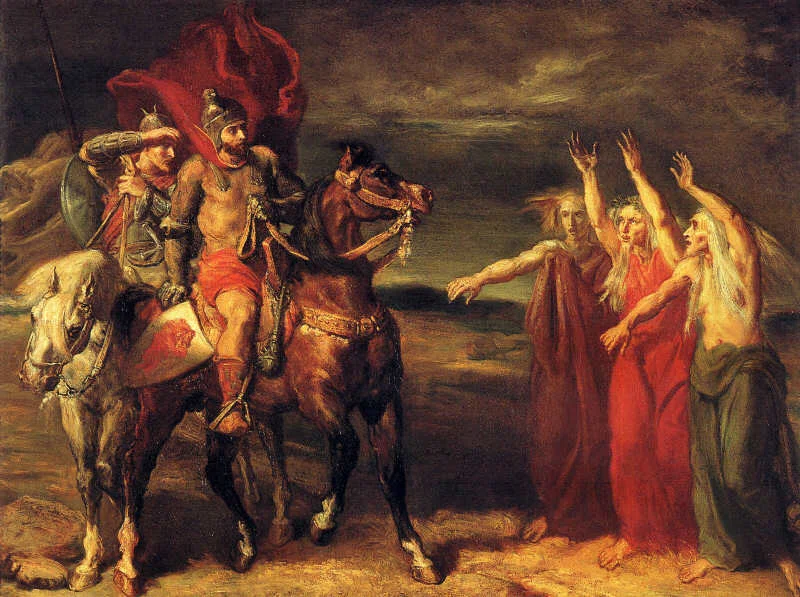
Claudius as Macbeth, Sham of Prayer:
Macbeth is about acting first, then being owned by consequences. Hamlet is about hesitation.
Claudius is the former: power seized, paranoia spiraling, justification collapsing. Claudius is the "Frightened Dictator." Like Macbeth, he acts first and is owned by the consequences. He performs "Unrepentant Penitence"—kneeling in prayer in a hollow performance, attempting to manipulate the divine without actual transformation.
Old Women as Three Witches:
The witches don’t lie—they frame truth to mislead.
So does the Old Woman:
she gives partial truth,
at structurally dangerous moments,
encouraging plausible but wrong inferences.
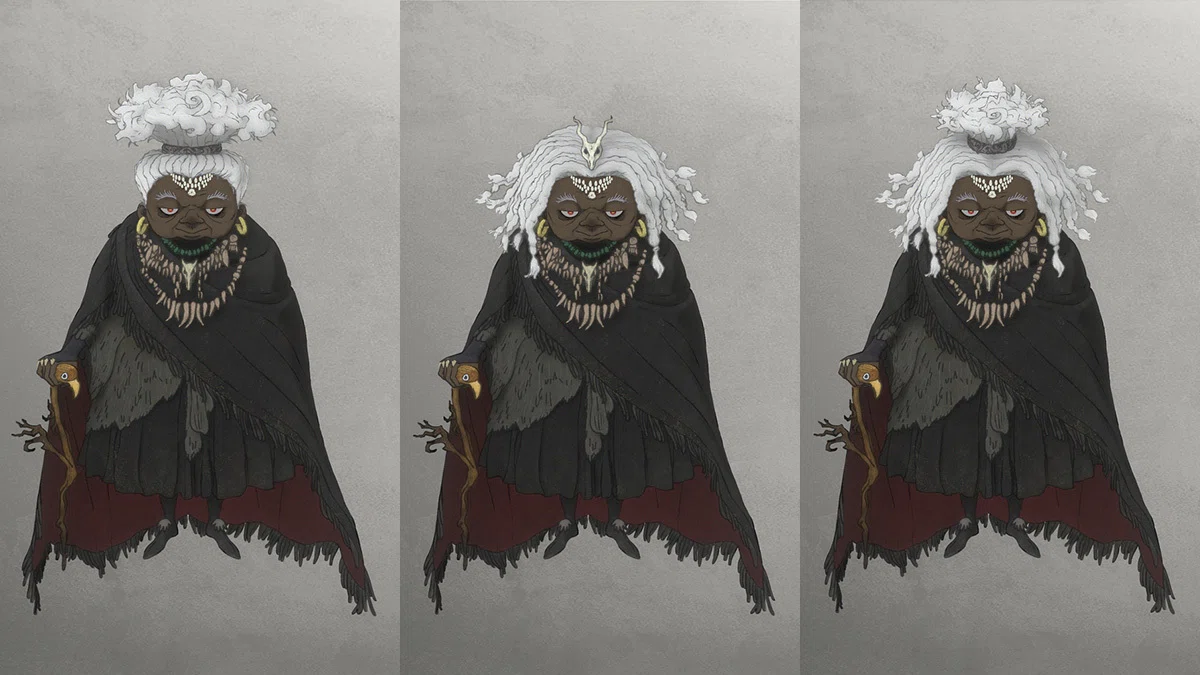
Key Move: Audience Deception
It’s not only Claudius being deceived. The audience is, too.
This sets up the real judgment—not revenge, but false repentance.
Dragon’s Double Strike:
Claudius performs penitence without transformation. Forgiveness abused becomes the final crime.
The Old Woman (The Witches) frames truth to mislead both Claudius and the audience. This sets up the real judgment: because his repentance is a sham, he is granted no mercy. In a definitive act of structural erasure, the Dragon (The Judge) strikes Claudius with lightning twice, ensuring the absolute termination of his fraudulent authority.
6) Bible and myth: Structural Logic of the Ending
If you stop at Shakespeare, the ending feels abrupt. Drop one layer deeper and it locks into place.

Shared Christ-function
Just as the Ophelia function was split, the Christ-function is shared between the two leads after the Shibuya Baptism. This is not a mere metaphor, but a structural necessity to resolve a revenge tragedy.
Scarlet carries the role of the "Resurrected Christ": providing the new legitimacy and the future of the living.
Hijiri embodies the "Suffering Christ" (The Passion): providing the sacrifice and the atonement required to "cleanse" the narrative.
Scarlet: From Mary Magdalene to Resurrected Christ
Structurally, the Festival Dance in Shibuya and Great Cut of her hair are the Baptism itself. Under Hijiri’s influence, Scarlet achieves the self-reflection needed to voluntarily enter this ritual. It transforms her from the "Mary Magdalene" role—where the scene of her long hair being grabbed symbolizes the core of violence against women—into a figure of new legitimacy. Scarlet passes through death-and-return imagery to become a "Christ-function" where forgiveness is enacted rather than just declared. This makes peace structurally possible within a revenge story; she becomes the place where a new future can be imagined.
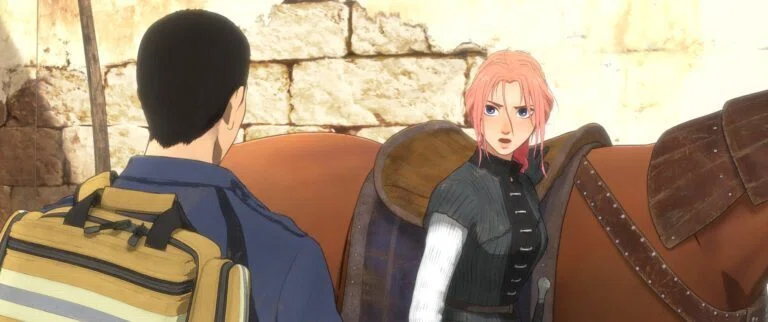
Hijiri: Mirror Arc (Idealism Contaminated by Reality)
Hijiri begins as a "Super Goody-two-shoes" modern ethicist who believes violence can always be refused. Scarlet, by contrast, begins as an excessive realist, accepting force as a necessary fact of the world. Their Arcs Cross-Contaminate:
Scarlet (Excessive Realist → Idealist): She is pulled toward idealism by Hijiri—learning to value mercy and care.
Hijiri (Excessive Idealist → Realist): He is pushed toward tragic realism by Scarlet.
The Crisis of Faith:Desperately calling for a ceasefire from Voltimand, Hijiri runs out alone. But his plea falls on deaf ears. Scarlet is shot while shielding him. As Hijiri treats her wound, he finally hears her true heart: her raw, unadorned desire to live. This shatters him; he is forced to face that his uncompromising ideals have only hurt the person before him.
The Transformation of Symbols: Hijiri’s shift is marked by a profound exchange of icons: he trades the lute he received from the caravan (a symbol of his pure idealism) for a bow-guard (a tool of harsh realism) at the marketplace. He then covers the Star of Life emblem on his uniform's shoulder—effectively masking his identity as a "healer" to become a "warrior."
The Failure of the Ideal: In the subsequent battle, When a warrior-monk who runs at the front lines armed only with a shield falls to an arrow, Hijiri attempts to treat him, but his efforts are in vain. The monk fades into nothingness. This scene is profoundly significant; it captures the moment Hijiri’s hyper-idealism crashes against the wall of reality, forcing him to accept that "saving everyone" is a beautiful impossibility.
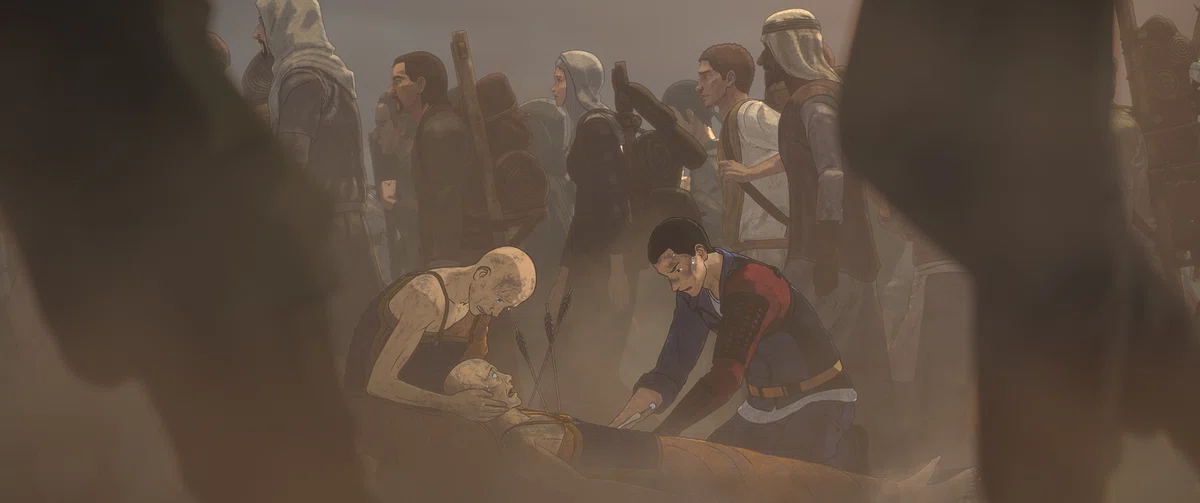
Hijiri’s Passion and Stigmata:
Hijiri takes on the "Passion" (Suffering) to cleanse the "Magdalene" stigma from Scarlet, allowing her to ascend.
The Stigmata: He is stabbed in the left side of his torso, exactly where Christ was pierced. This is his Stigmata.
The Score: Don't overlook the music during the battle and Hijiri’s Passion; it evokes Miklós Rózsa’s use of the Phrygian scale in Quo Vadis and the epic themes of Ben-Hur (the cruciform motif / cross motive), signaling the arrival of a mythic climax.
Stigmata and Dream Logic:
The shared role is physically confirmed by the Stigmata. While Hijiri takes the fatal wound to his side, Scarlet carries the stigmata on her right hand—inflicted by Polonius in the Otherworld—back into the physical world. Even after her "resurrection," her hair remains short and the scar on her hand persists. This is the "Dream Logic" famously noted by S.T. Coleridge, popularized by J.L. Borges, and first visualized by Jean Cocteau in Orphée: the idea that a mark acquired in a dream remains in the dreamer’s hand upon waking. The ritual experience in the Otherworld has physically stamped itself onto reality.
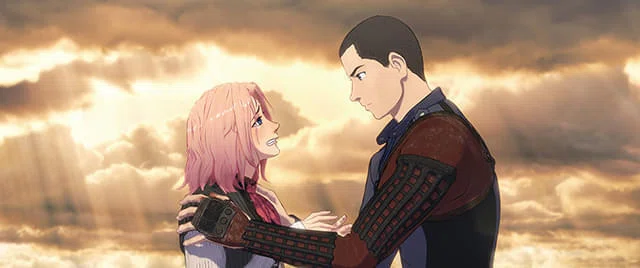
Old Woman, Dragon, Crown of Thorns and Absent God
As the "Passion" concludes, the Dragon (The Judge) withdraws. Authority withdraws. God disperses. What remains is contract, not miracle.

Final Role: Representative Leader
Scarlet’s final role is the Leader of a modern social contract. She moves from New Queen (old legitimacy of blood) to Representative Leader (modern legitimacy of consent and obligation). The withdrawal of the Dragon signifies the end of the "Absent God." Hope is no longer granted by divine intervention; it is a negotiated, hard-won responsibility.
7) Rites of Passage: Fourfold Nested Structure
The anthropologists Victor Turner and Arnold van Gennep identified that a rite of passage has three stages:
Separation
Liminal Space
Return & Incorporation
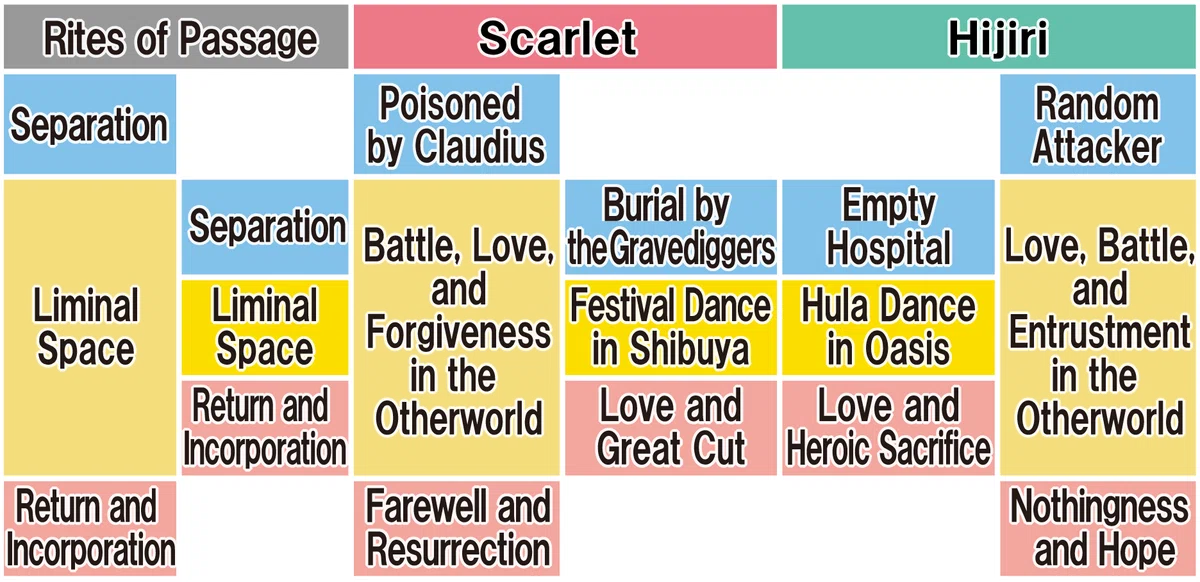
Rite #1 — Scarlet (micro)
Buried by the two Gravediggers (from naïveté).
Festive Dance in Shibuya.
New identity (hair-cut / role shift).
Rite #2 — Scarlet (macro)
Poisoned by Claudius and thrust into a state of suspended life.
Battles, love, and forgiveness in the Otherworld.
Farewell and resurrection (return as Queen).
Rite #3 — Hijiri (micro)
Empty hospital vision (himself, suspended life).
Caravan life, ritual ancient Hula dance in Oasis.
Ethical transformation, heroic sacrifice.
Rite #4 — Hijiri (macro, tragic variant)
A random attacker incident (heroic sacrifice).
Love, cares, battle, and entrustment in the Otherworld.
Fade into nothingness, but leaving hope within Scarlet.
These rites explain why the film feels like it has multiple endings: each one completes a different passage.
8) Conclusion: Architecture over Spectacle

What the film is actually doing?
It’s not a revenge story. It’s not a romance. It’s not a fantasy quest.
It’s about:
justice vs vengeance,
forgiveness vs denial,
repentance vs false repentance,
hope as miracle vs hope as social contract,
survival as “winning” vs survival as taking responsibility.
All staged through four stacked machines.
Scarlet is a cathedral built out of narrative systems. The spectacle is real—but the real flex is the architecture underneath.
Why it feels “hard” on first viewing:
Because the Old Woman functions as unreliable prophecy, the story is meant to feel cracked. That instability isn’t a flaw—it’s the ritual mechanism.
Rewatching isn’t optional. It’s part of the design.
