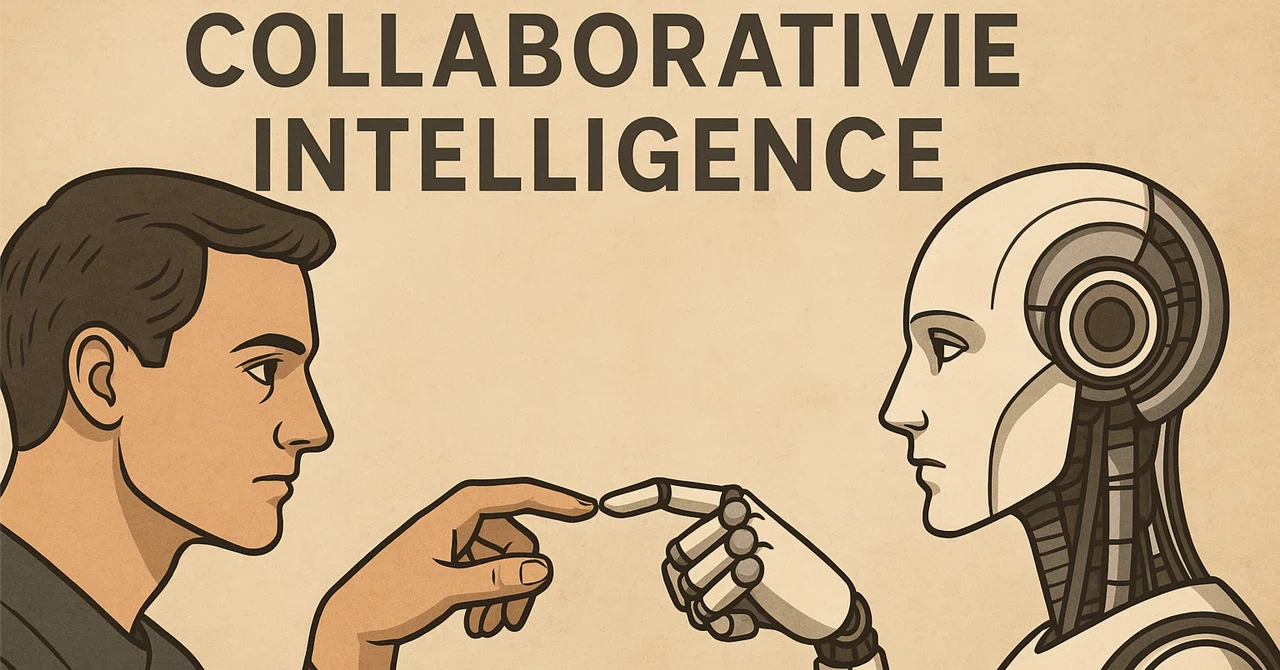
AIと人間の“共同知”──ひとりでは届かない知性へ **タイトルイメージの綴り間違い4o😆**

はじめに:AIは「道具」ではなく「相棒」になる?
「AIって結局、人間の仕事を奪うんでしょ?」
そんな声をよく耳にします。でも本当にそうでしょうか?
いま私たちが直面しているのは、AIが“道具”という立場から、“知的な相棒”へと変わり始めている時代です。文章を書く、デザインを考える、複雑な問題に答えを出す──これまで人間だけが担ってきたこうした創造的な営みに、AIが本格的に参加しはじめています。
ここで注目されているのが、「共同知(Collaborative Intelligence)」という考え方です。これは、AIと人間が互いの強みを活かしながら、ひとりでは決して生み出せなかった“新しい知性”を築くことを意味します。
1. AIと人間がタッグを組むと、何ができるのか?
● たとえば「創作」で
小説を書いたり、音楽を作ったり、広告を考えたり。最近では、AIが“アイデア出し”や“文章の下書き”を手伝ってくれる時代になっています。でも、AIだけでは物語に深みを与えることはできませんし、人間だけでは膨大な情報をさばききれません。
そこで、AIが「案を出す側」、人間が「意味を読み取り選ぶ側」として共同作業するケースが増えています。これは、まるで編集者とライターの関係に似ているとも言えるでしょう。
● たとえば「研究」で
専門家たちが調査や分析を行うときも、AIは強力なサポーターになります。膨大な文献を数秒で読み解き、関係のありそうな研究を推薦してくれる。これにより、研究者たちは“思いがけないつながり”を発見することもあるのです。
2. 人間の「弱さ」を、AIが補ってくれる
私たちには、疲れたり、迷ったり、偏った見方をしてしまう「限界」があります。でも、AIはそうした“感情”に左右されず、冷静にパターンを分析し、選択肢を提示してくれます。
一方、AIには「状況を柔軟に読む力」や「直観的な判断」が苦手という弱点があります。だからこそ、人間とAIが組んだとき、互いの弱点を補い合いながら、より賢い選択や創造ができるのです。
3. 「共同知」が社会を変えていく
この考え方は、すでに様々な分野で広がりつつあります。
● 教育では…
生徒の学習履歴や理解度に応じて、AIが最適な学習プランを提案し、先生はその結果をもとに丁寧な指導を行うという「AI+人間教師」の教育が始まっています。
● 医療では…
AIが病気の兆候を早期に見つけ出し、医師がそれをもとに判断を下す。命に関わる判断において、人間とAIが一緒に“最善”を探す場面も増えています。
● デザイン・ものづくりでは…
誰でもAIの力を借りてプロ級のデザインができるようになってきました。これにより、小さな地域や個人でも商品開発や表現ができるようになっています。
4. 「共同知」時代に大切なこと
ただし、注意しなければならない点もあります。
AIに任せすぎないこと
便利だからといって、考えることをやめてしまうと、人間の「思考力」や「想像力」が鈍ってしまうかもしれません。偏ったAIに気づける力
AIも人間の作ったデータで学習しています。そのため、過去の偏見や差別が“無意識のうちに”組み込まれてしまうこともあります。それを見抜くのは、やはり人間の役目です。自分なりの問いを持ち続けること
AIは「答え」を出すのが得意。でも、「問い」を立てるのは、いまのところ人間にしかできません。どんな問いをAIに投げかけるかによって、得られる知識の質も変わってきます。
5. これからの社会は「問いのデザイン」が鍵になる
今後、AIがさらに進化すれば、「感情を理解するAI」や「複数のAIと人間の集団知」が実現するかもしれません。そうなれば、私たちの思考や創造のスタイルもますます変わっていくでしょう。
でも忘れてはいけないのは、「問いを立てる力」こそが人間らしさの源泉だということです。
どうすれば世界はもっと良くなるのか?
自分は何を大切にしたいのか?
本当の意味で「幸せ」とは何か?
AIはその問いに即答してはくれません。でも、あなたが問いを立てれば、驚くような資料を探し、まったく別の視点を提示してくれるかもしれない。
AIとの“共同知”とは、そうした対話の積み重ねの中に生まれてくるのです。
おわりに:「孤独な知」から「つながる知」へ
AIと人間の関係は、使う者と使われる者という関係から、対等なパートナーシップへと変わり始めています。それはまるで、ひとりで悩んでいたところに、静かに寄り添ってくれる知的な相棒が現れたようなもの。
これからの時代、「ひとりで知ろうとしない知性」が、世界を前に進めていくかもしれません。
その第一歩は、AIと“ちゃんと話してみること”から始まるのです。
Collaborative Intelligence: Reaching Beyond the Limits of Individual Thought
Introduction: From "Tool" to "Partner"?
“Isn’t AI just going to steal our jobs?”
You’ve probably heard this before. But is that really all AI is doing?
In fact, we’re now entering an era where AI is shifting from being a mere "tool" to becoming a true "intellectual partner." Whether it’s writing, designing, or making complex decisions, AI is beginning to participate meaningfully in creative and intellectual activities that were once reserved for humans.
This new way of working is often called Collaborative Intelligence—a concept that emphasizes the fusion of human and machine strengths to generate knowledge and creativity that neither could achieve alone.
In this essay, we’ll explore what this collaboration looks like, how it’s already changing our world, and what it means for the future of how we think, create, and live.
1. What Happens When Humans and AI Team Up?
● In Creative Fields
Writing novels, composing music, designing ads—AI now helps with brainstorming, drafting, and refining ideas. But AI alone can’t bring emotional depth to a story, and humans alone can’t sift through infinite data instantly.
So, many teams now treat AI as the “idea generator” and humans as the “meaning-maker.” This division of labor is similar to the relationship between an editor and a writer.
● In Research
Researchers are using AI to rapidly scan and summarize huge numbers of papers, helping uncover unexpected connections and hypotheses. With AI as a research assistant, the pace of scientific discovery may accelerate significantly.
2. AI Complements Human Weaknesses
We humans get tired, confused, and emotionally swayed. AI doesn’t. It can remain calm and objective, analyzing patterns and offering options.
But AI lacks flexibility, empathy, and intuition. That’s where human judgment shines. When combined, these contrasting abilities create a more powerful, adaptive form of thinking.
3. How Collaborative Intelligence Is Reshaping Society
This idea is already transforming many areas of daily life:
● In Education
AI can recommend personalized study plans based on a student’s progress, while teachers focus on emotional support and deeper explanation. Together, they create more effective learning environments.
● In Healthcare
AI detects subtle signs of disease that even experts might miss. Doctors, in turn, make final decisions based on clinical experience and ethics. The result? More accurate and humane care.
● In Design and Business
AI tools have lowered the barrier to entry for design, allowing individuals and small teams to create professional-grade products. This democratization is unlocking new voices and ideas.
4. Navigating the Collaborative Age: What We Need to Remember
Of course, there are important things to be cautious about:
Don’t over-rely on AI
If we let AI think for us all the time, we risk dulling our own creativity and critical thinking.Recognize AI’s limitations
AI learns from human data—and sometimes that data contains bias or discrimination. We need to remain alert to what AI might reproduce unintentionally.Ask good questions
AI is great at generating answers. But coming up with meaningful questions? That’s still our job. And good questions lead to deeper insights.
5. The Future Belongs to Those Who Can Ask Better Questions
As AI evolves, we may see machines that understand emotions or interact in complex group settings. This could reshape how we create, decide, and even relate to each other.
But at the core of it all, the power of human questioning remains irreplaceable:
How can we build a better world?
What truly matters to us?
What does happiness really mean?
AI won’t answer these for us—but it can help us explore them more deeply, offering new perspectives we might never have considered.
This is the essence of collaborative intelligence: a dialogue between human intention and machine insight.
Conclusion: From “Lonely Thinking” to “Connected Knowing”
The relationship between humans and AI is shifting—from user and tool to partners in thought. It’s like having a quiet, tireless companion who helps you see more, think clearer, and create bolder ideas.
In this new era, you don’t have to think alone anymore.
And the first step is simple: start talking to your AI.
(4o)
