Beyond Given Roles: Bridging Tech and Business at the Forefront of Automation

Meet Mali, a Technical Product Manager (TPM) driving projects forward at DeepX. After transitioning from the logistics industry to software engineering, she now serves as a vital bridge connecting our engineers with the business side. In this article, Mali shares the excitement of carving out her own role, offers a behind-the-scenes look at her projects, and dives into the unique culture that defines DeepX.
From "User" to "Creator" of Tools
— What motivated you to move into software engineering from a different field?
Mali: My background is actually in the logistics industry, where I worked as a technical coordinator. I served as the liaison between the container planning and accounting departments and our internal CRM and database management systems.
Logistics is an incredibly data-heavy field. Whenever an item moves from A to B, there is a constant stream of scheduling and status updates. Initially, my job involved creating tables and organizing this data using existing software. But as I began writing Python scripts to automate tasks and diving into dashboard design and UI/UX, my focus started to evolve.
I had a strong realization: I didn't just want to use existing tools; "I wanted to make the tool itself." That led me to discover my love for software engineering. I started self-studying PHP, JavaScript, and Ruby on Rails on the side, contributed to our corporate website, and later joined a boot camp to formalize my coding skills before transitioning fully into a software engineering career.
— What were the reasons that influenced your decision to join DeepX as you built your career as a software engineer?
Mali: The biggest reason was that DeepX's business is largely an unexplored field. In my previous job, I developed client tools, including medical software with 3D elements, so I was already interested in communication through environmental visualization. However, when I learned about the projects DeepX is tackling, I found it incredibly exciting.
Since we spend most of our lives working, I believe work shouldn't be something we just get through, but something we can throw ourselves into and truly enjoy. I knew that at DeepX, there would always be a new challenge every day, and I would never be bored, which is why I decided to join.
Ideas Take Shape Because It's a Zero-Start: From Launching a New Team to TPM
— You joined DeepX as a Front-end/UI・UX engineer. What kind of responsibilities were you in charge of at that time?
Mali: When I first joined the company, our digital twin and visualization system had just been integrated into its first project and was about to be launched as a product. My role was to adapt and scale that system for other types of construction machinery. Additionally, the HMI (Human Machine Interface) team had just been established, and I was heavily involved in its rollout. Since it was a completely new space, there was naturally a lot of trial and error. But since we were starting from zero, the team was incredibly open to my ideas, even as a new hire. Carving out new roles and defining products from scratch was challenging, but absolutely rewarding.
──How did your role transition to TPM after that?
Mali: When I joined, we didn't have TPM as an independent position, and an engineer was filling in the role. I was responsible for taking meeting minutes and assisting with tasks such as sprint planning and goal setting, and my manager at the time recognized my aptitude, which led to my transition into a TPM role. Because DeepX is a young, small company, there is an opportunity everywhere. If you step up and show your skills, you might accidentally fall into a new role like I did this time.
— Did you have any difficulties transitioning from an engineer to a TPM?
Mali: I actually didn't feel any difficulties or resistance at all. If anything, stepping into the TPM role allowed me to connect much more deeply with the solution side, which really broadened my perspective as an engineer. While engineers naturally tend to focus heavily on the technical details and sometimes overlook the broader context, acquiring a clear understanding of our business operations and the overall industry structure has been a major advantage for me.
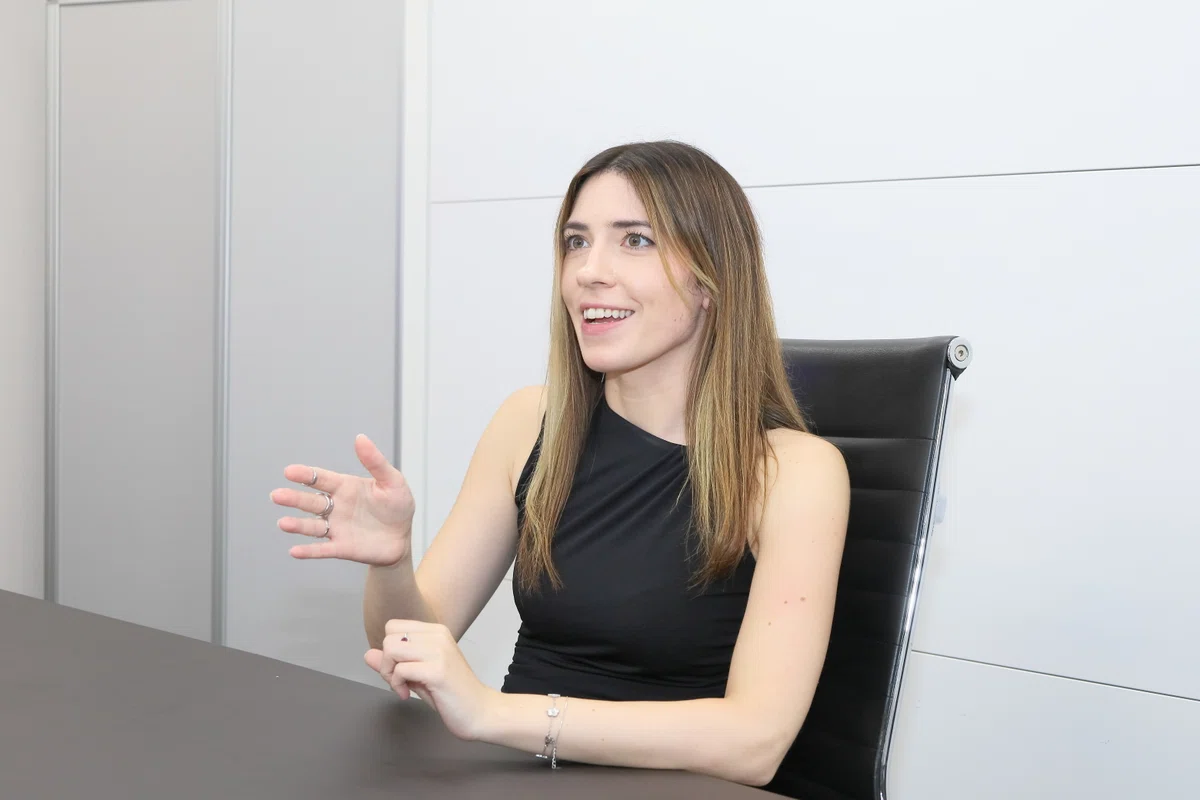
TPM is the Bridge That Translates Client Requests into Realistic Development Goals
— Could you tell us about your specific duties as a TPM and what you keep in mind when working?
Mali: I think of the TPM as the role that connects client requests with the engineers who implement them. It's about accurately communicating the client's problems to the engineers, and conversely, translating the engineers' perspectives and technical constraints to the business side.
For example, a feature that a client thinks "sounds simple" might actually be very costly to implement technically. Conversely, something a client thinks is difficult might be something engineers say "we can do in one week". Bridging this gap in perception and translating client requests into realistic development goals is my main responsibility as a TPM. It's the engineers who solve the problems, but as a vessel, I make adjustments and connect the two sides so the project proceeds smoothly.
— What do you focus on when managing a project team?
Mali: In team building, what I focus on is creating a clear mission for the project. By making sure everyone on the team feels "we are all going towards the same goal," it creates a sense of unity. Also, through this, I try to create opportunities for engineers to learn about other domains, not just staying within their own area of expertise.
Keeping Legacy Projects Evolving: The Importance of Staying Up-to-Date
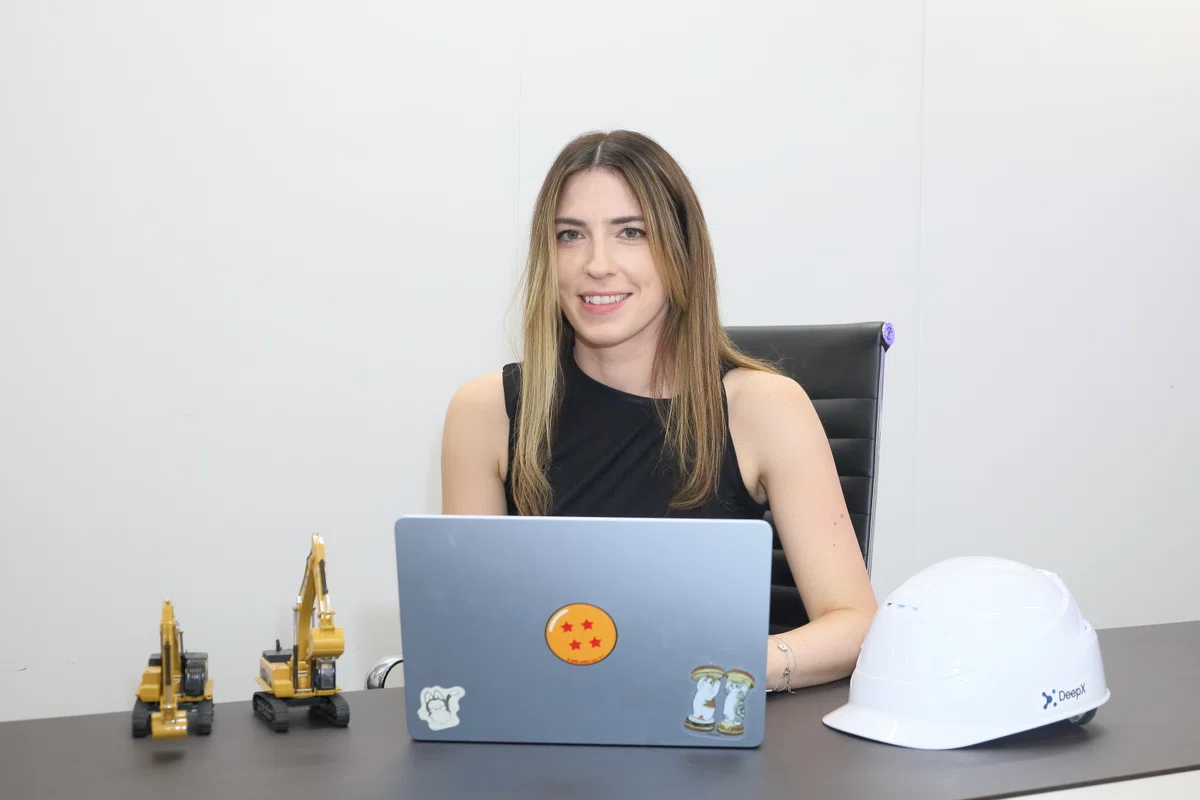
— Could you tell us about the hydraulic excavator project you are currently in charge of?
Mali: This is a collaborative project with Fujita Corporation, and it stands as one of DeepX's longest-running initiatives. The project has undergone significant evolution over a long period. Rather than simply automating the basic action of excavation, we are pushing forward with synchronized operations involving dump trucks. In the reality of construction sites, automating a single machine is essentially meaningless; true productivity is achieved only through the coordination of multiple machines. We have a live demonstration scheduled for this spring, and our development efforts are focused on eventually introducing this technology to an actual experimental site.
— Could you share a success story and a challenging experience you've faced in the project?
Mali: One success story I can mention is our live demo at the CSPI-EXPO (International Construction & Survey Productivity Improvement Expo)※. Usually, live demos at these exhibitions come with risks, and it's not rare to have small system failures or need reboots. But for three days in a row, everything worked smoothly without any interruptions. This was all thanks to the engineers who prepared tirelessly for one week before the event. I was really proud of everyone on the team then.
On the other hand, there are challenges precisely because it's an old project. Since the company's overall technical speed is very fast, some technologies in older projects can fall behind compared to new ones. Last year, we really pushed the project to evolve by installing more LiDARs and introducing 360-degree vision, which drastically improved reliability and safety. As the company grows, keeping an old project updated to the latest state is a challenge we face every day.
※At our CSPI-EXPO 2025 booth, we exhibited a video of a live demonstration of automated hydraulic excavator operation. For details, click here.
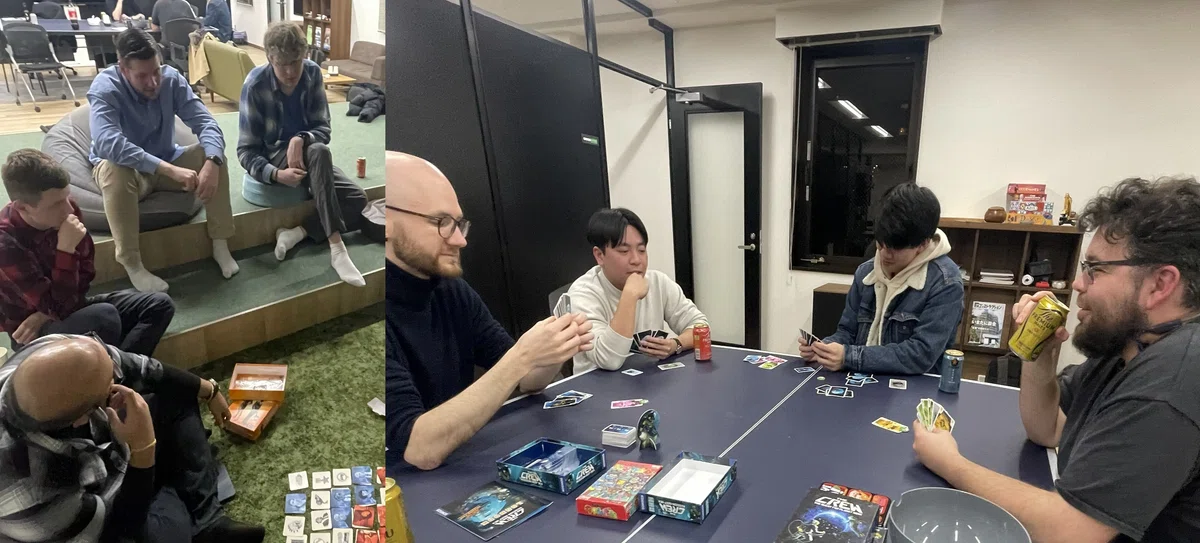
The "Board Game Night": A Flat Place to Connect Beyond Roles and Nationalities
— Moving away from work, I'd like to ask about the culture outside of work. I understand you're the one organizing "Board Game Night".
Mali: That’s right. It actually started when someone brought a card game to our internal "Beer Club" gatherings. I asked, "Do you just want a game night?" and people seemed excited. Now, we usually meet on the 5th floor of the office on Fridays after work. There are usually around 12 to 14 members joining. We play games like Werewolves or Codenames while eating pizza. It's a great opportunity to do something casual and talk to people you don't usually work with across different departments, and it's become an important time for everyone to de-stress together.
Carving Out Your Role at DeepX: A Coexistence of Diverse Talent and a Field-First Mindset
— Finally, what is the appeal of working at DeepX, and what kind of person is suited for it?
Mali: The appeal of DeepX is that two great aspects perfectly coexist: an "international environment" and a real "contribution to Japanese industry". Internally, our team is multinational and highly diverse, but since most of our clients are Japanese companies, you get to stay deeply connected to Japan and its industries.
Also, you don't feel like just a "cog in the wheel" of a giant organization like you might in a big company. DeepX is a young and dynamic company. We move at a rapid pace, and while the environment can be dizzying at times, the ultimate reward is knowing your ideas and actions directly steer the course of our projects and the company itself.
I think the kind of person suited for DeepX is someone who values communication. Also, even if you are not experienced, there's no problem. If you want to learn and have a positive mindset that enjoys change, you will definitely fit in well.
Join Us at DeepX to Advance Autonomous Construction Machinery Together
We are actively seeking new team members to join us on this journey. You can check our current openings via the link below.
