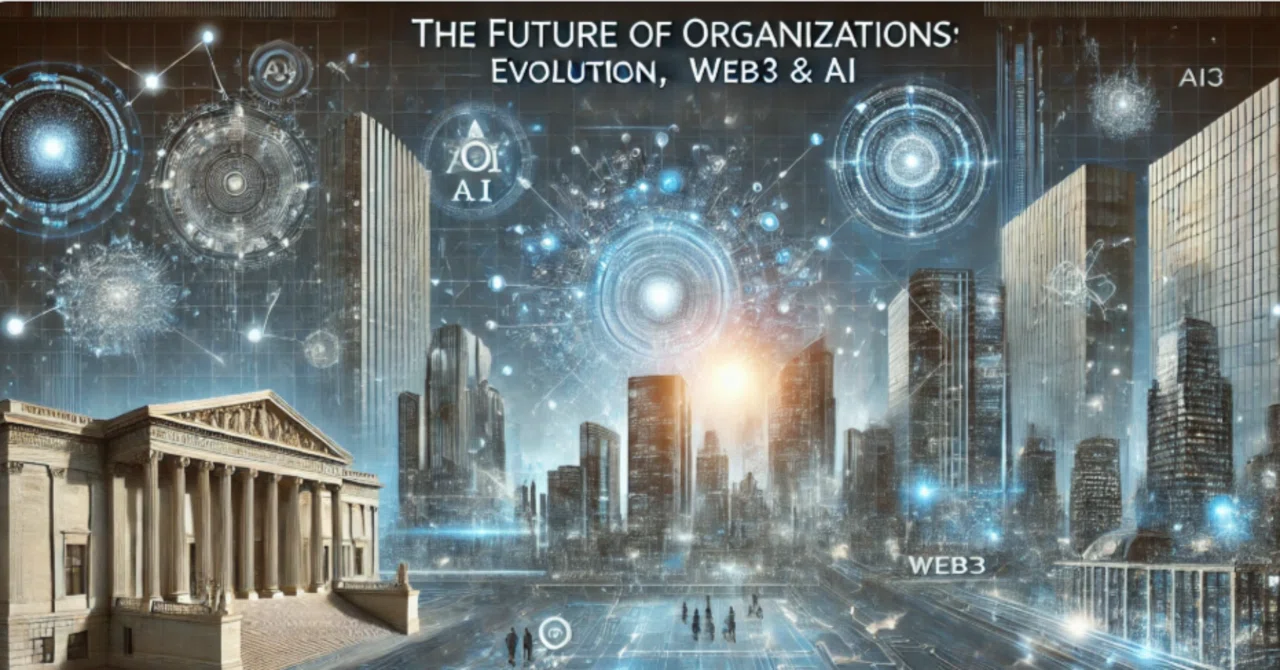
「進化論で学ぶ組織の未来戦略|Web3・AI時代に適応する企業と公的機関」_"The Future of Organizations: How Evolution Theory, Web3, and AI Shape Business & Public Institutions"

1. はじめに:現代の組織は進化できているのか?
現在、世界的に組織の在り方が大きく変わりつつあります。例えば、アメリカではトランプ政権のもとで中央省庁の廃止や人員削減が進められました。企業においても、イーロン・マスクがツイッター(現X)の大幅な改革を実施し、賛否両論を巻き起こしました。こうした変化は、「組織が時代の変化に適応できているか?」という問いを投げかけています。
企業と公的機関の違いは、営利目的か公益目的かという点ですが、組織運営の本質は同じです。「無駄を省き、持続可能な形で運営する」という点では、企業も公的機関も進化する必要があります。本記事では、この組織の進化を ダーウィンの進化論 に結びつけながら、変化に適応するための考え方を解説します。
2. 進化論と組織運営の関係
「適者生存」とは何か?
ダーウィンの進化論には「適者生存(Survival of the fittest)」という概念があります。これは、「最も強い者が生き残る」のではなく、「環境に最も適応した者が生き残る」という意味です。
恐竜 vs. 哺乳類
恐竜はかつて地球上で最も強大な生物でしたが、環境の変化(気候変動・隕石衝突)に適応できず絶滅しました。
一方、哺乳類は小さくても環境に適応し、生き残りました。
企業の例:ノキア vs. アップル
ノキアは携帯電話市場で世界トップのシェアを誇っていましたが、スマートフォンの波に適応できずに衰退しました。
一方、アップルはスマートフォン市場の変化を先取りし、イノベーションを続けることで成功しました。
この原則は、企業や公的機関にも当てはまります。「過去に成功した方法」に固執するのではなく、時代の変化に応じて適応し続ける組織だけが生き残るのです。
3. 公的機関・企業の「無駄」と「必要な変革」
コストカット vs. 未来投資
組織改革といえば「コストカット」がよく話題になります。しかし、単にコストを削るだけでは長期的な成長は望めません。
日産の改革(カルロス・ゴーンのV字回復)
人員削減・工場閉鎖・経費削減を実施
しかし、同時に技術開発や新モデルの投入に投資
結果として、業績回復を実現
公的機関の問題点
日本の自治体は人口減少と税収減の中で運営されている
しかし、単に人員削減すると、住民サービスが低下するリスク
「どの無駄を省くのか?」を精査し、持続可能な形で適応する必要がある
4. 進化に成功する組織の特徴
進化には「淘汰」ではなく「適応」が必要
単に「不要なものを排除する」だけでは、組織は健全に発展しません。むしろ、新たな技術や仕組みを取り入れることで 「持続可能な適応」 を目指すことが重要です。
AI・Web3・DAOの活用による業務効率化
AIによる自動化で行政サービスを効率化(チャットボット、データ処理)
Web3を活用した新たな契約・決済の仕組み(スマートコントラクト)
DAO(分散型自律組織)による組織運営の民主化
こうしたテクノロジーを活用することで、単なるコストカットではなく「未来の組織モデル」へと進化することができます。
Introduction: Are Modern Organizations Evolving?
Organizations worldwide are undergoing significant transformations. For example, in the United States, the Trump administration promoted drastic reforms, including the abolition of central government agencies and staff reductions. In the corporate world, Elon Musk implemented sweeping reforms at Twitter (now X), generating both support and controversy. These changes raise a fundamental question: Are organizations truly adapting to the changes of the times?
While companies and public institutions differ in their purpose—whether for-profit or public interest—the essence of organizational management remains the same. Both must eliminate waste and operate sustainably to evolve. This article explores how organizations can adapt to change by linking Darwin’s theory of evolution to modern organizational strategies.
2. The Relationship Between Evolution Theory and Organizational Management
What is "Survival of the Fittest"?
Darwin’s theory of evolution introduces the concept of "Survival of the Fittest." This principle states that it is not the strongest that survive, but those best adapted to their environment.
Dinosaurs vs. Mammals
Dinosaurs were once the most dominant creatures on Earth, but they failed to adapt to environmental changes (climate shifts, asteroid impact) and became extinct.
On the other hand, mammals, despite being smaller, adapted to their environment and survived.
Business Example: Nokia vs. Apple
Nokia once held the world’s largest market share in mobile phones, but it failed to adapt to the smartphone revolution and declined.
Apple, however, anticipated market changes and continued innovating, securing long-term success.
This principle applies to both corporations and public institutions. Organizations that cling to past successes instead of continuously adapting to changing circumstances will eventually be left behind.
3. The "Waste" and "Necessary Reforms" in Public Institutions and Businesses
Cost Cutting vs. Future Investment
Discussions about organizational reform often revolve around cost-cutting strategies. However, merely reducing costs does not guarantee long-term growth.
Nissan's Reform (Carlos Ghosn’s Turnaround Strategy)
Implemented staff reductions, factory closures, and expense cuts.
Simultaneously invested in technological development and new models.
As a result, Nissan achieved a full recovery.
Challenges in Public Institutions
Many local governments in Japan operate under declining populations and shrinking tax revenues.
However, merely reducing staff can lead to a deterioration in public services.
It is crucial to carefully assess “what waste should be eliminated?” and adapt in a sustainable manner.
4. Characteristics of Organizations That Successfully Evolve
Evolution Requires "Adaptation," Not Just "Elimination"
Simply eliminating unnecessary elements is not enough for organizations to grow in a healthy manner. Instead, organizations must incorporate new technologies and mechanisms to achieve "sustainable adaptation."
Utilizing AI, Web3, and DAOs for Operational Efficiency
AI-driven automation to improve administrative services (e.g., chatbots, data processing).
Web3-enabled contracts and payment systems (e.g., smart contracts).
DAO (Decentralized Autonomous Organizations) to democratize organizational management.
By leveraging these technologies, organizations can move beyond mere cost-cutting and transform into future-ready models.
#進化論 #組織運営 #Web3 #AI活用 #企業戦略 #ドナルドトランプ #イーロンマスク #EvolutionTheory #OrganizationalStrategy #Web3 #AI #BusinessInnovation #DonaldTrump #ElonMusk
いいなと思ったら応援しよう!
 🌟最後までお読みいただきありがとうございます。この記事が役に立ったり、心に残ったと感じていただけたら、チップで応援していただけるとうれしいです。これからの記事を書く力にさせていただきます。🚀