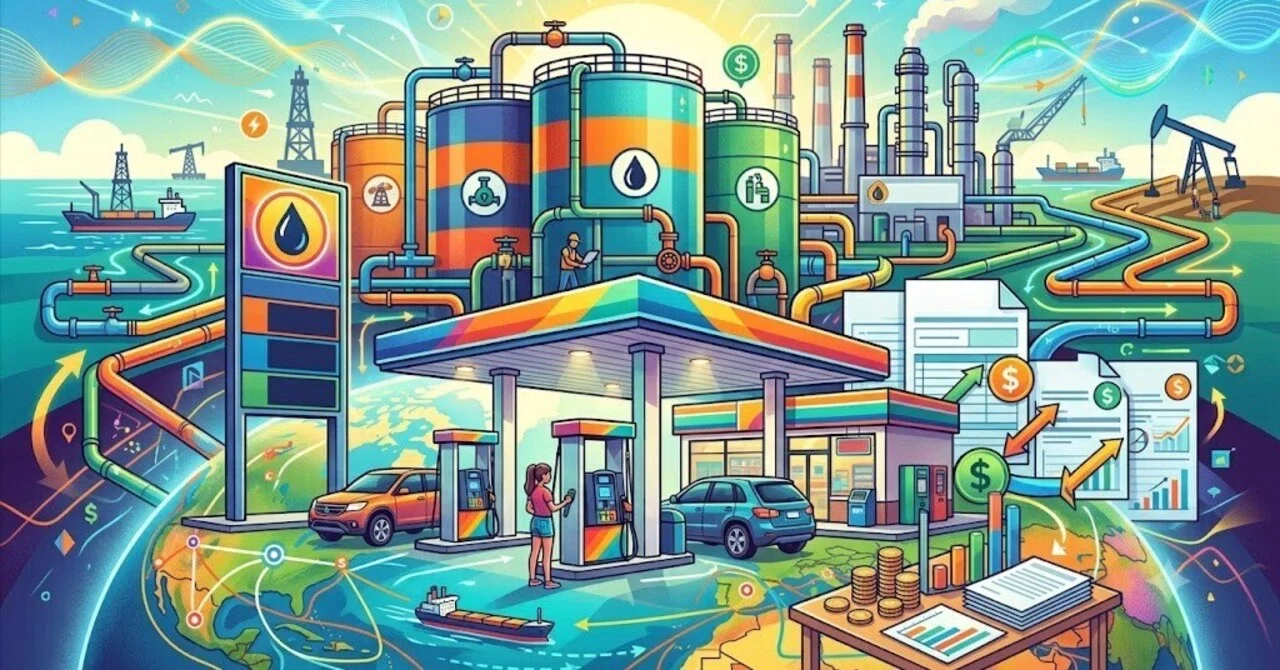
【usafacts.org】ガソリン価格が高い本当の理由:原油だけじゃない“ポンプ価格の裏側”

ガソリン代が上がると、通勤も旅行も外食も、じわっと高くなる。この記事は「誰が価格を決めているの?」という疑問を、原油・精製・流通・税金・地域差の5つでほどくデータ解説。ニュースを見る目が少し変わります。
Owner: usafacts.org
タイトル: What causes high gas prices?
日時: 2023/09/01
URL: “https://usafacts.org/articles/what-causes-high-gas-prices/”
🧩 英語要約
This USAFacts article explains why gasoline prices in the United States change so often and why no single person or institution fully controls them. The retail price of gasoline is mainly shaped by four components: crude oil, refining costs and profits, distribution and marketing, and federal, state, and local taxes. Among these, crude oil is usually the largest factor, so global oil supply and demand strongly affect what drivers pay at the pump.
The article also highlights the role of OPEC, which can influence crude oil prices by coordinating production among major oil-exporting countries. When oil supply is reduced, crude oil becomes more expensive, and retail gasoline prices often rise. However, non-OPEC producers, refinery capacity, transportation systems, local competition, and environmental rules also matter.
Gas prices vary by region and state. Taxes differ across states, some areas require special cleaner-burning gasoline, and transportation costs are higher where refineries or pipelines are farther away. For example, California often has higher prices because of stricter fuel standards, higher taxes, and limited refining options, while states closer to refinery networks may have lower prices. The article concludes that gas prices are the result of a complex chain, not just “oil companies” or “politicians.” Understanding this chain helps readers interpret price spikes more realistically.
🧩 日本語要約
この記事は、アメリカのガソリン価格がなぜ頻繁に上下するのかを、データに基づいて説明しています。結論から言うと、ガソリン価格は「原油価格」だけで決まるわけではありません。小売価格には、①原油のコスト、②精製コストと利益、③流通・マーケティングのコストと利益、④連邦・州・地方の税金が含まれます。その中でも原油価格の影響が最も大きく、世界の原油需給、産油国の生産方針、地政学的リスク、需要の増減がポンプ価格に反映されます。
記事では、OPECの影響も取り上げています。OPECは主要な産油国の集まりで、加盟国が生産目標を調整することで、世界の原油供給に影響を与えます。供給が減ると原油価格が上がり、それがガソリン価格にも波及します。ただし、OPECだけが価格を決めるわけではなく、非OPEC産油国、精製所の稼働状況、パイプラインやタンクローリーなどの輸送網、地域ごとの競争環境も重要です。
さらに、ガソリン価格には大きな地域差があります。州ごとに税率が異なり、環境基準に合わせた特殊なガソリンを使う州では製造や流通のコストが高くなります。たとえばカリフォルニアは、税金、環境規制、精製設備の制約などが重なり、全米でも価格が高くなりやすい地域です。一方、テキサスのように精製所が多く、供給網に近い地域では比較的安くなりやすい傾向があります。2026年6月29日時点のEIAデータでも、全米平均は1ガロン3.831ドル、カリフォルニアは5.245ドル、テキサスは3.230ドルと大きな差があります。
この解説から学べるポイントは、「ガソリン価格が高い=誰か一人が悪い」とは言い切れないことです。価格は、国際市場、税制、環境政策、物流、地域競争、季節需要が重なった結果です。車社会のアメリカでは、ガソリン代の上昇は家計だけでなく、物流費、物価、旅行、政治への不満にも直結します。日本に住む私たちにとっても、燃料価格は電気代、配送料、食品価格に波及するため、この記事は「海外ニュース」ではなく、日常生活のコストを読むための基礎知識になります。
🧩 CEFR B1以上の重要語彙 12語
🧩 01|crude oil
日本語訳:原油
Example: Crude oil is the largest component of gasoline prices.
🧩 02|refining
日本語訳:精製
Example: Refining turns crude oil into gasoline and other fuels.
🧩 03|distribution
日本語訳:流通、配送
Example: Distribution costs rise when fuel must travel a long distance.
🧩 04|marketing
日本語訳:販売促進、マーケティング
Example: Marketing costs are included in the final price at the pump.
🧩 05|federal
日本語訳:連邦の
Example: Federal taxes are part of the retail gasoline price.
🧩 06|local
日本語訳:地方の、地域の
Example: Local rules can affect how much drivers pay for gas.
🧩 07|taxes
日本語訳:税金
Example: Gasoline taxes differ from state to state.
🧩 08|fluctuate
日本語訳:変動する
Example: Gas prices fluctuate because supply and demand change.
🧩 09|supply
日本語訳:供給
Example: When oil supply falls, gasoline prices often rise.
🧩 10|demand
日本語訳:需要
Example: Demand usually increases during the summer travel season.
🧩 11|reserve
日本語訳:備蓄、埋蔵量
Example: Oil reserves can influence a country’s energy security.
🧩 12|pipeline
日本語訳:パイプライン
Example: Pipelines help move gasoline from refineries to markets.
🧩 外部参照情報
🧩 01|YouTube関連動画
What Determines Gas Prices?
EIAによるガソリン価格の仕組み解説動画。記事の内容と直接つながる学習素材です。
🧩 02|Reddit(USA)関連トピック
The US doesn't directly purchase oil from Iran, so why are our gas prices going up?
原油がグローバル市場で価格形成されることを考えるための関連トピックです。
🧩 地名・人名・キーワード調査
🧩 記事内の地名
United States / アメリカ合衆国
自動車移動への依存度が高く、ガソリン価格が家計、物流、政治に直結しやすい国です。EIAは週次で全米・地域・州別のガソリン価格を公表しています。
Middle East / 中東
世界の原油供給に大きな影響を持つ地域。OPEC加盟国の一部が含まれ、地政学的な不安が原油価格に影響することがあります。
North Sea / 北海
欧州北西部にある重要な産油地域。記事では非OPEC産油地域の例として登場します。
California / カリフォルニア州
環境基準、税金、精製設備の制約などにより、米国内でもガソリン価格が高くなりやすい州です。2026年6月29日時点のEIAデータでは、カリフォルニアのレギュラーガソリン平均価格は1ガロン5.245ドルでした。
Texas / テキサス州
石油・ガス産業と精製所が集積する州。2026年6月29日時点のEIAデータでは、テキサスのレギュラーガソリン平均価格は1ガロン3.230ドルでした。
🧩 記事に登場する人物名
個人名の登場なし
この記事は特定の政治家や企業経営者ではなく、USAFacts teamによるデータ解説記事です。
🧩 その他の主要キーワード
OPEC
Organization of the Petroleum Exporting Countriesの略。原油輸出国の組織で、加盟国の生産方針が世界の原油価格に影響します。OPEC公式サイトでは現在、アルジェリア、コンゴ、イラン、イラク、クウェート、サウジアラビアなどの加盟国が掲載されています。
EIA
U.S. Energy Information Administrationの略。アメリカ政府のエネルギー統計機関で、ガソリン価格、原油在庫、需要、精製などのデータを公表しています。
reformulated gasoline
大気汚染を抑えるために成分を調整したガソリン。州や地域の環境基準によって必要になることがあり、価格差の原因になります。
summer driving season
アメリカでは春から夏に旅行・移動需要が高まり、ガソリン需要が増える時期。EIAも夏場の需要増が価格上昇につながりやすいと説明しています。
🧩 日本・米国の比較情報
🧩 01|Japan / 日本
English:
Japan is highly dependent on imported energy, so global oil prices and exchange rates strongly affect domestic fuel prices. In 2026, Japan’s Agency for Natural Resources and Energy has used emergency fuel price relief measures for gasoline, diesel, kerosene, heavy oil, and aviation fuel. From July 2, 2026, the listed support rate for gasoline was 4.8 yen per liter. The government also publishes weekly petroleum product price surveys.
日本語:
日本はエネルギー資源の多くを輸入に頼っているため、原油価格と為替の影響を受けやすい国です。2026年には、資源エネルギー庁がガソリン・軽油・灯油・重油・航空機燃料を対象に「緊急的激変緩和措置」を実施し、2026年7月2日以降のガソリン支給単価は4.8円/Lと公表されています。また、石油製品価格調査は原則として毎週月曜調査・水曜公表です。
🧩 02|United States / 米国
English:
In the United States, gasoline prices are shaped by crude oil, refining, distribution and marketing, and taxes. The EIA reported that the U.S. average regular gasoline price was $3.831 per gallon on June 29, 2026, while regional differences were large: California averaged $5.245 and Texas averaged $3.230.
日本語:
米国では、ガソリン価格は原油、精製、流通・マーケティング、税金によって構成されます。EIAによると、2026年6月29日の全米レギュラーガソリン平均価格は1ガロン3.831ドルでしたが、カリフォルニアは5.245ドル、テキサスは3.230ドルで、州による差が非常に大きいことがわかります。
🧩 応用・ディスカッション展開
🧩 01|Theme 1: Why gas prices are not controlled by one person
Gas prices are often discussed as if one person, one company, or one government can control them. However, the reality is more complicated. The price at a gas station is the result of a long chain. First, crude oil is traded in a global market, so events in one region can affect prices everywhere. Second, crude oil must be refined into gasoline, and refining costs change depending on season, local fuel standards, and refinery capacity. Third, gasoline must be transported by pipeline, ship, train, or truck. If a region is far from refineries or has limited transportation infrastructure, prices can be higher. Finally, taxes differ by country, state, and city.
This does not mean governments have no influence. Tax policy, environmental rules, emergency reserves, and subsidies can change the final price. But these tools usually work within the larger global oil market. A useful discussion question is: should governments try to keep gasoline cheap, or should they encourage people to use less fuel? Cheap gasoline helps households and businesses in the short term. However, it may also increase traffic, pollution, and dependence on oil. A balanced policy may need both short-term relief and long-term investment in public transportation, electric vehicles, and cleaner energy.
🧩 02|Theme 2: Should gasoline taxes be lower during price spikes?
When gasoline prices rise, many people argue that governments should reduce gasoline taxes. This idea is attractive because taxes are visible and can be changed by policy. Lower taxes can give quick relief to drivers, especially people who must commute by car or small businesses that depend on transportation. In rural areas, where public transportation is limited, high fuel prices can feel especially unfair.
However, reducing gasoline taxes also has disadvantages. Fuel taxes often help pay for roads, bridges, and transportation infrastructure. If governments cut these taxes without replacing the revenue, infrastructure budgets may suffer. Another problem is that tax cuts do not always fully reach consumers. Some of the benefit may be absorbed by suppliers, distributors, or retailers depending on market conditions. In addition, cheaper gasoline can increase demand, which may push prices upward again when supply is tight.
A more targeted approach may be better. Instead of lowering taxes for everyone, governments could support low-income households, essential workers, rural drivers, or small logistics businesses. They could also invest in fuel efficiency, public transit, and charging infrastructure. The key question is not simply “Should gas be cheaper?” but “Who needs help most, and what kind of support creates the best long-term outcome?”
🧩 03|Theme 3: What Japan can learn from U.S. gasoline price differences
The United States is a useful case study because gasoline prices vary widely by state. California and Texas often show very different prices, even though they are in the same country. This teaches us that fuel prices are not only about global oil. Local taxes, environmental standards, refinery locations, pipeline networks, and competition among gas stations all matter. A driver in one state may pay much more than a driver in another state because the local cost structure is different.
Japan can learn from this in several ways. First, transparency matters. If people understand what part of the price comes from crude oil, taxes, distribution, and policy, public debate becomes more realistic. Second, regional infrastructure matters. Islands, rural areas, and regions far from supply centers may face higher transport costs. Third, short-term subsidies can reduce pain, but they do not remove the deeper issue of oil dependence.
For Japan, the long-term question is how to protect households while reducing vulnerability to global energy shocks. Better public transportation, efficient vehicles, electric mobility, renewable energy, and smarter logistics can all help. Gasoline prices are not just a car issue; they are connected to food prices, delivery fees, tourism, local economies, and climate policy. Learning from the U.S. example can help Japan design policies that are fair, transparent, and future-oriented.
🧩 記事の背景
🧩 01|English Background
Gasoline prices reflect global oil markets, refinery limits, transport costs, taxes, and local rules, making pump prices highly volatile.
🧩 02|日本語背景
ガソリン価格は原油市場、精製、輸送、税金、地域規制が重なって決まり、家計や物流に直接影響します。
🧩 ハッシュタグ
#ガソリン価格 #原油価格 #エネルギー #物価高 #アメリカ経済 #米国ニュース #データで読む #OPEC #EIA #インフレ #家計管理 #通勤費 #物流費 #環境政策 #税金 #経済ニュース #英語学習 #時事英語 #社会問題 #海外記事
#GasPrices #CrudeOil #Energy #USFacts #Economy #Inflation #OPEC #EIA #FuelPrices #Transportation #SupplyChain #PublicPolicy #Taxes #Refining #EnergyMarkets #EnglishLearning #教育 #英会話 #習い事
🧩↓👍イイネを押してもらえると嬉しいです
🧩 語彙ダジャレ記憶
🧩01|crude oil
読み:クルード オイル
意味:原油
ダジャレ:クルッと出てくる前の、まだ“粗い”オイル=crude oil。
🧩02|refining
読み:リファイニング
意味:精製
ダジャレ:油をリファインしてファインにする、それがrefining。
🧩03|distribution
読み:ディストリビューション
意味:流通、配送
ダジャレ:ディスっと配る?いや、全国に“配る”のがdistribution。
🧩04|marketing
読み:マーケティング
意味:販売活動、宣伝
ダジャレ:マーケットで売る作戦、それがmarketing。
🧩05|federal
読み:フェデラル
意味:連邦の
ダジャレ:フェデラルは“国全体レベル”、フェデレーションの仲間。
🧩06|local
読み:ローカル
意味:地域の
ダジャレ:ローカル線みたいに、その地域だけのlocalルール。
🧩07|taxes
読み:タクシズ
意味:税金
ダジャレ:タクシー代じゃなくて、払うと痛いtaxes。
🧩08|fluctuate
読み:フラクチュエイト
意味:変動する
ダジャレ:フラフラ価格が動く=fluctuate。
🧩09|supply
読み:サプライ
意味:供給
ダジャレ:足りない物をサッとプライして出す=supply。
🧩10|demand
読み:ディマンド
意味:需要
ダジャレ:みんなが「出まんど?」と欲しがる、それがdemand。
🧩11|reserve
読み:リザーブ
意味:備蓄、予備
ダジャレ:レストランも石油も、先に取っておくのがreserve。
🧩12|pipeline
読み:パイプライン
意味:パイプライン、輸送管
ダジャレ:パイプでライン状に運ぶからpipeline。
