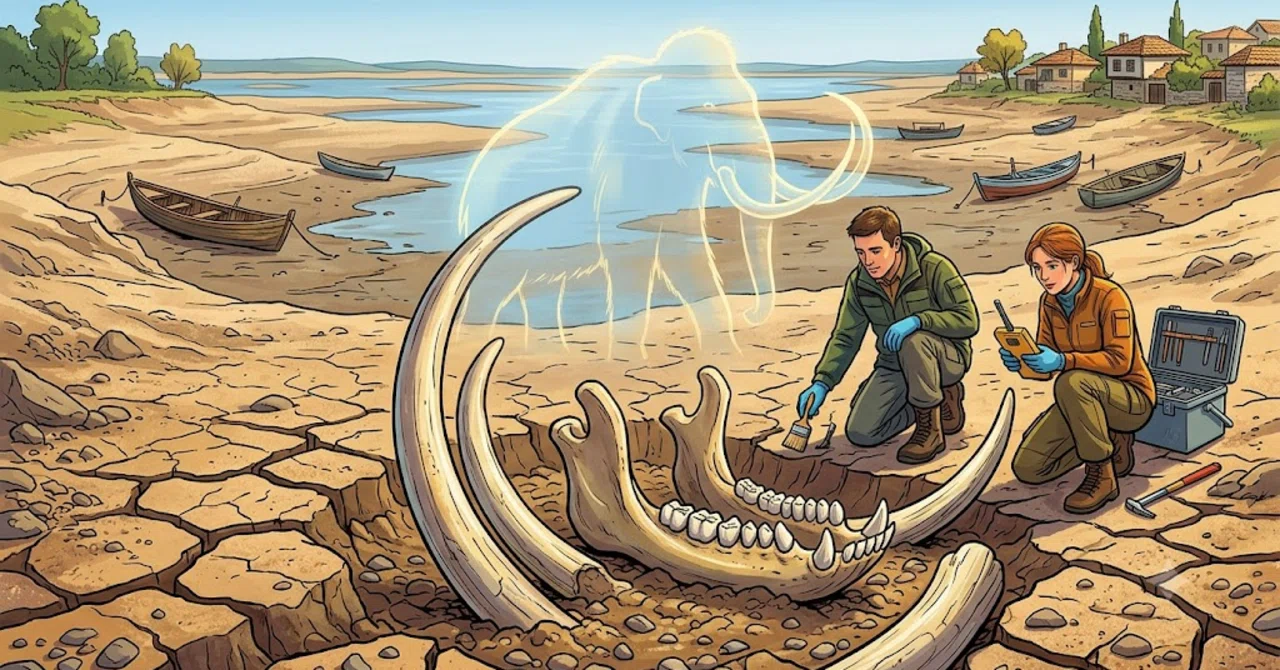
【reuters.com】川底からマンモス?記録的渇水が開いた「地球史のタイムカプセル」

いつもの川底が、突然「地球のタイムカプセル」になる。ブルガリアのドナウ川で、記録的な低水位によりマンモスとみられる骨が姿を現しました。驚きの発見の裏側には、欧州を襲う熱波と干ばつ、物流や電力にも広がる水不足があります。過去と現在が交差するニュースです。
Owner: reuters.com
タイトル: Mammoth remains revealed in Bulgaria after Danube water levels hit record low
日時: 2026/07/29
URL: “https://www.reuters.com/business/environment/mammoth-remains-revealed-bulgaria-after-danube-water-levels-hit-record-low-2026-07-29/” (Reuters)
🧩 英語要約
In northern Bulgaria, remains believed to belong to an ancient mammoth appeared on the exposed bed of the Danube River after water levels fell to a record low. A resident of Ryahovo village noticed the unusual bones on July 29, 2026. Other villagers then contacted specialists at the Regional History Museum in the nearby town of Ruse. The discovery was reported by Reuters, which cited Bulgaria’s BTA news agency. (Reuters)
Nikolay Nenov, director of the museum, said experts identified a lower jaw, two tusks, and an object that may be a mammoth rib. The bones were scheduled to be removed from the riverbed on July 30 for closer examination. Researchers still need to confirm their origin, age, and species. Nenov avoided describing the discovery as a sensation, but stressed that ancient remains can be scientifically important. He also said the area has long been considered a former swamp where the animal may have died thousands of years ago. (Reuters)
The immediate cause of the discovery was the unusually low river level. Prolonged heat waves and drought have affected the Danube and other European waterways, including the Rhine. Information reported separately from the original article shows that the wider Danube crisis has also disrupted shipping, tourism, wildlife, and electricity production. Boats have been stranded, cargo capacity has fallen, old shipwrecks have emerged, and nuclear reactors in Romania and Hungary have faced shutdowns because of insufficient river water. The fossil discovery is therefore both a valuable scientific opportunity and a visible sign of a much larger environmental and economic problem. (Reuters)
🧩 日本語解説
2026年7月29日、ブルガリア北部のリャホヴォ村付近で、古代のマンモスのものとみられる骨がドナウ川の川底から姿を現しました。発見したのは地元住民で、記録的な低水位によって露出した川底を歩いていた際、通常とは異なる形の骨に気づきました。住民から連絡を受けた近隣のルセ地域歴史博物館が専門家を現地へ派遣しています。(Reuters)
博物館長のニコライ・ネノフ氏によると、現時点で確認されたのは下あご、2本の牙、そしてマンモスの肋骨である可能性がある骨です。骨は翌30日に回収し、詳しい調査を行う予定とされました。ただし、Reutersの記事公開時点では、動物の種類、年代、骨の由来は確定していません。そのため、「マンモスの化石が発見された」と断定するより、「マンモスのものとみられる遺骸が見つかった」と表現するのが正確です。(Reuters)
ネノフ氏は、発見を過度にセンセーショナルに扱うことには慎重な姿勢を示す一方、古代の生物の痕跡は科学にとって重要だと説明しました。この場所はかつて湿地だったと考えられ、マンモスが数千年前にそこで死んだ可能性があります。しかし、正確な年代や当時の環境を知るには、骨の形態比較、保存状態の確認、地層の分析などが必要です。(Reuters)
今回の発見を生んだのは、喜ばしい条件ではありません。欧州を襲った長期的な熱波と干ばつにより、ドナウ川の水位が各地で記録的な低さとなったためです。元記事外の関連報道では、船舶の座礁、貨物輸送量の低下、古い沈没船の露出、観光への影響が報告されています。さらにルーマニアとハンガリーでは、冷却水の不足により原子力発電所の運転にも影響が及びました。(Reuters)
数千年前の生命を知る手がかりが現れた一方、その発見自体が現代の水不足の深刻さを物語っています。今後は骨の鑑定結果だけでなく、乾燥した川底で貴重な資料をどう保護するか、国境を越える河川をどう管理するかも注目点となります。
🧩 CEFR B1以上の重要語彙 12語
🧩 01|recede
日本語訳:後退する、水位が下がる
Example: As the Danube continued to recede, parts of the riverbed that were usually underwater became visible to local residents.
🧩 02|remains
日本語訳:遺骸、遺物
Example: Experts handled the suspected mammoth remains carefully because their position could provide clues about the ancient environment.
🧩 03|uncover
日本語訳:覆いを取り除く、発見する
Example: Extreme drought can uncover fossils and shipwrecks, but it may also damage fragile objects before researchers arrive.
🧩 04|resident
日本語訳:住民
Example: A local resident noticed unusual bones on the exposed riverbed and quickly informed other people in the village.
🧩 05|alert
日本語訳:知らせる、警告する
Example: Villagers decided to alert museum specialists instead of moving the bones without professional guidance by themselves.
🧩 06|specialist
日本語訳:専門家
Example: A museum specialist must compare the jaw, tusks, and rib with known specimens before confirming the animal’s species.
🧩 07|examination
日本語訳:詳しい調査、検査
Example: Further examination should help researchers determine the bones’ origin, age, condition, and scientific value more accurately.
🧩 08|establish
日本語訳:突き止める、確立する
Example: Scientists need laboratory evidence to establish whether the remains truly belong to a mammoth and when it lived.
🧩 09|origin
日本語訳:起源、由来
Example: The exact origin of the bones remains uncertain until experts complete detailed measurements and material tests.
🧩 10|significant
日本語訳:重要な、意義の大きい
Example: Even an incomplete fossil can be significant when it adds new evidence about an ancient landscape or animal population.
🧩 11|prolonged
日本語訳:長期化した
Example: Prolonged heat and limited rainfall lowered European rivers, disrupting transport while exposing objects hidden beneath the water.
🧩 12|drought
日本語訳:干ばつ、長期的な水不足
Example: The drought created an unexpected scientific opportunity, yet it also threatened ecosystems, shipping, farming, and energy production.
🧩 外部参照情報
🧩 01|YouTube関連動画
Mammoth remains found in Bulgaria after Danube levels hit record low
Reuters公式YouTubeチャンネルが公開した、現地の川底と発見物を確認できる英語ニュース動画です。(YouTube)
🧩 02|Reddit(USA)関連トピック
Mammoth remains revealed in Bulgaria after Danube water levels hit record low
r/worldnewsに投稿されたReuters記事の関連スレッドです。(Reddit)
🧩 地名・人名・キーワード調査
🧩 記事内の地名
リャホヴォ(Ryahovo)
ブルガリア北部、ルセ州スリヴォ・ポレ市に属するドナウ川沿いの村です。今回の骨は、村の近くで水位低下により露出した川底から発見されました。発見現場そのものが、かつて湿地だった可能性も指摘されています。(Reuters)
ルセ(Ruse)
リャホヴォ近郊に位置するドナウ川沿いの都市です。今回の調査を担当する地域歴史博物館があり、住民から連絡を受けた専門家が現場へ派遣されました。河川交通とブルガリア北部の文化・経済に深く関係する地域です。(Reuters)
🧩 記事に登場する人物名
ニコライ・ネノフ(Nikolay Nenov)
Reutersが引用したBTAの報道では、ルセ地域歴史博物館の館長です。専門家が下あご、2本の牙、肋骨らしき骨を確認したと説明し、発見の科学的価値を強調しました。詳しい公開略歴は、信頼できる一次情報から確認できませんでした。(Reuters)
🧩 その他の主要キーワード
ドナウ川
ドイツから黒海まで流れ、10か国を通過する欧州第2の長河です。国境を越えた物流、発電、農業、観光、生態系を支えるため、一地域の水位低下が複数国へ連鎖します。(AP News)
マンモス
絶滅したゾウの仲間で、複数の種がユーラシア大陸や北米に生息していました。今回の骨がどの種に属するかは未確定であり、ケナガマンモスと断定することはできません。(qrius.si.edu)
古生物学
化石や地層を手がかりに、過去の生物と環境を研究する学問です。骨そのものだけでなく、発見位置、周囲の土、保存状態を記録することで、動物が生きた時代や死後の変化を推定します。
干ばつ
通常より雨が少ない状態が長期間続き、水不足を引き起こす現象です。農業や飲料水だけでなく、河川輸送、生態系、発電所の冷却などにも影響します。(World Meteorological Organization)
🧩 日本・米国の比較情報
🧩 01|Japan / 日本
English:
Japan also faces periods of low rainfall and water shortages, although its river geography differs greatly from the Danube basin. Japanese rivers are generally shorter and steeper, so rainfall can move quickly from mountains to the sea. During droughts, national and local authorities coordinate water use among cities, farms, and industries. Measures may include adjusting water withdrawals, sharing available supplies, releasing reservoir water, and providing emergency drinking water. Japan’s Ministry of Land, Infrastructure, Transport and Tourism operates a drought information portal and supports coordination councils for major river systems. (国土交通省)
Japan also has a connection with mammoth history. Woolly mammoths reached Hokkaido from Eurasia around 30,000 years ago when lower sea levels created a northern land connection. Mammoth tooth fossils have been found near Kushiro and Cape Erimo. Important fossils or scientifically valuable natural sites can receive protection through Japan’s cultural property and natural monument systems. However, the legal status depends on the location, ownership, and whether the object or site has been officially recognized. Therefore, a new discovery should be reported to a museum, university, or local authority rather than removed without documentation. (国土交通省)
日本語:
日本でも少雨による渇水は発生しますが、ドナウ川流域とは河川の性質が異なります。日本の川は一般に短く傾斜が急なため、降った雨が比較的短時間で海へ流れます。渇水時には、都市、農業、工業の間で取水量を調整し、ダムからの放流、水の融通、緊急給水などを行います。国土交通省は渇水情報ポータルを運営し、主要水系では関係自治体や水利用者による協議会が調整を担います。(国土交通省)
日本にもマンモスとの歴史的な接点があります。約3万年前、海面低下によってユーラシア大陸と北海道北部がつながった時期に、ケナガマンモスが北海道へ渡ったと考えられています。釧路周辺や襟裳岬では歯の化石が見つかっています。科学的価値の高い化石や場所は、文化財・天然記念物の制度によって保護される可能性がありますが、すべての化石が自動的に同じ扱いを受けるわけではありません。発見時には動かさず、博物館や大学、自治体へ知らせることが重要です。(国土交通省)
🧩 02|United States / 米国
English:
The United States manages drought through a large monitoring network. The U.S. Drought Monitor is updated every Thursday and classifies conditions from abnormally dry to exceptional drought. Drought.gov combines information about rainfall, soil moisture, streamflow, snowpack, reservoirs, and forecasts so that governments, farmers, and communities can prepare for water shortages. This reflects the country’s wide range of climates, from humid eastern states to the dry Southwest. (Drought.gov)
The United States also has extensive mammoth fossil resources. Mammoth bones, teeth, tracks, tusks, or dung have been recorded in numerous national parks, especially in Alaska and the western states. Waco Mammoth National Monument in Texas protects the country’s only recorded nursery herd of Columbian mammoths, first discovered in 1978. On federal land, the Paleontological Resources Preservation Act of 2009 requires agencies to manage fossils according to scientific principles. Unauthorized removal can lead to penalties, while research collection normally requires permission. Rules may differ on state, tribal, and private land. Compared with Bulgaria’s emergency riverbed discovery, the U.S. system shows the value of permanent fossil inventories, trained response teams, and protected research sites. (National Park Service)
日本語:
米国では、広大で気候差の大きい国土に対応するため、複数機関による渇水監視が行われています。U.S. Drought Monitorは毎週木曜日に更新され、異常乾燥から例外的干ばつまで段階別に表示します。Drought.govでは降水量、土壌水分、河川流量、積雪、貯水池、予報などを統合し、自治体、農家、住民の備えに活用しています。(Drought.gov)
マンモス化石も米国各地で確認されており、国立公園では骨、歯、足跡、牙などが記録されています。テキサス州のウェーコ・マンモス国定記念物は、国内で唯一確認されたコロンビアマンモスの子育て集団の化石を保護しています。連邦所有地の化石は、2009年の古生物資源保存法に基づいて科学的に管理され、無許可の持ち出しは処罰対象となり得ます。ただし、州有地、先住民の土地、私有地では規則が異なります。(National Park Service)
🧩 応用・ディスカッション展開
🧩 01|Theme 1: Should scientists immediately remove fossils exposed by drought?
Introduction:
Fossils exposed by drought face two competing needs. Scientists want to protect them from damage, but they also need to study their original position before moving them. Therefore, immediate removal is not always the best first action.
Main argument:
Researchers should first secure the area, record the location, and examine the surrounding sediment. A fossil’s position can reveal how an animal died, whether water moved the bones, and what the environment was like. Photographs, measurements, mapping, and three-dimensional scanning can preserve this information. After documentation, removal may become urgent because sunlight, temperature changes, visitors, and returning water can quickly damage an exposed object.
Example:
In Bulgaria, specialists planned to remove the suspected mammoth jaw, tusks, and possible rib one day after the discovery. This suggests a short period for on-site inspection followed by controlled recovery. On protected federal land in the United States, fossils are also managed according to scientific principles rather than simply collected by whoever finds them. (Reuters)
Counterargument:
Some people may argue that leaving a fossil in place, even briefly, creates risks of theft or destruction. This concern is reasonable, especially when the location becomes public. Emergency removal may therefore be necessary when security cannot be guaranteed.
Conclusion:
Scientists should not follow one fixed rule. They should document the site as quickly as possible and then remove the fossil when environmental or human threats are greater than the value of leaving it in place. The goal is not merely to save the bone, but to preserve the information surrounding it.
🧩 02|Theme 2: Should record-low rivers be treated as cultural heritage emergencies?
Introduction:
A record-low river is usually described as an environmental or economic crisis. However, falling water can also expose fossils, archaeological sites, shipwrecks, unexploded weapons, and other fragile objects. Governments should therefore include cultural heritage in drought-response planning.
Main argument:
When water retreats, newly exposed materials can deteriorate rapidly. Mud may dry and crack, wooden objects may decay after contact with air, and valuable items may attract looters. A response plan should connect water authorities with museums, universities, police, local governments, and community volunteers. People living near the river also need clear instructions about photographing discoveries, recording locations, avoiding disturbance, and contacting specialists.
Example:
The Danube’s 2026 low water revealed suspected mammoth remains in Bulgaria and old shipwrecks elsewhere. At the same time, the crisis stranded boats, limited cargo transport, disrupted tourism, and affected nuclear power production. These events show that one hydrological emergency can create environmental, economic, safety, and heritage problems at once. (Reuters)
Counterargument:
Governments have limited staff and money during a drought. Drinking water, electricity, agriculture, and public safety must remain the first priorities. Creating a large heritage program during every low-water event could waste resources.
Conclusion:
Cultural heritage does not need to replace essential emergency services. A small specialist team, a reporting hotline, and cooperation with existing museums could protect important discoveries at relatively low cost. Rivers carry both water and history, so drought plans should recognize both.
🧩 03|Theme 3: How can the media report climate-related discoveries without sensationalism?
Introduction:
A mammoth appearing from a dry riverbed is a powerful image. It can attract readers to science and climate news, but dramatic reporting may create false certainty or turn a serious drought into entertainment.
Main argument:
Responsible reporting should clearly separate confirmed facts from possibilities. In the Bulgarian case, experts had identified a jaw, two tusks, and a possible rib, but had not yet confirmed the species, origin, or age. Headlines and social-media posts should therefore use expressions such as “believed to be” or “suspected” until laboratory work is complete. Reporters should also explain that the discovery was caused by low water, while avoiding unsupported claims that one specific fossil discovery proves a particular climate trend. (Reuters)
Example:
Museum director Nikolay Nenov said the find was scientifically important but avoided calling it a sensation. That approach gives the public a reason to care without exaggerating the evidence. A balanced report can describe both the excitement of the discovery and the wider costs of the drought, including transport and energy disruption. (Reuters)
Counterargument:
Some journalists may say that strong emotional language is necessary because climate and science stories often receive little attention. Without an attractive headline, many readers may never learn about the issue.
Conclusion:
A strong hook is useful, but it should lead to accurate information. The best climate communication creates curiosity, states uncertainty, provides context, and updates the story when scientific results become available. Excitement and accuracy do not have to be opposites.
🧩 記事の背景
🧩 01|English Background
Mammoths were extinct members of the elephant family that lived across parts of Eurasia and North America. Different species existed, so a jaw or tusk cannot be assigned to a particular species without careful comparison and dating. Fossils found in river sediments may have remained buried for thousands of years, but erosion or falling water can expose them. Their scientific value depends not only on the bones, but also on their position and surrounding material. In the Bulgarian case, the age, origin, and species remained unconfirmed when the Reuters report was published. (qrius.si.edu)
🧩 02|日本語背景
マンモスは絶滅したゾウの仲間で、ユーラシアや北米に複数の種が生息していました。骨の形だけで種や年代を即断することはできず、地層、保存状態、周囲の堆積物を含む調査が必要です。川底に埋もれた骨は水位低下や浸食で露出しますが、乾燥や人の接触で急速に傷む恐れもあります。今回の骨も、記事公開時点では種類と年代が未確定です。(Reuters)
🧩 ハッシュタグ
#ブルガリア #ドナウ川 #マンモス #化石 #古生物学 #干ばつ #熱波 #気候変動 #河川 #環境ニュース #科学ニュース #地球史 #博物館 #文化遺産 #水不足 #欧州ニュース #自然史 #異常気象 #科学調査 #リャホヴォ
#Bulgaria #DanubeRiver #Mammoth #Fossils #Paleontology #Drought #Heatwave #ClimateRisk #RiverScience #NaturalHistory #IceAge #ScientificDiscovery #WaterScarcity #EuropeanNews #MuseumResearch #EnvironmentalNews
🧩↓👍イイネを押してもらえると嬉しいです
🧩 語彙ダジャレ記憶
🧩 01|recede
読み:リシード
意味:後退する、水位が下がる
ダジャレ:川が後退し、岸に「離(リ)れたシード(種)」まで見えてきた。
🧩 02|remains
読み:リメインズ
意味:遺骸、遺物
ダジャレ:「リメイン=残る」。数千年後もズッと残った遺骸がリメインズ。
🧩 03|uncover
読み:アンカヴァー
意味:覆いを取り除く、発見する
ダジャレ:「あん、カバーが外れた!」水のカバーがなくなり、骨を発見。
🧩 04|resident
読み:レジデント
意味:住民
ダジャレ:村の「レジで、でんと」構えている地元の住民。
🧩 05|alert
読み:アラート
意味:知らせる、警告する
ダジャレ:「あらっと!」骨を見つけ、すぐ専門家に知らせるアラート。
🧩 06|specialist
読み:スペシャリスト
意味:専門家
ダジャレ:調査用の「スペシャルなリスト」を持っている専門家。
🧩 07|examination
読み:イグザミネイション
意味:詳しい調査、検査
ダジャレ:「行くぞ、見えない所まで!」骨の内部まで詳しく検査。
🧩 08|establish
読み:イスタブリッシュ
意味:突き止める、確立する
ダジャレ:いいスタート地点にブリッジを架け、調査方法を確立する。
🧩 09|origin
読み:オリジン
意味:起源、由来
ダジャレ:「オリジンはどこ?」骨が来た起源をさかのぼる。
🧩 10|significant
読み:シグニフィカント
意味:重要な、意義の大きい
ダジャレ:重要な発見で、科学のシグナルが「ピカン」と光る。
🧩 11|prolonged
読み:プロロングド
意味:長期化した
ダジャレ:プロが造るロングな道路工事が、長期間にわたって長引いた。
🧩 12|drought
読み:ドラウト
意味:干ばつ、長期的な水不足
ダジャレ:土地がドライになり、水がアウト。雨のない干ばつだ。
