
Is Japanese Food Halal? The 4 Japanese Ingredients Every Muslim Traveler Should Know

Japan is one of the world's most exciting food destinations.
From sushi and ramen to tempura and wagyu, many Muslim travelers arrive eager to experience authentic Japanese cuisine.
Yet after arriving, many discover the same challenge:
The question is often not "Does this dish contain pork?"
The question is:
"What exactly is inside this sauce?"
Japanese food is built on a small number of traditional ingredients that appear again and again across different dishes.
Even when a meal looks simple, these ingredients may be working quietly in the background.
Understanding them can make dining in Japan much easier and far less stressful.
The good news is that you do not need to become an expert in Japanese cooking.
Learning just four key ingredients will help you understand a large part of Japanese cuisine:
Soy Sauce (Shoyu)
Miso
Dashi
Mirin
These ingredients appear in everything from sushi and ramen to takoyaki and okonomiyaki.
And once you understand them, you'll be able to make more informed choices throughout your trip.
Why Japanese Food Can Feel Complicated

Many cuisines can be understood by looking at the main ingredient.
If a dish contains chicken, fish, vegetables, or beef, the decision may seem straightforward.
Japanese cuisine is a little different.
The flavor of many dishes comes not only from the visible ingredients, but from seasonings and stocks that are hidden beneath the surface.
A bowl of soup may appear vegetarian.
A piece of grilled fish may seem simple.
A dipping sauce may look harmless.
Yet each may contain ingredients that some Muslim travelers wish to verify before eating.
This does not mean Japanese food is unfriendly to Muslims.
In fact, many Muslim travelers enjoy wonderful dining experiences throughout Japan every day.
It simply means that understanding a few traditional ingredients can make your journey smoother.
Let's start with the ingredient you will encounter almost everywhere.
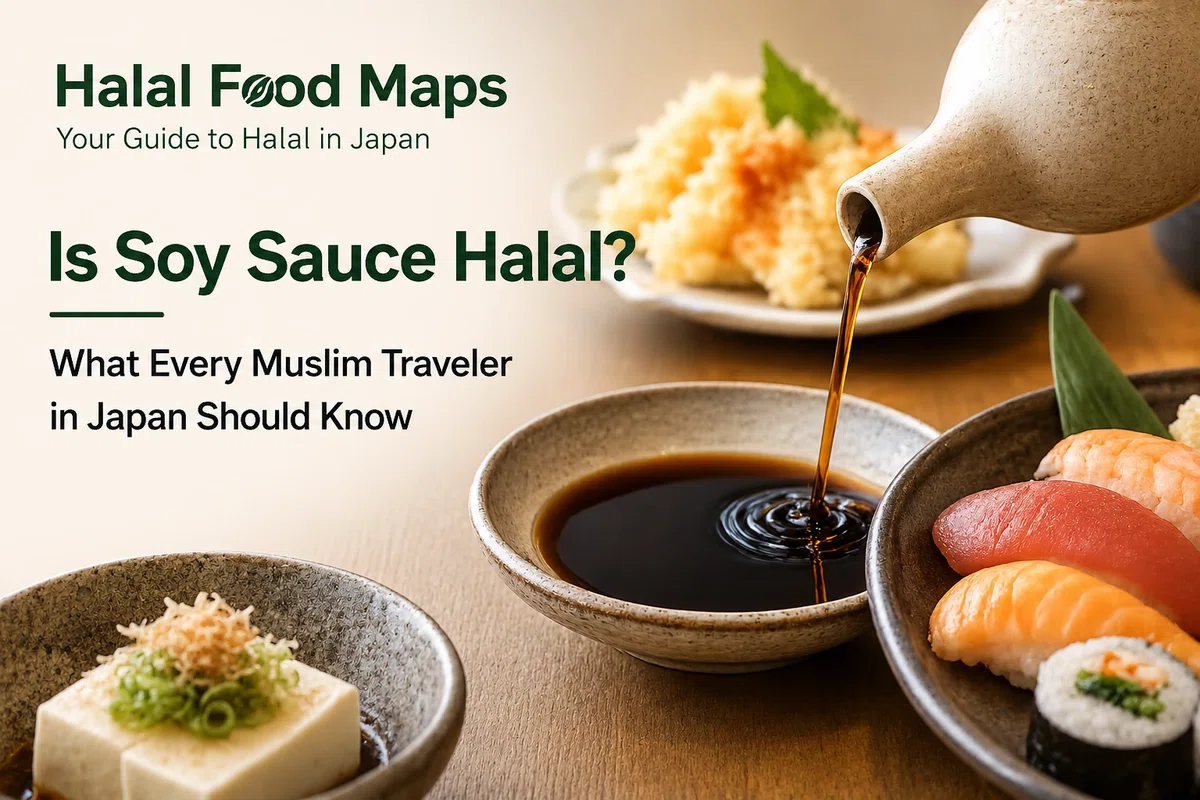
1. Soy Sauce (Shoyu)

If there is one flavor that defines Japanese cuisine, it is soy sauce.
From sushi counters to ramen shops, soy sauce is everywhere.
Traditionally, soy sauce is made from soybeans, wheat, salt, and microorganisms through a fermentation process that can take months.
For many Muslim travelers, soy sauce is one of the first ingredients they research before visiting Japan.
The reason is simple:
Fermentation can naturally produce small amounts of alcohol during production.
Different Muslim scholars and schools of thought may view this differently, which is why some travelers are comfortable with soy sauce while others prefer to investigate further.
In Japan, soy sauce appears in:
Sushi
Ramen
Yakitori
Donburi
Tempura sauce
Teriyaki sauce
Because soy sauce is such a foundational ingredient, understanding it can help you understand many other Japanese dishes as well.
If you would like a deeper explanation of how soy sauce is made and why opinions sometimes differ, we have a dedicated guide:
2. Miso

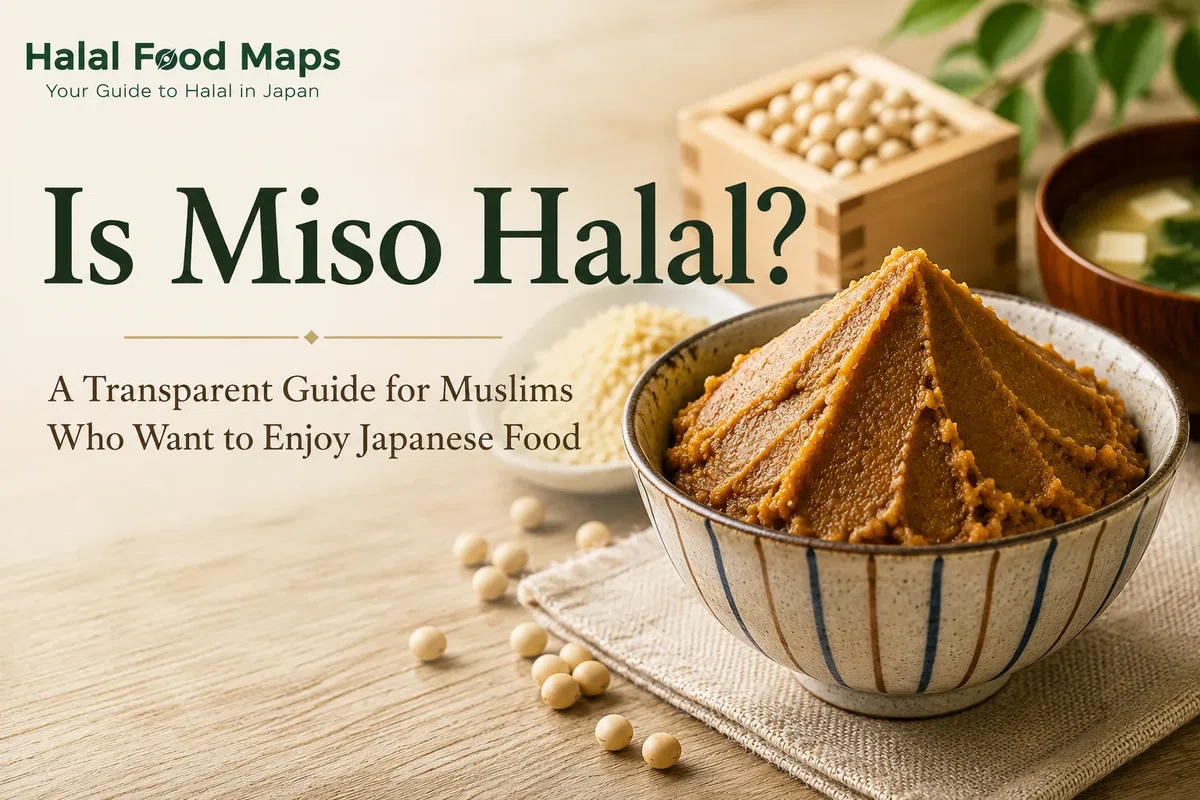
Miso is another ingredient that surprises many first-time visitors to Japan.
Made from fermented soybeans and koji, miso has been used in Japanese cooking for centuries.
Most travelers first encounter it in miso soup, but it also appears in:
Ramen
Sauces
Marinades
Hot pots
Grilled dishes
On its own, miso often consists of relatively simple ingredients.
However, the finished dish may include additional seasonings such as dashi, mirin, or cooking alcohol.
For that reason, the question is not always:
"Is miso halal?"
It may instead be:
"What else was added to the miso?"
This distinction becomes important when evaluating Japanese food.
The ingredient itself may be acceptable, while the final recipe may require additional confirmation.
3. Dashi

Among all Japanese ingredients, dashi may be the one that surprises Muslim travelers the most.
In fact, many visitors spend time researching soy sauce while rarely thinking about dashi.
Yet dashi is often the ingredient they encounter most frequently without realizing it.
Dashi is the foundation of Japanese cooking.
It provides the savory, umami-rich flavor that defines many traditional dishes.
Unlike soy sauce or miso, dashi is usually invisible.
You cannot see it in the finished meal.
But it may be present in:
Miso soup
Udon
Soba
Takoyaki batter
Okonomiyaki batter
Simmered dishes
Japanese sauces
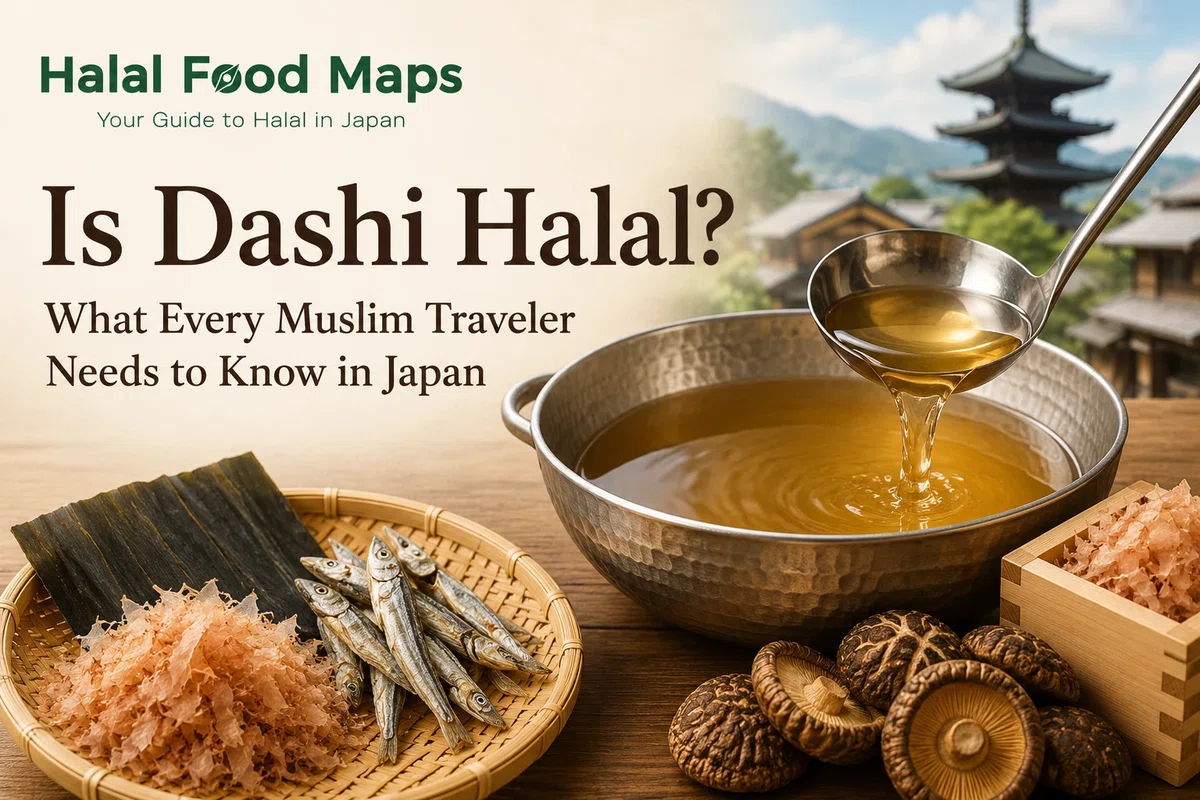
The most common type of dashi is made from:
Bonito flakes (katsuobushi)
Kombu seaweed
Some versions may include other seafood ingredients as well.

For many Muslim travelers, the question is not whether dashi contains pork or alcohol.
Instead, it is about understanding the source of the ingredients and deciding according to their own beliefs and school of thought.
This is why dashi is often one of the most important ingredients to learn about when visiting Japan.
A dish that appears vegetarian may still contain dashi.
A simple bowl of soup may contain more ingredients than expected.
Understanding dashi helps you better understand Japanese food itself.
4. Mirin

If dashi is the hidden flavor of Japanese cooking, mirin is the hidden sweetness.
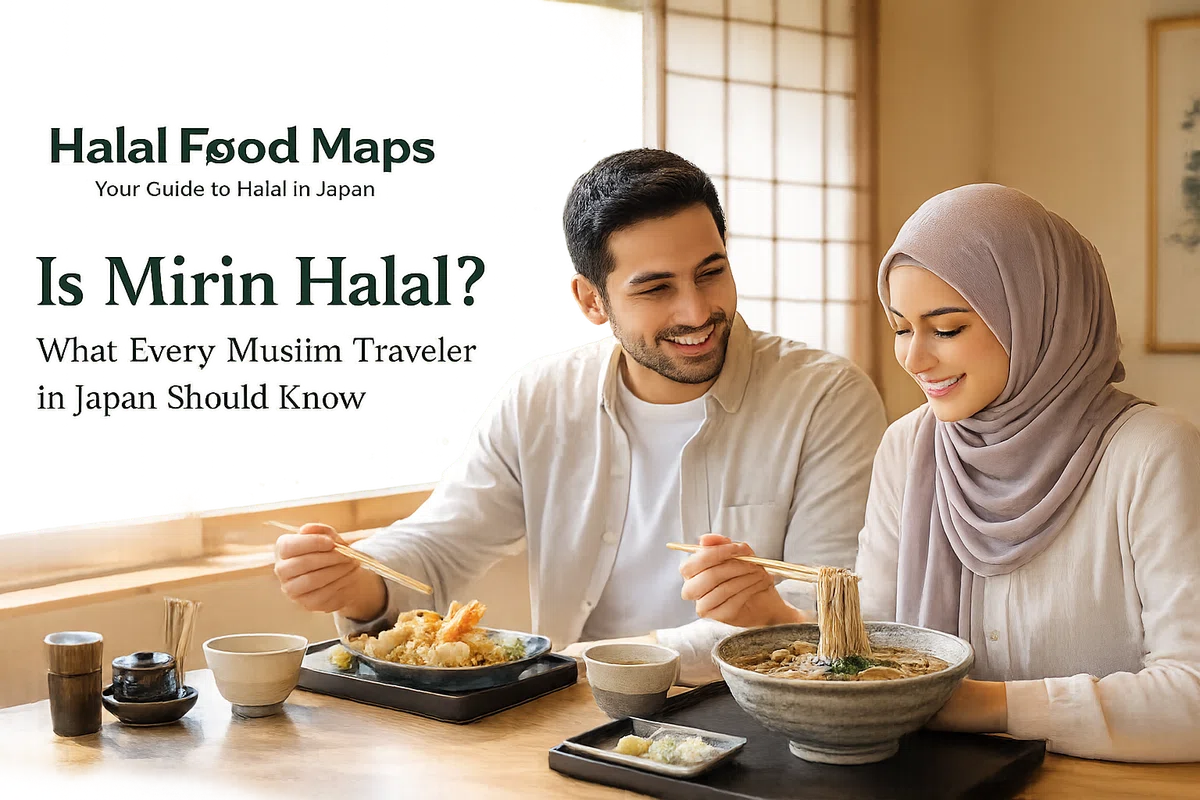
Mirin is a traditional Japanese cooking wine used to add sweetness, depth, and shine to food.
It is especially common in:
Teriyaki sauce
Glazes
Simmered dishes
Sushi preparation
Noodle sauces
Marinades
For Muslim travelers, mirin is often one of the most important ingredients to verify because traditional mirin contains alcohol.
The challenge is that mirin is rarely visible in the final dish.
You may not see it listed on a menu.
You may not taste it directly.
Yet it can play an important role in the recipe.
Adding to the confusion, Japan also sells products known as "mirin-style seasonings," which may differ from traditional mirin.
Because recipes vary from restaurant to restaurant, there is rarely a simple universal answer.
This is why many Muslim travelers choose to ask questions about sauces and seasonings rather than focusing only on the main ingredient.
What Matters More Than Memorizing Rules

After learning about soy sauce, miso, dashi, and mirin, you may feel that Japanese food is more complicated than expected.
In some ways, that is true.
But there is also good news.
You do not need to memorize every ingredient used in Japan.
You simply need to understand where questions are most likely to arise.
Many Muslim travelers discover that dining becomes much easier once they recognize a few common ingredients and cooking methods.
Instead of asking:
"Is Japanese food halal?"
It can be more helpful to ask:
"What ingredients were used in this particular dish?"
This shift in perspective often leads to better conversations, better understanding, and more confident choices.
The Best Approach When Traveling in Japan

Japan's food culture is incredibly diverse.
Some restaurants are fully halal-certified.
Others are Muslim-friendly and happy to explain their ingredients.
Some dishes may fit comfortably within your personal standards.
Others may not.
Every traveler approaches these questions differently.
At Halal Food Maps, we believe that knowledge is empowering.
The more you understand about Japanese ingredients, the easier it becomes to make choices that align with your own beliefs and comfort level.
The goal is not to create fear around Japanese food.
The goal is to help Muslim travelers enjoy Japan with confidence.
Continue Learning With Halal Food Maps

The four ingredients introduced in this guide appear throughout Japanese cuisine.
Understanding them is the first step toward understanding many of Japan's most famous dishes.
Want to learn more?
Explore our detailed ingredient guides:
You can also explore our guides covering:
Every dish has its own story.
And understanding those stories can make your journey through Japan even more rewarding.
Safe travels, and enjoy discovering Japan's incredible food culture.
