【シロクマ文芸部お題】『波の音』/ショートショート創作童話(英訳付)

※本作のプロット構成や表現の推敲において、一部AI(Geminiなど)のサポートを受けています。
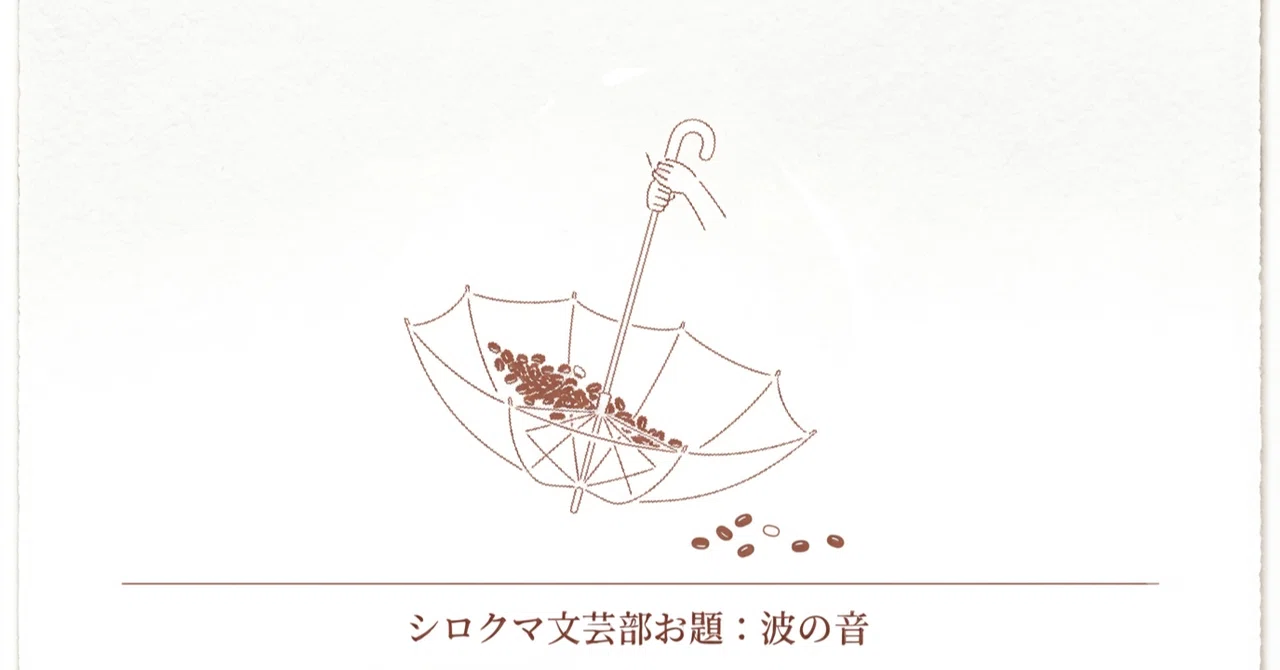
※画像:Geminiにて生成
あずきと傘
波の音が遠くに聞こえる。
ザザーン、ザザーンと、寄せてはひく波間で、わたしはパチャパチャと裸足で遊んでいた。
ああ、ここは子供の頃、遊びに来た海だ。
お父さんとお母さんが元気で、小学生のわたしは無邪気すぎるほど、無邪気だった。
そして、子供だったから、夏休みに海に遊びにつれてきてもらえることが、どんなに恵まれていたか知らなかった。
このひと時に、どんなに親のがんばりと全力がつぎ込まれていたことか。
仕事で疲れ切っているところに、子供を遊びに連れて行くなんてこと、なんて過重労働だったことか。
ただ、当時のお父さんとお母さんにそう言えば「当たり前のこと」で終わらせてしまうだろうけれど。
ただ笑って、わがままを言って、なんて幸せだったことか。
学校のかけっこが嫌いなんて、今思えば些細な悩み事はもちろんあったけれど。
このままずっとずっと、このキラキラした幸せな時間を過ごしていたい。
辛いことはイヤ。
悲しいこともイヤ。
帰りたくない――と思ったとき、シャサーーーッと、波の勢いが強くなった。
ザバーーーッ! と頭から覆いかぶさってきた大きな波にわたしは飲み込まれ、流された。
……と、目が覚めた。
どうやら、眠っていたようだ。
顔に、何やら小さな豆が落ちてくる。
つまんでみたら、あずきだった。
そして、下向きに傘を開いて持っている子供の姿。
「あっ、お母さん、起きた」
「何……?」
「お母さん、ここは波の音が聞こえなくて寂しいって言っていたでしょ。
だから、波の音を作ってみたの」
開いた傘の中にあずきを入れて適度な速さで回すと、実際の波によく似た音を作ることができるのだとか。
目をつむって、子供があずきと傘で作った効果音を聞いてみれば、なるほど、よく似ていた。
「そうか、お母さんのためにがんばってくれたんだ。ありがとう」
褒めて、と期待に満ちた目で見てくる子供をよしよしと抱き寄せる。
海がないこの町に引っ越してから、毎日のように聞いていた海の波の音を聞くことはなくなっていた。
とはいっても、一度か二度言ったくらいでしかなかったのに、気にかけてくれていたようだ。
子供なりの、せいいっぱいの笑顔で、顔がほころんだ。
とはいえ、台所からひっぱりだしてきたのか、赤いあずきが畳の上に散らばっている。
「あずきを拾おうか……」
(終)
[あとがき]
故事『邯鄲の夢』からのインスパイアのつもりです。
夢の中の世界が魅力的、あるいは恐ろしすぎて、そのまま現実に戻れず死にかけていたところを、物音や誰かの呼びかけといった現実のちょっとしたきっかけで目を覚まし、九死に一生を得る。
古典から現代にいたるまで、多くのモチーフになっているもの全般とでも思ってください。
『波の音』の効果音はアナログな方法ですが、あずきと傘で作ることができるようです。実際に試してはいませんが、理屈の上ではそうなのだとか。
傘のカーブに沿って滑り落ちる速さを調整すると、穏やかなさざ波から、激しい荒波まで作ることも可能だとか。
あずきではなく、大豆やビーズ、BB弾、細かな砂利。傘ではなく、浅くて平らな箱やザルでも可能だとか。
手作りの効果音に使う道具って、手品の種明かしじゃないですが、面白いですよね。
シロクマ文芸部のnote企画に参加しています。
※本文のあとに英訳を載せています↓
※AI support (such as Gemini) was used for refining the plot structure and expressions in this work.
※Image generated by Gemini.
Adzuki Beans and the Umbrella
I hear the distant hum of the ocean.
Swish, swoosh. The waves reach out and retreat, and I am there, splashing barefoot in the surf.
Ah, this is the sea—the one from my childhood.
My parents were still young and vibrant, and I was a schoolchild, brimming with an innocence so profound it felt boundless.
Back then, I had no inkling of how truly blessed I was to be brought to the shore for summer vacation. I could not see the vast, hidden well of my parents' devotion and effort poured into these fleeting moments.
How exhausting it must have been for them, worn down by their work, yet choosing to bring their child out to play—what a heavy burden they carried for my joy.
If I were to tell my parents about that time now, they would surely shrug it off as "just what parents do."
Back then, I simply laughed, made my demands, and basked in the warmth of it all. Oh, how happy I was.
I had my small troubles, of course—like dreading the school footrace—but they were so trifling.
I wanted to stay right here, bathed in this shimmering, golden happiness, forever and ever.
No more pain. No more sorrow.
Just as I thought, I don’t want to go back; the tide swelled with sudden, violent force.
CRASH! A towering wave surged over me, swallowing me whole, sweeping me away into the deep.
…I jolted awake.
It seems I had drifted into a dream.
Something small and hard hits my face. I pick it up—a single red adzuki bean.
Below me, a child stands holding an open umbrella, tipped downward.
"Oh, Mommy! You're awake."
"What... is this?"
"You said it was lonely here because you couldn't hear the ocean, right? So, I made the sound of the waves for you."
By swirling the adzuki beans inside the curved umbrella at just the right tempo, one can mimic the sound of the tide with haunting accuracy.
I close my eyes and listen to the sound effect the child has crafted. Indeed, it sounds just like the sea.
"I see. You worked so hard for me. Thank you."
I pull the child into a warm embrace, watching their eyes light up, glowing with the anticipation of praise.
Since we moved to this town, far from the sea, the rhythmic song of the waves had vanished from my life.
I had only mentioned it once or twice, yet the child had remembered.
The child’s face breaks into a radiant smile—their own special way of showing love.
Though as I look down at the tatami floor littered with red beans dragged from the kitchen, I smile, too.
"Shall we go pick up the beans?"
[Afterword]
This piece is intended as a tribute to the ancient parable of the "Dream of Handan."
It centres on a moment where the world within a dream is so enchanting—or perhaps so terrifying—that one lingers on the precipice of losing themselves entirely. It is a moment where a small, real-world interruption, like a sound or a gentle call, pulls one back from the brink of oblivion, granting a reprieve from the abyss.
Please consider this a reflection on that timeless motif, which has echoed through literature from the classics to the modern day.
The "sound of the ocean" is an old, analogue trick; it is said that an umbrella and adzuki beans can recreate it perfectly. I have never tested it myself, but in theory, it holds.
They say that by adjusting the speed at which the beans slide along the curve of the umbrella, one can conjure everything from a gentle ripple to a raging, turbulent storm.
You might use soybeans, beads, pellets, or fine gravel instead of adzuki beans, or a shallow box or sieve instead of an umbrella.
There is something inherently fascinating about the tools used for handmade sound effects—much like the unveiling of a magician’s secret, there is a quiet, profound magic in the mundane.
※Written in Japanese, translated with the help of AI. I hope the heart of this story reaches you, regardless of the language barrier.
いいなと思ったら応援しよう!
 物語を気に入っていただけたら、活動を応援いただけると励みになります。