The Memory of the White Heron in the Burned Ruins焼け野原に立った「白鷺」の記憶

What was the Himeji Air Raid?
姫路大空襲とは?
Around 80 years ago, Himeji was struck by devastating air raids during World War II.
In June and July of 1945 (Showa 20), Himeji experienced two major air raids. (Including smaller attacks, records show the city was targeted nine times in total.)
The most destructive was the massive incendiary bombing carried out from the night of July 3rd into the early hours of July 4th.
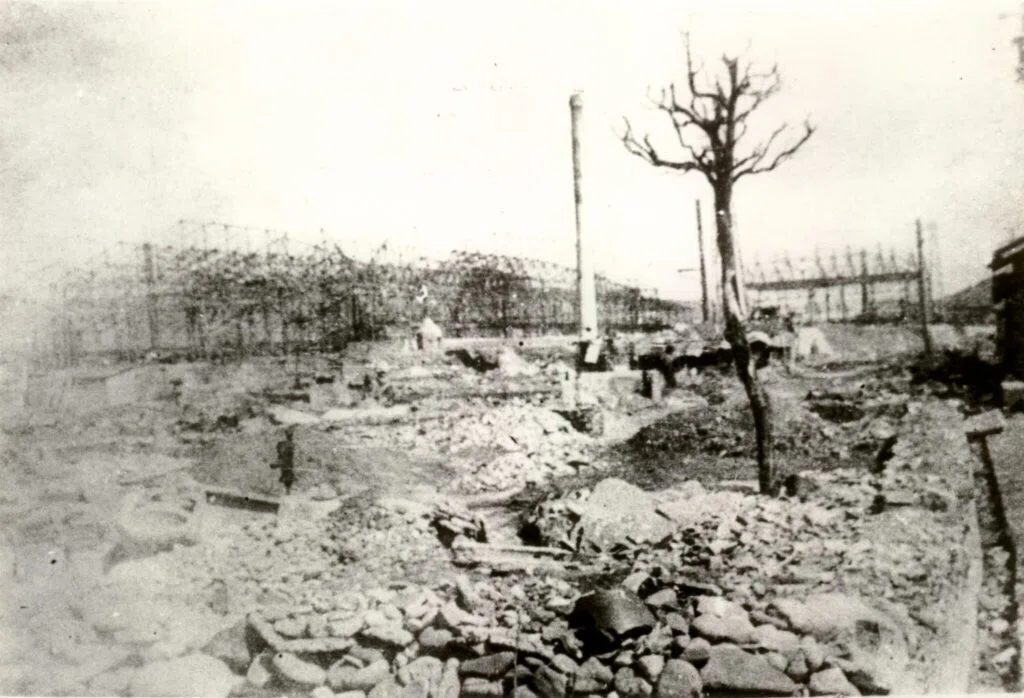
In just one and a half hours, a rain of countless incendiary bombs devastated the city, destroying more than 76% of the city’s central district. Many precious lives were lost, and Himeji was left in utter ruin.
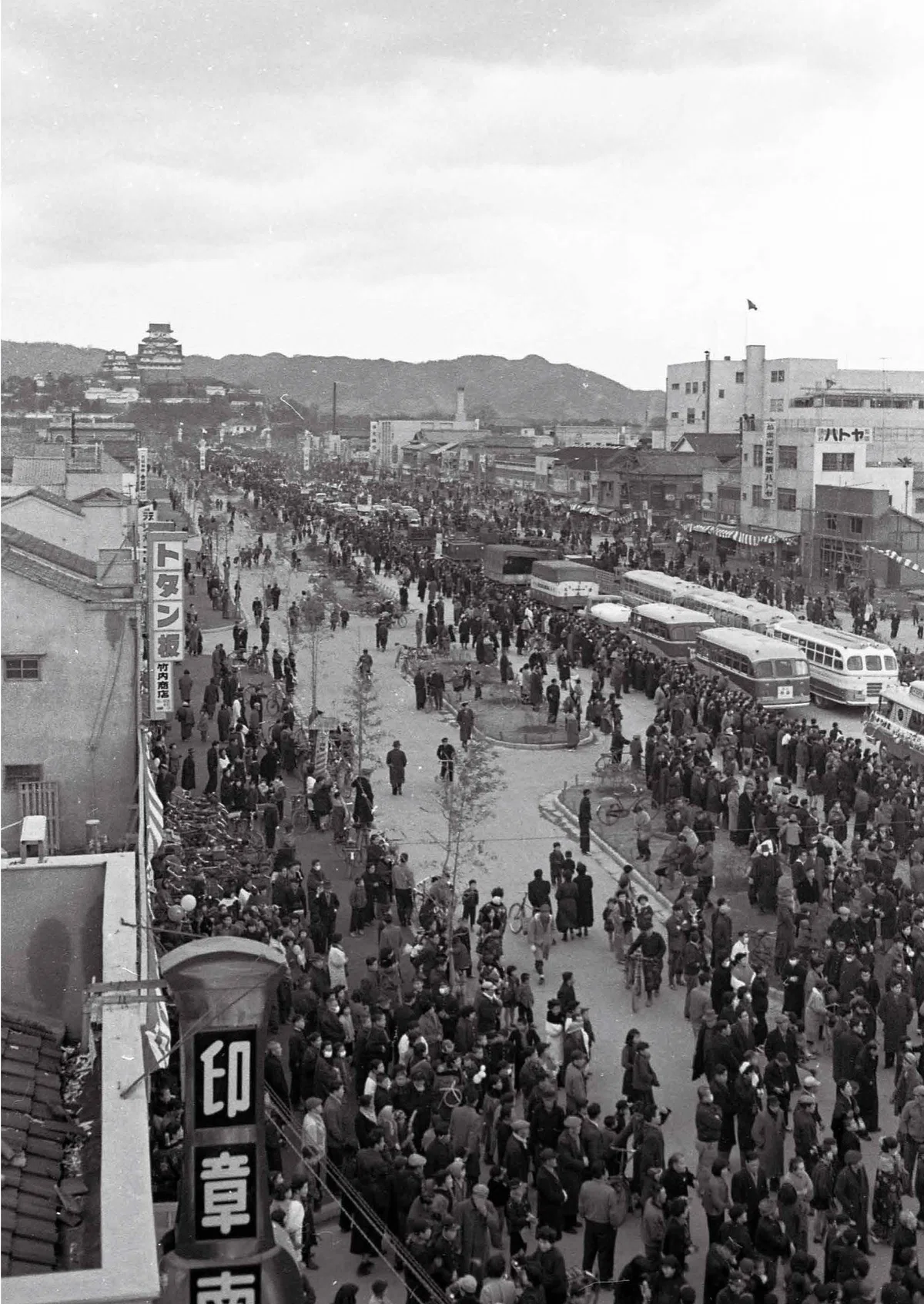
The very path we casually walk today—stretching from Himeji Station to Himeji Castle—was once nothing but a vast field of ashes.
約80年前の第二次世界大戦中、姫路の街は激しい空襲に見舞われました。
1945年(昭和20年)の6月と7月、姫路は2回の大規模な空襲を受けました。(軽微なものを含めると、記録では計9回にのぼります)
なかでも最も被害が大きかったのが、7月3日の深夜から4日未明にかけて行われた、焼夷弾による大空襲です。
わずか1時間半ほどの間に大量の焼夷弾が降り注ぎ、市街地の76%以上が灰燼に帰しました。多くの尊い命が失われ、街は完全に壊滅したのです。
今、私たちが何気なく歩いている姫路駅から姫路城へと続く道も、当時は見渡す限りの焼け野原でした。
Why did Himeji Castle survive?
なぜ姫路城は残ったのか?
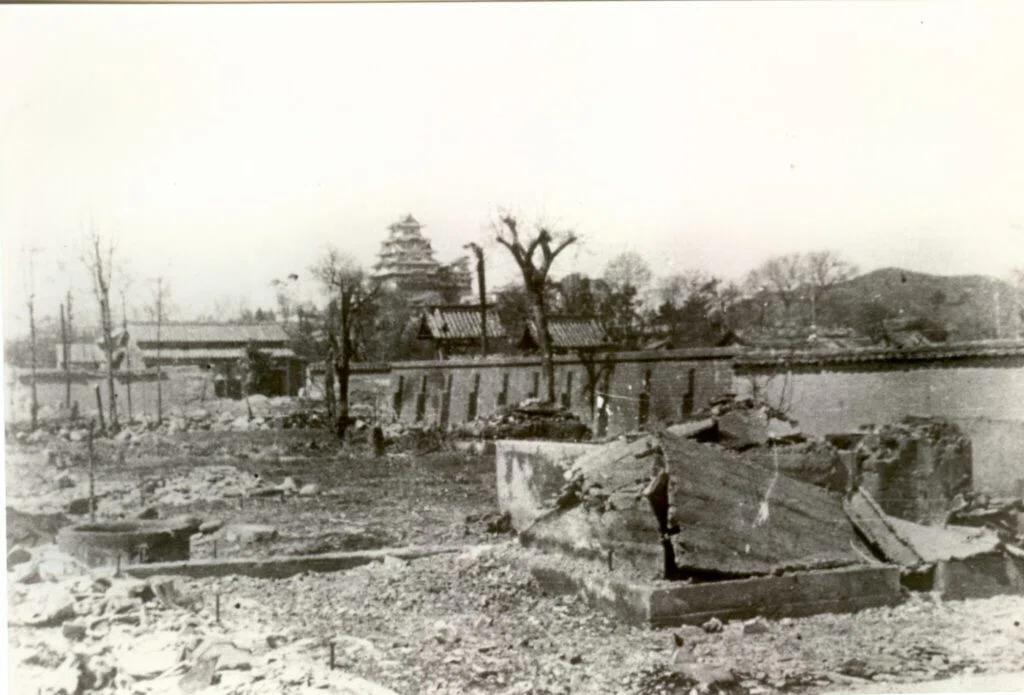
Yet, in the heart of that burned wasteland, one structure miraculously stood tall. Himeji Castle.
Affectionately known as “Shirasagi-jo” (The White Heron Castle), its nickname comes from its elegant white appearance, which resembles a heron spreading its wings. For generations, it has been the symbol of Himeji.
During the war, however, that iconic white brilliance became a dangerous vulnerability, making it highly visible to enemy aircraft.
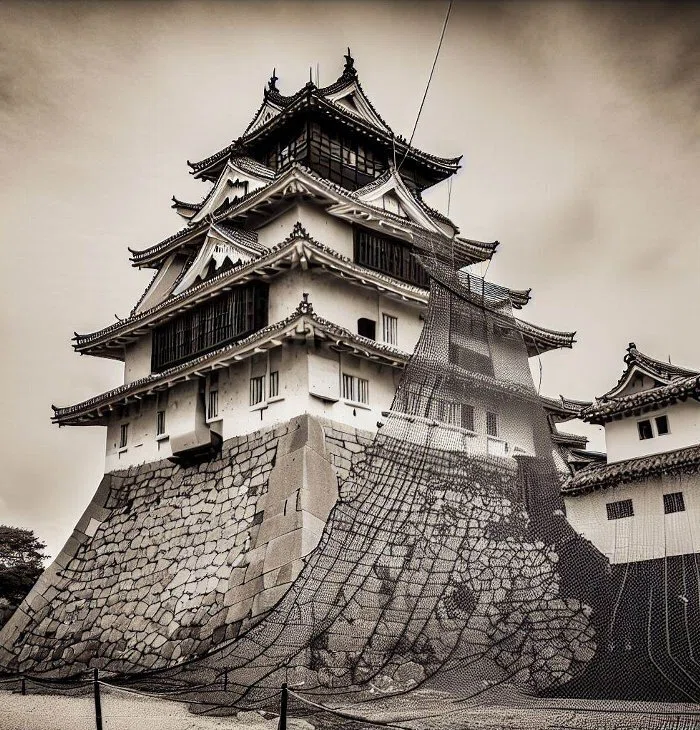
To protect it, the people covered the entire castle tower with black camouflage nets to hide it from above. The castle that should have stood shining white was forced to turn black, and was even called the “Black Heron Castle.”
Even so, destruction came terrifyingly close. Incendiary bombs fell in the immediate grounds, leaving charred remnants beneath the stone walls, and it is even said that an unexploded bomb was found inside the main keep.
If the slightest circumstance had been different, Himeji Castle might have burned to the ground. It was a survival decided by the thinnest of margins.
その絶望の景色の中で、奇跡的に燃えずに立ち続けていたものがありました。姫路城です。
姫路城は、白く美しい姿が羽を広げた白鷺に似ていることから、「白鷺城(しらさぎじょう)」の名で広く知られています。昔から姫路の象徴として存在してきました。
しかし戦時中、その白さは敵機から非常に目立ってしまうという弱点になりました。
そこで当時の人々は、城を空襲から守るために黒い偽装網で天守すべてを覆い隠したそうです。本来なら白く輝くはずの城が、戦時中だけは黒く姿を変え、「黒鷺城」と呼ばれていた。
それは、この城をなんとかして守りたいという、人々の祈りと意志の姿でもありました。
それでも、空襲の夜には城のすぐ近くまで焼夷弾が落ちていました。石垣の下には燃えカスが残り、天守には不発弾まであったといいます。
あとほんの少し、何かの条件が違っていれば、姫路城もこの世から消えていたかもしれません。本当に、紙一重の歴史でした。
Chance or Fate?
偶然か、それとも運命か?
Half a century after the war, a former B-29 pilot who participated in the raid visited Himeji and reportedly recalled:
“In the darkness of the night flight, we couldn’t discern the castle. We mistook the surrounding moat for a natural body of water, and halted the attack right there.”
In other words, Himeji Castle may have survived purely by chance.
Yet, it was precisely because that twist of fate overlapped with the fierce determination of the people to protect it that the castle still stands here today.
戦後50年が経った頃、実際に姫路を空爆したB29の元機長がこの地を訪れ、こう語ったと伝えられています。
「夜間飛行の中で城とは判別できず、堀を水面と誤認し、その地点で爆撃を止めた」
つまり、姫路城が残ったのは歴史の偶然だったのかもしれません。
けれど、その偶然と、「守りたい」と願った人間の強い意志が重なったからこそ、城は今もこうしてここに立っています。
The City Rebuilt from Ashes
灰の中から再び作られた街
The city burned, but Himeji Castle remained.
To those standing at the absolute bottom of despair, the sight of that solitary white keep rising from the smoking ruins must have been an immeasurable beacon of hope for reconstruction.
That itself is proof that even after losing everything in the air raids, there were people who protected this city, carried it forward, and rebuilt it once again.
The fact that we are able to live here today. The fact that visitors from all over the world can safely come to Himeji and look up at this view. And the fact that Himeji Castle still stands here as a World Heritage site.
All of these exist because, on top of what was once lost, the people before us kept carrying the future forward.
The ancient culture that survived, and the modern culture born from the ashes. Together, they shape the Himeji we know today.
The scenery we see now, and the time we spend here, are part of that long history.
When you gaze upon Himeji Castle, I hope you can feel not only its architectural beauty, but also the memory of a city that once lost everything, and the will of the people who stood back up and rebuilt this city.
街は焼け、けれど姫路城は残りました。
すべてを失い、絶望の底にあった当時の人々にとって、焼け野原の中にぽつんと、変わらず立ち続ける白い天守の姿が、どれほど大きな「復興への希望」になったかは想像に難くありません。
それこそが、あの大空襲ですべてを失いながらも、この街を守り、繋ぎ、もう一度築き上げてくれた先人たちがいた証です。
今、私たちがこうしてこの街で生きていること。世界中から多くの人が安心して姫路を訪れ、この景色を見上げていること。そして姫路城が世界遺産として今も変わらずここに立ち続けていること。
そのすべては、失われたものの上に、先人たちが未来を繋いできたからこそ存在しています。
残された古い文化(姫路城)と、失われた場所から新しく生まれた現代の文化(今の街並み)。その両方が重なり合って、今の姫路という街ができています。
私たちが今見ている景色も、ここで過ごす時間も、その長い歴史の積み重ねの先にあります。
姫路城を見る時、その美しさだけでなく、その背景にある「一度すべてを失った街の記憶」と、そこから立ち上がり、この街を築き直した人々の意志も一緒に感じてもらえたら嬉しいです。