The Doll That's Been Loved for Centuries — Because It's Built to Fail / 一体の人形が、何百年も愛され続けた理由

The Doll That's Been Loved for Centuries — Because It's Built to Fail / 一体の人形が、何百年も愛され続けた理由
All over the world, people have objects they turn to when they make a wish.
Charms, talismans, crosses, four-leaf clovers — you name it.
But among all of these, there's something pretty rare about the Japanese daruma: it's a good-luck object that's actually built on the assumption you're gonna fail.
A daruma is made to fall over.
And it's made to get back up again after it falls.
That's the whole point of the design.
So why have Japanese people, for hundreds of years, kept putting their wishes into this round little doll?
To find the answer, we have to go all the way back to a single monk.
世界には、願いを託すための道具があります。
お守りも、お札も、十字架も、四つ葉のクローバーも、そのひとつです。
けれどその中で、日本のだるまほど「失敗すること」を前提に作られた縁起物は、とても珍しいように思います。
だるまは、倒れることを前提に作られ、倒れても再び起き上がることを前提に作られた人形なのです。
では、なぜ日本人は、何百年ものあいだ、この丸い人形に願いを託し続けてきたのでしょうか。
その答えを探すには、一人の僧まで遡ります。
The Monk Who Sat for Nine Years / 九年座り続けた僧
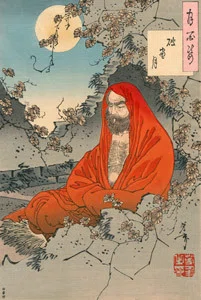
It's said that there was a monk who sat facing a wall for nine years straight.
Over those nine long years, his arms and legs are said to have withered away — but his mind never wavered.
That monk is Bodhidharma, regarded as the founder of Zen Buddhism.
He traveled from India to China and spread the teachings of Zen there.
Eventually, his legend crossed the sea and reached Japan.
But the "daruma" that was born in Japan isn't Bodhidharma himself.
なんと九年ものあいだ、壁に向かって座り続けた僧がいた、と伝えられています。
九年という長い歳月のなかで、僧の手足は朽ちたが、心は動じなかったそうです。
その人物こそが、禅宗の始祖とされる達磨大師です。
インドから中国へ渡り、禅の教えを広めた達磨。
その伝説は、やがて海を越えて日本へ伝わりました。
しかし、日本で生まれた「だるま」は、達磨大師そのものではありません。
Born From Silk Country / 養蚕の地で生まれた人形
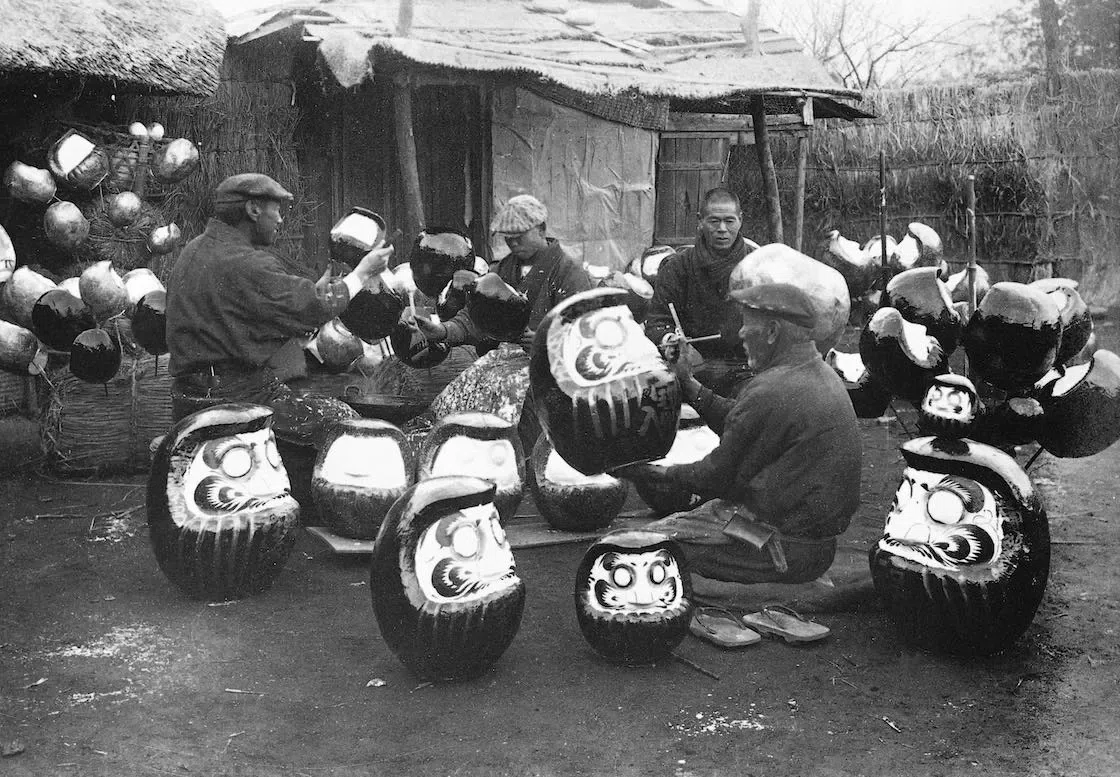
During the Edo period, in regions like Takasaki in Gunma where silk farming was a major industry, people began making papier-mâché dolls modeled after Bodhidharma's figure — or so it's said.
The round shape is said to evoke a silkworm cocoon, and it's also said to have borrowed the structure of the okiagari-koboshi, a traditional roly-poly toy.
Knock it down, and it gets back up.
Over time, that image became tied to the spirit of "nanakorobi yaoki" — fall down seven times, get up eight.
Fall again and again, fail again and again, and still get back up, no matter how many times it takes.
江戸時代、養蚕業が盛んだった群馬・高崎などの地域で、達磨の姿をもとにした張り子人形が作られるようになったとされています。
丸い形は繭を思わせるとも、起き上がり小法師の構造を取り入れたものとも言われています。
倒しても、また起き上がる。
その姿は、やがて「七転び八起き」の精神と重ねられるようになりました。
倒れても倒れても、失敗しても何度でも立ち上がる。
その精神を示すのです。
The Ritual of Painting In the Eyes / 「目入れ」という儀式
Here's something interesting: most Buddhist statues are enshrined in a finished, completed form.
Daruma is different.
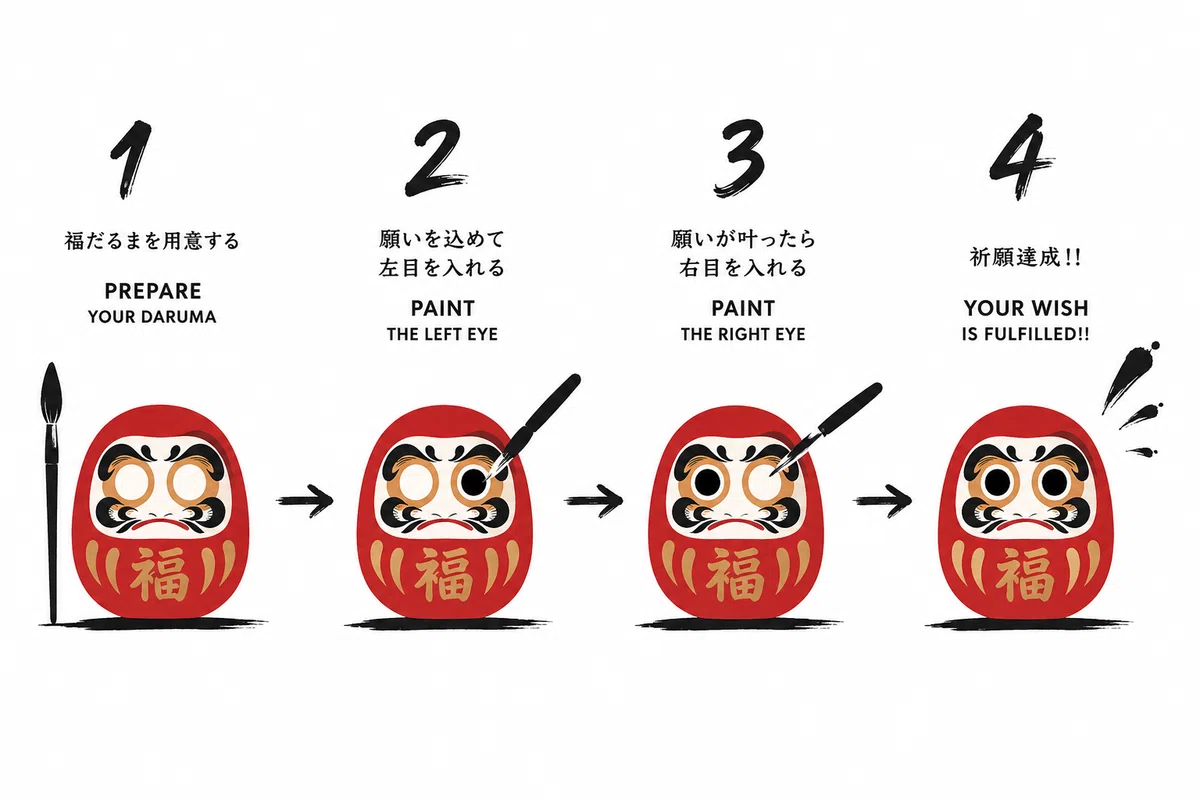
A daruma starts out with no eyes painted in at all.
There's a custom where you paint in one eye when you make a wish, and paint in the other once that wish comes true.
It's called "me-ire," or "eye-opening" — and it's not just decoration.
It's a small ritual where you turn a wish into something physical, a kind of promise you make with yourself.
Because it's incomplete, a person can pour their own will into it.
A daruma was never meant to be a good-luck charm that comes to you already finished — it's one you finish yourself, with your own hands.
仏像の多くは、完成された姿で祀られますが、だるまは違うんです。
だるまは、最初は目が入っておらず、願いを込めるときに片方の目を描き、願いが叶ったとき、もう片方を描く習慣があるんです。
「目入れ」と呼ばれるのですが、それは単なる装飾ではありません。
願いを形に変え、自分自身と約束を交わすための、小さな儀式なんです。
完成していないからこそ、人は自分の意志をそこへ宿すことができる。
だるまは、最初から完成された縁起物ではなく、自分の手で完成させる縁起物だったのです。
Red, and Every Color After / 赤、そしてすべての色へ

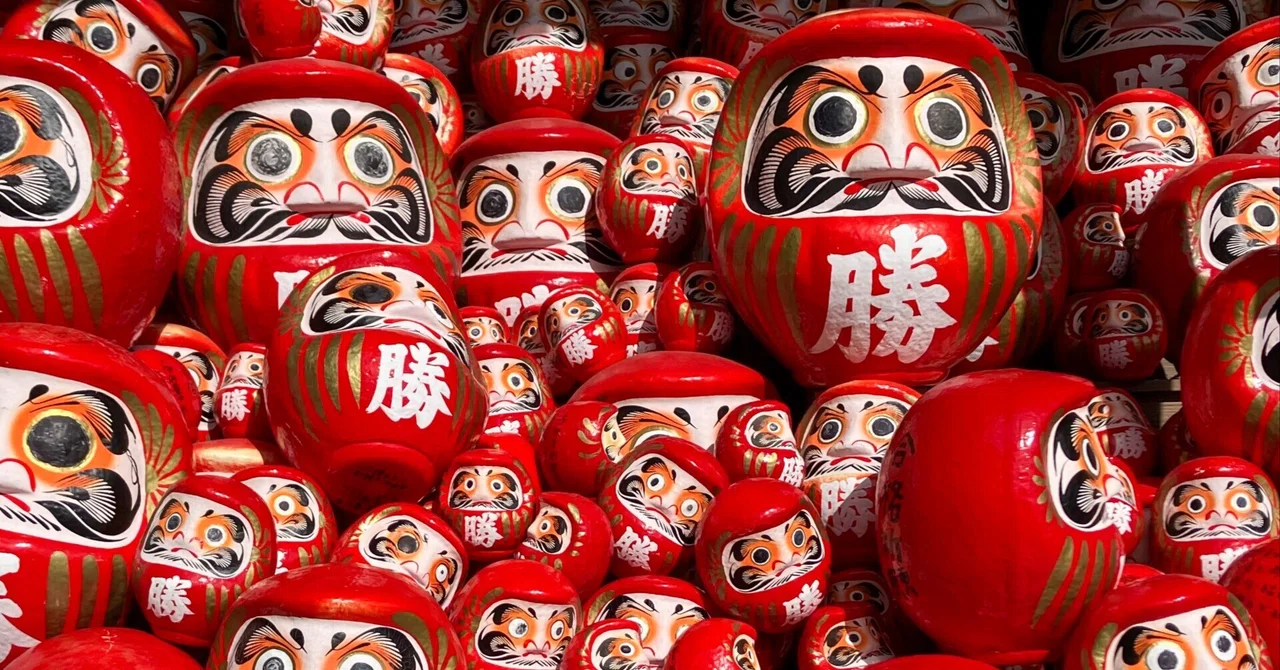
The color red is said to have spread because it carried the meaning of warding off evil and illness.
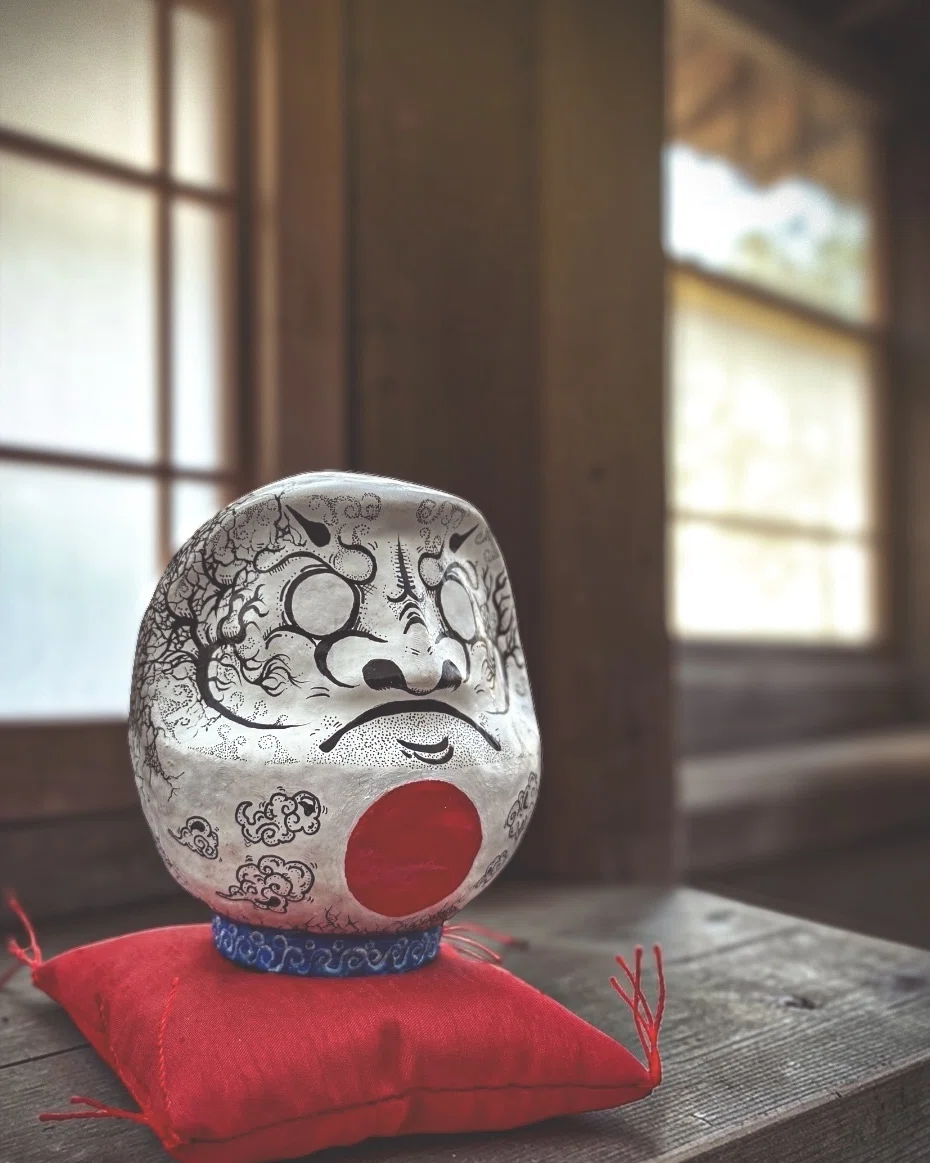
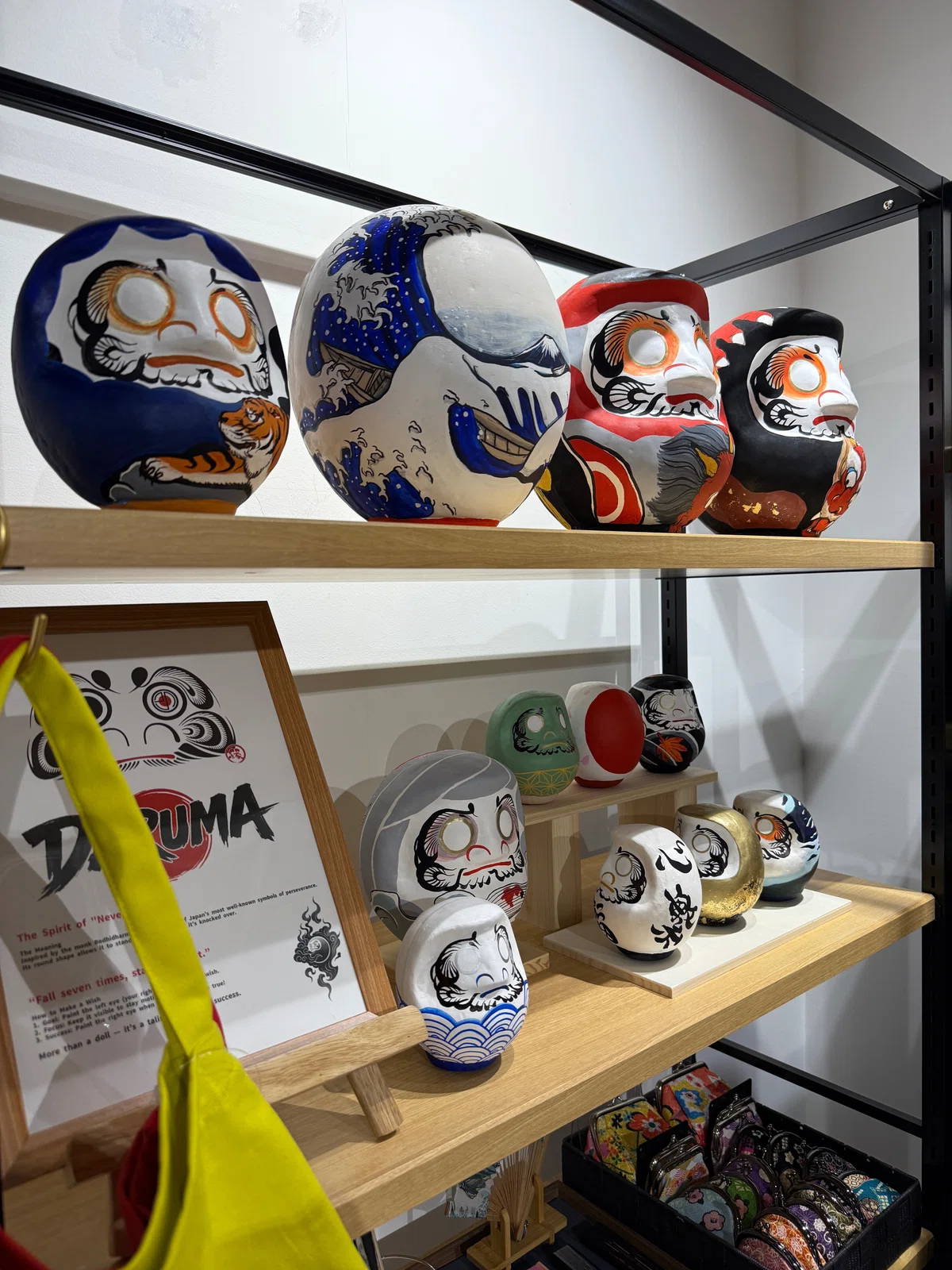
As time went on, daruma started showing up in all kinds of colors, each matched to a different wish — gold for money luck, other colors for health, love, passing exams, and more.
Today, you'll find daruma sitting in election campaign offices, on students' desks during exam season, at company opening ceremonies, and at celebrations for new businesses or store openings.
Even though it has religious roots, most people today don't really think of it as a "Buddhist statue" — they see it as a symbol of wishes and of taking on a challenge.
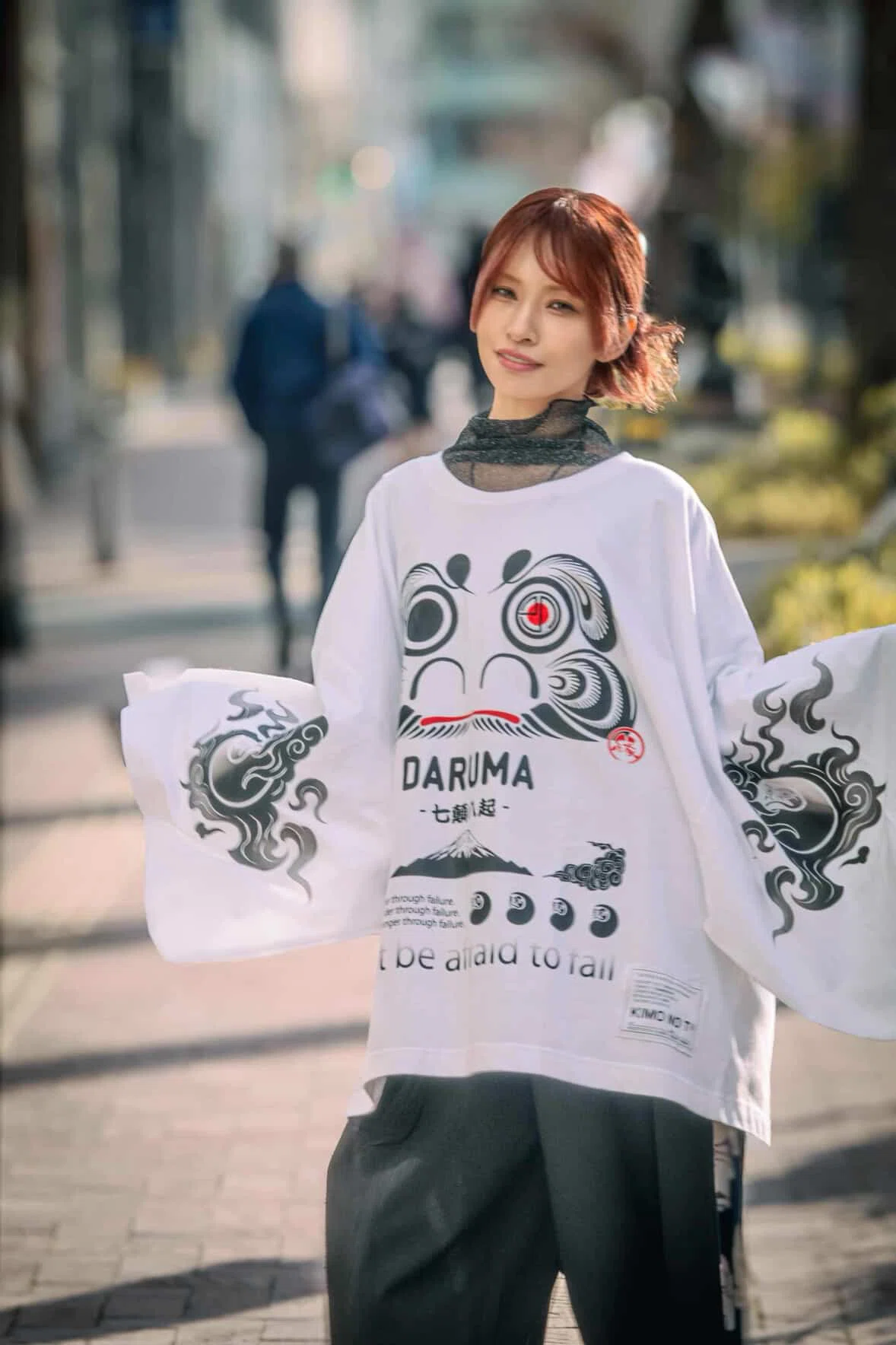
In recent years, daruma has found its way beyond interiors and into fashion, becoming something that connects tradition with contemporary culture.
赤い色が広まったのは、魔除けや病除けの意味が込められていたからだと言われています。
そして、時代が進むにつれ、金運、健康、恋愛、合格など、願いに合わせた色とりどりのだるまも生まれました。
現代では、選挙事務所にも、受験生の机にも、会社の始業式にもだるまが並び、起業や新規開店のお祝いのときにもだるまが選ばれます。
宗教的な起源を持ちながらも、今では多くの人が「仏教の像」としてではなく、「願い」や「挑戦」の象徴として受け入れているのです。
近年では、インテリアだけでなく、ファッションアイテムとしても親しまれ、伝統と現代文化をつなぐ存在になっています。
Why We Keep Coming Back to It / なぜ人は、だるまに惹かれるのか
So why are people drawn to daruma this much?
Maybe it's because daruma doesn't symbolize "success."
Daruma doesn't deny falling down.
It doesn't deny failing.
No matter how many times it falls, it comes back.
It's fine if things don't work out.
People are always allowed to try again, as many times as it takes.
Daruma has been quietly showing us that, for hundreds of years.
Real strength isn't never falling down, not even once.
It's fine to fall — you just have to come back again.
I don't think people get strong and then stand up.
I think people get a little stronger each time they stand back up.
People become wiser through failure.
People become kinder through failure.
People become stronger through failure.
Don't be afraid to fail.
では、なぜ人はこれほどまでに、だるまへ惹かれるのでしょうか。
きっとそれは、だるまが「成功」を象徴しているわけではないからじゃないでしょうか。
だるまは、倒れることを否定しません。
失敗することを否定しないのです。
何度倒れても、また戻ってくる。
上手くいかなくても良いのです。
人はいつでも、何度でも挑戦して良いんです。
だるまはその姿を、何百年も静かに見せ続けています。
本当の強さとは、一度も倒れないことではありません。
倒れても、また戻ってくれば良いのです。
人は強いから立ち上がるのではなく、立ち上がることを繰り返した先で、少しずつ強くなっていくのだと思います。
人は失敗を通して賢くなる。
人は失敗を通して優しくなる。
人は失敗を通して強くなる。
失敗を恐れないでください。
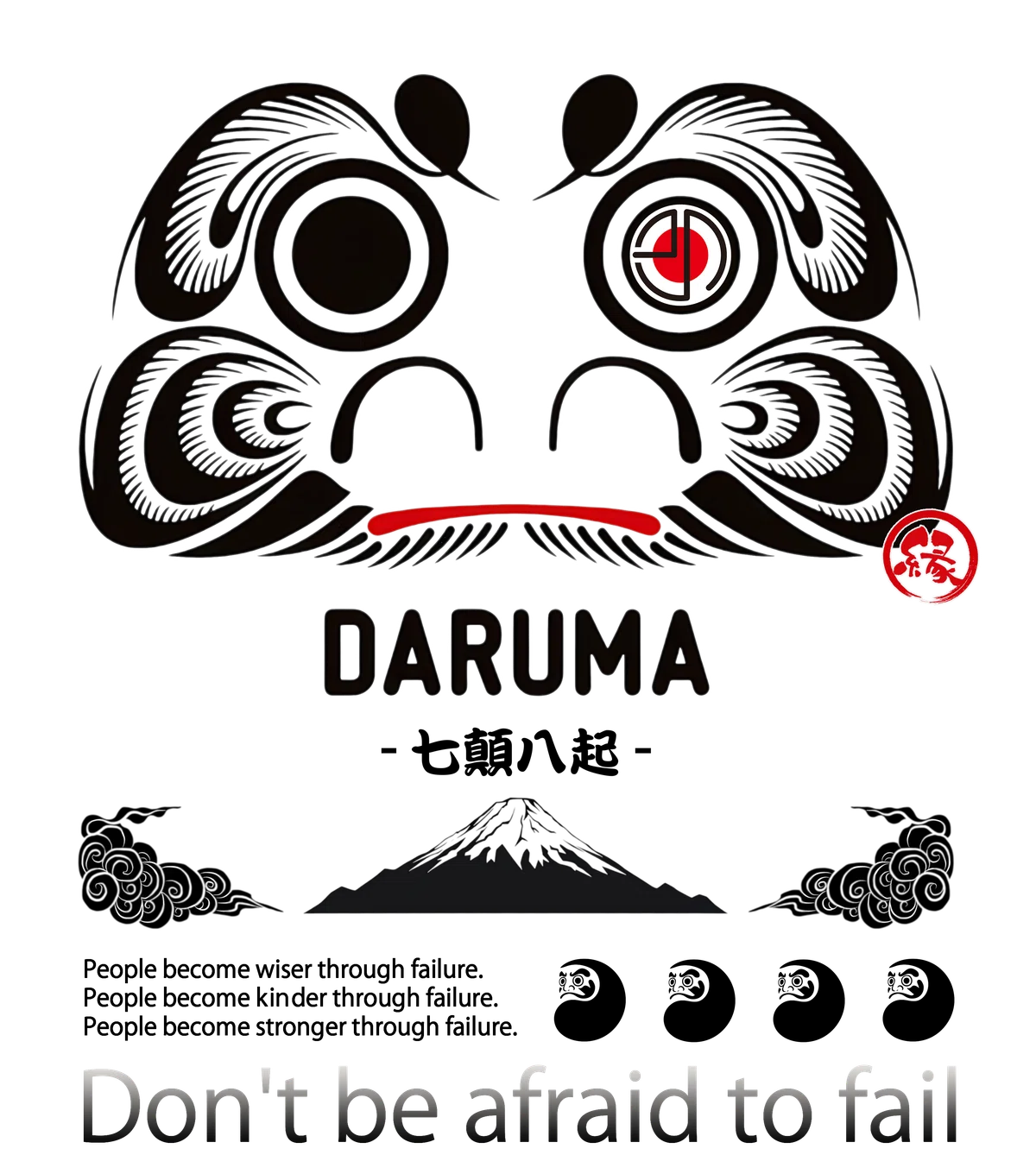
DARUMA Kimono T-Shirt