The Honnoji Incident, Hidden in Plain Sight / 名を偽った浮世絵、本能寺の

What Was the Honnoji Incident?
本能寺の変とは?
The Honnoji Incident happened in 1582.
It is one of the most dramatic betrayals in Japanese history.
Oda Nobunaga, the warlord who was on the verge of unifying Japan, was attacked by his own general, Akechi Mitsuhide.
Surrounded and with no escape, Nobunaga took his own life inside Honnoji Temple in Kyoto.
His dream of a unified Japan ended in fire, on the very night he was closest to achieving it.
本能寺の変は、1582年(天正10年)に起きました。
日本史の中でも屈指の裏切り劇として知られています。
天下統一を目前にしていた織田信長は、自らの家臣・明智光秀に攻められました。
逃げ場を失った信長は、京都・本能寺の中で自刃します。
天下統一まであと一歩というその夜に、すべては炎の中に消えました。
A Woodblock Print That Could Not Say His Name
名前を語ることを許されなかった浮世絵
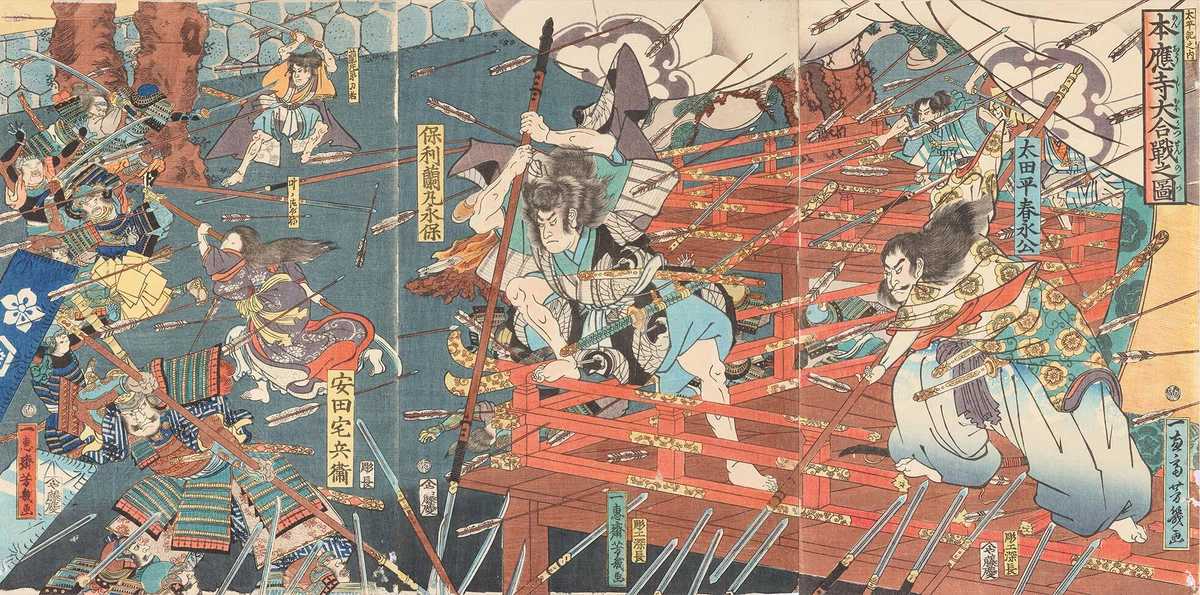
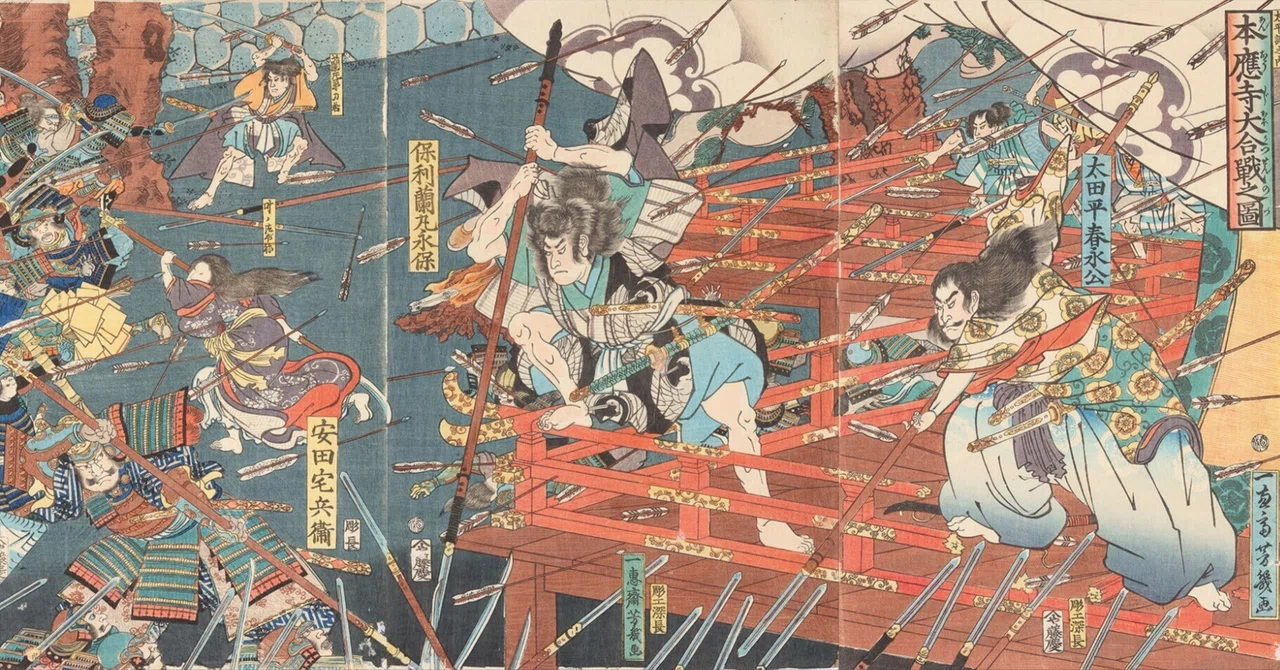
This ukiyo-e is titled "Taiheiki-no-uchi Hon-o-ji Dai-Kassen no Zu" (太平記之内本應寺大合戦之図), made by the artist Ochiai Yoshiiku in 1861, over 250 years after the incident.
But even then, the Edo shogunate still banned any artwork depicting the Oda and Tokugawa families after 1573.
So Yoshiiku disguised every name.
Nobunaga became "Ota Heiharunaga."
His attendant Mori Ranmaru became "Hori Ranmaru."
And Yasuda Kunitsugu, the warrior said to have landed the first spear on Nobunaga, became "Yasuda Takube."
Even Honnoji Temple itself was renamed "Hon-o-ji" in the title.
Anyone looking at the print could tell exactly what it depicted.
The censors could not touch it.
この浮世絵の題名は「太平記之内本應寺大合戦之図」。描いたのは落合芳幾で、事件から250年以上のちの1861年(文久元年)のことです。
それでも江戸幕府は、天正年間(1573年)以降の織田家や徳川家を描くことを固く禁じていました。
そこで芳幾は、あらゆる名前を偽装します。
織田信長は「太田平春永」に。
小姓の森蘭丸は「保利蘭丸」に。
信長に一番槍をつけたとされる安田国継は「安田宅兵衛」に。
本能寺という寺号さえも、絵の題名では「本應寺」と書き換えられました。
それでも見る者には、これが本能寺の変だと一目でわかります。
検閲の目は、ついにこの絵を止められませんでした。
The Men Behind the Fictional Names
偽名の裏にいた本当の人物たち
At the center of the print, a young man thrusts his spear downward.
This is believed to be Mori Ranmaru, Nobunaga's most trusted page.
Defending against him is Yasuda Kunitsugu, a warrior serving under Akechi Mitsuhide's chief retainer, Saito Toshimitsu.
Below them, pierced by countless spears, is the man believed to be Nobunaga himself, still fighting even as the end approaches.
画面中央で槍を突き下ろす若者は、信長の側近中の側近、森蘭丸と考えられています。
これに応戦するのが、明智光秀の重臣・斎藤利三に仕えた武将、安田国継。
そして下から無数の槍を突きつけられているのが、最期の瞬間まで戦い続ける信長その人だとされています。
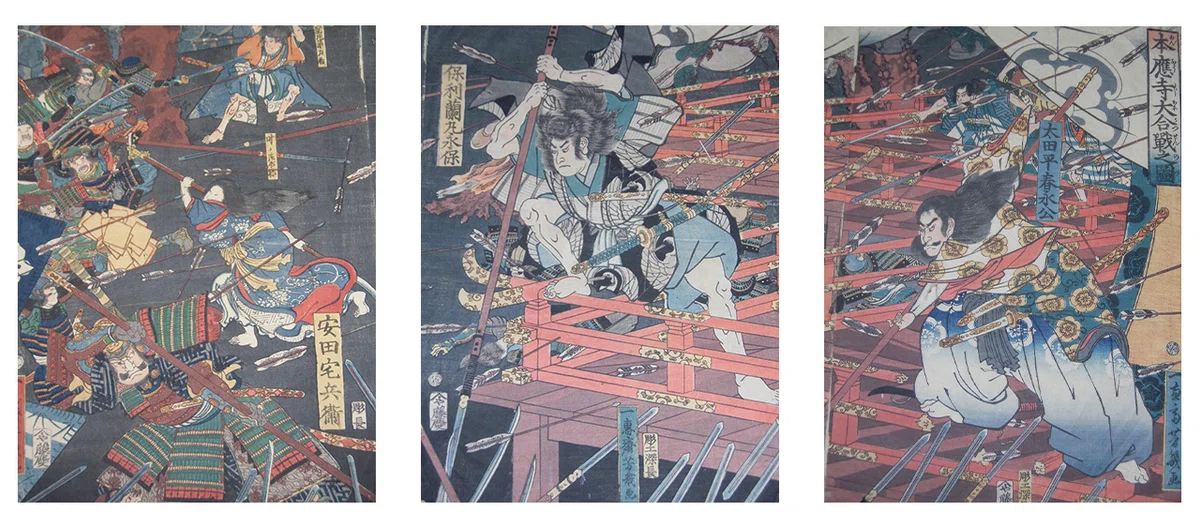
Yasuda is said to have wounded Nobunaga with the first spear thrust of the night, and to have killed Mori Ranmaru in the same battle.
He survived the Honnoji Incident, fought again at the Battle of Yamazaki, and later served under Hashiba Hidekatsu and Hidenaga in the Toyotomi camp.
Years later, on the anniversary of Nobunaga's death, he took his own life.
安田はこの夜、信長に一番槍をつけて傷を負わせ、森蘭丸をも討ち取ったと伝えられています。
本能寺の変を生き延びた安田は、山崎の戦いにも参加し、後に羽柴秀勝・秀長に仕えて豊臣方で活躍しました。
そして晩年、信長の命日にみずから命を絶ったといいます。
An Artist Trained by a Legend
国芳の弟子が描いた一枚
Ochiai Yoshiiku was a woodblock print artist active from the late Edo period into the Meiji era.
He studied under Utagawa Kuniyoshi, one of the most celebrated ukiyo-e masters of the time.
The explosive composition, the spears crossing in every direction, the raw tension of the fight—all of it carries Kuniyoshi's influence.
落合芳幾は、幕末から明治にかけて活躍した浮世絵師です。
師匠は、当時を代表する絵師のひとり、歌川国芳。
画面いっぱいに交錯する槍、爆発するような構図、生々しい緊張感には、国芳ゆずりの迫力が息づいています。
Why 1861?
なぜ1861年だったのか
The year before this print was made, the shogunate's chief minister Ii Naosuke was assassinated at Sakuradamon Gate.
A powerful ruler, struck down by men who had once served under him.
It is easy to imagine that audiences in 1861 saw more than just old history in this print of a lord betrayed by his own retainer.
The Ashikaga shogunate, too, had already been eclipsed by Nobunaga before this incident, and after Akechi's defeat at Yamazaki, Hashiba Hideyoshi rose to power as regent, closing the book on the Ashikaga era for good.
この絵が刷られる前年、大老・井伊直弼が桜田門外で暗殺されています。
かつて自らが仕えさせていたはずの者たちに討たれた、権力の頂点にいた人物。
家臣に裏切られた主君を描いたこの一枚に、1861年当時の人々が重ねて見ていたものは、決して昔話だけではなかったはずです。
なお室町幕府はこの事件以前にすでに信長によって実権を奪われており、山崎の戦いで光秀を破った羽柴秀吉が関白として天下を握ったことで、その歴史に完全な幕が下ります。
Turning the Print into a Shirt
浮世絵をシャツに纏うということ
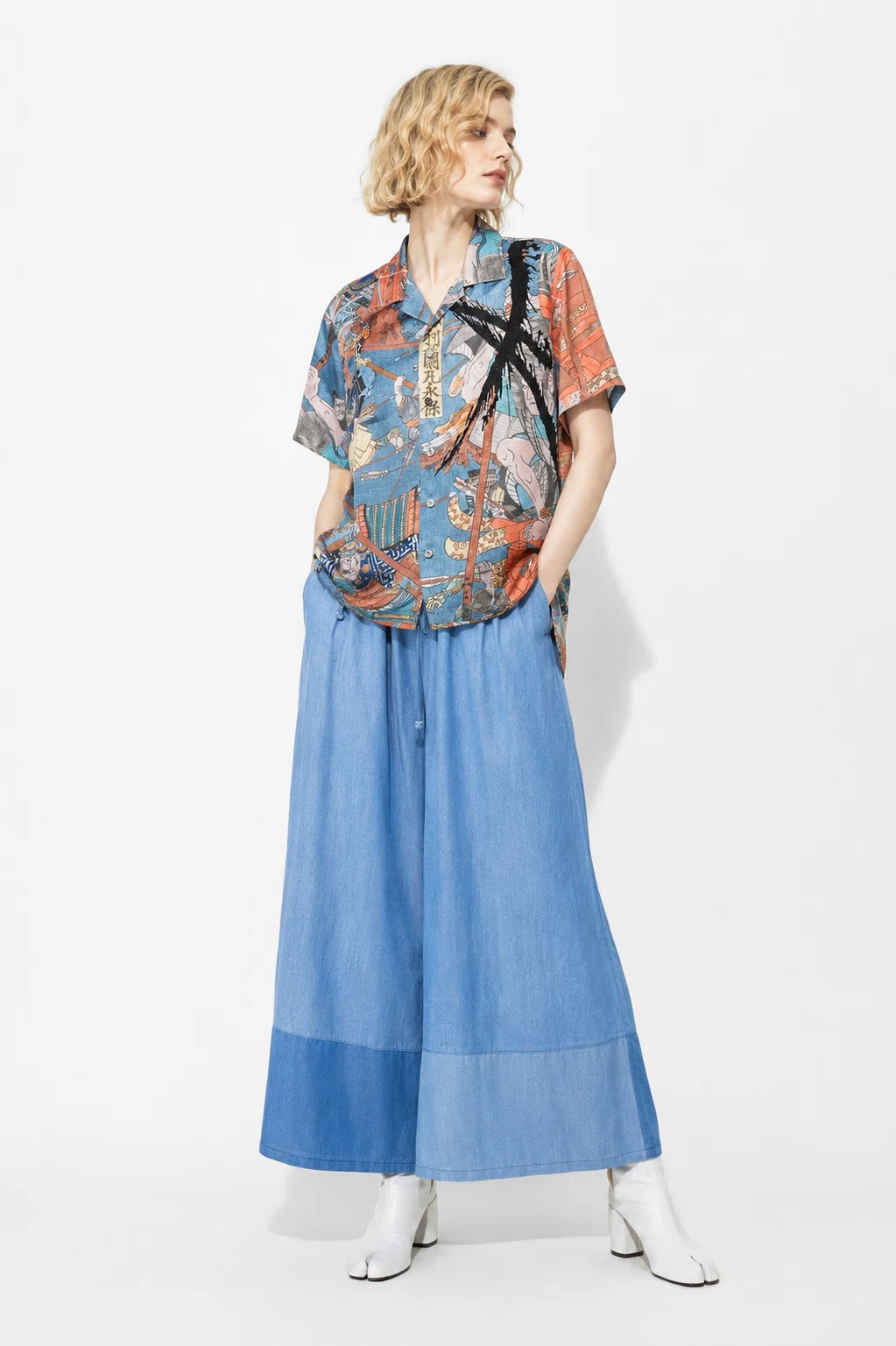
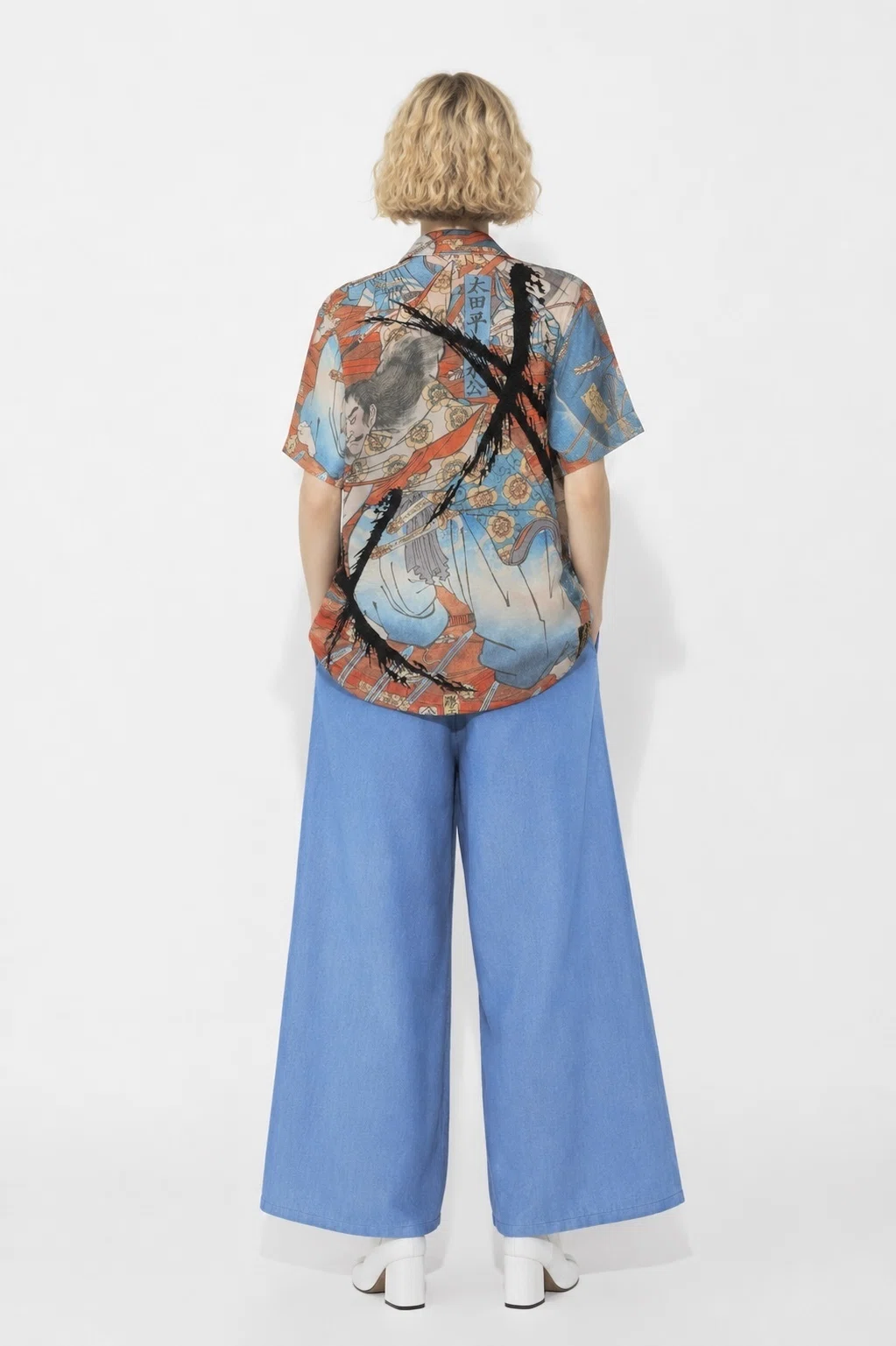
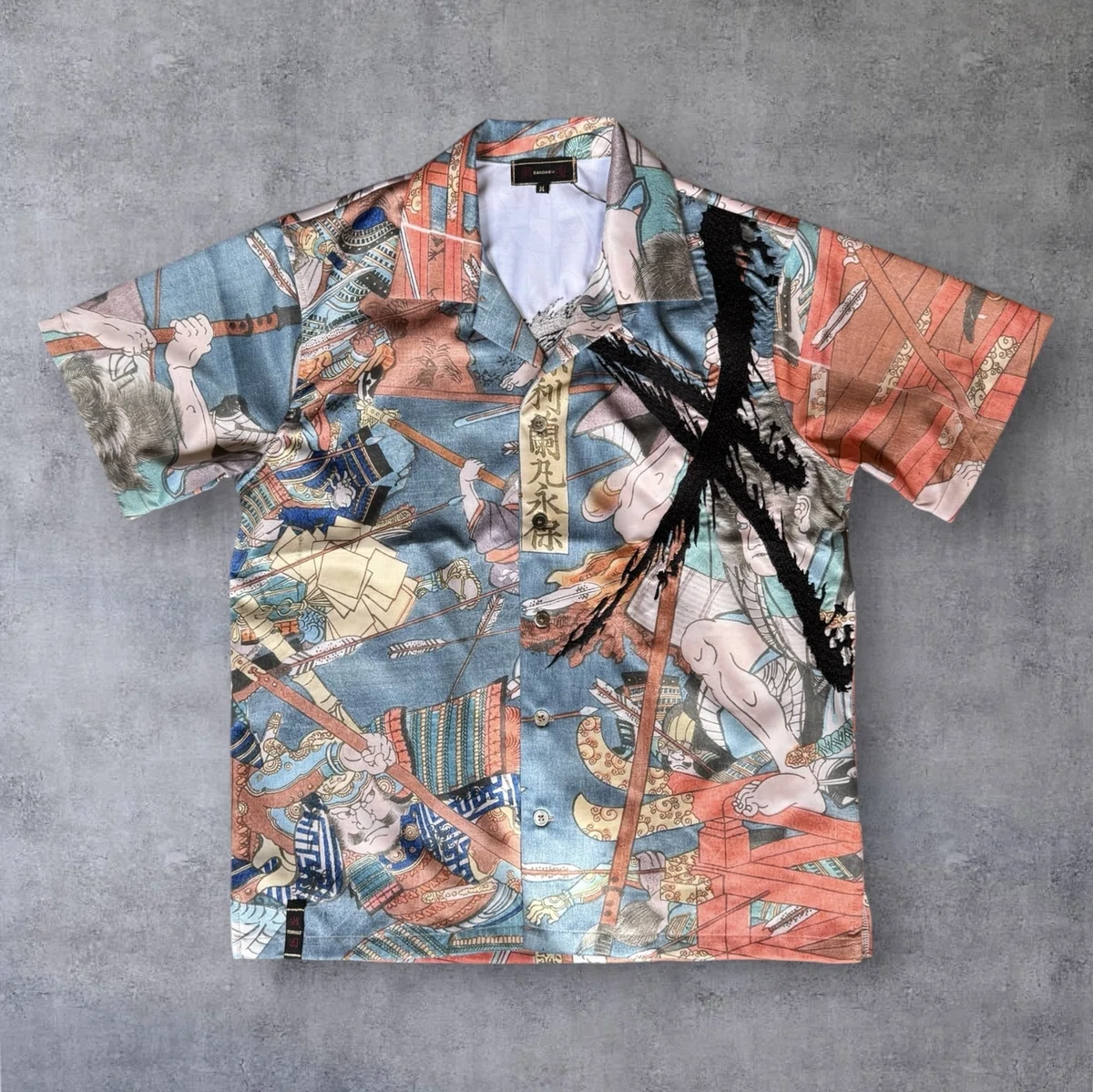
This aloha shirt is printed with Yoshiiku's Honnoji print, spears, swords, and all.A scene once hidden behind false names is now worn openly, over 160 years later.
このアロハシャツには、芳幾が描いた本能寺の変の一場面をそのままプリントしました。
槍も刀も、そのままに。
偽名の裏に隠されていた一場面が、160年以上の時を経て、今は堂々と身に纏われています。
One More Detail: The Cross of a Sword Strike
もうひとつのこだわり ― 刀捌きの一閃
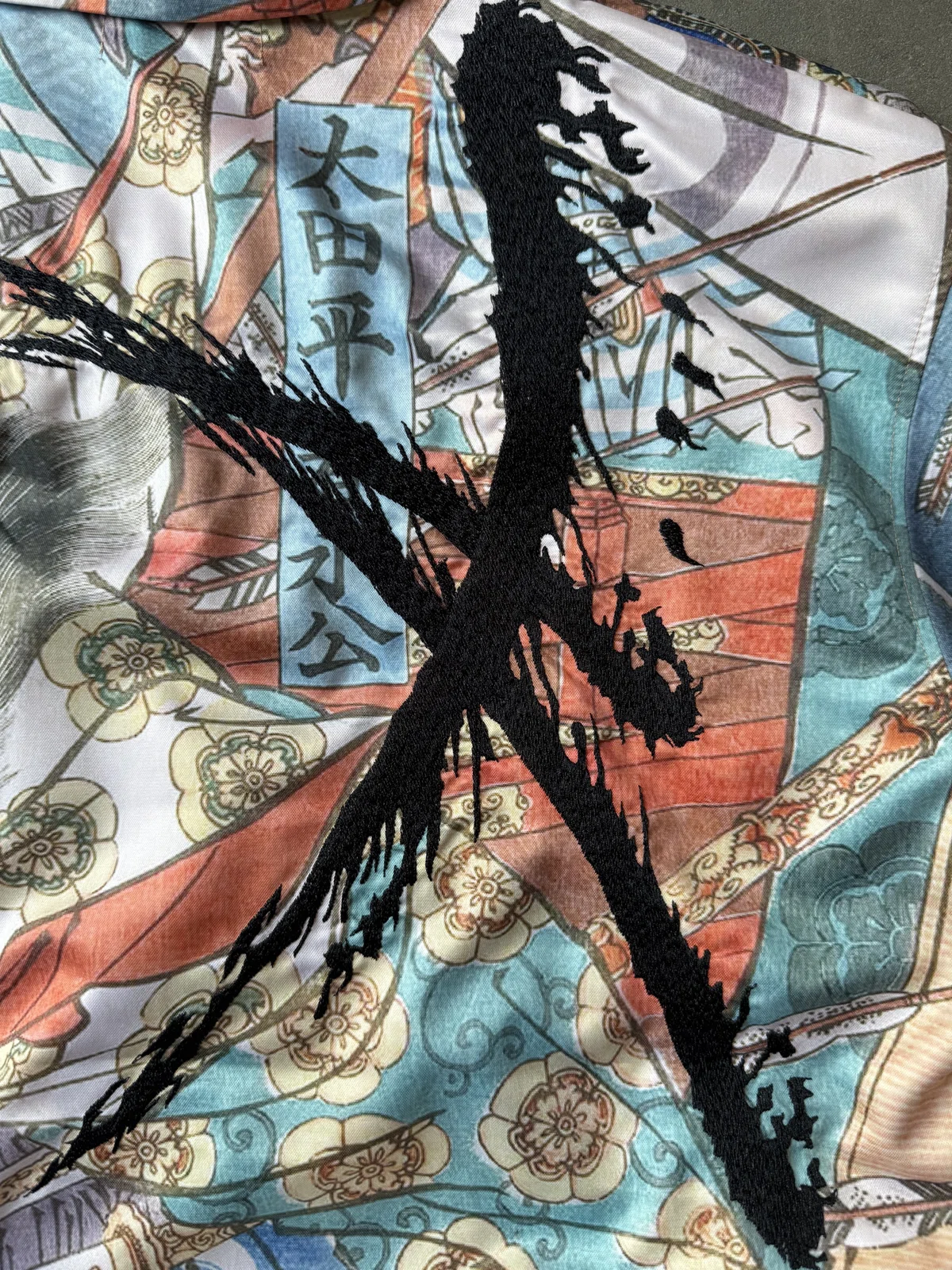
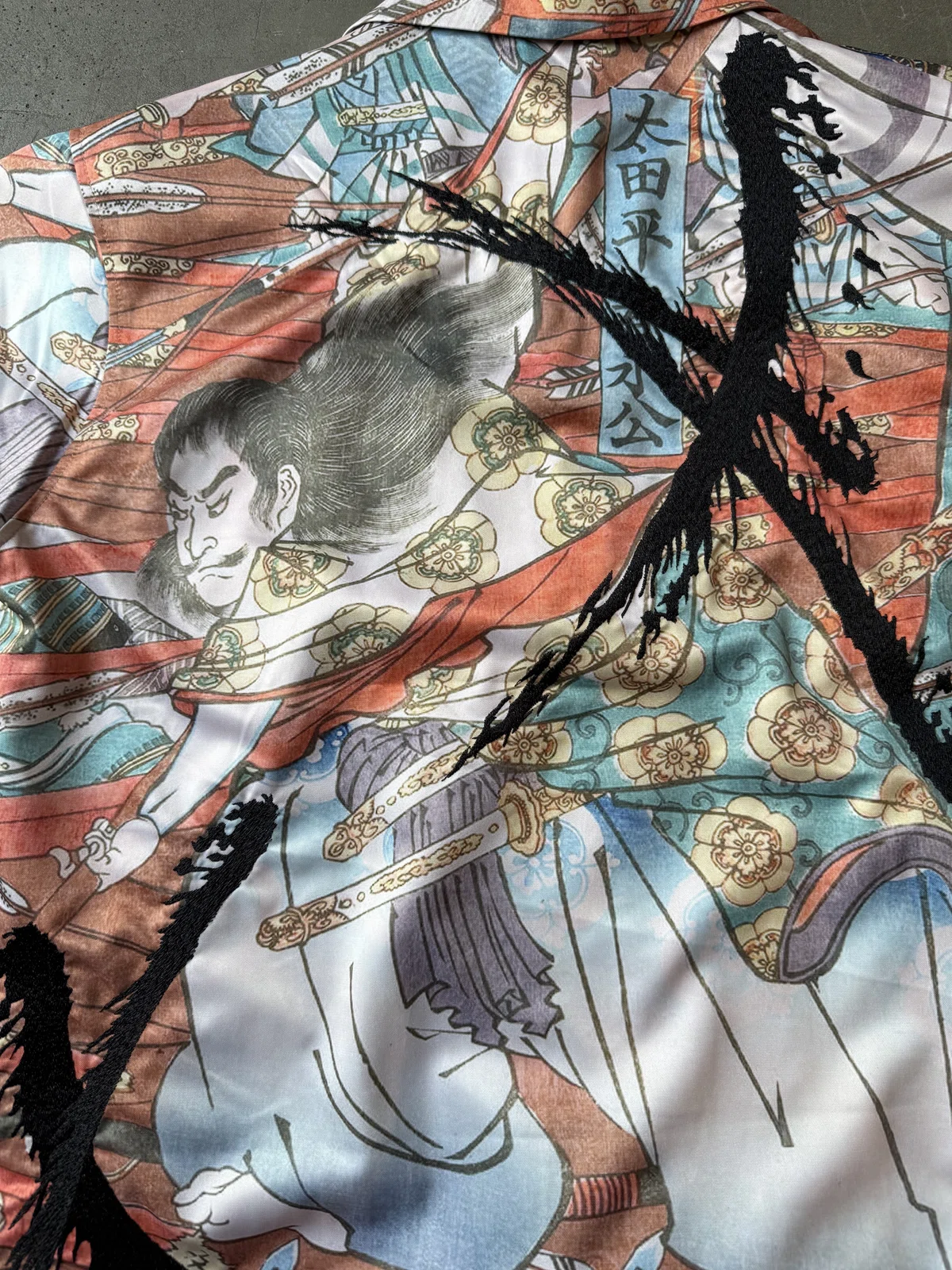
There is one more detail on this shirt worth pointing out.
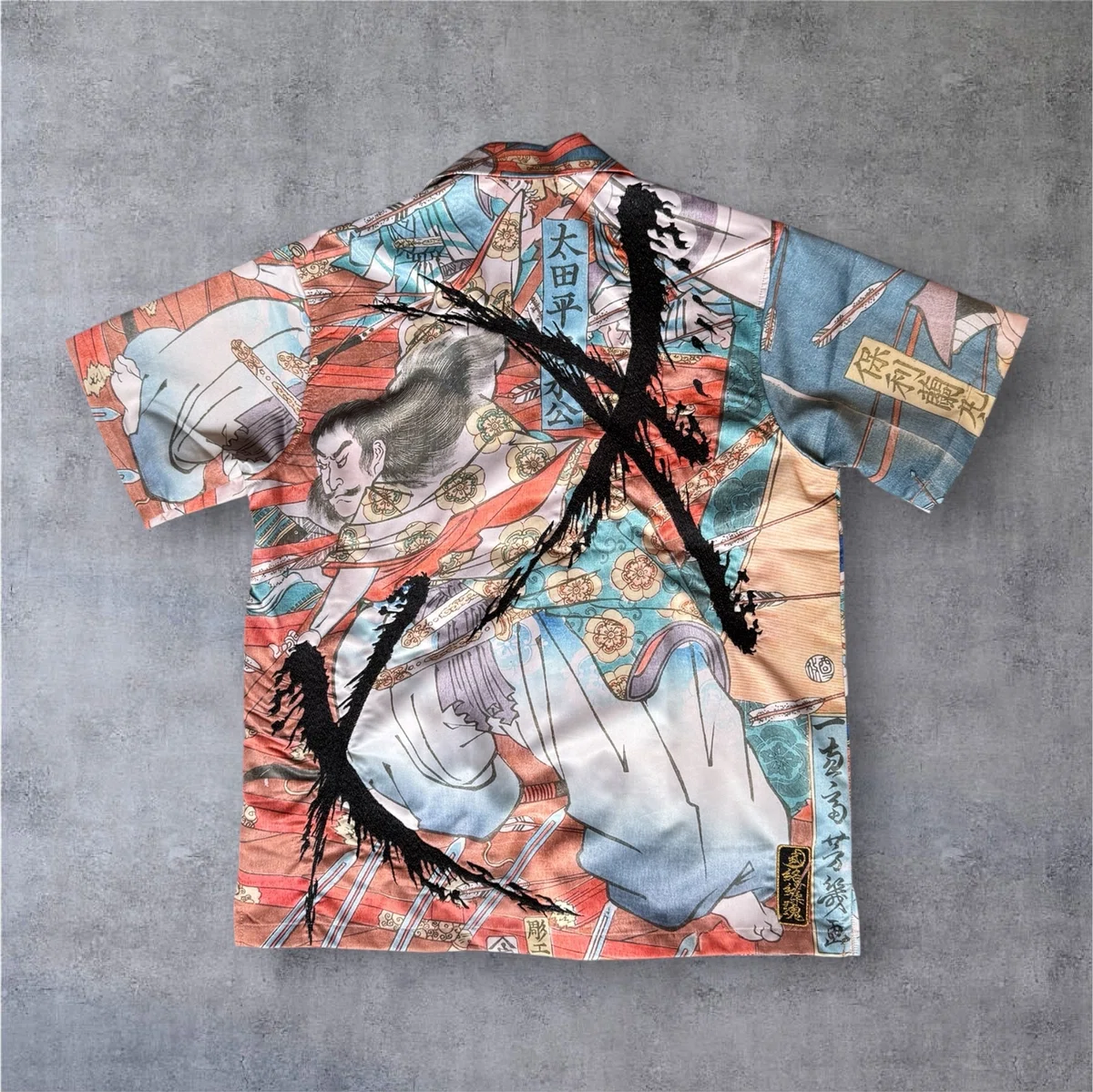
Across the back, a bold black embroidery cuts through the print in an "メ" shape.
It traces the motion of a sword—two strikes, crossing at the exact moment of impact.
Where the print freezes a single moment of battle, the embroidery brings a sense of motion back into it.
One more clash, stitched permanently onto the back of the wearer.
このシャツにはもうひとつこだわった点がある。
背中に大きく走る黒い刺繍だ。
これは刀の軌跡です。二本の斬撃が交差する、まさにその瞬間を描いています。
プリントされた浮世絵が合戦の一瞬を静止させているとすれば、刺繍はそこにもう一度、動きを呼び戻す役割を果たしています。
着る人の背中の上で、もう一太刀が交わされているのです。