(p.5) 縁の起点 / The Origin of Connections

『竹の えん(Take no En)』橋口博幸 Hiroyuki Hashiguchi(2021.3)
竹プロの代表を務めた板東先生は、学生時代の恩師でもある。私が竹プロに関わってから大学で働いていた約6年間は、家族よりも時間を共に過ごさせていただいたように思う。当然、とても大きな影響を受けた。
Professor Bando, who led Take-Pro, was also my mentor during my student years. In the roughly six years I worked at the university through the project, I likely spent more time with him than with my own family. Naturally, his influence on me has been profound.
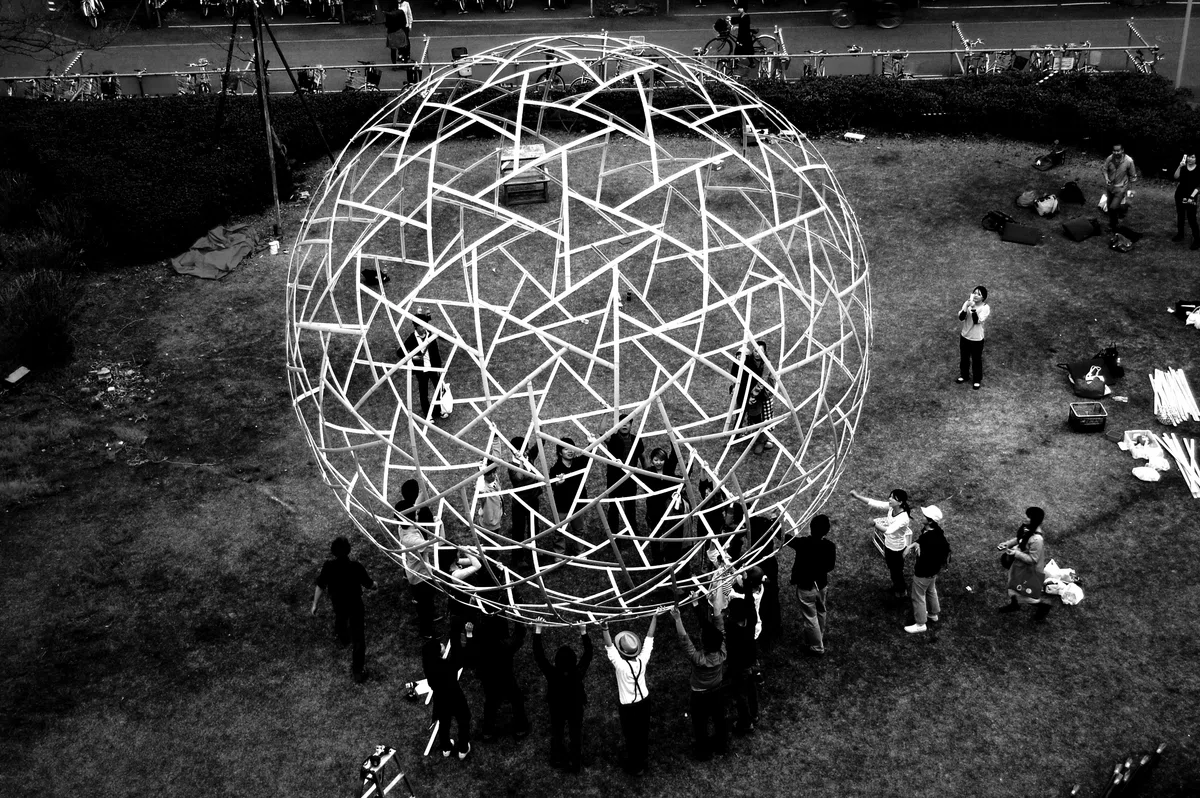
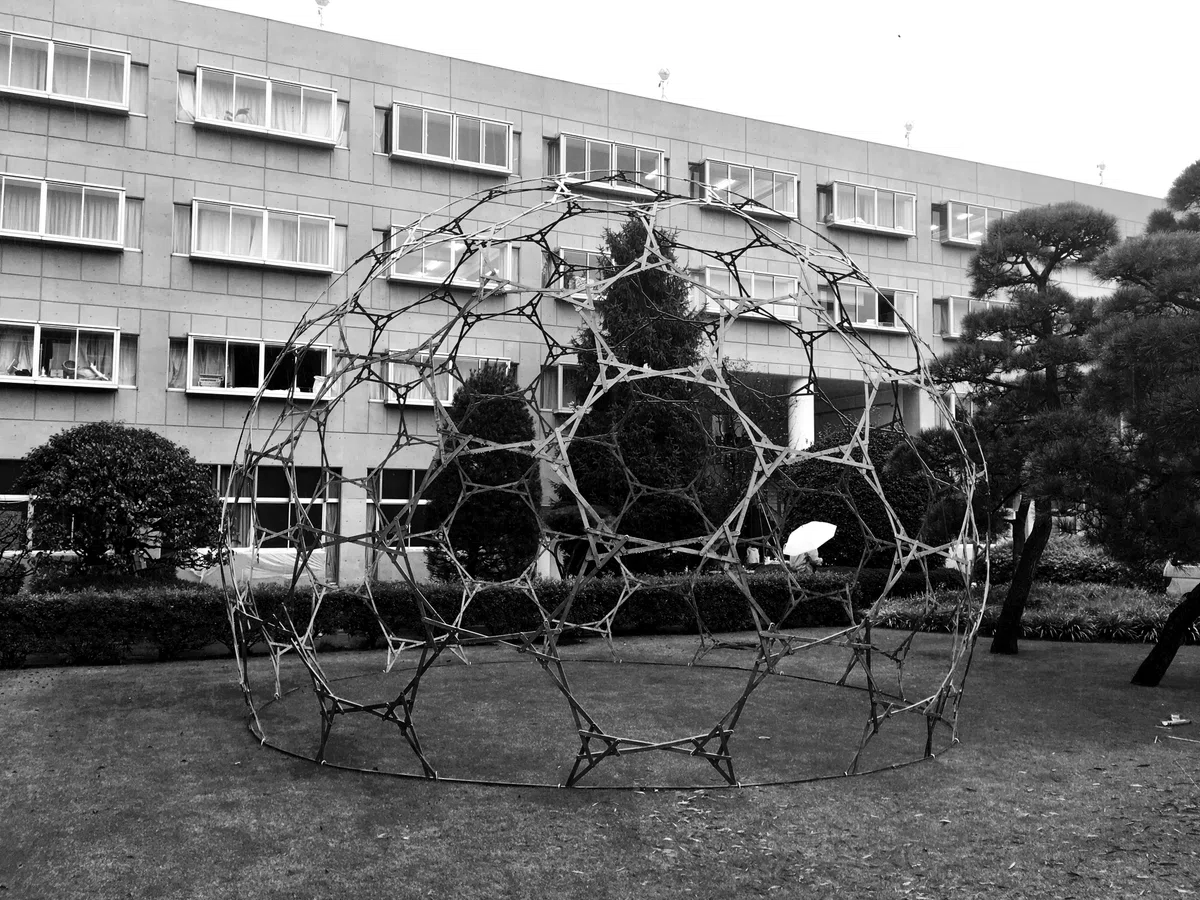
板東先生は元々スイスタイポグラフィをベースにしたデザインが特徴で、世界的に活躍されてきたグラフィックデザイナーだ。とてもミニマムで洗練されたデザインが特徴で、その後、R・バックミンスター・フラー(以下、フラー)の薫陶を受け、自身で軽量多面体構造の研究開発をはじめ、竹プロにおいても竹で多面体構造のドームを開発されてきた。おかげで本書でもこれから紹介する数学者やデザイナーを紹介していただき、そしてそれはどなたも非常に刺激的で素晴らしい方々ばかりだった。
Professor Bando began his career as a graphic designer, his work rooted in the Swiss typography tradition — spare, refined, and internationally recognized. He later came under the intellectual influence of R. Buckminster Fuller, which led him to research and develop lightweight polyhedral structures, and eventually to create bamboo geodesic domes through Chiku-Pro. Through him, I was introduced to the mathematicians and designers who appear throughout this book — every one of them a remarkable and inspiring person.
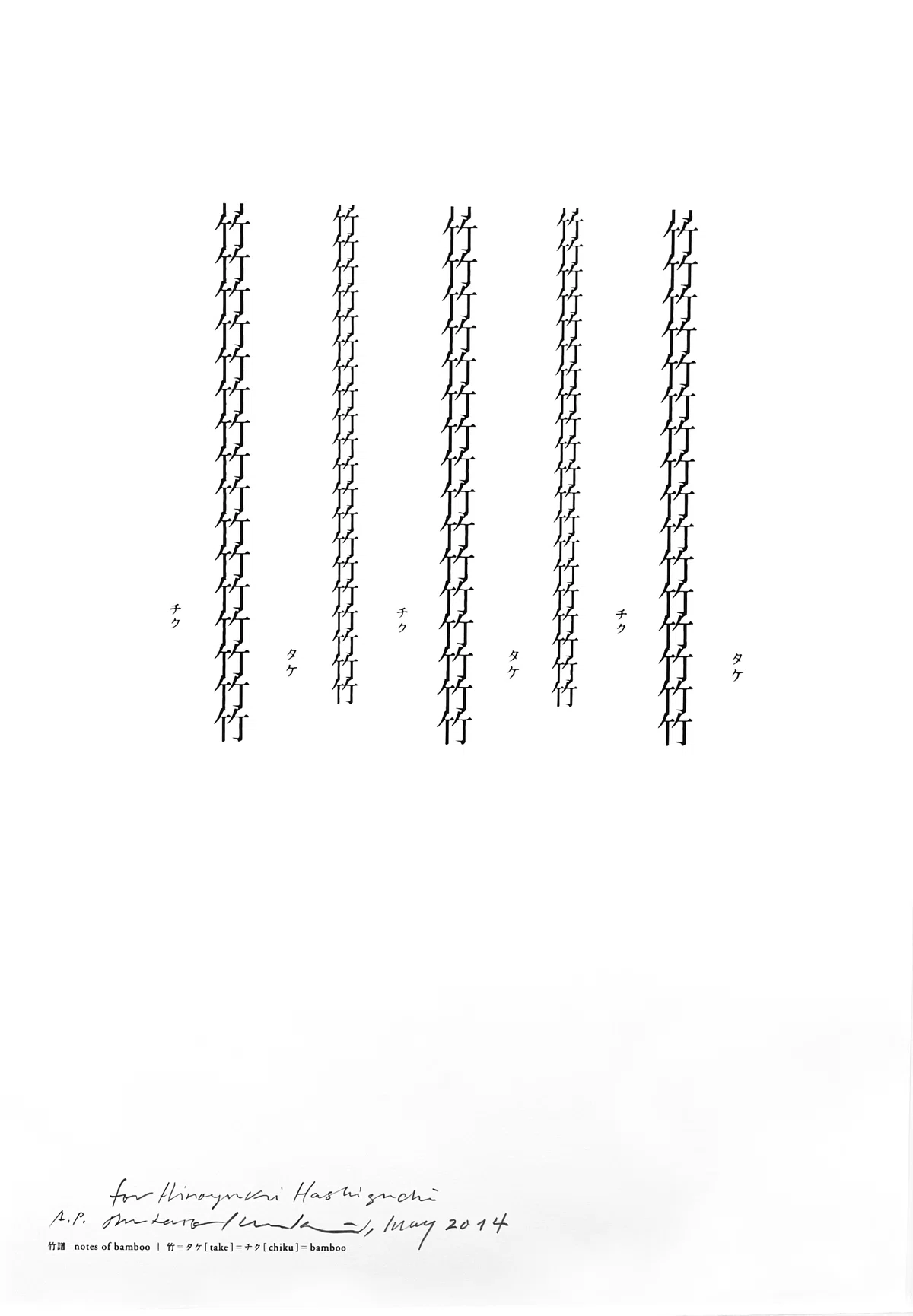
また、同時に板東先生からはそのまた恩師である向井周太郎先生という、モダンデザインの源流のただ中にいらっしゃった方の知見を、折に触れて教えていただいた。向井先生は私や板東先生の学んだ基礎デザイン学科を創立された方。向井先生の論考は難解だが、とても詩的でロマンティックな美しさがある。例えば「蝶の翅の奔放な色彩紋様さえ、あるものは木漏れ日の中で浴びた太陽残像の記憶痕跡ではあるまいかという想像におよぶ」(『形象の記憶 デザインのいのち』所収「擬態眼状紋の謎」より)と説く。なんと甘美な着想だろう。竹プロ活動中、板東先生から解説をいただきながら、学生時代に理解できなかった向井先生の論考の核心に少しずつ触れられた心地よさがあった。向井先生より拝受した「竹譜 notes of bamboo」というコンクリート・ポエトリーは宝物だ。
Professor Bando also shared with me, on many occasions, the thinking of his own mentor — Shutaro Mukai, a scholar who stood at the very wellspring of modern design. Professor Mukai founded the Department of Science of Design, where both Professor Bando and I studied. His writing is dense, but suffused with a poetic, almost romantic beauty. In one essay, he muses that even the vivid wing patterns of a butterfly might be "memory traces of sunlight absorbed while bathed in the dappled shade of leaves" (from "The Mystery of Mimetic Eye-Spots," in Keishō no Kioku: Design no Inochi). What an intoxicating idea. During the Take-Pro years, listening to Professor Bando unpack these ideas, I found myself gradually grasping the core of Professor Mukai's thought — something that had eluded me entirely as a student. A concrete poem Professor Mukai gave me, titled Take-fu: Notes of Bamboo, remains one of my most treasured possessions.
板東先生がおっしゃっていたことに「利便性に根ざした大量生産・大量消費の経済社会に暮らす私たちは、近代というわずか数十年の間に竹の文化的な記憶を捨て去った。だからこそ先人に学ぶべきものがたくさんある。デザイナーの視点で今一度、民具を捉え直す必要性を訴えていた」というものがあった。その一つの成果が武蔵野美術大学とバンドゥン工科大学の共同研究の報告書『竹―かたちの原像としての民具』(2014年発行)だ。
One of Professor Bando's recurring themes was this: living in a mass-production, mass-consumption society driven by convenience, we have — in the mere span of a few modern decades — discarded our cultural memory of bamboo. All the more reason, he argued, to learn from those who came before us, and to look again at folk crafts through the eyes of a designer. One tangible outcome of that conviction is the joint research report Take: Katachi no Genzō toshite no Mingū (Bamboo: Traditional Artifacts as Archetypes of Form), published in 2014 by Musashino Art University and Institut Teknologi Bandung.
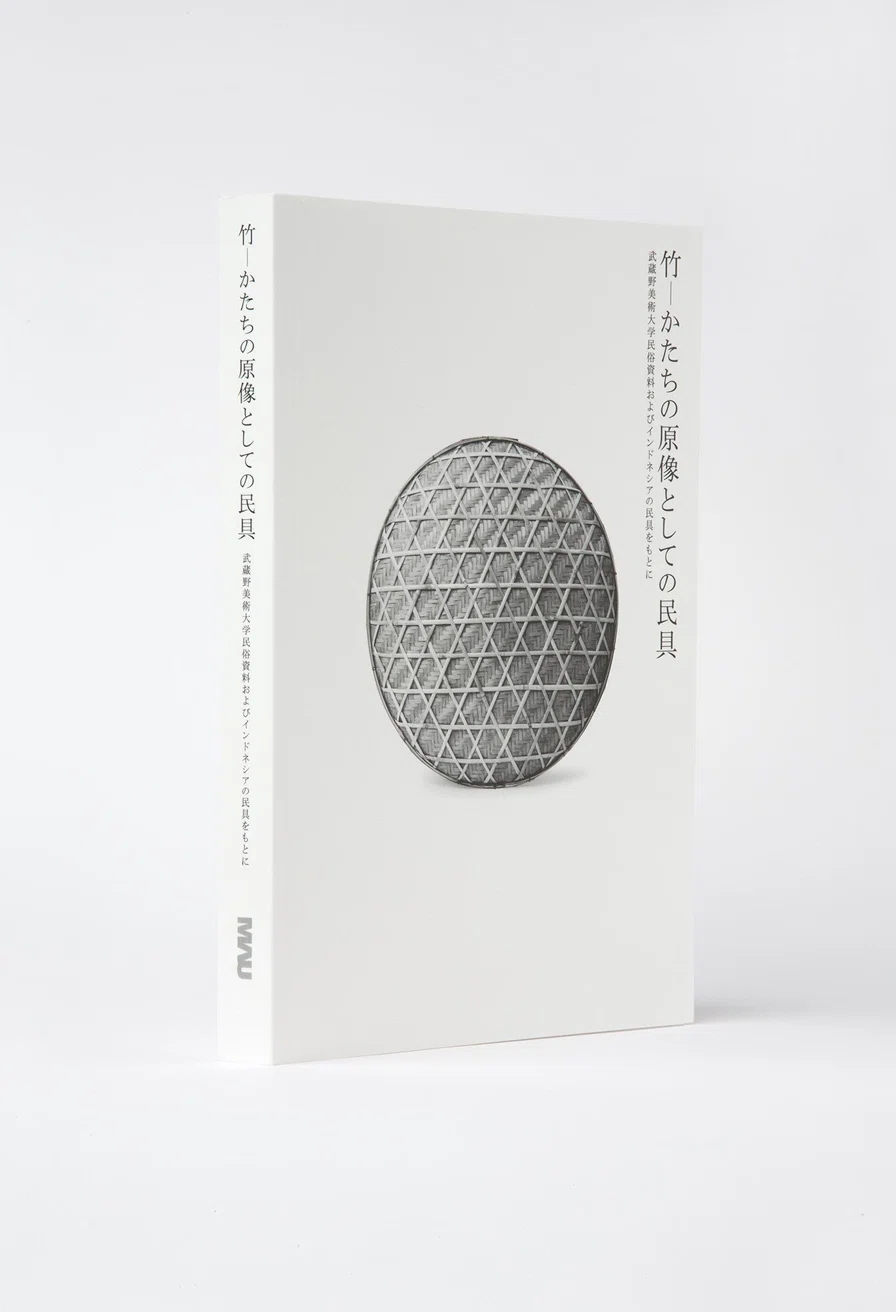
板東先生は竹の民具に「デザインの原像」を見、民具の編み目を「人の手によってつくられた結晶構造」と捉えた。それはフラーが東南アジアのセパタクローを見た際に、その構造に正十二面体があることに感銘を受けたというエピソードの直接的な延長線上にある眼差しだ。板東先生は報告書の序言で次のように述べている。
Professor Bando saw in bamboo folk crafts what he called the genzō — the "archetypal form" — of design, and described the woven patterns of bamboo ware as "crystal structures created by human hands." This perspective connects directly to the story of Fuller being struck by the dodecahedral structure of the Southeast Asian Sepak Takraw ball. In the preface to the report, Professor Bando writes:
もはや竹籠は単なる入れ物、過去の遺物、過去の生活としての記録ではなく、デザイナーが学ばなければならない生としてのデザイン、「デザインの原像」として光彩を放ちはじめはしないだろうか。わたしたちにその源泉へ立ちかえってデザインを再考する契機を与えてくれるのではないか。
The bamboo basket is no longer a mere container, a relic of the past, or a record of past ways of living. Should it not now shine as the very "archetype of design" — something designers must study as design in its living form? Might it not offer us a chance to return to the source and rethink what design can be?
私の現在の竹に対する考えや向き合う姿勢といったものの多くは、板東先生からの影響が非常に大きい。いわば私にとっての竹のご縁の起点とも言える存在だ。
Much of how I think about bamboo today, and how I engage with it, flows directly from Professor Bando's influence. In that sense, he is the very origin of my connections with bamboo.
編集注記(2026年) 向井周太郎先生は2024年にご逝去された。謹んでご冥福をお祈りいたします。ぼくは大学1年生のときに向井先生の授業を実際に聞くことができ、それは光栄なことだった。それ以後も年に何度か講義を受けたりお話を伺うことができたことは幸せな記憶として大事にしている。
本書で紹介する共同研究報告書は、板東先生をはじめとするMAUとITBの研究者たちの共同作業の結晶であり、竹の民具を「デザインの原像」という視点で論じた稀有な一冊だ。
Editor's note (2026): Professor Shutaro Mukai passed away in 2024. I offer my deepest condolences. As a first-year university student, I had the privilege of attending one of Professor Mukai's classes — something I still feel deeply fortunate to have experienced. The memory of hearing his lectures and speaking with him on several occasions each year after that is one I hold close.
The joint research report introduced in this essay is the fruit of collaboration between researchers at MAU and ITB, led by Professor Bando, and remains a rare document that examines bamboo folk crafts through the lens of design archetypes.
