(p.17)王文志 / Wang Wen-Chih

『竹のえん(Take no En)』橋口博幸 Hiroyuki Hashiguchi(2021.3)
台湾の王文志(ワン・ウェンチー)さんとはじめてお会いしたのは、2011年に望月先生と台湾のご自宅を訪ねたときだった。王さんは台湾だけでなく日本でも多くの竹の巨大作品を制作されており、台湾を、世界を代表する竹のアーティストだ。今でこそ台湾には多くの竹の巨大作品をつくる作家がいるものの、王さんはその先駆け的な存在だった。
I first met Wang Wen-Chih of Taiwan in 2011, when I visited his home with Professor Mochizuki. Wang creates large-scale bamboo works not only in Taiwan but across Japan, and is among the most celebrated bamboo artists in the world. While Taiwan now has many artists making monumental bamboo installations, Wang was the pioneer.
王さんは数ヶ月、台湾の原住民の村に滞在しながら竹の加工技術を学んだという。最初のうちは竹の職人たちと協働して作品をつくっていたそうだが、次第に自分たちだけで制作が可能になっていったという。王さんに限らず台湾の竹のアート作品には、伝統と現代がハイブリッドな融合をしているように思えることが多い。それは自分たちのルーツへの眼差しと、未来を見据えた意識が可能にする造形なのだと思う。
Wang spent several months living in an indigenous village in Taiwan to learn bamboo-processing techniques from the ground up. He began by working alongside craftspeople, but gradually became able to realize his works independently. His art — and Taiwanese bamboo art more broadly — often feels like a hybrid of tradition and contemporaneity. I think this is made possible by a simultaneous looking-back toward one's roots and a looking-forward toward the future.
王さん宅でお話を伺っていると、近所の老人が偶然ふらりとやってきた。少し話を伺うと、戦時中、日本軍の指揮下で竹の和紙を漉いていたという。竹の和紙は話には聞いていたが、はじめて実際に仕事として漉いていた人に出会い興奮したことを覚えている。
While we were talking at Wang's home, an elderly neighbor happened to wander in. He mentioned that during the war he had made washi paper from bamboo under the direction of the Japanese military. I had heard of bamboo washi before, but this was the first time I had ever met someone who had actually made it as part of their work, and I still remember the excitement of that moment.
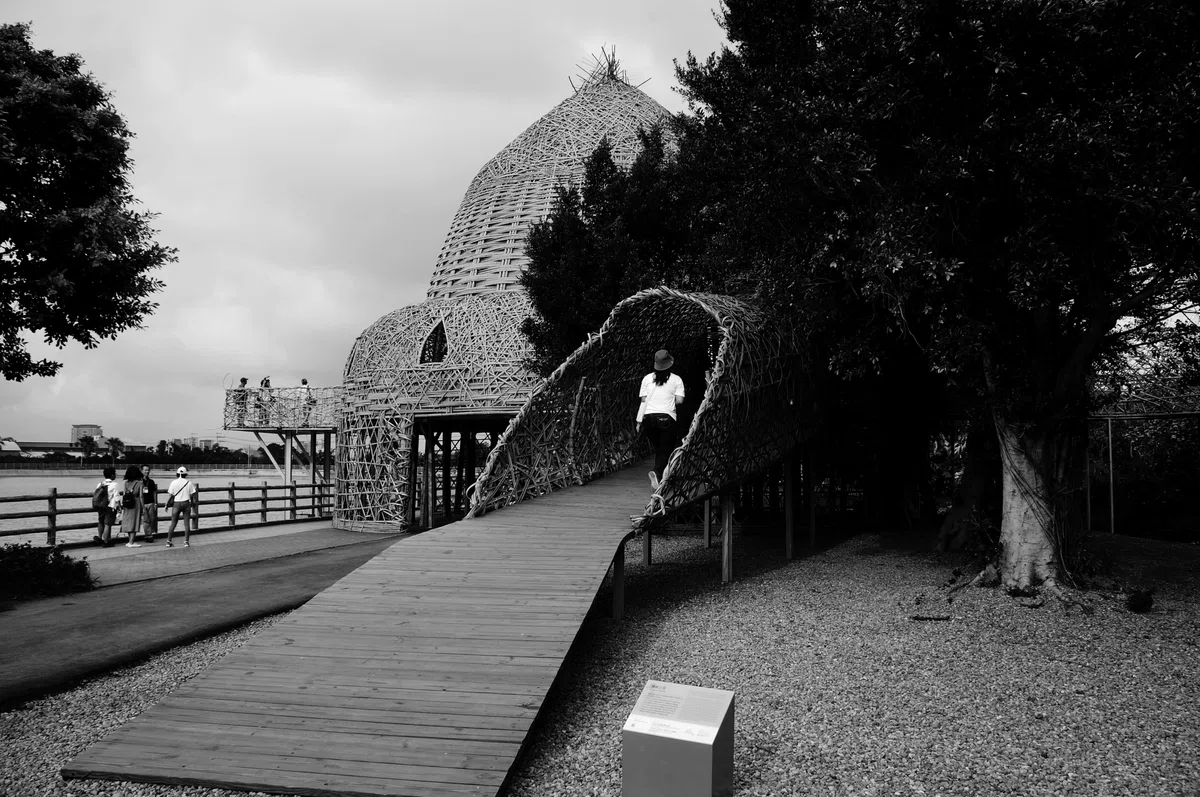
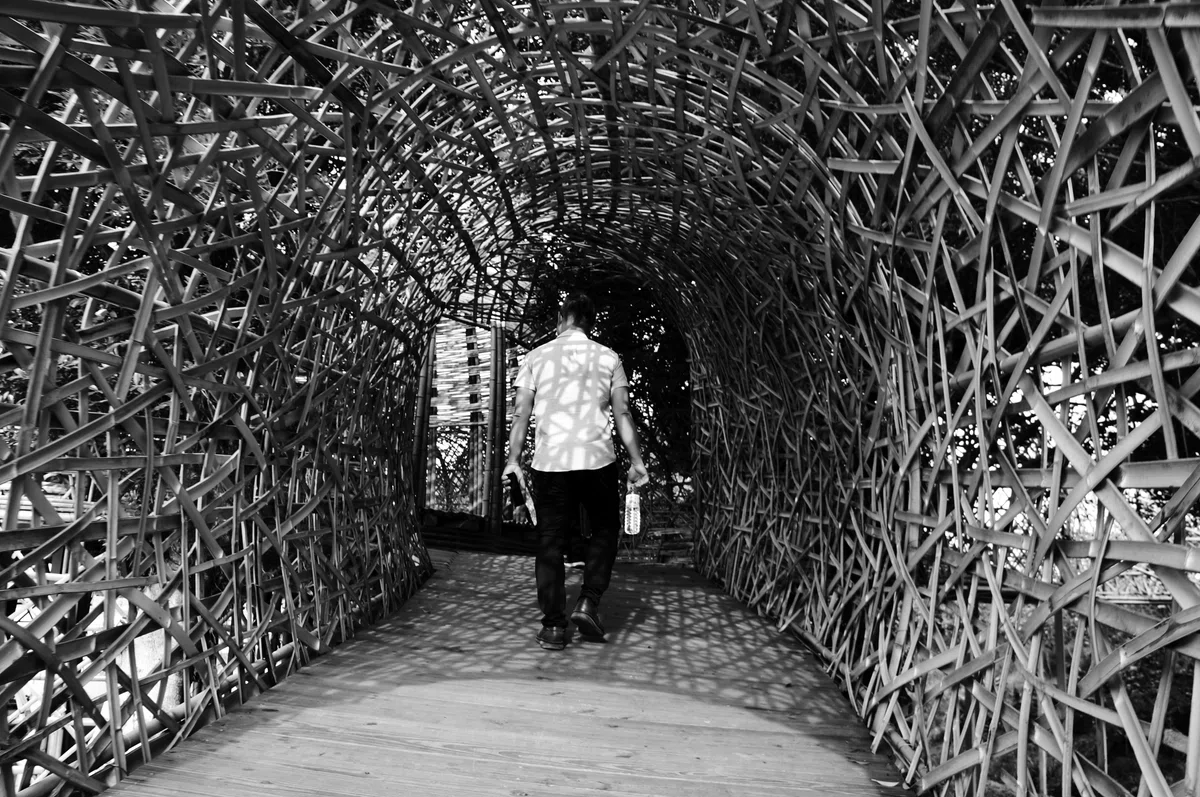
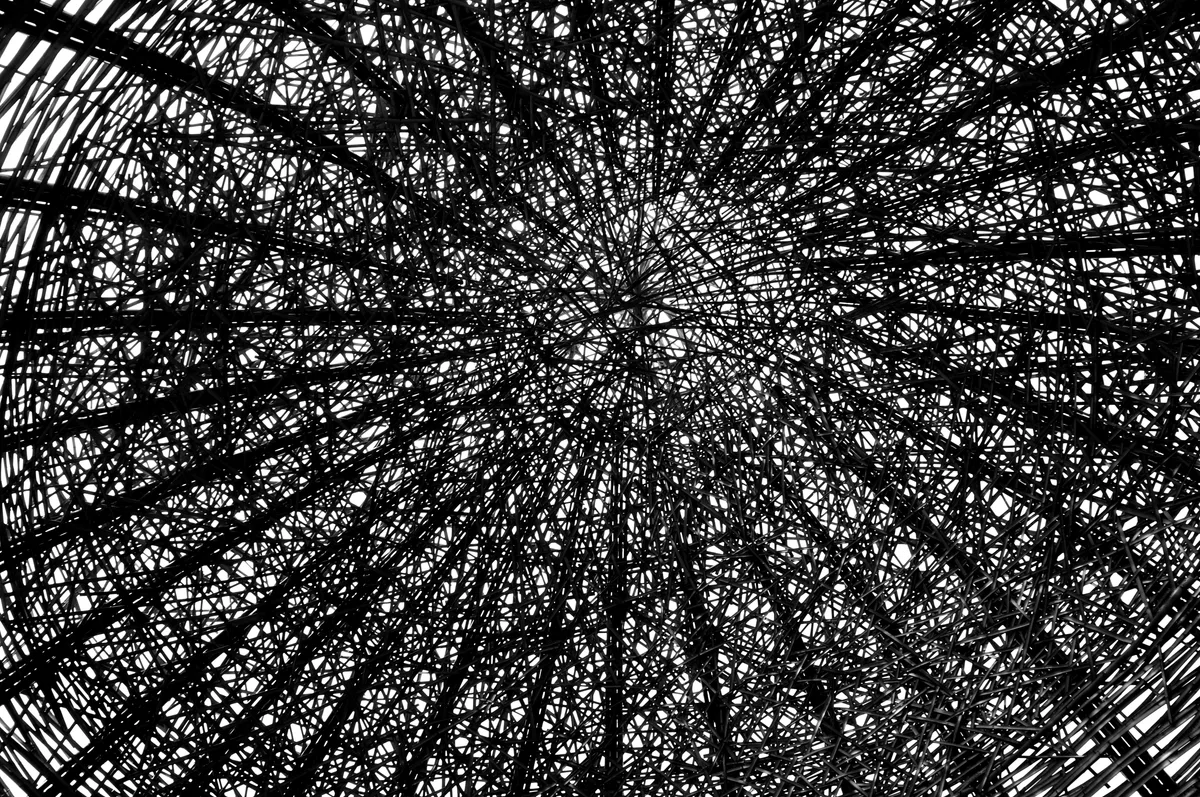
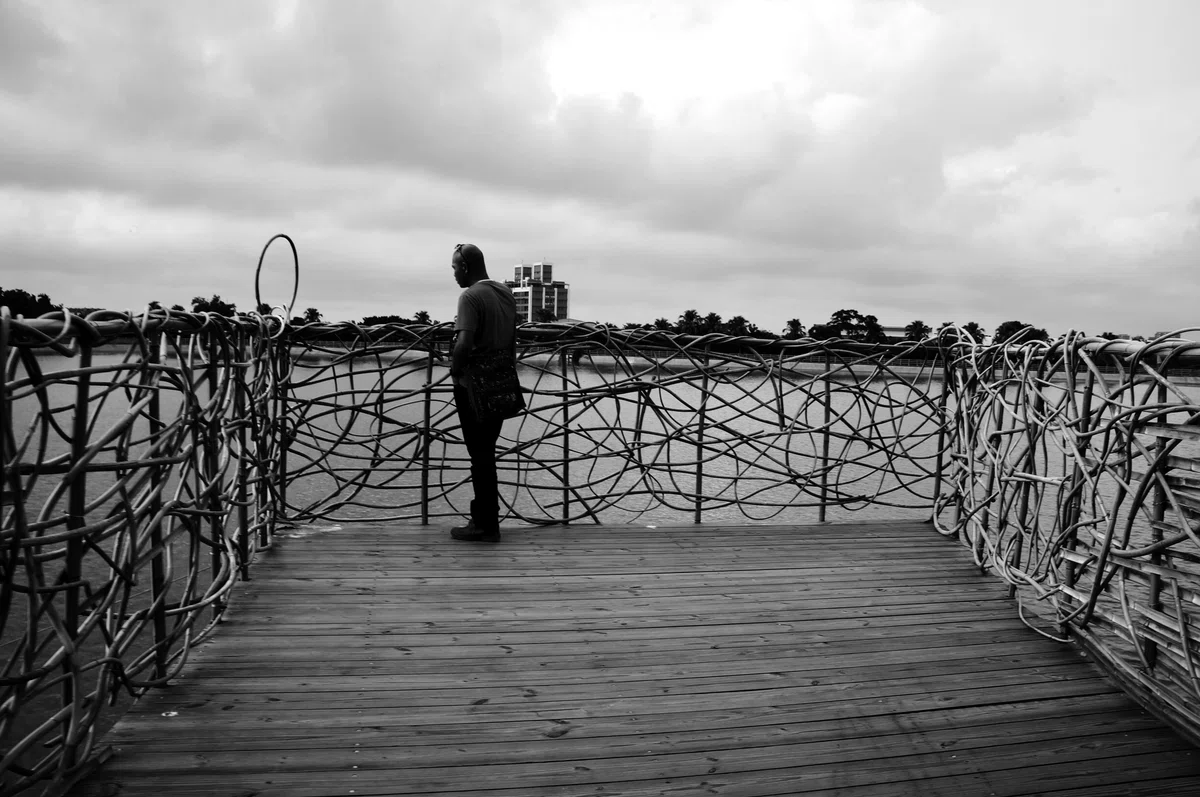
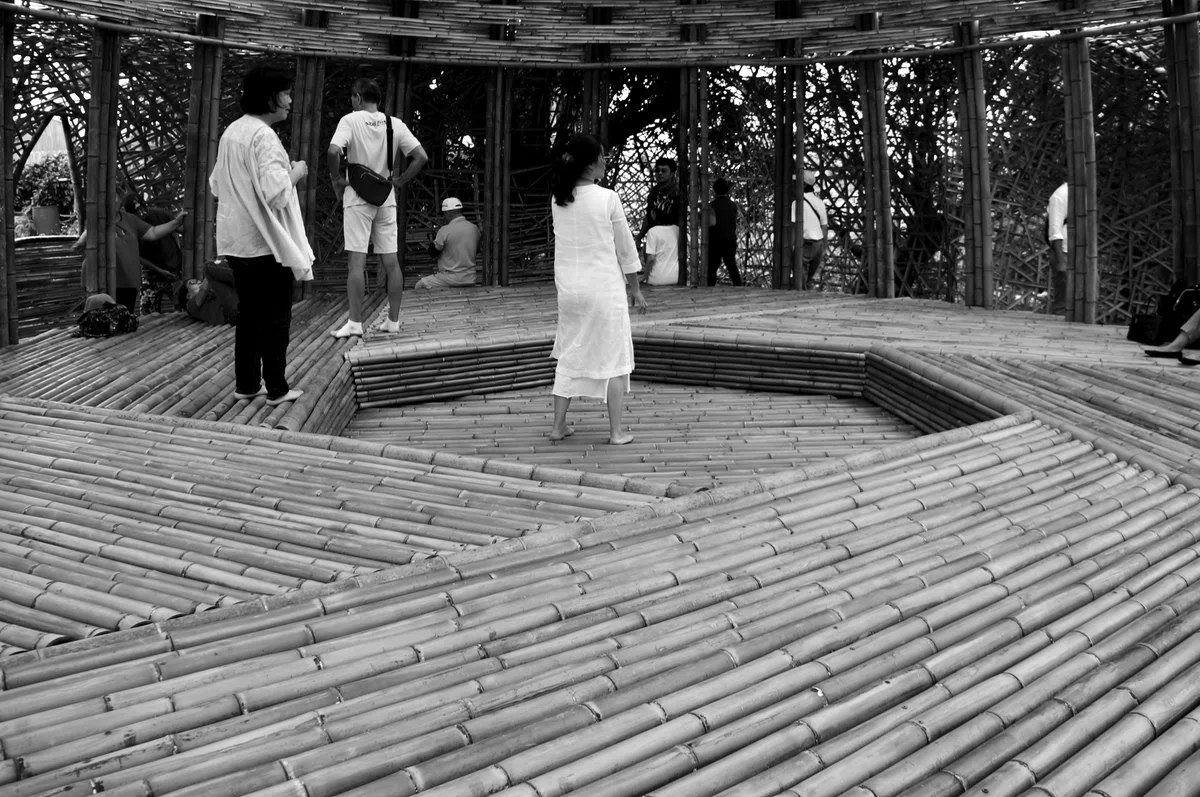
世の中は狭いもので、後述する2017年にブラジル、サンパウロで外務省主催の「JAPAN HOUSE(ジャパン・ハウス)」事業に参画していた際に知り合ったアーティスト、Marjorie Yamaguchi(マージョリー・ヤマグチ)は、王さんのスタッフの一人でもあった。2019年には小豆島で滞在制作中の王さんを訪ね、そこでマージョリーとも再会を果たすことができた。また、2020年は台湾を訪れた際に王さんと夕食をご一緒させていただく機会を得、貴重な作品集をいただいた。その際、どのようにして竹の加工技術を学んだのかなど伺うことができたことが嬉しかった。
The world is a small place. Marjorie Yamaguchi — an artist I met while participating in the Ministry of Foreign Affairs' JAPAN HOUSE project in São Paulo, Brazil in 2017, which I write about later — turned out to be one of Wang's own staff. In 2019, I visited Wang on Shodoshima Island, where he was working on a residency piece, and was able to reunite with Marjorie there as well. In 2020, during a trip to Taiwan, I had the pleasure of having dinner with Wang, and he gave me a precious catalogue of his work. Being able to hear directly from him about how he learned his bamboo-processing techniques was a real joy.
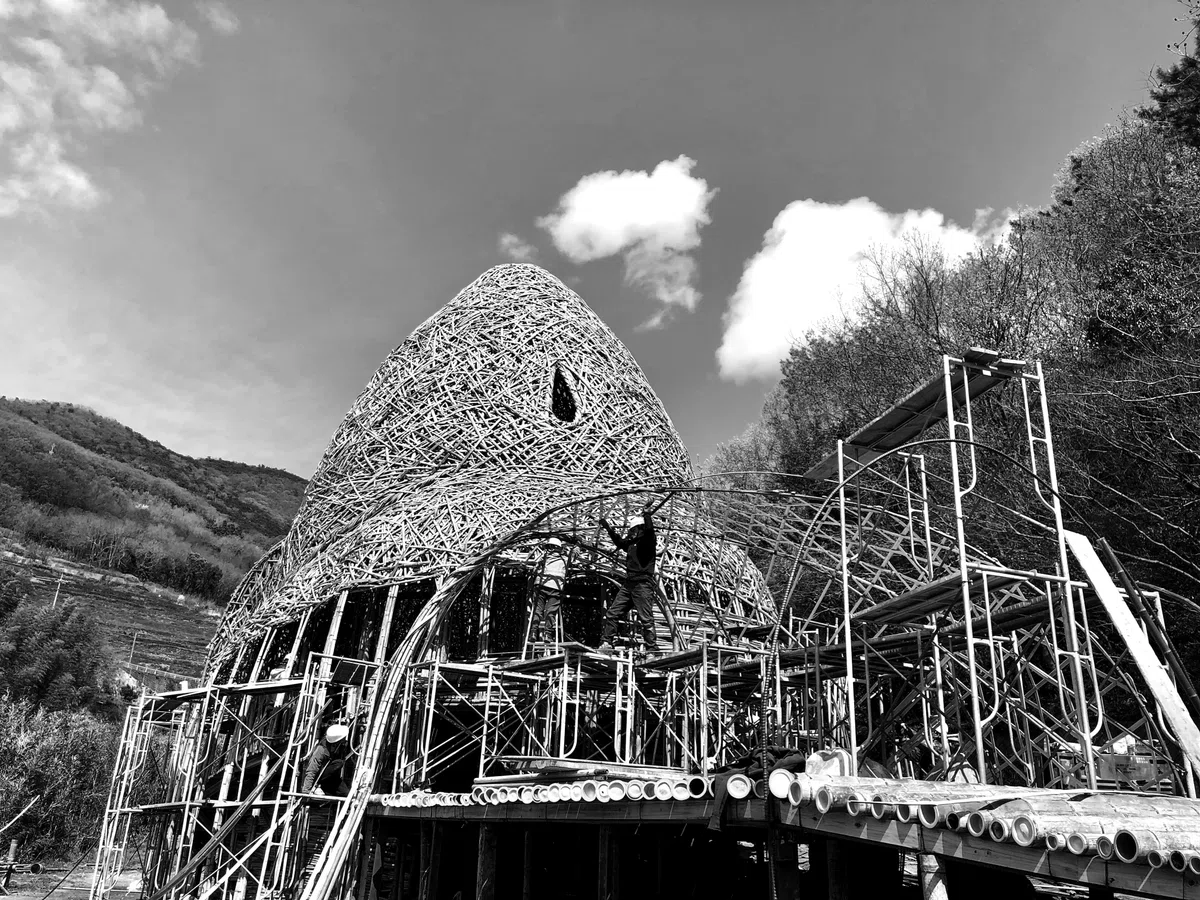
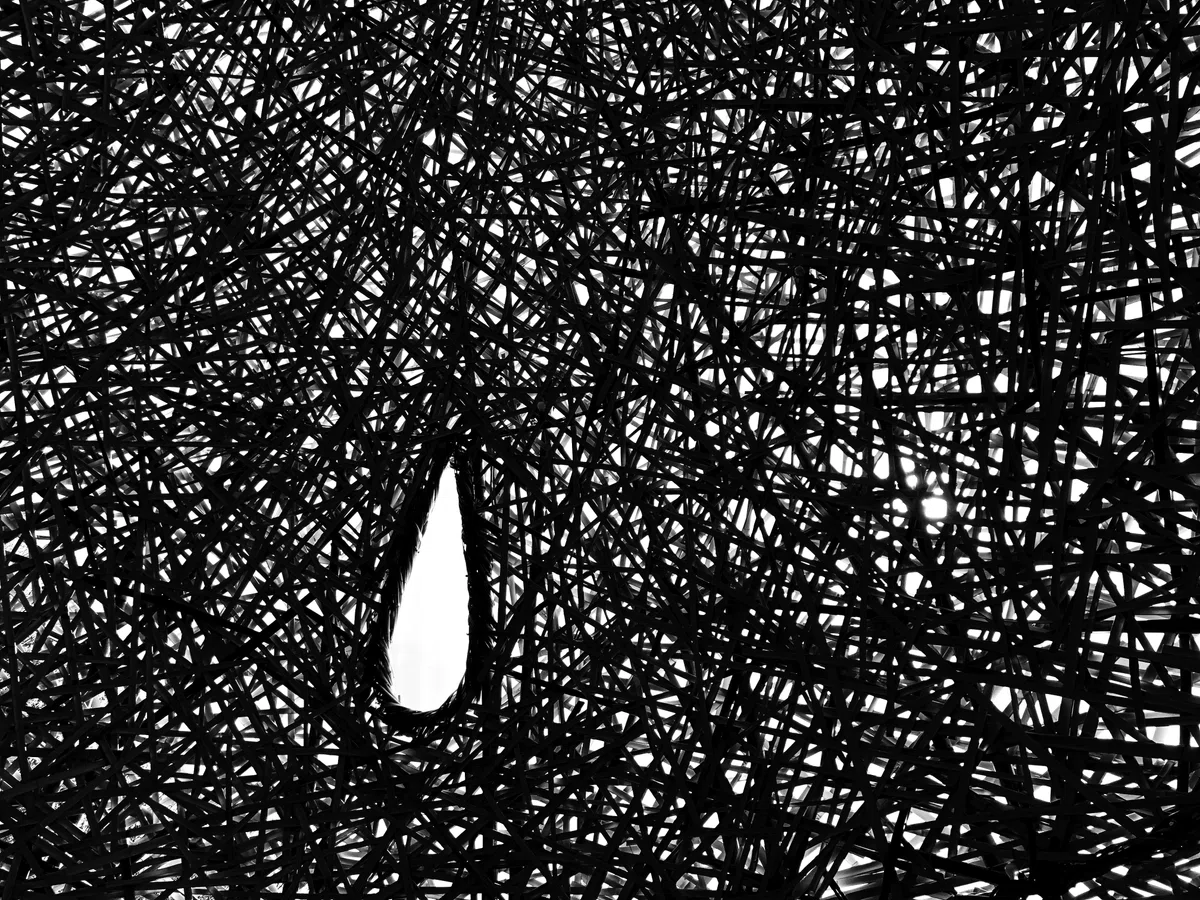
編集注記(2026年) 2023年、2024年と王さんと和歌山県白浜にて共同制作をする機会をいただいた。竹あかり演出家である親生くんの提案で、パンダ飼育で有名なアドベンチャーワールドの「パンダバンブープロジェクト」の一環だった。2024年には本文でも触れているMarjorieも一緒に作業ができ、感無量だった。王さんはアーティストだ。それも台湾を代表する、世界的作家と言えよう。制作作業を一緒にする中で、大勢のスタッフの誰よりも身体を動かしている姿が印象的だった。大御所と言えば、自身は手を動かさず、若いスタッフに丸投げしている印象があったが、少なくとも彼は違った。改めて彼の偉大さを感じた経験となった。
また、これは私自身の浅はかさであるが、今回パンダという中国における政治的存在に紐付けて王さんを招待したことへの自身の配慮の無さが忘れられない。少し考えれば分かることだが、完全に無頓着にお声がけさせていただいた。そして、日本滞在中の一度も私を含めて日本人スタッフへ苦言を呈することはなかった。無知や浅はかさはときに醜悪な武器となることを改めて痛感した出来事であった。
Editor's note (2026): In 2023 and 2024, I had the privilege of creating work alongside Wang in Shirahama, Wakayama Prefecture. The project came about through a proposal by Chikao, a bamboo light artist, as part of the "Panda Bamboo Project" at Adventure World — the wildlife park famous for its giant pandas. In 2024, Marjorie, mentioned in the essay itself, was also part of the team, and working together with both of them was deeply moving.
Wang is an artist — and not just any artist, but one who stands among Taiwan's finest and the world's. What struck me most during our time working together was that he was physically harder at work than anyone else on the crew, with a large team around him. My image of a celebrated master had always been someone who steps back and leaves the work to younger staff — but Wang was nothing like that. It was an experience that deepened my sense of just how great he truly is.
I must also confess something that speaks to my own lack of consideration. Inviting Wang — a Taiwanese artist — to a project framed around pandas, which carry obvious political connotations tied to China, was thoughtless on my part. It should not have taken much reflection to see this, yet I extended the invitation without a moment's pause. And not once during his time in Japan did Wang say a critical word to me or any of the Japanese staff. The experience reminded me, painfully, that ignorance and carelessness can become something ugly — a kind of unwitting harm.
