(p.6)竹は民主主義的 / Bamboo is Democratic

『竹の えん(Take no En)』橋口博幸 Hiroyuki Hashiguchi(2021.3)
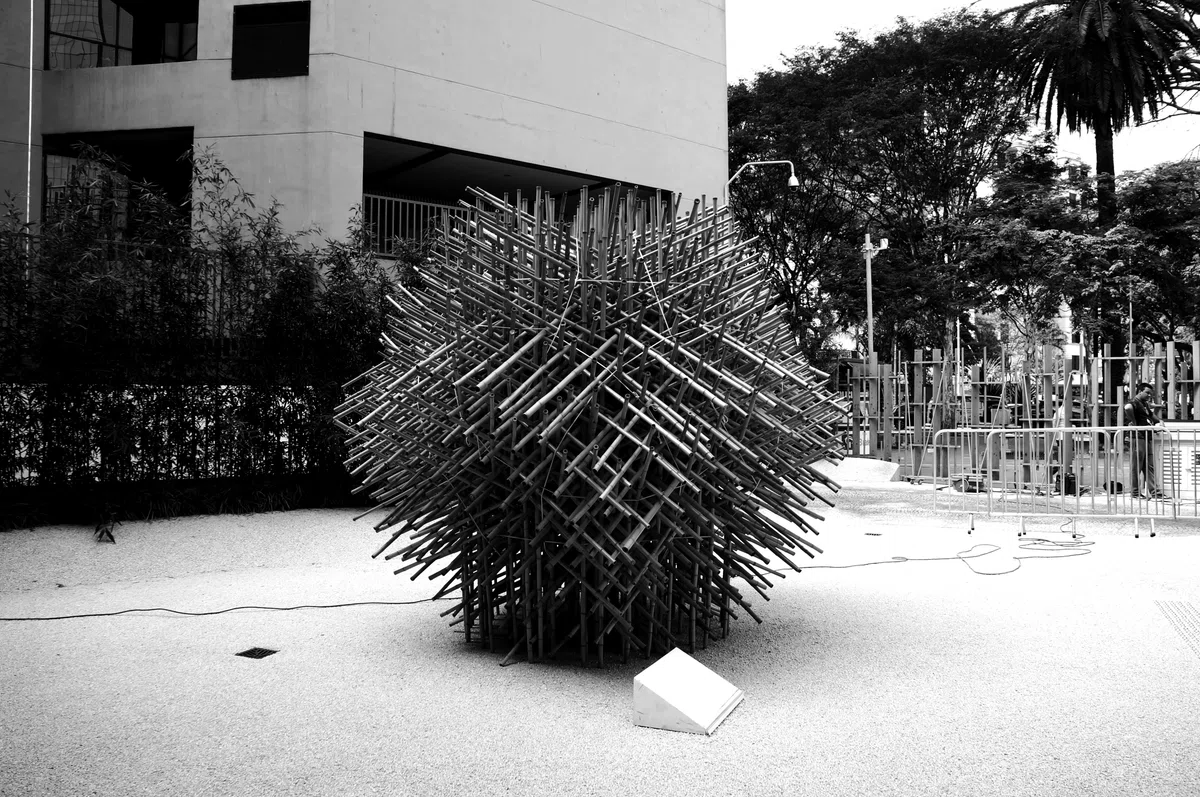
日詰明男さんは数学者であり、数学概念を竹を用いて三次元に表現する竹の造形作家だ。竹プロに初期から参加いただき、今でも毎年武蔵野美術大学でワークショップを開講されている。
Akio Hizume is a mathematician and bamboo sculptor who gives three-dimensional form to mathematical concepts through bamboo. He has been involved with Take-Pro since its earliest days, and to this day leads an annual workshop at Musashino Art University.
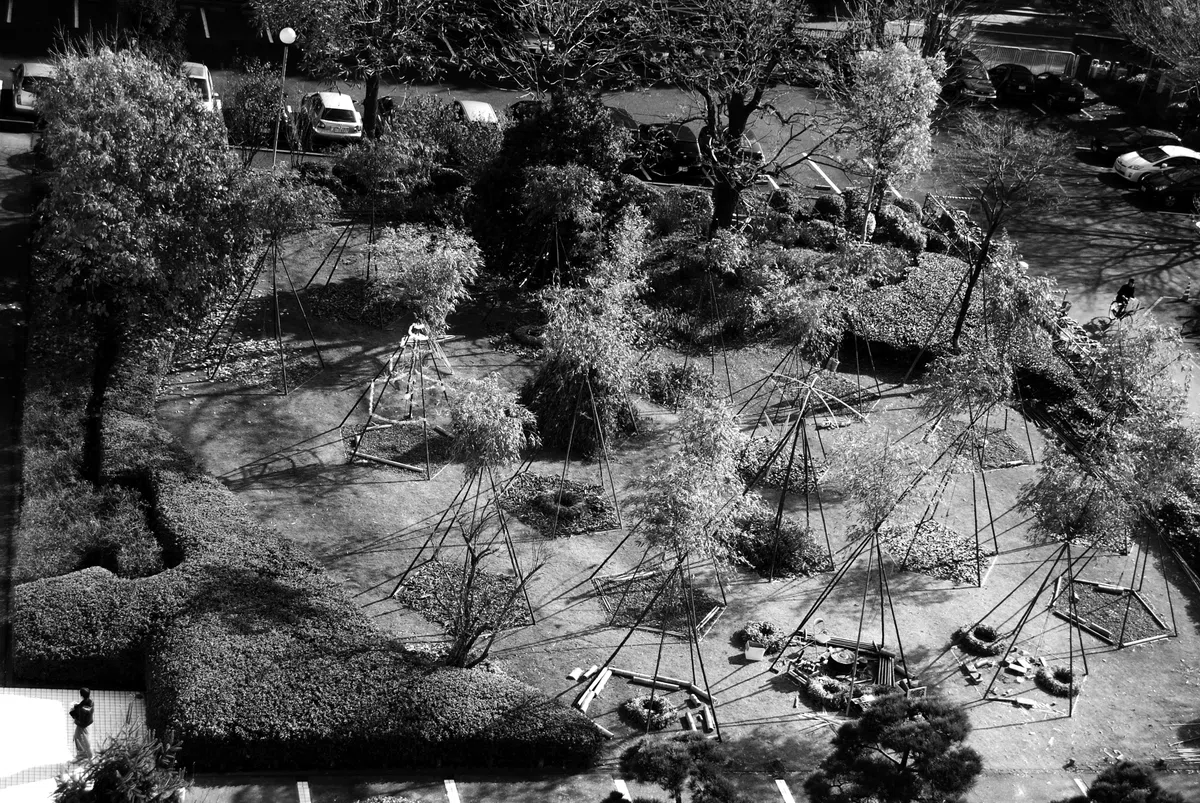
日詰さんの竹と向き合う姿勢は独特だ。日詰さんは「竹は民主主義的」「なにかをつくろうとするとき、まず竹でできないか考えてみる」などの「名言」を数多く発明され、私は大きな影響を受けている。
Hizume's approach to bamboo is singular. He has coined many memorable phrases — among them, "bamboo is democratic" and "whenever you want to make something, first ask yourself whether bamboo could do the job" — and these ideas have shaped my own thinking profoundly.
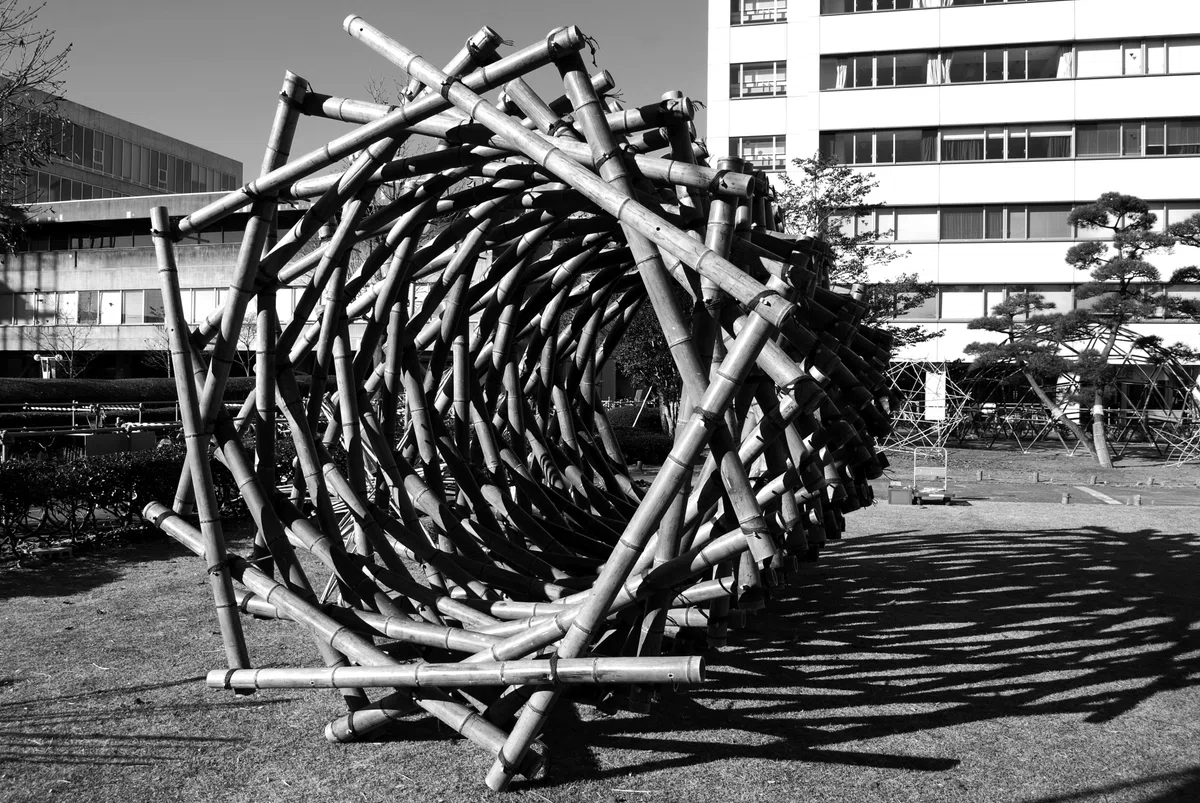
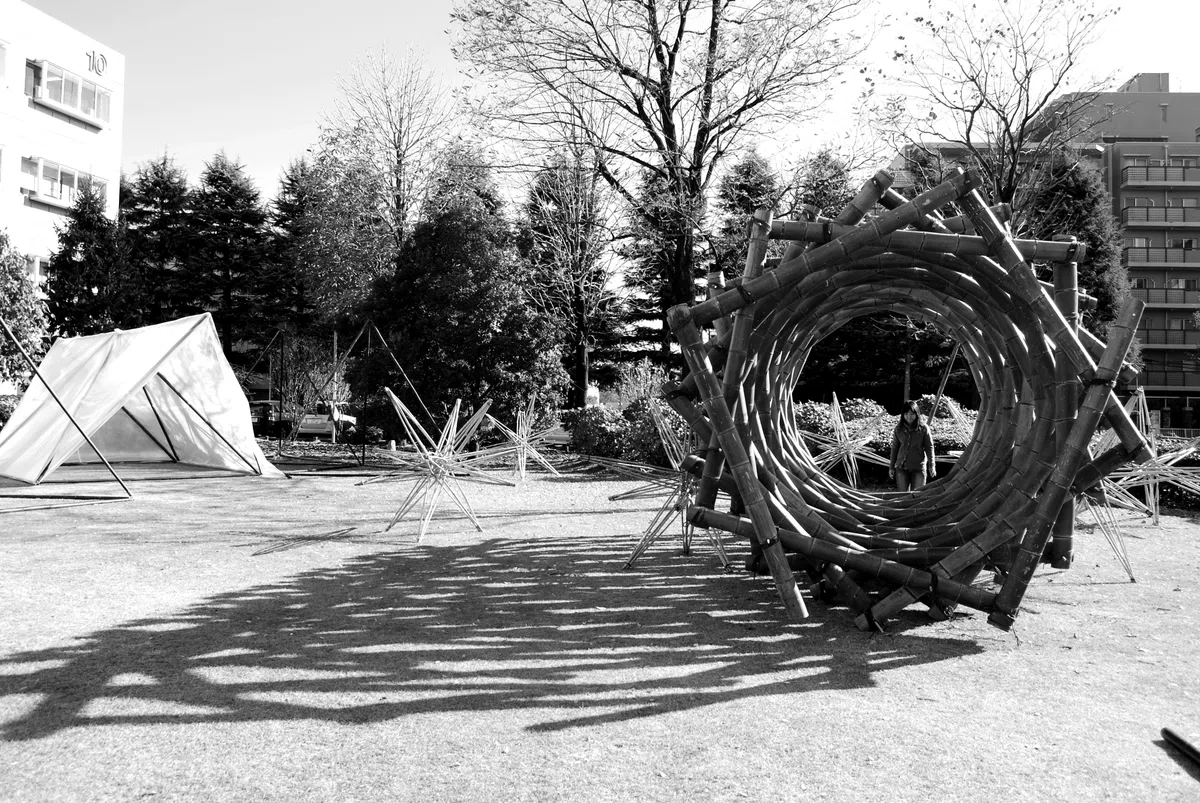
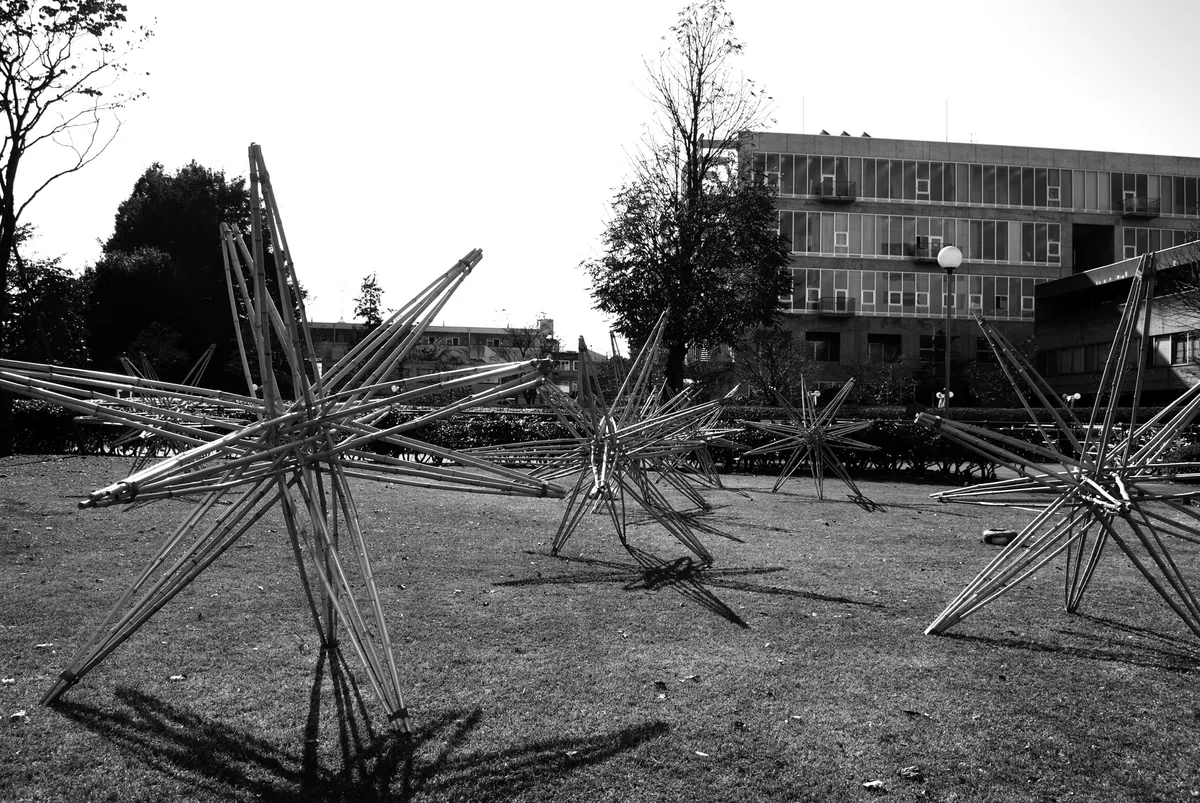
日詰さんの作品は黄金比・フィボナッチ数列で構成されている。決して真っ直ぐではない竹が精緻に組まれることで見事な幾何造形へと変貌する。日詰さんの作品や思想に触れるにつれ、数学とは自然界が採用したシステムを人間が理解するために生み出した言語、という認識が強くなってきた。
Hizume's works are built on the golden ratio and the Fibonacci sequence. Bamboo — never truly straight — is assembled with such precision that it is transformed into breathtaking geometric forms. The more I encounter his work and ideas, the more I have come to see mathematics not as a human invention, but as the language we developed to comprehend a system that nature itself had already adopted.
自然界のシステムは「合理的」だ。人間は自然という広大な宇宙システムを解読することに膨大な時間を費やし、記述しようとしてきた。だがそれでも未だ到達し得ない知の極みが自然であろう。日詰さんは竹を通して数学という自然界への解読言語を教えてくれた。
Nature's systems are, in a word, rational. Human beings have spent untold ages trying to decode and describe the vast cosmic system we call nature — and yet nature remains forever beyond our full grasp. Through bamboo, Hizume taught me that mathematics is the language we use to read the natural world.
10年以上前になるが、板東先生と初めて千葉県の日詰さん宅を訪ねたときのことを鮮明に覚えている。思えば、あの日「フィボナッチ茶室」という作品内でお茶をいただきながら話を伺う中で、ある種、日詰さんのワークショップに参加していたのだろう。以来、日詰さんの世界に憧れ、多くを教わってきた。
It was over ten years ago that I first visited Hizume's home in Chiba Prefecture, together with Professor Bando. Looking back, I realize that sitting inside his work Fibonacci Tea House and drinking tea as he spoke was, in its own way, a kind of workshop. Since that day, I have admired his world and learned a great deal from him.
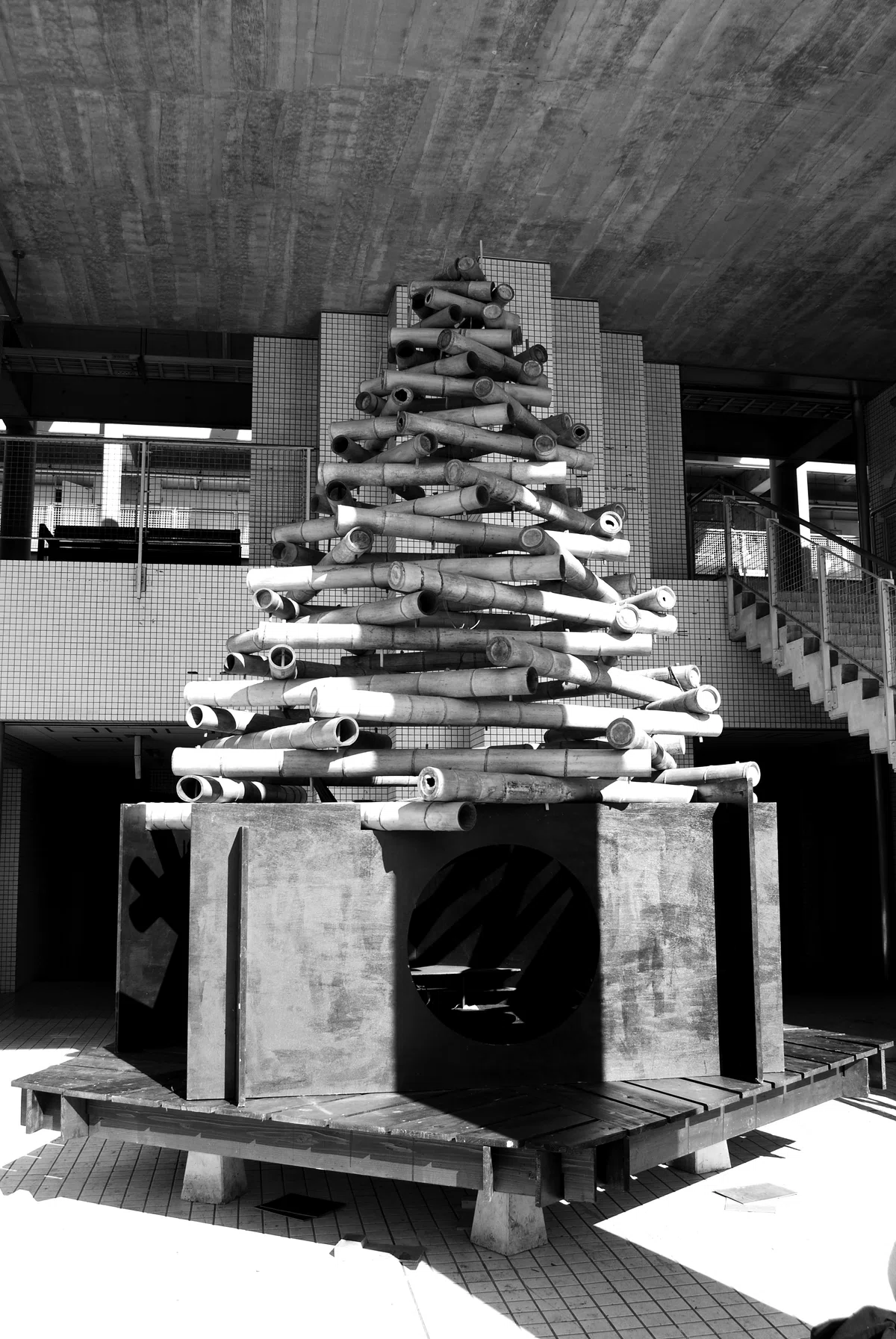
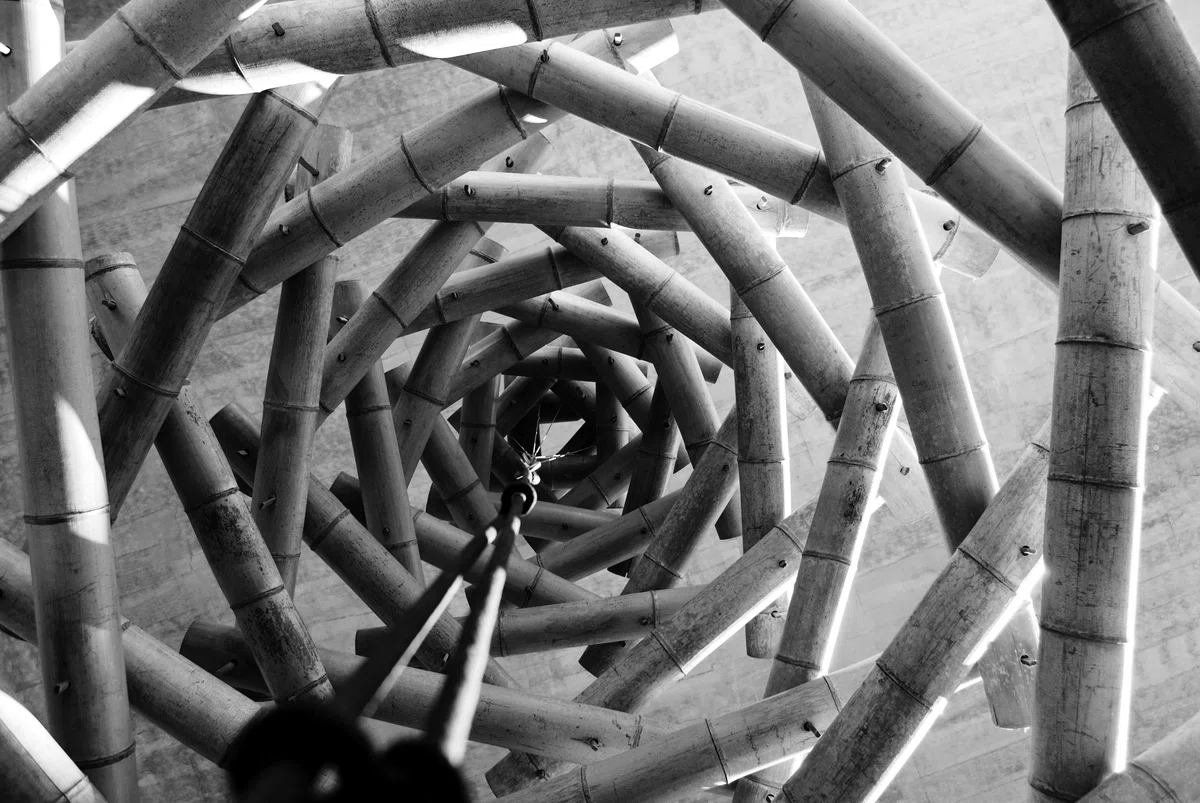
日詰さんの作品は幅広い。すべてに竹を用いて音楽(一次元)、平面(二次元)そして立体(三次元)を表現するだけでなく、都市空間をも数学(ペンローズタイリング)と竹でデザインする。日詰さんはワークショップに長けており、参加者は自然と竹や数学に親しんでいく。感覚としては「学ぶ」というより、日詰さんの哲学・概念が具現化した世界の住人になるような経験だ。
Hizume's work spans a remarkable range. Using bamboo alone, he expresses music (one dimension), flat surfaces (two dimensions), and sculpture (three dimensions) — and even designs urban spaces through mathematics and Penrose tiling. He is a gifted workshop leader: participants find themselves drawn naturally into bamboo and mathematics, not so much learning as inhabiting the world where his philosophy and concepts take living form.
編集注記(2026年) 日詰さんは今も変わらず精力的に活動されている。最近のインタビュー記事は大変読み応えがあった。是非多くの人に読んでもらいたい。
日詰さんのおっしゃる「竹は民主主義的」という概念はとても重要だと思っている。ぼくは竹は神(人智を超えた存在)が人類に使わした汎用性が高く地球での多様な共生を可能にする資源だと感じているが、だからこそ民主主義的側面を持つのだと思う。赤道ベルト付近には多く遍在し、ある程度伐採・加工が容易で、生活のさまざまなシーンを先史時代から支え続けてきた存在。それが竹だ。この資源を人類は活用する義務があると感じている。
Editor's note (2026): Hizume continues to work with the same energy as ever. A recent interview with him made for a deeply rewarding read — I hope as many people as possible will come across it.
The concept Hizume calls "bamboo is democratic" strikes me as profoundly important. My own sense is that bamboo is a resource sent to humanity by something beyond human intelligence — call it God, or the natural order — a uniquely versatile material that makes possible a rich diversity of coexistence on this earth. And it is precisely because of this that bamboo carries a democratic quality. It grows abundantly across the equatorial belt, is relatively easy to harvest and process, and has supported countless aspects of human life since prehistoric times. That is what bamboo is. I believe humanity has a responsibility to make use of this resource.
