(p.13)竹細工職人 / Bamboo Craftspeople

『竹のえん(Take no En)』橋口博幸 Hiroyuki Hashiguchi(2021.3)
私が武蔵野美術大学に在籍した頃、幾度となく名前を耳にするもののお目にかかる機会がなかったのが稲垣尚友(以下、ナオ)さんだ。ナオさんは宮本先生をはじめ相沢先生や工藤先生と親しく、竹細工を生業とされている。また、鹿児島県トカラ列島の、特に平島の「日常」を多く記録し続けた民俗研究家でもある。ナオさんは民俗学者や研究者が各地の「むかし」の話を聞いて回る様に違和感を覚えたという。「おぼろげな記憶を頼りに50年前を記録するより、まぎれもない『いま』を記録していくことの方が記録としては意味がある」との思いから「いま」を記録し続けたのだそうだ。
During my years at Musashino Art University, one name kept coming up — someone I kept hearing about but never managed to meet: Naotomo Inagaki, known to those around him simply as Nao. Nao was close to Miyamoto, Professor Aizawa, and Kudo, and bamboo craft was his livelihood. He was also a folklore researcher who documented the everyday life of the Tokara Islands in Kagoshima Prefecture, particularly Hirajima. Nao felt uneasy about the way folklorists and researchers would travel around collecting stories of "the old days." His conviction was that "recording the undeniable now is more meaningful than piecing together memories of fifty years ago" — and so he kept documenting the present.
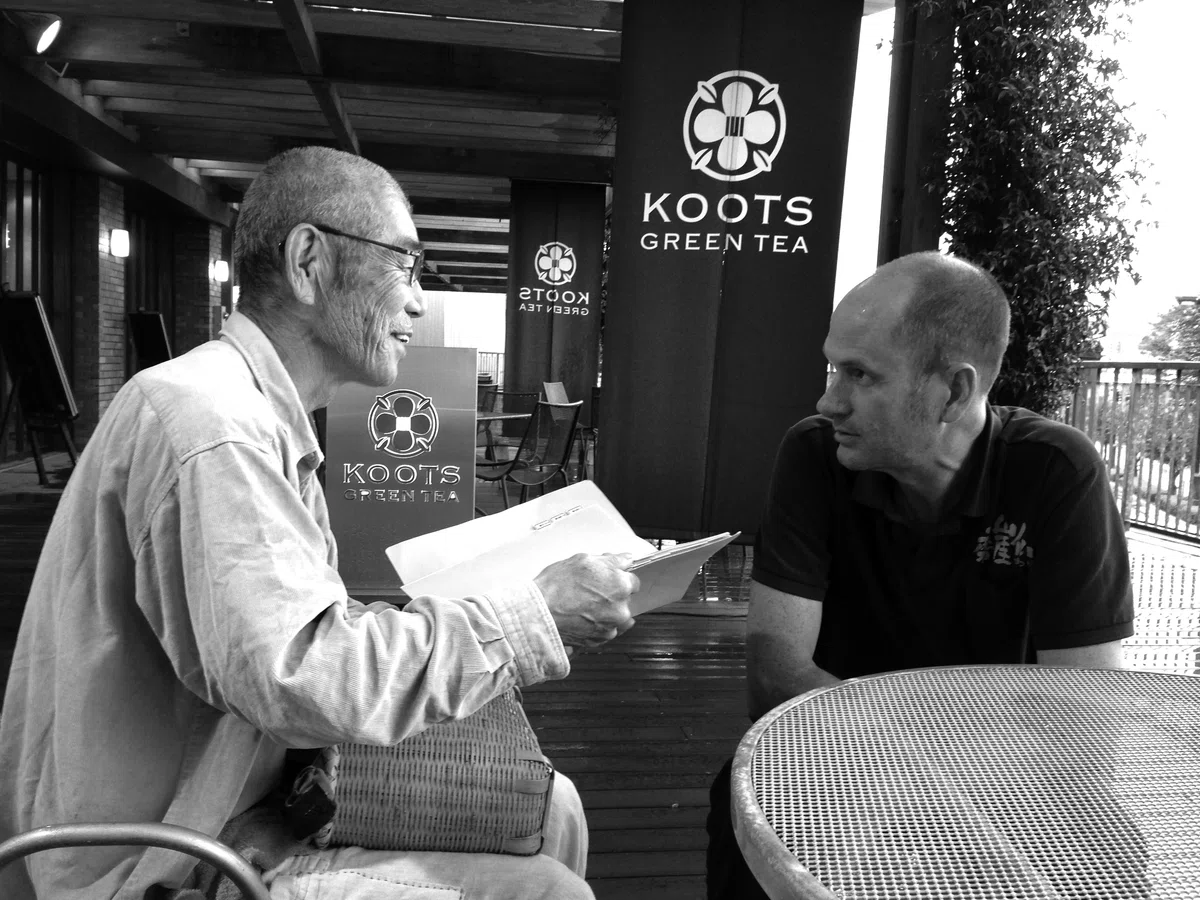
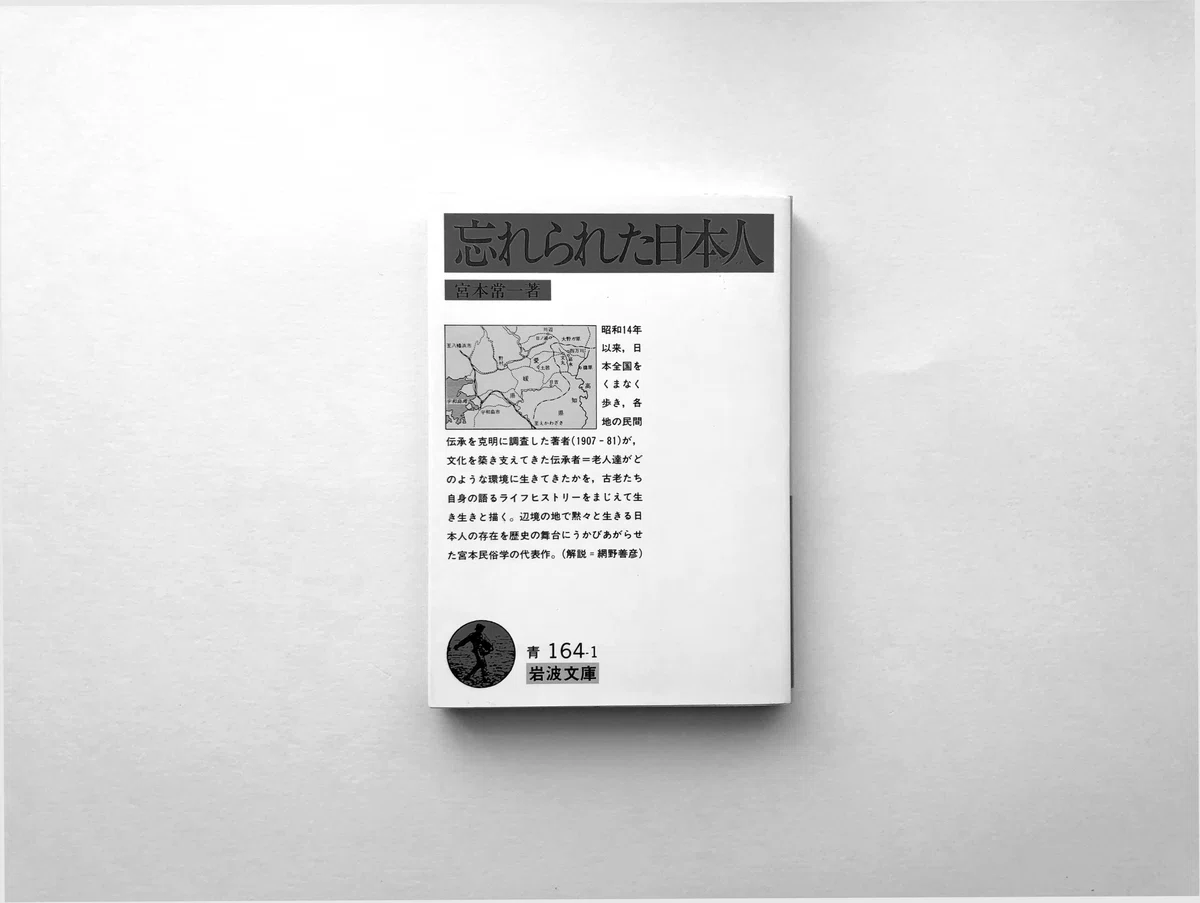
ナオさんとお会いできたのは私が大学を離れ、郷里の鹿児島に拠点を移した後だった。鹿児島国際大学で教鞭を執るジェフリー・S・アイリッシュさん(以下、ジェフ)が、枕崎の漁港に数日滞在しているナオさんを紹介してくださったのがきっかけだった。ジェフは宮本常一の名著『忘れられた日本人』を英訳した人であり、もう四半世紀以上鹿児島に住む民俗学者だ。ジェフとは共著というかたちで本を出版したことがある。とは言ってもジェフが学生たちとやってきたことをお手伝いしたに過ぎないのだが、ジェフの好意で共著というかたちにしてくれたのだ。いま思い返しても、ジェフと鹿児島市の坂之上という地域を毎日歩いて話を聞いていた日々は楽しかった。ジェフは私以上に鹿児島弁を流暢に操り、地域に溶け込んでいっていた。そして多忙にもかかわらず学生であれ、住民であれ、偉い立場の人であれ分け隔てなく丁寧に接していた。そのジェフにナオさんを紹介していただいた。衝撃だった。
I finally met Nao after I had left the university and returned to my hometown of Kagoshima. The introduction came through Jeffrey S. Irish, a folklorist who has lived in Kagoshima for more than a quarter of a century and teaches at Kagoshima International University. Jeff had translated Tsuneichi Miyamoto's landmark work Wasurerareta Nihonjin (The Forgotten Japanese) into English, and he told me that Nao was spending a few days at Makurazaki fishing port — and introduced us. Jeff and I once co-authored a book together; to be accurate, I assisted with what he and his students had already done, and it was Jeff's generosity that brought me on as co-author. Even now, I look back fondly on the days we walked the Sakanoueno neighborhood of Kagoshima, talking to people. Jeff spoke Kagoshima dialect more fluently than I did, and he blended effortlessly into the community. Despite his busy schedule, he gave the same careful attention to students, residents, and dignitaries alike. It was Jeff who introduced me to Nao — and the encounter was a shock.
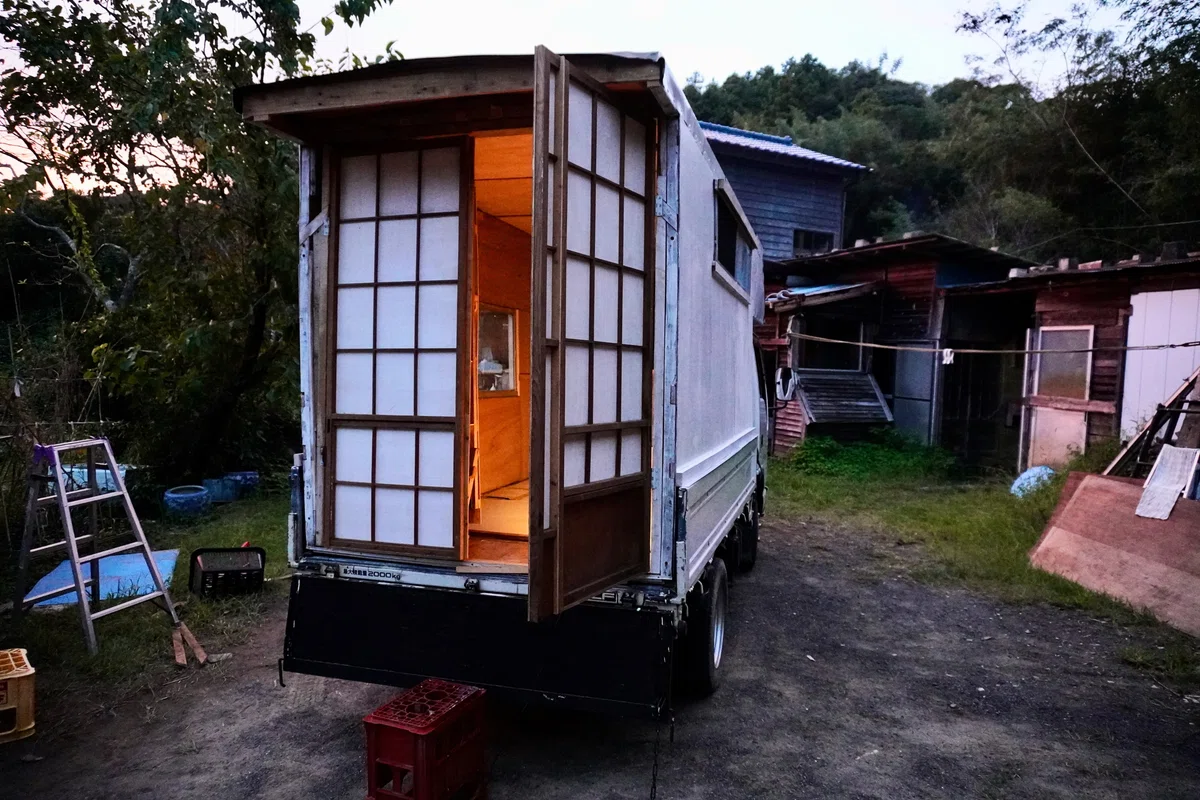
確か前日まで雨風が強かったのだと思うが、ナオさんは「ホワイトハウス」と呼ぶトラックマンション(トラックの荷台に住空間となる箱を載せている)でゆっくりとした時間を過ごしていた。地面には、釣りをしていた人がくれた魚を食べた痕跡が見てとれた。刺身で食べ、鍋でも食べたのだという。ホワイトハウスの中には煮炊き用の鍋とコンロ、布団そして竹細工道具一式が簡素に載せられていた。好きなところに行き、好きなように過ごす、まさにホワイトハウス的優雅な暮らしぶりだった。
The days before had apparently been stormy, but Nao was taking things at his own pace in what he called his "White House" — a truck with a living space built into the bed. On the ground were the remains of a fish that a local fisherman had given him; he'd eaten it as sashimi and then made a stew. Inside the White House: a pot, a stove, a futon, and a complete set of bamboo-working tools, all arranged simply. Going where he pleased, living as he liked — it was a life of White House elegance, in the truest sense.
ナオさんの話は面白かった。ナオさんは博学で何でも知っているように感じたが、ほとんどが自分の経験から得たものだった。逆に知らないことは素直に知らないと言い、教わろうとしていた。今まで会ったどんな人とも違うタイプの人間だなと感じた。
Nao's conversation was endlessly interesting. He seemed to know something about everything, but almost all of it came from direct experience. When he didn't know something, he said so plainly and asked to be taught. He was unlike anyone I had ever met.
ナオさんは籠屋として各地を歩きながら籠や笊の修理をしたり新しくつくってきた。そのため全国各地の竹の習俗や文化といったものに精通しており、私の知る限りもっとも竹を「知っている」方なのは間違いなかった。
Nao had walked the length of the country as a basket-maker, repairing and weaving baskets and sieves wherever he went. Through that, he had come to know bamboo customs and culture across Japan in remarkable depth. To my knowledge, he is without question the person who understands bamboo most deeply of anyone I have encountered.
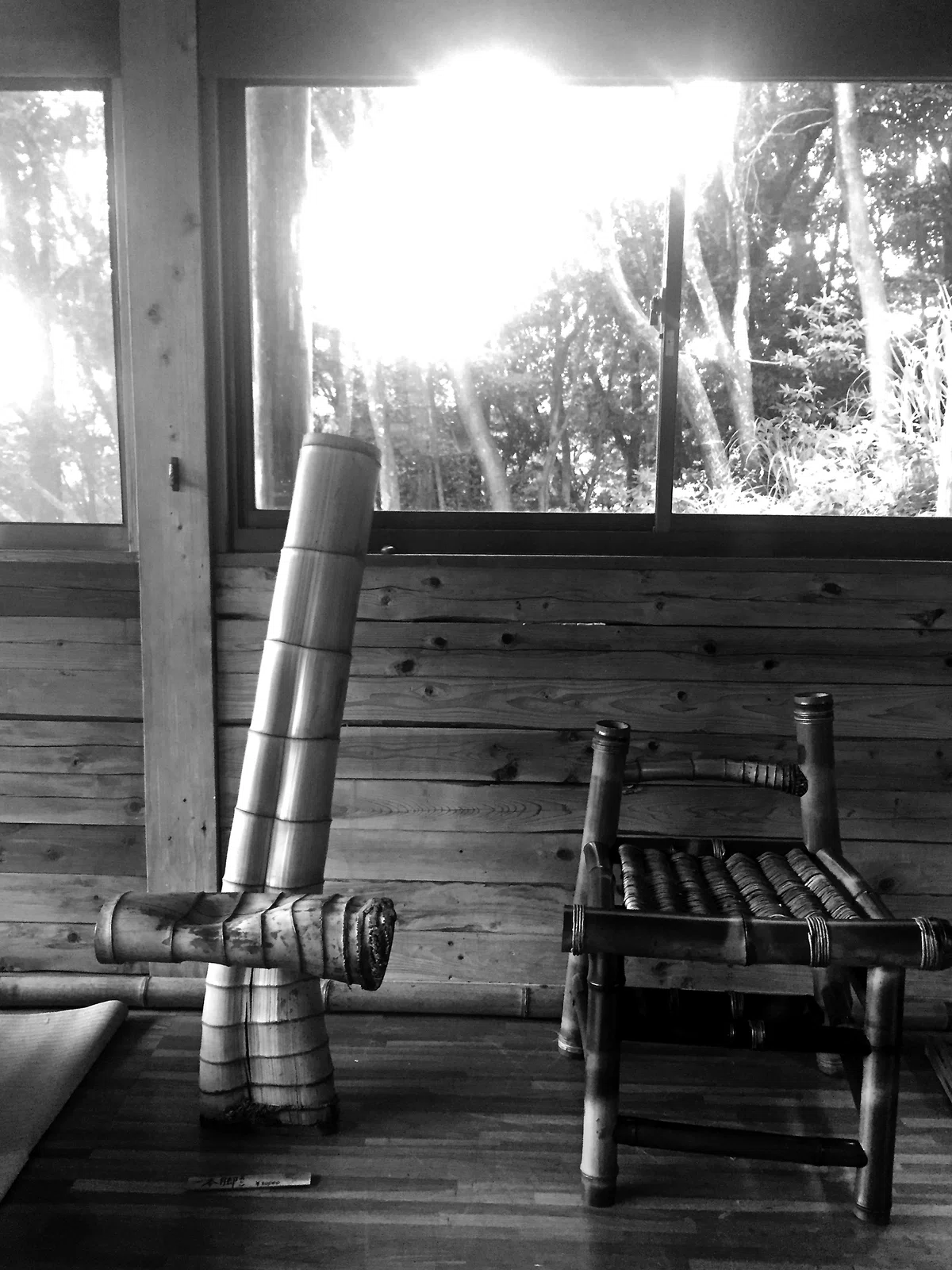
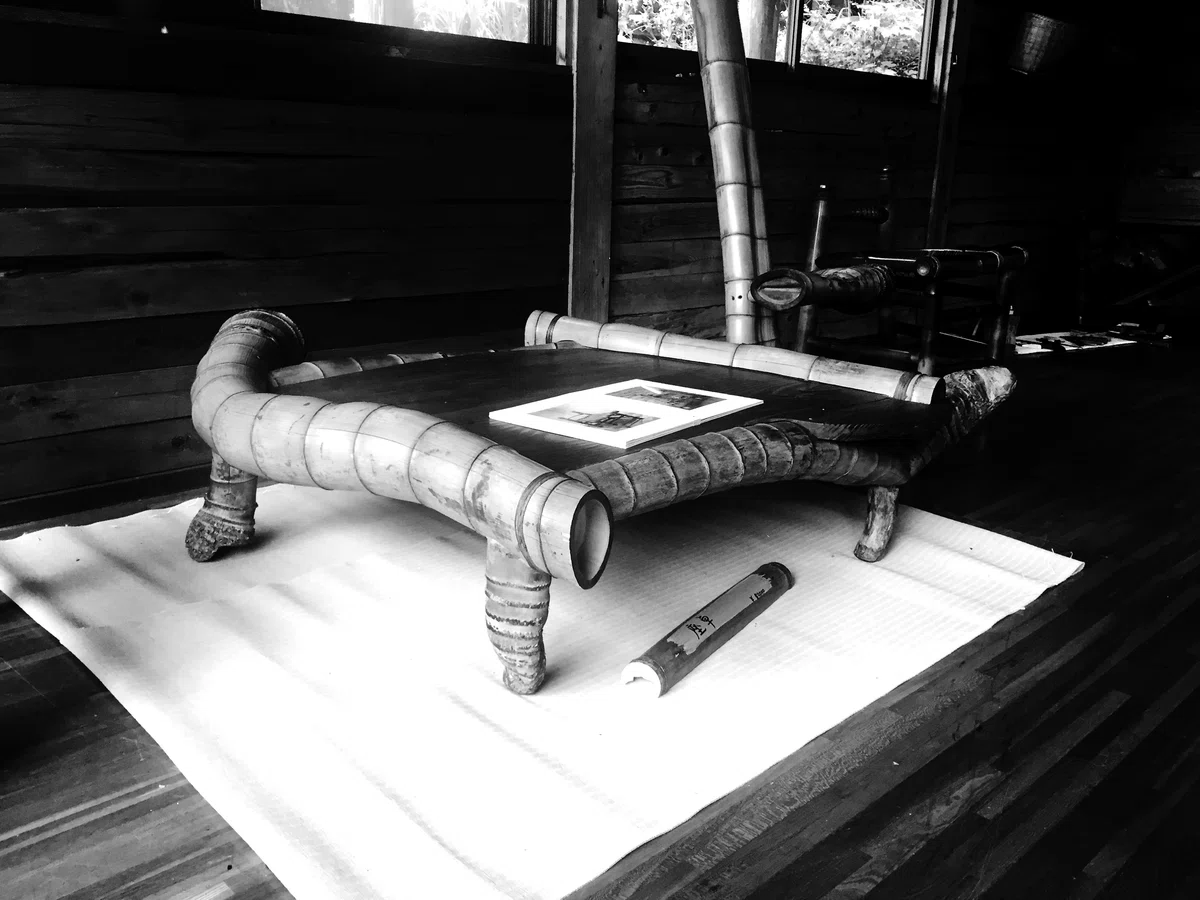
ナオさんは何十棟もの古民家を解体してきたため、多くの煤竹を持っていたらしい。煤竹は茅葺き屋根の屋根材などで、長年囲炉裏の火と煙で燻されていたものだ。年月がつくり出すものであり、また燻煙熱処理を施されているため材としても強いという特性から、希少なものとして扱われることも多い。ナオさんはそんな煤竹を使って笊や籠以外の「家具作品」も長くつくってきた。その作品たちは私の目にも、独創性に溢れ、芸術品としての輝きをまとっていた。おそらく金銭的にも決して低くない仕事になっていただろう。だがナオさんはその日々に「虚ろさ」を感じるようになったという。結果として修行した当初のように笊や籠を編むことに回帰していったのだそうだ。
Having dismantled dozens of old farmhouses over the years, Nao had accumulated a considerable store of susudake — bamboo that has been smoked for years by the hearth fires of traditional thatched-roof houses. Aged by time and hardened by years of smoke and heat, susudake is strong and rare, treated as something precious. Nao had long used it to make not only baskets and sieves but also furniture — objects that, to my eye, shone with originality and the unmistakable radiance of art. The work would likely have brought him considerable financial reward. But Nao said he began to feel a kind of hollowness in those days, and gradually returned to weaving the baskets and sieves he had learned to make when he first started out.
ナオさんに大きな影響を与えたのが宮崎県日之影町の廣島一夫さんだ。15歳で弟子入りしてから2013年に98歳で亡くなる直前まで、日常で使う竹の笊や籠をつくり続けた生粋の竹細工職人だ。日本では竹細工職人が評価されること自体少なく、また廣島さんの作品が花器などの工芸品ではなく日常の民具であったため一部の人のあいだでしか知られていなかった。だが73歳の頃、世界最大のスミソニアン博物館に作品が収蔵・展示されることになった。展示会は大きな反響を呼び、アメリカ全土を巡回展が開催され、続いてイギリスの大英博物館でも作品が収蔵・展示された。
The person who had the greatest influence on Nao was Kazuo Hiroshima from Hinokage, Miyazaki Prefecture — a lifelong bamboo craftsman who apprenticed at the age of 15 and went on making everyday bamboo baskets and sieves until just before his death in 2013, at the age of 98. Bamboo craftspeople rarely receive recognition in Japan, and because Hiroshima's pieces were everyday folk tools rather than decorative art objects, he was known only in certain circles. But around the age of 73, his work was acquired and exhibited by the Smithsonian Institution — the world's largest museum complex. The exhibition drew enormous attention, traveled across the United States, and was followed by an acquisition and showing at the British Museum in London.
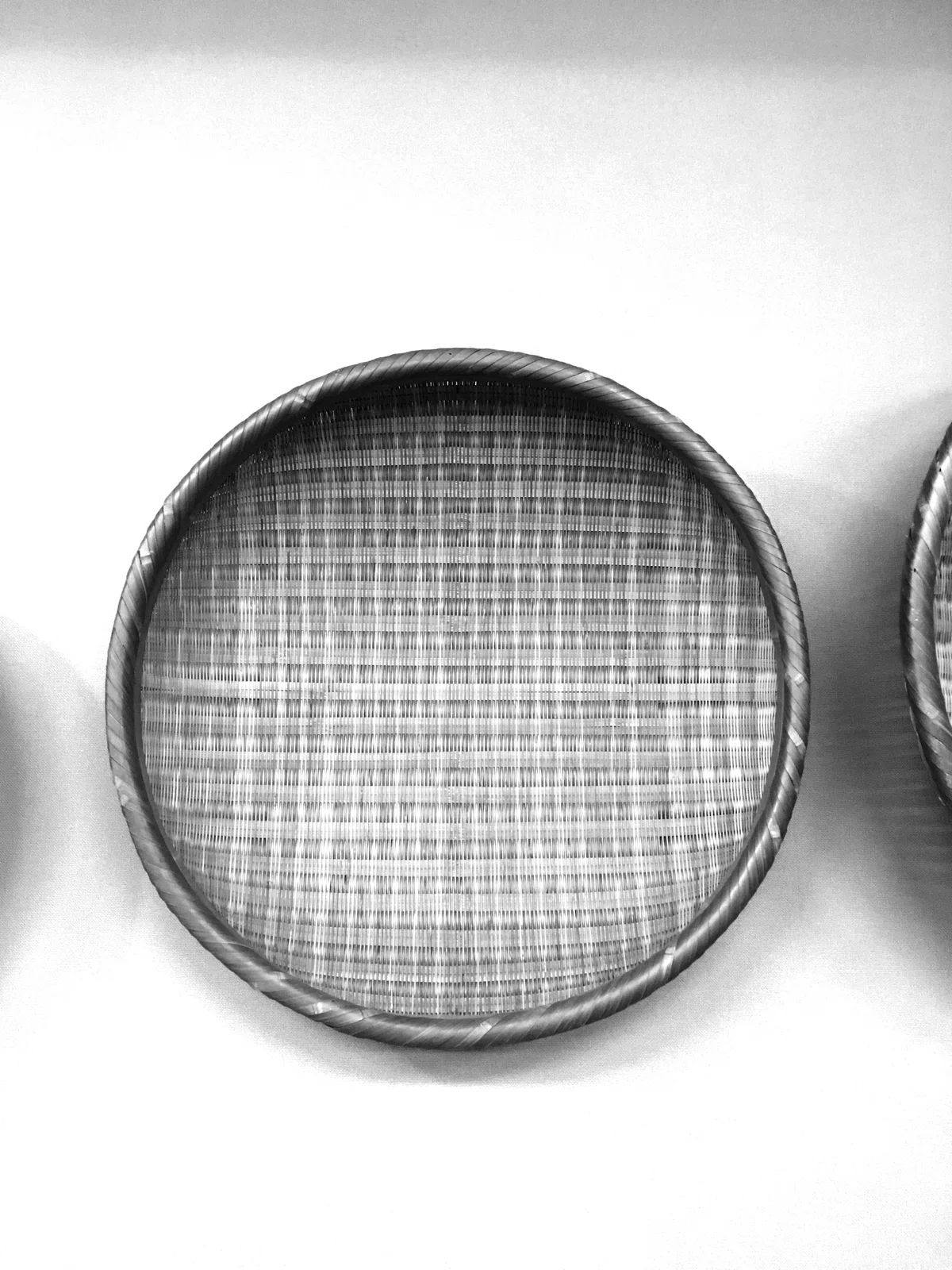
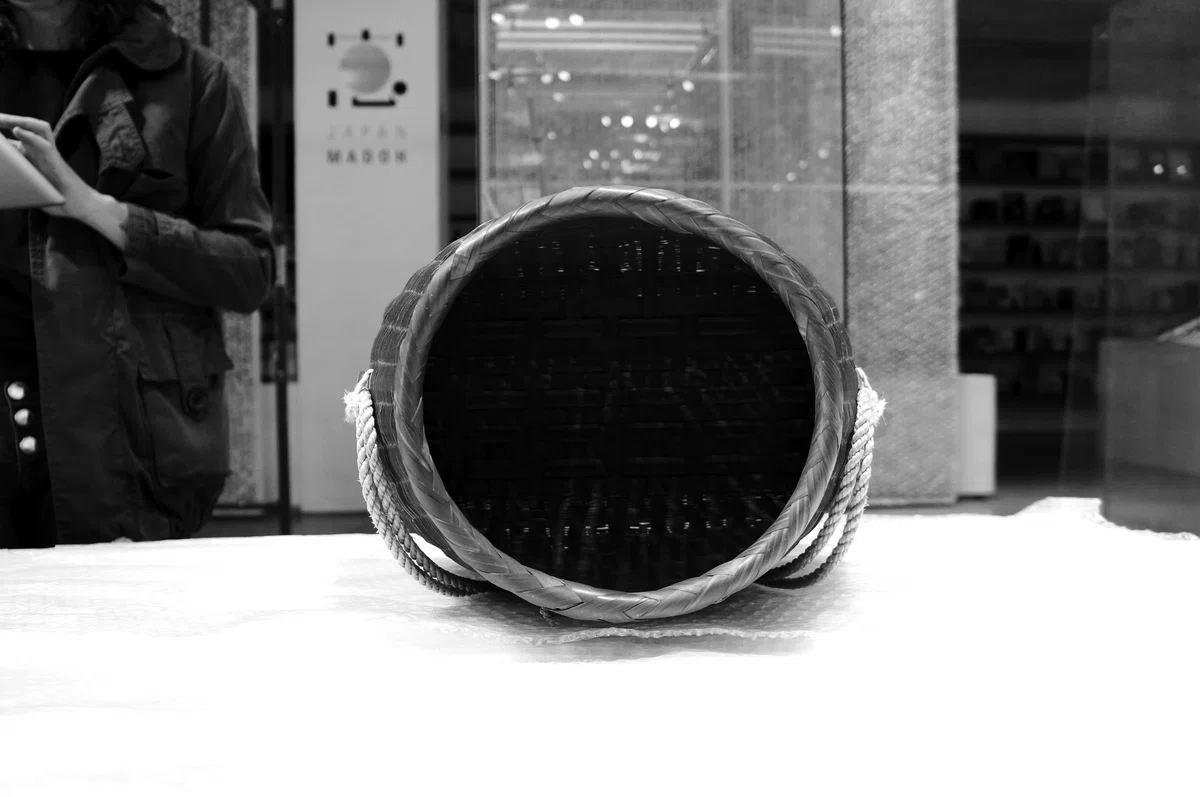
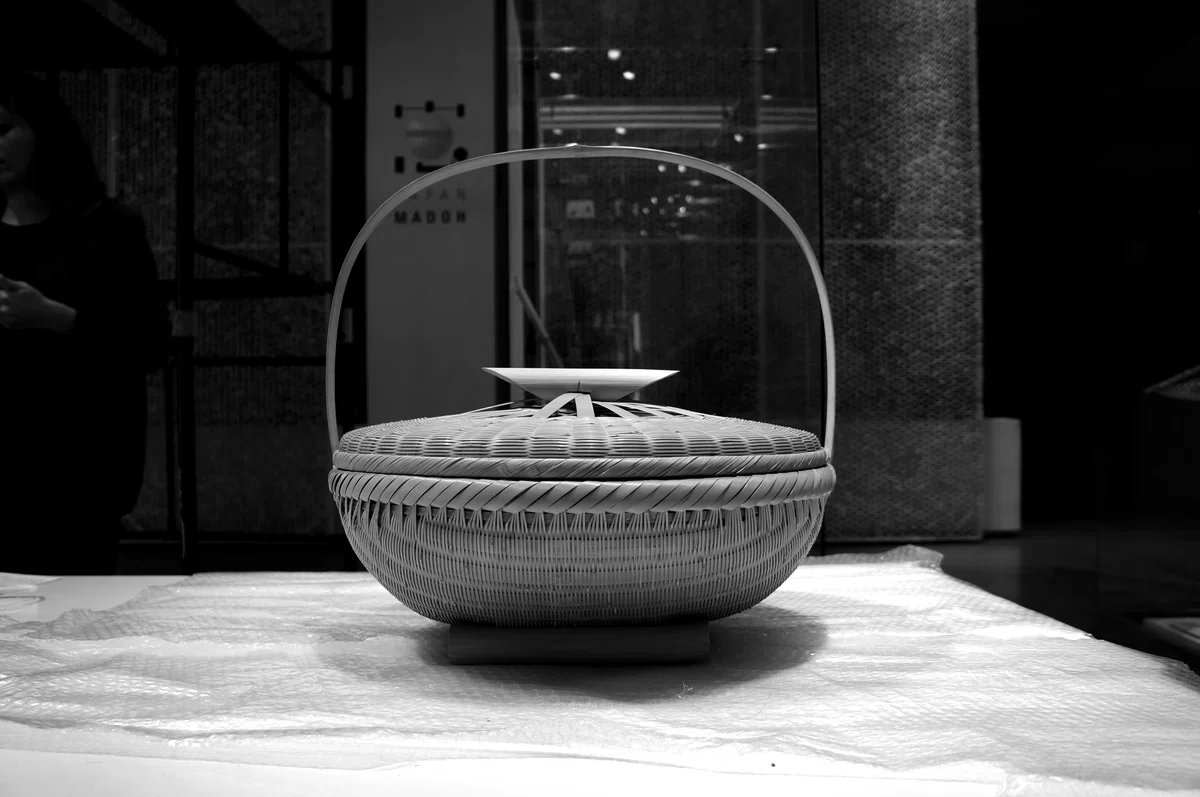
廣島さんの志や技術を引き継ぐ存在もいる。私がお会いしたのは廣島さんと同じ日之影町で竹細工を生業とする小川鉄平さんと、熊本県水俣在住の井上克彦さんのお二人だ。二人とも地域の人たちが日々生活で使用する竹細工を丁寧につくられている。作品を拝見すると、毎日使用する「道具」が丈夫で長持ちするよう、そして廣島さんのようにとても美しく仕上げられている。
There are those who carry forward Hiroshima's spirit and skill. The two I have had the pleasure of meeting are Teppei Ogawa, who works in the same town of Hinokage, and Katsuhiko Inoue, who lives in Minamata, Kumamoto. Both make, with quiet care, the everyday bamboo tools that people in their communities actually use. Looking at their work, you can see that every piece is made to be strong and long-lasting — and, like Hiroshima's, finished with great beauty.
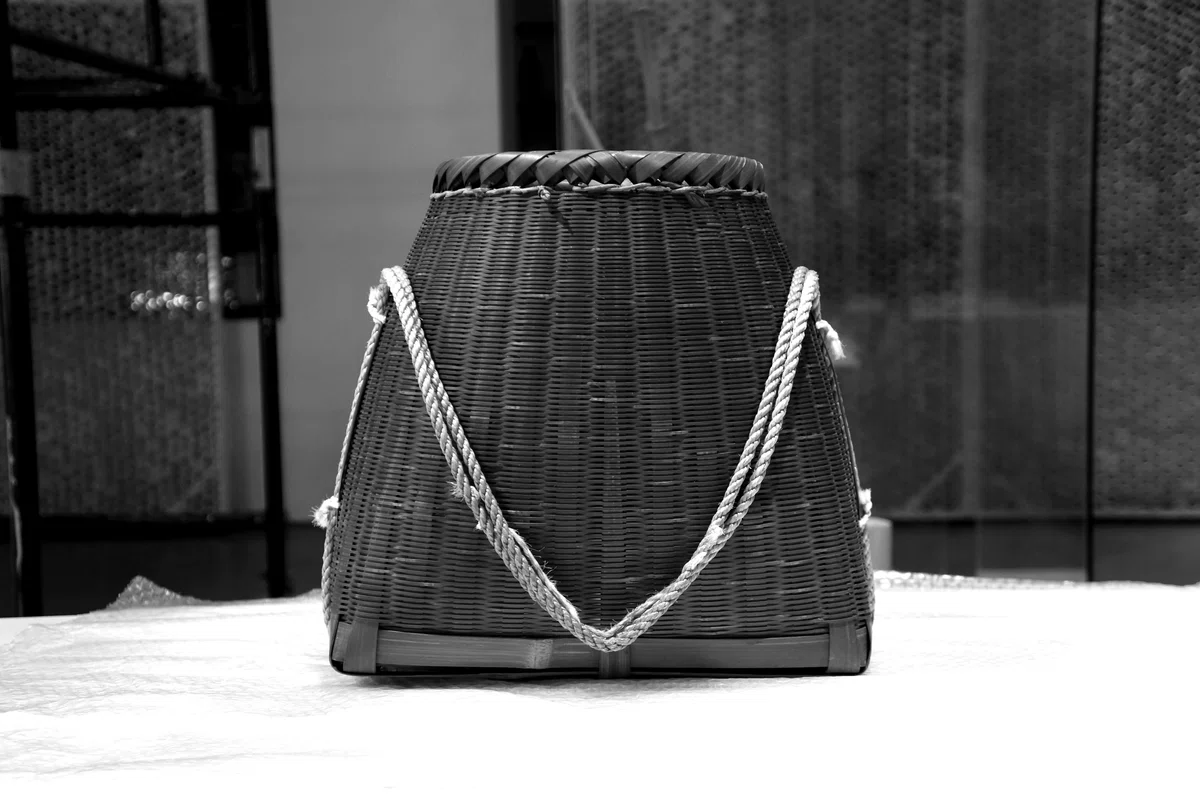
小川さんの作品に「カルイ」と呼ばれる伝統的な背負い籠を、現代の生活にあったショルダーバッグのサイズにデザインしたものがある。私も購入させていただき日々使っているが、伝統的な「かたち」の良さと意味を感じられ、そしてなによりその美しく編み込まれたかたちに心底惚れ込んでいる。小川さん、井上さんを紹介してくださったのもナオさんだった。
Among Ogawa's pieces is a design that takes the karui — a traditional backpack-style carrying basket — and scales it to the size of a modern shoulder bag. I bought one and use it every day. It carries the integrity and meaning of a traditional form, and I find myself deeply in love with the beauty of its weaving. It was Nao, again, who introduced me to both Ogawa and Inoue.
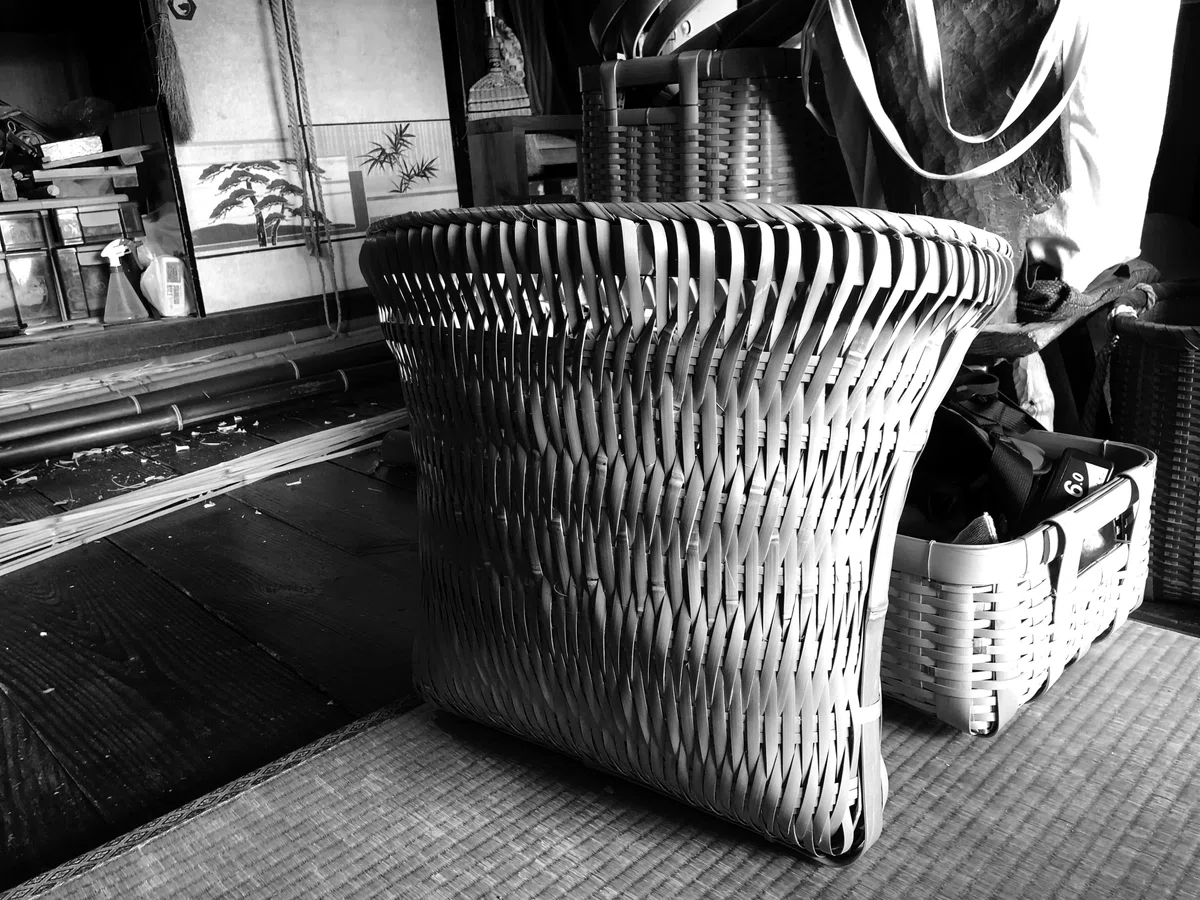
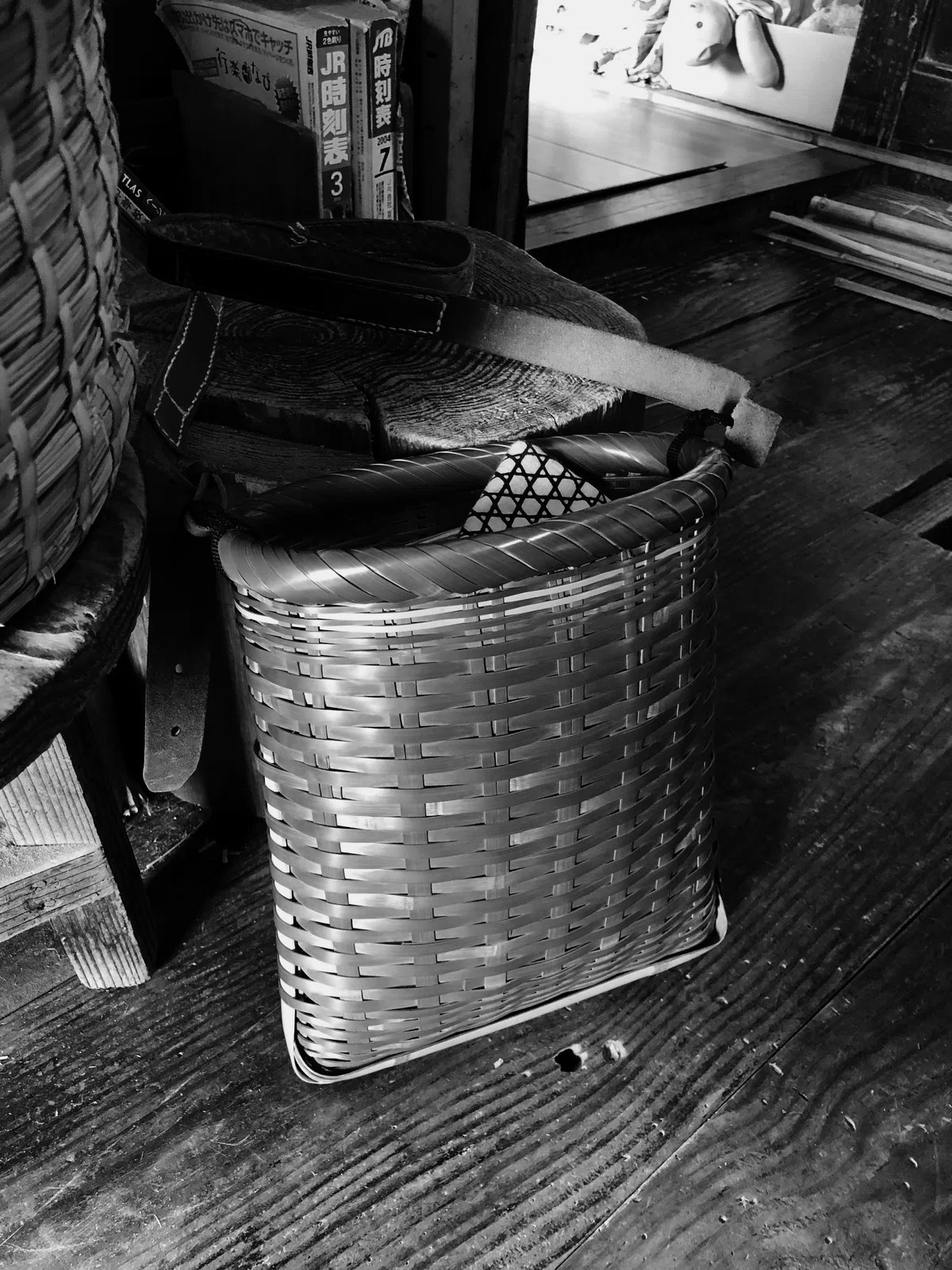
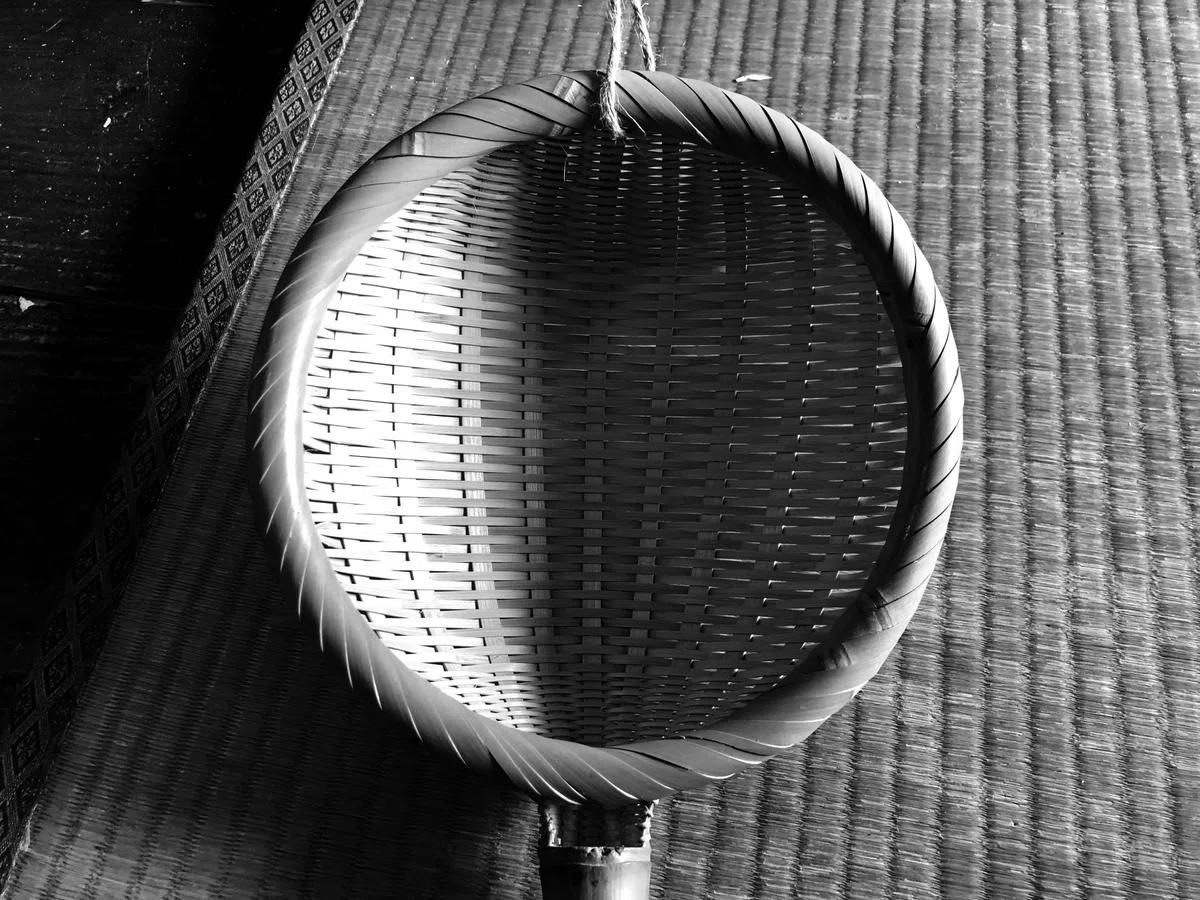
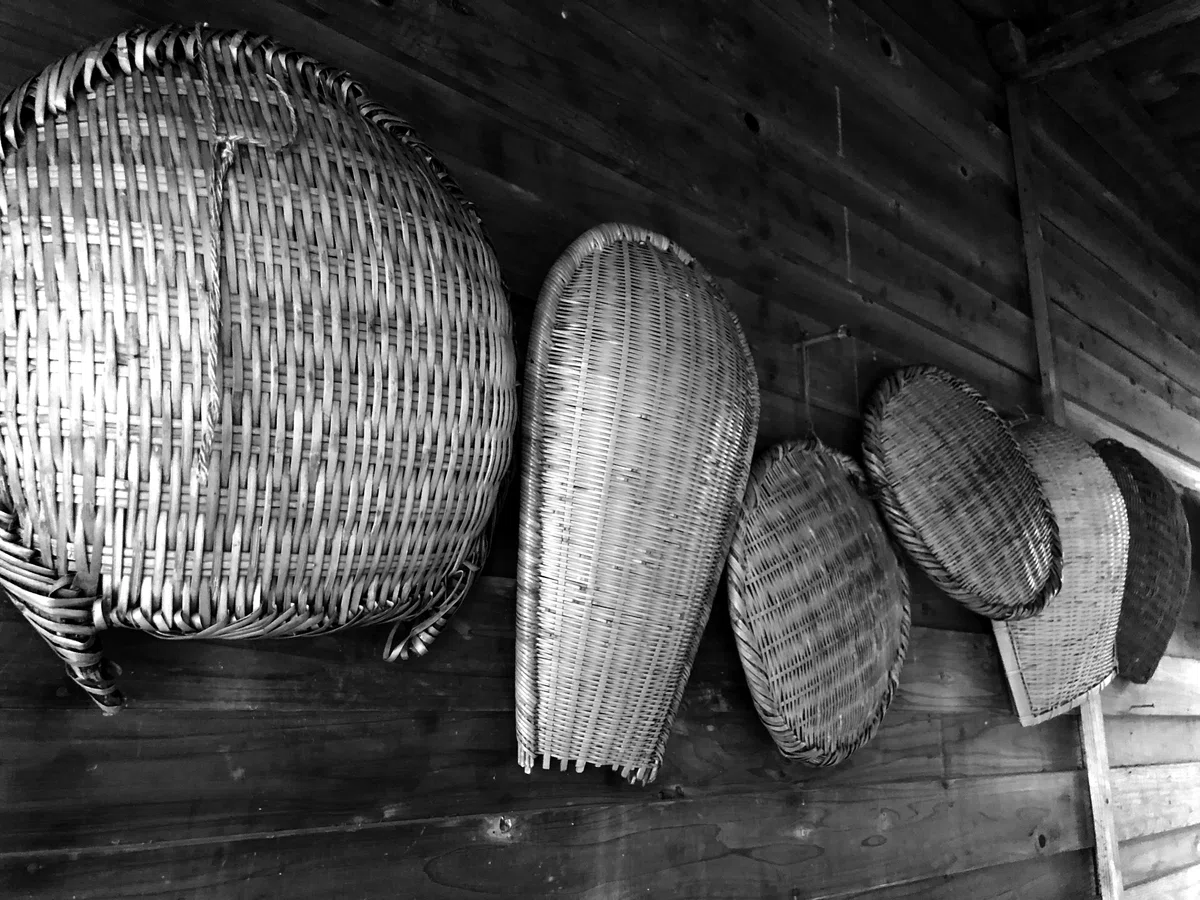
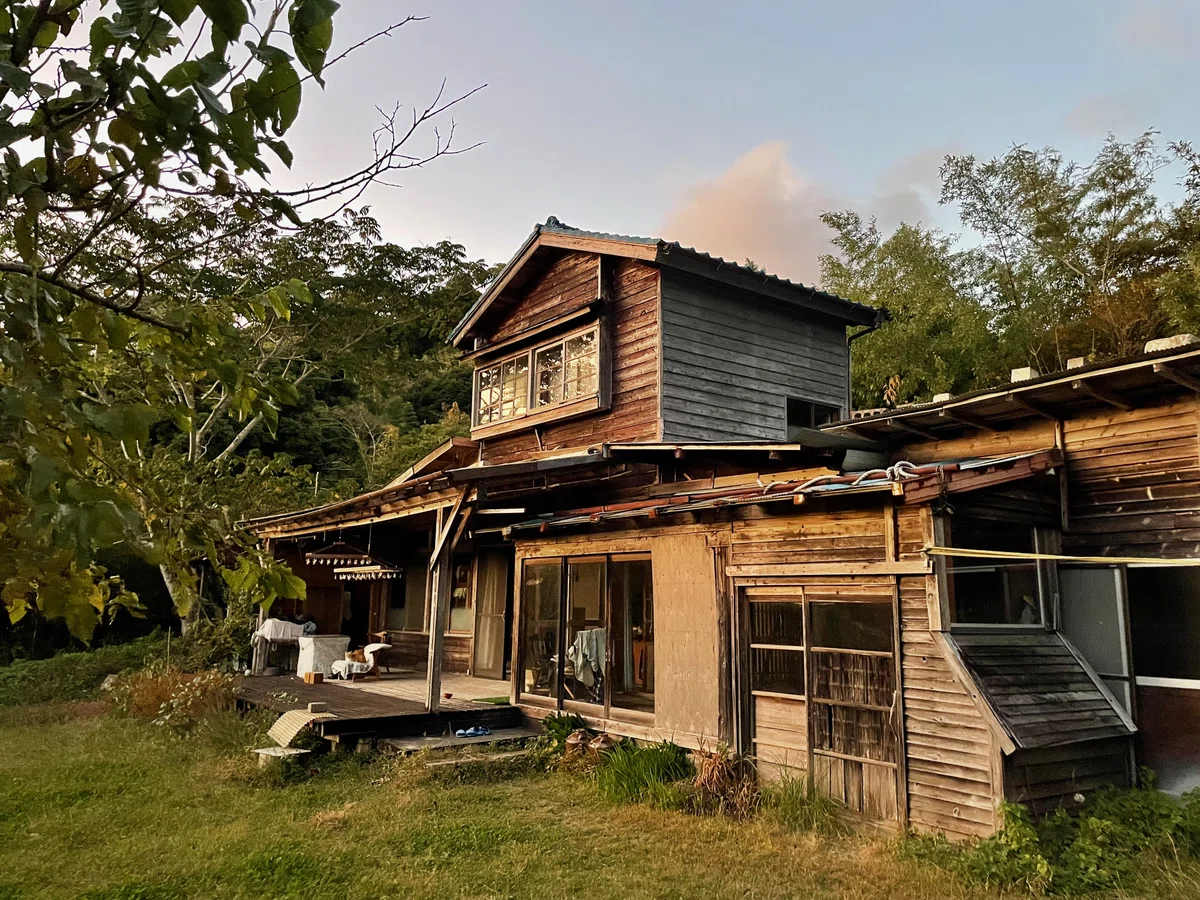
ナオさんは現在、千葉県鴨川に暮らしながら竹細工をしたり大工仕事をしたり原稿を書いたりしている。時々お邪魔して滞在させてもらうのだが、ナオさんの暮らしには無理がなく心地よい。鶏がいたときには毎日生まれる卵を楽しみにし、近隣の方からの野菜や肉の差し入れに舌鼓をうち、ありあまる古くなった竹ひごが最高の着火剤となってストーブやお風呂をわかしてくれる。壁には種々の「手づくりの」笊や籠が使いこまれて掛かっている。そもそも家自体がすべて廃材を利用した手づくりのものであるから、行く度に改築・増築工事が行われている。台風の影響で水がチロチロしか出ないこともある。ナオさんの暮らしぶりは窮屈な自然主義者ではなく、むしろなんだって受け入れられる寛容主義といった感じで肩の力が適度に抜けていて楽しい。
Nao now lives in Kamogawa, Chiba, weaving bamboo, doing carpentry, and writing. I visit and stay from time to time, and there is something deeply comfortable about the way he lives — nothing forced about it. When he kept chickens, the daily arrival of fresh eggs was a small daily delight; he savors vegetables and meat brought by neighbors; old, dry bamboo strips make the perfect kindling for the stove and the bath. The walls are hung with all manner of well-used handmade baskets and sieves. The house itself is built entirely from salvaged materials, and every visit there seems to be a new extension under construction. Sometimes, after a typhoon, the water comes out in the faintest trickle. Nao's way of living is not the cramped austerity of a purist — it is something more like a generous open-handedness, easy and unhurried, and always enjoyable to be around.
編集注記(2026年)
ナオさんとは僕はちょうど40歳離れているものの、僕としては最も親しい友人といった感じがある。ナオさんの著した竹細工の本『竹細工入門: やさしく編む』は多くの竹細工を志す人々に愛されている名著だ。ナオさんの竹に関する造詣の深さを感じるエッセイがインターネットで公開されている。
同時にナオさんの島への想い、経験したことは数珠玉の如く輝いており、その一端がまとまった本が『平島大事典』だ。ぼくは装丁を担当させてもらった。トカラ列島の平島は、地図の上で見ると針で指した点ほどの大きさしかないが、その地で起こった出来事は世界の事象と決して無関係ではない。60年、島と関わり、ときに拒絶され、それでも向き合い続けたナオさんだからこそ紡げた書だと思う。
Editor's note (2026): Even though Nao-san and I are exactly 40 years apart in age, I feel that he is one of my closest friends. His book on bamboo crafts, "An Introduction to Bamboo Crafts: Braiding with Ease", is a masterpiece loved by many aspiring bamboo artisans. His essays, which showcase his profound knowledge and deep insight into bamboo, are available online.
At the same time, Nao-san’s deep affection for the island and the experiences he gathered there shine like a string of precious beads. A glimpse of these experiences is captured in The Grand Encyclopedia of Tairajima, a book for which I had the honor of designing the cover. On a map, Tairajima in the Tokara Islands is no larger than a point pricked by a needle, yet the events that unfolded there are by no means disconnected from the affairs of the wider world. I believe this is a book that could only have been written by Nao-san—someone who has been deeply involved with the island for 60 years, facing it head-on even when he was, at times, rejected by it.
