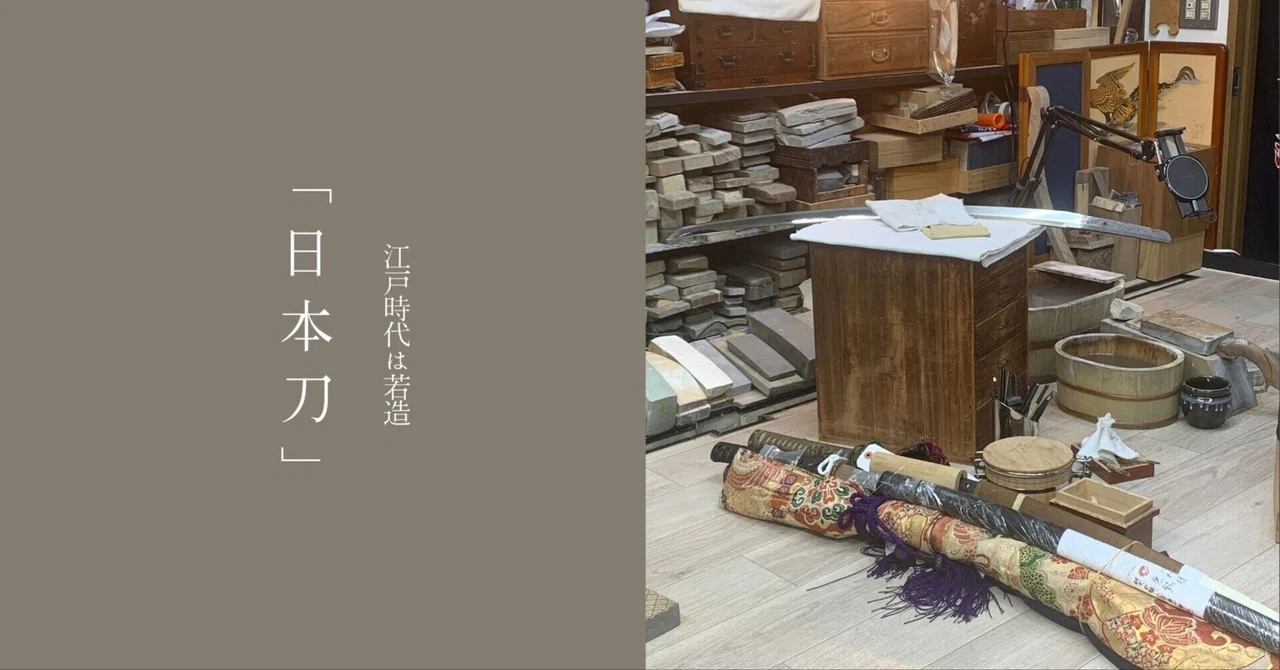
江戸の刀はまだ若造!?世田谷の気さくな研師・根本さんに教わった、日本刀の「真剣」な話とチャーミングな素顔 | Are Edo-Period Swords Still "Young"? Serious Talks and Charming Truths from Mr. Nemoto, a Friendly Sword Polisher in Setagaya

海外のお客様からの依頼で、どうしても分解しなくてはならなくなった2振りの「模造刀」。 私はそれを風呂敷に包み、世田谷にある「美術刀剣研処 文永洞(ぶんえいどう)」さんの扉を叩きました。
気難しい職人さんが出てきたらどうしよう……と少し緊張していた私を出迎えてくれたのは、40歳という若さで二代目を任されている、研師(とぎし)の根本さん。とても気さくで、チャーミングなお人柄の方でした。
模造刀と格闘した1時間 さっそく模造刀の分解をお願いしたのですが、これが一筋縄ではいきませんでした。 中の錆や作りの甘さで鍔(つば)が引っかかり、根本さんが潤滑油をつけながら木槌でトントンと叩くこと約1時間。ようやく外れた時、根本さんは笑いながらこう教えてくれました。 「模造刀は、後から分解して手入れをする想定で作られていないんですよ。組み立てる時、絶対に差し込めなくなるから、ここを少し削るように(お客様に)アドバイスしてあげてくださいね」 ちなみにもう1本の「お値段が高い方」の模造刀は、わずか15分で分解完了。モノの価値と作りの違いを、まざまざと見せつけられた瞬間でした。
日本刀を支える「7つの職人技」と厳しいリアル 作業の手を動かしながら、根本さんは時折「真剣(リアル)」な話をしてくれました。 日本刀は、鍛冶屋が鉄を打って終わりではありません。白銀師(ハバキを作る)、鞘師、柄巻師など、大きく分けて7つの専門職のリレーでようやく1振りが完成します。 メンテナンスの需要がある研師は職業として成り立ちやすいそうですが、他の工種は意外と経済状況が厳しく、鍛冶屋さんも刀だけでは需要が少ないため、包丁も一緒に作って生計を立てているという実情を知りました。
江戸時代の刀は「若造」!? そして一番驚いたのが、刀のタイムスケールです。 私たちからすれば、江戸時代のものは立派な骨董品。しかし1000年の歴史を持つ刀剣界においては「江戸時代の刀なんて、まだまだ若造ですよ」とのこと!本当に価値があるのは、鎌倉時代から前のものだそうです。 また、刀の身につけ方も時代で変わります。古い時代の「太刀(たち)」は刃を下向きにして腰から下げていましたが、江戸時代の「打刀(うちがたな)」は帯に直接差し、刃を上向きにするのだそう。
父が時代劇好きで、テレビの画面でいつも侍を見ていたのに、刃の向きすら知らなかった私。日本人でありながら、自国の文化について知らないことが山ほどあるのだとハッとさせられました。
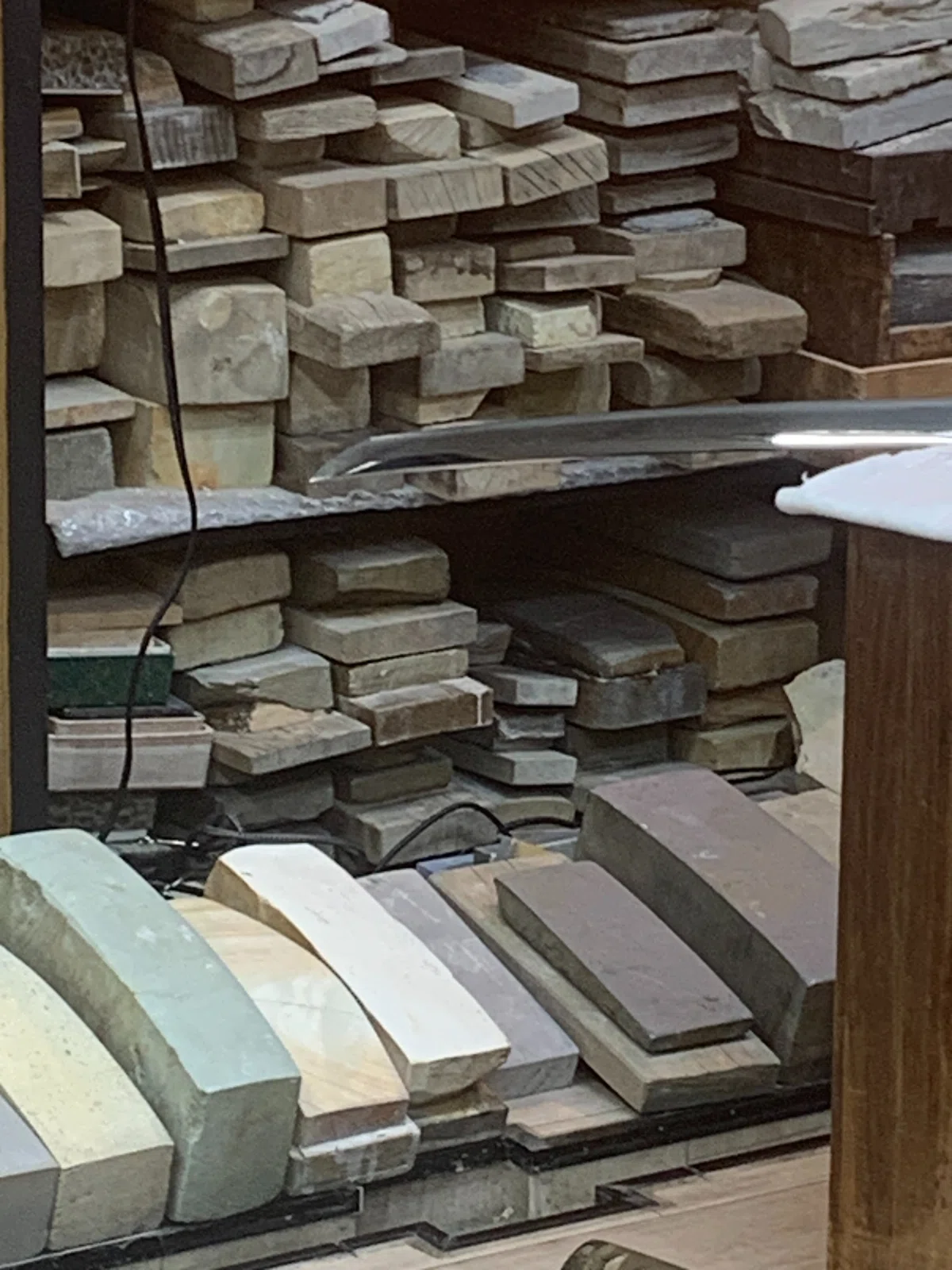
「最初に納豆を食べた人」と同じくらいすごいこと 刀は金属なのに、石を使ってピカピカに、しかも傷ひとつなく研ぎ上げる。 「この特別な砥石は、京都のある一部の地域でしか採れないんです。これを見つけた人は、最初に納豆を食べた人と同じくらいすごいことだと思っているんですよ(笑)」と、根本さん。そのユーモアのセンスに、すっかり引き込まれてしまいました。
現在、文永洞さんでは週に一度、外国人向けの「研ぎワークショップ」を開催しており、大変な人気だそうです。「海外に行って、研ぐパフォーマンスをやってみたらどうですか?」と提案してみたところ…… 「面白いですね〜!行きたいですが、英語ができません!(笑)」と最高の笑顔で返ってきました。
言葉の壁さえ越えれば、この素晴らしい技術と思想はもっと世界中へ羽ばたいていく。 歴史は過去のものではなく、気さくで熱い職人さんたちによって、今もこうして「更新中」なのだと深く感動した1日でした。
To fulfill a request from an overseas client, I needed to dismantle two imitation Japanese swords. Wrapping them carefully in a traditional furoshiki cloth, I knocked on the door of "Buneido," a fine sword polishing studio in Setagaya, Tokyo.
I was a bit nervous, expecting a stern, traditional craftsman. Instead, I was warmly welcomed by Mr. Nemoto, the 40-year-old second-generation sword polisher. He was incredibly friendly, approachable, and full of charm.
A One-Hour Battle with an Imitation Sword I asked him to dismantle the swords, but it was far from easy. Due to inner rust and loose construction, the tsuba (handguard) was completely stuck. Mr. Nemoto patiently applied lubricating oil and gently tapped it with a wooden mallet for about an hour. When it finally came off, he laughed and said, "Imitation swords aren't built with future maintenance or dismantling in mind. When your client reassembles it, they won't be able to slide the tsuba back on, so advise them to shave off this part just a little." Interestingly, the second sword—which was a more expensive model—took only 15 minutes to dismantle. It was a clear lesson in how price reflects the true quality of craftsmanship.
The "Seven Artisans" and the Harsh Reality of Sword Making As his hands expertly worked, Mr. Nemoto shared some "Shinken" (serious/real) stories about the sword world. A Japanese sword isn't finished when the blacksmith forges the steel. It requires a relay of about seven specialized artisans, including the polisher, the silversmith (making the habakicollar), the scabbard maker, and the handle wrapper. While polishers have steady work due to maintenance demands, other craftsmen face tough economic realities. For instance, some sword blacksmiths must forge kitchen knives to make a living because the demand for new swords is low.
Edo-Period Swords Are "Young"!? The most surprising fact was the time scale. To most of us, anything from the Edo period (1603-1868) is a valuable antique. But in the 1,000-year history of Japanese swords, "Edo-period swords are still just youngsters!" The truly priceless masterpieces date back to the Kamakura period (1185-1333) or earlier. He also taught me that how a sword was worn changed over time. The older Tachi swords were worn hanging from the waist with the blade facing down. However, the Uchigatana of the Edo period was thrust directly into the sash with the blade facing up. Growing up watching samurai TV dramas with my father, I realized I never even noticed the direction of the blade. It hit me how much I, as a Japanese person, still don't know about my own culture.
"As Amazing as the First Person Who Ate Natto" It is astonishing that metal swords are polished to a flawless, mirror-like finish using only stones. "These special whetstones can only be found in a specific region of Kyoto. I think the person who discovered these stones is just as amazing as the first person who ever tried eating Natto (fermented soybeans)!" Mr. Nemoto joked. His humor was simply captivating.
Currently, Buneido hosts a weekly sword-polishing workshop for foreigners, which is incredibly popular. When I suggested, "Why don't you do polishing performances overseas?" he replied with a huge smile, "That sounds fun! I'd love to go, but I don't speak English! (laughs)"
If we can just bridge that language barrier, this incredible artistry and philosophy can spread even further across the globe. Our history isn't just in the past; it is constantly being updated by passionate, friendly artisans like Mr. Nemoto. It was a truly inspiring day.
