Just Hours Before Japan’s Surrender

The Night the War Ended in My Family’s Memory
Just hours before Japan’s surrender, the last major air raid of WWII struck Akita. This is the story of my family who lived through that fateful night.
It was when I was still in elementary school that my mother told me this story.
Every summer vacation, I would go to stay at my grandmother’s house. At night, the whole family would line up our futons to sleep together in the Buddhist altar room. On the alcove shelf, a framed photograph of my grandfather, who died in the war, was displayed.
My grandfather had been killed in action in southern China. In the picture, he still looked like a young man—likely not even thirty years old.
My mother would tell me about him.
She said that on the day the notice of his death arrived from the battlefield, my grandmother seemed almost driven to madness with grief. She had three children to raise.
Later, a small envelope containing his ashes was delivered to the house. However, no one ever knew if those were truly my grandfather’s bones.
One day, my grandmother and the children were working in the rice fields when the air raid sirens suddenly blared. Everyone around them rushed into the bomb shelters. But my grandmother refused to flee. She stayed in the field, keeping low, and continued her work as if nothing were happening.
Then, a B-29 bomber flew in at an incredibly low altitude. My mother recalled thinking, “We’re going to be shot!” The aircraft roared past, practically skimming my grandmother’s back as it flew away. At that moment, to my mother’s young eyes, it looked as though the American soldier inside the plane was laughing. Whether that was true or just how it appeared to a terrified child, no one knows. My grandmother simply stood there, glaring after the departing B-29 as she watched it go.
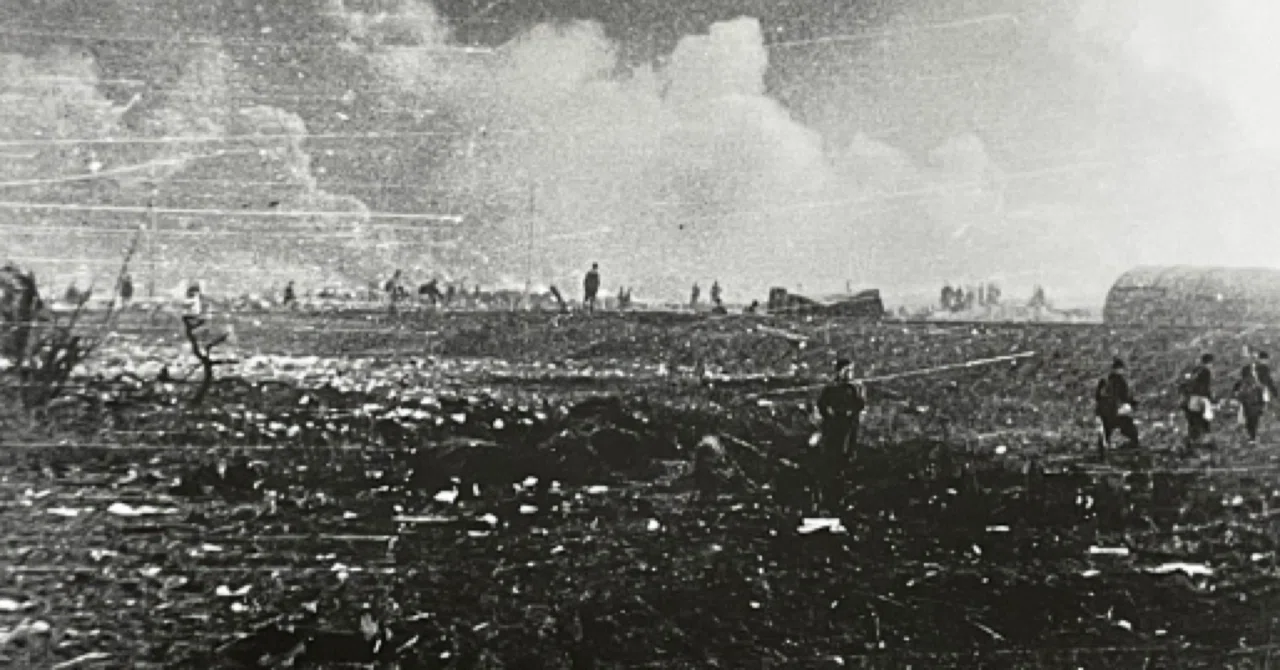
On the night before the war ended, from the banks of the Omono River near what is now Daisen City—in the former Nishisenboku area, close to Akita City—the distant sky burned a vivid, bright red. The flames were so intense that they reflected on the surface of the river itself, so that even the water seemed to be burning. At the time, my mother and her family had no idea that this would later be known as the “Tsuchizaki Air Raid.” They didn’t know what was happening. Yet that night sky, and the river stained red with fire, were deeply etched into the memory of my young mother.
I belong to a generation that has never known war. Even so, I can never forget the story my mother told me in that Buddhist altar room when I was a child.
Rows of memorial photographs hang on the wall. My eyes are always drawn to the photo of my young grandfather. The ashes that arrived in a small envelope. The B-29 that skimmed past my grandmother’s back. And the flames of Tsuchizaki that stained the distant sky—and the river—red.
For me, war does not live inside a textbook; it lives firmly within my family.
My grandmother never remarried. Working the fields, she raised her three children all on her own.
English Note: The “Tsuchizaki Air Raid” mentioned in this story took place on the night of August 14, 1945, and continued into the early morning of August 15—just hours before Emperor Hirohito announced Japan’s surrender. Targeted at an oil refinery in Akita Prefecture, it is recorded as the last major air raid of World War II, taking more than 250 innocent lives just as the war was ending.
Today, Tsuchizaki Port—once the target of that air raid—welcomes luxury cruise ships every year, now a peaceful harbor where those flames once burned.
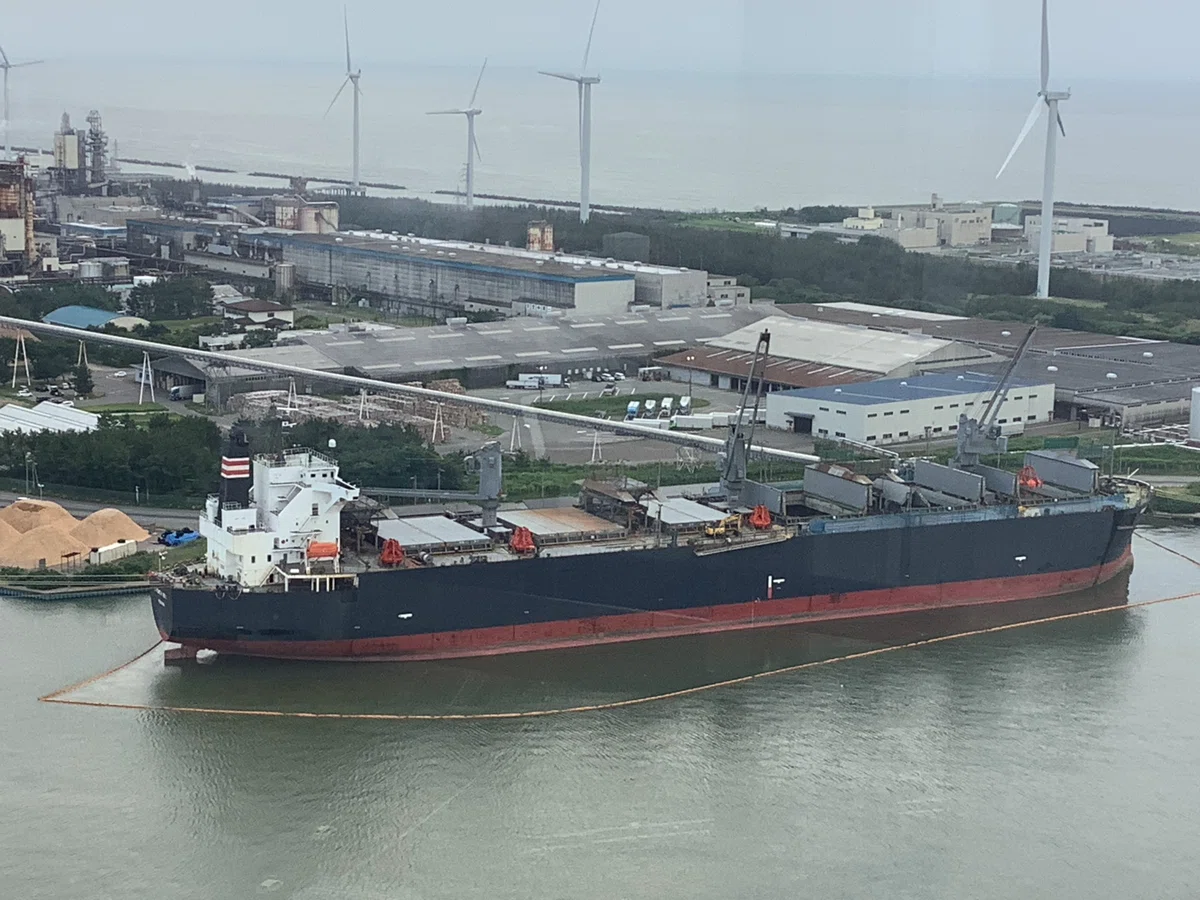
※ Photograph from the collection of Tsuchizaki Minato History and Heritage Museum, Akita City (秋田市土崎みなと歴史伝承館). Used for illustrative purposes.
