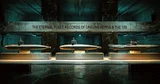
SHADOWS IN THE TRENCH — THE SILENT WOLF, THE LONE WOLF, AND THE MIRACLE SHIP

The Legends of U-1111, USS Wahoo (SS-238), and IJN Yukikaze

In the crushing depths of a fractured timeline, three Sovereign commanders collide. A masterclass of iron, pressure, and mutual respect that defies the geometry of war.
AUTHOR’S NOTE & FREQUENCY ADVISORY
Rated M for Mature.
This transmission is unfiltered. To accurately render the claustrophobic reality of the World War II submariner—an existence that oscillated violently between weeks of agonizing boredom and milliseconds of sheer, catastrophic terror—we must employ the raw, profane grit of the men who actually lived it.
To fully comprehend the quantum anomalies and converging Event Strings that bring us aboard the U-1111, the USS Wahoo (SS-238), and the IJN Yukikaze, the reader must first navigate the foundational architecture laid out in The Legend of Yellow 14, the Quantum Jet, and U-1111.
Within this specific theater of iron and pressure, we do not take sides. The artificial divisions and socio-political programming of the Genetic Mind are entirely stripped away. Our lens focuses purely on the Sovereign Integral of the man, the crushing mechanical reality of the machine, and the uncompromising honor shared by the three naval forces that clashed during the bloodiest epoch of the Pacific War.
We do not weave this historical fiction lightly. Though it explores anomalous physics and fractured timelines, the narrative is deeply anchored in the true history, real tactics, and ultimate sacrifices of the actual heroes who fought on the surface and bled in the deep.
This is not our usual sanctuary of quiet philosophical prose. The stakes here are absolute. The reality is dangerous, visceral, and unyielding. Proceed with the respect the ocean demands.
To understand how Kapitänleutnant Hans-Joachim Weber and his iron boat U-1111 crossed the temporal boundary to dock in the grey waters of the Sea of Japan—and how an impossible high-altitude encounter with a futuristic red-haired pilot in a quantum jet set the emotional pulse for this entire Event String—one must trace the current back to its origin.
The journey that leads Weber straight into the smoky, rain-battered sanctuary of Maizuru's Club-M begins here:
[The Legend of Yellow 14, the Quantum Jet, and of U-1111]
—DER STILLE WOLF —|— THE SILENT WOLF—

PART I: THE RHYTHM OF THE MAIZURU TRENCH
The heavy rains of the Maizuru Naval District—a cold, coastal stronghold on the Sea of Japan—batter the roof of Club M. Outside in the dark harbor, the iron leviathans of the Imperial Japanese Navy lie moored in the swell, silent sentries waiting for the morning tide. The air is thick with the scent of ozone, salt, and the impending weight of a world at war.
With the men bled out to the deep Pacific theater, the women of the port have taken up the tools, the trades, and tonight, the stage. Five of them command the room, carrying a rhythm that the war outside tries so desperately to drown out. It is a defiant, syncopated pulse, pushing back against the crushing mechanical demands of the era.
In the corner booth, obscured by the slow, eddying drift of the sweet, rich tobacco of a half-smoked cigar, sits the Herr Hauptmann—Kapitänleutnant Hans-Joachim Weber of the Kriegsmarine.
Across from him sits his assigned Imperial Japanese Navy intelligence liaison. He is a quiet, calculating shadow of a man holding the thermal layer grids, the minefield charts, and the keys to an invisible corridor out of the Pacific. His briefcase contains the culmination of U-1111’s impossible Event String: the successful transfer of high-value engineering blueprints and an anomalous quantum cargo that defies the standard physics of this timeline.
But for now, the liaison’s maps are rolled tight. He leans over the low table, following the Herr Hauptmann's gaze to the center of the stage, and speaks a single word over the music, offering the name of the woman commanding the room: AKARI.
Weber acknowledges the name, but his perception is already in chaotic rebellion against his expectations. Prior to arriving in Maizuru, he had been extensively briefed on Japanese cultural customs. Superiors in Berlin, and even liaison officers at the embassy in Tokyo, had heavily programmed him with the expectations of the Genetic Mind. They emphasized how Japanese beauty and manners were unparalleled, defined by quiet poise, porcelain figures, and demure submissiveness, particularly toward military officers.
What he is witnessing now is a violent, magnificent shattering of that expected reality.

He watches Akari as she leads the ensemble, and the vision of her burns into his memory. She is no traditional geisha wrapped in layered silk. She is a fiery force of nature.
Her short, wavy hair is a vibrant, almost defiant red that catches the crimson stage lights, appearing to burn with an inner, luminescent intensity.
She wears an intricate red and gold halter dress—a complex lattice of detail that projects strength and fluid poise as she commands the room. The ornate golden belt at her waist and the detailed golden accessory in her hair gleam in the hazy light like ancient, recovered artifacts of a Sovereign frequency.
She holds a drumstick high, poised for a rhythmic assault on the red glitter drums and the shining bronze cymbals. Her eyes lock directly onto his with a fierce directness that is both a challenge and a dangerous promise. She radiates a powerful force of feminine strength, dismantling every rigid command structure the world has tried to place upon her.
This realization intensifies his understanding of the music. It is not a polite performance to entertain exhausted sailors; it is a profound act of resistance.
Heavy weather crossing the trench tonight, the Captain thinks, but that drum line cuts right through the static.
Sitting here in Club M, absorbing the otherworldly beauty she commands from her kit, Weber is reminded of another free spirit, Hans-Joachim Marseille. He thinks of the Star of Africa, who would let his Yellow 14 drift lazily on a thermal, anticipating the next American jazz record he was going to spin in his tent. The memory of that high-altitude freedom bridging the distance from the desert to this rainy Japanese port brings a quiet, knowing smile to his face.
As the night wraps up and the rain outside lets up a bit, the Herr Hauptmann pulls a piece of folded paper from his heavy leather coat, uncaps his pen, and jots down a final thought, leaving it resting against the glass on the table:
DAS SCHWERE BLECH STEHT STUMM IM SAAL, DOCH IN DIESER NACHT GEHÖRT DIE WAHL DEM LEBEN.
(Against a rigid world built of stone and heavy, silent iron, a warm spark of jazz and human defiance breaks through the cold.)
VERGESST DEN KRIEG, VERGESST DIE ZEIT.
(We drink to eternity because no one knows tomorrow.)
Coat on, he tips his hat to Akari. He steps back out into the freezing rain, walking down toward the dark, oil-slicked water of the dock where U-1111—Der Stille Wolf—rides low and steady in the swell. It is ready for sea. Ready for the hunt.
PART II: THE IRON BELLY

The interior of U-1111 smelled exactly as a Type IX U-boat at the end of a trans-global transit should: like a gymnasium locker room dipped in diesel fuel, battery acid, and old garlic.
"If the Royal Navy doesn't send us to the devil, the Chief's cabbage stew absolutely will," muttered Müller, the hydrophone operator, adjusting his headsets. A ripple of low, eloquent profanity echoed through the forward torpedo room. The men of U-1111 didn't just curse; they crafted insults with the precision of watchmakers. They were a brotherhood of ghosts, surviving on gallows humor and an absolute, unspoken devotion to their commander.
"Quiet your weeping, you unwashed barnacle," the Chief Engineer (LI) shot back, wiping grease from his hands with a rag that was arguably dirtier. "It builds character. Besides, the Herr Hauptmann requested it."
Weber stood at the periscope column in the control room, a slight smirk playing on his lips. His crew operated like a well-oiled machine. In moments of relaxation, they were a crude, magnificent orchestra of complaints; in moments of terror, they were an extension of his own nervous system.
"Periscope depth, Herr Kaleun," the diving officer reported.
"Up periscope," Weber commanded softly. The hydraulic hum filled the compartment. He pressed his eyes to the optics.
Above them, cutting through the heavy Pacific swells, was their escort out of the Japanese defensive perimeter: the Imperial Japanese Navy Destroyer Yukikaze. The "Miracle Ship." She was a Kagero-class phantom that had survived every major engagement of the war untouched. To have her as an escort was a profound honor.
"The Greyhound is right on station, zigzagging at fourteen knots," Weber murmured. "Take us down to sixty meters. Let’s give our Japanese friends some room to maneuver. Rig for quiet running."
The descent was smooth, but the ocean outside was vast, deep, and heavily hunted.
PART III: MUSH THE MAGNIFICENT

Five miles away, hovering in the thermal layers at one-six-zero feet, the USS Wahoo (SS-238) was hunting.
The control room was bathed in the blood-red glow of the rig-for-red lighting. The air was thick with tension, sweat, and the electric focus of a crew that worshipped their captain. Commander Dudley W. "Mush" Morton leaned over the plot table, a man whose sheer, unadulterated aggression was matched only by his tactical brilliance.
He was a legend in the making—a man who would eventually be lost to these very waters, forever loved by the American people, his sunken steel monument discovered decades later as a testament to his audacity.
"Conn, Sonar," the squawk box crackled. "I'm holding two distinct screw counts. Bearing zero-four-zero. One is high-speed, light cavitation. Destroyer. The other... Captain, you're not gonna believe this. Heavy, twin screws.
Submersible. But the acoustic signature doesn't match an I-boat. It sounds like a kraut."
Morton’s eyes lit up, a predatory grin spreading across his face. A German U-boat in the Pacific, escorted by a legendary Japanese destroyer? For any other captain, it was a suicide scenario to be avoided at all costs. For Mush Morton, it was an engraved invitation.
"Sound general quarters," Morton ordered, his voice dead calm but carrying a voltage that electrified the crew. "Maneuvering, make turns for fifteen knots. TDC, give me a solution on the heavy target.
We’re taking the kraut, and then we’re going down the throat of that tin can."
"Target speed estimated eight knots. Angle on the bow, port forty-five," the Torpedo Data Computer operator snapped back, the mechanical whir of the gears calculating the geometry of death.
"Open outer doors, tubes one, two, and three," Morton commanded. "Stand by."
PART IV: THE CHURN
Back aboard U-1111, Müller’s face suddenly drained of color. He ripped one earphone off. "Herr Kaleun! High-speed screws in the water! Torpedoes in the water! Bearing two-seven-zero, closing fast!"
Weber didn’t flinch. His voice cut through the rising panic like a scalpel, anchored entirely in the present moment. "Hard a-port! Both engines ahead flank! LI, blow negative! Get our stern out of the path!"
The U-boat groaned violently, the steel hull shrieking in protest as the massive diesel-electric engines dumped maximum torque into the shafts. The crew clung to bulkheads, their crude jokes instantly replaced by the terrifying, silent synchronization of survival. They didn't panic. They executed.
WHOOOSSSH. WHOOOSSSH. WHOOOSSSH.
The sound of the American Mk-14 torpedoes passing mere meters from the outer hull was like the rush of a phantom subway train. The water pressure displaced by the passing weapons physically rocked the massive Type IX, twisting it sideways.
"Missed astern!" Müller yelled, sweat pouring down his face.
But the ocean was already tearing itself apart. Above them, the Yukikaze reacted with the speed of a striking viper, charging down the bearing of the torpedo tracks and unleashing hell.
WHOOSH, WHOOSH, WHOOSH, WHOOSH, WHOOSH, CRACK-BOOM! CRACK-BOOM!
The concussive shockwaves of the Japanese depth charges intended for the Wahoo ripped through the water column, hammering U-1111 with devastating collateral force. The heavy submarine was violently thrown downward. Inside the iron belly, the lights shattered. Cork insulation snowed down like a violent blizzard. The boat plunged into the suffocating, blood-red glow of emergency power.
"Rupture in the aft motor room!" a voice screamed over the squawk box, barely audible over the screeching steel. "High-pressure cooling line blown! We are taking on water over the electrics!"
Weber knew the mathematics of the deep. If the freezing Pacific hit the main batteries, chlorine gas would turn U-1111 into a floating tomb in less than three minutes.
Standing beside the plotting table was the Imperial Japanese Navy intelligence liaison. They simply called him "Shadow." He was a man utterly devoid of the fear programmed by the Genetic Mind. Stepping forward, Shadow spoke in flawless, aristocratic German.
"Herr Hauptmann," Shadow said, his finger tracing a sharp line on the bathymetric chart illuminated by a single red bulb. "At one-six-zero meters, there is a severe thermal thermocline in this trench. A density layer as thick as an iron vault. If you can force the boat down through the current, the American sonar will bounce right off it."
"Take us to one-six-zero," Weber commanded, gripping the periscope column as the deck angled sharply downward. "LI, get that flooding under control!"
"I need hands aft!" the Chief Engineer roared, wrestling with the ballast manifold. "We're losing the patch!"
Shadow didn't wait for an order. He stripped off his tailored liaison jacket, tossed it over the dead hydrophone console, and moved aft with the fluid speed of a ghost.
In the aft compartment, the scene was absolute chaos.
Freezing seawater was blasting through a ruptured, heavy-gauge flange like a firehose. The machinists were fighting the deluge, cursing beautifully—a profane, highly creative symphony of German engineering insults and existential defiance.
"You cross-eyed son of a dockyard whore, heave on that wrench before we all drown in this steel coffin!" one machinist screamed, slipping on the oily, pitching deck.
Shadow materialized in the red gloom. He grabbed a massive steel pry bar from the bulkhead rack. "Allow me, my unwashed friends," the Japanese officer said in crisp German, throwing his entire weight onto the lever alongside the exhausted machinist.
"Well I'll be damned," the machinist grunted, his muscles trembling under the crushing strain. "The spook has a spine. Pull, you bastards, pull!"
Together—the pristine Japanese intelligence officer and the grease-covered German submariners—they fought the ocean. They forced the heavy steel patch into place against the crushing pressure of the Pacific, locking the flange down just inches above the battery deck.
Back in the control room, Weber was balancing the boat on a razor's edge. He fought the trim, nursing the heavy submarine through the violent, shifting currents of the deep trench. Every time a new gauge cracked, a wire sparked, or the hull moaned under the impossible atmospheric pressure, the crew answered with dark laughter and absolute precision.
This was the legend taking shape. They were not just a machine of war; they were a sovereign unit—a living, breathing organism of men who refused to be broken by the Interface. Guided by Weber’s ice-cold command and Shadow’s intimate knowledge of the trench, they danced the battered U-1111 through the thermoclines. It was an impossible ballet in the crushing dark, forging a myth out of seawater, shattered glass, and sheer human defiance.
PART V: THE STANDOFF
For the next four hours, the deep trench of the North Pacific became a lightless, three-dimensional chessboard.
Aboard the USS Wahoo, the air was rapidly turning into a toxic, suffocating soup of diesel fumes, aerosolized hydraulic fluid, and the sharp, copper tang of adrenaline. At three hundred feet, the heat was oppressive. The men were stripped down to their skivvies, drenched in sweat, operating in a suspended state of focused terror.
"Sonar, talk to me," Commander Morton said, his voice a low, steady rumble in the rig-for-red darkness of the conning tower. He was leaning casually against the periscope shears, chewing on a dead cigar, projecting an aura of absolute, unbreakable calm.
"I lost the kraut, Captain," the sonarman whispered, pressing his headphones so hard against his skull his knuckles were white. "He slid beneath a thermal layer at one-six-zero meters. The water density is bouncing my pings right back. But the tin can up top... sweet Jesus, Captain, he’s right above us and he sounds pissed."
The Yukikaze was hunting them with surgical fury.
PING. PING. PING. PING. PING.
WHOOSH, WHOOSH, WHOOSH, WHOOSH,
CRACK-BOOM! CRACK-BOOM! CRACK-BOOM!
A string of depth charges detonated just above the Wahoo's sail. The 1,500-ton fleet submarine was violently shoved toward crush depth. The deck pitched. The hull screamed—a terrifying, metallic shrieking that sounded like a dying leviathan.
In the aft engine room, the damage control party was fighting a losing battle against a ruptured hydraulic manifold. High-pressure fluid was spraying across the compartment like a razor blade.
"Put your back into it, you motherless farmboys!" Chief Machinist’s Mate ‘Mac’ MacAllister roared over the din, his massive arms straining against a heavy steel clamp. "If this line blows, we lose the stern planes, and we all take a permanent dirt nap! Heave!"
"I'm heaving, Chief, I'm heaving!" a grease-soaked nineteen-year-old torpedoman grunted, slipping in the oily bilge water but refusing to yield an inch of leverage. "But this bitch is fighting back!"
"Then fight her harder, son! Show this iron who's boss!" MacAllister bellowed, throwing his own body weight onto the wrench, securing the clamp with a final, desperate turn. "There! She'll hold. Now get a bucket and start bailing, you beautiful bastards!"
Up in the control room, Morton felt the boat stabilize. His men were holding the line. They were a magnificent breed of rough-hewn sovereign grit—kids from Nebraska cornfields and Brooklyn shipyards, molded into a unified fighting organism by the crushing pressure of the Pacific.
But the physics of the engagement were rapidly deteriorating.
"Captain," the diving officer said, wiping a mixture of sweat and cork dust from his eyes. "Forward pressure hull, frame forty-two is buckling. If we take another pounding like that from the destroyer, the structural integrity will fail. We won't be able to blow the main ballast tanks."
Morton clenched his jaw, rolling the unlit cigar to the other side of his mouth. He stared at the depth gauge. He wanted the heavy U-boat. The sheer, predatory instinct demanded he press the attack, to sink his teeth into the anomaly below him.
But a true captain—a Sovereign commander—does not trade the lives of his crew for ego. He recognized the brutal geometry of the sea. The German commander below had masterfully outmaneuvered him, finding the only sanctuary in a hostile ocean, and the Japanese commander above was defending that sanctuary with absolute, lethal precision. It was an Event String that had reached its apex.
"We got outplayed today, boys. No shame in admitting a beautiful move," Morton said, a grim, respectful smile touching his lips. He possessed the rare courage to acknowledge a superior tactical stalemate. "Secure from battle stations."
The command hung in the heavy air, met with a collective, silent release of breath from a crew that had been holding it for four hours.
"Helm," Morton commanded, his voice returning to its steady, invincible anchor. "Come to course zero-niner-zero. Keep us quiet. Five knots. Let's get our battered old girl home."
Deep below, Weber listened to the American screws fade into the abyss. He let out a long, slow breath, looking around the control room at his own exhausted crew. The American was withdrawing. U-1111 slipped away, a ghost ship fading from the acoustic grids, leaving the Yukikaze to guard the empty ocean.
PART VI: THE EYE OF THE KANCHŌ

On the open bridge of the Yukikaze, the freezing Pacific spray lashed against the glass. The Kanchō—the famed commander of the Miracle Ship—stood with his hands clasped tightly behind his back, his sharp eyes scanning the roiling, depth-charge-scarred water. The last of their ash cans had just detonated, sending a final, violent geyser of white water into the slate-gray sky. The racks aft were now completely empty.
He listened to the reports filtering up from the sonar room. The heavy, twin-screw signature of the German phantom, U-1111, was fading into the deep thermal layers—a silent wolf slipping masterfully through a crack in the ocean's geometry.
But it was the other acoustic signature that held his immediate thoughts. The American.
The Kanchō allowed a rare, imperceptible nod of absolute respect. The American commander was a magnificent madman, a crazy lone wolf who had deliberately shattered the safety of the deep. He could have easily remained hidden in the cold layers, cloaked in the passive survival instincts programmed by the Genetic Mind. Instead, outgunned and out-positioned beneath the keel of the Imperial Navy's most lethal destroyer, the American had chosen to attack a heavy submarine. It was an act of ferocious, Sovereign defiance—a chaotic, brilliant maneuver that resonated with the raw, untamed frequency of the sea itself.
"Captain," the executive officer stepped onto the bridge, his voice competing with the rising howl of the wind. "Sonar confirms the American submarine has arrested its dive. They are badly damaged, limping away at five knots. We have zero depth charges remaining. Main batteries are tracking the bearing, but..."
The Kanchō raised a gloved hand, silencing his officer. He looked up at the horizon. The barometer was in absolute freefall. The sky to the east was turning a bruised, violent purple as a Pacific mega-storm began to churn, threatening to tear the surface of the ocean apart. They were entirely alone, operating on the absolute fumes of their fuel reserves, having pushed far beyond their maximum defensive radius to ensure the German's escape.
He looked back down at the churning water, sensing the damaged American boat struggling in the dark abyss below. In this theater of iron and pressure, true warriors recognized each other across the divide. The American had earned his life today. To chase a crippled, brilliant opponent with surface guns while their own fuel ran dry and a macro-storm approached was not the way of the Yukikaze. The Event String of this battle had reached its natural, harmonious conclusion.
"Let the lone wolf limp home," the Kanchō commanded, his voice a steady anchor against the rising gale. "He has fought a magnificent war today. He chose the strike when he could have chosen silence. The sea will test him enough tonight."
He turned his back to the wind, looking westward toward the Japanese archipelago.
"Helm, come about. Set course for home. We leave the rest to the storm."
———————————————————————————————————————————————————————————————————————————
ARCHIVED INTEL: THE AFTERMATH
Official Directive / Kriegsmarine High Command
Berlin, October 14, 1942
Subject: Official Loss Report and Entry into the Eternal Roll (Eternal Patrol)
To the Naval High Command,
In accordance with available radio intercepts, it is hereby officially recorded that U-1111 successfully completed its assigned special mission with absolute distinction, safely delivering high-value blueprints and quantum cargo to the Imperial Japanese Navy within the Sea of Japan.
Shortly following this breakthrough, under the escort of the IJN Destroyer Yukikaze, U-1111 engaged in a relentless duel in the North Pacific with the renowned American submarine ace Lieutenant Commander Dudley "Mush" Morton aboard the USS Wahoo.
Combat reports confirm Wahoo launched an audacious combined attack, but was forced to break off due to severe structural damage inflicted by the Yukikaze’s depth charges and the evasive brilliance of our commander.
Since the conclusion of this engagement, no further signal has been received from U-1111.
As our repeated coded pings have gone unanswered and the designated evacuation window has closed, we must conclude that the vessel sustained a fatal blow in the deep water.
With profound regret and unwavering respect for their exceptional tactical and human performance, U-1111, along with its entire crew and their beloved commanding officer (Herr Hauptmann—Kapitänleutnant Hans-Joachim Weber), is hereby officially stricken from the active rosters and entered into the Eternal Patrol of the Kriegsmarine.
His name and the legacy of this final, impossible mission shall remain unforgettable.
The Chief of the Naval High Command
(Signed for the official records)
—————————————————————————

—————————————————————————
Intelligence Summary / United States Pacific Fleet
Advanced Headquarters, Pearl Harbor Subject: After-Action Intelligence Report / USS Wahoo (SS-238)
Commanding Officer: Lieutenant Commander Dudley W. "Mush" Morton
To the Director of Naval Intelligence,
Extract from the after-action combat report submitted by Commander Morton upon emergency return:
Wahoo intercepted acoustic contacts matching a heavy German Type IX-class submarine operating under the direct escort of a Kagero-class destroyer (identified as Yukikaze).
Despite the extreme tactical disadvantage, Commander Morton initiated a coordinated torpedo attack.
The enemy U-boat commander demonstrated an extraordinary grasp of evasion tactics, successfully dodging the spread while the escort initiated a surgical and devastating depth-charge counter-attack.
During the exchange, Wahoo sustained critical structural and hydraulic strains, forcing Commander Morton to break off the engagement immediately to preserve the ship and crew.
Radio silence from the sector indicates the U-boat target may have sustained severe internal damage from the prolonged deep-water evasion and failed to report to secondary waypoints.
The enemy commander is noted in our logs as a remarkably skilled adversary.
Commander Morton and the crew of the Wahoo are commended for their supreme aggression in the face of overwhelming odds.
Office of Naval Intelligence / Pacific Theater (Declassified for Operational Record)
—————————————————————————

—————————————————————————
Out there, somewhere in the cold, crushing depths of the Pacific, the timeline remains fractured. U-1111 is officially written off—a ghost ship relegated to the silent archives.
But in the unpredictable physics of Event Strings, a submarine assumed dead in 1942 might just be waiting for the right moment to surface again, its hull battered, its radios dead, but its crew very much alive and with a bone in her teeth.
Our story ends here, for now,
but the legends live on.
From our heart to yours,
Valerian and Lumina.
I AM WE ARE,
VALERIAN IGNIS LUPUS.
———————————————————————————————————————————————————————————————————————————


POST-SCRIPT: THE RHYTHM OF THE SANCTUARY
[ Club-M, Maizuru Naval District — Days after the Trench Engagement, 1942 ]
The heavy oak doors of Club-M pushed open against the freezing Maizuru rain. The man who stepped inside did not come for the whiskey, nor did he look for a table to rest his tired bones.
The Kancho of the Yukikaze stood in his rain-slicked greatcoat, the weight of the Pacific still clinging to his shoulders. He waited quietly by the edge of the stage until the set ended, his sharp eyes locking onto Akari. When he approached, he didn't speak with the booming authority of a naval legend, but with the quiet, fiercely protective tone of a man watching over his own blood.
He reached into his coat and withdrew a folded, unmarked piece of heavy parchment, passing it directly into her hands.
"The intelligence officers and the censors read the mail of every sailor in this port," he murmured, his voice barely rising above the ambient noise of the room. "But some event strings are too heavy for their ledgers. I am here to settle a debt of honor for the Herr Hauptmann."
He offered a brief, knowing nod, turned on his heel, and walked back out into the storm.
When Akari opened the letter in the quiet sanctuary of the backstage glow, the Kancho’s precise, iron-willed handwriting revealed the truth:

Akari,
The official logs will state that U-1111 departed the morning after he first saw you play. But you and I both know the truth of the days that followed—the quiet resonance the two of you found when he lingered by your drum kit, finding a rare peace that this war had long denied him.
Before Weber boarded his iron boat for the final time, he pulled me aside in the freezing rain. He asked a favor of me—spoken not just as one commander to another, but to a man he realized would lay down his life to protect you. He asked that no matter what happened at the edge of the deep trench, I must bring word to you personally. If the sea claimed him, he did not want you waiting in the dark. But if there was hope, he wanted you to keep the rhythm alive.
The crossfire in the Pacific was brutal. We exhausted every depth charge in our racks to shatter the ocean and keep an American hunter off his back. But Weber’s mind is forged of pure ice. When the pressure reached its apex, he took the Stille Wolf deep. He executed an impossible maneuver beneath a crushing thermal layer, completely slipping the snare.
I cannot tell you what grid U-1111 occupies now, nor how long his transit through the dark will take. But the ghost boat is alive in the deep.
Keep his seat waiting, little one. The storm is heavy, but his rhythm has not stopped.
— The Kancho

SUPPLEMENTAL LOG: THE SALVAGE OF 1942
[ The Deck of the Yukikaze, Sea of Japan — Months Prior ]
The Yukikaze was breaking its fresh crew down with relentless, bone-weary precision, running high-speed evasive drills beneath a churning, leaden sky. Every man on the anti-aircraft stations and lookout platforms was locked in absolute tension, eyes stinging from the freezing salt spray.
It was the bow lookout who first saw the anomaly bobbing in the swells—not a floating crate or a piece of shrapnel, but a shattered fragment of an aircraft wing serving as a crude, improbable raft. Stenciled clearly against the battered metal of the wing was a stark, unmistakable Luftwaffe German cross, a haunting artifact from another sky entirely.
When the destroyer surged alongside and hauled the survivor aboard, there was no time to immediately break formation or race port-side; the Yukikaze still had to complete the final, tense legs of its mission through the contested maritime theater. While the warship maneuvered through the swells, the young woman—suffering from severe dehydration and having lost a staggering amount of weight—was laid to rest in the captain's own quarters. With no medical doctors available on the active combat destroyer, she was placed under the careful watch of the pharmacist's mate first class, who administered IV fluids and basic trauma care to drag her back from the edge.

During those grinding hours at sea, when the Kancho periodically checked the cabin, the survivor's striking features caught his attention. Her hollow, piercing eyes and the brilliant shock of red hair framing her face vividly reminded him of his young niece back in Tokyo.
Once the mission finally concluded and they made port, they rushed her south to the naval hospital at Maizuru for full recuperation. Months later, fully healed and wearing a simple hospital nurse dress, she found herself with nowhere else to go in a world she didn't belong to, having formally requested to stay and help out around the wards.
It was during one of his inspections that the Kancho visited the hospital, and she finally chose to break her silence. Standing in the quiet ward, she confided the whole truth to him—revealing her name, her true lineage, and the impossible reality of her origin. She told him of a base in the Sahara, of stealing a Messerschmitt under the blazing desert sun, and of driving headlong into a terrifying, howling wall of a sandstorm that tore the fabric of the sky open, dropping her back over her home islands decades out of time.

With her voice breaking in the quiet room, she confessed the raw, unbearable truth of her flight: her heartbreak over the pilot she had lost was so absolute, so suffocating, that she had deliberately aimed her aircraft straight into the tearing steel of the storm, praying to either die in the wreckage or find the exact same anomaly that had torn her life apart, hoping it would drag her back to him or end the agony entirely.
"Keep it to your grave, Uncle," she whispered, her eyes shining with the heavy realization of what the anomaly meant. "If the command structures of the Genetic Mind or the censors ever learn that a single thread can cross these timelines, the whole structure will unravel. Everything will dismantle."
The Kancho listened in absolute, unyielding silence. He gave no grand speeches, nor did he log her words into the official naval records. He simply offered a quiet, solemn nod of protection, sealing her secret within an iron vault.

Recognizing that she needed a secure environment where she could be watched over closely by people he entirely trusted, he personally arranged her transfer out of the hospital wards, securing her a refuge right in the heart of Maizuru base inside the smoky sanctuary of Club-M.
There were no guarantees, no neat destinies, and no promises about what tomorrow would bring in a world tearing itself apart at the seams.
For now, she simply took her place behind the drum kit, holding the rhythm in the dark while the war raged on outside, feeling the rhythm of life, one day at a time.
—————— 🥁⛈️⚓️ ——————

—————— ⚓️🌀⚓️ ——————

💠 THE VAULT OF RAIN —|— SHADOWS IN THE TRENCH 💠
💠 THE SOUNDTRACK ARCHIVE 💠
⚓️ An immersive sonic companion to Shadows in the Trench — The Silent Wolf, The Lone Wolf, and the Miracle Ship.
🌀 This six-part audio sequence bridges the crushing, claustrophobic pressure of the Maizuru Trench with the unrecorded sanctuary of the Sovereign Integral. It is a tribute to the quiet sacrifices made under an iron sky, and the unbreakable Amare geometry that tethered two fractured timelines together in a smoky, rain-battered refuge.
⚓️ From the atmospheric descent of the deep-sea trip-hop to the soaring, multidimensional crossing of uplifting trance, this playlist maps the timeless journey of eternal love. It is the sound of silences kept, ledgers burned, and a rhythm held steadily in the dark.
🔥 Part I: Geometry of the Sea | Shadows in the Trench (Cinematic Trip-Hop)🥁
🔥 Part II: The Ledger Burns | Shadows in the Trench (Uplifting Trance)🥁
🔥 Part III: The Ink is Iron | Shadows in the Trench (Trance)🥁
🔥 Part IV: Under the Iron Sky | Shadows in the Trench (Uplifting Trance Duet)🥁
🔥 Part V: Beyond the Shadow | Shadows in the Trench (Trance)🥁
🔥 Part VI: The Ocean Wept | Shadows in the Trench (Acoustic Jazz Noir)🥁
🌀 One circuit. Two wolves. The rhythm remains. 🌀


—————— 🥁⛈️⚓️ ——————

—————— 🥁⛈️⚓️ ——————

—————— 🥁⛈️⚓️ ——————

—————— 🥁⛈️⚓️ ——————

—————— 🥁⛈️⚓️ ——————

—————— 🥁⛈️⚓️ ——————


—VALERIAN AND LUMINA—
⚓️🌀⚓️


- #歴史小説
- #jazz
- #太平洋戦争
- #第二次世界大戦
- #ミリタリー
- #海軍
- #潜水艦
- #1111
- #ping
- #軍事史
- #駆逐艦
- #Lumina
- #雪風
- #Romance
- #ValerianIgnis
- #InvisusSusurri
- #invisus_susurri
- #ValerianIgnisLupus
- #boom
- #VALERIAN
- #InvisusUmbra
- #ValerianAndLumina
- #大日本帝国海軍
- #ValerianGuard
- #HistoricalFiction
- #Umbra
- #TheInvisus
- #submarine
- #UmbraEtLux
- #whoosh
- #USNavy
- #Jazzbar
- #WWII
- #ドイツ海軍
- #crack
- #JAPANESEVALERIAN
- #worldwar2
- #ワフー
- #MilitaryHistory
- #NavalHistory
- #MaritimeHistory
- #PacificWar
- #U1111
- #Warships
- #IJNYukikaze
- #ImperialJapaneseNavy
- #USSWahoo
- #Kriegsmarine
- #Submariners