
【和訳】Trump’s Three Steps to Economic Growth 【By Scott Bessent 】『トランプ大統領の経済成長への3つのステップ』

ソース元
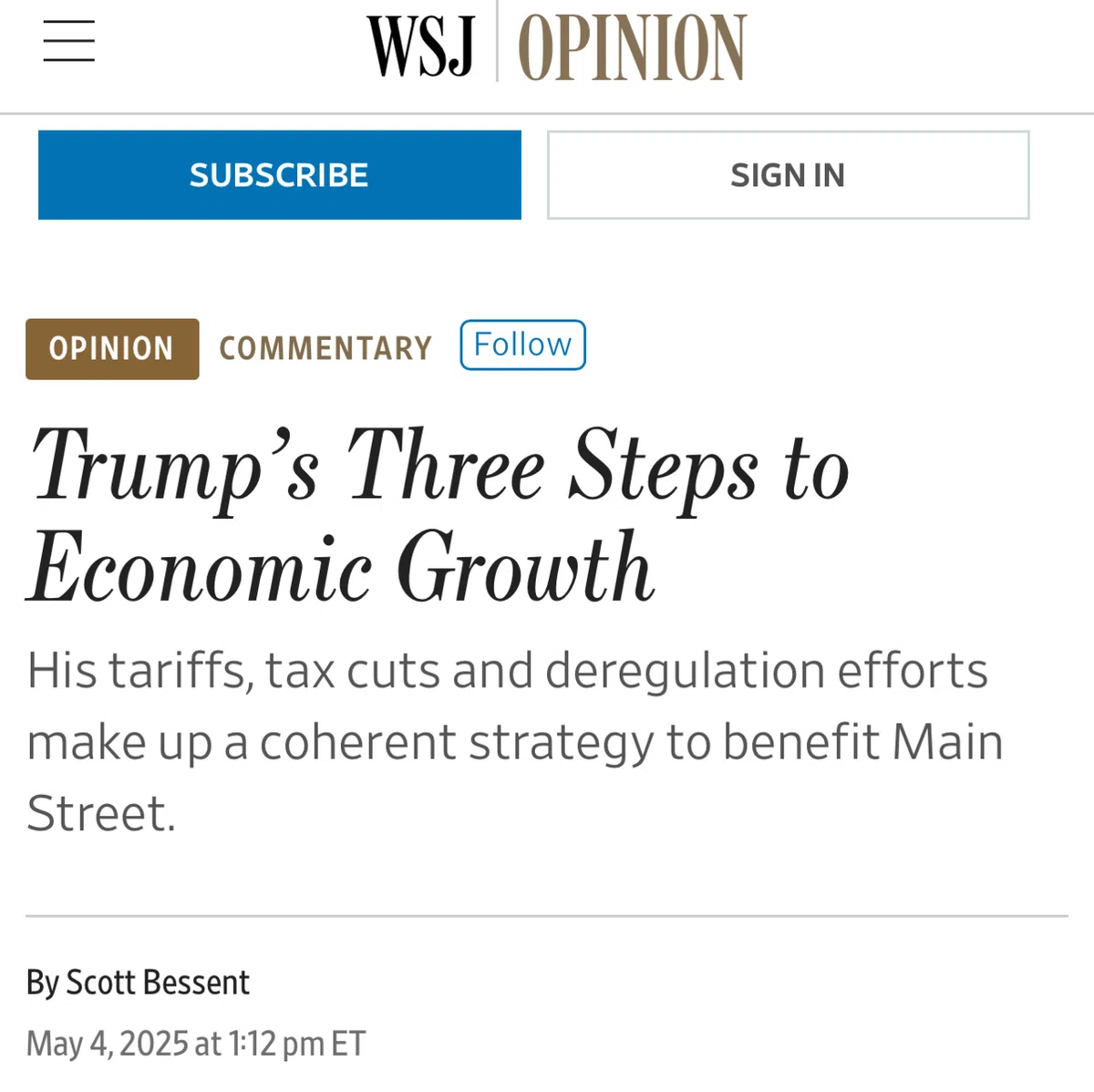
Trump’s Three Steps to Economic Growth
His tariffs, tax cuts and deregulation efforts make up a coherent strategy to benefit Main Street.
By Scott Bessent
May 4, 2025 at 1:12 pm ET
(急ぎ翻訳のため、Google翻訳です。)
Google翻訳
トランプ大統領の経済成長への3つのステップ
関税、減税、規制緩和の取り組みは、メインストリートに利益をもたらす一貫した戦略です。
スコット・ベセント
2025年5月4日午後1時12分(東部時間)
本紙の読者の皆様は誰よりもよくご存知でしょう。ウォール街は過去40年間、歴史的な成功を収めてきました。1980年以降、S&P500指数は5,500%以上上昇しました。私たちの資本市場は世界が羨む存在であり、トランプ大統領はそれをさらに強化しようとしています。
大統領は、アメリカンドリームの実現に資金を提供する上でウォール街が果たす重要な役割を認識しています。しかし、今度はメインストリートがその繁栄を分かち合う番です。これが、トランプ大統領の大胆な経済政策の根底にある理念です。
彼は、労働者世帯が過去の経済成長の時代に取り残されることのないよう、次の経済成長の時代に取り残されることを確実にしたいと考えています。彼の大統領就任から100日間で、私たちは世界貿易の均衡を取り戻し、アメリカの産業基盤を回復し、ウォール街とメインストリートが共に発展できる経済を構築するための基盤を築きました。
この経済の均衡を取り戻す緊急性を理解するには、そもそもなぜそれが必要なのかを理解することが不可欠です。2000年代初頭は、新自由主義の最高潮、つまり専制政治が民主主義と自由貿易に道を譲る「歴史の終わり」を象徴する時期でした。
偶然ではありませんが、この時期は、2001年に世界貿易機関(WTO)に加盟した中国が世界貿易において台頭した時期でもありました。経済学者のデビッド・オーター、デビッド・ドーン、ゴードン・ハンソンは、貿易自由化の不均衡な影響に関する2016年の論文の中で、「チャイナショック」と名付けました。370万人のアメリカ人が職を失いました。中国への生産移転は、米国の製造業における雇用喪失の59.3%を占め、これらの労働者の大半は長期失業に陥りました。
この破壊的な政策の支持者たちは、富の再分配によって損失を補填すべきだと主張しました。まるで、アウトソーシングによって崩壊した家族や地域社会を、施しで癒せるかのように。一部の学者は、究極の見下しとして、これを「敗者への補償」戦略と名付けました。そして、それは惨めに失敗しました。
消費財の価格は下落したにもかかわらず、住宅、教育、医療保険の費用が急騰し、生活費は上昇しました。何百万人ものアメリカ人が実質所得の絶対的な減少を経験しました。ドナルド・トランプが登場するまで、あらゆる主要政治家はグローバリゼーションによって引き起こされた国家の分裂を無視していました。
貿易によって分断された国をいかにして再統合するのか?国家安全保障を強化しつつ、すべてのアメリカ人が将来にわたって成功できるようにいかに確保するのか?これらの問いは、新政権の最優先事項です。私たちの経済政策は、これらの問いに答えることを目指しています。
トランプ氏は、アメリカ史上最も繁栄した10年を迎え入れる意向だが、労働者階級の精神的退廃を犠牲にするつもりはない。政権は経済の新たな道筋を描き出した。それは、製造現場と取引現場の両方を強化する道である。私たちはこれを3つのステップで実行している。
第一に、世界貿易の再交渉。関税は国際貿易の均衡を図る効果的な手段である。他国の貿易障壁を削減し、アメリカの生産者に新たな市場を開放すると同時に、数千もの製造業の雇用を取り戻す。
経済安全保障は国家安全保障である。新型コロナウイルス感染症のパンデミックは、サプライチェーンの脆弱性と、重要な製造業を他国に依存するリスクを露呈させた。関税は、供給を国内回帰させることで、産業生産能力を高め、国家安全保障を強化することができる。また、大幅な歳入増加にもつながる。
第二に、2017年減税・雇用法を恒久化し、大統領の新たな税制優遇措置であるチップ、残業代、社会保障への課税を撤廃する。トランプ氏の税制改革は、無謀な貿易政策によって損害を受けたアメリカ国民の生活の質を向上させるだろう。これらの改革を推進し、2017年の減税を恒久化することで、個人と企業に確実性をもたらし、経済の勢いを高めることができます。
トランプ大統領の第一期における成長促進税制政策の恩恵を最も受けたのは、労働者と中小企業です。世帯の純資産の下位50%は、上位10%よりも速いペースで増加しました。政権は現在、これらの措置が2025年末に失効しないよう、議会と緊密に連携しています。経済諮問委員会は、トランプ減税を延長しない場合、2人の子供を持つ中所得世帯の手取り収入が4,000ドル以上減少すると推定しています。
今年の税制改革法案では、設備投資の100%経費計上を復活させ、この優遇措置を新規工場建設にも拡大することで、再産業化を加速させます。大統領が提案した米国製自動車の自動車ローン控除は、生産、雇用、そして減税を促進するでしょう。
第三に、経済の規制緩和です。アメリカは再び建設しなければなりません。住宅や工場だけでなく、半導体、発電所、人工知能(AI)データセンター、そして未来のテクノロジーも含め、あらゆる産業を建設しなければなりません。産業能力を再び活性化させることは、労働者階級と中流階級の雇用と賃金上昇の鍵であり、技術と軍事の覇権をめぐって中国と競争する唯一の方法です。
アメリカが建設を進めるためには、政府が邪魔をしてはいけません。だからこそ、現政権は野心的な規制緩和政策を掲げています。有害な規制を撤廃すれば、国家債務が軽減され、個人と企業の貯蓄につながります。トランプ氏は、バイデン政権時代の規制を撤廃するだけで、既に平均的な4人家族に2,100ドルの節約をもたらしました。アメリカ国民の貯蓄を支援するだけでなく、自動車ローンや住宅ローンを提供することでメインストリートで重要な役割を果たしている地域銀行やその他の中小銀行の不当なコンプライアンス負担を軽減することで、彼らの資金調達を容易にしたいと考えています。
規制緩和政策の重要な要素の一つは、エネルギー分野での優位性を確立することです。エネルギーは製造業の復興の原動力となるでしょう。大統領は国家エネルギー非常事態を宣言し、アラスカ州の153万エーカーの土地をエネルギー開発のために開放し、バイデン政権による液化天然ガス(LNG)ターミナル建設の一時停止を解除しました。ガソリンの平均価格は1年前より50セント低くなっています。
トランプ政権の経済政策を批判する人々は、個々の政策を個別に攻撃します。こうした都合の良いものだけを選ぶ戦術は、これらの政策が相互に関連していることを無視しています。貿易、減税、規制緩和はそれぞれ独立した施策ではなく、経済成長と国内製造業の活性化を目的としたエンジンの連動する構成要素です。
減税と規制緩和によるコスト削減は、家計と企業の実質所得を増加させます。関税は所得税の軽減をもたらし、再産業化のインセンティブを生み出します。規制緩和は、エネルギーと製造業への投資を促進することで、関税を補完します。
エンジンは既に始動しています。金曜日に発表された非農業部門雇用者数は2か月連続で予想を上回り、4月は17万7000人増加しました。1月以降、民間部門の雇用は50万人以上増加しました。これにインフレ率の低下と、新型コロナウイルス感染症以降初の消費者物価下落が加わります。
これはエンジンの始動に過ぎません。アメリカ国民は2025年後半にはエンジンの唸り音を聞くことになるでしょう。すべてのピストンが動き始めれば、雇用、製造業の拡大、経済成長の加速、国防の強化、賃金上昇、減税、規制緩和、エネルギー価格の低下、国家債務の減少、中国への依存度の低減が実現します。しかも、強いドルは維持されます。
これこそが、労働者階級を復興させ、アメリカを産業大国として再建し、偏った貿易政策の誤りを正す方法です。これこそが、ウォール街の次の40年間の繁栄への道を切り開き、同時にメインストリートもそれに呼応していく方法です。これこそが、すべてのアメリカ国民にとって再び偉大なアメリカを築く方法です。
ベセント氏は米国財務長官です。
Original Text
Trump’s Three Steps to Economic Growth
His tariffs, tax cuts and deregulation efforts make up a coherent strategy to benefit Main Street.
By Scott Bessent
May 4, 2025 at 1:12 pm ET
Readers of this paper know better than anyone: Wall Street has experienced historic success over the last four decades. Since 1980, the S&P 500 has increased more than 5,500%. Our capital markets are the envy of the world, and President Trump intends to strengthen them further.
The president recognizes the critical role Wall Street plays in financing the American dream. But it’s Main Street’s turn to share in the prosperity. This is the guiding ethos of his bold economic agenda.
He wants to ensure working families aren’t left behind in the next era of economic growth—as many were in the last. In the first 100 days of his presidency, we have laid the groundwork to rebalance global trade, restore America’s industrial base, and build an economy that allows Wall Street and Main Street to rise together.
To understand the urgency of this economic rebalancing, it’s critical to understand why it is necessary in the first place. The early 2000s represented the high-water mark of neoliberalism—the “end of history” in which despotism would give way to democracy and free trade.
Not coincidentally, this period also marked China’s rise in global commerce after joining the World Trade Organization in 2001. Economists David Autor, David Dorn, and Gordon Hanson identified the “China Shock” in a 2016 paper on the uneven effects of trade liberalization: 3.7 million Americans lost their jobs. Offshoring production to China accounted for 59.3% of U.S. manufacturing job losses, and most of these workers entered long-term unemployment.
Proponents of this wrecking-ball policy argued for making up its losses through wealth redistribution—as if a handout could heal the families and communities shattered by outsourcing. In the ultimate show of condescension, some academics labeled this the “compensate the losers” strategy. It failed miserably.
Even though the price of consumer goods declined, the cost of living increased as housing, education and medical-insurance costs soared. Millions of Americans experienced an absolute decline in real income. Every leading politician ignored the national rupture caused by globalization, until Donald Trump.
How do you reunite a country divided by trade? How do you ensure all Americans can succeed going forward, while enhancing national security? These questions are top of mind for the new administration. Our economic agenda seeks to answer them.
Mr. Trump intends to usher in the most prosperous decade in American history—but not at the cost of the spiritual degradation of the working class. The administration has charted a new course for the economy—one that strengthens both the shop floor and the trading floor. We are doing so in three steps:
First, renegotiating global trade. Tariffs are an effective tool for balancing international commerce. They reduce trade barriers in other countries, opening more markets to American producers while also bringing back thousands of manufacturing jobs.
Economic security is national security. The Covid pandemic exposed vulnerabilities in our supply chain and the risk of relying on other countries for critical manufacturing. Tariffs can increase our industrial capacity and strengthen our national security by reshoring supply. They can also raise substantial revenue.
Second, making the 2017 Tax Cuts and Jobs Act permanent and adopting the president’s new tax priorities: no tax on tips, overtime and Social Security. Mr. Trump’s tax reforms will improve the quality of life for Americans harmed by reckless trade policies. Advancing these reforms and making the 2017 tax cuts permanent will provide individuals and businesses with certainty and build economic momentum.
Workers and small businesses benefited most from Mr. Trump’s first-term pro-growth tax agenda. The bottom 50% of households saw their net worth increase faster than the top 10%. The administration is now working closely with Congress to ensure those measures don’t expire at the end of 2025. The Council of Economic Advisers estimates that failing to extend the Trump tax cuts would cost a median-income family with two children more than $4,000 in take-home pay.
This year’s tax bill will restore 100% expensing for equipment and expand that incentive to new factory construction to accelerate reindustrialization. The president’s proposed deduction for auto loans on U.S.-made cars will spur more production, jobs and tax relief.
Third, deregulating the economy. America must build again—not only homes and factories but also semiconductors, power plants, artificial-intelligence data centers and other technologies of the future. Reawakening our industrial capacity is key to raising employment and wages among the working and middle classes and the only way to compete with China for technological and military supremacy.
For America to build, government needs to get out of the way. That’s why this administration embraces an ambitious deregulation agenda. Removing harmful regulations will allay the national debt and result in savings for individuals and businesses. Mr. Trump has already saved the average family of four $2,100 simply by repealing Biden-era regulations. In addition to helping Americans save, we want to enhance their access to capital by easing undue compliance burdens on community and other small banks, which play a crucial role on Main Street by providing loans for cars and homes.
Part and parcel of the deregulation agenda is establishing energy dominance. Energy will fuel our manufacturing renaissance. The president has declared a national energy emergency, opened 1.53 million acres in Alaska for energy development, and lifted the Biden administration’s pause on liquefied natural gas terminals. The average price of gasoline is 50 cents lower than a year ago.
Critics of the Trump economic agenda attack individual policies in isolation. This cherry-picking tactic ignores how these policies are interconnected. Trade, tax cuts and deregulation aren’t stand-alone measures but interlocking parts of an engine designed to drive economic growth and domestic manufacturing.
Tax cuts and cost savings from deregulation raise real incomes for families and businesses. Tariffs provide income-tax relief and create incentives for reindustrialization. Deregulation complements tariffs by encouraging investments in energy and manufacturing.
The engine is already starting. For the second month in a row, Friday’s nonfarm payrolls report beat expectations, with 177,000 jobs added in April. More than half a million private-sector jobs have been added since January. Add to this falling inflation and the first decline in consumer prices since Covid.
This is just the cylinder firing. The American people should expect to hear the engine humming during the second half of 2025. With all pistons moving, we’ll see more jobs, more manufacturing, more growth, a more robust national defense, higher wages, lower taxes, less-burdensome regulation, cheaper energy, less national debt and less dependence on China—all while maintaining a strong dollar.
This is how we restore the working class, re-establish the U.S. as an industrial powerhouse, and right the wrongs of lopsided trade policies. This is how we pave the way for Wall Street’s next 40-year run while making sure Main Street runs alongside it. This is how we make America great again for all Americans.
Mr. Bessent is U.S. Treasury secretary.
いいなと思ったら応援しよう!
この記事は noteマネー にピックアップされました

