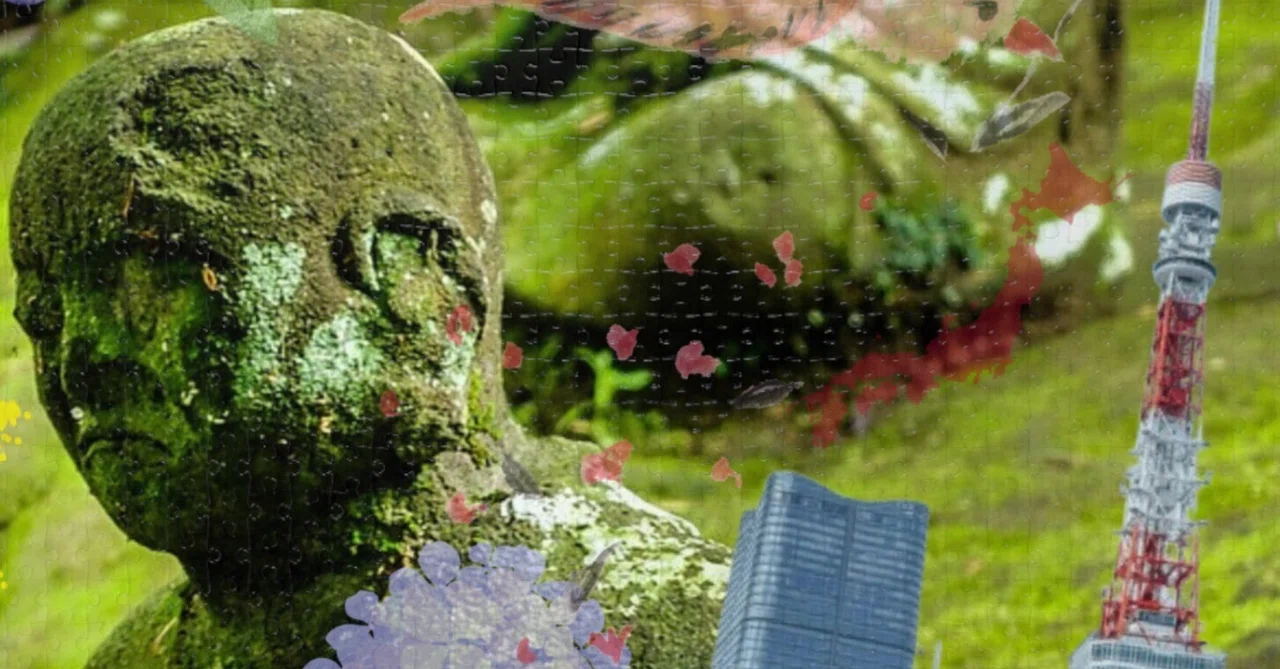
Allure of Moss-Covered Stone ~ Wabi-Sabi ~ Kimigayo ( Japanese National Anthem )

The Profound Allure of Moss-Covered Stone Buddhas
An Aesthetic of Eternal Serenity
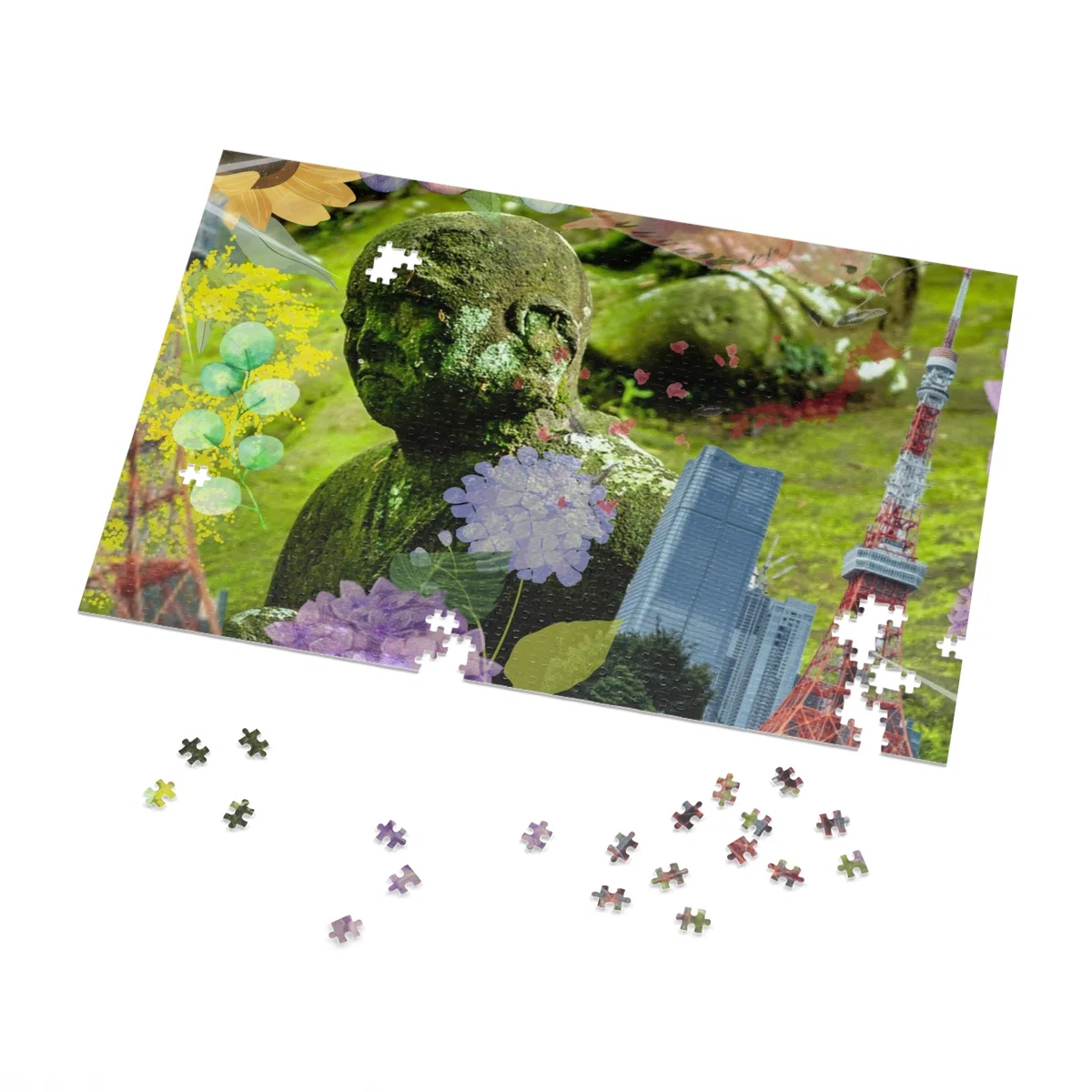
The primary enchantment of moss-covered stone Buddhas (Sekibutsu) lies deeply rooted in the traditional Japanese aesthetic of "Wabi-sabi."
This philosophy finds profound beauty in the imperfect, the impermanent, and the natural progression of time.
As these man-made statues gradually merge with the surrounding environment over decades or even centuries, the boundaries between human craftsmanship and the raw power of nature begin to blur, creating a scene that resonates with spiritual depth and artistic grace.
The Living Embodiment of "Wabi-sabi"
Moss serves as a living symbol of transience and quietude.
A stone Buddha blanketed in a lush, emerald velvet of moss evokes a powerful sense of the passage of time. It represents the beauty of aging and the dignity of enduring through the ages, reminding observers of the interconnectedness between the ephemeral nature of life and the vastness of eternity.
Sublime Harmony with the Natural World
As these statues become integrated into the landscape of ancient gardens or misty forests, they transcend their status as mere physical objects.
They appear as if they have naturally emerged from the earth itself, evolving into a sacred presence that radiates a deep, grounded peace.
This seamless integration provides a sanctuary of stillness, inviting visitors into a state of meditative reflection.
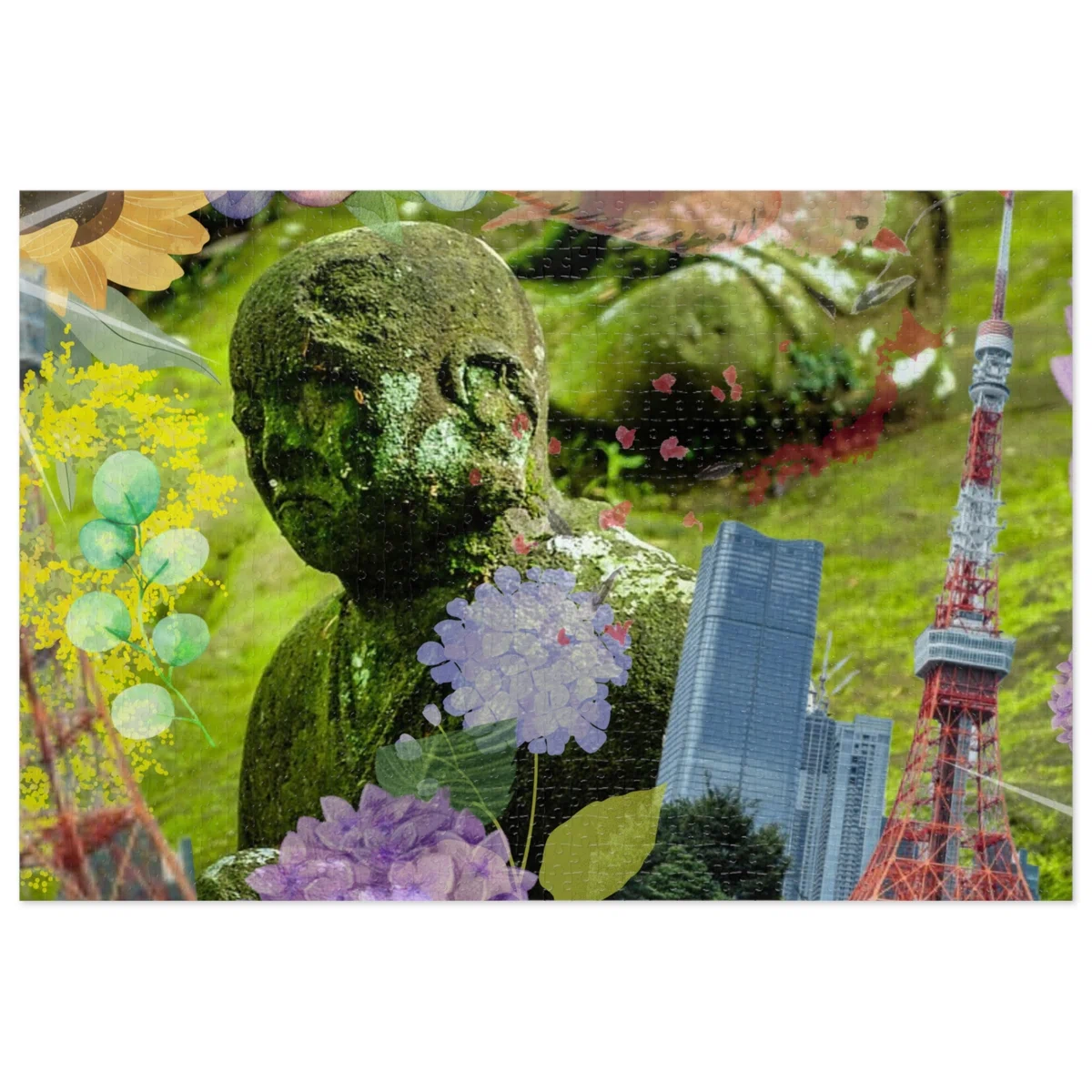
A Silent Testament to the Vastness of Time
The growth of a thick, healthy layer of moss is a painstakingly slow process that requires a tremendous span of years. Consequently, the sight of a fully moss-shrouded Buddha serves as silent, undeniable proof of the statue's long history. It stands as a witness to countless seasons of wind, rain, and snow, quietly observing the changing world and the many generations of people who have offered their prayers before it.

The Softening of Expression and Divine Compassion
The natural accumulation of moss acts to soften the sharp, weathered edges of the carved stone. This physical transformation often results in the Buddha’s facial expression appearing more tender, gentle, and filled with an aura of profound compassion. The green veil adds a layer of warmth to the cold stone, making the deity seem more approachable and protective.

Visual Serenity and Atmospheric Healing
The vibrant, deep hues of green provided by the moss are inherently soothing to the human eye. This lush texture creates a unique micro-atmosphere of moisture and coolness, effectively filtering out the noise of the modern world. The visual harmony between the gray stone and the green moss offers a therapeutic effect, fostering a sense of spiritual healing and absolute tranquility.
May your reign
Continue for a thousand, eight thousand generations,
Until the tiny pebbles
Grow into massive boulders
Lush with moss.
君が代は
千代に八千代に
さざれ石の
巌となりて
苔のむすまで
( 古今和歌集 )
When the phrase【 苔のむすまで : Until moss grows 】 is used to mean “forever” or “for a very long time,” it is typically employed to express a mind-bogglingly long span of time, as in the lyrics of “Kimigayo.”
Until moss grows (on the pebbles)
For eternity / Forever
Until the end of time
When using the phrase 【 Covered with moss 】 to convey the sense of “weathered” or “charming,” it is often used to describe a state where moss has grown over the course of many years.
Covered with moss
Weather-beaten
Timeless
It is often said that the beauty of Japan’s national anthem lies in the brevity of its lyrics. It seems that the essence of wabi-sabi is condensed within those few lines…
