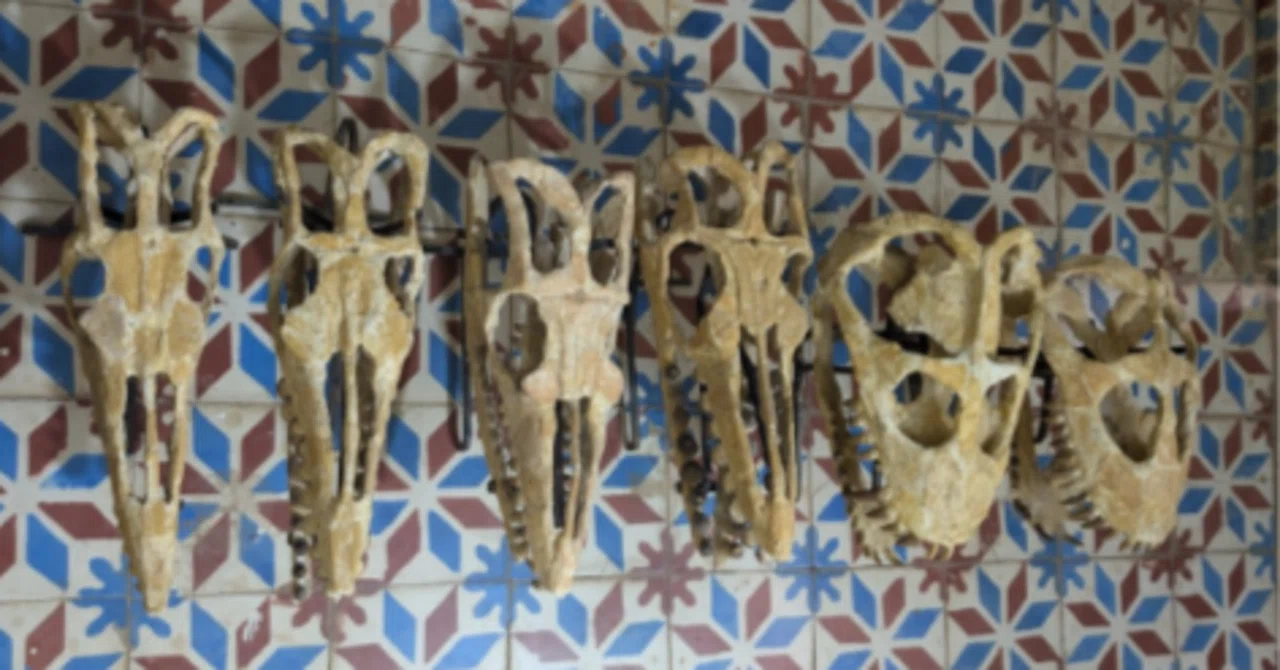
63.モササウルス頭骨とプレシオサウルス類頭骨の比較|6体のスカル(Mosasaur / Plesiosaur fossil)

【恐竜の化石専門ショップ】ジュラシック王国 です。
▼ショップは下記URLから。
https://jurassic-fossil.shop-pro.jp/
ジュラシック王国 店長です。
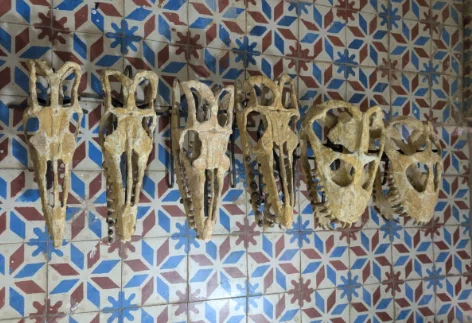
モロッコ現地で撮影された、海生爬虫類の頭骨(skull / 頭蓋骨)6体の比較写真です。
同一地域から産出された化石(fossil)でありながら、形状の違いが非常に分かりやすい好例です。
本記事では、
モササウルス類4体
プレシオサウルス類2体
それぞれの頭骨の違いを、歯と顎を中心に解説します。
モササウルス類の頭骨比較|歯と顎の違い(Mosasaurids skull)
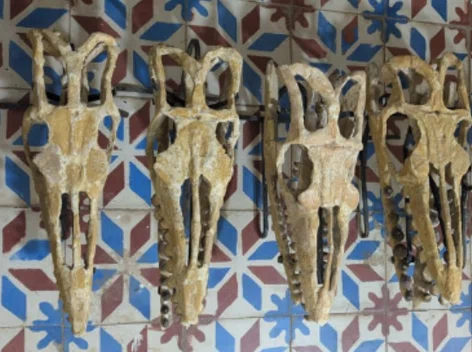
こちらはモササウルス類(Mosasaurids)の頭骨4体です。
一見似ているようでいて、それぞれに明確な違いが見られます。
この中には、グロビデンス(Globidens)系統が含まれているようです。
■ 個体差が現れるポイント
吻部(snout)の長さの違い
顎の幅・厚み(頑丈さ)
歯の形状(鋭い歯/丸みのある歯)
眼窩(orbit)の形状
これらは
種の違い(Mosasaurus / Prognathodon / Globidens など)
成長段階(幼体〜成体)
を反映している可能性があります。
■ 歯の形状と食性の関係
モササウルス類の特徴として重要なのが、歯の形状の違いです。
細長く鋭い歯
→ 魚類や頭足類を捕らえるタイプ丸みを帯びた頑丈な歯(グロビデンス型)
→ 貝類やアンモナイトを砕く
硬い獲物を食べる食性(durophagy)への適応
この違いは
捕食戦略の違い=生態的な棲み分け
を示しています。
プレシオサウルス類の頭骨|構造の違い(Plesiosaur skull)
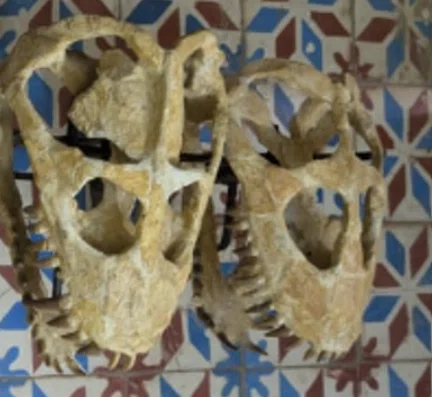
こちらはプレシオサウルス類(Plesiosaur)の頭骨2体です。
モササウルス類と比較すると、形状の違いは非常に明確です。
■ 頭骨の特徴
短く幅広い吻部
大きく丸い眼窩(orbit)
均一な円錐形の歯が整然と並ぶ構造
■ 捕食スタイルの違い
プレシオサウルス類は
小型魚類や柔らかい獲物を中心に捕食
一方でモササウルス類は
より多様で大型の獲物にも対応
していたと考えられます。
まとめ|6体の頭骨が示す多様な進化
今回の比較から分かるのは、
モササウルス類は非常に多様な捕食者グループ
グロビデンスのような特殊化(硬い獲物への適応)も存在
プレシオサウルス類とは全く異なる進化を遂げた
という点です。
同じ海に生きながら、異なる形で進化した海生爬虫類たち
頭骨(skull / 頭蓋骨)という限られた化石からでも、
その生態や役割の違いが読み取れるのは非常に興味深いポイントです。
※画像の無断転載はお断りいたします。
【恐竜の化石専門ショップ】ジュラシック王国
https://jurassic-fossil.shop-pro.jp/
ブログはこちらから
https://jurassic-fossil.shop-pro.jp/?mode=f9
Youtube動画はこちらから
https://www.youtube.com/@jurassicfossilshop/shorts
🇺🇸 English
Mosasaur and Plesiosaur Skull Fossils|Comparing Six Marine Reptile Skulls from Morocco
This photograph, taken in Morocco, shows six fossil skulls of prehistoric marine reptiles displayed side by side. Although these fossils come from the same region, their different shapes make it possible to clearly compare their skull anatomy, jaws, and teeth.
The group includes four mosasaurid skulls and two plesiosaur skulls. By comparing these specimens, we can observe how different marine reptiles developed different skull structures and feeding adaptations.
Comparing Four Mosasaurid Skulls|Differences in Teeth and Jaws
The four mosasaurid skull fossils may appear similar at first glance, but closer examination reveals significant differences.
Among these specimens, one appears to show characteristics associated with the Globidens lineage, although precise identification from photographs alone can be difficult.
Important points of comparison include:
Length and shape of the snout
Width and robustness of the jaws
Shape of the teeth, from pointed to rounded forms
Size and shape of the orbit (eye socket)
Some of these differences may reflect taxonomic differences among mosasaurids such as Mosasaurus, Prognathodon, and Globidens, while others may be related to individual variation or growth stage.
Mosasaur Teeth and Feeding Adaptations
One of the most interesting differences among mosasaurids is the shape of their teeth.
Many mosasaurs possessed elongated, pointed or conical teeth suitable for gripping fish, cephalopods, and other slippery prey.
In contrast, Globidens is famous for its rounded and robust teeth. These specialized teeth were adapted for durophagy, the consumption of hard-shelled prey.
Rather than simply piercing prey, the powerful teeth of Globidens could crush hard food items such as shellfish and other shelled marine organisms.
These differences in tooth morphology show that mosasaurids were not all using the same feeding strategy. Different species occupied different ecological roles and exploited different food resources within marine ecosystems.
Plesiosaur Skull Fossils|A Different Skull Structure
The other two specimens are plesiosaur skull fossils. When placed beside the mosasaurid skulls, differences in their overall proportions and anatomy become much easier to recognize.
Features visible in these specimens include a relatively different snout proportion, prominent eye sockets, and rows of pointed teeth.
Plesiosaurs and mosasaurs belonged to very different groups of marine reptiles and followed separate evolutionary histories. Their skulls therefore provide an interesting comparison of two different solutions to life and predation in prehistoric seas.
Differences in Feeding Strategy
The shape of a fossil skull can provide valuable clues about how an extinct marine reptile captured and consumed its prey.
Many plesiosaurs possessed pointed teeth suited to catching fish and other relatively soft-bodied or slippery prey.
Mosasaurids, on the other hand, evolved a particularly broad diversity of tooth and jaw forms. Some were effective at gripping fish and other marine animals, while specialized forms such as Globidens developed crushing teeth for hard prey.
This diversity suggests differences in feeding strategy and ecological niche among the marine reptiles sharing ancient marine environments.
Six Fossil Skulls Showing the Diversity of Marine Reptiles
Comparing these six marine reptile skull fossils makes the diversity of prehistoric marine predators especially clear.
The mosasaurids show considerable variation in snout proportions, jaw robustness, teeth, and eye sockets. Specialized mosasaurs such as Globidens demonstrate how far feeding adaptations could develop within the group.
The plesiosaur skulls, meanwhile, show a distinctly different anatomical pattern resulting from their separate evolutionary history.
By comparing Mosasaur skull fossils, Plesiosaur skull fossils, teeth, jaws, and eye sockets, we can learn much more than the external appearance of these extinct animals.
Even a skull alone can preserve important evidence about feeding adaptations, ecological roles, and the remarkable diversity of the marine reptiles that once inhabited prehistoric seas.
🇨🇳 中文
沧龙与蛇颈龙类头骨化石比较|摩洛哥六件海生爬行动物头骨
这张拍摄于摩洛哥的照片展示了六件史前海生爬行动物的头骨化石。虽然这些化石来自同一地区,但将它们排列在一起后,可以非常直观地观察头骨形态、颌骨以及牙齿结构之间的差异。
其中包括四件沧龙类头骨和两件蛇颈龙类头骨。
通过比较这些海生爬行动物化石,我们可以进一步了解不同动物在漫长的演化过程中,如何形成不同的头骨结构和捕食适应。
四件沧龙类头骨比较|牙齿与颌骨的差异
这四件**沧龙类头骨化石(Mosasaur skull fossil)**乍看之下比较相似,但仔细观察后,可以发现许多明显的形态差异。
其中有一件似乎具有与Globidens类群相关的特征,不过仅通过照片进行精确分类仍然需要谨慎。
比较这些沧龙头骨时,可以重点观察:
吻部的长度与形状
颌骨的宽度和粗壮程度
尖锐牙齿与圆钝牙齿之间的差异
**眼眶(orbit)**的大小与形状
这些差异中的一部分,可能与Mosasaurus、Prognathodon、Globidens等不同沧龙类群有关,同时也可能受到个体差异和生长阶段的影响。
沧龙牙齿形态与食性的关系
沧龙类最值得观察的特征之一,就是不同类型之间明显不同的牙齿形态。
许多沧龙具有细长、尖锐或接近圆锥形的牙齿,非常适合咬住鱼类、头足类以及其他容易滑脱的海洋动物。
而Globidens则以圆钝、粗壮而坚固的牙齿闻名。
这种特殊的牙齿结构与**硬食性(durophagy)**有关,也就是适应捕食具有坚硬外壳的猎物。
与单纯刺穿猎物的尖锐牙齿不同,Globidens的粗壮牙齿更适合压碎贝类及其他具有硬壳的海洋生物。
这种牙齿结构的差异说明,沧龙类并不是采用完全相同的捕食方式,而是根据不同食物资源形成了多样化的生态适应。
蛇颈龙类头骨化石|不同的头骨结构
另外两件标本属于蛇颈龙类头骨化石(Plesiosaur skull fossil)。
将它们与沧龙类头骨并列比较时,可以更加明显地看到整体比例和头骨结构上的不同。
这些标本可以观察到不同的吻部比例、明显的眼眶,以及排列在颌骨上的尖锐牙齿。
蛇颈龙类与沧龙类属于完全不同的海生爬行动物类群,也具有不同的演化历史。因此,它们的头骨结构为我们提供了一个非常有趣的比较对象。
不同的捕食方式与生态适应
化石头骨的形态可以为我们了解史前海生爬行动物的捕食方式提供重要线索。
许多蛇颈龙类具有尖锐的牙齿,适合捕捉鱼类以及其他相对柔软或容易滑脱的猎物。
相比之下,沧龙类的牙齿和颌骨形态更加多样化。有些种类适合咬住鱼类和其他海洋动物,而像Globidens这样的特殊类型,则演化出了适合压碎坚硬猎物的牙齿。
这种差异体现了不同海生爬行动物之间的捕食策略和生态位差异。
六件头骨展现史前海生爬行动物的多样性
将这六件海生爬行动物头骨化石放在一起比较,可以非常直观地看到史前海洋动物在演化上的多样性。
四件沧龙类头骨在吻部、颌骨、牙齿以及眼眶等方面都表现出不同特点,而Globidens这样的特殊类型,更体现了沧龙类对不同食物资源的高度适应。
另一方面,蛇颈龙类头骨则展现出由于不同演化路线而形成的另一种头骨结构。
通过比较沧龙头骨化石、蛇颈龙头骨化石、牙齿、颌骨以及眼眶结构,我们不仅能够观察这些史前动物的外形,还能够进一步了解它们的捕食方式和生态角色。
即使只是一件头骨化石,也保存着关于史前海洋生态系统和海生爬行动物演化的重要信息。
🇰🇷 한국어
모사사우루스와 플레시오사우루스 두개골 화석 비교|모로코 해양 파충류 두개골 6점
이 사진은 모로코 현지에서 촬영된 선사시대 해양 파충류 두개골 화석 6점을 나란히 보여줍니다.
같은 지역에서 발견된 화석이지만 서로 비교해 보면 두개골의 형태, 턱의 구조, 이빨 모양에서 상당한 차이가 있다는 것을 쉽게 확인할 수 있습니다.
이 가운데 4점은 모사사우루스류 두개골이며, 2점은 플레시오사우루스류 두개골입니다.
이러한 화석을 비교하면 서로 다른 해양 파충류가 어떤 방식으로 다른 두개골 구조와 포식 적응을 발달시켰는지 이해하는 데 도움이 됩니다.
모사사우루스류 두개골 4점 비교|이빨과 턱의 차이
4점의 **모사사우루스류 두개골 화석(Mosasaur skull fossil)**은 처음에는 비슷하게 보이지만 자세히 살펴보면 여러 형태적 차이가 나타납니다.
이 가운데에는 Globidens 계통과 관련된 특징을 가진 것으로 보이는 표본도 포함되어 있지만, 사진만으로 정확한 분류를 하는 데에는 주의가 필요합니다.
주요 비교 포인트는 다음과 같습니다.
주둥이의 길이와 형태
턱의 폭과 두께
날카로운 이빨과 둥근 이빨의 차이
**안와(orbit)**의 크기와 형태
이러한 차이는 Mosasaurus, Prognathodon, Globidens와 같은 서로 다른 모사사우루스류의 분류학적 차이를 반영할 가능성이 있으며, 개체 차이나 성장 단계와 관련될 수도 있습니다.
모사사우루스 이빨과 먹이의 관계
모사사우루스류를 비교할 때 특히 흥미로운 특징 중 하나가 이빨의 형태입니다.
많은 모사사우루스류는 길고 날카롭거나 원뿔형에 가까운 이빨을 가지고 있어 물고기, 두족류 및 기타 미끄러운 해양 동물을 붙잡는 데 적합했습니다.
반면 Globidens는 둥글고 굵으며 튼튼한 이빨로 유명합니다.
이러한 특수한 이빨은 단단한 먹이를 섭취하는 **경식성(durophagy)**에 적응한 구조로 알려져 있습니다.
날카로운 이빨로 먹이를 찌르는 방식과 달리 Globidens의 강한 이빨은 조개류를 비롯한 단단한 껍질을 가진 먹이를 부수는 데 적합했습니다.
이러한 치아 형태의 차이는 모사사우루스류가 모두 동일한 포식 전략을 사용한 것이 아니라, 서로 다른 먹이와 생태적 환경에 적응했다는 것을 보여줍니다.
플레시오사우루스류 두개골|다른 형태의 머리 구조
나머지 두 표본은 **플레시오사우루스류 두개골 화석(Plesiosaur skull fossil)**입니다.
모사사우루스류의 두개골과 나란히 비교하면 전체적인 비율과 해부학적 구조의 차이를 더욱 쉽게 확인할 수 있습니다.
이 표본들에서는 서로 다른 주둥이 비율과 뚜렷한 안와, 그리고 턱을 따라 배열된 날카로운 이빨을 관찰할 수 있습니다.
플레시오사우루스류와 모사사우루스류는 서로 다른 해양 파충류 집단이며 각각 별도의 진화 역사를 가지고 있습니다.
따라서 두 집단의 두개골은 선사시대 바다에서 서로 다른 방식으로 적응한 해양 파충류를 비교하는 흥미로운 자료입니다.
서로 다른 포식 전략과 생태적 적응
두개골 화석의 형태는 멸종한 해양 파충류가 어떤 방식으로 먹이를 포획했는지를 이해하는 데 중요한 단서를 제공합니다.
많은 플레시오사우루스류는 물고기와 비교적 부드럽거나 미끄러운 먹이를 붙잡는 데 적합한 날카로운 이빨을 가지고 있었습니다.
모사사우루스류는 더욱 다양한 형태의 이빨과 턱을 발달시켰습니다. 일부는 물고기와 다른 해양 동물을 붙잡는 데 적합했으며, Globidens와 같은 특수한 형태는 단단한 먹이를 부수는 이빨을 발달시켰습니다.
이러한 차이는 선사시대 해양 파충류 사이에 존재했던 포식 전략과 생태적 지위의 차이를 보여줍니다.
6개의 두개골이 보여주는 해양 파충류의 다양성
이 6점의 해양 파충류 두개골 화석을 함께 비교하면 선사시대 바다에 살았던 동물들의 다양성을 보다 명확하게 확인할 수 있습니다.
모사사우루스류는 주둥이, 턱의 강도, 이빨, 안와 등에서 다양한 차이를 보여주며, Globidens와 같은 특수한 형태는 특정 먹이에 대한 높은 적응성을 보여줍니다.
반면 플레시오사우루스류의 두개골에서는 서로 다른 진화 과정에서 형성된 또 다른 형태의 구조를 확인할 수 있습니다.
Mosasaur skull fossil, Plesiosaur skull fossil, 이빨, 턱, 안와 구조를 비교하면 단순히 동물의 외형뿐만 아니라 포식 방식과 생태적 역할까지 이해할 수 있습니다.
두개골이라는 제한된 화석 자료만으로도 선사시대 바다에 살았던 해양 파충류들의 다양한 진화와 생태를 살펴볼 수 있다는 점은 매우 흥미롭습니다.
