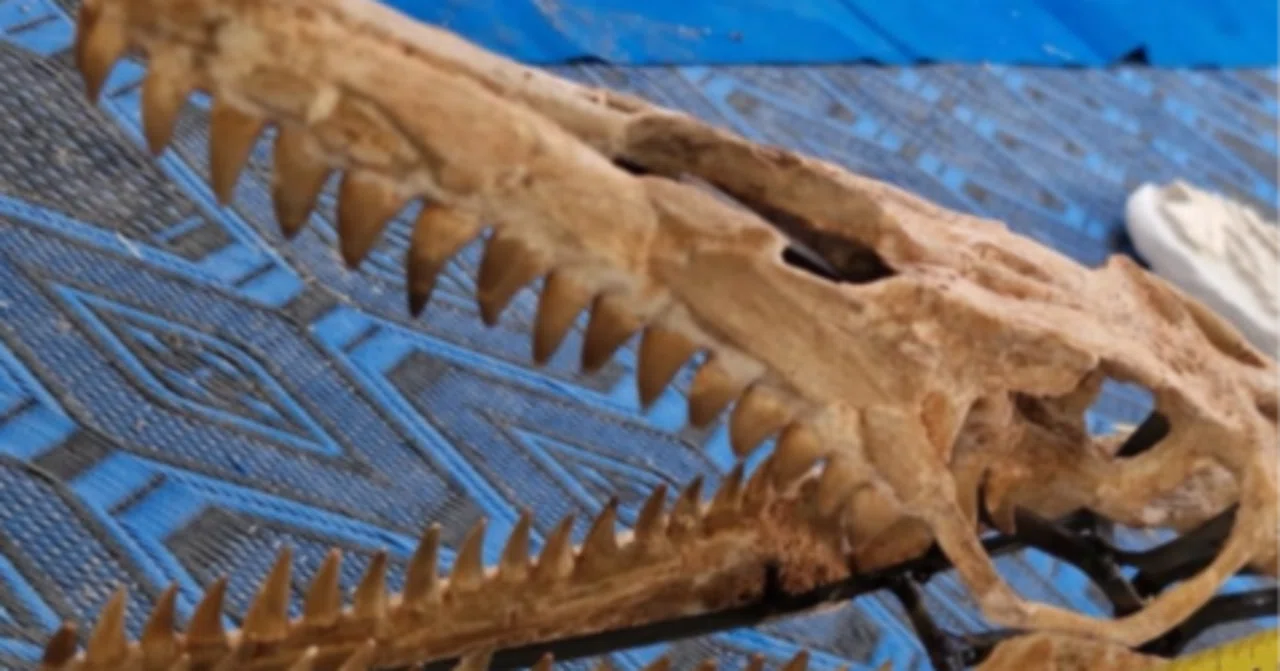
60.モササウルスはスゴイ! 大きな口で獲物をガッチリ

【恐竜の化石専門ショップ】ジュラシック王国 です。
▼ショップは下記URLから。
https://jurassic-fossil.shop-pro.jp/
ジュラシック王国 店長です。
モササウルス(Mosasaur)は、白亜紀の海に生息した大型捕食者です。
その大きな特徴のひとつが、大きく開く顎の構造にあります。
今回の標本では、その仕組みを直感的に理解することができます。
■ 上顎の構造|軽量化と筋肉配置
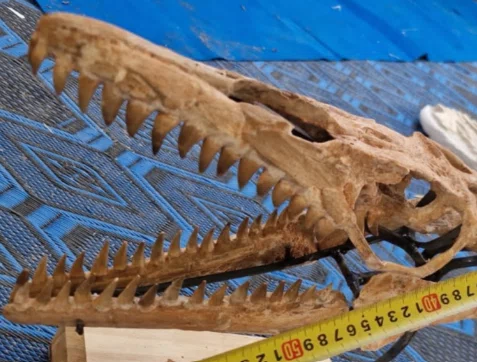
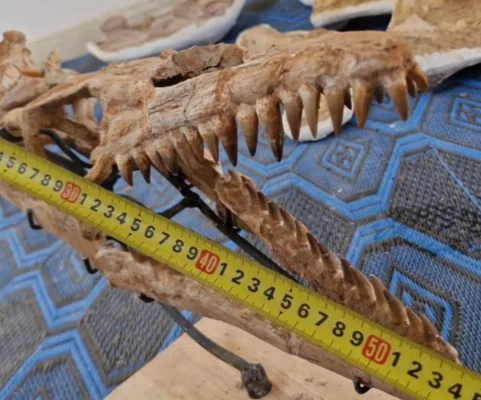
上顎は、複数の骨で構成されたフレーム構造になっており、
大きな開口部(側頭窓)が発達しています。
これにより、
頭部の軽量化
咬む力を生み出す筋肉のスペース確保
水中での機動性向上
といった機能が両立されています。
また、細長く伸びた吻(口先)は水の抵抗を減らし、
水中で素早く獲物に食らいつくのに適しています。
歯は円錐形でやや後方へカーブしており、
滑りやすい獲物をしっかり捕らえる形になっています。
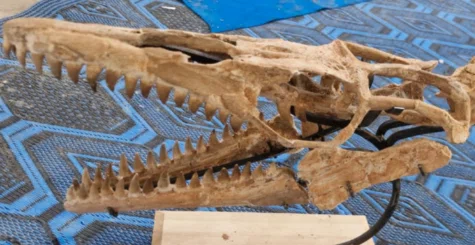
■ 下顎の構造|よく開く“しなる顎”
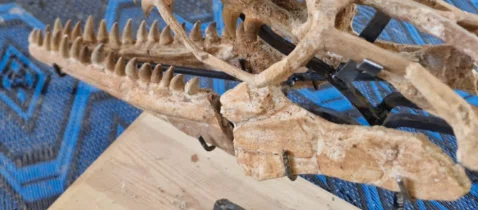
下顎を見ると、前後で分かれているように見える部分があります。
これは破損ではなく、もともとこのような構造をしています。
この“分かれた構造”によって、
口を大きく開くことができる
顎にわずかな柔軟性(しなり)が生まれる
といった特徴が得られます。
特に、獲物に食らいつく瞬間や、
大きめの獲物を咥える際に効果を発揮します。
■ 何を食べていたのか?
モササウルスは、海の頂点捕食者として
さまざまな生物を捕食していました。
代表的な獲物としては、
魚類
イカやタコなどの頭足類
アンモナイト(Ammonite)
他の海生爬虫類(大型個体の場合)
などが知られています。
特にアンモナイトについては、
殻を砕かれた痕跡のある化石も見つかっており、
実際に捕食していた証拠とされています。
■ 捕食スタイル|“捕らえて逃がさない”
モササウルスの歯は、ナイフのように切る形ではなく、
円錐形で滑りにくい構造
をしています。
そのため、
一度咥えたら逃がさない
振り回して弱らせる
そのまま飲み込む、または分断する
といった、力強い捕食スタイルを持っていたと考えられています。
■ まとめ|海のハンターを支えた顎
この標本から分かるポイントはシンプルです。
上顎:軽量で強い構造
下顎:大きく開く柔軟性
歯:獲物を逃がさない形
これらが組み合わさることで、
水中で確実に捕らえる捕食者
としての能力を発揮していました。
※画像の無断転載はお断りいたします。
【恐竜の化石専門ショップ】ジュラシック王国
https://jurassic-fossil.shop-pro.jp/
ブログはこちらから
https://jurassic-fossil.shop-pro.jp/?mode=f9
Youtube動画はこちらから
https://www.youtube.com/@jurassicfossilshop/shorts
🇺🇸 English
Mosasaur Jaw Structure|How Its Wide-Opening Jaws Worked for Hunting
Mosasaurs (Mosasaur) were large marine reptiles that lived in the oceans during the Late Cretaceous. One of the most remarkable features of these powerful marine predators was their jaw structure, which allowed them to open their mouths widely and capture a variety of prey.
By examining a Mosasaur skull fossil and jaw, we can better understand how the upper jaw, lower jaw, and teeth worked together as an effective feeding system.
Upper Jaw Structure|Lightweight Skull and Powerful Muscles
The upper portion of the Mosasaur skull was composed of multiple bones forming a relatively lightweight framework. Large openings in the skull, including the temporal region, reduced unnecessary bone mass while also providing space associated with the jaw musculature.
This combination helped create a skull capable of supporting effective feeding while remaining suitable for movement through the water.
The elongated snout also gave the Mosasaur skull its characteristic streamlined appearance. Along the jaws were numerous pointed teeth.
Many Mosasaur teeth were approximately conical in shape and slightly curved backward. Rather than functioning primarily like knife blades, these teeth were particularly effective at gripping slippery prey and preventing it from escaping.
Lower Jaw Structure|Mobility and a Wide-Opening Mouth
An interesting feature can be observed in the lower jaw. Certain sections appear to be separated or divided, but this does not necessarily indicate damage to the fossil. It reflects the multi-element construction and specialized articulation of the original jaw.
The lower jaw of mosasaurs possessed a degree of mobility that contributed to their ability to open the mouth widely and handle relatively large prey.
This combination of mobility and strength was particularly useful when the animal rapidly seized prey or attempted to control an animal struggling between its jaws.
The jaw was therefore not simply a rigid structure. Its anatomical construction formed part of a highly specialized feeding system adapted to life as a large marine predator.
What Did Mosasaurs Eat?
Mosasaurs occupied high trophic positions in Late Cretaceous marine ecosystems, and different species consumed a wide variety of prey.
Potential prey included fish, cephalopods, ammonites, marine turtles, and other marine reptiles, depending on the size and species of the mosasaur.
Ammonite fossils showing damage interpreted as bite marks provide particularly interesting evidence of interactions between mosasaurs and ammonites in ancient marine ecosystems.
Different mosasaur genera also developed different tooth shapes. This suggests that not every mosasaur used exactly the same feeding strategy, and their diets could vary significantly.
Mosasaur Feeding Strategy|Gripping and Controlling Prey
The combination of a wide-opening jaw and pointed, recurved teeth created an effective system for capturing prey.
Once prey entered the mouth, the conical and slightly backward-curved teeth helped maintain a secure grip. The jaws and teeth worked together to reduce the chance of slippery marine prey escaping.
Depending on the prey and the mosasaur species involved, food could then be manipulated, swallowed, or processed further before ingestion.
What the Mosasaur Jaw Fossil Reveals
A Mosasaur jaw fossil provides much more information than simply the size of this prehistoric marine reptile.
The relatively lightweight skull structure, mobile lower jaw, wide gape, and recurved conical teeth all formed parts of an effective feeding apparatus.
By studying Mosasaur skull fossils, jaw fossils, and Mosasaur teeth, we can better understand how these formidable marine reptiles captured prey and became some of the most successful predators in the oceans of the Late Cretaceous.
🇨🇳 中文
沧龙颌骨结构|能够大幅张开的嘴与捕食机制
**沧龙(Mosasaur)**是生活在白垩纪晚期海洋中的大型海生爬行动物,也是当时海洋生态系统中极具代表性的捕食者之一。
沧龙最引人注目的特征之一,就是其特殊的头骨和颌骨结构(Mosasaur jaw structure)。通过观察沧龙头骨化石和颌骨化石,我们可以更加直观地了解这种大型海洋捕食者如何张开嘴巴、咬住猎物并进行捕食。
上颌结构|轻量化的头骨与肌肉空间
沧龙头骨由多块骨骼组成,并具有明显的开口结构。这样的构造可以在减少头部不必要重量的同时,为控制颌部运动的肌肉和相关组织提供空间。
这种结构使沧龙能够兼顾头骨的功能性与水中活动所需要的机动性。
沧龙的吻部较为细长,形成了非常具有代表性的头部轮廓。上下颌排列着大量尖锐的牙齿。
许多沧龙牙齿(Mosasaur teeth)接近圆锥形,并略微向后弯曲。这种牙齿并不是单纯像刀一样切割猎物,而是非常适合咬住并牢牢控制容易滑脱的海洋猎物。
下颌结构|具有活动性的颌骨
观察沧龙下颌骨时,可以看到某些部位似乎存在分离或连接的结构。这并不一定代表化石发生了破损,而与沧龙下颌本身由多个骨骼单元组成及其特殊的连接方式有关。
这种下颌结构具有一定的活动性,有助于沧龙形成较大的张口幅度,并处理相对大型的猎物。
当沧龙迅速咬住猎物,或者控制在口中不断挣扎的动物时,这种兼具活动性与稳定性的颌骨结构具有重要作用。
因此,沧龙的下颌并不是简单的刚性结构,而是其整个捕食系统的重要组成部分。
沧龙吃什么?
沧龙类在白垩纪晚期的海洋生态系统中占据重要的捕食者位置。根据沧龙的种类和体型不同,其猎物也具有相当大的多样性。
可能的食物包括鱼类、头足类、菊石、海龟以及其他海生爬行动物等。
部分菊石化石上发现了被解释为捕食或咬合造成的损伤痕迹,为研究沧龙与菊石之间的生态关系提供了有趣的化石证据。
不同沧龙类的牙齿形态也存在明显差异,因此并不是所有沧龙都采用完全相同的捕食方式。
捕食方式|咬住并控制猎物
能够大幅张开的颌骨与尖锐的牙齿相结合,形成了沧龙非常有效的捕食系统。
猎物进入口中之后,圆锥形并略微向后弯曲的牙齿能够帮助沧龙牢牢控制猎物,降低鱼类等容易滑脱的动物从口中逃脱的可能性。
根据猎物大小和沧龙种类的不同,捕获的食物随后可能被进一步处理或直接吞食。
从沧龙颌骨化石了解白垩纪海洋捕食者
一件**沧龙颌骨化石(Mosasaur jaw fossil)**不仅能够展示这种史前海生爬行动物的巨大尺寸,也能够帮助我们了解它的捕食机制。
头骨的结构、具有活动性的下颌、较大的张口幅度,以及能够牢牢控制猎物的圆锥形牙齿,共同组成了沧龙高效的捕食系统。
通过观察沧龙头骨化石、沧龙颌骨化石以及沧龙牙齿化石(Mosasaur teeth fossil),我们可以更加具体地理解这些大型海生爬行动物如何捕获猎物,以及它们如何成为白垩纪晚期海洋中的重要捕食者。
🇰🇷 한국어
모사사우루스 턱 구조|크게 벌어지는 입과 포식 방식
**모사사우루스류(Mosasaur)**는 백악기 후기 바다에 살았던 대형 해양 파충류로, 당시 해양 생태계를 대표하는 강력한 포식자 중 하나였습니다.
모사사우루스류의 가장 흥미로운 특징 가운데 하나는 **두개골과 턱 구조(Mosasaur jaw structure)**입니다. 모사사우루스 두개골 화석과 턱 화석을 관찰하면 이 대형 해양 포식자가 어떻게 입을 벌리고 먹이를 포획했는지 이해할 수 있습니다.
위턱 구조|가벼운 두개골과 턱 근육
모사사우루스류의 두개골은 여러 개의 뼈로 구성되어 있으며, 측두부를 비롯한 여러 개방된 구조를 가지고 있습니다.
이러한 구조는 불필요한 뼈의 무게를 줄이는 동시에 턱의 움직임과 관련된 근육이 자리할 수 있는 공간을 제공합니다. 결과적으로 두개골은 효과적인 포식 기능과 수중 활동에 필요한 구조를 함께 갖출 수 있었습니다.
길게 뻗은 주둥이 역시 모사사우루스 두개골의 특징적인 형태를 만듭니다.
턱에는 많은 날카로운 이빨이 배열되어 있습니다. 일반적인 Mosasaur teeth는 원뿔형에 가까우며 뒤쪽으로 약간 휘어진 형태를 보입니다.
이러한 이빨은 단순히 먹이를 칼처럼 자르는 것보다 미끄러운 먹이를 물어서 단단히 붙잡는 데 효과적인 구조였습니다.
아래턱 구조|움직임과 넓은 입 벌림
모사사우루스 아래턱을 보면 일부가 분리되거나 연결되어 있는 것처럼 보이는 부분이 있습니다. 이것이 반드시 화석의 파손을 의미하는 것은 아니며, 원래 아래턱을 구성하는 여러 뼈와 관절 구조와 관련되어 있습니다.
모사사우루스류의 아래턱은 일정한 움직임이 가능했으며, 이러한 구조는 입을 크게 벌리고 비교적 큰 먹이를 처리하는 데 도움을 주었습니다.
특히 먹이를 빠르게 공격하거나 턱 사이에서 움직이는 먹이를 제어할 때 이러한 턱의 구조는 중요한 역할을 했을 것으로 생각됩니다.
모사사우루스는 무엇을 먹었을까?
모사사우루스류는 백악기 후기 해양 생태계에서 중요한 포식자였습니다. 종류와 크기에 따라 먹이 역시 다양했습니다.
대표적으로 어류, 두족류, 암모나이트, 바다거북 및 다른 해양 파충류 등이 먹이였을 가능성이 있습니다.
일부 암모나이트 화석에서는 포식이나 교합과 관련된 것으로 해석되는 손상 흔적이 발견되어 모사사우루스류와 암모나이트의 관계를 연구하는 중요한 자료가 되고 있습니다.
또한 모사사우루스류는 종류에 따라 치아 형태에도 차이가 있었기 때문에 모든 종류가 완전히 동일한 방식으로 먹이를 사냥했던 것은 아닙니다.
포식 전략|먹이를 붙잡고 놓치지 않는 구조
크게 벌어지는 턱과 날카로운 이빨의 조합은 모사사우루스류가 먹이를 효과적으로 포획할 수 있도록 했습니다.
먹이가 입안으로 들어오면 원뿔형이며 뒤쪽으로 약간 휘어진 이빨이 먹이를 단단히 붙잡아 물고기와 같은 미끄러운 먹이가 쉽게 빠져나가지 못하도록 하는 데 도움을 주었습니다.
먹이의 종류와 크기에 따라 포획된 먹이는 추가적으로 처리되거나 삼켜졌을 것으로 생각됩니다.
모사사우루스 턱 화석이 보여주는 포식자의 구조
**모사사우루스 턱 화석(Mosasaur jaw fossil)**은 단순히 이 해양 파충류의 크기를 보여주는 것 이상의 정보를 제공합니다.
두개골의 구조, 움직임이 가능한 아래턱, 넓은 입 벌림, 그리고 먹이를 붙잡는 원뿔형 이빨이 결합되어 효과적인 포식 시스템을 형성했습니다.
Mosasaur skull fossil, Mosasaur jaw fossil, Mosasaur teeth fossil을 함께 관찰하면 모사사우루스류가 어떻게 먹이를 포획하고 백악기 후기 바다에서 성공적인 대형 포식자로 살아갔는지를 보다 구체적으로 이해할 수 있습니다.
