My Shakespeare Play Critique Series No.22: “Hamlet”ーThe Labyrinth of Language-Existence and Theatricality ー

[Introduction]
Written by William Shakespeare around 1600,*Hamlet*transcends the framework of the revenge tragedy to become one of the most significant texts in literary history, probing the human psyche and the absurdity of the world. Why has this play continued to captivate audiences for over 400 years? We delve into the heart of the matter.
[1. Performance History and Legendary Performances: A Mirror Reflecting the Times]
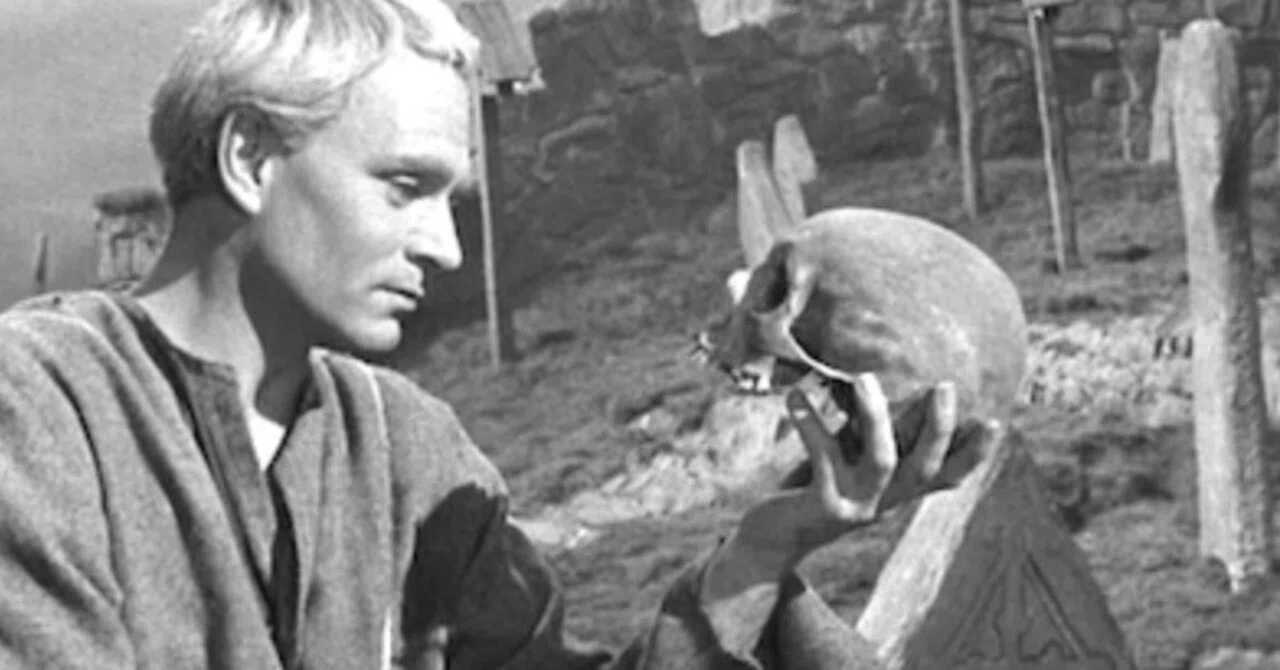
It is no exaggeration to say that the history of *Hamlet* is synonymous with the evolution of theatre history itself. Ever since Richard Burbage, who is said to have played Hamlet in the premiere, the role has remained the ‘Mount Everest’ for actors.In the 18th century, David Garrick established a classical interpretation through his emotionally charged performance, whilst in the 19th century, Henry Irving emphasised psychological depth. In the 20th century,John Gielgud and Laurence Olivier presented introspective and intellectual portrayals of Hamlet;in particular,Olivier’s 1948 film adaptation cemented the stereotype of ‘the indecisive man’in the global consciousness.In the modern era, interpretations have diversified, ranging from female actors playing Hamlet—a tradition begun by Sarah Bernhardt—to Benedict Cumberbatch’s fast-paced performance. Each of these masterful performances is an answer to the question: ‘How does the era define Hamlet?’
[2. Multi-layered Themes: Revenge, Politics, and Nihilism]
The narrative of this play is highly multi-layered. On the surface, it is a bloody drama of ‘revenge for one’s father’, but underlying this lies the political theme of ‘corruption’ within the Kingdom of Denmark.
‘Something is rotten in the state of Denmark’ (Act I, Scene 4)
As this line suggests, the royal court is a state of spies where eavesdropping and surveillance are rife. Furthermore, Hamlet is confronted with ‘female infidelity’, symbolised by his mother Gertrude’s betrayal, and the philosophical question of the boundary between life and death. It is precisely this structure, in which personal vengeance leads to the survival of the state and, ultimately, to a sense of cosmic nihilism, that gives the play its depth.
[3. Rhythmic Soliloquies: The Music of the Inner Mind]
The true essence of Shakespearean drama lies in its poetic dialogue, delivered in iambic pentameter. Hamlet’s soliloquies, in particular, give rhythm to the very process of thought.
‘To be, or not to be, that is the question.’ (Act 3, Scene 1)
This all-too-famous line captures, with perfect rhythm, the fragility of a man torn between the pain of living and the fear of the unknown after death.
The soliloquy is not an explanation addressed to the audience, but rather ‘music’ resonating within Hamlet’s own mind. It is this musical quality that evokes empathy in the audience, transcending logic.
[4. Wordplay: The Mask of Madness and the Truth]
Hamlet feigns ‘madness’ to bide his time for revenge, yet this madness is expressed through sharp ‘wordplay’. He uses words as weapons, toying with King Claudius and the courtier Polonius.
When Polonius asks him, ‘What are you reading?’, he replies, ‘Words, words, words.’ This is a sarcastic remark on how words, as symbols, have lost their substance.
Furthermore, the phrase ‘Get thee to a nunnery’ directed at Ophelia carries the double meaning of ‘convent’ and ‘brothel’, cruelly condensing his distrust of women and his twisted view of love.
[5. Shakespeare’s View of Humanity: The Birth of the Multifaceted ‘Individual’]
What Shakespeare presents in this work is not a ‘character’ with a consistent personality, but ‘humanity’ itself, full of contradictions.
‘What a piece of work is a man!’ (Act II, Scene 2)
Immediately following this exclamation, Hamlet dismisses humanity as ‘dust of the dust’. A being who, whilst harbouring noble ideals, finds his feet caught in a quagmire of reality. Through Hamlet, Shakespeare anticipated and depicted the modern affliction of ‘self-consciousness’.
He is both a victim tossed about by fate and a philosopher who binds himself through his own thoughts. It is precisely this ‘ambiguity’ constitutes the realism Shakespeare achieved, and it is the very reason we find fragments of ourselves within Hamlet.
In conclusion, *Hamlet* is not merely a classical play. It is a time capsule, eternally sealed by the magic of theatre, capturing the human endeavour of wandering through a labyrinth of words whilst continually asking, ‘Who am I?’
[はじめに]
1600年頃にウィリアム・シェイクスピアによって執筆された『ハムレット』は、復讐悲劇という枠組みを超え、人間の精神や世界の不条理を深く探求する、文学史上最も重要な作品の一つとなった。なぜこの戯曲は、400年以上にわたって観客を魅了し続けてきたのだろうか。その核心に迫りたいと思う。
[1. 上演の歴史と伝説的な演技:時代を映し出す鏡] 『ハムレット』の歴史は、演劇史そのものの変遷と同義であると言っても過言ではない。初演でハムレットを演じたとされるリチャード・バーベッジ以来、この役は俳優たちにとって「エベレスト」であり続けてきた。18世紀には、デヴィッド・ギャリックが感情豊かな演技を通じて古典的な解釈を確立し、19世紀にはヘンリー・アーヴィングが心理的な深みを強調した。20世紀には、ジョン・ギールグッドとローレンス・オリヴィエが内省的で知性的なハムレット像を提示した。
特に、オリヴィエによる1948年の映画化作品は、「優柔不断な男」というステレオタイプを世界的な認識として定着させた。現代では、サラ・ベルナールが始めた伝統である女性俳優によるハムレットの演じ方から、ベネディクト・カンバーバッチのテンポの速い演技に至るまで、解釈は多様化している。これらの見事な演技の一つひとつが、「その時代はいかにしてハムレットを定義するのか」という問いへの答えとなっている。
[2. 多層的なテーマ:復讐、政治、そしてニヒリズム]
この戯曲の物語は極めて多層的である。表面的には「父の仇討ち」という血なまぐさいドラマだが、その根底にはデンマーク王国における「腐敗」という政治的テーマが横たわっている。
「デンマークの国には何か腐ったものがある」(第1幕第4場)。
この台詞が示唆するように、王宮は盗聴や監視が横行するスパイだらけの場所となっている。さらに、ハムレットは、母ガートルードの裏切りによって象徴される「女性の不貞」や、生と死の境界に関する哲学的な問いにも直面する。個人的な復讐が国家の存続へとつながり、最終的には宇宙的なニヒリズムの感覚へと至るという、まさにこの構造こそが、この戯曲に深みを与えている。
[3. リズミカルな独白:内なる心の音楽]
シェイクスピア劇の真髄は、五歩格で語られる詩的な対話にある。とりわけハムレットの独白は、思考のプロセスそのものにリズムを与えている。「生きるか、死ぬか、それこそが問題だ。」(第3幕第1場)このあまりにも有名な台詞は、生きる苦しみと死後の未知への恐怖の間で引き裂かれた男の脆さを、完璧なリズムで捉えている。この独白は観客に向けた説明ではなく、むしろハムレット自身の心の中で響き渡る「音楽」である。論理を超越し、観客の共感を呼び起こすのは、まさにこの音楽的な性質である。
[4. 言葉遊び:狂気の仮面と真実]
ハムレットは復讐の機会を待つために「狂気」を装うが、その狂気は鋭い「言葉遊び」を通じて表現される。彼は言葉を武器として用い、クローディウス王や廷臣ポローニアスを翻弄する。
ポローニアスが「何を読んでいるのか?」と尋ねると、彼は「言葉、言葉、言葉」と答える。これは、象徴としての言葉がその実体を失ってしまったことに対する皮肉な発言である。さらに、オフィーリアに向けた「修道院へ行け」という言葉には、「修道院」と「売春宿」という二重の意味が込められており、女性に対する彼の不信感と、愛に対する歪んだ見方が残酷に凝縮されている。
[5. シェイクスピアの人間観:多面的な「個人」の誕生]
シェイクスピアがこの作品で提示しているのは、一貫した性格を持つ「登場人物」ではなく、矛盾に満ちた「人間性」そのものである。
「人間とはなんと素晴らしい作品か!」(第2幕第2場)
この叫びの直後、ハムレットは人間性を「塵の中の塵」と一蹴する。高潔な理想を抱きつつも、現実という泥沼に足をはまらせてしまう存在。シェイクスピアはハムレットを通じて、現代の病である「自己意識」を予見し、描き出した。
彼は運命に翻弄される犠牲者であると同時に、自らの思考によって自らを縛りつける哲学者でもある。まさにこの「曖昧さ」こそが、シェイクスピアが成し遂げたリアリズムを構成しており、私たちがハムレットの中に自分の断片を見出す理由そのものである。
結論として、『ハムレット』は単なる古典劇ではない。それは、演劇の魔法によって永遠に封印されたタイムカプセルであり、「私は誰なのか?」と問い続けながら、言葉の迷宮をさまよう人間の営みを捉えているのである。
