🔹第1部🎵リズム編③ 世界の言語リズムは3タイプ Three Types of Rhythm in World Languages【Part 1 – Rhythm③】

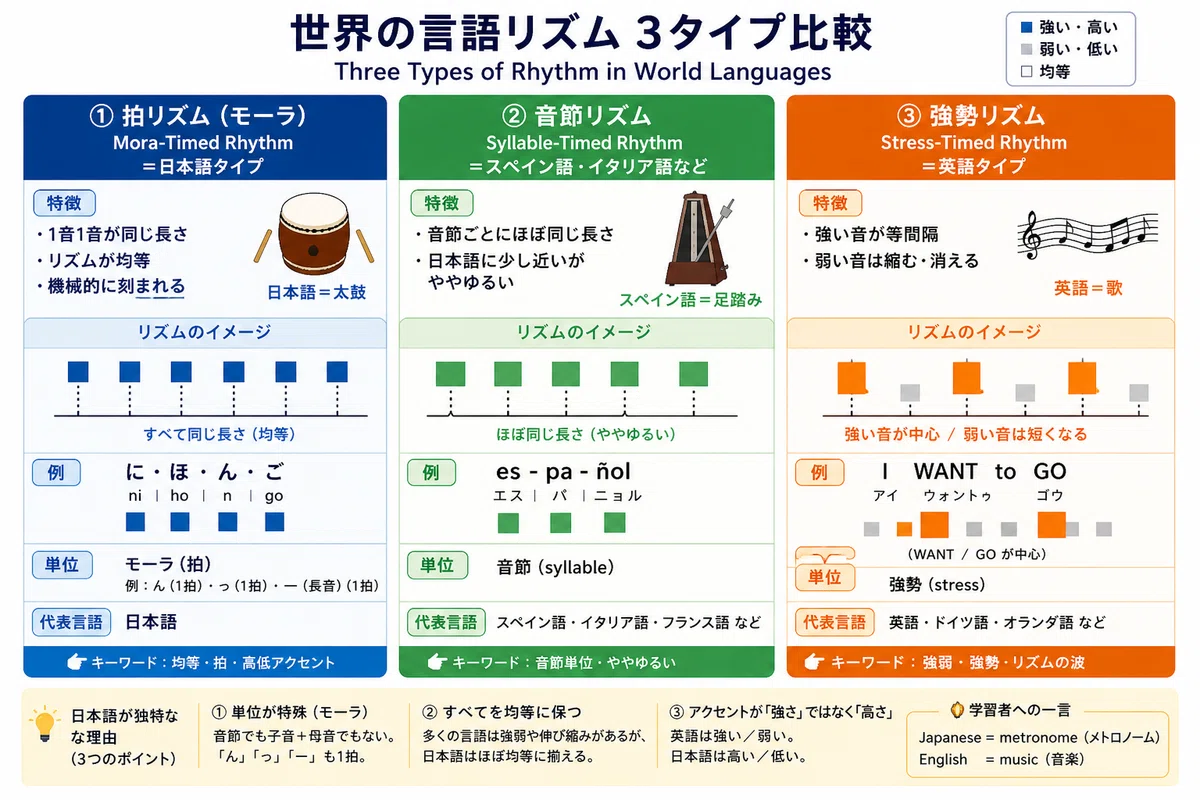
言語のリズムは、大きく3つに分かれます。
World languages can be broadly divided into three rhythm types.
この違いを理解すると、日本語の発音が一気に分かります。
Once you understand this, Japanese pronunciation becomes much clearer.
① 拍リズム(モーラ)
Mora-Timed Rhythm (Japanese Type)
👉 日本語が代表格
👉 Japanese is the main example
特徴:
・1音1音が同じ長さ
・リズムが均等
・機械的に刻まれる
Features:
・each unit has equal length
・rhythm is even
・it sounds like a steady beat
例:
に・ほ・ん・ご
All units have the same timing.
② 音節リズム
Syllable-Timed Rhythm
👉 スペイン語・イタリア語など
👉 Spanish, Italian, etc.
特徴:
・音節ごとにほぼ同じ長さ
・日本語に少し近いが、ややゆるい
Features:
・each syllable has similar length
・close to Japanese, but looser
例:
es-pa-ñol
👉 日本語よりざっくりしている
👉 less strict than Japanese
③ 強勢リズム
Stress-Timed Rhythm (English Type)
👉 英語・ドイツ語など
👉 English, German, etc.
特徴:
・強い音が等間隔
・弱い音は縮む・消える
Features:
・stressed beats occur regularly
・unstressed sounds are reduced
例:
I WANT to GO
(WANT / GO are stressed)
なぜ日本語は「独特」なのか
Why Japanese Is Considered Unique
ここが本質です。
This is the key point.
① 単位が特殊(モーラ)
Unique Unit: Mora
日本語は「拍(モーラ)」で動きます。
Japanese uses mora as its unit.
👉 音節ではない
👉 not syllable-based
👉 子音+母音でもない
👉 not simple CV units
例:
・ん(1拍)
・っ(1拍)
・ー(長音)(1拍)
👉 これらもすべて1拍
👉 all count as one unit
👉 世界的には珍しい仕組み
👉 this is relatively rare
② 徹底した均等リズム
Strictly Even Timing
多くの言語は:
Most languages:
👉 多少の強弱がある
👉 have some variation
👉 音が伸び縮みする
👉 allow length variation
しかし日本語は:
But Japanese:
👉 ほぼ完全に均等
👉 keeps timing almost perfectly even
👉 これはかなり特殊
👉 this is quite unusual
③ アクセントの違い
Pitch vs Stress
👉 英語:強い/弱い
👉 English: strong / weak
👉 日本語:高い/低い
👉 Japanese: high / low
👉 強さではなく高さ
👉 not stress, but pitch
似た言語はあるか
Are There Similar Languages?
いくつかありますが、完全には一致しません。
Some languages are similar, but none match exactly.
● フィンランド語・ハンガリー語
👉 リズムは安定
👉 but not mora-based
● 古典ギリシャ語(理論上)
👉 モーラの概念あり
👉 but not in modern form
● 韓国語
👉 比較的フラット
👉 but not mora-timed
👉 完全に同じタイプではない
👉 not the same system
結論
Conclusion
👉 日本語は
・モーラ単位
・均等リズム
・高低アクセント
Japanese combines:
・mora units
・even timing
・pitch accent
👉 この3つが揃っている
👉 all three features together
👉 だから珍しい
👉 that’s why it is rare
👉 準・唯一クラスの言語
👉 almost unique
学習者への伝え方
How to Explain It Simply
👉 Japanese = metronome
👉 English = music
または:
👉 日本語=太鼓
👉 英語=歌
Kazu式まとめ
Kazu Method Summary
・日本語は「拍」で刻む
・全部同じ長さ
・強くしない
・高さだけ変える
Japanese:
・count mora
・keep timing even
・do not stress
・change pitch only
この理解が入ると、発音は一気に変わります。
Once you understand this, your pronunciation will improve dramatically.
