Ceremonies, rituals and celebrations, do you need them?

Traditions of the time
When I was a kid, I really hated the New Year celebrations at home.
Japan has many old traditions surrounding the end of the year and New Year but my parents, who came from working-class families, didn't inherit many strict traditions from their own families.
Like many households during the period of rapid growth after WWII, they eagerly imitated the 'traditional' ceremonies, rituals and celebrations presented by the social norms and the media of the time, including celebrities, magazines, radio and TV commercials.
My mum's tradition
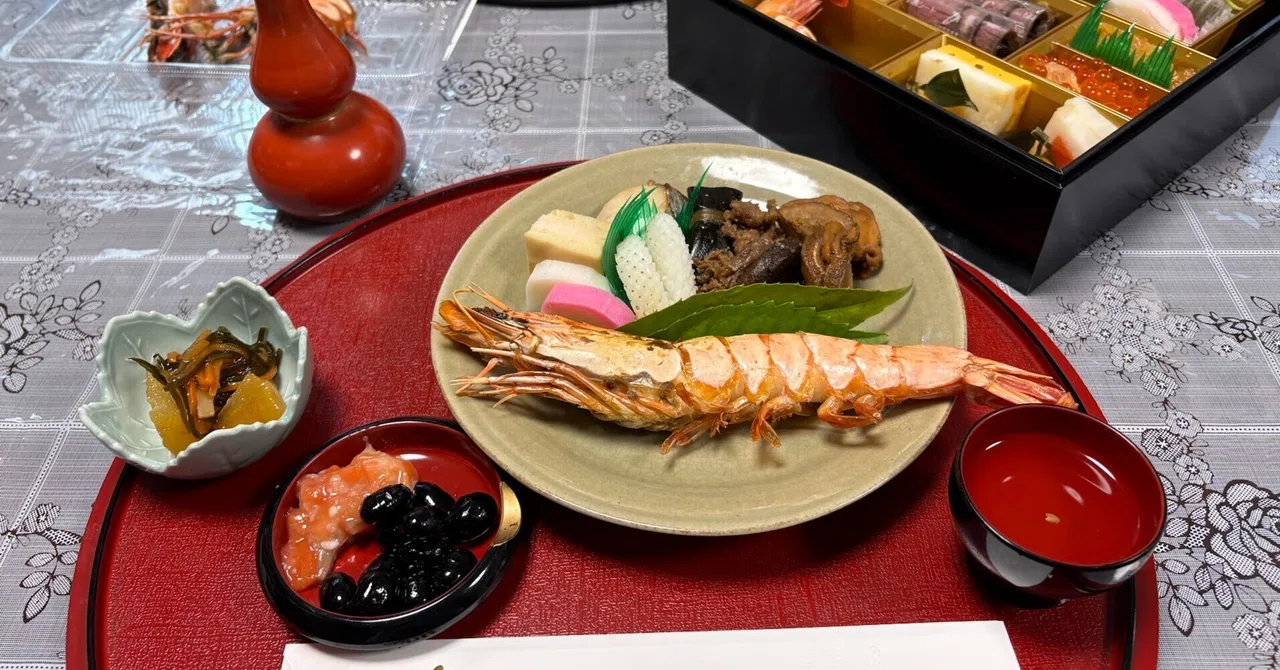
My mum had equipped with a full set of beautiful New Year plates and bowls, and set a family tradition of eating broiled sea bream and big shrimp while drinking sake in the early morning on the New Year's day. (The pic on the top: We still did it this year but no sea bream and less food. )
On New Year's morning, we were forced to wake up to meet at the table by 7:30 am at the latest. Sake was poured and I had to drink with sleepy eyes, and eat fish that had first been touched by my dad's chopsticks. In my memory, nothing tastes really good when you're not hungry and sleepy, and wanting coffee or tea rather than alcohol!
My dad's tradition
My dad's tradition was to visit the nearby temple to hear the New Year's Eve bell, the Joyano-kane, ringing live at midnight on 31 December. I truly hated accompanying him on this family ritual of his because it was cold outside and the temple was always extremely crowded. I always thought that it didn't need to be on the very crowded day and time but I could go anytime later. What's more, we had to get up at around 7 am on New Year's Day to join my mum's feast, even though we had gone to bed late!
What's up to our tradition now?
Over 50 years later, my parents are no longer keen on strictly adhering to their traditions. My mum, who is 89, still prepares sake for New Year's morning, but she prefers a slow start as she doesn't want to prepare all the dishes and get up early. My dad, also 89, prefers to relax on his warm futon on New Year's Eve.
As they were the driving force behind keeping their ceremonies, rituals and celebrations, they won't be preserved if they stop, since I never found meanings in them in the first place. Because of my family experience, I have been wondering for many years what the point of ceremonies, rituals and celebrations is wherever I live, not just in Japan which is full of them.
What is the point of ceremonies, rituals and celebrations?
Thanks to my interest in human behaviour (anthropology), practising animism, and living abroad, I have gained new perspectives on Japanese and my family culture and traditions, as well as on Western and Eastern religious and philosophical influences.
If we didn't have ceremonies, rituals and celebrations, our everyday lives would feel very flat in terms of time. Without events like festivals and ceremonies of the changing seasons or significant milestones in life, we would simply get up, go to work, eat and sleep, and repeat the same routine day after day.
If we view ceremonies, rituals and celebrations based on our cultures and religions without judgement, they clearly provide rites of passage that help us distinguish the different stages of our lives. They help us create rhythms, structures and something to look forward to in our everyday lives.
Throughout human history, ceremonies, rituals and celebrations have motivated us and given us a clear sense of progress, cycles and the passage of time. This makes us reflective, grateful, and aspirational for the future.
Meaning of ceremonies, rituals and celebrations
In modern society, where we don't adhere to many ceremonies, rituals or celebrations, we can lose our sense of rhythm and motivation, asking ourselves, "Why am I doing this?"
It is the continuation of those behaviours that creates cultures and traditions.
I don't think I will fully follow the ceremonies, rituals and celebrations of my parents because I find many of them inconvenient and cannot find the meanings. Yet, I have learned from my parents' efforts the importance of physically performing them.
Ceremonies, rituals and celebrations are tangible acts of our intentions.
I have fully experienced the sense of closure by visiting the temple on a cold night, listening to the deep sound of the bell and new beginnings by eating and drinking a special meal with my family on New Year's Day.
Intentions, all that matter.
The missing element was intention.
My parents could learn how to do ceremonies, rituals and celebrations through social norms and media of the time but nobody taught them why it's important to do them.
Ceremonies, rituals and celebrations without intentions do not survive. They don't become traditions.
Intentions without ceremonies, rituals and celebrations are hard to materialise in reality.
If we want our intentions, goals and dreams to come true, we can utilise the power of ceremonies, rituals and celebrations by learning from those that are already held at the best times.
Photo by Zoomin: the New Year's Day feast at 8:30 am (a bit later than before)!
