クラウゼヴィッツに聞く🎤戦争は本当に「政治の続き」なのか🌙千夜一夜物語第119夜|只管多読で英語を育てる

【千夜一夜物語第119夜 CEFR-A2〜B1 約700語 クラウゼヴィッツに聞く🎤戦争は本当に「政治の続き」なのか】アメリカ英語 男性
【千夜一夜物語の行先】
英語を身につけるには本来、洋書を読むことが効果的ですが、実際にはレベル差が大きく、途中で読み切れなくなることも少なくありません。このブログ「千夜一夜物語」は、CEFR A2レベルから無理なくスタートし、段階的にレベルアップすることで、読解力と英語力を同時に育てていくことを目的としています。チャンクを意識して音読することで、英語の理解とリズムを体に定着させる学習法です。
【英文ストーリー】
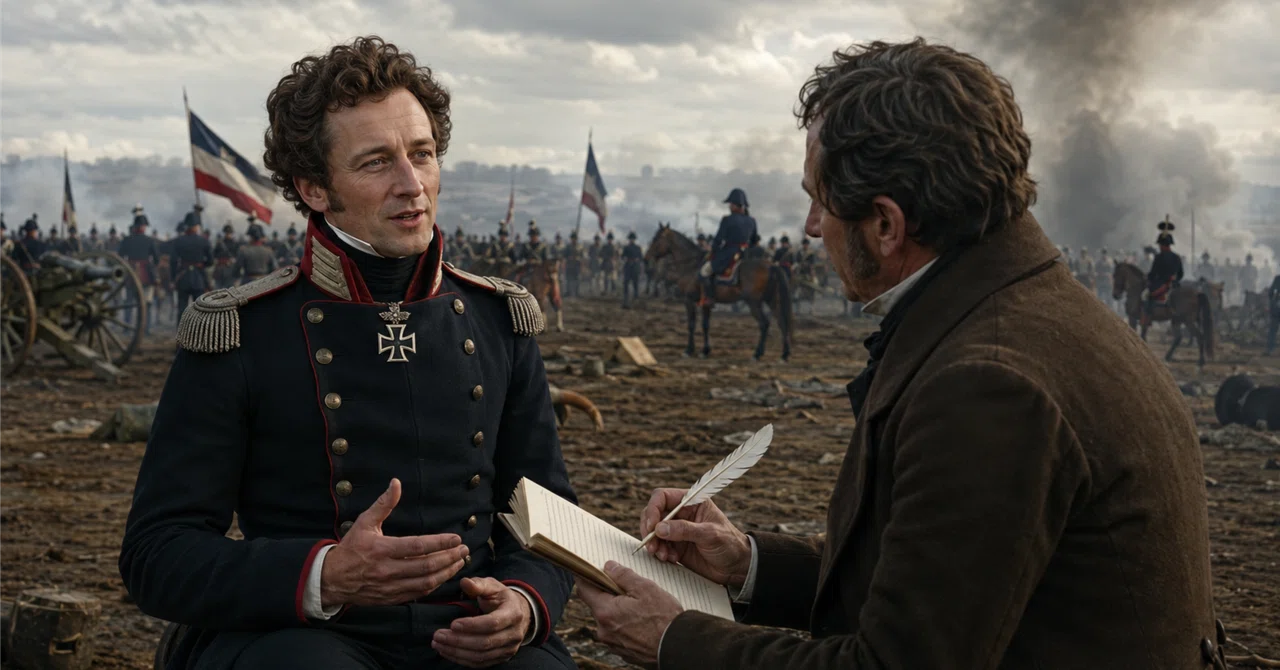
◆ A dim study. Maps cover the walls. A candle burns beside a heavy book. A man in an old military coat sits calmly. His eyes are tired, but very sharp, like someone who has seen too many battles and too many speeches before battles.
◇ My name is Carl von Clausewitz. People remember one sentence: “War is the continuation of politics by other means.” Many quote it. Fewer understand it. Some people use it like a sword. That is dangerous. A sentence is not a toy.
◆ Tonight’s question is direct. Is war really “the continuation of politics”?
◇ Yes. But listen carefully. I did not say war is good politics. I said war is connected to political purpose. War is not a storm from nowhere. It comes from decisions, fears, ambitions, and failed talks. War has a parent. Its parent is politics.
◆ So war is not separate from government?
◇ Exactly. A general may move armies, but a political leader decides the goal. If the goal is unclear, the war becomes a monster. It eats money, young lives, time, and truth. Then people ask, “Why are we still fighting?” That question means politics has lost control.
◆ In 2026, Russia is still fighting in Ukraine. Europe talks about peace, but the war continues. How would you read that?
◇ I would ask one cold question: “What is the political object?” Russia wants security, influence, land, and prestige. Ukraine wants survival, independence, and the right to choose its future. Europe wants stability. Each side uses military force because political goals are still in conflict.
◆ That sounds very simple, but also very dark.
◇ War often looks complex because the pain is huge. But the logic can be simple. If two political wills cannot live in the same space, they may use force. My warning is this: once force begins, it becomes difficult to control. War is like fire. A leader may light it for one room, but wind may carry it to the whole city.
◆ What about China?
◇ China is a great power that wants recognition, control, and security. Around Taiwan and the South China Sea, we see pressure without full war. Ships, aircraft, drills, sanctions, strong words. This is politics using military shadow. It is not peace, but it is not open war either. It is pressure in uniform.
◆ “Pressure in uniform” is a strong phrase.
◇ Yes. Modern states often prefer not to cross the final line. They test. They push. They wait. They ask, “Will the other side step back?” This is still political struggle. The danger is mistake. One accident, one angry captain, one proud speech, and the shadow can become fire.
◆ And North Korea?
◇ North Korea is a small state with a large fear and a loud strategy. It uses missiles, nuclear power, and alliances to say, “Do not ignore me.” Its closer tie with Russia shows another truth: war creates new friendships among states that dislike the same enemy. In politics, fear is a strong glue.
◆ That sounds unpleasantly realistic.
◇ Reality often is. People like moral stories: good men here, bad men there. Morality matters, of course. But strategy asks another question: “What do they want, and what will they risk to get it?” If you do not ask that, you are not thinking. You are only shouting.
◆ Then how should ordinary people understand war?
◇ Do not start with emotion alone. Start with purpose. Ask: Who wants what? What are they afraid of? What do they think they can gain? What cost are they willing to pay? War is not only tanks and missiles. It is human will under pressure.
◆ Can peace also be a continuation of politics?
◇ Of course. Peace is not just the absence of shooting. Peace is politics that still works. It needs agreements, trust, trade, limits, and sometimes strong defense. A weak peace is only a pause. A wise peace gives each side a reason not to shoot.
◆ One last question. What would you say to leaders in 2026?
◇ Do not fall in love with your own military power. Power can open a door, but it cannot always build a house. If your political goal is foolish, your army only carries foolishness faster. Before you fight, ask: “What peace do I want after this?” If you cannot answer, do not begin.
◆ The candle becomes small. The maps stay silent. Clausewitz closes his book and speaks one last time.
◇ War is politics in a dangerous costume. If you cannot understand the politics, you cannot understand the war.
【日本語訳】
◆ 薄暗い書斎。壁には地図が貼られている。重い本のそばで、ろうそくが燃えている。古い軍服の男が静かに座っている。目は疲れているが鋭い。戦いそのものだけでなく、戦いの前に語られる多くの演説まで見てきた人の目だ。
◇ 私はカール・フォン・クラウゼヴィッツ。人々は一つの言葉で私を覚えている。「戦争は、他の手段による政治の継続である」と。多くの人が引用する。しかし理解している人は少ない。その言葉を剣のように振り回す人もいる。危険だ。言葉は玩具ではない。
◆ 今夜の質問は直球です。戦争は本当に「政治の続き」なのですか。
◇ そうだ。ただし注意して聞いてほしい。私は「戦争は良い政治だ」と言ったのではない。戦争は政治目的と結びついている、と言ったのだ。戦争はどこからともなく来る嵐ではない。決定、恐れ、野心、失敗した交渉から来る。戦争には親がいる。その親が政治だ。
◆ 戦争は政府から切り離せない?
◇ その通り。将軍は軍を動かすかもしれない。しかし政治指導者が目的を決める。目的が曖昧なら、戦争は怪物になる。金、若い命、時間、真実を食べる。そして人々は「なぜまだ戦っているのか」と問う。その問いが出た時、政治は戦争を制御できていない。
◆ 2026年、ロシアはなおウクライナで戦っています。欧州は和平を語るが、戦争は続いています。どう読みますか。
◇ 私なら冷たい質問を一つする。「政治目的は何か」と。ロシアは安全保障、影響力、土地、威信を求める。ウクライナは生存、独立、自分の未来を選ぶ権利を求める。欧州は安定を求める。政治目的が衝突しているから、軍事力が使われている。
◆ 単純ですが、暗いですね。
◇ 戦争は痛みが大きいので複雑に見える。しかし論理は単純なことがある。二つの政治的意志が同じ空間に住めない時、力を使うことがある。私の警告はここだ。いったん力が始まると制御が難しい。戦争は火のようなものだ。指導者は一部屋のために火をつけたつもりでも、風が街全体へ運ぶことがある。
◆ 中国についてはどう見ますか。
◇ 中国は承認、支配、安全保障を求める大国だ。台湾周辺や南シナ海では、全面戦争ではない圧力が見える。船、航空機、演習、制裁、強い言葉。これは軍事の影を使った政治だ。平和ではないが、全面戦争でもない。制服を着た圧力だ。
◆ 「制服を着た圧力」とは強い表現です。
◇ そうだ。現代国家は、最後の一線を越えない形を好むことが多い。試し、押し、待つ。「相手は下がるか」と見る。これも政治的闘争だ。危険なのは誤算だ。一つの事故、一人の怒った艦長、一つの誇り高い演説で、影は火になる。
◆ 北朝鮮はどうですか。
◇ 北朝鮮は小さな国家だが、大きな恐れと大きな声の戦略を持っている。ミサイル、核、同盟を使い、「無視するな」と言う。ロシアとの接近は、もう一つの真実を示す。戦争は、同じ敵を嫌う国同士に新しい友情を作る。政治において恐れは強い接着剤だ。
◆ 嫌なほど現実的ですね。
◇ 現実はたいていそうだ。人は道徳の物語を好む。こちらに善人、あちらに悪人。もちろん道徳は大切だ。しかし戦略は別の問いを立てる。「彼らは何を望み、それを得るために何を危険にさらすのか」と。それを問わないなら、考えているのではない。ただ叫んでいるだけだ。
◆ 普通の人は戦争をどう理解すればよいですか。
◇ 感情だけから始めるな。目的から始めよ。誰が何を欲しがっているのか。何を恐れているのか。何を得られると思っているのか。どの代償まで払う気なのか。戦争は戦車とミサイルだけではない。圧力下の人間の意志だ。
◆ 平和も政治の続きですか。
◇ もちろんだ。平和とは単に撃っていない状態ではない。平和とは、政治がまだ機能している状態だ。合意、信頼、貿易、制限、そして時には強い防衛も必要だ。弱い平和は休止にすぎない。賢い平和は、それぞれの側に「撃たない理由」を与える。
◆ 最後に、2026年の指導者に言うなら?
◇ 自分の軍事力に恋をするな。力は扉を開けることはあるが、家を建てられるとは限らない。政治目的が愚かなら、軍隊はその愚かさを速く運ぶだけだ。戦う前に問え。「この後にどんな平和が欲しいのか」と。答えられないなら、始めるな。
◆ ろうそくが小さくなる。地図は沈黙している。クラウゼヴィッツは本を閉じ、最後にもう一度言う。
◇ 戦争とは、危険な衣装を着た政治である。政治を理解できなければ、戦争も理解できない。
【音読・多読のポイント】
今回は「名言をただ覚える」のではなく、「名言の中身を聞き直す」回です。◆の質問は短く、◇の答えは落ち着いた断言で読むと、クラウゼヴィッツらしい重みが出ます。特に political purpose、pressure in uniform、fear is a strong glue、what peace do I want after this? は核心なので、一息で丁寧に読んでください。後半は抽象度が上がるので、意味が完全に取れなくても止まらず、日本語訳で整えるのが良いです。
【語句の解説】
continuation:B2目安。「継続」。前から続いているもの。本文では「戦争は政治と切れていない」という意味。
用例:War is the continuation of politics.(戦争は政治の継続である。)
political purpose:B2目安。「政治目的」。戦争や交渉の背後にある国家の狙い。
用例:A war needs a clear political purpose.(戦争には明確な政治目的が必要だ。)
ambition:B1〜B2目安。「野心」。より大きな力や地位を求める気持ち。
用例:Ambition can lead a country into danger.(野心は国を危険へ導くことがある。)
prestige:B2目安。「威信」。他国や国民から立派だと思われる力。
用例:A state may fight for prestige.(国家は威信のために戦うことがある。)
military shadow:B2目安。「軍事の影」。全面戦争ではないが、軍事力の存在で圧力をかける比喩。
用例:The ships created a military shadow.(その艦船は軍事的な影を作った。)
pressure in uniform:B2目安。「制服を着た圧力」。軍や警備組織を使った政治的圧力を表す比喩。
用例:It was not war, but pressure in uniform.(それは戦争ではなく、制服を着た圧力だった。)
miscalculation:B2目安。「誤算」。相手の反応や状況を読み間違えること。
用例:One miscalculation can start a war.(一つの誤算が戦争を始めることがある。)
alliance:B2目安。「同盟」。国同士が協力・支援を約束する関係。
用例:The country built a stronger alliance.(その国はより強い同盟を作った。)
glue:B1目安。「接着剤」。ここでは比喩で、国同士を結びつける力。
用例:Fear can be a strong glue.(恐れは強い接着剤になることがある。)
absence:B2目安。「不在」「ないこと」。本文では「撃っていない状態だけが平和ではない」という意味で使う。
用例:Peace is not only the absence of shooting.(平和とは撃ち合いがないことだけではない。)
