What a Simple Family Curry Taught Me

This Was Not About My Ideal Meal
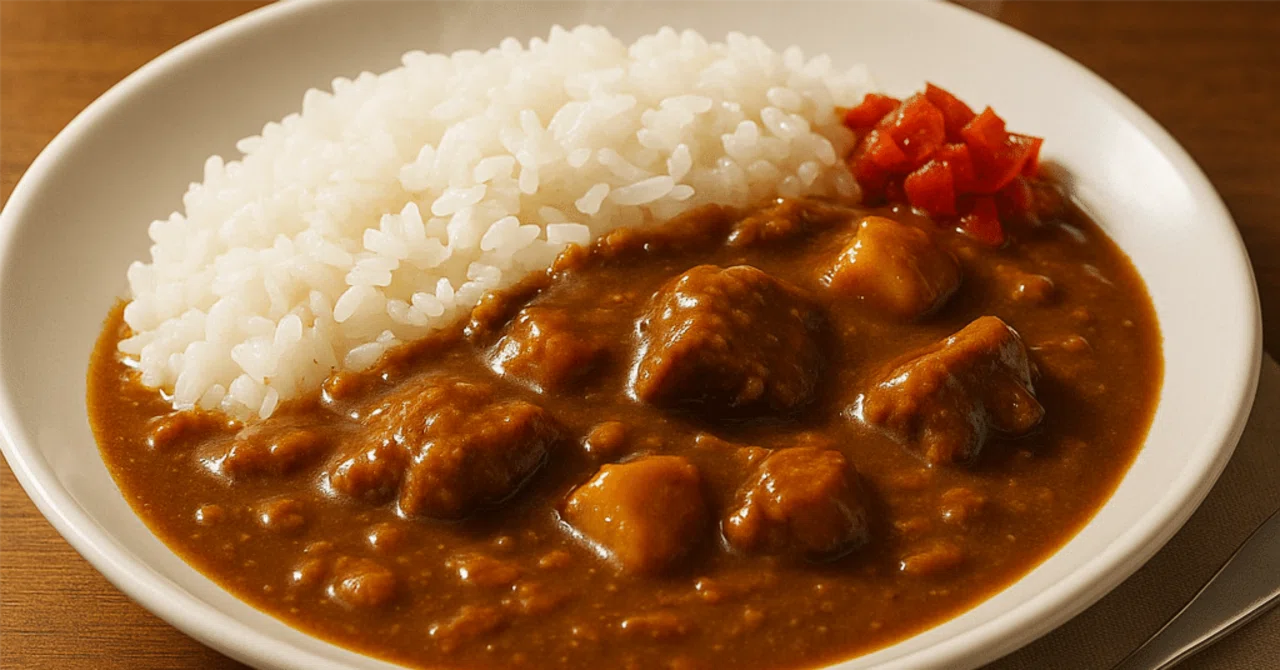
This time, I made curry because my mother asked for it—curry in the most familiar, home-style sense.
To be honest, it is not exactly the kind of dish I would choose for myself.
It contains ingredients and nutritional elements that I would normally think twice about.
If I had been cooking only for my own satisfaction, I probably would have made something quite different.
But I knew from the start that this was not the moment to insist on my own preferences or ideas.
What mattered was simple:
that my mother could eat it with ease,
and that she could enjoy it without hesitation.
That was the purpose.
Consciously Choosing Someone Else’s Axis
I did not abandon my own values.
I simply chose, consciously, to align with someone else’s needs.
To me, that makes all the difference.
There is a world of difference between being swept along by someone else’s preferences and deliberately deciding, with a clear mind, that this is the right choice for this moment.
This was not self-betrayal.
It was not passive compromise.
It was a conscious response to the relationship in front of me.
In that sense, I feel this choice was deeply connected to Danshari.
Danshari is often understood as the practice of choosing for oneself, but I think it also teaches us something subtler: how to step back, see the whole picture, and understand when to foreground your own axis—and when not to.
The Gift of a Wider View
One of the things Danshari has given me is perspective.
Not just the courage to live by my own standards,
but the ability to recognize what a particular moment is actually asking for.
Sometimes the most appropriate choice is not the one that reflects your taste most strongly.
Sometimes it is the one that allows the other person to feel safe, relaxed, and received.
This time, I never felt that I was “putting up with it” for my mother.
Because I chose it myself, I was not hurt by the choice at all.
That, too, feels important.
When we choose something with awareness, even an other-oriented choice does not necessarily wound us.
It can feel calm, clear, and right.
I Still Left My Signature in the Pot
That said, I did not surrender everything.
I quietly left some of my own sensibility in the cooking process.
Instead of sautéing the ingredients first and then simmering them in water, I began by layering them in the pot with just a little oil, letting them cook slowly in their own moisture.
Only after the vegetables had released their juices and natural umami did I add water and continue simmering.
No one looking at the finished dish would know.
It still appeared to be an ordinary, reassuring bowl of family curry.
But underneath, the foundation had been built in my own way.
That mattered to me.
Not Imposition, but Translation
What I like about this experience is that it did not feel like giving myself up.
It felt more like translation.
On the surface, I made something accessible and comforting for someone else.
But underneath, I still allowed my own care, intuition, and sense of flavor to shape the dish.
That kind of quiet adjustment feels very close to the spirit of Danshari as I understand it.
Not forcing.
Not showing off.
Not declaring, “This is the right way.”
Just creating something that works well within the relationship, while still remaining true to yourself at a deeper level.
Nothing Is Good or Bad on Its Own
Hideko Yamashita often says that there are no absolutely “good” ingredients or “bad” ingredients.
What matters is how something functions within a relationship—whether it works in a nourishing way, or in a less fortunate one.
She also says that the most unfortunate thing is to take things in unconsciously, without attention or care.
That idea reaches me very directly.
Because in the end, it is not only about what we consume.
It is also about how we receive it,
why we choose it,
and what kind of relationship allows it to become nourishment.
The same thing can function beautifully in one context and poorly in another.
That is true not only of food, but of words, information, objects, and even human relationships.
An Ordinary Curry, A Quiet Revelation
This curry may not have been my ideal dish.
But it fulfilled its purpose.
My mother could eat it comfortably.
She could enjoy it.
And within that simple act, I was still able to weave in my own intention in a quiet, almost invisible way.
Perhaps it was nothing more than a pot of ordinary family curry.
But sometimes the smallest choices reveal the deepest patterns in how we live.
Not just what we make,
but for whom,
for what purpose,
and in what kind of emotional space we place it before someone.
That is what I found myself thinking about as I stirred the pot.
And perhaps that, too, is Danshari:
not merely removing what is unnecessary,
but becoming conscious of the relationships we create—with food, with other people, and with ourselves.
いいなと思ったら応援しよう!
 こんなこんな思いつきの雑多なページにようこそ。いつもご覧いただきありがとうございます。