Horsetail: Japan's "King of Minerals" for Skin, Bones & Detox | Sleep Pharmacy Podcast #3

This note is the text version of the weekly podcast "Sleep Pharmacy: Secrets of Japanese Wild Herbs" by Chizuko Nakayama, pharmacist and PhD in pharmaceutical sciences.
🎙️ Listen here:
YouTube (English) → https://www.youtube.com/playlist?list=PLcpCmaKE7n08FGIQZf_ctLLpvvIYvmh0J
Spotify (English) → https://open.spotify.com/show/4nUw2aO9otEDT3WUyKZx6f?si=16a98623e3884d54
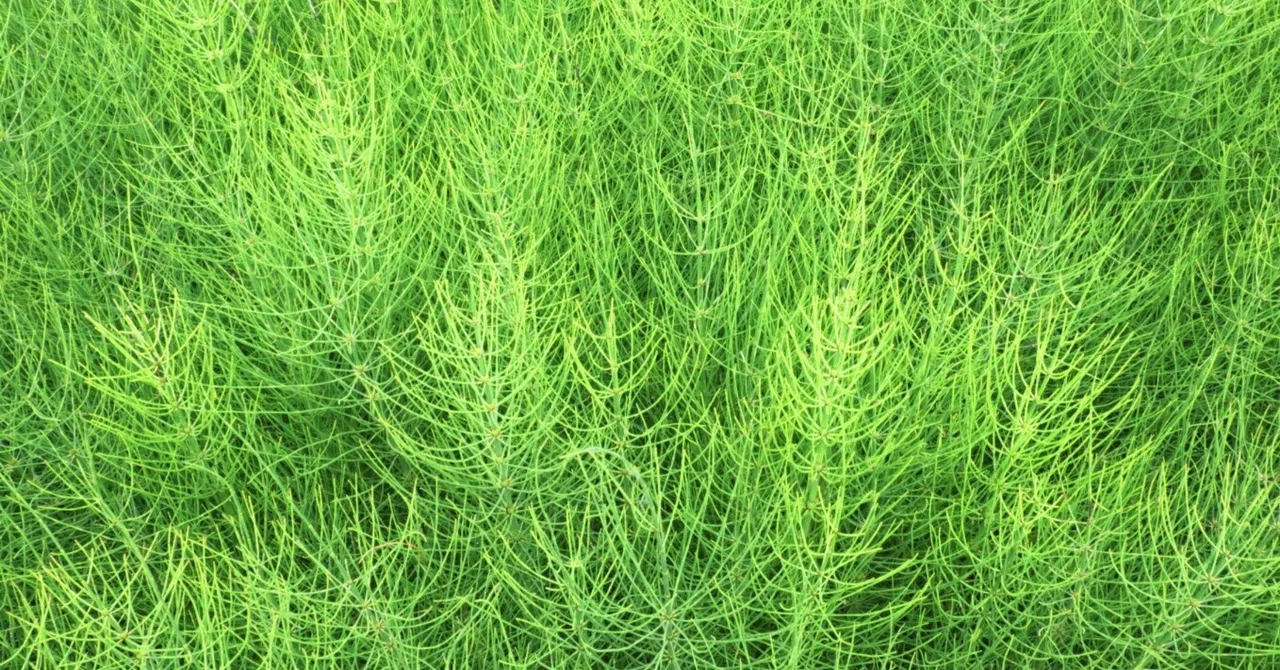
You might not know the plant called sugina — but if you've ever seen tsukushi (field horsetail shoots) in spring, you know its other half. Tsukushi and sugina are the same plant, connected underground. The tsukushi appears first, releasing spores from its brushlike tip. Then, once the spores are gone, sugina rises in its place: a dense cluster of thin, needle-like branches, resembling a miniature conifer tree.
It's infamous as a weed. The underground rhizomes run so deep and spread so far that no amount of pulling gets rid of it. Farmers find it maddening. But from a medicinal herb perspective, it's one of the most mineral-rich plants you can find in Japan.
■ Why I Call It the "King of Minerals"
Sugina's deep, sprawling root system isn't just what makes it hard to remove — it's also what makes it medicinally valuable. Those roots pull minerals up from deep in the soil and concentrate them in the plant above ground.
The standout mineral is silicon (silica).
You may have heard of silica water — the kind certain celebrities swear by for "anti-aging." The silica in plants is in a highly bioavailable form, and it plays a direct role in synthesizing collagen and other structural proteins. That means:
Hair — strength and shine
Skin — elasticity and regeneration
Bones — density and resilience
All of these are supported by silica. It's used as a supplement ingredient precisely for these reasons.
■ Natural Diuretic — A Different Kind Than Caffeine
Sugina is rich in calcium, magnesium, and other minerals that shift the sodium-potassium balance in the body. When sodium is flushed out through urine, excess water follows. This is how sugina acts as a natural diuretic — and it works differently than caffeine.
Caffeine triggers the hormonal system to increase urination. Sugina works through mineral exchange. For people who retain water or feel chronically puffy, this distinction matters — it's gentler and more targeted.
This is also why some people call it a "detox" herb. I'm not especially fond of that word, but in this case, it's flushing out excess minerals and retained fluids. That's not nothing.
■ Research: Blood Sugar, Cancer Cells, and More
Animal studies using diabetic rats showed blood sugar-lowering effects
Cell culture experiments have identified anti-tumor activity against certain cancer cell lines
Horsetail grows around the world, which means there's a substantial body of international research on it. If you search "horsetail anti-aging," "horsetail cancer," or "horsetail diabetes" in English, you'll find a range of studies — far more than most Japanese wild herbs have.
One caution: precisely because it's so mineral-dense, taking too much can burden the liver. Tea is the right format — a gentle daily amount, not a concentrated supplement.
■ How to Make Sugina Tea
It's genuinely simple.
Harvest the green stems (the above-ground part, not the roots)
Rinse well, tie the base with string or a rubber band, and hang upside down to dry
After about a week, it should be crisp — if you squeeze a handful and it crumbles easily, it's ready
Grind it in a mortar or spice grinder to make powder
The color is a pleasant pale green, and the taste is mild — like a thin, slightly earthy green tea. If you find it too earthy on its own, it works beautifully mixed into pound cake or pancake batter. The green color is lovely.
⚠️ Only harvest from places where no pesticides or herbicides have been sprayed, and always get permission from the landowner first.
■ And the Tsukushi?
The spring shoots — tsukushi — are edible too. Remove the papery rings (the "hakama"), rinse well, and sauté with soy sauce, sugar, and sesame oil. Serve over rice. You can also make tempura.
My children ate it happily for a few years, then suddenly announced it looked "like bugs" and refused. The fluffy tip, apparently, was too insect-like for them. So tsukushi became my snack.
Sugina's peak season is early summer — right now. If you see something that looks like a tiny conifer tree growing from the roadside or a ditch, that's very likely sugina.
Sleep well tonight.
Goodnight.
#WildPlants #HerbalMedicine #Horsetail #Sugina #Silica #Detox #Minerals #AntiAging #Pharmacist #Podcast #SleepPharmacy
