Tokyo Bridge Stories ― 下町を渡る風景 another story episode.4

駒形の夕日榮(ゆうひさかえ)多田薬師の行雁
―北斎が描いた黄昏のまちと、信仰の風景
夕暮れどきの隅田川沿い、やわらかな陽の光に包まれたまちは、江戸の人々の営みと祈りが静かに交差する場所でした。
葛飾北斎の『隅田川両岸一覧』の一編
「駒形の夕日榮」は、そんな江戸の情景を穏やかに、そして詩的に描いています。
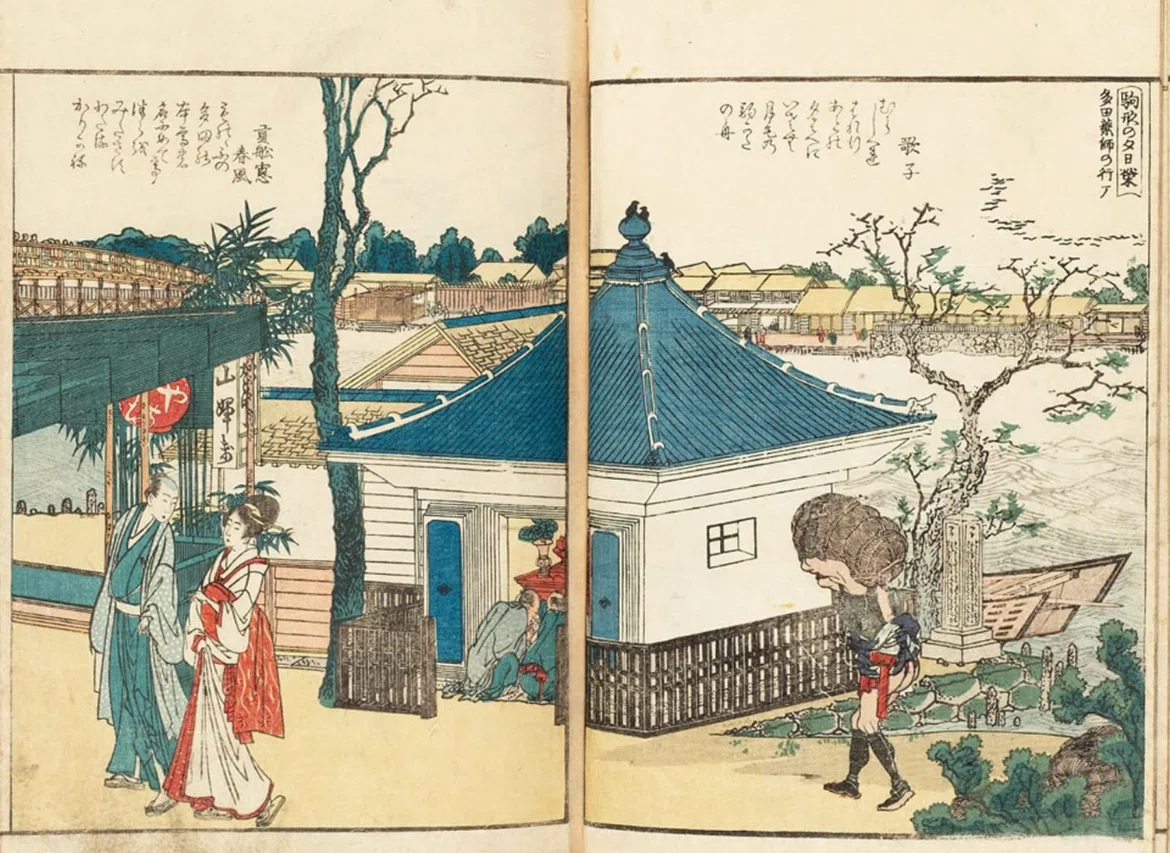
駒形の夕日榮 多田薬師の行雁】
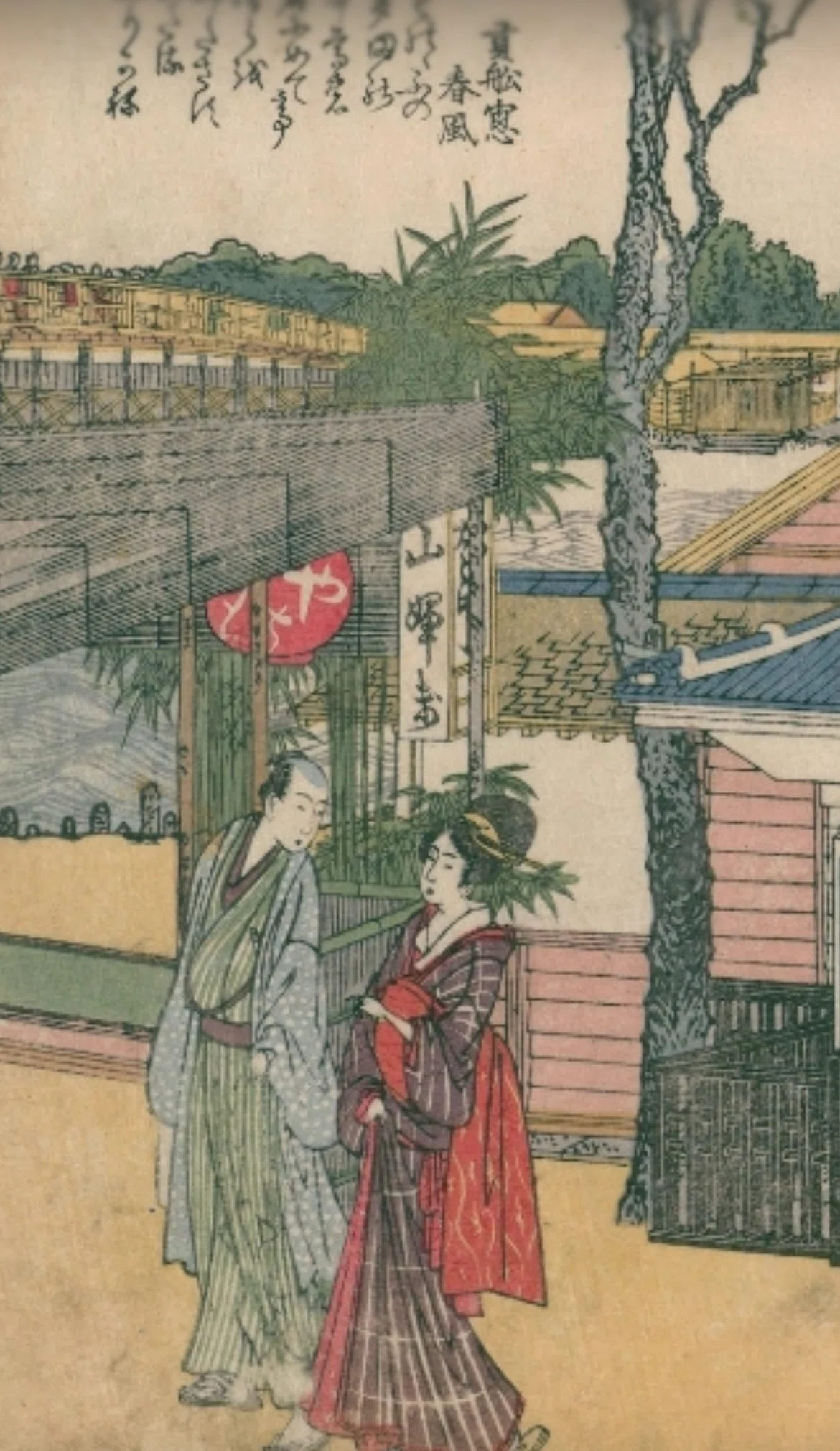
画面左には連れ立って歩く男女が描かれ、
その背後には看板がかかる店が見えます。
料理屋か茶屋でしょうか。
夕暮れの街の賑わいが伝わってくるようです。
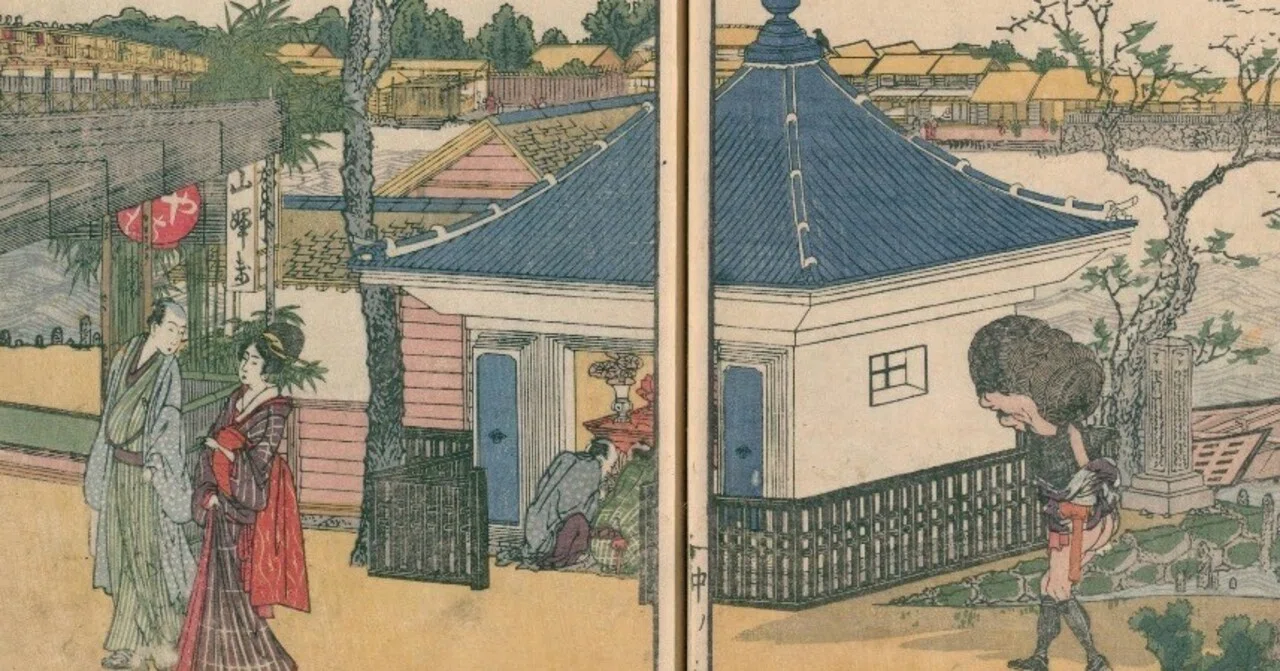
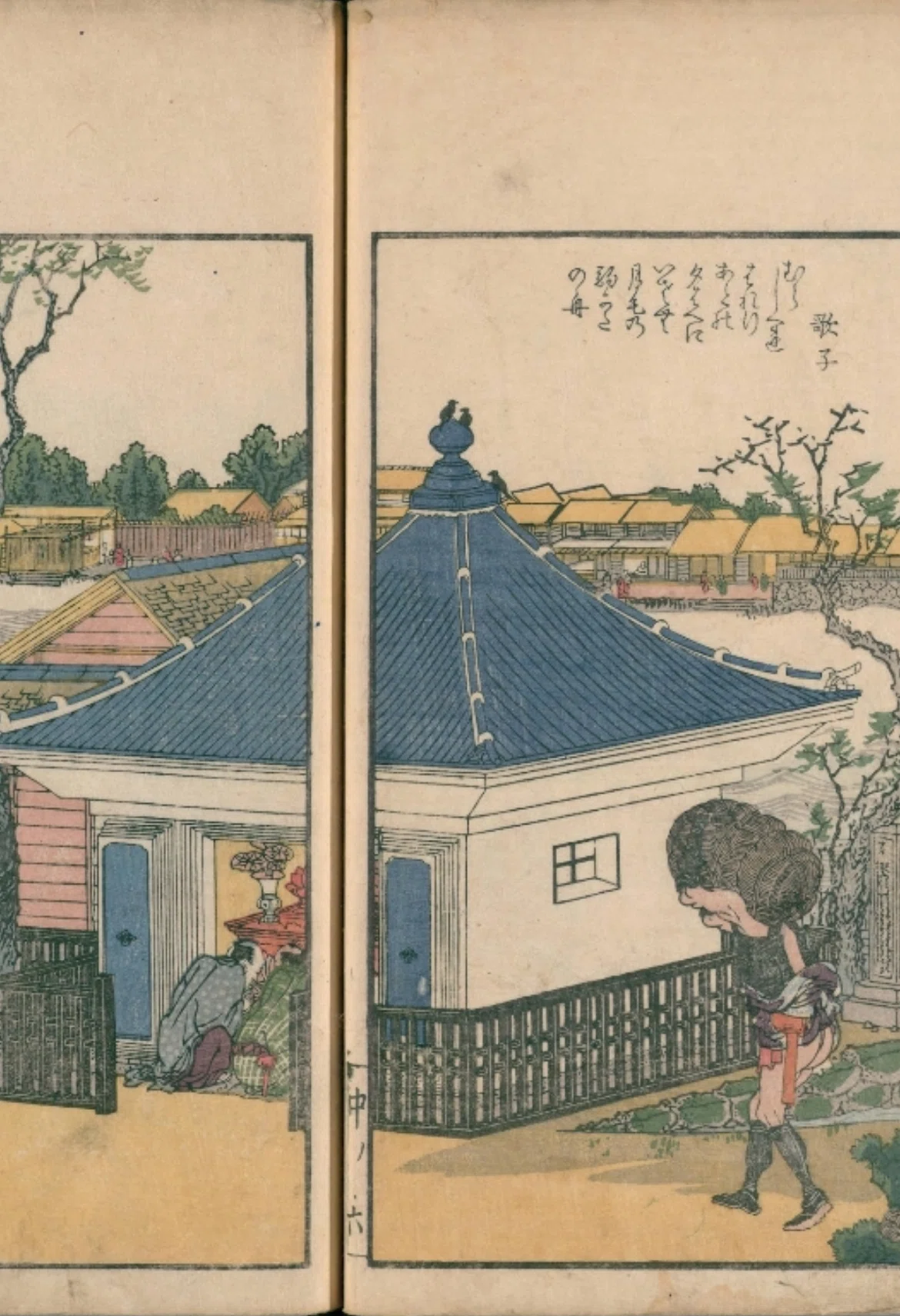
画面の中央にあるのが、青い屋根を持つ建物―駒形堂(こまがたどう)です。
この特徴的な形は、当時の江戸の人々にとっても目を引く存在だったことでしょう。
現在の駒形堂(台東区駒形二丁目)は別の形状ですが、江戸時代にはこのような姿だったとされており、北斎の絵はその貴重な記録となっています。
駒形堂と浅草寺の起源
この駒形堂は、浅草寺の本尊である聖観音菩薩像が最初に祀られた場所と伝えられています。
時は推古天皇36年(628年)、
隅田川で漁をしていた檜前浜成・竹成兄弟が仏像を引き上げます。それを土地の長であった土師中知(はじのなかとも)が自宅に祀り、やがてこの地に堂宇が建てられました。この仏像こそが、現在も浅草寺本堂に安置されている聖観音菩薩です。
その起源を伝える場として、駒形堂には今もなお観音像が安置され、人々の祈りを集めています。
三社祭―信仰がまちを練り歩くとき
この観音像の発見に関わった三人―土師中知、檜前浜成、竹成―は、後に浅草神社(三社様)の祭神とされました。
こうして、仏教と神道が交差する「神仏習合」の信仰が生まれ、江戸の人々に受け継がれていきます。
その三人の神霊を祀るのが、
毎年5月に行われる「三社祭」です。起源は鎌倉時代の1312年。土師中知の夢に神仏が現れ、
「我を祀れば国が栄える」と告げたことに始まると伝えられています。
やがて祭りは町全体を巻き込む大行列へと発展し、今では東京を代表する活気あふれる行事となりました。三基の大神輿が浅草のまちを練り歩くその姿は、信仰と祝福の象徴です。
そしてその物語の起点こそが、隅田川の岸辺に佇む駒形堂なのです。
視覚的手がかりから読み解く―北斎が仕掛けた小さな物語たち
この絵には、ただの風景描写を超えた「見る者に語りかける構図」が仕込まれています。北斎は、色・形・配置という視覚的な要素を通して、信仰の記憶と人々の祈りをそっと伝えているのです。
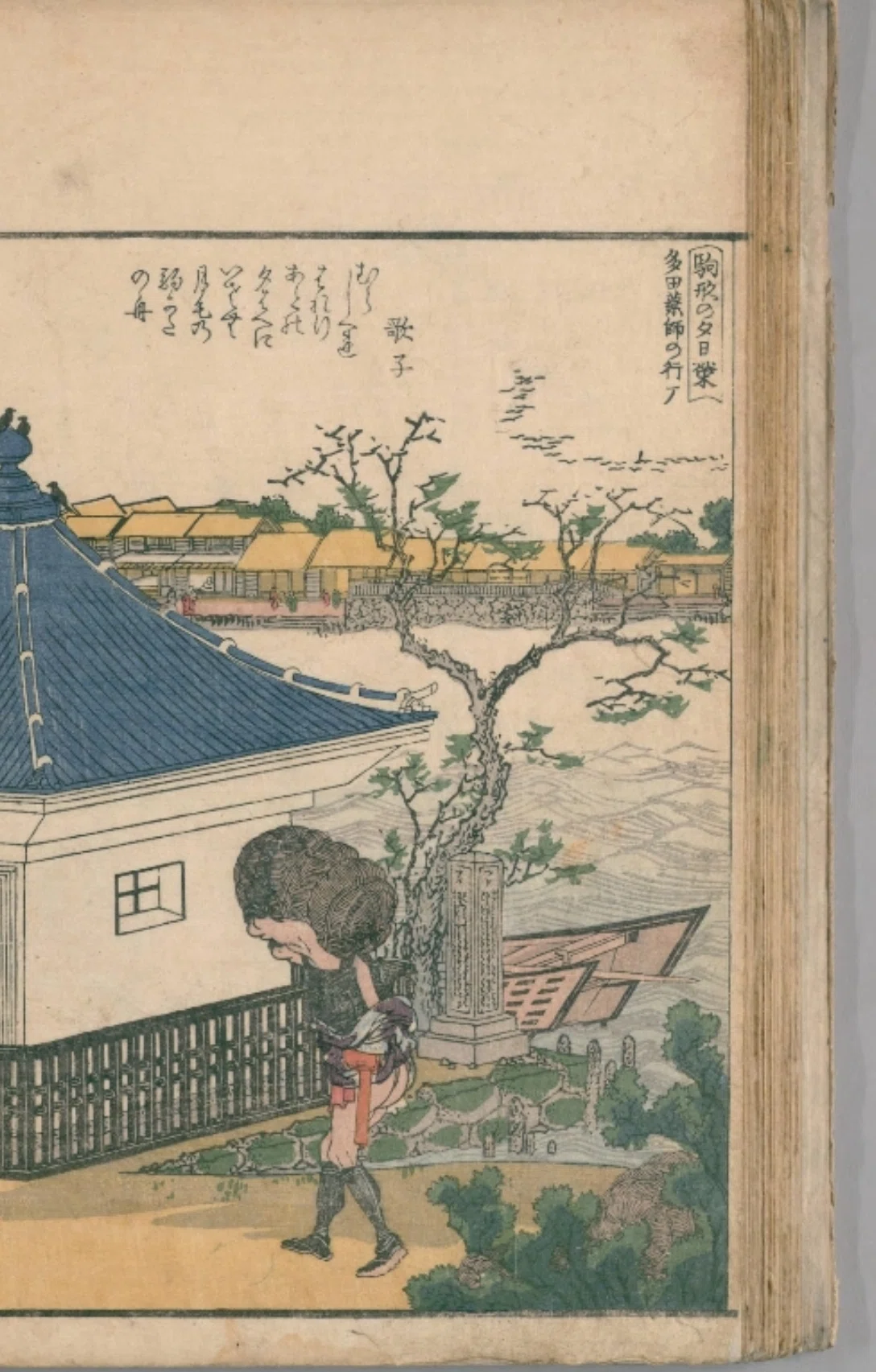
下流側は御米蔵のち、蔵前です
隅田川の反対側、雁が飛んでいるあたりが
かつての多田薬師
言葉にされていない風景から
時代を読み解くのも浮世絵のたのしさです
たとえば―
① 空を飛ぶ雁と、その下に描かれたお堂
画面右奥、空を横切る雁の列のすぐ下に、小さく描かれている堂宇があります。これはかつて墨田区東駒形一丁目付近にあった「多田薬師」とされています。
当時、多田薬師は眼病に霊験あらたかとされ、
多くの庶民が健康を願って参詣しました。
現在は葛飾区東金町の「東光院 多田薬師如来堂」にその信仰が受け継がれています。
雁の飛翔という「目のよい鳥」のイメージと、眼病平癒の薬師信仰。北斎はこの視覚的連想によって、薬師如来への祈りの風景を空の一角に忍ばせているのです。
② 青い屋根―非日常を示すかたち
駒形堂の屋根も、非日常性を帯びたデザインです。宗教建築における幾何学的な強調は、
そこが“ただならぬ場”であることを視覚的に知らせる手段。人々の心に「ここは祈る場所だ」と自然に訴えかけていたのでしょう。
北斎が描いた“祈りの風景”
荷を背負って歩く男、桜の枝、川辺の舟、まちに差し込む夕日――北斎はこの一枚に、信仰と暮らしが交錯する*江戸の“祈りの風景”を繊細に描き出しました。
祈りは、特別な場にだけあるのではありません。日常のなかに差し込む夕陽のように、静かに、やわらかく、そこにあるものだったのです。
「駒形の夕日榮」は、
江戸という都市の“こころの風景”を今に伝える、ひとつの信仰の記憶。
浅草寺の起源から三社祭、そして視線の先に潜む薬師堂まで―人びとの願いと祈りが紡いだ物語を、北斎はそっと紙の上に咲かせました。
Komagata at Sunset Glory
— Twilight in the City and Scenes of Faith, as Painted by Hokusai
As the sun sets along the Sumida River, the cityscape wrapped in gentle light becomes a quiet intersection of daily life and silent prayer.
“Komagata no Yūhi Sakae” (“Komagata at Sunset Glory”), one of the illustrations in Both Banks of the Sumida River by Katsushika Hokusai, captures such a moment in Edo—poetic, tranquil, and filled with subtle emotion.
On the left side of the image,
a man and woman walk together.
Perhaps it is a teahouse or a restaurant. The gentle bustle of evening in the city is palpable.
At the center stands the building with the distinctive blue roof—Komagata-dō.
This unusual design must have drawn the attention of Edo’s citizens. The current Komagata-dō (located in Komagata 2-chome, Taitō Ward) differs in shape, but in the Edo period, it is believed to have looked like this. Hokusai’s painting thus serves as a rare visual record of its former form.
Komagata-dō and the Origins of Sensō-ji Temple
Komagata-dō is said to be the site where the statue of the bodhisattva Kannon—now enshrined at Sensō-ji Temple—was first venerated.
In the year 628 CE (Suiko 36), brothers Hinokuma Hamanari and Takenari discovered a Buddhist statue while fishing in the Sumida River. The local chief, Haji no Nakatomo, enshrined it in his home, and eventually, a hall was built on the site. This statue became the principal image of Kannon now housed in Sensō-ji’s main hall.
To this day, Komagata-dō remains a place of prayer, where an image of Kannon continues to be venerated.
Sanja Festival — When Faith Walks the City
The three men involved in the discovery of the Kannon statue—Haji no Nakatomo, Hinokuma Hamanari, and Takenari—were later deified as the gods of Asakusa Shrine, known as the Sanja-sama. Thus began a syncretic blend of Buddhist and Shintō traditions, cherished by the people of Edo.
This gave rise to the Sanja Matsuri, held every May. Its origin dates back to 1312, when Haji no Nakatomo received a divine dream instructing him to honor the gods. From a simple ritual, the festival evolved into a grand procession involving the entire town. Today, it is one of Tokyo’s most spirited and iconic events.
The three great portable shrines (mikoshi) paraded through the streets do more than display grandeur—they embody the very act of divine presence moving among the people. And Komagata-dō stands as the spiritual point of origin in this vibrant celebration.
Reading the Image — Visual Clues and Hidden Narratives
Hokusai’s image goes beyond mere depiction. He embeds subtle visual storytelling through composition, color, and form, offering quiet insight into lives of faith.
For example:
① The flying geese and the small hall beneath them
In the top-right sky, a formation of geese flies above a modest hall nestled by the river. This is believed to be the Tada Yakushi temple, once located near present-day Higashi-Komagata in Sumida Ward.
In Edo, Yakushi Nyorai (the Medicine Buddha) was revered for healing, particularly eye diseases. Tada Yakushi drew many who prayed for health and recovery. The temple was later relocated to Higashikanamachi in Katsushika Ward, where it continues as Tōkō-in Tada Yakushi Nyorai-dō.
Geese—symbolizing keen vision—paired with a hall of healing for eyes: Hokusai’s juxtaposition suggests more than scenery. It offers a poetic visual metaphor for spiritual insight and prayer.
② The octagonal roof — signaling the sacred
The roof of Komagata-dō stands out visually. In religious architecture, geometric emphasis often signifies sacred space. The unusual form may have instinctively signaled to viewers that this was a place for reverence and prayer.
Hokusai’s Landscape of Devotion
A man bearing a load, cherry blossoms, boats on the river, light bathing the town—Hokusai’s work quietly weaves together faith and everyday life.
Prayer was not confined to temples alone. Like the soft light of the evening sun, it permeated daily existence—gently, naturally, persistently.
“Komagata at Sunset Glory” preserves a spiritual memory of Edo’s soul.
From the origin of Sensō-ji and the Sanja Festival to a subtle reference to the Medicine Buddha, Hokusai blossoms a quiet tale of prayer across the surface of paper.
いいなと思ったら応援しよう!
 まだ見ぬ東京下町を探す旅。
応援していただけたらうれしいです。
よろしくお願いいたします。
まだ見ぬ東京下町を探す旅。
応援していただけたらうれしいです。
よろしくお願いいたします。