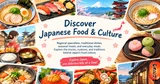
Sushi: Discover Japan’s Most Famous Traditional Food 🇯🇵🍣

When you think of Japanese food, what comes to mind?
Perhaps fresh tuna, salmon, shrimp, and beautifully prepared sushi?
Sushi is one of Japan’s most famous traditional foods. Today, it is loved by people all around the world.
Many visitors to Japan look forward to trying authentic sushi during their trip.
But did you know that sushi has a long history? It has changed quite a lot over the centuries.
Let’s explore the wonderful world of Japanese sushi!
1. Did Sushi Originally Start as a Way to Preserve Fish?
Today, we usually think of sushi as fresh seafood served with vinegared rice.
However, its origins were quite different.
In the past, people used fermented rice to preserve fish for a long time. This traditional method is known as “Narezushi.”
Fish was packed with rice and left to ferment. This helped preserve it before modern refrigeration existed.
Over time, people began using vinegar instead of waiting for natural fermentation.
During the Edo period (1603–1868), a style of sushi similar to today’s nigiri sushi became popular in Japan.
2. What Are the Different Types of Sushi?
Japan has many different types of sushi. Here are four popular examples.
Nigiri Sushi
Nigiri sushi is made by shaping a small portion of vinegared rice by hand and placing a slice of seafood or another topping on top.
Popular toppings include tuna, salmon, shrimp, and squid.
This is one of the most familiar styles of sushi in Japan.
Maki Sushi (Sushi Rolls)
Maki sushi is made by wrapping rice and fillings in dried seaweed called “nori.”
Common fillings include cucumber, tuna, and Japanese omelet.
Some rolls are thin, while others are thick and filled with several ingredients.
Chirashi Sushi
Chirashi sushi is served in a bowl or dish with vinegared rice topped with colorful ingredients such as seafood, egg, and vegetables.
It looks beautiful and is often enjoyed during celebrations, including the Japanese Doll Festival in March.
Oshi Sushi (Pressed Sushi)
Oshi sushi is made by placing rice and toppings into a special mold and pressing them together.
Osaka’s traditional Hakozushi and Toyama’s famous Masuzushi are well-known examples.
Each region has its own unique style.
3. Does Sushi Differ From Region to Region?
Yes! Japanese sushi has many regional variations.
For example, Osaka is famous for Hakozushi, a traditional type of pressed sushi.
It is made by layering rice and fish or other ingredients in a wooden mold to create beautiful square pieces.
In Hokkaido, fresh seafood sushi is especially popular because of the region’s rich marine resources.
Even within Japan, sushi reflects local ingredients and food traditions.
Trying regional sushi is a wonderful way to discover different parts of Japan.
4. How Do Japanese People Enjoy Sushi?
There are a few things worth knowing when eating sushi.
If you use soy sauce, try dipping just the fish topping rather than the rice. This helps prevent the rice from falling apart.
Wasabi is another popular sushi accompaniment. Some sushi chefs add it between the rice and topping, but you can also enjoy sushi without it.
You may also notice a small serving of pickled ginger called “Gari.”
Gari is usually eaten between different pieces of sushi to refresh your palate.
Of course, there are no strict rules. Enjoy sushi in the way you like best!
5. Conveyor Belt Sushi: A Fun Japanese Food Experience
Have you ever heard of conveyor belt sushi?
In Japan, this style of restaurant is called “Kaiten Sushi.”
Sushi travels around the restaurant on a conveyor belt, allowing customers to pick up the dishes they want.
Many modern restaurants also use touchscreens. You can order your favorite sushi, and it arrives directly at your table on a special delivery lane.
Besides sushi, you can often enjoy miso soup, Japanese egg custard, desserts, and many other dishes.
Conveyor belt sushi is affordable, convenient, and fun for families and friends.
It’s a unique part of everyday Japanese dining culture!
Conclusion: Sushi Is More Than Just Food
Sushi is much more than fish and rice.
It began as a way to preserve fish and gradually developed into one of Japan’s most beloved food traditions.
Different regions have their own styles, ingredients, and ways of enjoying sushi.
If you visit Japan, I highly recommend trying authentic sushi.
You don’t have to visit an expensive sushi restaurant. Conveyor belt sushi is also a great way to experience Japanese food culture.
So, what’s your favorite sushi?
Tuna? Salmon? Shrimp? Or something else?
I’d love to hear your answer! 🍣