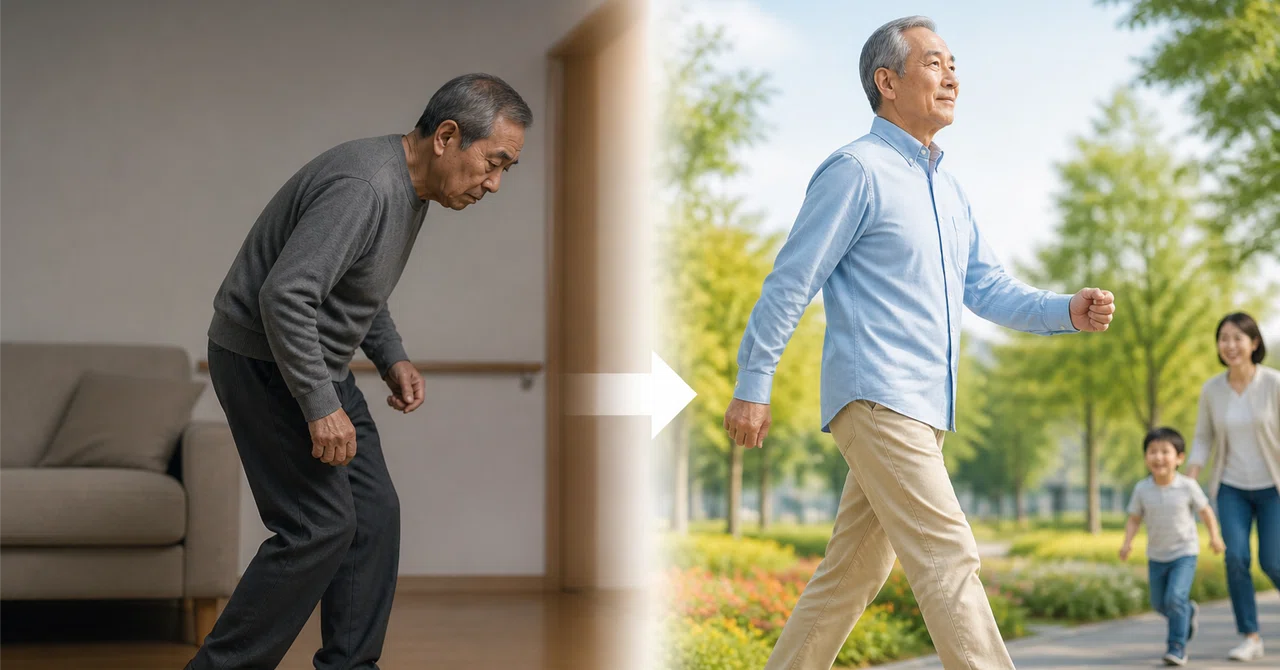
目的がはっきりすれば歩きも変わる〜パーキンソン病患者も例外ではない〜

何をするにも、「何のために」という目的はとても大切ですよね。
目的がはっきりすれば、それを成し遂げるための行動のエネルギー(力の入り方)が変わってきます。
それは、パーキンソン病の方においても例外ではありません。
これは、私が以前リハビリを担当させていただいた、入院中の90代のパーキンソン病患者様のエピソードです。
パーキンソン病の代表的な症状として、
足がすくんで一歩が出にくくなる「すくみ足」や、
突進するような歩き方になり止まれなくなる「突進現象」があります。
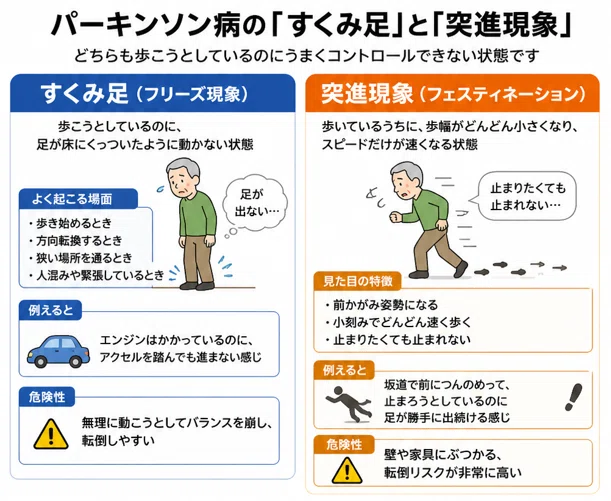
この方も、その2つの症状が強く出ており、歩行器で何とか歩ける状態でした。
時々転倒もあり、正直なところ、いつ歩けなくなってもおかしくないと感じていました。
そんなある日、お孫さんが久しぶりに帰省されることになり、
息子さんや娘さんを含めた8人で食事に出かけることになったのです。
私は移動手段として、車椅子の方が安全ではないかと考えていました。
しかしご本人は、「歩いて行きたい」と強く希望されました。
そこで、病院で普段使っている歩行器で外出できることを目標に設定し、
段差や屋外歩行の練習を1週間ほど行いました。
すると、驚くことに、普段よりもスムーズに歩けるようになっていたのです。
「すくみ足」や「突進現象」も、ほとんど見られなくなっていました。
そして当日、無事に歩行器で外出し、楽しい食事会を過ごすことができました。
私はこの経験から、「目的」を持つことの大切さを強く実感しました。
目的があれば、そこに向かって自然と足が出るのだと思います。
ちなみに、パーキンソン病の方が目的を持つことでスムーズに歩けるようになる動画も見つけましたので、
よろしければご覧ください。
#パーキンソン病
#リハビリ
#理学療法
#作業療法
#歩行訓練
#すくみ足
#突進現象
#高齢者医療
#目的意識
#モチベーション
#行動変容
#実体験
#医療エピソード
#在宅復帰
#前向きな力
When a purpose becomes clear, even the way we walk can change
— People with Parkinson’s disease are no exception —
No matter what we do, having a clear sense of purpose—asking “what am I doing this for?”—is incredibly important.
When that purpose becomes clear, the energy we put into our actions—the way we engage our strength—begins to change.
This is no exception for people living with Parkinson’s disease.
This is a story about a patient in their 90s with Parkinson’s disease, whom I once had the opportunity to work with during rehabilitation.
One of the characteristic symptoms of Parkinson’s disease includes “freezing of gait,” where the feet seem to get stuck and it becomes difficult to take a step forward. Another is what is often called “festination,” a walking pattern where the person accelerates unintentionally and finds it difficult to stop.
This patient showed both of these symptoms quite strongly and was only able to walk with the support of a walker.
There were also occasional falls, and to be honest, I felt it wouldn’t be surprising if they soon became unable to walk at all.
Then one day, we learned that their grandchild would be returning home for the first time in a while, and the family planned to go out for a meal together—eight people in total, including their son and daughter.
I thought it would be safer for the patient to use a wheelchair for transportation.
However, the patient strongly expressed, “I want to walk.”
So, we set a goal: to be able to go out using the walker they usually used in the hospital. We practiced stepping over obstacles and walking outdoors for about a week in preparation.
Then, something remarkable happened—the patient began to walk more smoothly than usual.
The freezing of gait and festination were hardly noticeable.
On the day of the outing, the patient was able to walk with the walker, and they successfully went out and enjoyed a wonderful meal with their family.
Through this experience, I strongly felt the importance of having a clear purpose.
When there is a purpose, our feet seem to move forward naturally toward it.
By the way, I also found a video showing how people with Parkinson’s disease can walk more smoothly when they have a clear goal. If you’re interested, I encourage you to take a look.
#ParkinsonsDisease
#Rehabilitation
#PhysicalTherapy
#OccupationalTherapy
#GaitTraining
#FreezingOfGait
#Festination
#ElderlyCare
#PurposeDriven
#MotivationMatters
#BehaviorChange
#PatientStory
#HealthcareStories
#RecoveryJourney
#PowerOfPurpose
