[en] Thinking About "Generational Harm" Through Hayao Miyazaki - Chapter 1: The Danger of Labeling — "Rōgai" as Scapegoat

Introduction: A Word That Has Always Unsettled Me
Scroll through the internet long enough, and you'll encounter the Japanese word rōgai (「老害」— "generational harm").
The term has become so mainstream that even Studio Ghibli producer Toshio Suzuki has used it to describe himself and Hayao Miyazaki:
"Miyazaki is 82, and I'm 75. As you can all see, we're now in the 'late-stage elderly' category — we've reached an age where we have to think seriously about something like rōgai. We've been consulting with our staff about various things." — Toshio Suzuki, Animage+
That word has always nagged at me. Something about it has always felt wrong.
"Generational harm" bundles together wildly different phenomena under a single label. The more you mix them together, the thicker the fog becomes — while the conflict itself only grows.
The aim of this essay is to pull apart everything stuffed inside that word, and put the pieces back in their proper places. This is an attempt to dissect rōgai as a structure, using Hayao Miyazaki as the specimen.
My conclusion: Hayao Miyazaki is, in fact, generational harm.
The chances that someone who actually embodies rōgai will read this and have a moment of reckoning are close to zero. People who cannot relinquish their exemptions are beyond the reach of this kind of argument.
So who is this for? The next generation. More precisely: it is written for those who are currently suffering under rōgai as young people — so that when the day comes that they find themselves on the other side, they'll be ready.
Understanding the structure of a problem is the only reliable way to avoid repeating it. This essay is an autopsy record, grounded in lived experience, aimed at breaking that cycle — even for just one person.
Chapter 1 | The Danger of the Label
1-1. A Word So Convenient It Stops Thought
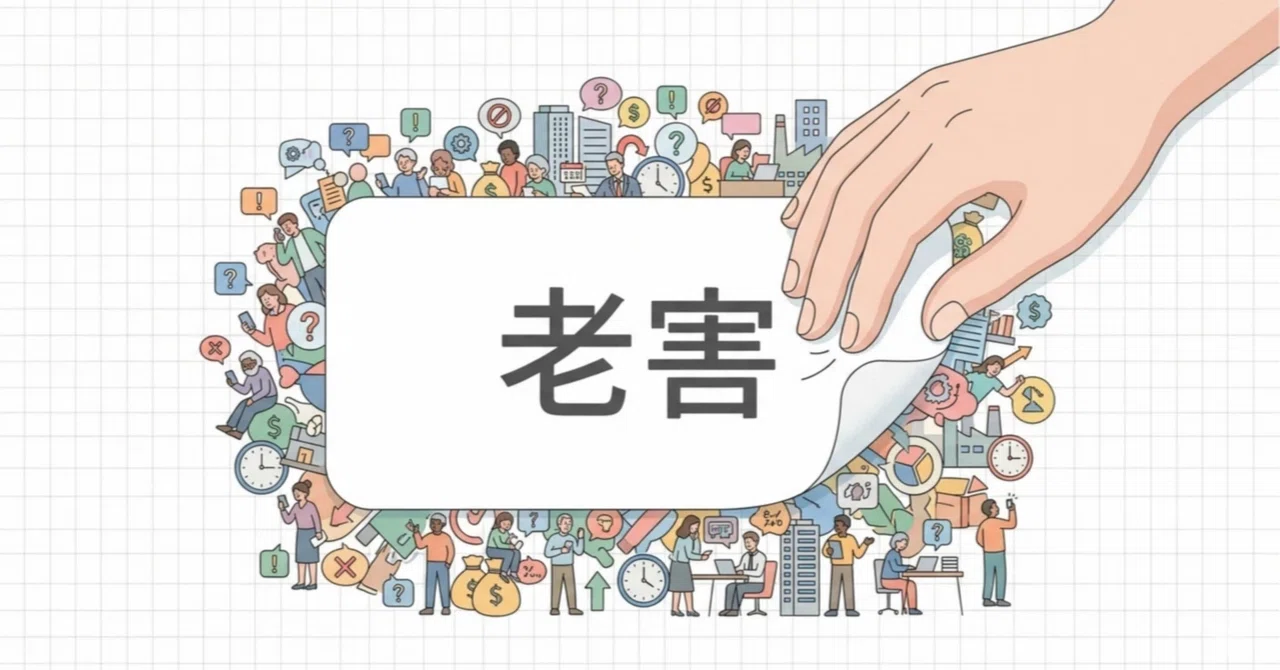
"Generational harm" is dangerously convenient. An irritable boss. A stubborn parent. An outdated institution. The behavior of Hayao Miyazaki. Completely different phenomena get tossed into the same single word — and once they're bundled together, the real nature of the problem disappears.
The moment you say "it's just rōgai," you no longer have to think any further. A label is a shortcut: it dissolves the cognitive burden of sitting with something unresolved. And with that shortcut comes a secondary reward — the feeling of having correctly classified someone "behind the times," which produces a quiet sense of moral superiority.
This essay does not argue against using the label. But before you reach for it, I'd like you to develop the habit of checking two things:
Is this person's behavior stealing time from the next generation?
And do they consider that theft to be perfectly normal?
When both conditions are met, we're looking at a structure that functions as generational harm. If either one is missing, there's still a different reading available.
1-2. The Scapegoat in Righteous Clothing
The true danger of this kind of labeling is not that it's overtly malicious — it's that it looks like a socially virtuous act.
The moment you declare "that person is rōgai," the value of listening to what they say evaporates, and the possibility of constructive dialogue closes. Furthermore, the habit of judging right and wrong by age-category is a habit that will circle back to you the moment you age out of your current position.
This is where we need the concept of the scapegoat.
A scapegoat is a mechanism: it concentrates a group's frustration, anxiety, and anger onto a specific individual or attribute, allowing people to look away from the structural causes of their problems. The rōgai label is unusually well-suited to this function.
First: there is an easy-to-assign attribute (age). Second: attacking that attribute can be framed as righteousness. Third: the attack itself delivers emotional satisfaction. The labeling of rōgai satisfies all three conditions simultaneously.
Economic stagnation. Institutional inequity. The widening gap between generations. Complex, systemic problems get simplified into the identification of a named villain — and suddenly everyone feels better, without the discussion ever reaching the root. That is why the rōgai label keeps working as an outlet for rage. And yet: an outlet is not a solution.
A society that practices righteous exclusion as a habit is simply a society in which everyone waits for their turn to be excluded. That is a bleak way to live.
1-3. Where the Labeling Leads
As this labeling intensifies, what follows is predictable: the forced disposal of experience and knowledge — the very assets that older generations carry — in the name of progress. Structural problems are left untouched while everyone feels satisfied having identified and ejected the villain. Eventually, the collective loses its capacity to actually solve anything.
What's left is a group that confuses ongoing exclusion with being correct. That is no longer a society worth the name.
So: when we remove the label, what remains?
The true nature of rōgai is not age. The next chapter examines its real core. But before that critique can hold weight, there is something we must honestly look at first: why young people reach for this word, and what gives them the right to do so.
→ Continues to Chapter 2
