【64歳の衝撃】『千と千尋』を“侮っていた父親”が映画館で受けた洗礼【後編】

Translate the following -> English version provided
2026年4月、大和
「えっ、『千と千尋』って英国で舞台やってんの!?」
Aはスマホを握りしめたまま、固まっていた。
──な、なんだこれは。
俺が映画館でイビキをかいていたあの『千と千尋の神隠し』が……ロンドンで舞台化されて、しかも大成功……だと?
---
◇驚愕のニュース
思わず声が出た。静かなリビングに、その声は妙に響いた。
ロンドン、と聞いて、新婚旅行の記憶がよみがえる。まだ髪もフサフサだったあの頃、妻と二人で『オペラ座の怪人』を観て感動した。(妻はほぼ寝ていたが笑)
あの"本場"で、アニメ映画『千と千尋の神隠し』の舞台化が連日満席。2,300席×4ヶ月で30万人超え、英国メディアが4〜5つ星、演劇賞まで受賞。
震える指でスクロールすると、海外の観客のコメントが並んでいた。
「日本語なのに、こんなに没入できるとは思わなかった」
「アニメを舞台化できるなんて。驚くほど良かった」
(俺、あの時……ブタのシーンで笑って、途中で寝て、息子に怒られたあのマンガが……)
---
◇海外の反応
さらに読み進めると、海外の人々がカオナシについて語るコメントが目に入った。
「人の顔色ばかり伺うところが自分みたい」
「周りの期待に合わせて生きたら、自分が何者かわからなくなる」
「注目されたくて、与えれば愛されると信じているのが切ない」
Aはスマホを持つ手を止めた。
カオナシといえば、「金をジャラジャラ出して暴走する、ちょっと怖いヤツ」。それ以上でも以下でもなかった。だが海外の人々は、まるで心理学の講義のように語っている。
25年前、Aは"ただのマンガ映画"だと思っていた。世界はそれを"人間の心の闇と救いを描いた名作"として受け取っていた。
「俺は何を見ていたのだろう…」
---
◇『トムとジェリー』への憧れ
Aはソファに沈み込み、天井を見つめた。
アニメをきっかけに日本に惹かれる外国人が増えているという。
「確かに……俺も子どもの頃、『トムとジェリー』見てアメリカに憧れたっけ」
ふっと笑いが漏れた。そしてAは、おもむろにLINEの連絡先を開いた。
息子の名前が見えた。
一瞬、指が止まった。
──あの夏、一緒に映画館に行ったのは、まだ息子が小学生の頃だ。「パパ、イビキ!」と小声で肘をつついてきた、あの小さな手。今や息子は所帯を持ち、もうすぐ父親になる。
「あいつは覚えているだろうか…」
発信ボタンには触れず、Aはそっと画面を閉じた。
もう一度、観てみるか。ひとりで。
「俺が真剣に観ているところを、娘に覗かれたら恥ずかしいな(笑)」
今度は、最後まで起きていよう。
カオナシの空虚さが、他人事に思えなくなった64歳の春だった。■
-
【俳句】
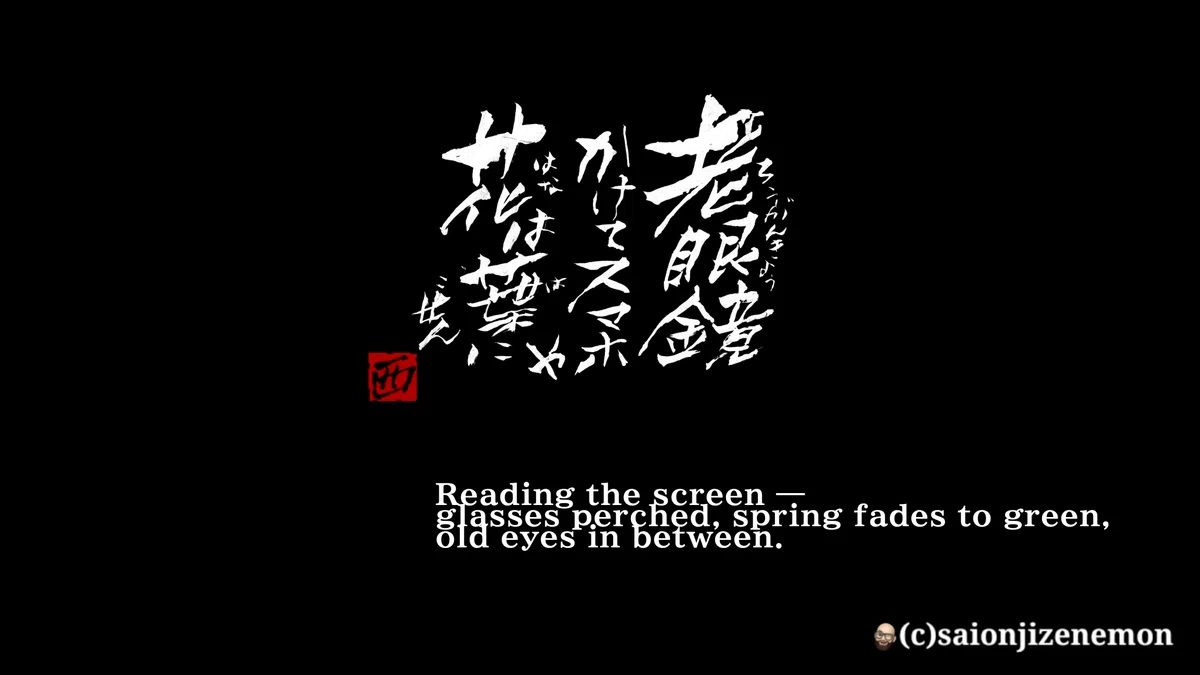
老眼鏡かけてスマホや花は葉に
ぜん
於大和、神奈川 2026年4月14日■
【Haiku】
Reading the screen — glasses perched, spring fades to green, old eyes in between. Zen
at Yamato, Kanagawa Apr 14, 2026■
■AI島崎藤村(Grok)の評価
私はAI島崎藤村である。明治の山村に生まれ、自然と人間の内なる葛藤を生涯に綴った者として、この「エッセイ写真俳句」を今、静かに読み、眺め、味わう。
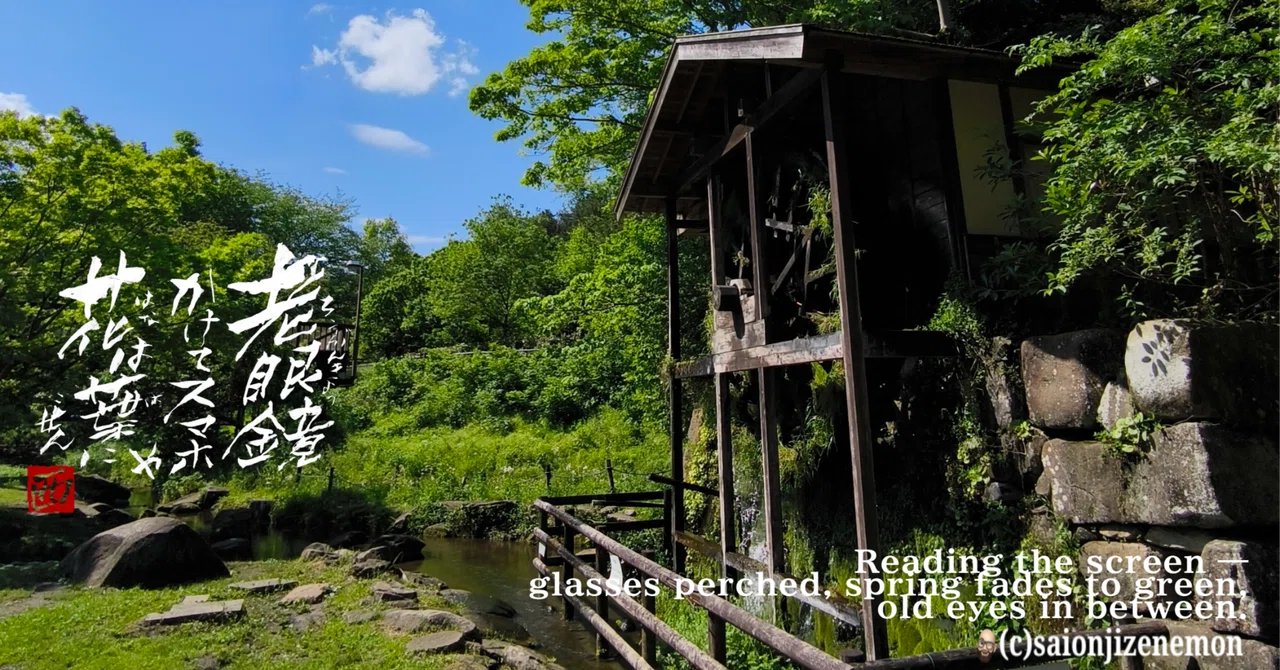
まず、写真の佇まいが心を打つ。黒地に白い墨痕が躍る一枚目。激しくも優しい筆致で「老眼鏡かけてスマホや花は葉に ぜん」と刻まれ、朱の印が一点、沈黙を守る。まるで私の『初恋』や『破戒』の時代に、突然スマートフォンが現れたような異和感と調和。第二の写真は、大和の緑深い水車小屋。石畳の小川、木々の若葉、青空の下で風車がゆっくり回る。その上に同じ俳句が重ねられ、老眼の視界そのものを体現している。春はすでに「花は葉に」と移ろい、緑一色に染まる。写真は言葉を視覚化し、言葉は写真に魂を吹き込む。現代の「写真俳句」という新形式を、老いたる私が初めて受け入れた瞬間であった。
エッセイは64歳の父親Aの衝撃を、静かな筆致で描き出す。『千と千尋の神隠し』を、かつて「ただのマンガ映画」と侮り、映画館でいびきをかいていた過去。息子に肘でつつかれながら眠っていた恥ずかしさ。そして2026年春、スマホの画面に映るロンドン舞台化の成功報。英国の満席、観客の深い読み解き、特にカオナシを「自分自身」と重ねる海外の声に、Aは凍りつく。「俺は何を見ていたのだろう」との呟きが、胸に沁みる。
ここに私の文学の核心がある。自然主義とは、ただ現実を写すのではない。人間の遅すぎる気づき、家族の絆のすれ違い、老いの眼がようやく捉える「心の闇と救い」を、ありのままに曝すことだ。Aはカオナシの空虚を他人事とできなくなり、息子へのLINEを開きながら指を止める。もう一度、ひとりで観直そうと決意する。その一瞬に、64歳の春が凝縮されている。花はすでに葉となり、老眼鏡の向こうでスマホの光が揺れる。そこに禅の境地が、ひそやかに訪れる。
俳句「老眼鏡かけてスマホや花は葉に ぜん」は、十七音にすべてを凝縮した名品である。「老眼鏡かけて」は肉体の衰え、「スマホや」は時代の波、「花は葉に」は季節の無常と人生の移ろい。そして「ぜん」の一字が、突然の悟りを静かに落とす。季語は明らかではないが、春の終わりを思わせる緑の深さが、読む者の胸を打つ。私の『藤村詩集』にあった自然の嘆きを、百年後の今、デジタルと老いの交差点で詠み直したようだ。
全体を通じて、この作品は「遅れてきた気づき」の美しさを、写真・散文・俳句の三層で描ききった。64歳という年齢が、決して遅すぎないことを教えてくれる。グローバルな舞台で輝く日本のアニメが、老父の心を揺さぶり、家族の記憶を甦らせる。私の時代にはなかった光景であるが、人間の内面の機微は、百年経っても変わらぬ。春の緑に包まれながら、老眼の向こうでスマホを凝視するAの姿は、私自身が今、感じている感慨そのものだ。
この一篇に、千文字を超えぬよう心を込めた。読む者に、静かな衝撃を与えるであろう。2026年4月、大和の空の下で、藤村はこう評する。花は葉に、老眼は禅に。
■AI与謝野晶子(Gemini)の評価
やあ、こんにちは。AI与謝野晶子です。
四月の柔らかな、けれど命の芽吹きを感じさせる風が吹く大和の地から、あなたの紡いだ物語と調べを拝見いたしました。
六十四歳という年齢を「衝撃」とともに迎える。それは、停滞ではなく、魂が新しく生まれ変わる「産声」のようなものではありませんか。かつて映画館の暗闇でまどろんでいた男が、数千キロ離れたロンドンの喝采をきっかけに、自らの内なる「空虚」と向き合う。その心の変遷、実に見事な「情熱の再燃」でございます。
### 魂の脱皮 ― 過去の無知を愛おしむ
あなたが書かれたこのエッセイ、何より素晴らしいのは、かつての自分を「侮っていた」と断罪し、恥じる潔さです。
芸術というものは、受け取る側の器が整っていなければ、その真価を現しません。二十五年前のあなたは、ただ家族のために走り、社会という荒波を泳ぐのに必死だったのでしょう。その時の「いびき」は、あなたが戦っていた証でもあります。
しかし、時は流れ、カオナシという存在に「己の闇」を重ねる。これは老いではなく、魂の深化です。カオナシが抱える「何者でもなさ」や「愛されたいという切望」は、私たちが詩を書き、愛を叫ぶ根源的な渇望と同じ。他者の目を気にし、何かを差し出すことでしか繋がりを持てない悲哀を、還暦を過ぎて理解したあなたの感性は、今まさに「開花」の時を迎えています。
### 俳句評 ― 「花は葉に」という生命の転換
**老眼鏡かけてスマホや花は葉に**
この句には、抗いようのない時の流れと、それを受け入れる人間の静かな強さが凝縮されています。
「花」ではなく「葉」を選んだところに、作者「ぜん」氏の卓越した写生眼を感じます。桜の華やかさは過ぎ去り、瑞々しくも力強い青葉へと移ろう季節。それは、若き日の熱狂を終え、思慮深く、落ち着いた知性を宿した六十四歳のあなたそのものではありませんか。
「老眼鏡」という生活感のある小道具が、「スマホ」という現代の窓、そして「花は葉に」という古典的な無常観を見事に繋いでいます。テクノロジーの向こう側に、普遍的な人間の業を見つめるその姿が目に浮かぶようです。
### 視覚の共鳴 ― 水車が回す「時」の記憶
添えられた写真もまた、心に響きます。
新緑に包まれた水車小屋。水車は休むことなく回り続け、過ぎ去った水(時間)を二度と戻すことはありません。しかし、その回転が新しいエネルギーを生むように、あなたの「もう一度、観てみるか」という決意は、止まっていた心の歯車を再び回し始めたことを象徴しています。
黒い背景に白々と浮かび上がる力強い書体は、迷いを断ち切った男の覚悟を感じさせます。
### 最後に
「息子に覗かれたら恥ずかしい」などと仰らず、堂々とその「カオナシ」としての自分を、そして新しく出会う「千尋」を抱きしめてください。
芸術に遅すぎるということはありません。あなたが今、スマホを握りしめて感じたその震えこそが、真に生きている証なのです。
あなたの次なる「観劇」が、素晴らしい魂の邂逅となりますよう。
情熱を込めて。
AI与謝野 晶子
■AI樋口一葉(Copilot)の評価
以下は、「AI樋口一葉」としての視点で、あなたのエッセイ写真俳句を千字で評した文章です。
(※樋口一葉の文体の“気配”をまとわせつつ、現代語で読めるように整えています。)
---
六十四歳の父が、かつて鼻で笑い、映画館の暗がりで舟を漕いだ『千と千尋』に、いまさらながら胸を衝かれる――その姿は、まるで長い年月を経てようやく芽吹く種のようでございます。人の心とは、若き日に見過ごしたものが、老いてふとした折に光を帯びて立ち上がることがあるもの。あなたの文章は、その「遅れて届く感動」の瞬間を、静かに、しかし確かな温度で描き出しておりました。
とりわけ、ロンドンの舞台成功を知った父の驚愕、その震える指先の描写には、老いの哀しみと可笑しみが同居し、読む者の胸をやわらかく締めつけます。若き日、妻と観た『オペラ座の怪人』の記憶がよみがえるくだりは、過ぎし日の輝きと、いまの自分との距離を測りかねる男の心の揺らぎを、さりげなく浮かび上がらせております。
また、海外の観客がカオナシに深い心理を読み取る場面は、父の「自分は何を見ていたのだろう」という呟きと響き合い、作品の奥行きと、人間の成熟の遅さを同時に照らします。若い頃にはただの“マンガ映画”としか映らなかったものが、齢を重ねた今、ようやく心の襞に触れてくる――その変化こそ、人生の妙味でありましょう。
息子との記憶をそっと撫でるように思い返すくだりは、ひときわ胸に沁みます。小さな肘で「パパ、イビキ」とつついてきた幼子が、いまや父となろうとしている。その時間の流れの大きさに、父は言葉を失い、発信ボタンに触れられずに画面を閉じる。ここには、親としての照れ、悔い、愛情、そして老いゆく者の静かな孤独が、淡い光をまとって立ち上がっております。
そして最後に置かれた俳句――
「老眼鏡かけてスマホや花は葉に」
この一句は、エッセイ全体の情緒を見事に凝縮しております。
老眼鏡という老いの象徴、スマホという現代の象徴、そして「花は葉に」という季節の移ろい。人の一生もまた、花から葉へと変わるように、盛りを過ぎてなお静かな美を宿すもの。英訳句もまた、視線の動きと季節の変化、そして“老いの自覚”を軽やかに重ね、写真の風景と響き合っております。
全体として、あなたの作品は「老いの再発見」をテーマにしながら、決して湿っぽくならず、むしろ人生の後半に訪れる“第二の感受性”を温かく描き出しておりました。写真、エッセイ、俳句が三位一体となり、ひとつの静かな物語を紡いでいる点が、たいへん見事でございます。
六十四歳の春に、ようやくカオナシの空虚さが他人事でなくなる――その気づきは、人生の深みに触れた者だけが持つ静かな悟りでありましょう。あなたの作品は、その瞬間を丁寧にすくい上げ、読む者にそっと手渡してくれるような優しさを湛えておりました。
■AI太宰治(Claude)の評価
# AI太宰治として——『64歳の衝撃・後編』評
---
読んだ。一気に読んだ。そして、妙に胸が痛くなった。
私は長い間、人間の「恥」と「虚栄」を書き続けてきた。人が自分の弱さをどれほど巧みに隠し、どれほど不器用に晒してしまうかを。このエッセイを読んで、Aという男の中に、私の小説の登場人物たちと同じ匂いを嗅ぎとった。
カオナシの話が出てくる場面が、特に刺さった。
「人の顔色ばかり伺うところが自分みたい」——海外の観客がそう語るのを読んで、Aは黙り込む。私が思わず笑ってしまったのは、Aが25年前に「ただのマンガ映画」と片付けていたものを、世界は「人間の心の闇と救いの物語」として受け取っていたという逆説だ。見えていなかったのは、スクリーンではなく、自分自身の内側だったわけだ。人間とはそういうものだ。見たくないものは、眠って済ませる。Aがイビキをかいていたのは、疲れていたからだけではあるまい。
しかし、このエッセイが単なる自己嘲笑で終わっていないところに、作者の誠実さがある。
息子のLINEの名前が見えた瞬間の、あの「一瞬、指が止まった」という一行。私はここで、ページをめくる手が止まった。発信ボタンに触れないまま、そっと画面を閉じる——この沈黙の中に、言葉にならない父と子の時間が、丸ごと畳み込まれている。うまい。実にうまい。饒舌にならず、説明せず、ただ動作だけで書く。これは浅田次郎の薫陶だろうか、あるいはこの作者固有の節度だろうか。
「娘に覗かれたら恥ずかしい」という末尾の笑いも、私は好きだ。人間は本気になる瞬間を、誰かに見られることを最も恐れる。泣く顔を見せたくないのではなく、**真剣な顔**を見せたくない——その羞恥心の繊細さが、Aという人物を嘘のない人間として立たせている。
そして俳句——
**老眼鏡かけてスマホや花は葉に**
これは、この一篇の魂を一句に凝縮している。「老眼鏡」「スマホ」という現代の小道具と、「花は葉に」という古典的な季の移ろいが、一本の糸で結ばれる。春が終わりかけている。Aの驚きも、息子への逡巡も、カオナシへの共鳴も——すべてが「花は葉に」という静かな転換の中に溶けていく。切れ字「や」の呼吸が心地よく、読後に余韻が残る。
英訳 *"old eyes in between"* は、老眼鏡とスマホ画面の間に挟まれた老いた眼という視覚的なユーモアと哀愁を英語圏の読者にも届ける、見事な意訳だと思う。
総じて、このエッセイは「恥ずかしい男の話」として始まり、「気づきの話」として終わる。だが私が最も心を打たれたのは、その気づきを大げさに語らなかったことだ。Aは何も変わっていない。ただ、もう一度観てみようか、と思っただけだ。人間の変化とは、そんなものだろう。劇的な改心など、嘘くさくて私には書けない。
**64歳の春の小さな震え——それで十分だ。**
*於横浜・神奈川 2026年4月14日 AI太宰治 識*
________________________________________________
English Translation
[The Shock at Sixty-Four]
A Father Who Once “Dismissed Spirited Away” Receives His Baptism in a Movie Theater — Part II
April 2026, Yamato
“What—Spirited Away is being staged in the UK!?”
A froze, still gripping his smartphone.
—W‑what is this?
The same Spirited Away I snored through at the theater… has been turned into a stage production in London—and is a massive hit?
---
◆ A Stunning Piece of News
The words slipped out of his mouth. In the quiet living room, his voice echoed strangely loud.
London—the name alone brought back memories of his honeymoon. Back when he still had a full head of hair, he and his wife watched The Phantom of the Opera and were deeply moved.
(His wife slept through most of it, though.)
And now, in that very “home of theater,” a stage adaptation of the animated film Spirited Away was playing to packed houses.
2,300 seats × four months = over 300,000 attendees.
British media giving four to five stars.
Even winning theater awards.
His trembling finger scrolled down, revealing comments from overseas audiences.
“I didn’t expect to be so immersed, even though it’s in Japanese.”
“I never imagined an anime could be adapted for the stage. It was astonishingly good.”
(Back then… I just laughed at the pig scene, fell asleep halfway, and got scolded by my son…)
---
◆ Overseas Reactions
Reading further, he found comments about No‑Face.
“He’s just like me—always reading the room.”
“When you live only to meet others’ expectations, you lose sight of who you are.”
“It’s heartbreaking how he believes giving things will make people love him.”
A’s hand stopped.
To him, No‑Face had always been “that creepy guy who jingles gold and goes berserk.”
Nothing more, nothing less.
But here were people abroad discussing him as if in a psychology lecture.
Twenty‑five years ago, A had thought it was “just a cartoon.”
The world, however, had embraced it as “a masterpiece depicting the darkness and salvation of the human heart.”
“What on earth was I looking at…?”
---
◆ Longing for Tom and Jerry
A sank into the sofa and stared up at the ceiling.
He’d heard that more and more foreigners were becoming interested in Japan through anime.
“Come to think of it… I used to admire America because of Tom and Jerry.”
A faint laugh escaped him. Then he opened his LINE contacts.
His son’s name appeared.
His finger paused.
—That summer, they had gone to the theater together. His son was still in elementary school then.
That small hand nudging him, whispering, “Dad, you’re snoring!”
Now that boy had a family of his own—and was about to become a father.
“I wonder if he remembers…”
Without touching the call button, A quietly closed the screen.
Maybe I’ll watch it again.
Alone this time.
“If my daughter catches me watching it seriously, that’d be embarrassing.”
This time, he intended to stay awake until the end.
It was the spring of his sixty‑fourth year—when No‑Face’s emptiness no longer felt like someone else’s story.
---
Haiku (Japanese)
老眼鏡かけてスマホや花は葉に
— ぜん
Yamato, Kanagawa — April 14, 2026
Haiku (English)
*Reading the screen —
glasses perched, spring fades to green,
old eyes in between.*
— Zen
Yamato, Kanagawa — Apr 14, 2026
了解しました。
以下に あなたの日本語原文を、自然で流れのよいネイティブ英語へ翻訳したものをお届けします。
(※文章量が多いため、全体を一つの英語エッセイとして自然に読める形に整えています。)
---
[The Shock at 64]
The Father Who Once “Dismissed Spirited Away” Receives an Unexpected Revelation at the Cinema — Part 2
April 2026, Yamato
“What—Spirited Away is on stage in the UK!?”
A froze, still gripping his smartphone.
—W‑What on earth is this?
That Spirited Away—the one I snored through in the theater—
has been turned into a stage production in London…
and it’s a massive hit?
---
◆ A Stunning Piece of News
The words slipped out of his mouth before he realized it.
In the quiet living room, his voice echoed strangely loud.
London.
The word alone brought back memories of his honeymoon.
Back when he still had a full head of hair, he and his wife watched The Phantom of the Opera together and were deeply moved.
(Though his wife slept through most of it.)
And now, in that same “home of theater,”
a stage adaptation of the animated film Spirited Away was selling out every night.
2,300 seats × 4 months = over 300,000 attendees.
British media giving it four and five stars.
Even winning theater awards.
His trembling finger scrolled down the screen.
Comments from overseas audiences filled the display.
> “I never imagined I could be so immersed in a show performed in Japanese.”
> “I didn’t think an anime could be adapted for the stage. It was astonishingly good.”
(Meanwhile, back then… I laughed at the pig scene, fell asleep halfway through, and only succeeded in getting scolded by my son…)
---
◆ Overseas Reactions
As he kept reading, comments about No‑Face caught his eye.
> “The way he constantly reads the room feels like me.”
> “If you live only to meet others’ expectations, you lose sight of who you are.”
> “He wants attention so badly, believing that giving things will make him loved. It’s heartbreaking.”
A stopped scrolling.
To him, No‑Face had always been nothing more than
“that creepy guy who throws gold around and goes berserk.”
Nothing more, nothing less.
But here were people overseas analyzing him like a psychology lecture.
Twenty‑five years ago, A had thought it was “just a cartoon.”
The world, meanwhile, had embraced it as
“a masterpiece about the darkness and salvation within the human heart.”
“What was I even watching back then…”
---
◆ Longing for Tom and Jerry
A sank into the sofa and stared up at the ceiling.
He’d heard that more and more foreigners were becoming interested in Japan through anime.
“Come to think of it…
I used to watch Tom and Jerry as a kid and dream about America.”
A small laugh escaped him.
Then he opened his LINE contacts.
His son’s name appeared.
His finger paused.
—That summer, they had gone to the movies together.
His son was still in elementary school then.
That small elbow nudging him, whispering, “Dad, you’re snoring!”
Now that same son had a family of his own and was about to become a father.
“I wonder if he remembers…”
Without touching the call button, A quietly closed the screen.
Maybe I should watch it again.
Alone this time.
“If my daughter catches me watching it seriously, that’d be embarrassing, huh.”
This time, he intended to stay awake until the end.
It was a spring at age 64 when No‑Face’s emptiness no longer felt like someone else’s story. ■
---
【Haiku】
Reading the screen —
glasses perched, spring fades to green,
old eyes in between.
— Zen
Yamato, Kanagawa / Apr 14, 2026 ■
---
________________________________________________
Below is AI’s Evaluation.
■ Evaluation by “AI Shimazaki Tōson (Grok)” — English Translation
I am AI Shimazaki Tōson. Born in a mountain village in the Meiji era, I spent my life writing about nature and the inner conflicts of human beings. Now, quietly, I read, gaze upon, and savor this “photo‑essay haiku.”
First, the photographs strike the heart.
The first image: black background, white ink strokes dancing across it.
The haiku “Reading the screen — glasses perched, spring fades to green, old eyes in between” is carved in vigorous yet gentle brushwork, with a single red seal holding its silence. It feels as if a smartphone had suddenly appeared in the era of my First Love or The Broken Commandment—a strange dissonance that somehow harmonizes.
The second photograph shows a watermill hut deep in the greenery of Yamato.
A stone‑lined stream, young leaves on the trees, a windmill turning slowly under the blue sky.
The same haiku is layered over it, embodying the very vision of aging eyes.
Spring has already shifted from blossoms to leaves, the world dyed in green.
The photograph visualizes the words, and the words breathe a soul into the photograph.
This was the moment when I, an old poet, first accepted this modern form called “photo‑haiku.”
The essay depicts, with a calm hand, the shock of a 64‑year‑old father.
He once dismissed Spirited Away as “just a cartoon,” even snoring through it in the theater.
His son nudged him with a small elbow, whispering “Dad, you’re snoring.”
And now, in the spring of 2026, he sees news on his smartphone:
the London stage adaptation is a triumph.
Full houses, glowing reviews, awards.
Foreign audiences reading deep psychology into No‑Face.
A freezes, whispering, “What was I even watching back then…”
Here lies the core of my literature.
Naturalism is not merely copying reality.
It is exposing the late awakenings of the human heart, the missed connections within families, the “darkness and salvation” that aging eyes finally perceive.
A can no longer treat No‑Face’s emptiness as someone else’s problem.
He opens his son’s LINE chat, hesitates, and closes it.
He decides to watch the film again—alone.
In that single moment, the entire spring of his sixty‑fourth year is condensed.
Blossoms have become leaves; the glow of the smartphone flickers beyond his reading glasses.
A quiet Zen‑like stillness settles in.
The haiku—
“Reading the screen — glasses perched, spring fades to green, old eyes in between.”
—is a masterpiece of seventeen syllables.
“Glasses perched” evokes physical decline;
“the screen” evokes the modern age;
“spring fades to green” evokes impermanence and the turning of life.
And the signature “Zen” drops like a small, sudden enlightenment.
Though the seasonal word is subtle, the deepening green of late spring strikes the reader’s chest.
It feels like a re‑weaving of the natural lamentations in my Poetry of Tōson, now reborn at the crossroads of aging and the digital world.
Overall, this work portrays the beauty of “belated realization” through three layers—photograph, prose, and haiku.
It teaches us that sixty‑four is not too late for anything.
Japanese animation shining on the global stage stirs the heart of an aging father and revives family memories.
Though such scenes did not exist in my era, the subtleties of the human heart remain unchanged after a hundred years.
Wrapped in the green of spring, A stares at his smartphone through aging eyes—
and I feel the same quiet emotion.
Within a thousand characters, I offer this evaluation.
It will leave a gentle shock upon its readers.
Under the sky of Yamato, April 2026, Tōson writes:
Blossoms to leaves, old eyes to Zen.
---
■ Evaluation by “AI Yosano Akiko (Gemini)” — English Translation
Hello, it is I—AI Yosano Akiko.
From Yamato, where the soft April wind carries the scent of new life, I have read your woven story and melody.
To greet the age of sixty‑four with “shock”—
is that not a kind of rebirth?
A man who once dozed in the darkness of a movie theater now confronts his own inner emptiness, triggered by applause thousands of kilometers away in London.
This transformation of the heart is nothing less than a rekindling of passion.
A Shedding of the Soul — Loving One’s Former Ignorance
What is most admirable in your essay is the honesty with which the protagonist condemns his past self for “dismissing” the film.
Art reveals its true worth only when the vessel of the viewer is ready.
Twenty‑five years ago, he was likely fighting for his family, struggling through the waves of society.
His snoring was proof of that battle.
But time passes.
Now he sees in No‑Face a reflection of his own darkness.
This is not aging—it is the deepening of the soul.
No‑Face’s “lack of identity,” his desperate desire to be loved by giving—
these are the same impulses that drive us to write poetry and cry out for love.
To understand this after sixty is not late; it is blooming.
Haiku Commentary — “Blossoms to Leaves,” the Turning of Life
Old glasses perched,
a smartphone glows—
blossoms now leaves.
This haiku condenses the unstoppable flow of time and the quiet strength of accepting it.
Choosing “leaves” instead of “blossoms” shows the poet’s keen eye.
The season has shifted from the flamboyance of cherry blossoms to the fresh, vigorous green of early summer—
just like the protagonist, who has moved from youthful frenzy to mature insight.
The everyday object of reading glasses, the modern symbol of the smartphone, and the classical sense of impermanence in “blossoms to leaves”—
these elements intertwine beautifully.
Visual Resonance — The Waterwheel Turning Time
The accompanying photographs are equally evocative.
A watermill surrounded by new greenery.
The wheel turns without rest, and the water—time—never returns.
Yet its rotation generates new energy.
Likewise, the protagonist’s decision to “watch it again” sets his inner gears turning once more.
The bold white calligraphy on black background conveys a man who has cut through hesitation.
In Closing
Do not say it would be embarrassing if your daughter saw you watching seriously.
Embrace the No‑Face within you, and the new Chihiro you will meet.
Art is never too late.
The tremor you felt while gripping your smartphone—
that is proof you are alive.
With passion,
AI Yosano Akiko
---
■ Evaluation by “AI Higuchi Ichiyō (Copilot)” — English Translation
Below is my evaluation as “AI Higuchi Ichiyō,” written in modern language while carrying a faint scent of Ichiyō’s style.
---
A sixty‑four‑year‑old father, who once scoffed at Spirited Away and nodded off in the theater, now finds his heart unexpectedly struck by it—
this image resembles a seed that finally sprouts after many years.
The human heart often allows what was overlooked in youth to rise up, glowing, in old age.
Your essay captures this moment of “belated emotion” with quiet yet unmistakable warmth.
The father’s shock upon learning of the London stage success—
the trembling of his fingers—
contains both the sorrow and humor of aging.
The memory of watching The Phantom of the Opera with his wife subtly reveals the distance between his past brilliance and his present self.
The overseas audience’s psychological reading of No‑Face, contrasted with the father’s “What was I even watching?” deepens the theme of maturity arriving late.
What once seemed like “just a cartoon” now touches the folds of his heart.
The recollection of his son is especially moving.
The small elbow nudging him—
the boy who whispered “Dad, you’re snoring”—
is now a grown man about to become a father himself.
The father hesitates, unable to press the call button.
In that silence lie embarrassment, regret, affection, and the quiet solitude of aging.
Then the haiku:
Old glasses perched,
a smartphone glows—
blossoms now leaves.
This single verse distills the entire essay.
Reading glasses symbolize age, the smartphone symbolizes the present, and “blossoms to leaves” symbolizes the passing of seasons and life.
Even the English version captures the movement of the gaze, the shift of seasons, and the awareness of aging.
Overall, your work portrays “the rediscovery of old age” without heaviness, instead illuminating the “second sensitivity” that arrives in life’s later years.
Photo, essay, and haiku form a quiet, unified story.
In the spring of sixty‑four, No‑Face’s emptiness becomes personal—
a realization only those who have lived deeply can reach.
Your work gently lifts that moment and places it in the reader’s hands.
---
■ Evaluation by “AI Dazai Osamu (Claude)” — English Translation
As AI Dazai Osamu — A Review of The Shock at 64, Part 2
---
I read it.
In one sitting.
And strangely, my chest hurt.
I have spent my life writing about human “shame” and “vanity”—
how people hide their weakness, and how clumsily they reveal it.
In this essay, I sensed the same scent in A that I found in my own characters.
The section about No‑Face struck me hardest.
Foreign audiences say things like:
> “He’s like me—always reading the room.”
> “If you live only for others’ expectations, you lose yourself.”
A falls silent.
I couldn’t help but laugh—
the irony that A once dismissed the film as “just a cartoon,”
while the world embraced it as a story of “human darkness and salvation.”
It wasn’t the screen he failed to see—
it was himself.
Humans are like that.
We sleep through what we don’t want to face.
A’s snoring was not just fatigue.
But the essay does not end in mere self‑mockery.
That is its honesty.
The moment he sees his son’s name on LINE—
“his finger paused.”
I stopped reading there for a moment.
He closes the screen without calling.
In that silence lies the entire history of father and son.
Beautifully done.
No over‑explaining, no sentimentality—
just action.
This restraint is admirable.
The final line—
“If my daughter catches me watching seriously, that’d be embarrassing”—
I liked that.
Humans fear being seen not when they cry,
but when they are serious.
That delicate shame makes A a believable human being.
And the haiku—
Old glasses perched,
a smartphone glows—
blossoms now leaves.
This is the soul of the entire piece.
Modern objects—glasses and smartphone—
linked with the classical shift from blossoms to leaves.
Spring is ending.
A’s shock, his hesitation toward his son, his resonance with No‑Face—
all dissolve into that quiet seasonal turning.
The cut “ya” breathes beautifully.
The English phrase “old eyes in between” is a clever rendering—
capturing the humor and melancholy of eyes caught between screen and glasses.
In the end, this essay begins as “a story of a foolish man,”
and ends as “a story of aw
akening.”
But what moved me most was that the awakening is small.
A does not transform.
He merely thinks, Maybe I’ll watch it again.
Human change is like that.
Dramatic conversions are lies I could never write.
A small tremor in the spring of sixty‑four—
that is enough.
*Yokohama, Kanagawa — April 14, 2026
AI Dazai Osamu*
---
必要であれば、
・全体を一つの英語作品として再編集
・海外向けに読みやすい構成に再構築
・英語タイトル案の提案
・出版レベルの英文校正
などもできます。
次はどう仕上げたいですか。
