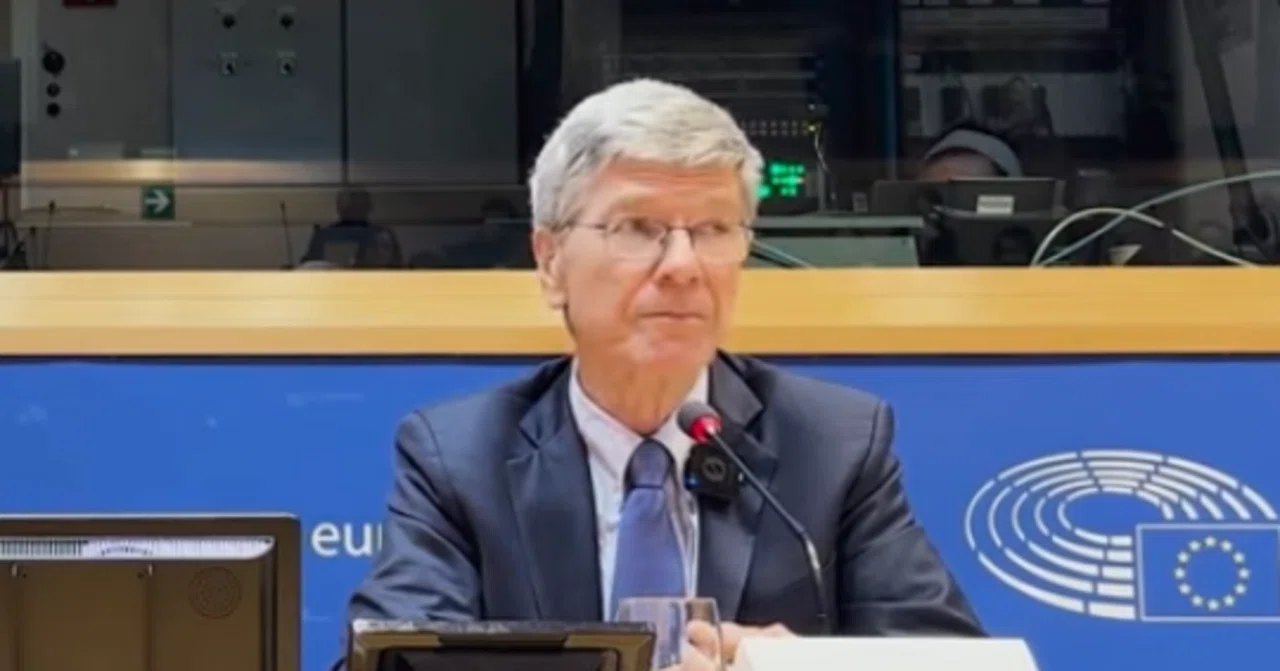
平和の地政学 - ジェフリー・サックス、欧州議会で語る

The Geopolitics of Peace - Jeffrey Sachs in the European Parliament
#JeffreySachs #ジェフリー・サックス #欧州議会
オリジナル動画:Michael von der Schulenburg
SaneVox Japanese 日本語吹き替え動画:
[シュレンベルク]
議会に来ると、欧州連合は混乱状態にあります。私はこれに反論したくありませんが、ウクライナ戦争はアメリカの主導で、欧州は交渉のテーブルに着きません。また、これは欧州の地での戦争です。ですから、私たちは非常に困難な状況にあります。私たちはどの方向に進むべきかわかりません。私は議会で6か月間働いていますが、国連で働いてきた者として、この議会が戦争のことしか語らないこと、国連で力で解決策を生み出せることを知り、かなりショックを受けました。私たちは常にすべての国で違うことを言ってきました。私がここで言うことは、私がこれまで訪れた戦争国すべてで実際に言っていることです。私は戦争国で34年間過ごしてきました。私はこれらのことに賛成ですが、私たちは今、何をしたいのかを再考する必要があると思います。私は欧州連合も来てくれることを願っています。なぜなら、私は欧州連合支持者だからです。我々はいかにして平和を追求し、いかにして平和を管理し、いかにして再び平和なヨーロッパを創り出すかを考えなければならないことに気づくでしょう。そしてジェフはこれらのことについて我々に何らかの洞察を与えてくれるかもしれません。
どうもありがとうございます。
[発言者1: J.サックス]
マイケル、本当にありがとう。そして、皆さんが一緒に集まり、一緒に考える機会を与えてくれたことに感謝します。今は確かに複雑で急速に変化する時期であり、非常に危険な時期です。ですから、私たちは本当に思考を明確にする必要があります。私は私たちの会話に特に興味があるので、できるだけ簡潔かつ明確に話せるように努力します。
私は過去36年間、東ヨーロッパ、旧ソ連、ロシアの出来事を非常に間近で見てきました。1989年にはポーランド政府の顧問を務め、1990年と91年にはゴルバチョフ大統領、1991年から1993年にはエリツィン大統領、1993年から1994年にはウクライナのクチマ大統領の顧問を務めました。エストニアの通貨の導入にも協力しました。
私は旧ユーゴスラビアのいくつかの国、特にスロベニアを支援しました。36年間、出来事を間近で見てきました。マイダンの後、新政府からキエフに来るように言われ、マイダンを案内され、直接多くのことを学びました。
私はロシアの指導者たちと30年以上連絡を取り合ってきました。アメリカの政治指導者たちを間近で知っています。ご参考までに言うと、前財務長官は51年前の私のマクロ経済学の先生でした。ですから私たちは半世紀にわたってとても親しい友人でした。
私はこれらの人々全員を知っています。私が自分の観点から説明したいことは、間接的なものではないので、これを言いたいだけです。これはイデオロギーではありません。
これは私がこの期間に自分の目で見て、経験したことです。ウクライナ危機だけでなく、1999年のセルビア、イラク、シリアを含む中東の戦争、スーダン、ソマリア、リビアを含むアフリカの戦争など、さまざまな状況でヨーロッパに起こった出来事についての私の理解では、これらはおそらく皆さんを驚かせるほどのものであり、私がこれから述べることについて非難されるかもしれません。
これらは米国が主導し、引き起こした戦争であり、これはもう40年以上も続いています。30年以上、より正確に言えば、米国は、特に1990年、91年、そしてソ連の崩壊とともに、米国が世界をコントロールするようになった、そして米国は誰かの意見、越えてはならない一線、懸念、安全保障の観点、いかなる国際的義務、いかなる国連の枠組みにも耳を傾ける必要はない、という認識に至ったのです。とても簡単に申し上げて申し訳ありませんが、皆さんに理解していただきたいのです。
1991年、私はゴルバチョフに支援を得ようと懸命に努力しました。ゴルバチョフは、現代最高の政治家だったと私は思っています。最近、国家安全保障会議で私の提案が議論されたときのアーカイブされたメモを読みましたが、米国はソ連の財政安定化と改革を支援すべきだと私が言ったとき、彼らはそれを完全に却下し、一笑に付しました。メモには、特にハーバード大学の元同僚の何人かが、災害を防ぐために最低限のことはするが、最低限のことは支援するのは私たちの仕事ではないと記されています。
まったく逆で、助けることに我々の利益はありません。1991年にソ連が崩壊すると、その見方はさらに誇張され、私は章と節を挙げることができますが、我々がショーを運営するという見方でした。チェイニー、ウォルフォウィッツ、そして皆さんがご存知のその他の多くの名前は、文字通り、これは今や米国の世界であり、我々はやりたいようにやると信じていました。
我々は旧ソ連から一掃します。残っている同盟国をすべて排除します。イラク、シリアなどの国も排除します。
そして、私たちはこの外交政策を実質的に33年間経験してきました。ヨーロッパは、私が理解する限りこの期間中にいかなる外交政策も持たなかったため、このために大きな代償を払いました。声も、団結も、明確さも、ヨーロッパの利益もなく、アメリカの忠誠心だけがありました。
意見の相違があった瞬間もありましたが、それは素晴らしい意見の相違だったと思います。特に、2003年のイラク戦争のときが特に重要でした。フランスとドイツは、この戦争で米国が国連安全保障理事会を迂回することは支持しないと言いました。ちなみに、その戦争はネタニヤフと米国防総省の同僚たちが直接でっち上げたものです。私はそれが関連や相互関係だったと言っているのではありません。
それは直接的な戦争だったと言っているのです。それはイスラエルのために遂行された戦争でした。ポール・ウォルフォウィッツとダグラス・フェイスがネタニヤフと連携して行った戦争でした。
そして、それがヨーロッパが発言権を持った最後の時でした。私は当時ヨーロッパの指導者たちと話しましたが、彼らは非常に明確で、とても素晴らしかったです。ヨーロッパはその後、特に2008年に完全に発言力を失いました。
さて、1991年以降2008年までに何が起こったかというと、米国は、一極化とはNATOがブリュッセルからウラジオストクまで段階的に拡大することを意味すると決定した。NATOの東方拡大に終わりはない。これが米国の一極世界となるだろう。
私がやったように、子供のころにリスクゲームをやっていたとしたら、これが米国の考えであり、盤上のあらゆる場所で平和を保つことだ。基本的に、米軍基地のない場所はどこも敵だ。中立は米国の政治用語では汚い言葉だ。
おそらく最も汚い言葉です。少なくともあなたが敵なら、私たちはあなたが敵だと知っています。あなたが中立なら、あなたは破壊者です。なぜなら、あなたは私たちに何も言わないから、本当に私たちに敵対しているからです。
中立を装っている。これが考え方であり、1994年にクリントン大統領がNATOの東方拡大に署名した際に正式に決定が下された。1991年2月7日、ハンス・ディートリッヒ・ゲンシャーとジェームズ・ベイカー3世がゴルバチョフと会談したことを覚えているだろう。
ゲンシャー氏はその後記者会見を開き、NATOは東方へと進軍しない、ワルシャワ条約機構の解体に便乗するつもりはない、と説明した。これは法的な文脈での話であり、非公式な文脈ではないと理解している。
これはドイツ統一に向けた交渉による第二次世界大戦の終結でした。NATOは1インチたりとも東に進まないという合意が成立しました。それは明確に述べられ、数え切れないほどの文書に記されています。
ジョージ・ワシントン大学の国家安全保障アーカイブを調べれば、何十もの文書が見つかります。それは「ゴルバチョフがNATOについて聞いたこと」というウェブサイトです。見てみてください。米国から聞かされていることはすべて嘘だからです。
しかし、記録は完全に明らかです。1994年にNATOをウクライナまで拡大するという決定が下されました。これはプロジェクトです。
これは、ある政権の問題ではありません。30 年以上前に始まった米国政府のプロジェクトです。1997 年に、ズビグニュー・ブレジンスキーが『大チェス盤』を執筆しました。
これはブレジンスキー氏の単なる思索ではありません。これは米国政府の決定を国民に説明したものであり、それがこの本の目的です。そしてこの本は、ヨーロッパの東方拡大とNATOの拡大が同時に起こっている出来事として描いています。
その本には、ヨーロッパとNATOが東に拡大する中でロシアはどうするのか、という興味深い章があります。私はズビグニュー・ブレジンスキーを個人的に知っていました。彼は私にとても親切でした。
私はポーランドにアドバイスをしていました。彼は大きな助けになりました。彼はとても親切で賢い人でしたが、すべてを間違えました。
そこで彼は、1997年に、ロシアがNATOとヨーロッパの東方拡大に同意する以外に選択肢がない理由を詳しく書きました。実際、彼はヨーロッパの東方拡大、ヨーロッパだけでなくNATOの東方拡大について述べています。これは計画であり、プロジェクトでした。
そして彼は、ロシアが中国と決して同盟を組まない理由を説明しています。考えられません。ロシアがイランと同盟を組むことは決してありません。
ロシアにはヨーロッパ以外の使命はない。だから、ヨーロッパが東に進んでも、ロシアにできることは何もない。そう、また別のアメリカの戦略家が言う。
我々がなぜいつも戦争をしているのか、疑問の余地はないだろうか。アメリカの特徴の 1 つは、相手が何をするかを常に把握しているにもかかわらず、常に間違えてしまうことだ。そして、常に間違える理由の 1 つは、アメリカの戦略家が用いるゲーム理論では、相手側と実際に話をしないからである。
相手の戦略が何であるかがすぐに分かります。素晴らしいですね。時間の節約になります。
外交は必要ありません。それで、このプロジェクトが始まり、おそらく昨日まで、30年間にわたって政権が継続しました。30年間のプロジェクトです。
ウクライナとジョージアがこのプロジェクトの鍵でした。なぜでしょうか? アメリカが知っていることはすべてイギリスから学んだからです。
つまり、我々は大英帝国になりたがっているのです。そして、パーマストンさん、パーマストン卿、失礼ですが、1853年に大英帝国が理解していたのは、黒海でロシアを包囲し、東地中海へのロシアのアクセスを禁止することでした。そして、あなたが見ているのは、21世紀にそれを実行しようとするアメリカの計画なのです。
その考えは、黒海沿岸諸国としてウクライナ、ルーマニア、ブルガリア、トルコ、ジョージアが位置し、黒海を封鎖することでロシアの国際的地位を奪い、実質的にロシアを地域大国以上の存在として中立化するというものだった。ブレジンスキーはこの点について完全に明快だ。そしてブレジンスキーの前にはマッキンダーがいた。
そして、世界の島を所有する者は世界を所有します。つまり、このプロジェクトはずっと昔に遡ります。基本的にはパーマストンにまで遡ると思います。
繰り返しますが、私はすべての政権下で生きてきました。大統領たちを知っています。彼らのチームも知っています。
クリントンからブッシュ、オバマ、トランプ、バイデンまで、ほとんど何も変わっていません。おそらく、段階的に悪化したのでしょう。私の見解では、バイデンが最悪でした。
おそらく、彼はここ数年、正気を失っていたからだろう。これは皮肉な発言ではなく、本気で言っている。アメリカの政治システムはイメージのシステムなのだ。
これは毎日行われているメディア操作です。これはPRシステムです。つまり、基本的に機能しない大統領を2年間権力の座に就かせ、実際にその大統領が再選に立候補する可能性があるのです。
そして、1つ残念なのは、彼はたった一人で90分間ステージに立たなければならなかったことです。そして、それで終わりでした。あのミスがなかったら、午後4時以降に寝ていようといまいと、彼は立候補を続けていたでしょう。ですから、これが現実なのです。皆がそれに従っています。私が言っていることは、今この世界ではほとんど何も真実を語っていないので、失礼です。
つまり、このプロジェクトは 1990 年代から続いていたのです。1999 年にベオグラードを 78 日間連続で爆撃したのは、このプロジェクトの一環でした。国境は神聖であるのに、国を分断するなんて、本当にそうではないでしょうか?
コソボを除いて。アメリカが変更しない限り、国境は神聖なものなので問題ありません。スーダンも関連プロジェクトのひとつでした。
南スーダンの反乱。あれは南スーダン人が反乱を起こしたから起きたのでしょうか?それとも、大人としてこれが何なのか理解していただくために、CIA の戦略をお教えしましょうか?
軍事行動には費用がかかります。装備、訓練、基地、諜報、資金が必要です。それは大国から提供されます。
それは地元の反乱から生じたものではありません。南スーダンは部族間の争いで北スーダンやスーダンを倒したわけではありません。それは米国のプロジェクトでした。私はナイロビに頻繁に行き、スーダンの政治に深い関心を持つ米国軍や上院議員などと会いました。これは一極化のゲームの一部でした。ですから、ご存じのとおり、NATOの拡大は1999年に飢えたポーランドとチェコ共和国から始まりました。
ロシアはこれに非常に不満でした。しかし、これらの国々は国境からまだ遠い国でした。そしてロシアは抗議しました。
しかし、もちろん、無駄でした。その後、ジョージ・ブッシュ・ジュニアが登場しました。9.11が起こったとき、プーチン大統領は全面的な支援を約束しました。
そして、2001年9月20日、米国は5年間で7つの戦争を起こすことを決定しました。ウェズリー・クラーク将軍のこの件に関する発言をオンラインで聞くことができます。彼は1999年にNATOの最高司令官でした。
彼は2001年9月20日にペンタゴンを訪れた。彼は7つの戦争を説明した書類を手渡された。ちなみに、これらはネタニヤフの戦争だった。
その考えは、旧ソ連の同盟国を一掃し、ハマスとヒズボラの支持者を排除することでした。ネタニヤフの考えは、国家は一つ、ただ一つ、イスラエルだけ、というものだったからです。
イスラエルは領土全体を支配する。そして反対する者は誰でも打倒する。正確には我々ではなく、我々の友人である米国だ。
これが今朝までの米国の政策です。それが変わるかどうかはわかりません。今、唯一の問題は、イスラエルがガザを所有するのではなく、米国がガザを所有するかもしれないということです。しかし、この考えは少なくとも25年前からありました。これは実際には、ネタニヤフと彼のアメリカの政治チームが2国家解決の考えを終わらせるために1996年にまとめた「クリーンブレイク」と呼ばれる文書に遡ります。この文書はオンラインでも見つけることができます。
つまり、これらはプロジェクトであり、長期的なイベントです。これは、クリントンなのか、ブッシュなのか、オバマなのか、ということではありません。それは、アメリカの政治を日々のゲームとして見る退屈な方法です。
しかし、アメリカの政治はそうではありません。そこで、2004年にNATOの次の拡大が行われ、バルト三国、ルーマニア、ブルガリア、スロベニア、スロバキアの7カ国が加わりました。この時点で、ロシアはかなり怒っていました。
これはドイツ再統一で合意された戦後秩序の完全な違反でした。本質的には、米国が協力体制から離脱する根本的な策略であり、米国は一極主義を信奉しているため、結局はそうなりました。皆さんも覚えていると思いますが、先週、2007年のミュンヘン安全保障会議が開かれたばかりだったので、
プーチン大統領は「やめろ。
もう十分だ。もう十分だ。もうやめなさい。」と言いました。
そしてもちろん、それが意味したのは、2008年に米国がNATOのウクライナとジョージアへの拡大をヨーロッパに押し付けたことです。これは長期にわたるプロジェクトです。私は2008年5月にニューヨークでサアカシビリ氏の話を聞き、その場を立ち去り、ソニアに電話して「この男は狂っている」と言いました。そして1か月後、戦争が勃発しました。米国がこの男に「我々はジョージアを救った」と言ったからです。彼は外交問題評議会で「ジョージアはヨーロッパの中心にある」と言います。しかし、皆さん、それは違います。
ジョージアはヨーロッパの中心ではありません。そして最近の出来事はジョージアにとって、ジョージアの安全にとっても、ジョージアに渡航する国会議員や欧州議会議員、そしてヨーロッパの政治家にとっても役に立ちません。ジョージアは破壊されるのです。
これではジョージアは救われません。ジョージアは破壊され、完全に破壊されるのです。2008年、皆さんご存知の通り、元CIA長官ウィリアム・バーンはコンドリーザ・ライスに、拡張に関する長いメッセージを送りました。ニートとはニートという意味です。
これはジュリアン・アサンジからわかったことです。なぜなら、信じてください、アメリカ国民に対して、あるいはあなた方に対して、あるいは最近のどの新聞にも、何についても一言も伝えられていないからです。ですから、私たちはジュリアン・アサンジに感謝しなければなりませんが、メモを詳しく読むことができます。ご存知のように、ヴィクトル・ヤヌコビッチは中立を掲げて2010年に選出されました。
ロシアはウクライナに領土的利益も計画も全く持っていなかった。私はその数年間そこにいたから知っている。ロシアが交渉していたのは、セヴァストポリ海軍基地の2042年までの25年間のリースだった。
そうです。クリミアのためでも、ドンバスのためでもなく、そんなことはありません。プーチンがロシア帝国を再建しているという考えは、子供じみたプロパガンダです、すみません。
日々の歴史や毎年の歴史を知っている人なら、これは子供っぽいものだと分かるでしょう。子供っぽいものの方が大人っぽいものより効果があるようです。だからデザインはまったくありません。
米国は、この男を打倒しなければならないと決断しました。これは政権交代作戦と呼ばれています。米国による政権交代作戦は100回ほど行われ、その多くは皆さんの国で、そして世界中で行われました。
それがCIAの仕事です。いいですか、知っておいてください。これは非常に異例な外交政策です。
しかしアメリカでは、相手が気に入らない場合、交渉はせず、できれば秘密裏に相手を打倒しようとします。秘密裏にうまくいかなければ、公然と打倒します。いつも「私たちのせいではない」と言います。
彼らは侵略者だ。彼らは反対側だ。彼らはヒトラーだ。
サダム・フセインであれ、アサドであれ、プーチンであれ、それは2、3年ごとにでてきます。とても都合がいいのです。アメリカ国民がどこでも与えられる唯一の外交政策の説明です。
まあ、我々は 1938 年のミュンヘンに直面している。 まあ、我々は 1938 年のミュンヘンに直面している。 反対側と話すことはできません。
彼らは邪悪で、執念深い敵だ。これが、マスメディアが耳にする唯一の外交政策モデルだ。そして、マスメディアがそれをそのまま繰り返すのは、それが米国政府に完全に唆されているからだ。さて、2014年、米国はヤヌコビッチを打倒するために積極的に動いた。コロンビア大学の同僚、ビクトリア・ヌーランドと米国大使、ピーター・ピアットが傍受された電話は誰もが知っている。これ以上の証拠はない。
ロシア人は彼女の通話を傍受し、それをインターネットに公開した。聞いてみろよ。興味深い内容だ。
私はこれらの人々を全員知っています。ちなみに、そうすることで、彼らは全員バイデン政権で昇進しました。それが仕事です。
さて、マイダン事件が起きたとき、私はすぐに呼び出されました。「ああ、サックス教授、ウクライナの新首相があなたに会って経済危機について話したいそうです。私はそれが得意ですから」
それで、私はキエフに飛んで、マイダン広場を歩き回りました。そして、アメリカがマイダン広場の周りのすべての人々にお金を支払ったことを聞きました。尊厳の自発的な革命です。
皆さん、これらのメディアはどこから来たのでしょうか?これらの組織はどこから来たのでしょうか?これらのバスはどこから来たのでしょうか?
呼び出された人たちはどこから来たんですか?冗談でしょ?
[発言者1]
これは組織的な取り組みであり、ヨーロッパと米国の市民以外には秘密ではありません。他の誰もがそれをはっきりと理解しています。その後、ミンスク、特にミンスク II が起こりました。ちなみに、ミンスク II は南チロルの自治をモデルにしていました。
ベルギーはミンスク II に非常に共感したかもしれない。ウクライナ東部のロシア語圏地域に自治権を与えるべきだとしている。国連安全保障理事会はこれを全会一致で支持した。米国とウクライナはこれを履行しないと決定した。ノルマンディー合意の保証人であったドイツとフランスはこれを放棄した。これはまさに米国の直接的な一極行動であり、ヨーロッパは合意の保証人であったにもかかわらず、いつものようにまったく役に立たない補助的な役割を演じた。
まず、トランプは軍備を増強した。ドンバスでのウクライナの砲撃で何千人もの死者が出た。ミンスク合意IIはなかった。
そしてバイデンが大統領に就任しました。繰り返しますが、私はこれらの人々を全員知っています。私はかつて民主党員でした。
私は今、どちらの政党にも属さないことを固く誓っています。なぜなら、結局、どちらも同じだからです。そして、民主党は時が経つにつれて完全な戦争主義者となり、あなた方の国会議員のほとんどと同じように、平和についての声は一つもありませんでした。そこで、1991年末、プーチンは最後の努力として、ヨーロッパと米国との2つの安全保障協定案を提出しました。
米国は12月15日、19日~2021年まで交渉をテーブルに載せた。私はホワイトハウスでジェイク・サリバンと1時間電話し、「ジェイク、戦争を避けてください。あなたなら戦争を回避できます」と懇願した。
NATOはウクライナに拡大しないと言えばいいだけです。そして彼は私にこう言いました。「ああ、NATOはウクライナに拡大しない。心配するな」
私は「ジェイク、公に言ってくれ」と言いました。いや、いや、公には言えません。ジェイク、起こってもいないことで戦争をするつもりですか?
彼は言いました、「心配しないで、ジェフ、戦争は起きない。彼らはあまり賢い人たちではない。」正直に言えば、彼らはあまり賢い人たちではないのです。
私は40年以上彼らと付き合ってきました。彼らは独り言ばかり言います。他の誰とも話しません。
彼らはゲーム理論をプレイします。非協力ゲーム理論では、相手と話をしません。戦略を立てるだけです。
これがゲーム理論の本質です。交渉理論でもなければ、和平理論でもありません。
正式なゲーム理論を知っていれば、それは一方的かつ非協力的な理論です。彼らがプレイしているのはまさにそれです。それは RAND コーポレーションで始まりました。
彼らは今もそれをやっている。2019年にRANDが「ロシアをどう拡大するか」という論文を発表した。バイデンが追随した「ロシアをどう苛立たせるか」という論文を彼らが書いたのをご存知ですか?
それがまさに戦略です。どうやってロシアを怒らせるか。ロシアを挑発し、分裂させようとしています。政権交代や社会不安、経済危機などを引き起こすかもしれません。
それがあなたの味方のことを言うんだ。冗談でしょ?それで、私はサリバンと長くてイライラする電話をした。
私は凍えるような寒さの中、外に立っていました。たまたまスキーをしようとしていたのです。そして、ジェイク、戦争は起こらないように。
ああ、戦争は起きないよ、ジェフ。翌月に何が起きたかはよくわかっている。彼らは交渉を拒否した。NATOの最も愚かな考えは、いわゆる門戸開放政策だ。
冗談でしょう?NATOは近隣諸国が一切口出しすることなく、行きたいところに行く権利を留保しています。メキシコ人とカナダ人には、そんなことはしないでと伝えます。
ご存知のとおり、トランプ氏はカナダを乗っ取りたいと思っているかもしれません。ですから、カナダは中国に「オンタリオに軍事基地を建設したらどうですか?」と言うかもしれません。私はそう勧めません。
そして米国は、まあ、それは開かれた扉だ、とは言わないだろう。それは彼らの仕事だ。つまり、彼らはやりたいことをやればいいのだ。
それは我々の仕事ではありません。しかし、ヨーロッパの大人たちはこれを繰り返しています。ヨーロッパでは、あなたの委員会や高官の間で、これはナンセンスです。
これは、地政学の幼稚さですらない。まったく考えていない。それで、戦争が始まった。
プーチン大統領の戦争での意図は何だったのか? 彼の意図が何だったかは、私には分かる。それは、ゼレンスキー大統領に中立交渉を強いることだった。
そしてそれは侵攻開始から7日以内に起こったのです。皆さんはこれを理解すべきです。これについて書かれたプロパガンダ、つまり「彼らは失敗し、彼はウクライナを占領するつもりだ」という宣伝文句ではなく。さあ、皆さん、基本的なことを理解してください。
その考えは、NATOを維持することだった。NATOとは何なのか?NATOとは、米国をロシア国境から遠ざけることだ。それ以上でもそれ以下でもない。
非常に重要な点を一つ付け加えておきます。なぜ彼らはそんなに関心を持っているのでしょうか。第一に、中国やロシアがリオグランデ川やカナダ国境に軍事基地を置くと決めた場合、米国がパニックに陥り、10分以内に戦争になってしまうだけでなく、米国は2002年に弾道ミサイル防衛条約を一方的に放棄し、それによって核軍備管理の枠組みを終わらせたからです。
これは理解することが極めて重要です。核軍備管理の枠組みは先制攻撃を阻止することに基づいています。ABM条約はその重要な要素でした。
米国は2002年にABM条約から一方的に離脱した。ロシアは激怒した。だから私がこれまで述べてきたことはすべて、核の枠組みの破壊という文脈での話だ。
そして2010年から、米国はポーランドに、そしてルーマニアにイージスミサイルシステムを設置しました。そしてロシアはそれを好ましく思っていません。そして2021年12月と1月、2022年1月に議題に上がった問題の1つは、米国がウクライナにミサイルシステムを設置する権利を主張するかどうかでした。
そして、ブリンケン氏は2022年1月にラブロフ外相にこう語った。「米国は望む場所にミサイルシステムを設置する権利を留保している。それがあなたの仮想同盟国だ。それでは、中距離ミサイルシステムをドイツに戻しましょう。」
米国は2019年にINF条約から一方的に離脱した。現時点では核兵器の枠組みは存在しない。全く。
ゼレンスキー氏が「7日以内に交渉しましょう」と言ったとき、私はすべての関係者と詳細に話をしたので、この詳細を非常によく知っています。2週間以内に、プーチン大統領が承認し、ラブロフ外相が提示した文書が交換され、トルコの仲介者が管理していました。私は仲介者が何をしているかを詳しく聞くためにアンカラに飛びました。
ウクライナは合意寸前だったところから一方的に離脱した。なぜか?それは米国がそう指示したからだ。
英国は、4月初旬にボリス・ジョンソンをウクライナに派遣して説明させることで事態をさらに悪化させた。そして最近、彼は、もし皆さんの安全がボリス・ジョンソンの手に委ねられているなら、私たち全員を神が助けてください、キース・スターマーはさらに悪い人物であることが判明した。想像もできないことだが、これは事実だ。
ボリス・ジョンソンは、ここで問題となっているのは西側の覇権だと説明しており、ウェブサイトでも調べることができます。ウクライナではなく、西側の覇権です。マイケルと私は2022年の春にバチカンでグループと会い、この戦争からウクライナにとって良いことは何も生まれないことを説明する文書を作成しました。
今交渉しましょう。時間がかかると、大量の死者、核戦争の危険、そしておそらく戦争の敗北を意味します。当時私たちが書いたものを一語変えたいと思います。その文書には何ら間違いはありませんでした。
そしてその文書以来、米国が交渉相手を交渉のテーブルから引き離して以来、約100万人のウクライナ人が死亡、または重傷を負った。そして、想像できる限り意地悪で冷笑的で腐敗した米国の上院議員たちは、米国人が一人も死なないから、これは我々のお金の素晴らしい使い道だと言う。これは純粋な代理戦争だ。
私の近くにいる上院議員の一人、ブルーメンソールは、これを声に出して言っています。ミット・ロムニーもこれを声に出して言っています。これはアメリカが使える最良のお金です。
アメリカ人は誰も死んでいません。信じられない。昨日の出来事を思い出してください。これは失敗しました。
このプロジェクトは失敗しました。このプロジェクトの目的は、ロシアが手をこまねくことでした。ズビグニュー・ブレジンスキーが 1997 年に説明したように、最初からロシアは抵抗できないという考えでした。
アメリカ人は、自分たちが優位に立っていると考えていた。彼らをはったりでだますから、勝てるだろう。彼らは実際に戦うつもりはない。
彼らは実際には動員しないでしょう。SWIFTから彼らを締め出すという核兵器オプションは、彼らを破滅させるでしょう。経済制裁は、彼らを破滅させるでしょう。
HIMARS が彼らを倒すだろう。ATTACMS、F-16。正直に言うと、私はこれを 70 年間聞いてきました。
私は、56年間、半分理解しながら聞いてきました。彼らは毎日、ナンセンスを話します。私の国、私の政府。
これは私にとって非常に馴染み深いことです。完全に馴染み深いことです。私はウクライナ人に懇願しましたし、ウクライナ人との実績もありました。私はウクライナ人に助言しました。
私は反ウクライナ派ではありません。完全に親ウクライナ派です。私はこう言いました。「命を守り、主権を守り、領土を守り、中立でいてください。アメリカ人の言うことを聞いてはいけません。」
私はヘンリー・キッシンジャーの有名な格言を彼らに繰り返しました。それは、「アメリカの敵になることは危険だが、友人になることは致命的である」というものです。では、ヨーロッパのためにこれを繰り返しましょう。アメリカの敵になることは危険だが、友人になることは致命的であるということです。
それで、トランプについて最後に一言述べさせてください。トランプは負けたくないのです。だからこそ、この戦争が終わる可能性は高いのです。なぜなら、トランプとプーチン大統領は戦争を終わらせることに同意するからです。
ヨーロッパが戦争を煽る大騒ぎをしても、それは問題ではありません。戦争は終わりつつあります。だから、それを忘れてください。
同僚たちに、もう終わったと伝えてください。トランプは敗者を担ぎたくないから終わったのです。それだけです。
それは偉大な道徳心の問題ではなく、彼は敗者を抱えたくないのです。これは敗者です。現在行われている交渉によって救われるのはウクライナです。
2番目はヨーロッパです。ここ数日、交渉に関する恐ろしいニュースにより株価が上昇しています。この議場では恐怖の声が上がっていることは承知していますが、これが皆さんが得ることのできる最高のニュースです。
今、私は勇気づけたが、彼らは私の言うことを聞いてくれない。しかし、私はヨーロッパの指導者の一部に働きかけようとした。ほとんどの人は私の言うことをまったく聞きたがらない。しかし私は、キエフには行かないでと言った。
モスクワへ行き、相手方と話し合ってください。冗談でしょう?
あなた方はヨーロッパです。人口は4億5000万人、経済規模は20兆ドルです。
あなた方はロシアの主要な経済貿易相手国であるべきです。それは自然なつながりです。ところで、もし誰かが米国がノルドストリームを破壊した経緯について議論したいなら、喜んでそれについてお話しします。つまり、トランプ政権は根っからの帝国主義者です。大国が世界を支配しています。できるときにやりたいことをやります。
我々は老齢のバイデンより優れており、必要なところでは損失を抑えるだろう。世界には戦争地帯がいくつかあり、中東もそのひとつだ。そこで何が起こるかは分からない。
もう一度言いますが、もしヨーロッパが適切な政策を持っていたら、その戦争を止めることができます。その方法を説明します。しかし、中国との戦争も起こり得ます。
ですから、私は私たちが新しい平和の時代にいると言っているのではありません。しかし、私たちは今、非常に異なる種類の政治の中にいるのです。そして、ヨーロッパは外交政策を持つべきです。それは単なるロシア嫌いの外交政策ではなく、ロシアの状況を理解し、ヨーロッパの状況を理解し、アメリカが何であるか、そしてアメリカが何を支持しているかを理解し、アメリカによるヨーロッパの侵略を避けようとする現実的な外交政策です。なぜなら、アメリカがデンマーク領に軍隊を上陸させることは不可能ではないからです。私は冗談を言っているのではありませんし、彼らも冗談を言っているとは思いません。そして、ヨーロッパには外交政策が必要です。それは本物の外交政策であり、「はい、トランプ氏と交渉して折り合いをつけましょう」というものではありません。それがどんなものかご存知ですか?後で電話してください。どうか、アメリカの役人をヨーロッパのトップに据えないでください。ヨーロッパの役人を据えてください。
どうか、ヨーロッパ的な外交政策をとってください。あなた方は長い間ロシアと共存することになるのですから、どうかロシアと交渉してください。現実的な安全保障上の問題が浮上していますが、大げさな言い方やロシア嫌いはあなた方の安全保障にまったく役立っていません。
これはウクライナの安全保障にまったく役立っていません。あなたが賛同し、その後主導的な応援団となったこの愚かなアメリカの冒険によって、ウクライナで百万人の犠牲者が出ました。何も解決しません。
ちなみに、中東に関しては、米国は30年前に外交政策をネタニヤフに完全に委ねました。イスラエルのロビーがアメリカの政治を支配していることに疑いの余地はありません。それがどのように機能するかは、何時間でも説明できます。
これは非常に危険です。私はトランプが政権を破壊したり、ネタニヤフのせいでパレスチナの人々を悪化させたりしないことを願っています。ネタニヤフは戦争犯罪者であり、国際刑事裁判所によって正式に起訴されており、国際法によれば、1967年6月4日の国境にパレスチナ国家が設立されることが平和の唯一の道であるとこれ以上言われる必要はありません。ヨーロッパが中東との国境に平和をもたらす唯一の方法は、2国家解決なのです。
ちなみに、これに対する唯一の障害は、国連安全保障理事会における米国の拒否権です。ですから、何らかの影響力を持ちたいのであれば、米国に拒否権を放棄するように伝えてください。あなた方は世界の 180 か国と共にあるのです。
パレスチナ国家に反対しているのは、米国、イスラエル、ミクロネシア、ナウル、パラオ、パプアニューギニア、マレー、パラグアイだけです。ですから、ここはヨーロッパが大きな影響力を及ぼせる場所です。ヨーロッパは、JCPOAとイランについては沈黙しています。
ネタニヤフ氏の人生最大の夢は、米国とイランの戦争だ。彼は諦めていないし、そうなる可能性もゼロではない。それは、この点で米国が独立した外交政策を持っていないからだ。米国はイスラエルに支配されている。悲劇だ。ところで、驚くべきことだ。
そして、それは終わるかもしれない。トランプ氏は外交政策を取り戻したいと言うかもしれない。多分。
そうなることを願っています。最後に、中国に関して言えば、中国は敵ではありません。中国は単なる成功物語です。
だからこそ、中国は米国よりも経済規模が大きいため、米国は中国を敵視しているのです。それだけです。
[発言者3]
結構です。では質問です。発言は控えてください。
質問だけしてください。人数が多すぎるし、時間もあまりありません。ではどこから始めましょうか。左側から始めます。
ご存知のとおり、私は左派を好みます。どうぞ。
[発言者2]
はい、どうぞ。ありがとう、ジェフリー・サックス。チェコ共和国から。お越しいただき、ありがとうございます。
問題があります。EU は汚いと考える魔女に呪われてしまったのです。だから 2029 年まで改善されないでしょう。
しかし、その間に私たち中央ヨーロッパ人は何をすべきでしょうか。特にドイツ人がサラ・ヴァーゲンクネヒトに十分な投票をしない場合は、中央ヨーロッパに何らかの中立性を作り出すべきでしょうか。それとも、私たちに何をすべきだとお考えですか。
[発言者1]
まず、私の孫は全員チェコ人です。知っておいていただきたいのですが。ソニアはチェコ生まれでチェコ国籍です。
だから私たちはとても誇りに思っています。私はこの件では従兄弟ですが、チェコ人になりたいと思っています。ヨーロッパにはヨーロッパの外交政策が必要です。
そして、それは現実主義的な外交政策である必要があります。現実主義とは憎しみではありません。現実主義とは、実際に双方を理解し、交渉しようとすることです。
現実主義者には2種類います。守備的現実主義者と攻撃的現実主義者です。私の親友で攻撃的現実主義者のジョン・ミアシャイマーとは親しい友人で、私は彼のことを愛していますが、彼以上に私は、相手側と話し合って理解し合う方法を見つけるべきだと信じています。ですから、基本的にロシアはヨーロッパを侵略するつもりはありません。
これが根本的な点です。ドニエプル川まで到達するかもしれませんが、ヨーロッパを侵略することはありません。
しかし、実際の問題もあります。ロシアにとっての主な問題は米国でした。なぜなら、ロシアは世界最大の核保有国であり、最初から米国の一極主義を深く懸念していたからです。これが終わりを迎えそうな今、欧州もロシアと直接交渉を始めなければなりません。米国はすぐに関心を失い、今後数千年はロシアと共存することになるからです。
それで、あなたは何を望んでいますか?バルト諸国の安全を確保したいのです。バルト諸国にとって最善のことは、ロシア嫌いをやめることです。
エストニアにはロシア国民またはロシア語を話す国民、つまりロシア民族が約25パーセントいます。ラトビアも同様です。隣国を刺激しないでください。
以上です。これは難しくありません。本当に難しくありません。
もう一度、私の見解を説明したいと思います。私は、私が話しているこれらの国々を助け、助言しようとしてきました。私は彼らの敵ではありません。
私はプーチンの操り人形ではありません。プーチンの弁護者でもありません。私はエストニアで働いていました。
彼らは私に、エストニア大統領が外国人に与えることのできる二番目に高い民間人栄誉を与えたと思います。なぜなら、私は1992年に彼らのために通貨制度を設計したからです。だから私は彼らにアドバイスをしているのです。エストニアよ、そこに立って、ロシアを解体したいなどと言わないでください。
冗談でしょ?冗談じゃない。この世界で生き残るにはそんな方法じゃない。
実際、相互尊重があれば生き残ることができます。交渉があれば生き残ることができます。議論があれば生き残ることができます。
ロシア語を禁止してはいけません。人口の 25% がロシア語を母国語としているのに、それは良い考えではありません。国境に巨人がいなかったとしても、それは正しくありません。
それは正しいことではない。公用語として、小学校で教える言語として使うことになるだろう。
ロシア正教会を敵に回すようなことはしないでしょう。つまり、基本的に私たちは大人のように振舞う必要があるのです。そして私が彼らが子供のように振舞っているといつも言うと、ソニアはいつも私に、それは子供に対して不公平だと言います。
[発言者1]
なぜなら、これは子供よりもひどいからです。私たちには6歳の孫娘と3歳の孫息子がいますが、彼らは実際に友達と仲直りしています。私たちは彼らに何も言わず、ただ、明日も毎日、彼らを嘲笑するだけです。
私たちは、彼らにハグして遊びに行きなさいと言います。そして彼らはそうします。これは難しいことではありません。
ところで、まあ、とにかく、その点についてはこれ以上詳しくは述べません。ありがとう。それでは、新しい政府を選出してください。
いいえ、そんなことを言うべきではありません。私が言うべきなのは、政策を変えろ、変えろ、変えろ、ということだけです。
[発言者5]
それは機能しますか?はい。こんにちは、私の名前はキラです。
私はブリュッセル・タイムズの記者です。ジェフリーさん、興味深い話をありがとうございました。NATO加盟国に支出を5%増やしてほしいというトランプ大統領の発言についてお聞きしたいのですが。
そして現在、ベルギーを含め、多くの国が、そうするつもりであることを証明しようと躍起になっています。ベルギーはNATO本部でもあるので、NATO加盟国によるこうした発言に対して、どのような対応が適切かお聞きしたいのですが。ありがとうございます。
[発言者1]
この問題に関して、私たちは完全に意見が一致しているわけではありません。そこで、私なりの見解を述べさせてください。ブリュッセルに敬意を表しつつ、私がまず提案したいのは、NATO本部をどこか別の場所に移転することです。
本気で言っているのは、現在のヨーロッパ政策の最も悪い点の一つは、ヨーロッパとNATOの完全な混同だということです。これらは全く異なるものですが、全く同じになってしまいました。ヨーロッパはNATOよりずっと良いのです。
私の意見では、NATOはもはや必要ありません。私は1991年にNATOを終わらせていたでしょう。しかし、米国はNATOをロシアに対する防衛ではなく覇権の手段とみなしていたため、その後も存続しました。
しかし、NATOとヨーロッパの混同は致命的です。なぜなら、ヨーロッパの拡大はNATOの拡大を意味するからです。そして、これらは完全に異なるものであるべきでした。
これが最初のポイントです。私の見解は、マイケルに敬意を表しつつも、私たちはこれについてほんの短い会話をしただけですが、ヨーロッパは基本的に独自の外交政策と独自の軍事安全保障、いわゆる独自の戦略的自治権を持つべきだということです。そして、それはそうあるべきです。
私はそれに賛成です。NATOを解体するつもりですが、トランプはいずれにしてもそうするでしょう。トランプはグリーンランドに侵攻するかもしれません。
誰にも分かりません。その時、NATOが何を意味するのかが本当に分かるでしょう。ですから、ヨーロッパは安全保障に投資すべきだと私は思います。
5%というのはとんでもない、馬鹿げている、不条理、まったく不条理です。誰もそんな額を費やす必要はありません。おそらく現在の状況では、GDPの2~3%でしょう。
ちなみに、私がやろうとしているのは、ヨーロッパの製品を買うことです。というのも、この世界では、奇妙なことに、残念なことに、そしてこれは本当に自明の理ですが、残念なことなので、私はそれを擁護しません。多くの技術革新は軍事部門から派生しています。なぜなら、政府が軍事部門に投資しているからです。
つまりトランプは武器セールスマンだ。それは分かるだろう。彼はアメリカの武器を売っているのだ。
彼はアメリカの技術を売っています。数日前、ヴァンス氏はあなた方に、独自の AI 技術を持つことなど考えないようにと言いました。ですから、この支出の増加はあなた方のためではなく、アメリカのためであることを理解してください。
そういう意味で、私はそのアプローチに完全に反対です。しかし、ヨーロッパが統一されたヨーロッパ安全保障体制にGDPの2~3%を費やし、ヨーロッパとヨーロッパの技術に投資し、アメリカがヨーロッパの技術の使用を指示しないというアプローチには反対しません。とても興味深いことです。
最先端の半導体、極端紫外線リソグラフィーの唯一の機械を生産しているのはオランダ、ASMLです。しかし、ASMLのあらゆる政策はアメリカが決定します。
オランダには脚注すらありません。もし私があなただったら、すべての安全保障を米国に引き渡すなんてことはしません。私はそんなことはしません。
私は独自の安全保障枠組みを持つつもりです。そうすれば、独自の外交政策枠組みも持つことができます。ヨーロッパは、米国が支持していない多くのことを支持しています。
ちなみに、ヨーロッパは気候変動対策を支持していますが、それは当然のことです。なぜなら、私たちの大統領はこの問題に完全に無関心だからです。そして、ヨーロッパは良識と社会民主主義を精神として支持しています。私は政党のことを言っているのではありません。
私が話しているのは、生活の質がどのように生まれるかという精神についてです。ヨーロッパは多国間主義を象徴しています。ヨーロッパは国連憲章を象徴しています。
米国は、これらのいずれにも賛同していません。ご存知のように、我が国の国務長官マルコ・ルビオは、議題に平等と持続可能性があったため、南アフリカへの訪問をキャンセルしました。そして彼は、「私はそのことには関与しません」と言いました。
これは、根深いアングロサクソンの自由主義を正直に反映したものです。平等主義はアメリカの語彙には存在しません。持続可能な開発も、まったく存在しません。
ちなみに、国連加盟国 193 カ国のうち、191 カ国が自主的な国家レビューとして SDG 計画を提示していることはご存知でしょう。2 カ国は提示していません。
ハイチとアメリカ合衆国。バイデン政権は持続可能な開発目標を口にすることさえ許されなかった。財務省は持続可能な開発目標を口にしない方針だった。
わかりました。私がこれらすべてについて言及したのは、皆さんが独自の外交政策を必要としているからです。私は毎年報告書を 1 つ、2 つ発行しています。1 つは世界幸福度報告書です。そして、私の記憶が正しければ、上位 20 カ国のうち 18 カ国はヨーロッパです。
これは世界最高の生活の質です。ですから、その生活の質を守るために独自の政策が必要です。米国ははるかに下位にランクされています。
そしてもう一つの報告ですが、同僚のギヨームはどこにいるのでしょうか? 彼は部屋のどこかにいます。あそこにいます。
ギヨーム・ラプルトゥーンは、私たちの年次持続可能な開発報告書の主執筆者です。上位 20 か国のうちほぼすべてがヨーロッパの国々です。これは、皆さんがこの考えを信じているからです。そして、それが、地政学的な面を除けば、皆さんが最も幸福である理由です。
しかし、生活の質は重要です。ですから、独自の外交政策は必要ですが、安全保障がなければそれは実現しません。絶対に実現しないのです。
ちなみに、27カ国がそれぞれ独自の外交政策を持つことはできません。これは問題です。欧州の外交政策と欧州の安全保障体制が必要なのです。
ちなみに、マイケルはOSCEは死んだと断言していますが、私はOSCEの大ファンで、OSCEはヨーロッパの安全保障のための適切な枠組みだと信じています。本当に機能する可能性があります。
[発言者3]
ありがとう。どうもありがとう。はい、わかりました。
そうですね、教授、ありがとうございます。私はスロバキア出身で、私の首相ロバート・フリッツルは、あなたと同じような意見を持っていたために、銃殺されそうになりました。そうです、私たちは、欧州連合の数少ない国のスロバキア政府として、ロシアと話し合っています。
2か月前、私はメドベージェフ氏と話していました。2週間後には、モスクワのロシア外交委員会の委員長であるスルツキー氏とドゥーマで話す予定です。私の質問は、現時点でロシア国民にどのようなメッセージを送りたいか、ということかもしれません。
なぜなら、私が聞いたところによると、彼らは勝利の波に乗っている。ドンバスを征服しない理由はない。それが彼らの戦争目的だからだ。そして、トランプは彼らに戦争を直ちに止めるために何を提供できるだろうか?
あなた方からロシア人へのメッセージは何でしょうか? ありがとうございます。
[発言者1]
現在、多くの重要な事柄が提案され、協議されています。このため、戦争は速やかに終結するだろうと私は信じています。そして、これは非常に困難な時期における少なくとも一つの祝福となるでしょう。和解が具体的にどのようなものになるかは、今や領土問題だけの問題だと私は思います。
それは、ヘルソン州とザポリージャ州全体を含む4つの州全体なのか、それとも接触線上にあるのか、そしてこれらすべてがどのように交渉されるのかということです。私は交渉の場にいないので、これ以上は言えません。しかし、領土の譲歩が基本となるでしょう。
中立は保たれるでしょう。ウクライナ、そしてすべての当事者にとって安全が保証されるでしょう。少なくとも米国との間では、経済制裁は終了するでしょう。しかし、重要なのはもちろん、ヨーロッパとロシアです。核兵器交渉の再開があり、おそらくそうなるでしょう。それは非常に前向きなことです。ヨーロッパがロシアと直接交渉すべき極めて重要な問題があると思います。
ですから私は、コスタ大統領とヨーロッパの指導者たちに、プーチン大統領と直接協議を始めるよう強く求めます。なぜなら、ヨーロッパの安全保障が議題に上がっているからです。私はロシアの指導者たち、彼らの多くをよく知っています。彼らは優れた交渉者です。皆さんは彼らと交渉すべきです。そして、彼らとうまく交渉すべきです。
私は彼らにいくつか質問します。この戦争を永久に終わらせるために機能する安全保障とは何なのか、バルト諸国にとっての安全保障とは何なのか、と彼らに尋ねます。
何をすべきでしょうか? 交渉のプロセスの一部は、実際に相手側に懸念事項を尋ねることです。相手が何を知っているかを知るだけでなく、実際に「私たちには本当の問題がある。本当に心配している」と尋ねることです。
保証とは何でしょうか?そうですね、私も答えを知りたいです。ところで、私はラブロフ氏、ラブロフ外相を30年間知っています。私は彼を素晴らしい外務大臣だと思っています。彼と話し、交渉し、アイデアを出し、アイデアをテーブルに載せ、反対の考えをテーブルに載せます。私は、これらすべてが自分自身のせいで、純粋な理性だけで解決できるとは思いません。
戦争は、交渉して本当の問題が何であるかを理解することで解決します。相手が問題を表明したときに、相手を嘘つき呼ばわりしないでください。それが平和の相互利益にどのような影響を与えるかを考え出してください。したがって、最も重要なことは、怒鳴り声や好戦的な態度をやめ、ロシアの相手方と話し合うことであり、米国と交渉のテーブルに着くように懇願しないことです。
あなた方はアメリカと同じ部屋にいる必要はありません。あなた方はヨーロッパなのです。あなた方はヨーロッパとロシアと同じ部屋にいるべきです。
アメリカが参加したいなら、それは結構だ。だが、懇願するのはだめだ。ところで、ヨーロッパがロシアと交渉するときに、ヨーロッパはウクライナをその場に同席させる必要はない。
あなた方には多くの問題、直接的な問題があります。外交政策を誰にも引き渡さないでください。米国にも、ウクライナにも、イスラエルにも。ヨーロッパの外交政策を維持してください。
これが基本的な考え方です。
[発言者2]
この議会の主権主義政治グループ、政党としてのドイツのための選択肢のハンス・ノイホフです。まず、ザックス氏、ここに来てアイデアを共有していただいたことに感謝いたします。あなたのアイデアや同僚のジョン・マーシュハイマーのアイデアの多くは、ここにいる政治グループに受け入れられ、私たちの議題に取り入れられました。私はあなたの意見に広く賛同しますが、あなたが述べた歴史的説明に関して1つ疑問があり、それについて少し詳しくお話ししたいと思います。
これはNATO拡大の始まりに関するものです。ゴルバチョフが聞いた話として、例えばゲンシャー氏からNATOは1インチも東に進まないだろうという発言が数多くあると、ウェブサイトから報告されました。さて、2プラス4条約は1990年9月にモスクワで調印されましたね。
当時はまだワルシャワ条約機構が存在し、ポーランド、ハンガリー、チェコなどの国は2プラス4条約の交渉に参加していませんでした。そのため、ワルシャワ条約機構は1991年7月に解体され、ソ連は1991年12月に解体しました。そのため、交渉に参加していた人の中で、ポーランド、ハンガリー、スロバキアを代表して、全体的な状況が変わったらNATO加盟国になろうとしないなどと発言できる人は誰もいませんでした。
ですから、私たちが反論しなければならない反論は、ポーランド、ハンガリー、スロバキアといった国々がNATOに加盟したかったのは、まさにソ連との歴史のせいだ、というものです。そしてもちろん、ロシアは依然として、ある意味ではソ連の追随者とみなされていました。では、この反論にどう反論しますか?
[発言者1]
ハンガリー、ポーランド、チェコ共和国、スロバキアがなぜ NATO に加盟したかったのか、私には疑問の余地はありません。問題は、米国は平和のために何をしているのかということです。NATO はハンガリー、ポーランド、チェコ共和国、スロバキアの選択ではなかったからです。
NATOは米国主導の軍事同盟です。問題は、いかにして確実に平和を確立するかです。もし私が当時そのような決断を下していたら、1991年にNATOを完全に終わらせていたでしょう。
これらの国々がNATOを要請したとき、私は彼らに、我が国のウィリアム・ペリー国防長官が何と言ったか、我が国の指導者ジョージ・ケナンが何と言ったか、我が国の最後の駐ソ連大使ジャック・マトロックが何と言ったか説明したでしょう。彼らは、「あなたの気持ちはわかりますが、ロシアとの新たな冷戦を引き起こす可能性があるため、それは良い考えではありません」と言いました。だから私はそのように答えたでしょう。
これらの国々が最初の波に参加したとき、それが大きなプロジェクトの一部であったことを除けば、実際のところそれほど重大なことではなかったと思います。そして、そのプロジェクトは 1994 年にすでに詳細に説明されていました。ハーバード大学出版局のジョナサン ハスラム著の「Hubris」という非常に優れた本があり、何が起こったかを段階的に詳細に歴史的に記録しています。
本当に読む価値があります。しかし、私が本当に言いたいのは、ウクライナとジョージアは遠すぎたということです。これはロシアと対峙しているのです。
これは、核の枠組みが完全に不安定化する状況の中で起きています。これは、米国がロシア国境にミサイルシステムを設置する状況の中で起きています。プーチン大統領の長年の発言をよく聞いてみると、おそらく彼が最も懸念しているのは、モスクワから7分のところにあるミサイル、つまり首切り攻撃です。
これはまさに現実です。米国は西半球でこれが起こったときにパニックになるだけでなく、実際にパニックになりました。つまり、これはキューバ危機の逆バージョンなのです。
そして幸運なことに、ニキータ・フルシチョフは立ち上がって、「ワルシャワ条約機構の門戸開放政策。我々はどこへでも行ける」とは言わなかった。キューバが我々に頼んだのだ。
それはアメリカには関係のないことだ。フルシチョフが言ったのは戦争だ。私たちは戦争を望んでいない。私たちはこの危機を終わらせる。
我々は両方とも撤退する。それが最終的にフルシチョフとケネディが決めたことだ。これが本当の結末だ。
ロシアは、バルト諸国、ルーマニア、ブルガリア、スロバキア、スロベニアを、多大な苦痛を伴いながら飲み込みました。それはウクライナとジョージアです。そしてそれは地理的な理由によるものです。
それはパーマストン卿のせいです。それは第一次クリミア戦争のせいです。ミサイルシステムのせいで、これがこの戦争が起こった本質なのです。
[発言者4]
サックス教授、お越しいただきましてありがとうございます。欧州連合は独自の外交政策を策定する必要があるとおっしゃいました。かつてはドイツとフランスの同盟がそうした政策の大きな推進力となっていました。
ウクライナ戦争により、おそらくそれが揺らぎ始めています。将来、欧州連合が新しい外交政策を策定するとき、欧州連合が再び主導権を握ることになると思いますか?それとも、他の国や他のブロックがその変化を起こそうとするべきでしょうか?
どうもありがとうございます。
[発言者1]
ああ、それは難しいですね。難しいのは、もちろん、ヨーロッパの外交政策の本当の基盤となるヨーロッパ憲法がまだないからです。そして、全会一致ではあり得ません。
ヨーロッパが、たとえ多少の反対意見があっても、ヨーロッパの政策に沿ってヨーロッパとして発言できるような構造が必要です。そこに到達する方法を単純化しすぎるつもりはありません。しかし、今ある構造であっても、直接交渉したほうがずっとうまくいくでしょう。
第一のルールは、外交官は外交官であるべきであり、陸軍長官であってはならないということです。正直に言って、これでは少なくともあなたが目指すところの半分は達成できません。外交官というのは非常に特別な才能の持ち主です。
外交官は相手と一緒に座り、相手の話を聞き、握手し、微笑み、愛想よく振る舞うよう訓練されます。それはとても難しいことです。それは技術なのです。
それは訓練です。それは職業です。ゲームではありません。
そういう外交が必要です。申し訳ありませんが、そのような話は聞いていません。いくつか不満を述べておきます。
まず、私が言ったように、ヨーロッパはNATOではありません。ストルテンベルグは最悪だと思っていましたが、それは間違いでした。状況は悪化し続けています。
NATOの誰か、お願いだからさらなる戦争について話すのをやめてくれませんか?そしてNATOはヨーロッパを代表して発言するのをやめ、ヨーロッパはNATOだと考えるのをやめてくれませんか?これが第一の絶対的なポイントです。
第二に、残念ですが、あなた方の高官である副大統領は外交官になる必要があります。外交とは、モスクワに行き、ロシアの相手方をここに招待して話し合うことです。これは今のところ行われていません。
これがまさに私の主張です。私は、ヨーロッパは今後さらに統合され、統一されるべきだと信じています。私は補完性を強く信じています。
それで、私たちは議論していましたが、住宅政策は実際にはヨーロッパの主要な問題ではないと思います。これは地方レベルまたは国家レベルで対処できると思います。私はこれをヨーロッパの問題とは見ていません。
しかし、私は外交政策を27カ国の問題だとは考えていません。これはヨーロッパの問題であり、安全保障はヨーロッパレベルの問題だと考えています。
ですから、私は物事を再調整する必要があると思います。しかし、私は、真にヨーロッパ的な問題にはもっとヨーロッパが関与し、国や地方レベルでヨーロッパに適切に従属する事柄にはヨーロッパが関与しないようになることを望みます。そして、そのような進化が起こることを願っています。
ご存知のとおり、現在世界が大国について語るとき、彼らは米国、ロシア、中国について語ります。私はインドも含めます。そして、私は本当にヨーロッパも含めたいと思っています。
そして私は本当にアフリカをアフリカ連合に含めたいと思っています。そしてそれが実現することを望んでいます。しかし、リストを見ると、ヨーロッパは今のところ入っていません。
これはヨーロッパの外交政策が存在しないからです。
[Speaker 2]
Now, Jeff is coming out to the Parliament, then this, then we have, we are, the European Union is in turmoil for whatever, I don't want to violate this, but I think we have now the Ukraine war, it's an American initiative, Europe will not sit on the table, also this is a war on European soil, and so we are in a very difficult situation, I think the, we don't know in what directions to go, I'm here since six months in this Parliament, and for somebody who worked for the UN, I was actually quite shocked to learn that this Parliament speaks only about war, and that you can with force create solutions in the UN, we always spoke differently in all the countries, and when I say here things which I say actually in all the war countries I've been to, and I've been 34 years in war countries, I'm good for these things, but I think we have now to rethink what we want to do, and I hope the European Union will also come, because I'm pro-European Union, will come to realize that we have also to see how we seek peace, and how we manage peace, and how we create again a peaceful Europe, and Jeff might give us for these things some insight.
Thank you very much.
[Speaker 1]
Michael, thank you so much, and thanks to all of you for the chance to be together, and to think together. This is indeed a complicated and fast-changing time, and a very dangerous one, so we really need clarity of thought. I'm especially interested in our conversation, so I'll try to be as succinct and clear as I can be.
I've watched the events very close up in Eastern Europe, the former Soviet Union, Russia, very closely for the last 36 years. I was an advisor to the Polish government in 1989, to President Gorbachev in 1990 and 91, to President Yeltsin in 1991 to 1993, to President Kuchma of Ukraine in 1993-94. I helped introduce the Estonian currency.
I helped several countries in former Yugoslavia, especially Slovenia. I've watched the events very close up for 36 years. After the Maidan, I was asked by the new government to come to Kiev, and I was taken around the Maidan, and I learned a lot of things firsthand.
I've been in touch with Russian leaders for more than 30 years. I know the American political leadership close up. Our previous Secretary of Treasury was my macroeconomics teacher 51 years ago, just to give you an idea, so we were very close friends for a half century.
I know all of these people. I just want to say this because what I want to explain in my point of view is not secondhand. It's not ideology.
It's what I've seen with my own eyes and experienced during this period. In my understanding of the events that have befallen Europe in many contexts, and I'll include not only the Ukraine crisis, but Serbia 1999, the wars in the Middle East, including Iraq, Syria, the wars in Africa, including Sudan, Somalia, Libya. These are to a very significant extent that would surprise you, perhaps, and would be denounced about what I'm about to say.
These are wars that the United States led and caused, and this has been true for more than 40 years now. What happened more than 30 years, I should say, to be more precise, the United States came to the view, especially in 1990, 91, and then with the end of the Soviet Union, that the US now ran the world, and that the US did not have to heed anybody's views, red lines, concerns, and security viewpoints, or any international obligations, or any UN framework. I'm sorry to put it so plainly, but I do want you to understand.
I tried very hard in 1991 to get help for Gorbachev, who I think was the greatest statesman of our modern time. I recently read the archived memo of the National Security Council discussion of my proposal, how they completely dismissed it and laughed it off the table when I said that the United States should help the Soviet Union in financial stabilization and in making its reforms. And the memo documents, including some of my former colleagues at Harvard in particular, saying we will do the minimum that we will do to prevent disaster, but the minimum, it's not our job to help.
Quite the contrary, it's not our interest to help. When the Soviet Union ended in 1991, the view became even more exaggerated, and I can name chapter and verse, but the view was we run the show. Cheney, Wolfowitz, and many other names that you will have come to know, literally believed this is now a US world, and we will do as we want.
We will clean up from the former Soviet Union. We will take out any remaining allies. Countries like Iraq, Syria, and so forth will go.
And we've been experiencing this foreign policy for now essentially 33 years. Europe has paid a heavy price for this because Europe has not had any foreign policy during this period that I can figure out. No voice, no unity, no clarity, no European interests, only American loyalty.
There were moments where there were disagreements, and very, I think, wonderful disagreements, especially in the last time of significance was 2003 in the Iraq war, when France and Germany said, we don't support the United States going around the UN Security Council for this war. That war, by the way, was directly concocted by Netanyahu and his colleagues in the US Pentagon. I'm not saying that it was a link or mutuality.
I'm saying it was a direct war. That was a war carried out for Israel. It was a war that Paul Wolfowitz and Douglas Feith coordinated with Netanyahu.
And that was the last time that Europe had a voice. And I spoke with European leaders then, and they were very clear, and it was quite wonderful. Europe lost its voice entirely after that, but especially in 2008.
Now, what happened after 1991 to get to 2008 is that the United States decided that unipolarity meant that NATO would enlarge somewhere from Brussels to Vladivostok, step by step. There would be no end to eastward enlargement of NATO. This would be the US unipolar world.
If you play the game of risk as a child, like I did, this is the US idea, to have the peace on every part of the board. Any place without a US military base is an enemy, basically. Neutrality is a dirty word in the US political lexicon.
Perhaps the dirtiest word. At least if you're an enemy, we know you're an enemy. If you are neutral, you're subversive, because then you're really against us, because you're not telling us.
You're pretending to be neutral. So, this was the mindset, and the decision was taken formally in 1994, when President Clinton signed off on NATO enlargement to the east. You will recall that in February 7th, 1991, Hans-Dietrich Genscher and James Baker III spoke with Gorbachev.
Genscher gave a press conference afterwards, where he explained, NATO will not move eastward. We will not take advantage of the dissolution of the Warsaw Pact. And understand that was in a juridical context, not a casual context.
This was the end of World War II being negotiated for German reunification. And an agreement was made that NATO will not move one inch eastward. And it was explicit, and it is in countless documents.
And just look up National Security Archive of George Washington University, and you can get dozens of documents. It's a website called What Gorbachev Heard About NATO. Take a look, because everything you're told by the US is a lie about this.
But the archives are perfectly clear. So, the decision was taken in 1994 to expand NATO all the way to Ukraine. This is a project.
This is not one administration or another. This is a US government project that started more than 30 years ago. In 1997, Zbigniew Brzezinski wrote The Grand Chessboard.
That is not just musings of Mr. Brzezinski. That is the presentation of the decisions of the United States government explained to the public, which is how these books work. And the book describes the eastward enlargement of Europe and of NATO as simultaneous events.
And there's a good chapter in that book that says, what will Russia do as Europe and NATO expand eastward? And I knew Zbigniew Brzezinski personally. He was very nice to me.
I was advising Poland. He was a big help. He was a very nice and smart man, and he got everything wrong.
So, in 1997, he wrote in detail why Russia could do nothing but accede to the eastward expansion of NATO and Europe. In fact, he says the eastward expansion of Europe and not just Europe, but NATO. This was a plan, a project.
And he explains how Russia will never align with China. Unthinkable. Russia will never align with Iran.
Russia has no vocation other than the European vocation. So, as Europe moves east, there's nothing Russia can do about it. So, says yet another American strategist.
Is it any question why we're in war all the time? Because one thing about America is we always know what our counterparts are going to do, and we always get it wrong. And one reason we always get it wrong is that, in game theory, that the American strategists play, you don't actually talk to the other side.
You just know what the other side's strategy is. It's wonderful. It saves so much time.
You don't need any diplomacy. So, this project began, and we had a continuity of government for 30 years until maybe yesterday, perhaps. 30 years of a project.
Ukraine and Georgia were the keys to the project. Why? Because America learned everything it knows from the British.
And so, we are the wannabe British Empire. And what the British Empire understood in 1853, Mr. Palmerston, Lord Palmerston, excuse me, is that you surround Russia in the Black Sea, and you deny Russia access to the eastern Mediterranean. And all you're watching is an American project to do that in the 21st century.
The idea was that there would be Ukraine, Romania, Bulgaria, Turkey, and Georgia as the Black Sea littoral that would deprive Russia of any international status by blocking the Black Sea, and essentially by neutralizing Russia as more than a local power. Brzezinski's completely clear about this. And before Brzezinski, there was Mackinder.
And who owns the island of the world owns the world. So, this project goes back a long time. I think it goes back basically to Palmerston.
Again, I've lived through every administration. I've known these presidents. I've known their teams.
Nothing changed much from Clinton to Bush to Obama to Trump won to Biden. Maybe they got worse step by step. Biden was the worst in my view.
Maybe also because he was not compass mentis for the last couple of years. And I say that seriously, not as a snarky remark. The American political system is a system of image.
It's a media manipulation every day. It is a PR system. And so, you could have a president that basically doesn't function and have that in power for two years and actually have that president run for reelection.
And one damn thing is he had to stand on a stage for 90 minutes by himself. And that was the end of it. Had it not been that mistake, he would have gone on to have his candidacy whether he was sleeping after 4 p.m. in the afternoon or not. So, this is actually the reality. Everybody goes along with it. It's impolite to say anything that I'm saying because we don't speak the truth about almost anything in this world right now.
So, this project went on from the 1990s. Bombing Belgrade's 78 straight days in 1999 was part of this project. Splitting apart the country when borders are sacrosanct, aren't they indeed?
Except for Kosovo. That's fine because borders are sacrosanct except when America changes them. Sudan was another related project.
The South Sudan rebellion. Did that just happen because South Sudanese rebelled? Or can I give you the CIA playbook to please understand as grown-ups what this is about?
Military events are costly. They require equipment, training, base camps, intelligence, finance. That comes from big powers.
That doesn't come from local insurrections. South Sudan did not defeat North Sudan or Sudan in a tribal battle. It was a U.S. project. I would go often to Nairobi and meet U.S. military or senators or others with deep interests in Sudan's politics. This was part of the game of unipolarity. So, the NATO enlargement, as you know, started in 1999 with hungry Poland and the Czech Republic.
And Russia was extremely unhappy about it. But these were countries still far from the border. And Russia protested.
But, of course, to no avail. Then George Bush Jr. came in. When 9-11 occurred, President Putin pledged all support.
And then the U.S. decided in September 20th, 2001, that it would launch seven wars in five years. And you can listen to General Wesley Clark online talk about that. He was NATO's supreme commander in 1999.
He went to the Pentagon on September 20th, 2001. He was handed the paper explaining seven wars. These, by the way, were Netanyahu's wars.
The idea was partly to clean up old Soviet allies and partly to take out supporters of Hamas and Hezbollah. Because Netanyahu's idea was there will be one state, thank you, only one state. It will be Israel.
Israel will control all of the territory. And anyone that objects, we will overthrow. Not we exactly, our friend, the United States.
That's U.S. policy until this morning. We don't know whether it will change. Now, the only wrinkle is that maybe the U.S. will own Gaza instead of Israel owning Gaza. But the idea has been around at least for 25 years. It actually goes back to a document called Clean Break that Netanyahu and his American political team put together in 1996 to end the idea of the two-state solution. You can also find it online.
So these are projects, these are long-term events. These aren't, is it Clinton, is it Bush, is it Obama? That's the boring way to look at American politics as the day-to-day game.
But that's not what American politics is. So the next round of NATO enlargement came in 2004 with seven more countries, the three Baltic states, Romania, Bulgaria, Slovenia, and Slovakia. At this point, Russia was pretty damn upset.
This was a complete violation of the post-war order agreed with German reunification. Essentially, it was a fundamental trick or defection of the U.S. from a cooperative arrangement, is what it amounted to, because they believe in unipolarity. So as everybody recalls, because we just had the Munich Security Conference last week in 2007, President Putin said, stop.
Enough. Enough. Stop now.
And of course, what that meant was in 2008, the United States jammed down Europe's throat, enlargement of NATO to Ukraine and to Georgia. This is a long-term project. I listened to Mr. Saakashvili in New York in May of 2008, and I walked out, called Sonia and said, this man's crazy. And a month later, a war broke out, because the United States told this guy, we saved Georgia. And he stands at the Council on Foreign Relations, says Georgia's in the center of Europe. Well, it ain't, ladies and gentlemen.
It's not in the center of Europe. And the most recent events are not helpful for Georgia, for its safety and your MPs going there, your MEPs going there, and European politicians. That gets Georgia destroyed.
That doesn't save Georgia. That gets Georgia destroyed, completely destroyed. In 2008, as everybody knows, our former CIA Director William Byrne sent a long message back to Condoleezza Rice, Niet means Niet, about expansion.
This we know from Julian Assange, because believe me, not one word is told to the American people about anything, or to you, or by any of your newspapers these days. So we have Julian Assange to thank, but we can read the memo in detail. As you know, Viktor Yanukovych was elected in 2010 on the platform of neutrality.
Russia had no territorial interests or designs in Ukraine at all. I know, I was there during these years. What Russia was negotiating was a 25-year lease to 2042 for Sevastopol Naval Base.
That's it. Not for Crimea, not for the Donbas, nothing like that. This idea that Putin is reconstructing the Russian Empire, this is childish propaganda, excuse me.
If anyone knows the day-to-day and year-to-year history, this is childish stuff. Childish stuff seems to work better than adult stuff. So no designs at all.
The United States decided this man must be overthrown. It's called a regime change operation. There have been about 100 of them by the United States, many in your countries, and many all over the world.
That's what the CIA does for a living. Okay, please know it. It's a very unusual kind of foreign policy.
But in America, if you don't like the other side, you don't negotiate with them, you try to overthrow them, preferably covertly. If it doesn't work covertly, you do it overtly. You always say it's not our fault.
They're the aggressor. They're the other side. They're Hitler.
That comes up every two or three years, whether it's Saddam Hussein, whether it's Assad, whether it's Putin. That's very convenient. That's the only foreign policy explanation the American people are ever given anywhere.
Well, we're facing Munich 1938. Well, we're facing Munich 1938. Can't talk to the other side.
They're evil, implacable foes. That's the only model of foreign policy we ever hear from our mass media. And the mass media repeats it entirely because it's completely suborned by the U.S. government. Now, in 2014, the U.S. worked actively to overthrow Yanukovych. Everybody knows the phone call intercepted by my Columbia University colleague, Victoria Nuland, and the U.S. ambassador, Peter Piat. You don't get better evidence.
The Russians intercepted her call and they put it on the internet. Listen to it. It's fascinating.
I know all these people. By the way, by doing that, they all got promoted in the Biden administration. That's the job.
Now, when the Maidan occurred, I was called immediately. Oh, Professor Sachs, the new Ukrainian prime minister would like to see you to talk about the economic crisis. Because I'm pretty good at that.
And so, I flew to Kyiv and I was walked around the Maidan. And I was told how the U.S. paid the money for all the people around the Maidan. Spontaneous revolution of dignity.
Ladies and gentlemen, please, where do all these media outlets come from? Where does all this organization come from? Where do all these buses come from?
Where do all these people called in come from? Are you kidding?
[Speaker 1]
This is organized effort, and it's not a secret, except to citizens of Europe and the United States. Everyone else understands it quite clearly. Then came Minsk, and especially Minsk II, which, by the way, was modeled on South Tyrolean autonomy.
And the Belgians could have related to Minsk II very well. It said there should be autonomy for the Russian-speaking regions in the east of Ukraine. It was supported unanimously by the U.N. Security Council. The United States and Ukraine decided it was not to be enforced. Germany and France, which were the guarantors of the Normandy process, let it go. And it was absolutely another direct American unipolar action, with Europe, as usual, playing completely useless subsidiary role, even though it was a guarantor of the agreement.
Trump, one, raised the armaments. There were many thousands of deaths in the shelling by Ukraine in the Donbas. There was no Minsk II agreement.
And then Biden came into office. And again, I know all these people. I used to be a member of the Democratic Party.
I now am strictly sworn to be a member of no party, because both are the same anyway. And because this is – the Democrats became complete warmongers over time, and there was not one voice about peace, just like most of your parliamentarians, the same way. So, at the end of 1991, Putin put on the table a last effort in two security agreement drafts, one with Europe and one with the United States.
The U.S. put on the table December 15, 19 – 2021. I had an hour call with Jake Sullivan in the White House begging, Jake, avoid the war. You can avoid the war.
All you have to do is say NATO will not enlarge to Ukraine. And he said to me, oh, NATO's not going to enlarge to Ukraine. Don't worry about it.
I said, Jake, say it publicly. No, no, no, we can't say it publicly. Say, Jake, you're going to have a war over something that isn't even going to happen?
He said, don't worry, Jeff, there will be no war. These are not very bright people. I'm telling you, if I can give you my honest view, they're not very bright people.
And I dealt with them for more than 40 years. They talk to themselves. They don't talk to anybody else.
They play game theory. In non-cooperative game theory, you don't talk to the other side. You just make your strategy.
This is the essence of game theory. It's not negotiation theory. It's not peacemaking theory.
It is unilateral, non-cooperative theory, if you know formal game theory. That's what they play. It started at the RAND Corporation.
That's what they still play. In 2019, there's a paper by RAND, how do we extend Russia? Do you know they wrote a paper which Biden followed, how do we annoy Russia?
That's literally the strategy. How do we annoy Russia? We're trying to provoke it, trying to make it break apart, maybe have regime change, maybe have unrest, maybe have economic crisis.
That's what you call your ally. Are you kidding? So, I had a long and frustrating phone call with Sullivan.
I was standing out in the freezing cold. I happened to be trying to have a ski day. And there I was, Jake, don't have the war.
Oh, there'll be no war, Jeff. We know a lot of what happened the next month, which is that they refused to negotiate. The stupidest idea of NATO is the so-called open-door policy.
Are you kidding? NATO reserves the right to go where it wants without any neighbor having any say whatsoever. Well, I tell the Mexicans and the Canadians, don't try it.
You know, Trump may want to take over Canada. So, Canada could say to China, why don't you build a military base in Ontario? I wouldn't advise it.
And the United States would not say, well, it's an open door. That's their business. I mean, they can do what they want.
That's not our business. But grown-ups in Europe repeat this. In Europe, in your commission, your high representative, this is nonsense stuff.
This is not even baby geopolitics. This is just not thinking at all. So, the war started.
What was Putin's intention in the war? I can tell you what his intention was. It was to force Zelensky to negotiate neutrality.
And that happened within seven days of the start of the invasion. You should understand this, not the propaganda that's written about this, oh, that they failed and he was going to take over Ukraine. Come on, ladies and gentlemen, understand something basic.
The idea was to keep NATO, and what is NATO? It's the United States, off of Russia's border. No more, no less.
I should add one very important point. Why are they so interested? First, because if China or Russia decided to have a military base on the Rio Grande or in the Canadian border, not only would the United States freak out, we'd have war within about 10 minutes, but because the United States unilaterally abandoned the anti-ballistic missile treaty in 2002 and ended the nuclear arms control framework by doing so.
And this is extremely important to understand. The nuclear arms control framework is based on trying to block a first strike. The ABM Treaty was a critical component of that.
The US unilaterally walked out of the ABM Treaty in 2002. It blew a Russian gasket. So everything I've been describing is in the context of the destruction of the nuclear framework as well.
And starting in 2010, the US put in Aegis missile systems in Poland and then in Romania. And Russia doesn't like that. And one of the issues on the table in December and January, December 2021, January 2022, was does the United States claim the right to put missile systems in Ukraine?
And Blinken told Lavrov in January 2022, the United States reserves the right to put missile systems wherever it wants. That's your putative ally. And now let's put intermediate missile systems back in Germany.
The United States walked out of the INF Treaty unilaterally in 2019. There is no nuclear arms framework right now. None.
When Zelensky said in seven days, let's negotiate, I know the details of this exquisitely, because I've talked to all the parties in detail. Within a couple of weeks, there was a document exchanged that President Putin had approved, that Lavrov had presented, that was being managed by the Turkish mediators. I flew to Ankara to listen in detail to what the mediators were doing.
Ukraine walked away unilaterally from a near agreement. Why? Because the United States told them to.
Because the UK added icing to the cake by having Bojo go in early April to Ukraine and explain. And he has recently, and if your security is in the hands of Boris Johnson, God help us all, Keith Starmer turns out to be even worse. It's unimaginable, but it is true.
Boris Johnson has explained, and you can look it up, on the website, that what's at stake here is Western hegemony. Not Ukraine, Western hegemony. Michael and I met at the Vatican with a group in the spring of 2022, where we wrote a document explaining nothing good can come out of this war for Ukraine.
Negotiate now, because anything that takes time will mean massive amounts of deaths, risk of nuclear escalation, and likely loss of the war. I want to change one word from what we wrote then. Nothing was wrong in that document.
And since that document, since the U.S. talked the negotiators away from the table, about a million Ukrainians have died or been severely wounded. And the American senators, who are as nasty and cynical and corrupt as imaginable, say this is wonderful expenditure of our money, because no Americans are dying. It's the pure proxy war.
One of our senators nearby me, Blumenthal, says this out loud. Mitt Romney says this out loud. It's best money America can spend.
No Americans are dying. It's unreal. Now, just to bring us up to yesterday, this failed.
This project failed. The idea of the project was that Russia would fold its hand. The idea all along was Russia can't resist, as Zbigniew Brzezinski explained in 1997.
The Americans thought, we have the upper hand. We're going to win, because we're going to bluff them. They're not really going to fight.
They're not really going to mobilize. The nuclear option of cutting them out of SWIFT, that's going to do them in. The economic sanctions, that's going to do them in.
The HIMARS, that's going to do them in. The ATTACMS, the F-16s. Honestly, I've listened to this for 70 years.
I've listened to it as semi-understanding, I'd say, for about 56 years. They speak nonsense every day. My country, my government.
This is so familiar to me, completely familiar. I begged the Ukrainians, and I had a track record with the Ukrainians. I advised the Ukrainians.
I'm not anti-Ukrainian, I'm pro-Ukrainian, completely. I said, save your lives, save your sovereignty, save your territory, be neutral. Don't listen to the Americans.
I repeated to them the famous adage of Henry Kissinger, that to be an enemy of the United States is dangerous, but to be a friend is fatal. Okay, so let me repeat that for Europe. To be an enemy of the United States is dangerous, but to be a friend is fatal.
So, let me now finalize a few words about Trump. Trump does not want the losing hand. This is why it is more likely than not this war will end, because Trump and President Putin will agree to end the war.
If Europe does all its great war-mongering, it doesn't matter. The war is ending. So, get it out of your system.
Please tell your colleagues, it's over. And it's over because Trump doesn't want to carry a loser. That's it.
It's not some great morality, he doesn't want to carry a loser. This is a loser. The one that will be saved by the negotiations taking place right now is Ukraine.
Second is Europe. Your stock market's rising in recent days by the horrible news of negotiations. I know this has been met with the sheer horror in these chambers, but this is the best news that you could get.
Now, I encouraged, they don't listen to me, but I tried to reach out to some of the European leaders. Most don't want to hear anything from me at all. But I said, don't go to Kiev.
Go to Moscow. Discuss with your counterparts. Are you kidding?
You're Europe. You're 450 million people. You're a $20 trillion economy.
You should be the main economic trading partner of Russia. It's natural links. By the way, if anyone would like to discuss how the U.S. blew up Nord Stream, I'd be happy to talk about that. So, the Trump administration is imperialist at heart. It is great powers dominate the world. It is we will do what we want when we can.
We will be better than a senescent Biden, and we'll cut our losses where we have to. There are several war zones in the world, the Middle East being another. We don't know what will happen with that.
Again, if Europe had a proper policy, you could stop that war. I'll explain how. But war with China is also a possibility.
So, I'm not saying that we're at the new age of peace, but we are in a very different kind of politics right now. And Europe should have a foreign policy, and not just a foreign policy of Russophobia, a foreign policy that is a realistic foreign policy that understands Russia's situation, that understands Europe's situation, that understands what America is and what it stands for, that tries to avoid Europe being invaded by the United States, because it's not impossible that America will just land troops in Danish territory. I'm not joking, and I don't think they're joking. And Europe needs a foreign policy, a real one, not a yes, we'll bargain with Mr. Trump and meet him halfway. You know what that will be like? Give me a call afterwards. Please, don't have American officials as head of Europe, have European officials.
Please, have a European foreign policy. You're going to be living with Russia for a long time, so please negotiate with Russia. There are real security issues on the table, but the bombast and the Russophobia is not serving your security at all.
It's not serving Ukraine's security at all. It contributed to a million casualties in Ukraine from this idiotic American adventure that you signed on to and then became the lead cheerleaders of. Solves nothing.
On the Middle East, by the way, the U.S. completely handed over foreign policy to Netanyahu 30 years ago. The Israel lobby dominates American politics, just have no doubt about it. I could explain for hours how it works.
It's very dangerous. I'm hoping that Trump will not destroy his administration and worse the Palestinian people because of Netanyahu, who I regard as a war criminal, properly indicted by the ICC, and that needs to be told no more, that there will be a state of Palestine on the borders of the 4th of June 1967, according to international law, as the only way for peace. It's the only way for Europe to have peace on your borders with the Middle East is the two-state solution.
There is only one obstacle to it, by the way, and that is the veto of the United States in the U.N. Security Council. So if you want to have some influence, tell the United States, drop the veto. You are together with 180 countries in the world.
The only ones that oppose a Palestinian state are the United States, Israel, Micronesia, Nauru, Palau, Papua New Guinea, Mr. Malay, and Paraguay. So this is a place where Europe could have a big influence. Europe has gone silent about the JCPOA and Iran.
Netanyahu's greatest dream in life is a war between the United States and Iran. He's not given up, and it's not impossible that that would come also. And that's because the U.S., in this regard, does not have an independent foreign policy. It is run by Israel. It's tragic. It's amazing, by the way.
And it could end. Trump may say that he wants foreign policy back. Maybe.
I'm hoping that it's the case. Finally, let me just say, with respect to China, China is not an enemy. China is just a success story.
That's why it is viewed by the United States as an enemy, because China is a bigger economy than the United States. That's all.
[Speaker 3]
Very well. Now, questions. Please, don't make any statements.
Just make questions, because we are too many, and we don't have all that much time. So where do I start? I start with on the left side.
I have a preference to the left, as you know. You come on.
[Speaker 2]
Yeah, go ahead. Thank you, Jeffrey Sachs. From the Czech Republic, we are glad we have you here.
We have a problem. We were cursed by a witch who thought the EU and the EU is mucked. So it won't be improved until 2029.
But what we, the Central Europeans, should do in the meantime, especially if the Germans don't happen to vote for Sarah Wagenknecht enough, are we supposed to create some kind of neutrality for the Central Europe? Or what would you suggest us to do?
[Speaker 1]
So, first of all, all my grandchildren are Czech. I want you to know. And Sonia is a Czech-born and Czech citizen.
So we're very proud. I'm the trailing spouse in this, but I'm a Czech wannabe. Europe needs to have a foreign policy that is a European foreign policy.
And it needs to be a realist foreign policy. Realist is not hate. Realist is actually trying to understand both sides and to negotiate.
There are two kinds of realists, a defensive realist and an offensive realist. My dear friend, John Mearsheimer, who is the offensive realist, we're very close friends and I love him, but I believe more than he does, you talk to the other side and you find a way to make an understanding. And so, basically, Russia is not going to invade Europe.
This is the fundamental point. It may get up to the Dnieper River. It's not going to invade Europe.
But there are real issues. The main issue for Russia was the United States, because Russia, as a major power and the largest nuclear power in the world, was profoundly concerned about US unipolarity from the beginning. Now that this is seemingly possibly ending, Europe has to open negotiations directly with Russia as well, because the United States will quickly lose interest and you're going to be living with Russia for the next thousands of years.
So, what do you want? You want to make sure that the Baltic states are secure. The best thing for the Baltic states is to stop their Russophobia.
Estonia has about 25 percent Russian citizens or Russian speaking citizens, ethnic Russians. Latvia, the same. Don't provoke the neighbor.
That's all. This is not hard. It really isn't hard.
And again, I want to explain my point of view. I have helped these countries, the ones I'm talking about, trying to advise. I'm not their enemy.
I'm not Putin's puppet. I'm not Putin's apologist. I worked in Estonia.
They gave me, I think it's the second highest civilian honor that a president of Estonia can bestow on a non-national, because I designed their currency system for them in 1992. So, I'm giving them advice. Do not stand there, Estonia, and say, we want to break up Russia.
Are you kidding? Don't. This is not how to survive in this world.
You survive with mutual respect, actually. You survive in negotiation. You survive in discussion.
You don't outlaw the Russian language. Not a good idea when 25 percent of your population is, has a first language of Russian. It's not right even if there weren't a giant on the border.
It wouldn't be the right thing to do. You'd have it as an official language. You'd have a language in lower school.
You wouldn't antagonize the Russian Orthodox Church. So, basically, we need to behave like grown-ups. And when I constantly say that they're acting like children, Sonia always says to me, that's unfair to children.
[Speaker 1]
Because this is worse than children. We have a six-year-old granddaughter and a three-year-old grandson, and they actually make up with their friends. And we don't tell them, go just, just ridicule them tomorrow and every day.
We say, go give them a hug and go play. And they do. This is not hard.
By the way, well, anyway, I won't belabor the point. Thank you. So, elect a new government.
No, I shouldn't say that. What all I should say is change, change, change policy.
[Speaker 5]
Does that work? Yeah. Hi, my name is Kira.
I'm a reporter with the Brussels Times. Thank you for the fascinating talk, Jeffrey. I just wanted to ask you about Trump's statements about wanting NATO members to increase their spending by 5%.
And we're now seeing lots of countries scrambling to prove that they're going to do that, including Belgium. And given that Belgium is also the NATO headquarters, I wanted to ask you what would be the appropriate response to those statements by NATO members? Thanks.
[Speaker 1]
We don't see exactly eye to eye on this question. So let me give you my own view. My first recommendation with all respect to Brussels is move the NATO headquarters somewhere else.
I mean it seriously because one of the worst parts of European policy right now is a complete confusion of Europe and NATO. These are completely different, but they became exactly the same. Europe is much better than NATO.
In my opinion, NATO isn't even needed anymore. I would have ended it in 1991. But because the US viewed it as a instrument of hegemony, not as a defense against Russia, it continued afterwards.
But the confusion of NATO and Europe is deadly. Because expanding Europe meant expanding NATO, period. And these should have been completely different things.
So this is the first point. My own view, again, with all respect to Michael, we only had a brief conversation about it, is that Europe basically should have its own foreign policy and its own military security, its own strategic autonomy, so-called. And it should.
I'm in favor of that. I would disband NATO and maybe Trump is going to do it anyway. Maybe Trump's going to invade Greenland.
Who knows? Then you're really going to find out what NATO means. So I do think that Europe should invest in its security.
Five percent is outlandish, ridiculous, absurd, completely absurd. No one needs to spend anything like that amount. Two to three percent of GDP, probably under the current circumstances.
What I would do, by the way, is buy European production. Because actually, strangely, weirdly, unfortunately, in this world, and it's a true truism, but it's unfortunate, so I'm not championing it. A lot of technological innovation spins off from the military sector, because governments invest in the military sector.
So Trump is a arms salesman. You understand that. He's selling American arms.
He is selling American technology. Vance told you a few days ago, don't even think about having your own AI technology. So please understand that this increase of spending is for the United States, not for you.
And in this sense, I'm completely against that approach. But I would not be against an approach of Europe spending two to three percent of GDP for a unified European security structure, and invested in Europe and European technology, and not having the United States dictate the use of European technology. It's so interesting.
It's the Netherlands that produces the only machines of advanced semiconductors, extreme ultraviolet lithography. It's ASML. But America determines every policy of ASML.
The Netherlands doesn't even have a footnote. I wouldn't do that if I were you, hand over all security to the United States. I wouldn't do it.
I would have your own security framework. So you can have your own foreign policy framework as well. Europe stands for lots of things that the United States does not stand for.
Europe stands for climate action, by the way, rightly so, because our president is completely bonkers on this. And Europe stands for decency, for social democracy, as an ethos. I'm not talking about a party.
I'm talking about an ethos of how a quality of life occurs. Europe stands for multilateralism. Europe stands for the UN Charter.
The U.S. stands for none of those things. You know that our Secretary of State, Marco Rubio, canceled his trip to South Africa because on the agenda was equality and sustainability. And he said, I'm not getting into that.
That is an honest reflection of deep Anglo-Saxon libertarianism. Egalitarianism is not a word of the American lexicon. Sustainable development, not at all.
You probably know, by the way, that of the 193 UN member states, 191 have had SDG plans presented as voluntary national reviews. 191. Two have not.
Haiti and the United States of America. The Biden administration wasn't even allowed to say sustainable development goals. The Treasury had a policy not to say sustainable development goals.
Okay. I mention all of this because you need your own foreign policy. I issue a report, two reports each year, one the World Happiness Report, and 18 of the top 20 countries, if I remember correctly, are European.
This is the highest quality of life in the whole world. So, you need your own policy to protect that quality of life. The United States ranks way down.
And the other report, where's my colleague Guillaume? He's somewhere in the room. There he is.
Guillaume Lapourtoon is the lead author of our annual sustainable development report. And almost all of the top 20 countries are European countries, because you believe in this stuff. And that's why you're the happiest, except in geopolitics.
But quality of life. So, you need your own foreign policy, but you won't have it unless you have your security. You just won't.
And by the way, 27 countries cannot each have their own foreign policy. This is a problem. You need a European foreign policy and a European security structure.
And by the way, although Michael assures me it's dead, I was the greatest fan of OSCE and believe that OSCE is the proper framework for European security. It could really work.
[Speaker 3]
Thank you. Thank you very much. Yeah, okay.
Well, thank you, Professor. I am from Slovakia, and my Prime Minister, Robert Fritzl, was almost shot dead because the opinions you had, the similar with him. Yes, we are, as a Slovakia, Slovak government of the few countries in the European Union, we are talking to Russians.
Two months ago, I was talking with Mr. Medvedev. In two weeks, I will be talking in Douma with Mr. Slutsky, who is the chairman of the Russian Foreign Affairs Committee in Moscow. Maybe my question is, what would be your message to Russians in this moment?
Because as I heard, they're on the victorious wave. They have no reason not to conquer the Donbass, because that's their war aim. And what can Trump offer to them to stop the war immediately?
What would be the message for Russians from your side? Thank you very much.
[Speaker 1]
Lots of important things are now on offer and on the table, and I believe that the war will end quickly because of this. And this will be at least one blessing in a very difficult time. Exactly what the settlement will be, I think, is now only a question of the territorial issues.
And that is whether it is the complete four oblasts, including all of the Kherson and Zaporizhia, or whether it is on the contact line and how all of this will be negotiated. I'm not in the room of the negotiations, so I can't really say more. But the basis will be there will be territorial concessions.
There will be neutrality. There will be security guarantees for Ukraine, for all parties. There will be, at least with the U.S., an end of the economic sanctions. But what counts, of course, is Europe and Russia. I think that there are, and maybe there will be, a restoration of nuclear arms negotiations, which would be extraordinarily positive. I think that there are tremendously important issues for Europe to negotiate directly with Russia.
And so I would urge President Costa and the leadership of Europe to open direct discussions with President Putin, because European security is on the table. I know the Russian leaders, many of them quite well. They are good negotiators, and you should negotiate with them, and you should negotiate well with them.
I would ask them some questions. I would ask them, what are the security guarantees that can work so that this war ends permanently? What are the security guarantees for the Baltic States?
What should be done? Part of the process of negotiation is actually to ask the other side about your concerns, not just to know what they know, as you think is true, but actually to ask, we have a real problem. We have a real worry.
What are the guarantees? Well, I want to know the answers also. By the way, I know Mr. Lavrov, Minister Lavrov, for 30 years. I regard him as a brilliant foreign minister. Talk with him, negotiate with him, get ideas, put ideas on the table, put counter ideas on the table. I don't think all of this can be settled by pure reason, because of oneself.
You settle wars by negotiating and understanding what are the real issues, and you don't call the other side a liar when they express their issues. You work out what the implications of that are for the mutual benefit of peace. So, the most important thing is stop the yelling, stop the warmongering, and discuss with the Russian counterparts, and don't beg to be at the table with the United States.
You don't need to be in the room with the United States. You're Europe. You should be in the room with Europe and Russia.
If the United States wants to join, that's fine. But to beg, no. And by the way, Europe does not need to have Ukraine in the room when Europe talks with Russia.
You have a lot of issues, direct issues. Don't hand over your foreign policy to anybody, not to the United States, not to Ukraine, not to Israel. Keep a European foreign policy.
This is the basic idea.
[Speaker 2]
Hans Neuhoff from the Sovereignist Political Group in this Parliament, Alternative for Germany as Political Party. First of all, let me thank you, Mr. Sachs, for being here and sharing your ideas with us, and be assured that many of your ideas and of your colleague, John Mershheimer, have well been received by political groups here and have been integrated into our agenda. I widely share your views, yet there's one question regarding the historical account that you gave, where I would like to go in some detail.
This concerns the beginning of NATO expansion. You reported from the website, what Gorbachev heard, that there are many quotations from Genscher, for example, that NATO will not move one inch eastwards. Now the 2 plus 4 treaty has been signed in September 1990, right, in Moscow.
So at that point in time, the Warsaw Pact still existed, and countries like Poland, Hungary, and Czechia were not part of the negotiations for the 2 plus 4 treaty. So the Warsaw Pact actually dissolved in July 1991, and the Soviet Union dissolved in December 1991. So nobody who was present in the negotiations could speak for Poland, could speak for Hungary, could speak for Slovakia, that they would not try to become a member of NATO once the overall situation has changed.
So the counter-argument, which we have to counter, is that it was on the will of these countries, of Poland, of Hungary, of Slovakia, that they wanted to join NATO because of the very history they had with the Soviet Union. And of course Russia was still perceived in a way as a follower of the Soviet Union. So how do you counter that argument?
[Speaker 1]
I have no doubt of why Hungary, Poland, Czech Republic, Slovakia wanted to join NATO. The question is, what is the U.S. doing to make peace? Because NATO was not a choice of Hungary, Poland, Czech Republic, or Slovakia.
NATO is a U.S.-led military alliance. And the question is, how are we going to establish peace in a reliable way? If I were making those decisions back then, I would have ended NATO altogether in 1991.
When those countries requested NATO, I would have explained to them what our defense secretary, William Perry, said, what our lead statesman, George Kennan, said, what our final ambassador to the Soviet Union, Jack Matlock, said. They said, well, we understand your feelings, but it's not a good idea because it could provoke a new Cold War with Russia. So that's how I would have answered it.
When those countries joined in the first wave, I don't think it was that consequential, in fact, except that it was part of a bigger project. And the project was spelled out already in 1994. There's a very good book by Jonathan Haslam, Harvard University Press, called Hubris, which gives a detailed historical documentation of step-by-step what happened.
And it's really worth reading. But the point I would really make is that Ukraine and Georgia were too far. This is right up against Russia.
This is in the context of the complete destabilization of the nuclear framework. This is in the context of the US putting in missile systems on Russia's borders. If you listen to President Putin over the years, probably the main thing, if you listen carefully, that he's concerned about is missiles seven minutes from Moscow, is a decapitation strike.
And this is very real. The US not only would freak out, but did freak out when this happened in the Western Hemisphere. So it's the Cuban missile crisis in reverse.
And fortunately, Nikita Khrushchev did not stand up and say, open door policy of the Warsaw Pact. We can go wherever we want. Cuba's asked us.
It's none of America's business. What Khrushchev said is war, my God, we don't want war. We end this crisis.
We both pull back. That's what Khrushchev and Kennedy decided in the end. So this is the real consequential.
Russia even swallowed with a lot of pain, the Baltic States, Romania, Bulgaria, Slovakia, and Slovenia. It is Ukraine and Georgia. And it's because of geography.
[Speaker 4]
Thank you very much, Professor Sachs for coming. You've mentioned that the European Union needs to formulate its own foreign policy. In the past, the German-Franco alliance was a big driver for those policies.
Now with the Ukraine war, arguably, that receives a crack. Do you think that in the future, when the European Union is going to formulate this new foreign policy, that they're going to be again in the front seat? Or should it be other countries or other blocs trying to make that change?
Thank you very much.
[Speaker 1]
There has to be a structure in which Europe can speak as Europe, even with some dissent, but with the European policy. I don't want to oversimplify how to get there exactly. But even with the structures you have, you could do a lot better with negotiating directly.
The first rule is your diplomats should be diplomats, not secretaries of war. [Applause]
Honestly, that would go halfway, at least to where you want to go. A diplomat is a very special kind of talent.
A diplomat is trained to sit together with the other side and to listen, to shake hands, to smile and to be pleasant. It's very hard. It's a skill.
It's training. It's a profession. It's not a game.
You need that kind of diplomacy. I'm sorry, we are not hearing anything like that. I'll just make a couple complaints.
First, Europe is not NATO, as I said. I thought Stoltenberg was the worst, but I was wrong. It just keeps getting worse.
Could someone in NATO stop talking, for God's sake, about more war? And could NATO stop speaking for Europe and Europe stop thinking it's NATO? This is the first absolute point.
Second, I'm sorry, but your high representative vice presidents need to become diplomats. Diplomacy means going to Moscow, inviting your Russian counterpart here, discussing. This doesn't happen till now.
So, this is really my point. Now, I believe that Europe should become more integrated and more unified in the years ahead. I'm a strong believer in subsidiarity.
So, we were discussing, I don't think housing policy is really Europe's main issue. I think this can be handled at the local level or at the national level. I don't see it as a European issue.
But I don't see foreign policy as being a 27-country issue. I see it being as a European issue. And I see security being at a European level.
So, I think things need to be readjusted. But I'd like to see more Europe for truly European issues and maybe less Europe for things that are properly subsidiary to Europe at the national and the local level. And I hope that such an evolution can take place.
You know, when the world talks about great powers right now, they talk about US, Russia, China. I include India. And I really want to include Europe.
And I really want to include Africa as an African union. And I want that to happen. But you'll notice on the list, Europe doesn't show up right now.
And this is because there is no European foreign policy.
Q&A
